
Author: sewgirl
BEATRICE DRESS

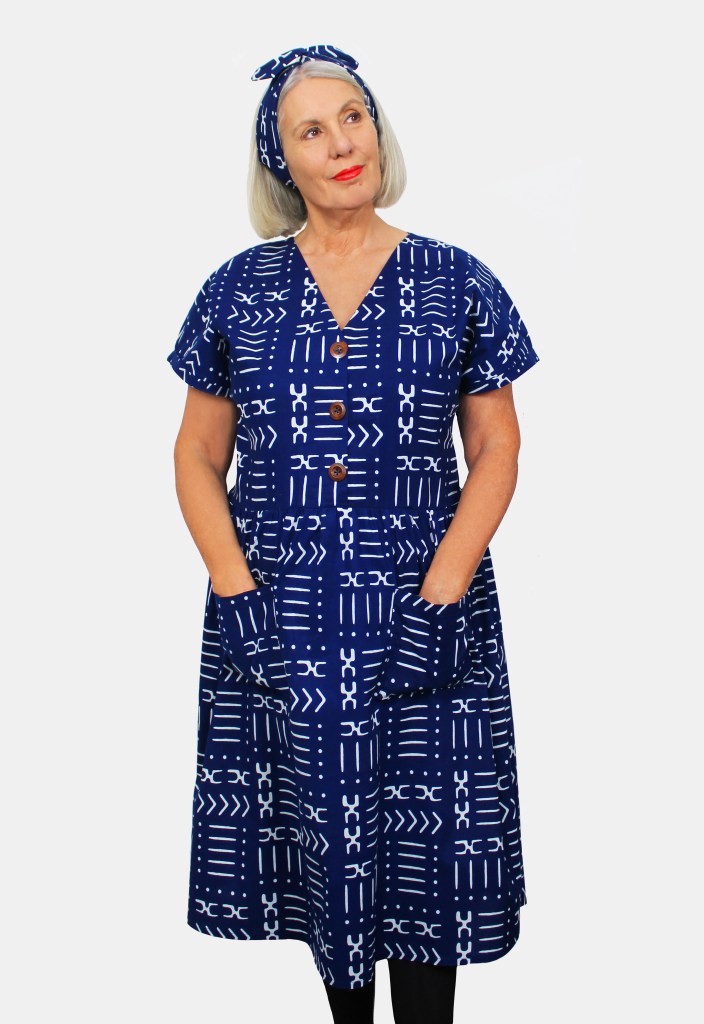
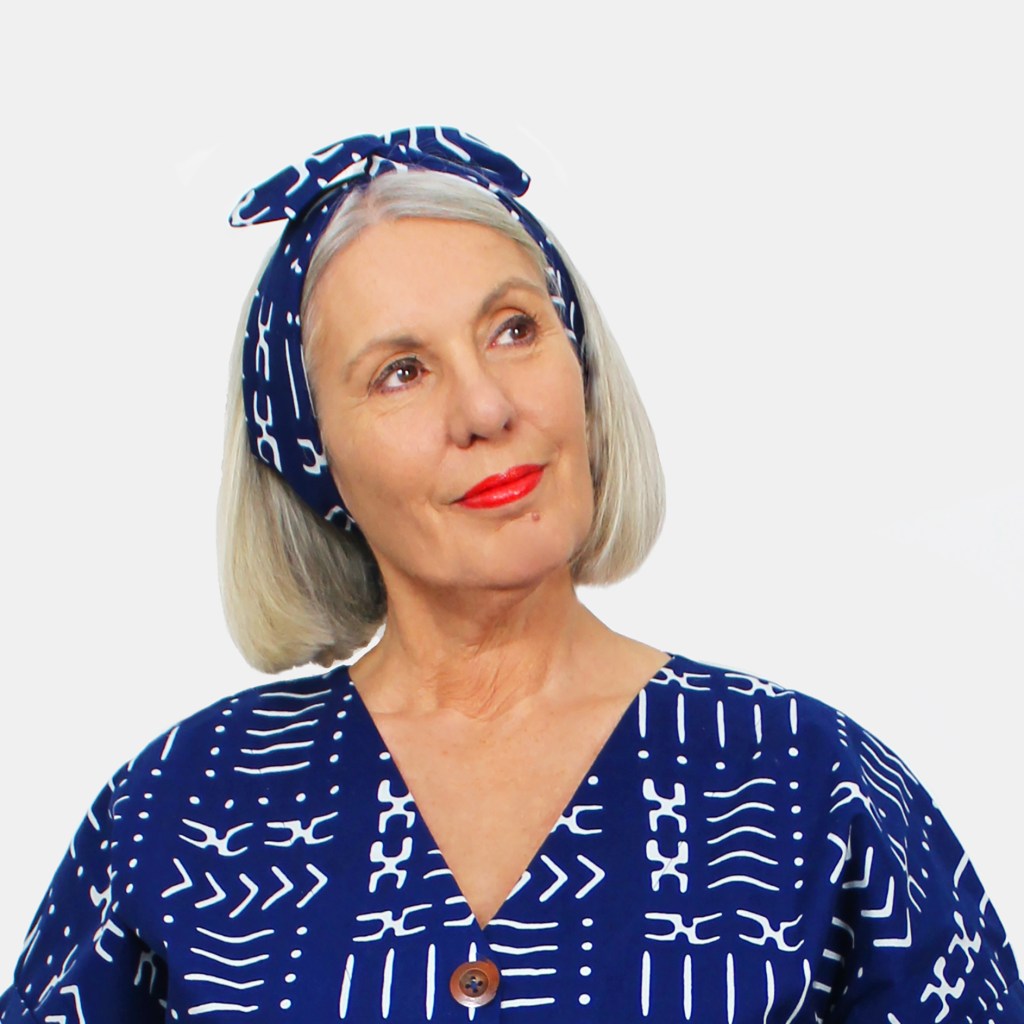
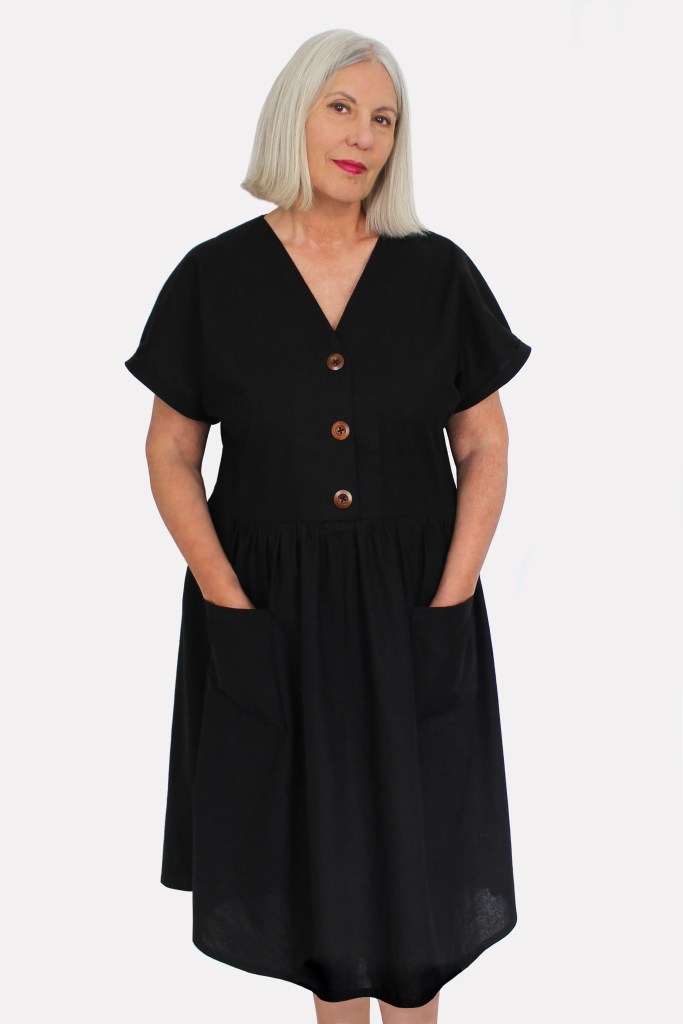
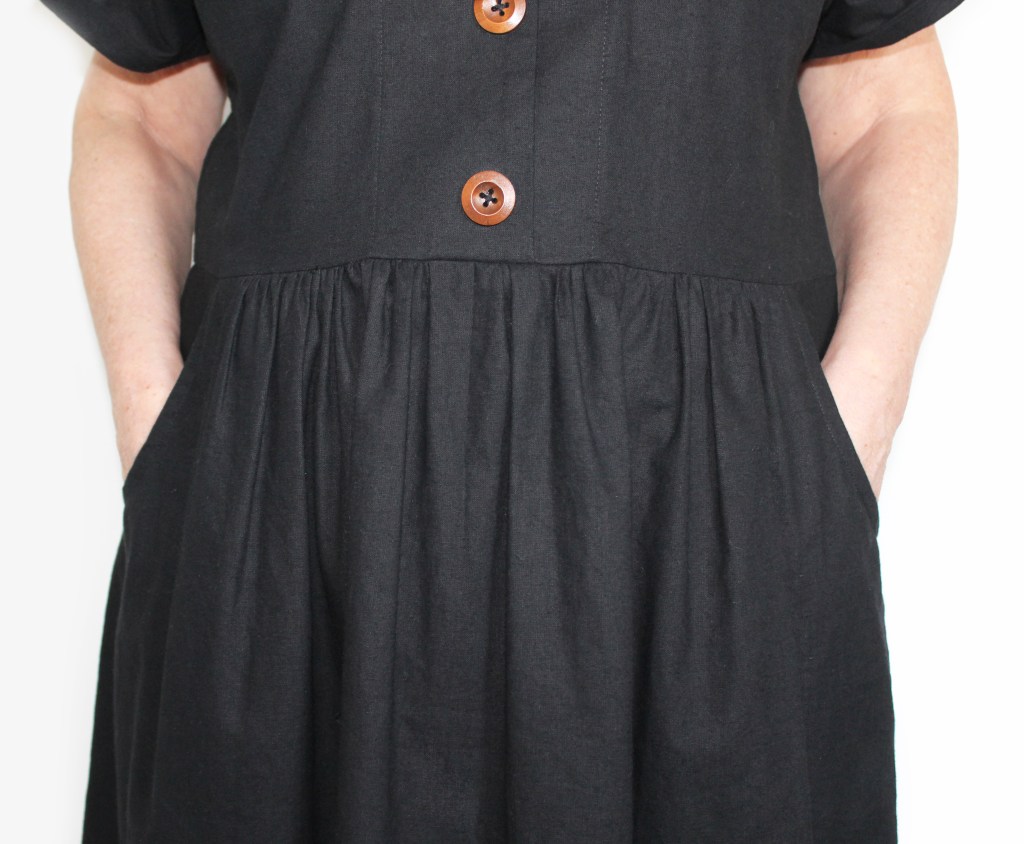
Beatrice dress has a V-neck, button down bodice with ‘cap’ style grown on sleeves, with fold back hems, great for wearing with cardigans and jackets.
The skirt section is gathered on to the bodice, with a shirt style curved hem detail at each lower far side.
Patch pockets are a must, with an alternative downloadable pocket hack pattern (see the end of this page for details).
Beatrice is a loose fitting, stylish, comfortable dress, suitable for everyday wear as well as special occasions.
Sizes 8-26.
Suitable for beginners/intermediates.
The beauty of the grown on sleeve is that you don’t have to insert a sleeve which can sometimes be rather tiresome (although frankly, I really enjoy setting in sleeves and find it very satisfying). Anyway, I digress….. Beatrice has three feature buttons at the front of the bodice…..however if you fancy leaving off the buttonholes and just sewing them on to the centre front overlap then feel free to do so (I won’t tell on you!) because, hey presto! its possible to pop the dress on easily over your head without having to open up the buttons. How fab is that?

And one other thing- you get the instructions to create a matching wired hairband included in the pattern.
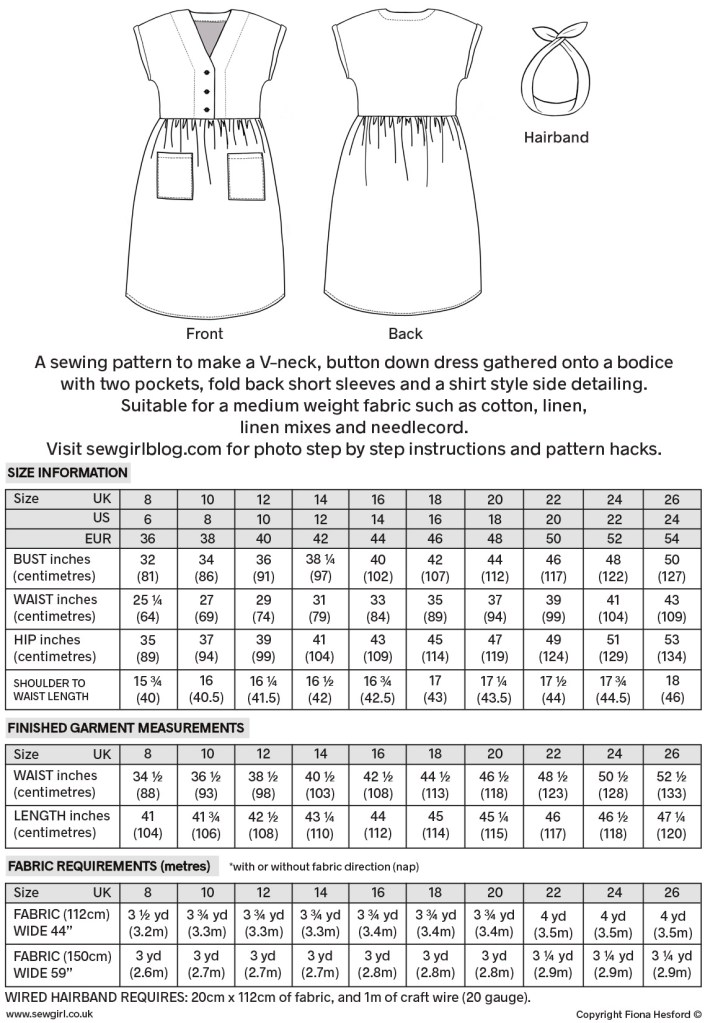
Here is a copy of the info you find on the back of the pattern.
The inspiration behind Beatrice is a French actress called Beatrice Dalle.

In 1986 I moved to Paris to live and work in the fashion industry for 6 years. When I arrived the film ‘Betty Blue‘ had just come out, starring the incredible Beatrice Dalle. She embodied the Parisian style that was an inspiration to a young English girl starting out her career in the industry. I truly can’t believe I’m still working in fashion almost forty years on. Thanks Beatrice!
How to make the Beatrice Dress.
This page shows you the basics- the pattern instructions contain more in depth text and illustrations.
Seam allowance is 1cm.
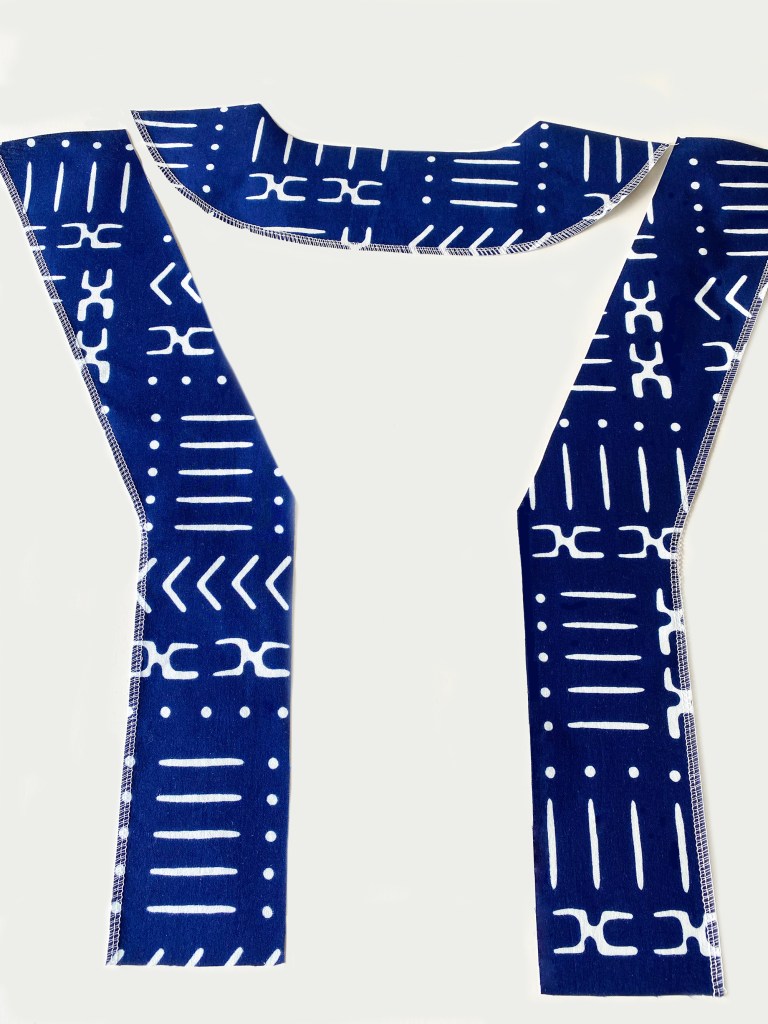
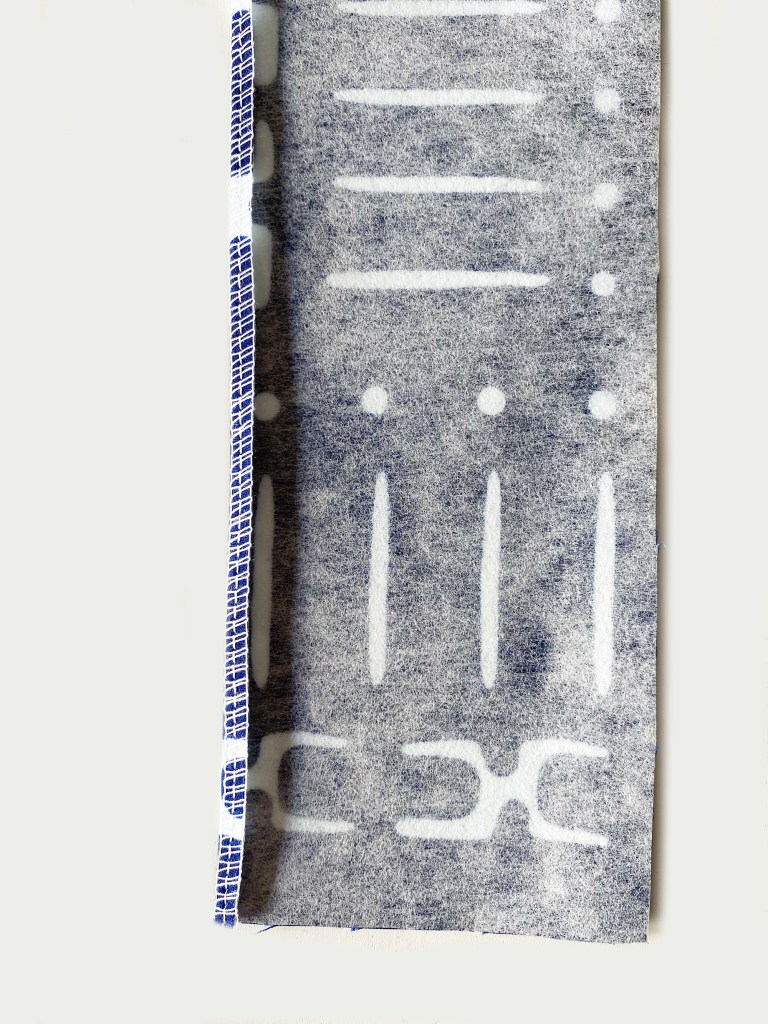
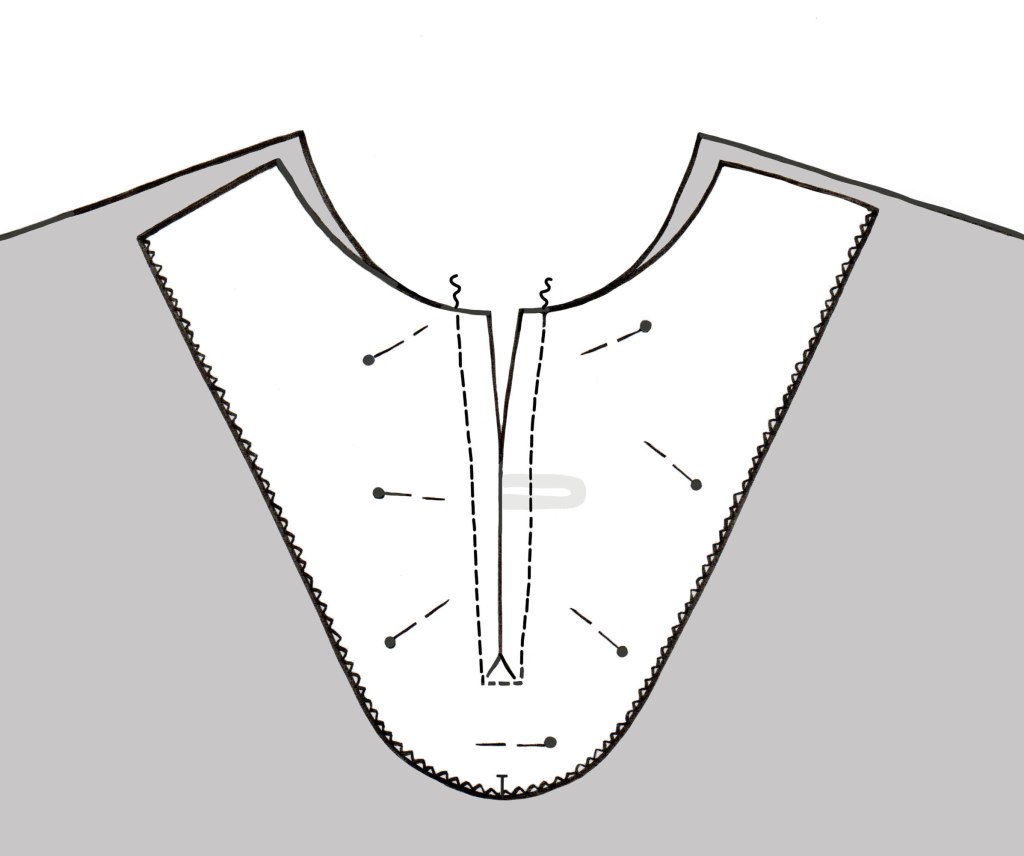
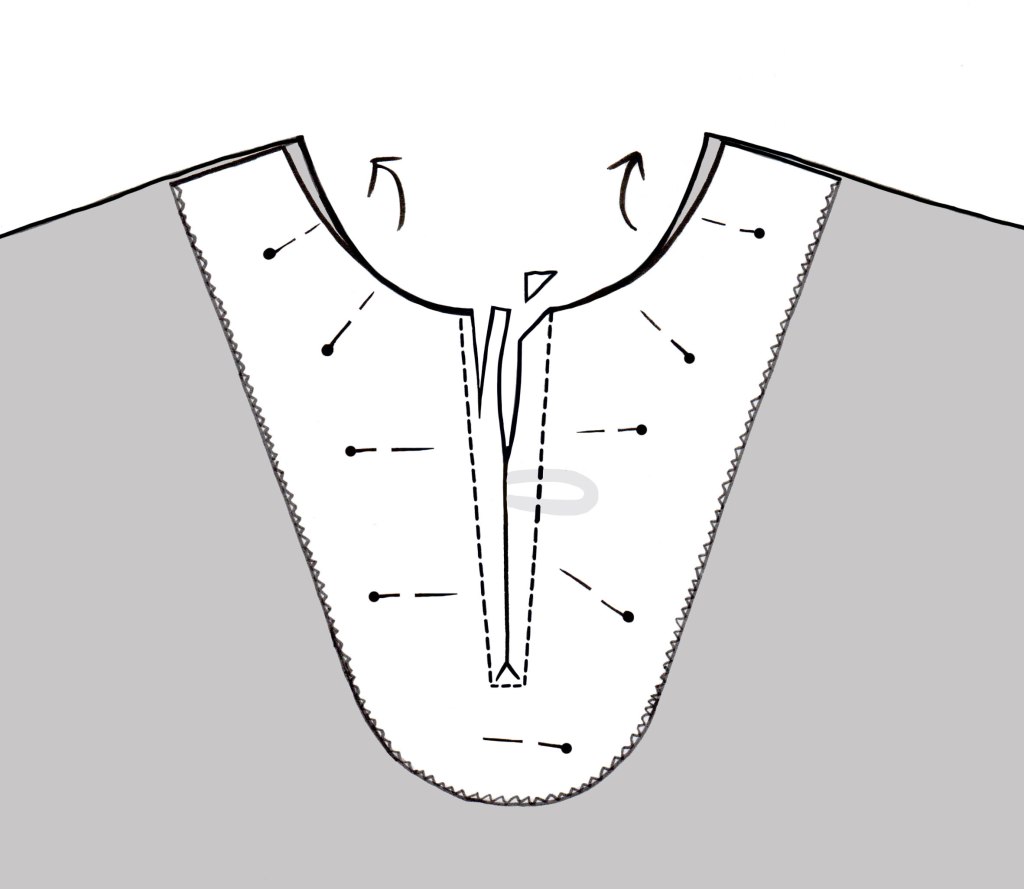
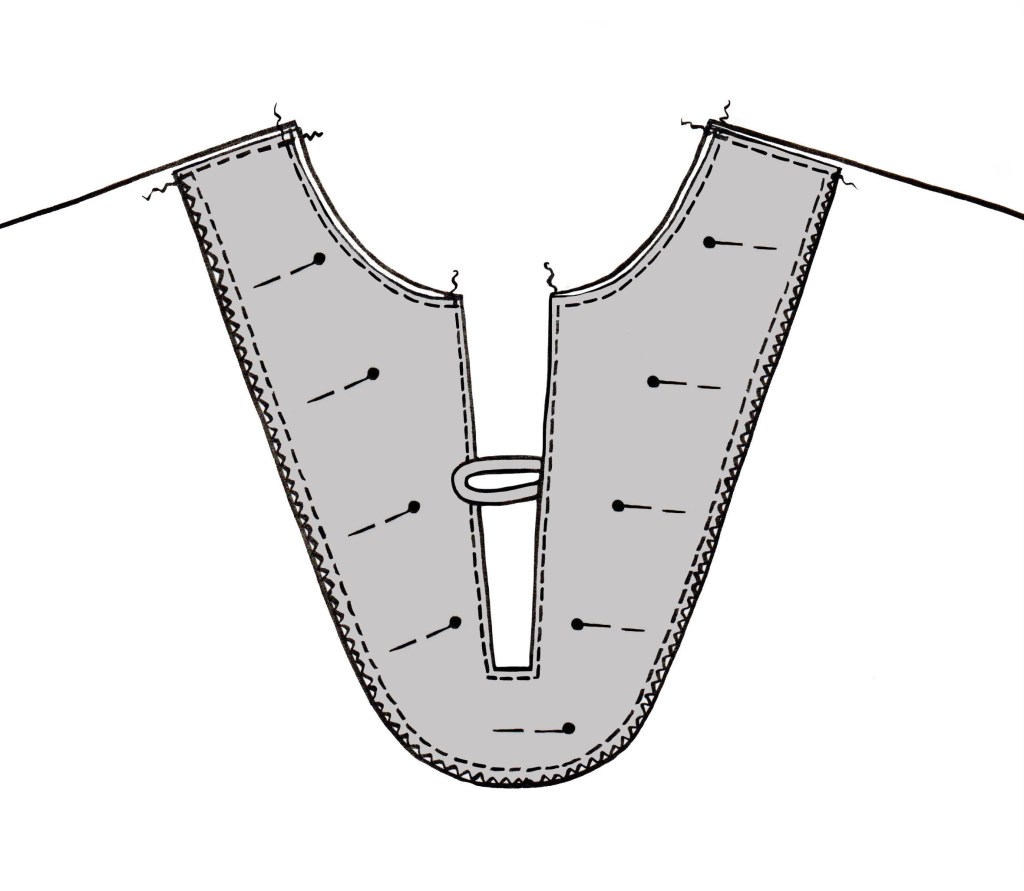
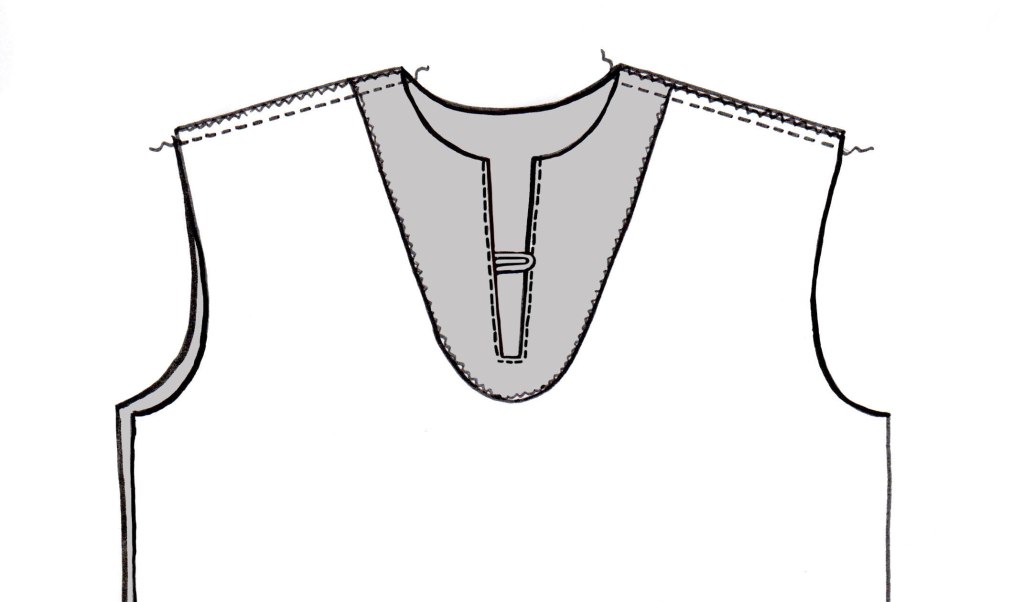
Back Neck Facing
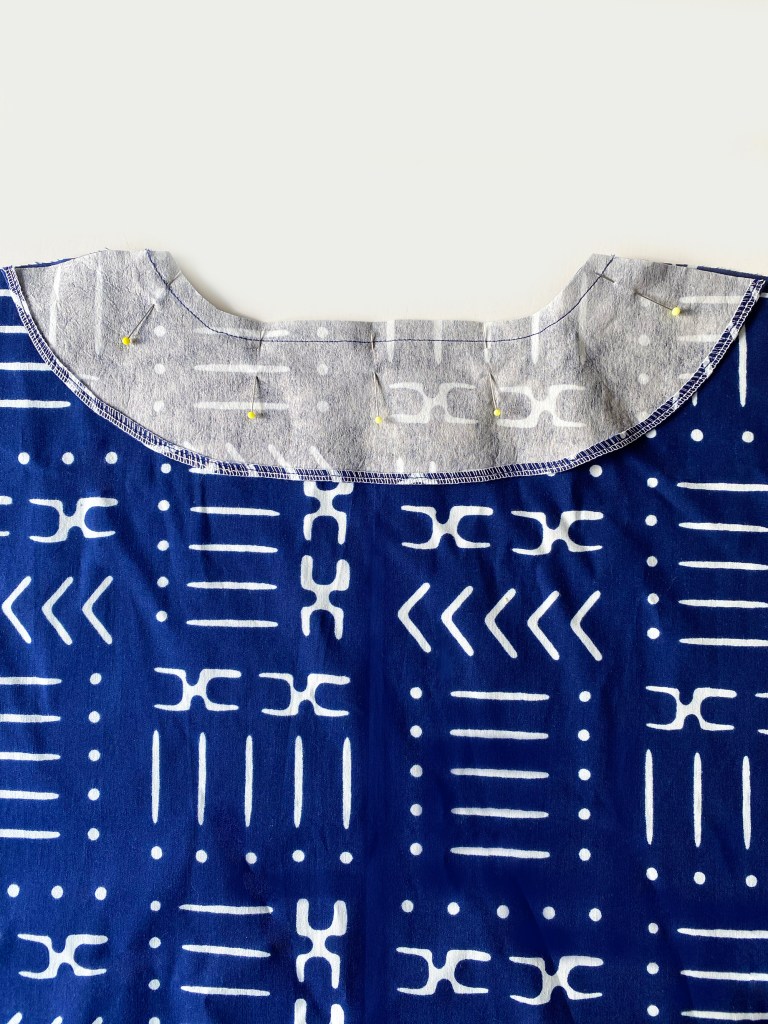
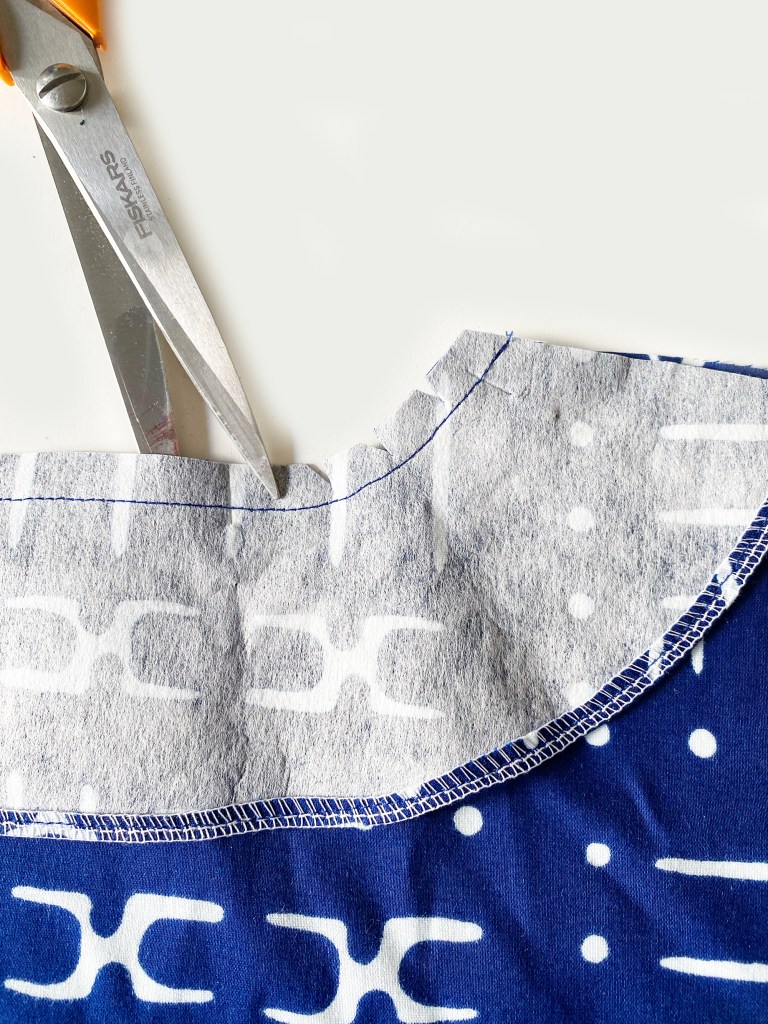
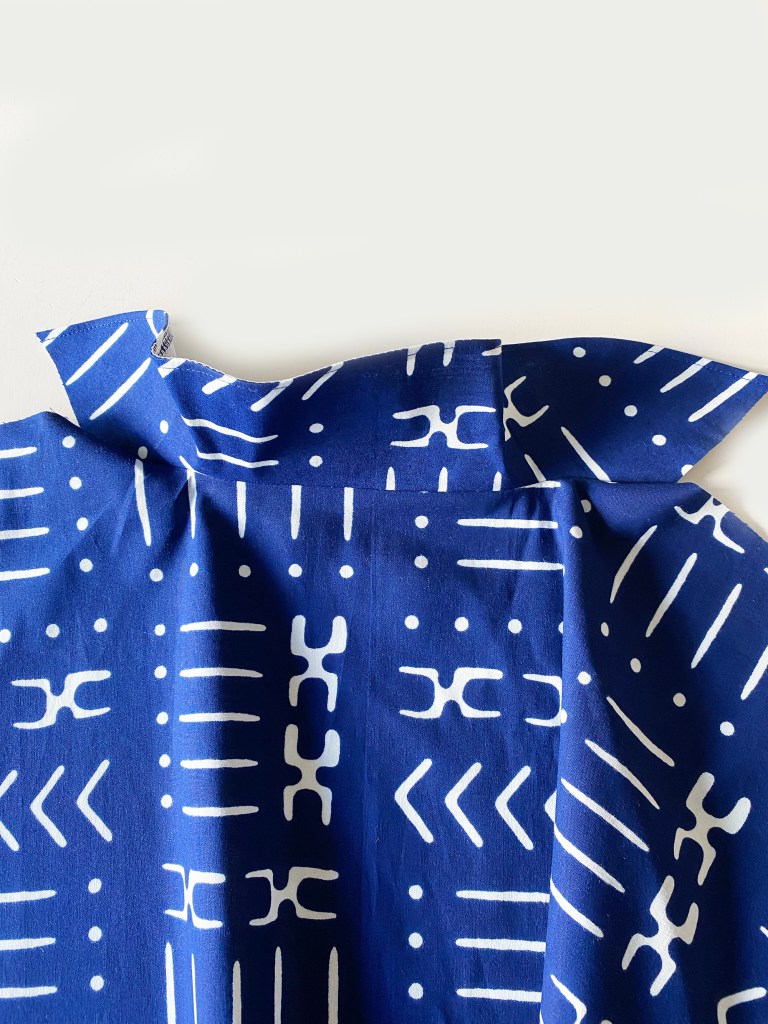
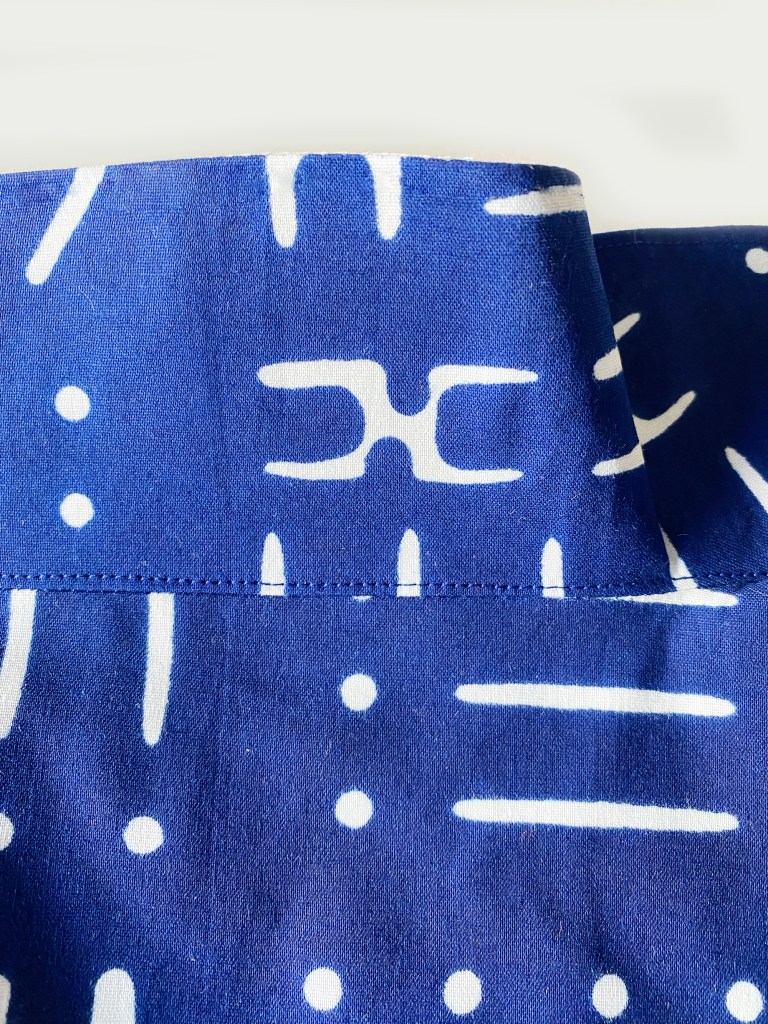
Front Neck Facing
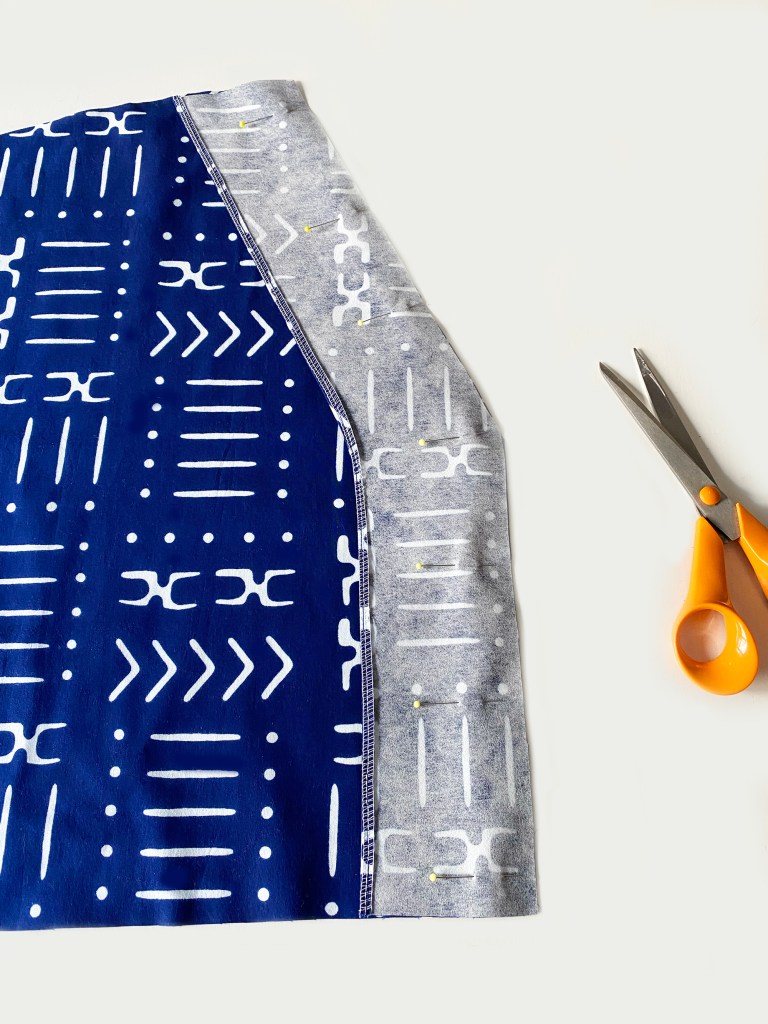
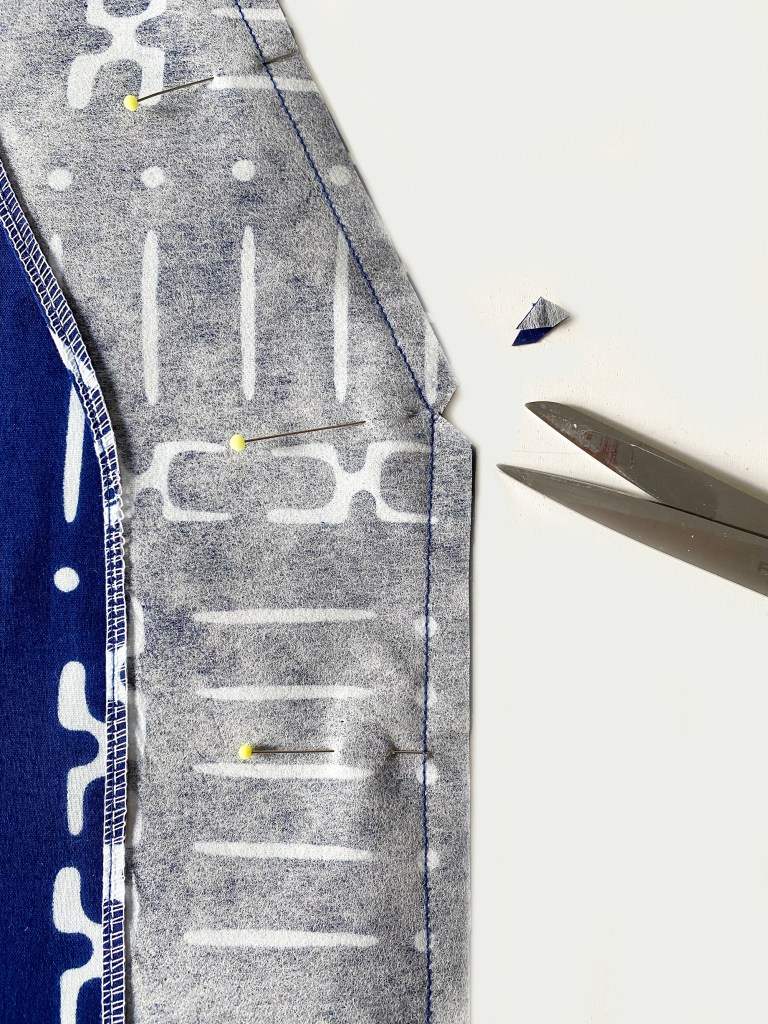
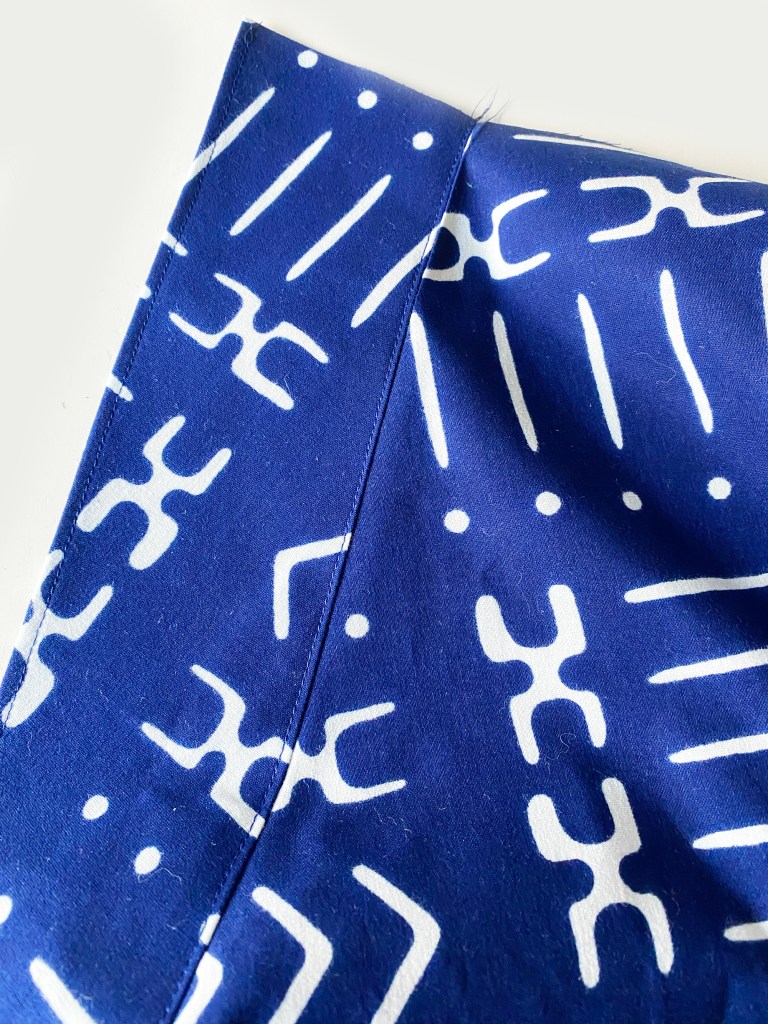
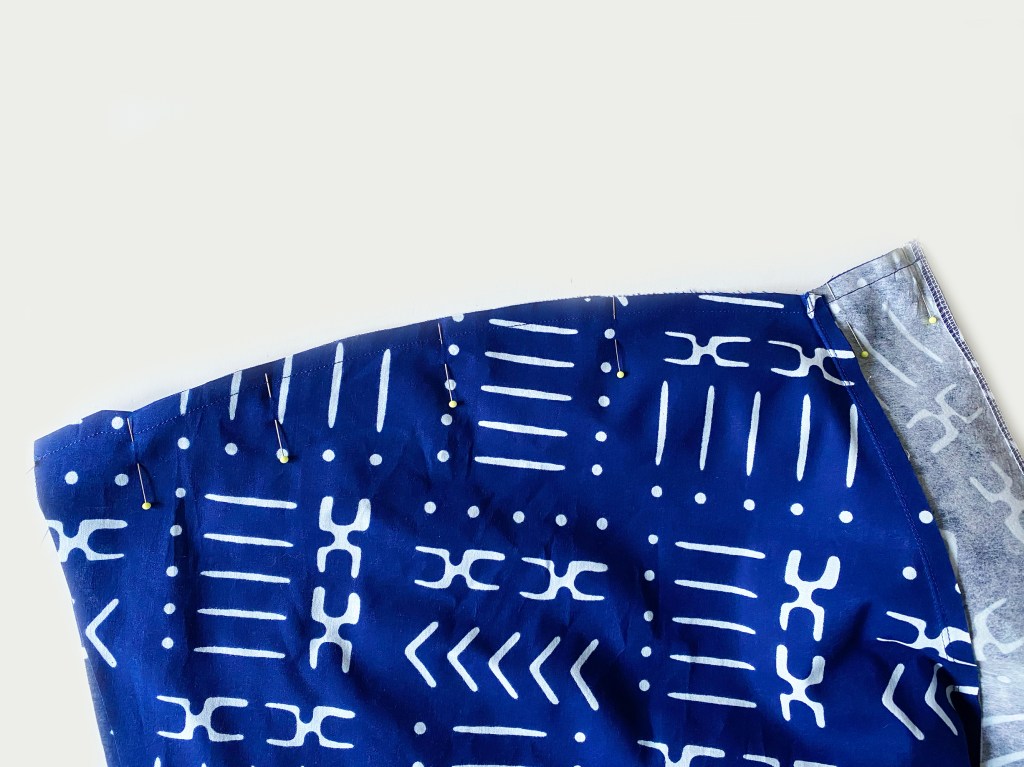
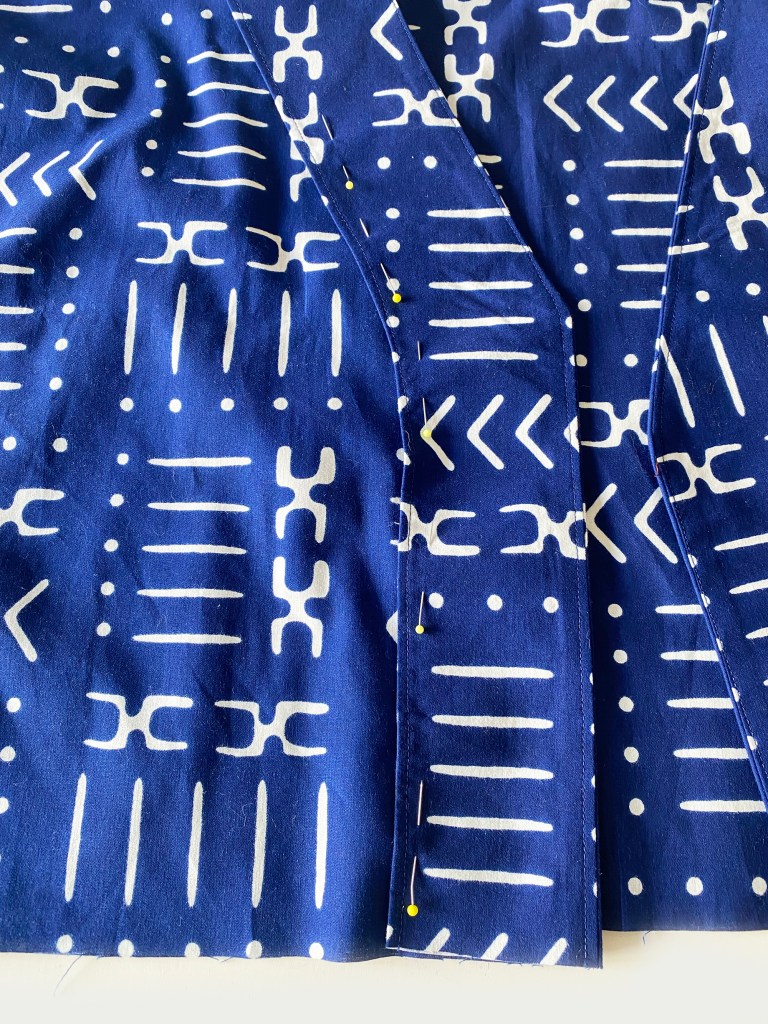
Press.
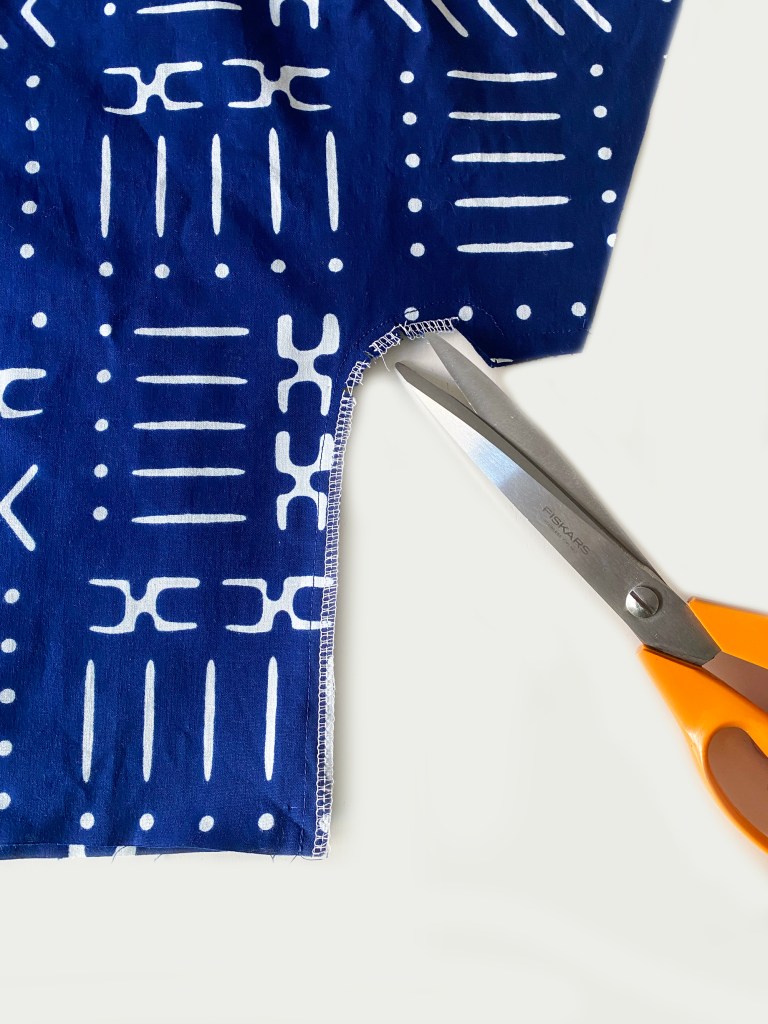
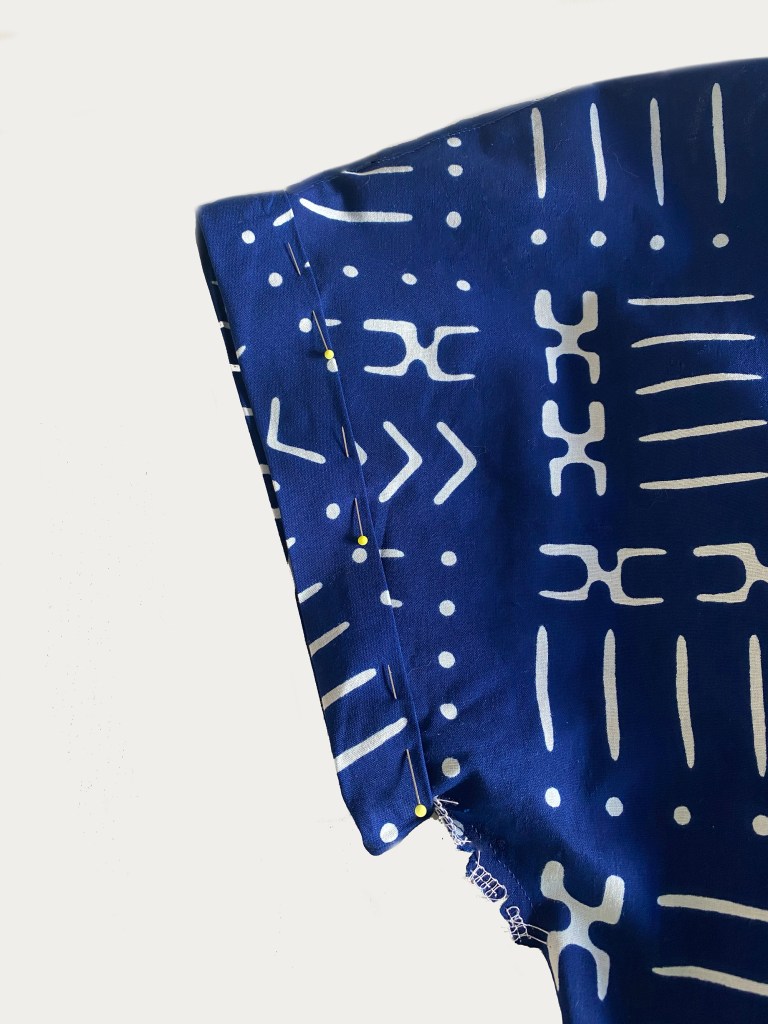
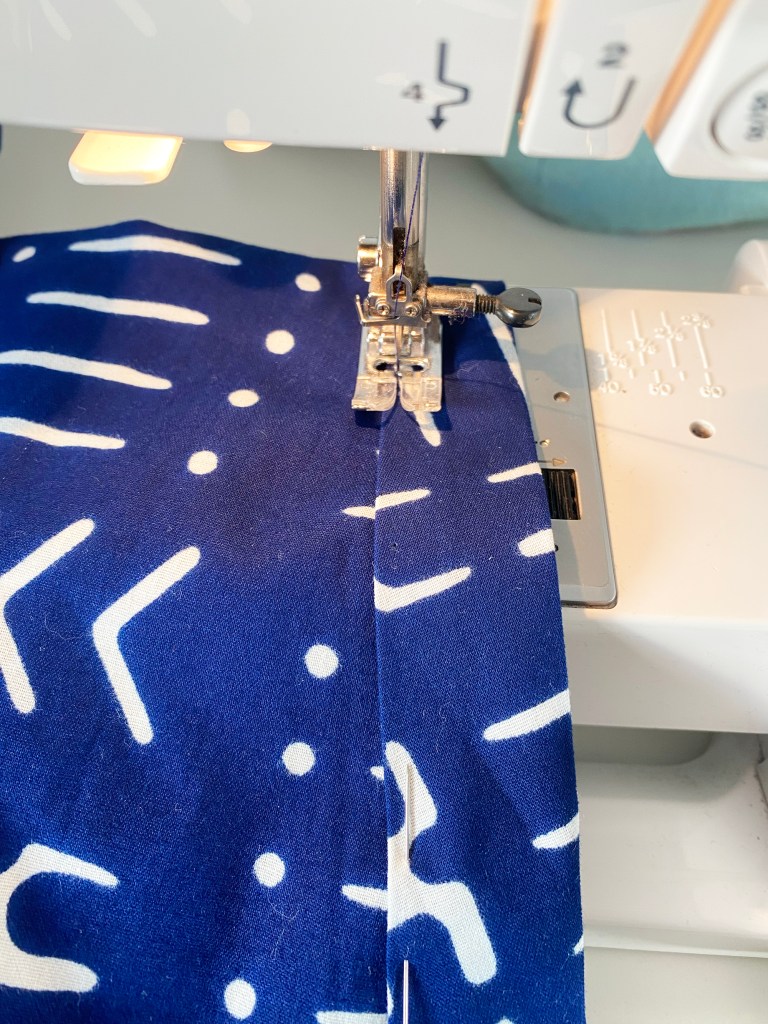
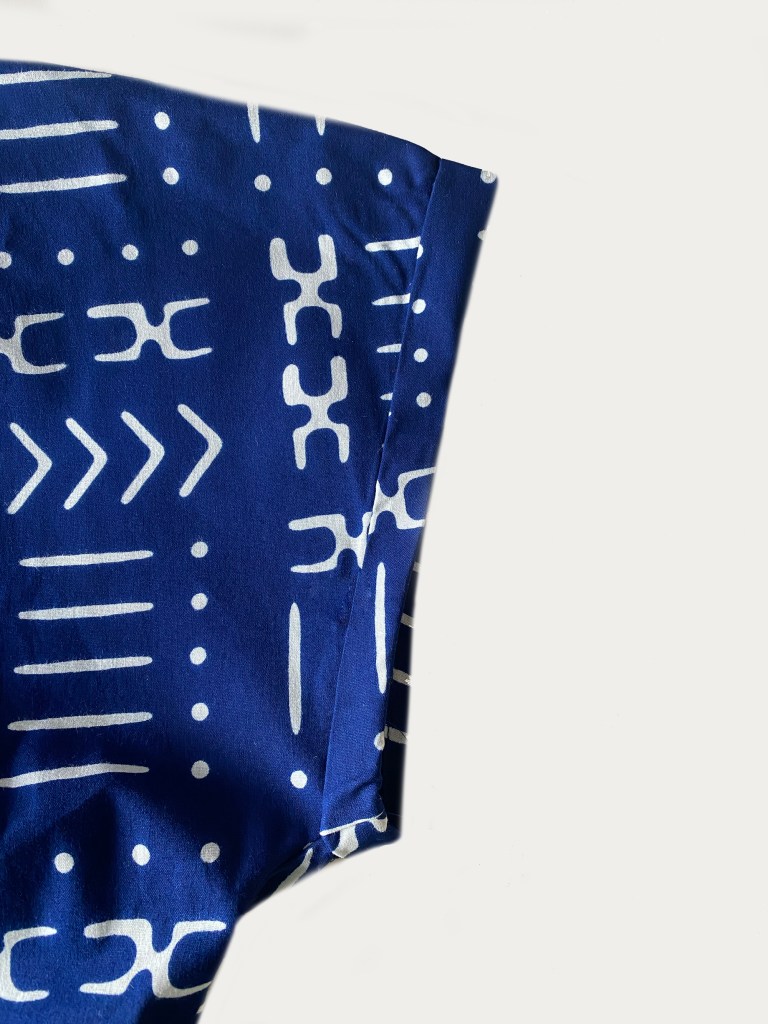
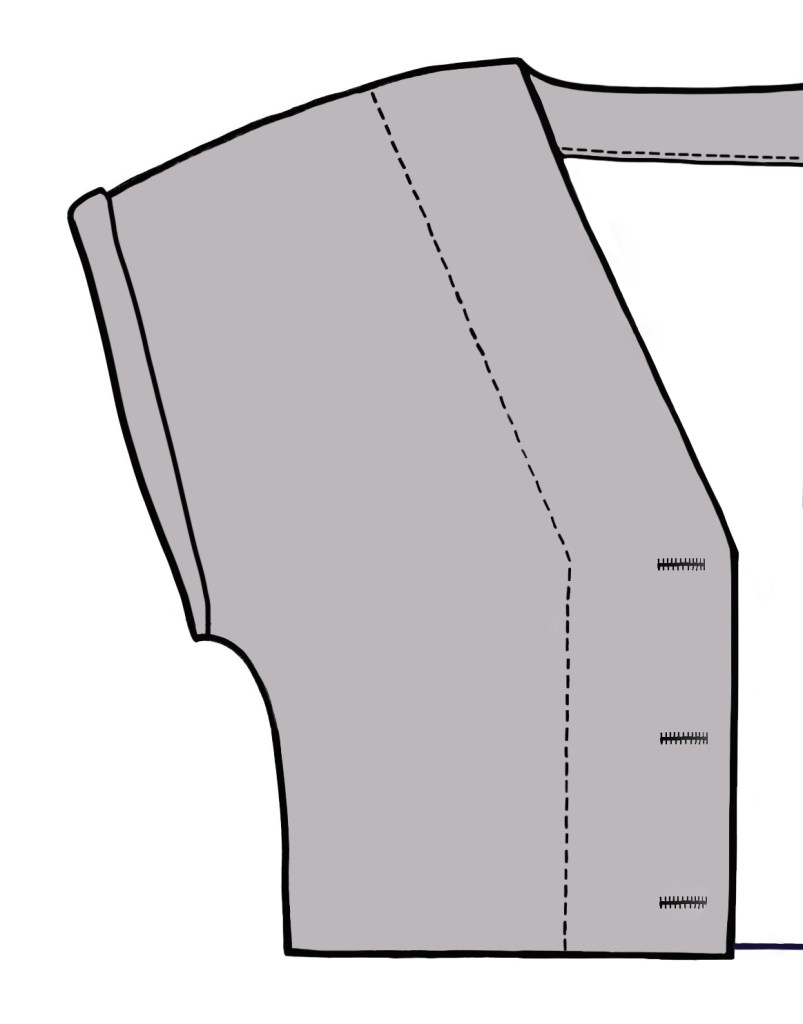
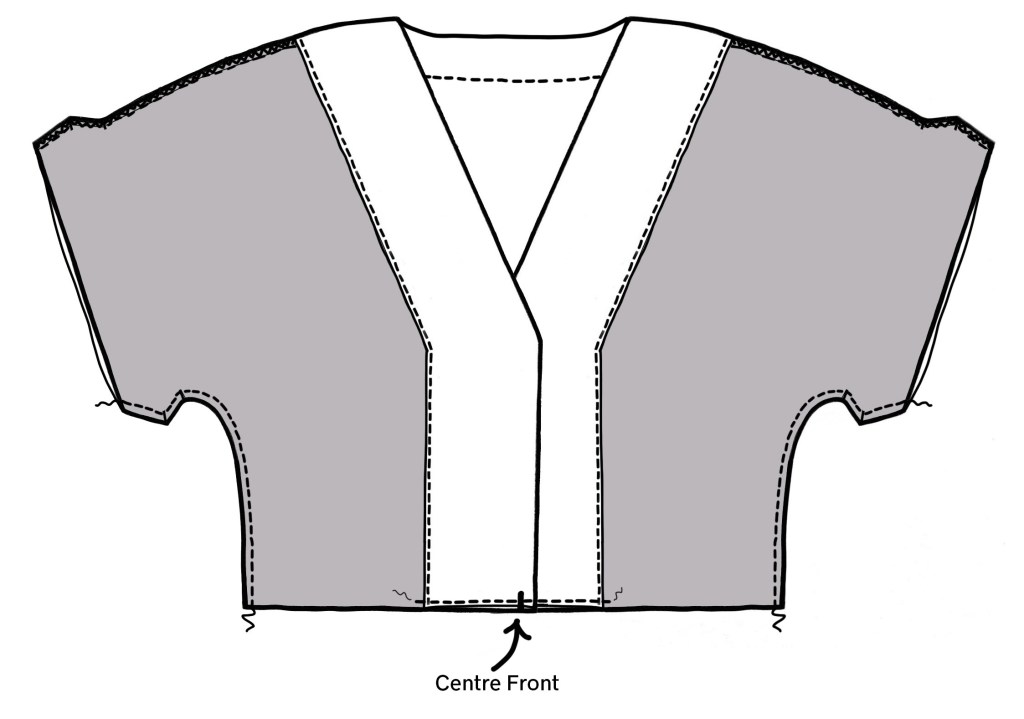
Skirt section/pockets
If you want to do the Inserted Pocket hack version. Follow the Dowloaded instructions from this point (at the end of this page).
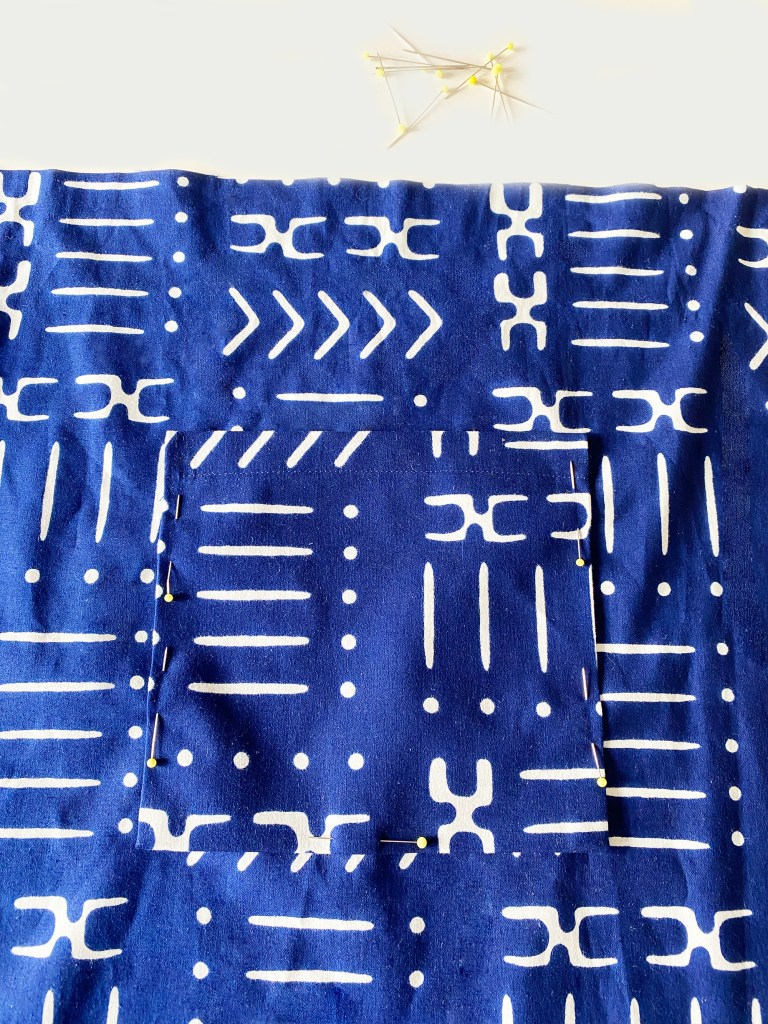
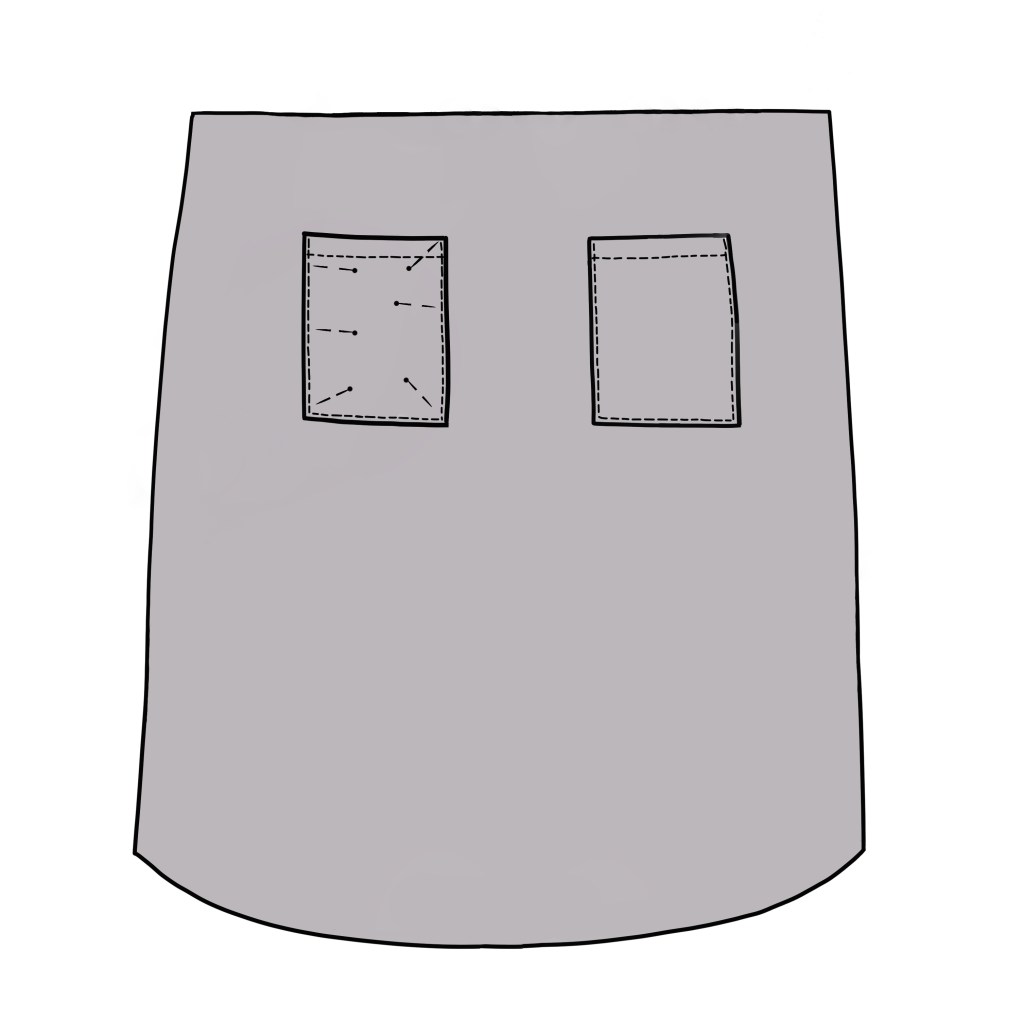
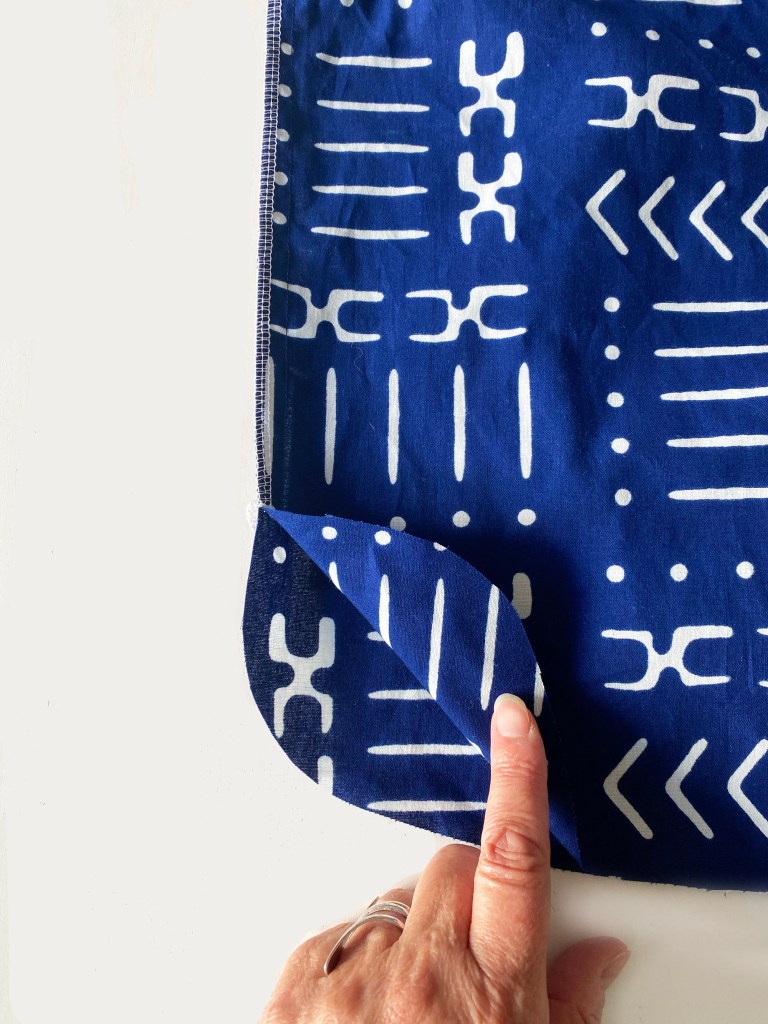
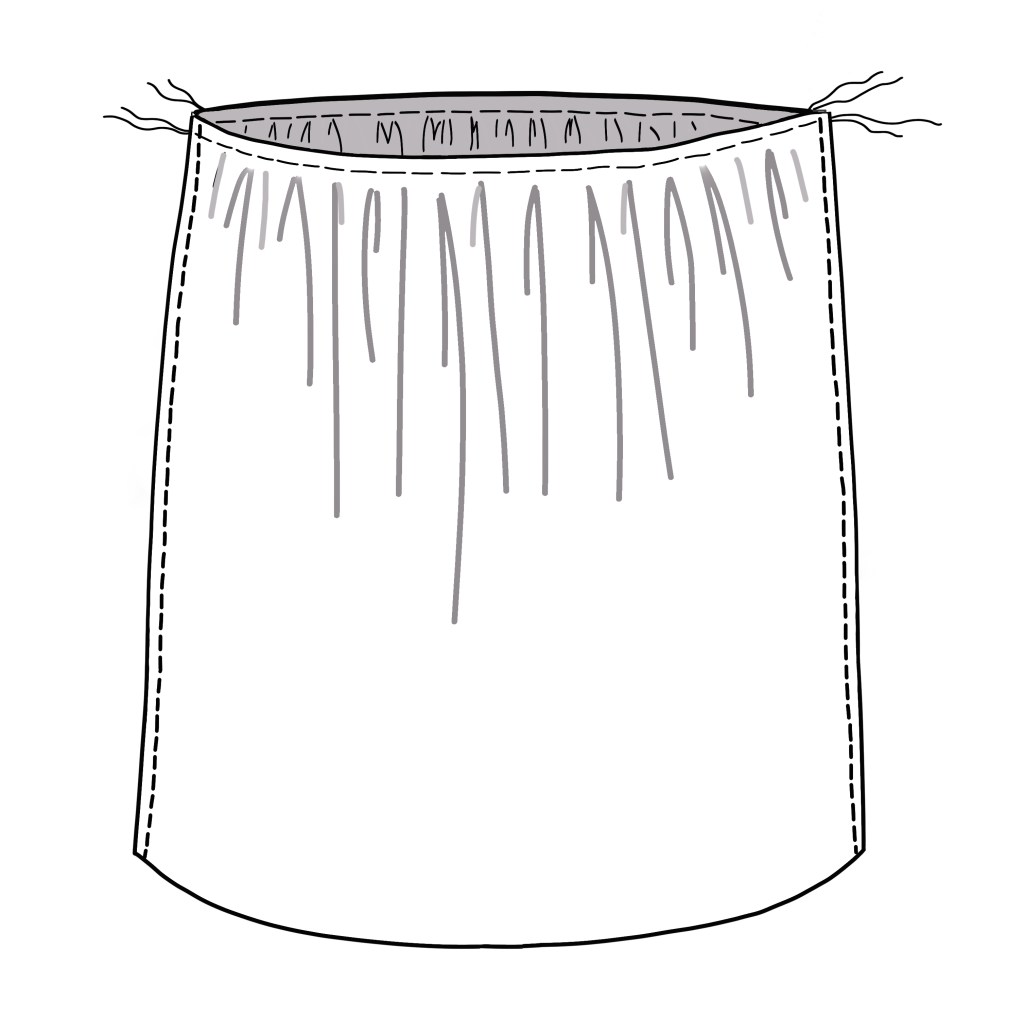
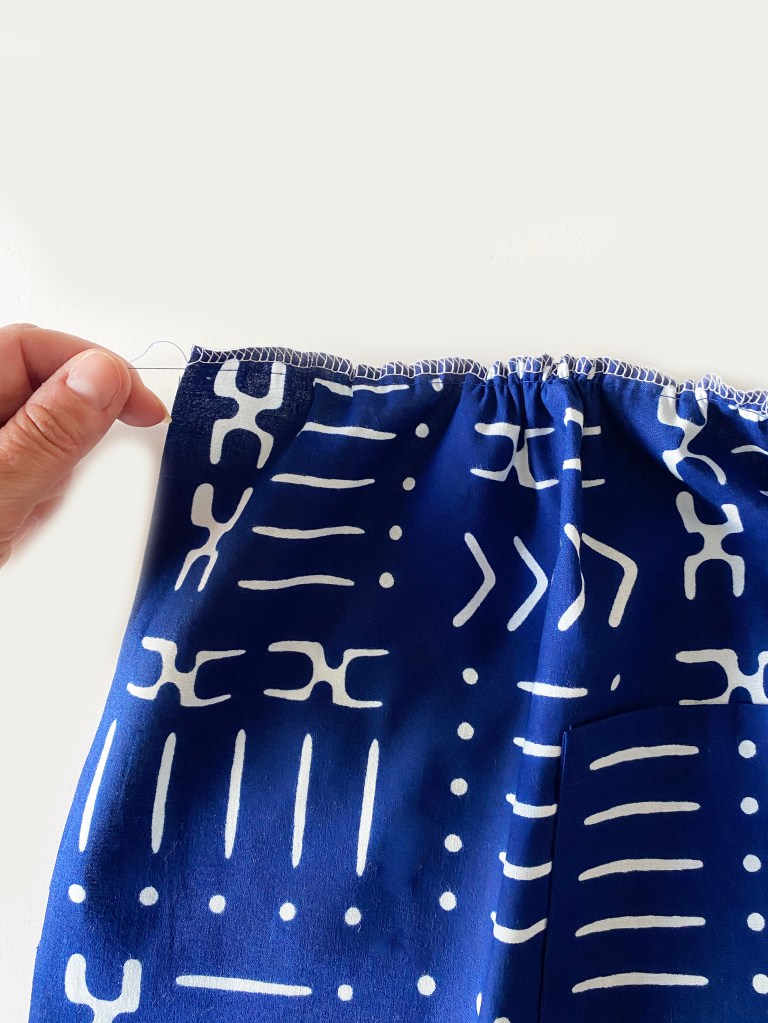
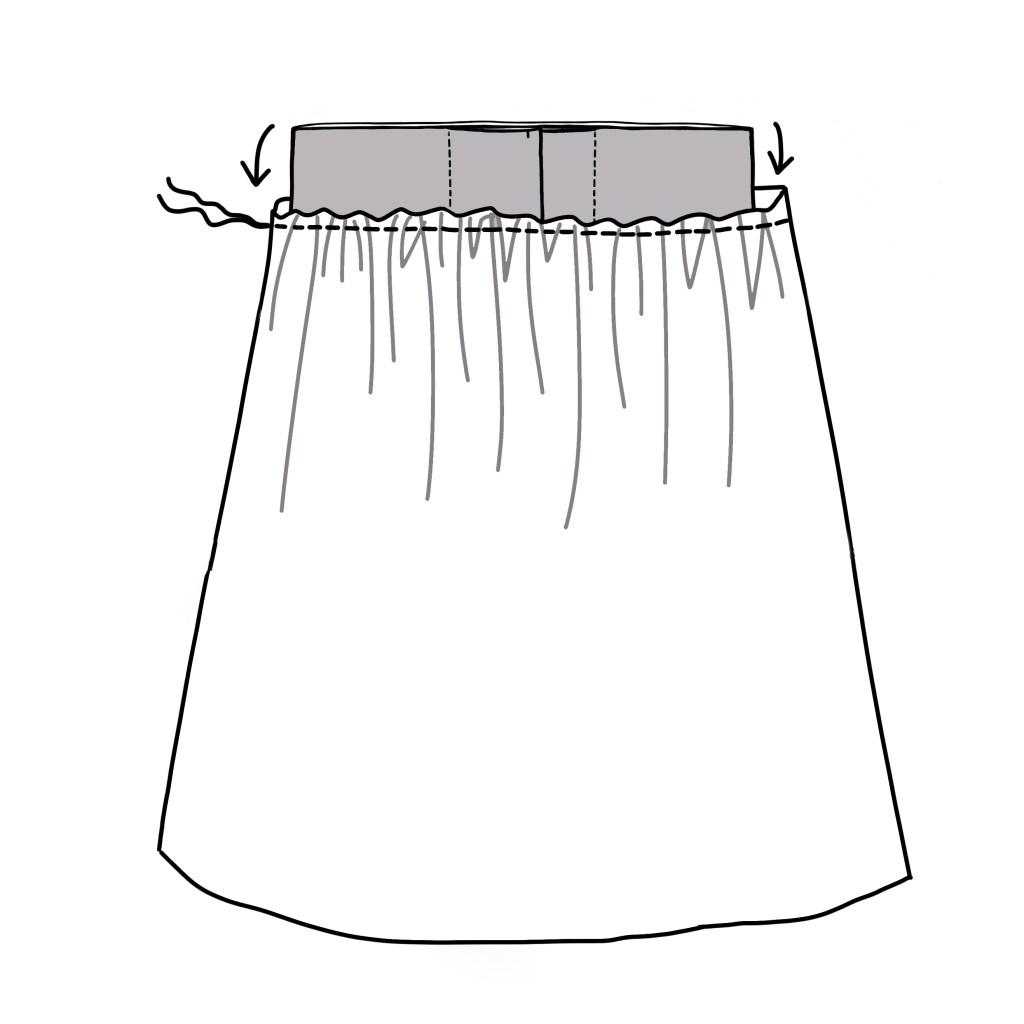
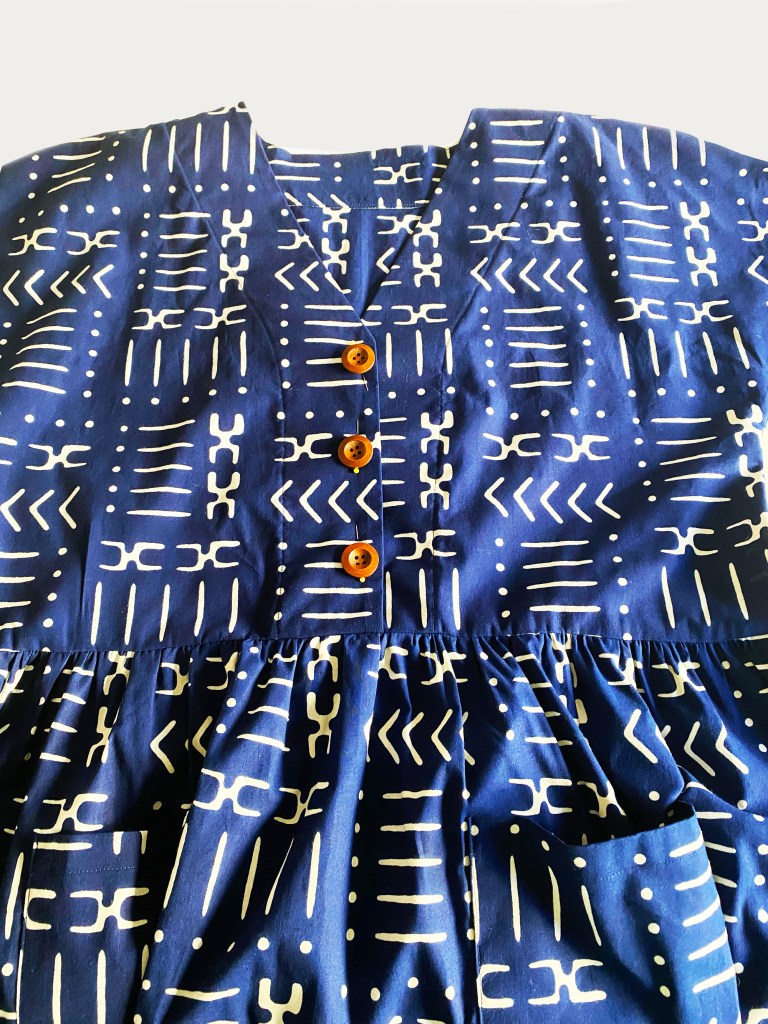
There you have it.
POCKET HACK
So do you fancy a different style of pocket? Well here goes! This one is a super way to update your dress. Its an inserted style of pocket. Easy to make with a couple of templates and step-by-step instructions which you can download below.
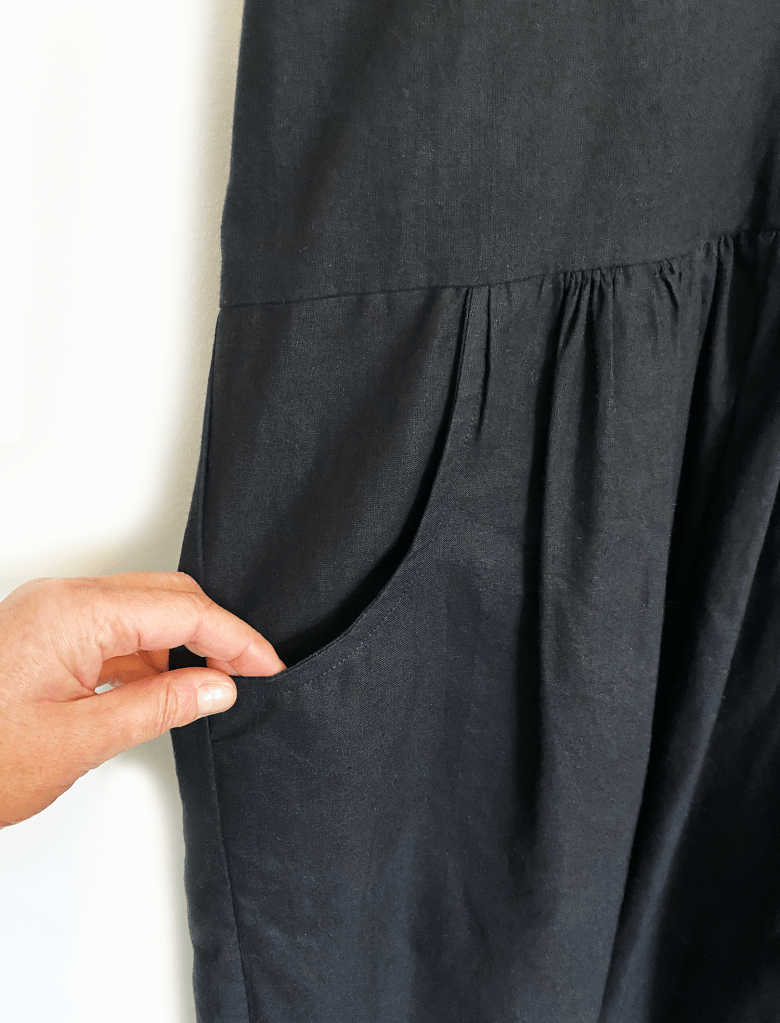
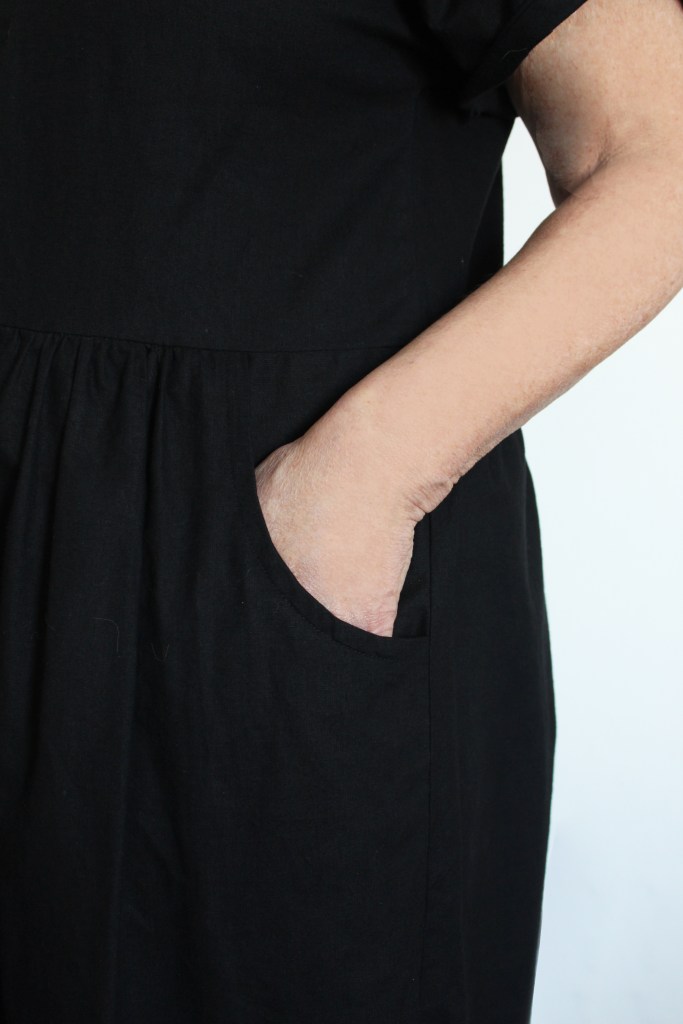
You could also do some really creative things with it, like making the Pocket Lining in a different fabric or edging it with a bit of Liberty binding, even matching it up with binding around the neck edge and sleeve cuff. Oooo….. endless possibilities. Its so nice to customise a pattern and make it unique.


All images and text are subject to copyright. Please ask permission if you would like to use them.
Protected: PROJECT PDF DOWNLOADS
POPPY COCOON DRESS
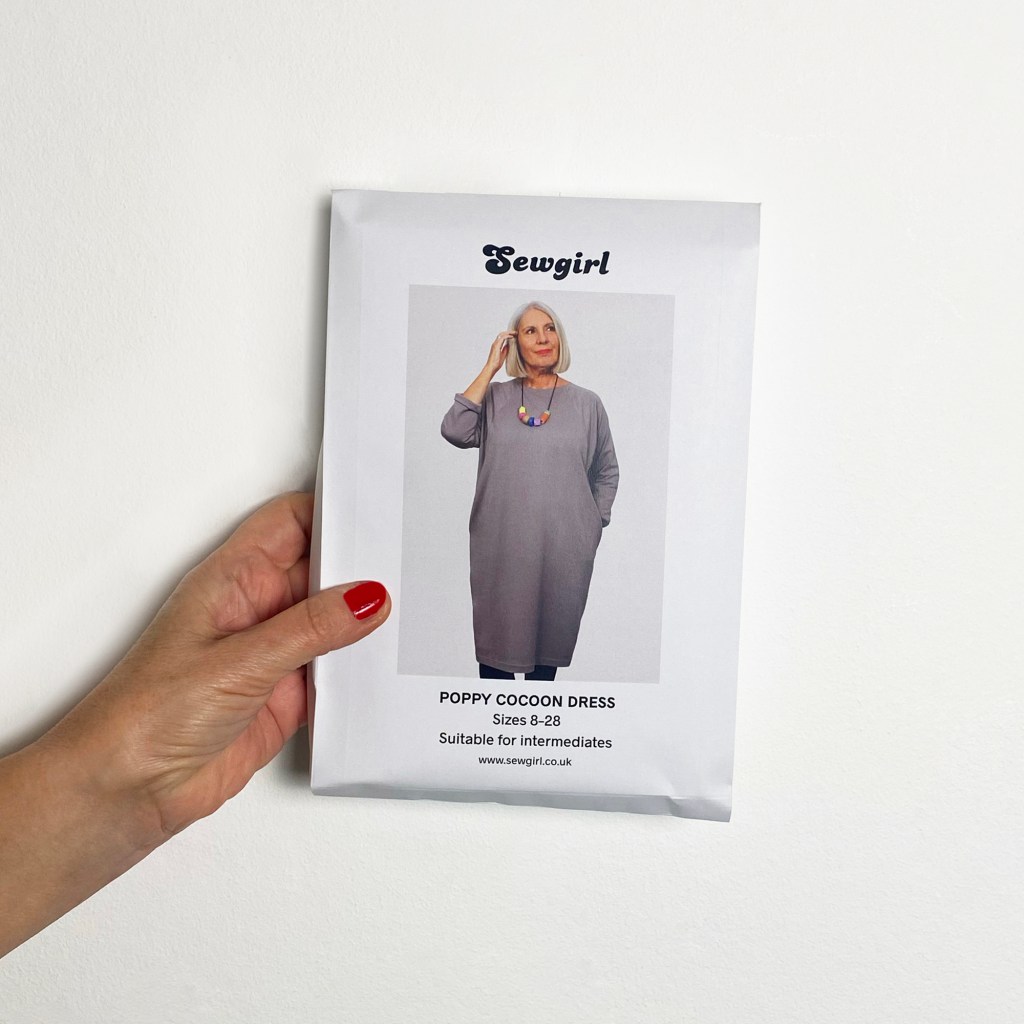
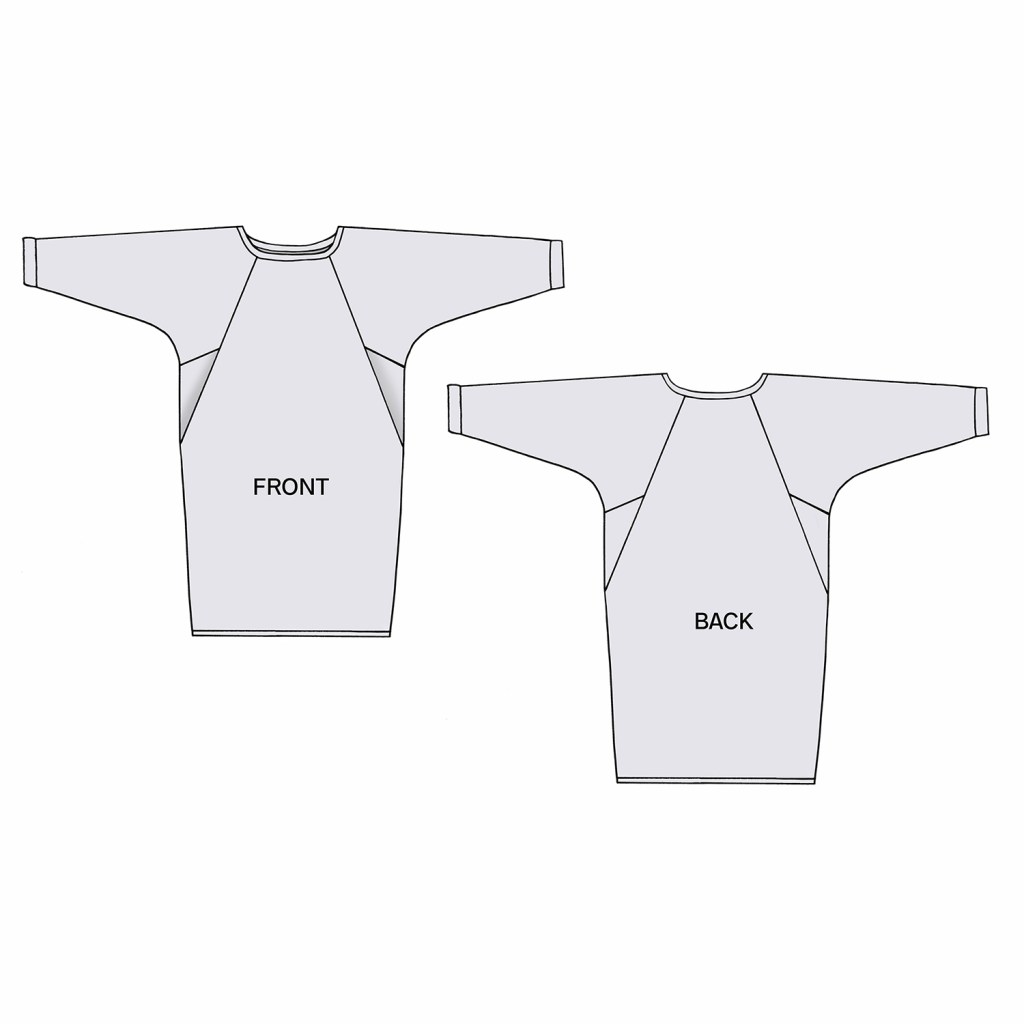
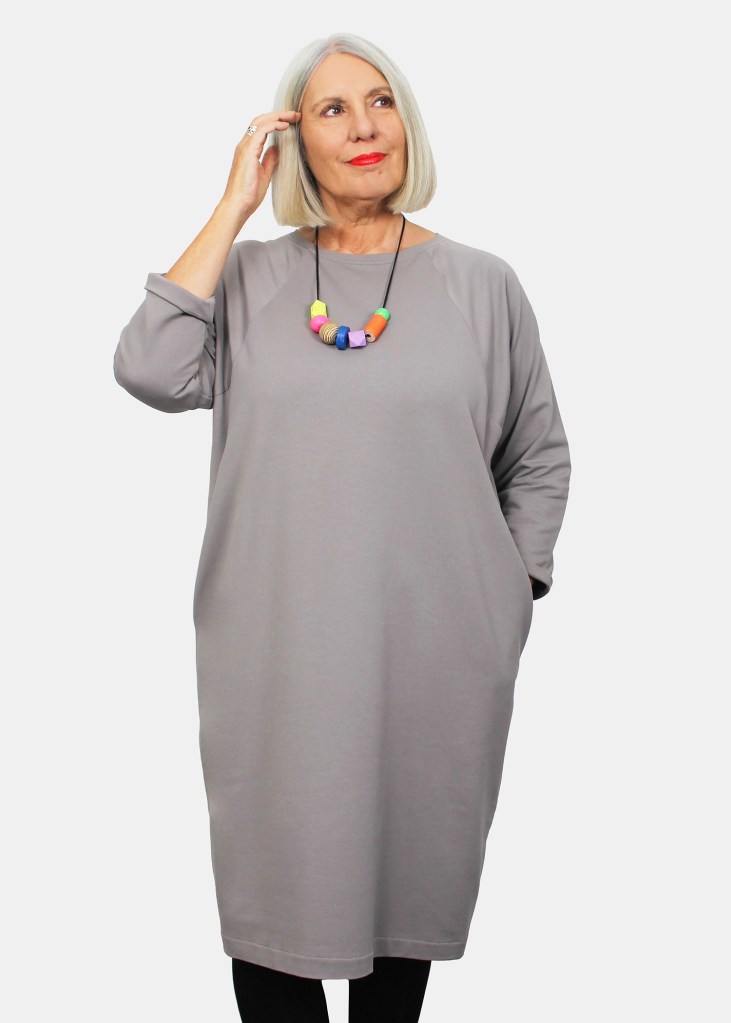
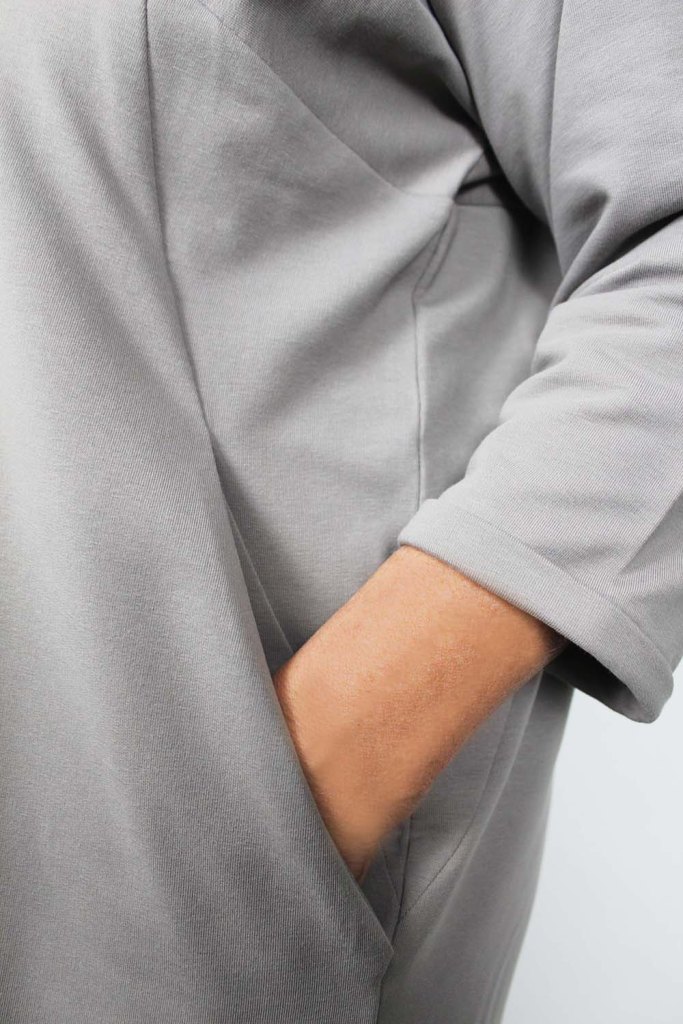
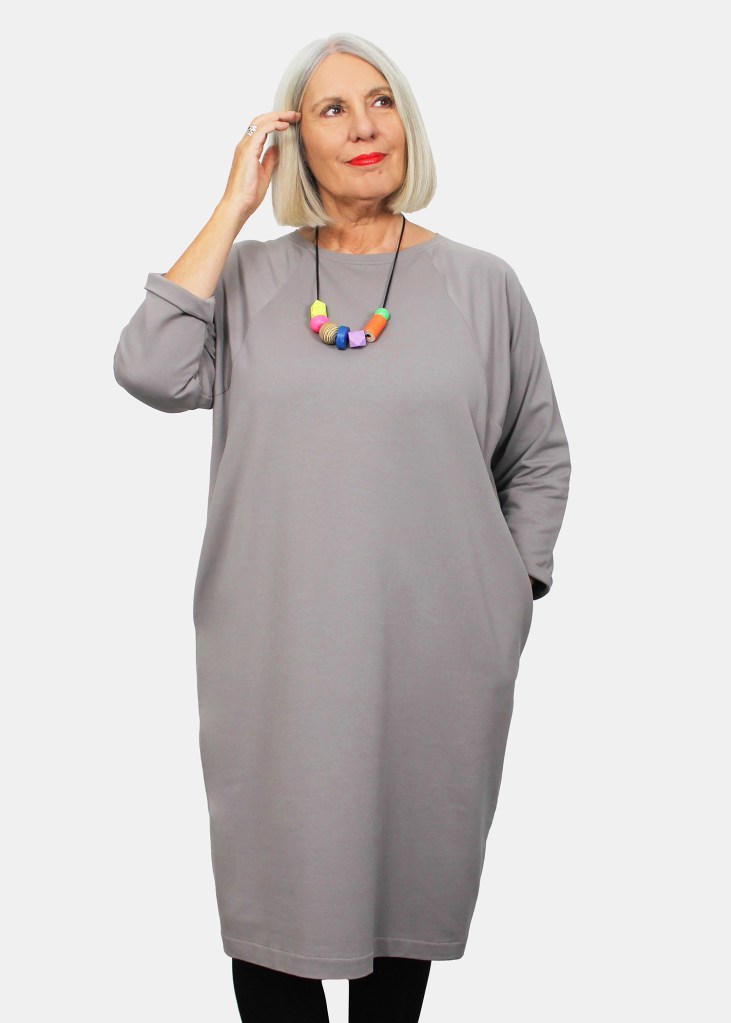
Poppy Cocoon dress is a loose-fitting, comfortable, everyday round neck, cocoon shaped, tunic with pockets set into a raglan sleeve. The pattern comes in all sizes from 8-28.
Make in soft sweat fabric (see below) or loop back jersey or a medium weight two way stretch fabric such as a cable knit would be nice. Minerva fabrics have some lovely ones.
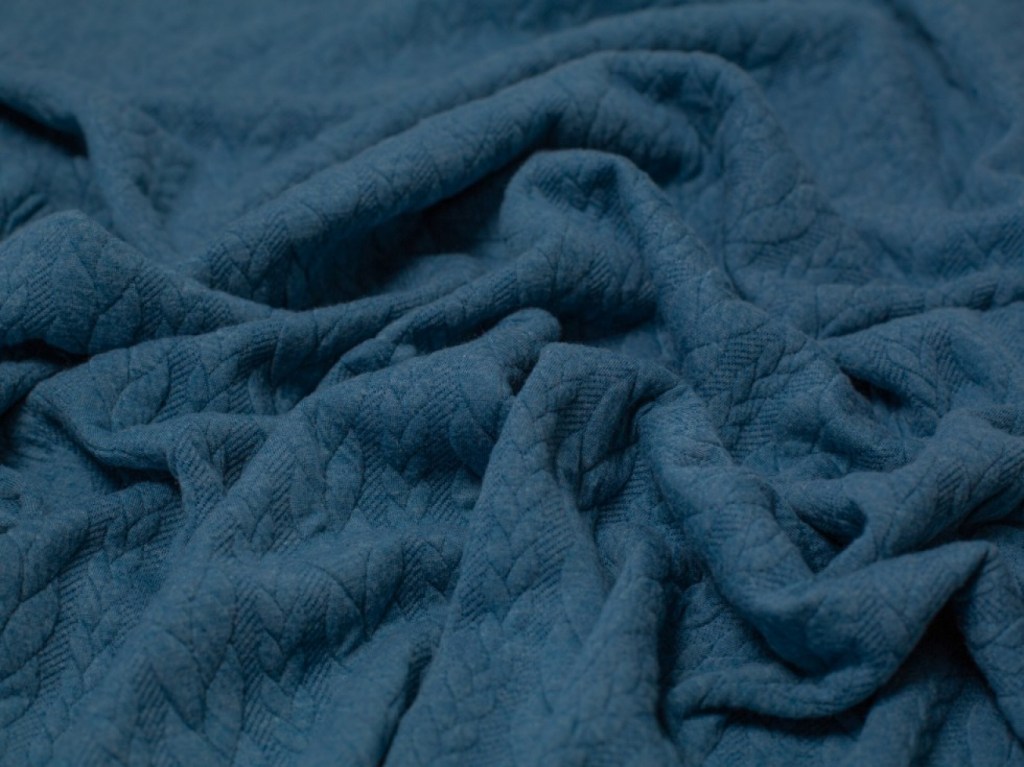
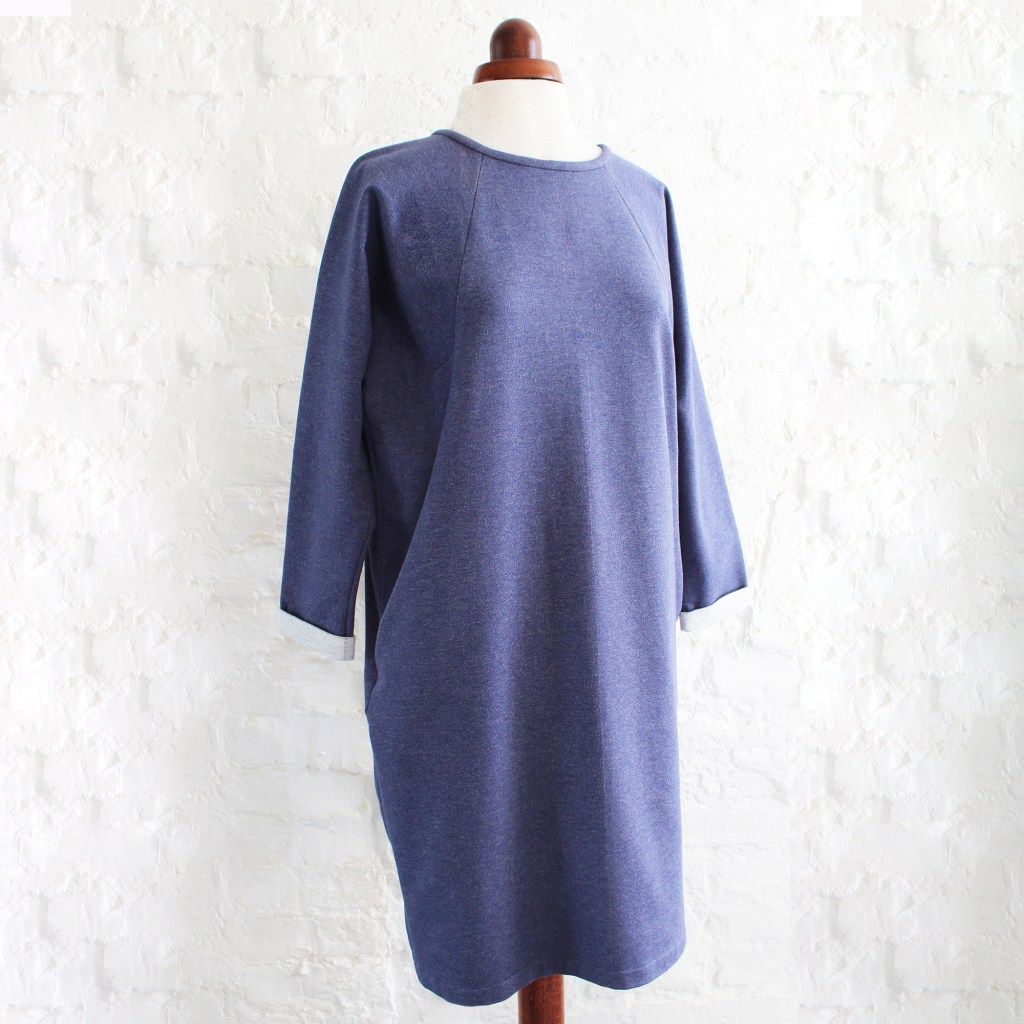
The lovely thing about this pattern is the pockets set into the deep raglan style sleeve and the side gusset which help create its ‘Cocoon’ shape.
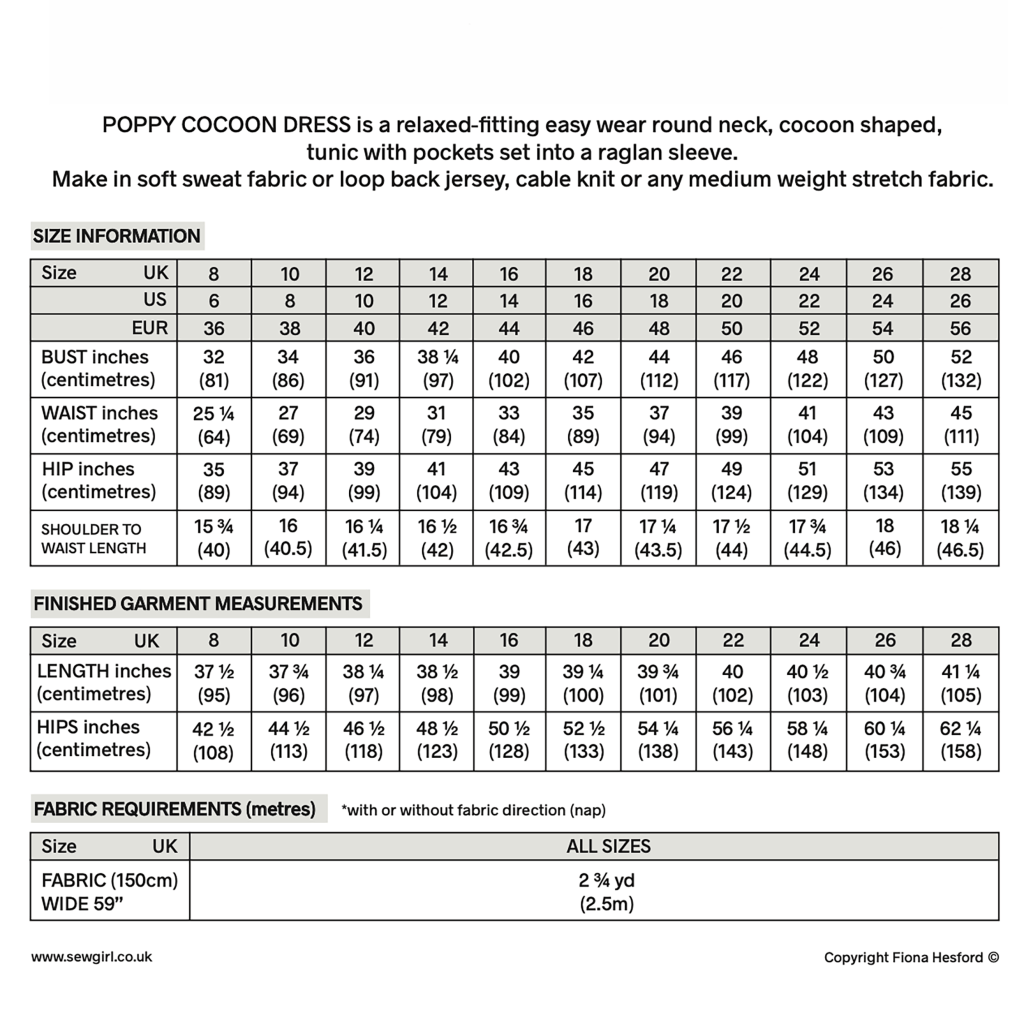
Here are size info, finished garment details and fabric requirements which are found on the reverse side of the pattern pack.
A few things to know….
Mark the notches with small 5mm nick within the seam allowance.
Seam allowance is 1cm.
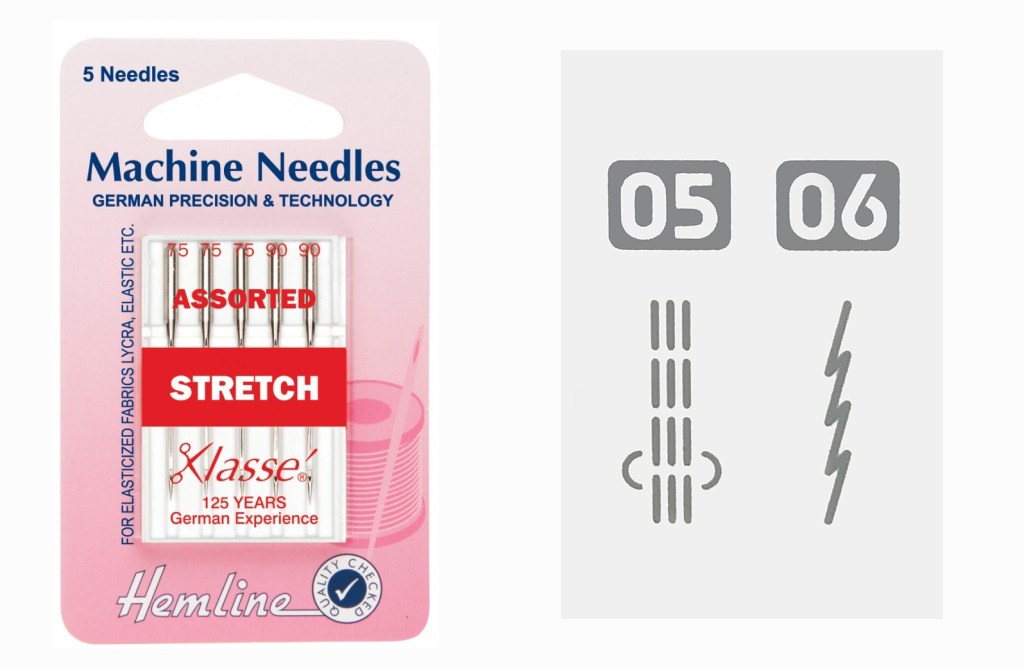
Insert a jersey needle or a in your machine and use a stretch stitch machine setting.
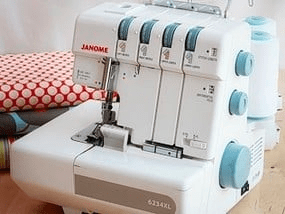
Jersey fabric doesn’t tend to fray, so either leave the edges unfinished or use an over locker to finish them.
Topstitch- a line of longer length stitching (2.8mm) on the right side of the fabric close to the seamline.
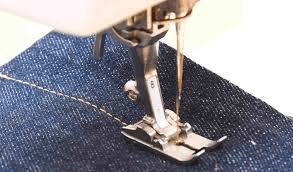
RST/WST– Right Sides Together/Wrong Sides Together.
MAKING POPPY COCOON DRESS
1JOINING THE SIDE FRONT & BACK TO THE SLEEVES
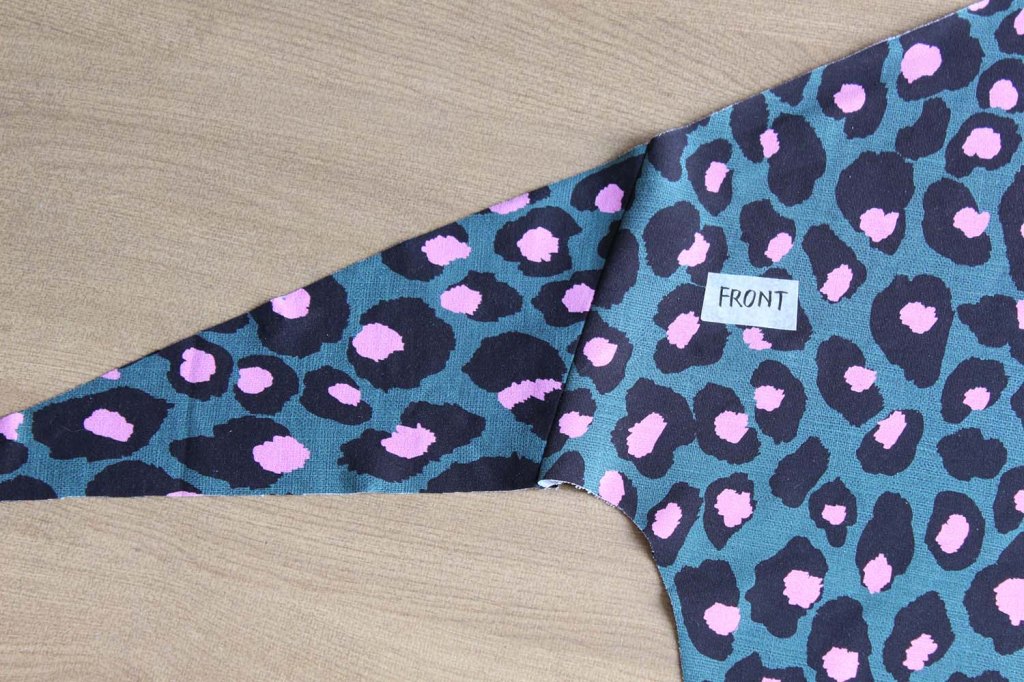
With the RST, pin the Side Front (piece 3) to the Sleeve (piece 5) front section short edge. Sew. Press away from the Sleeve with the seam allowances towards the Sleeve on the reverse side. Topstitch on the Sleeve side. By the way, see how Ive stuck some masking tape on the fabric piece indicating what it is. This is such a good trick which I use all the time, especially when pieces are so similar to each other.
Repeat for the other Side Front and Sleeve front section.
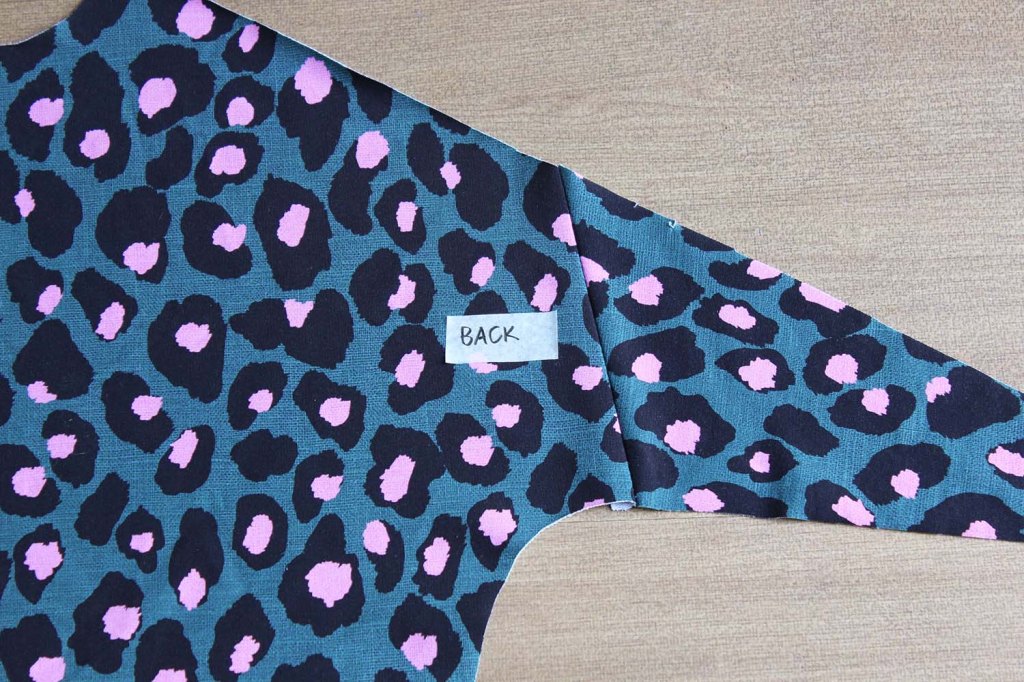
With the RST, pin the Side Back (piece 4) to the Sleeve Back section short edge. Sew. Press away from the Sleeve with the seam allowances towards the Sleeve on the reverse side. Topstitch on the Sleeve side.
Repeat for the other Side Front and Sleeve front section.
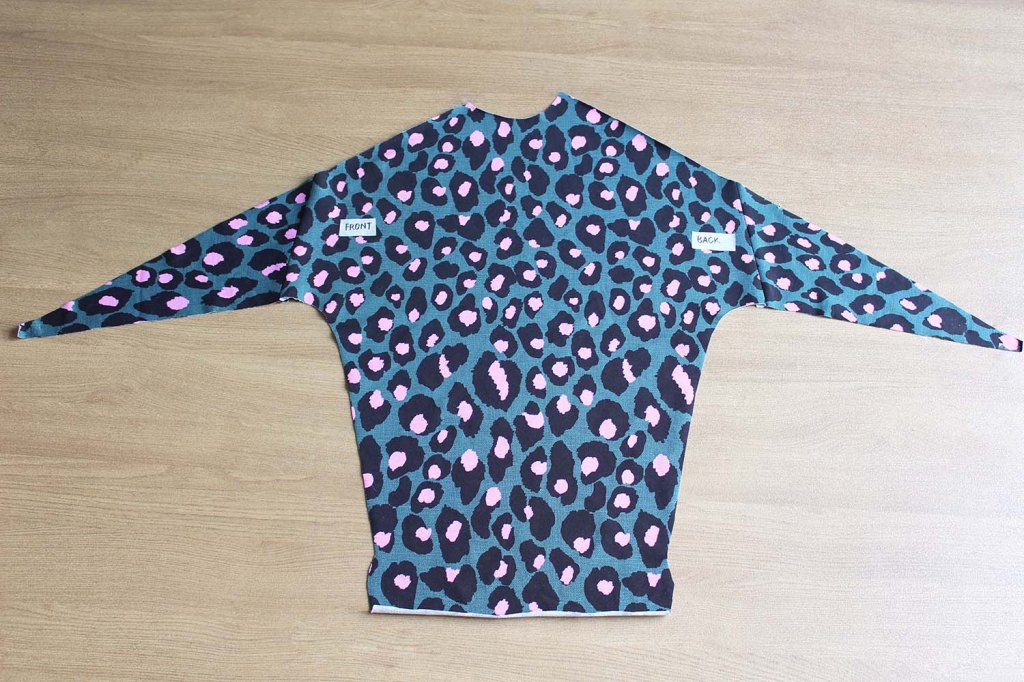
Both Sleeves now have both Side Front and Side Back pieces attached.
POCKETS
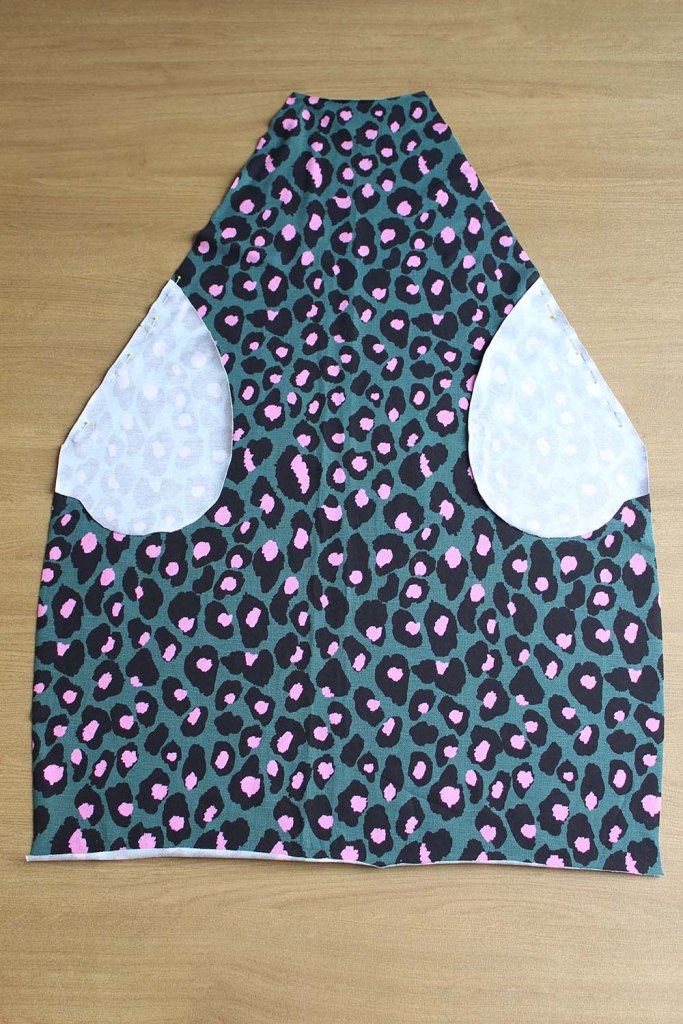
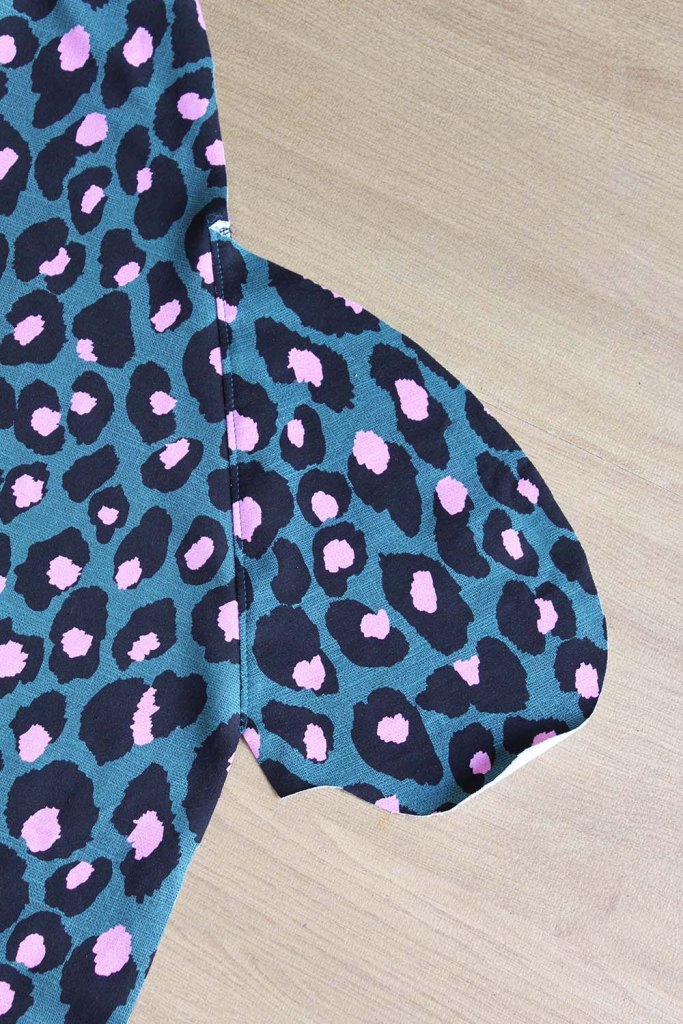
With the RST, pin one Pocket (piece 6) at each side of the Front slanted edges, aligning the notches. Sew. Press the seam allowance towards the Pocket on the reverse side. Topstitch on the Pocket side.
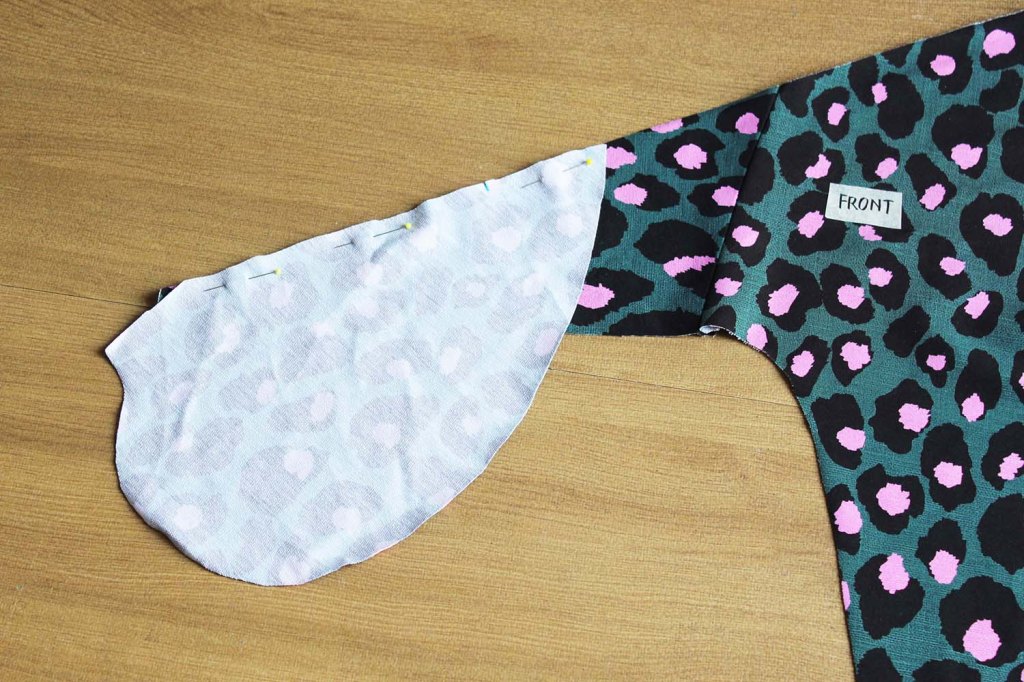
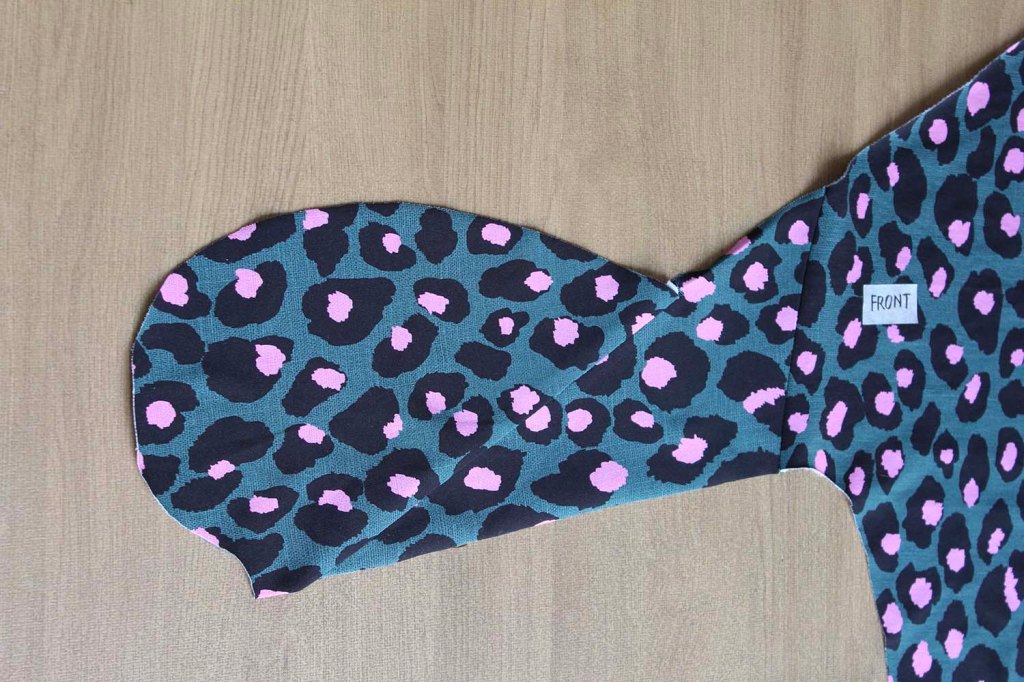
With the RST, pin one Pocket to the Side Front/Sleeve piece, aligning the notches. Sew. Press the Pocket away from the Side Front. Topstitch on the Pocket side.
Repeat for the remaining Pocket and Side Front piece.
Both Sleeve pieces now have both Side Front (with Pocket piece) and Side Back attached.
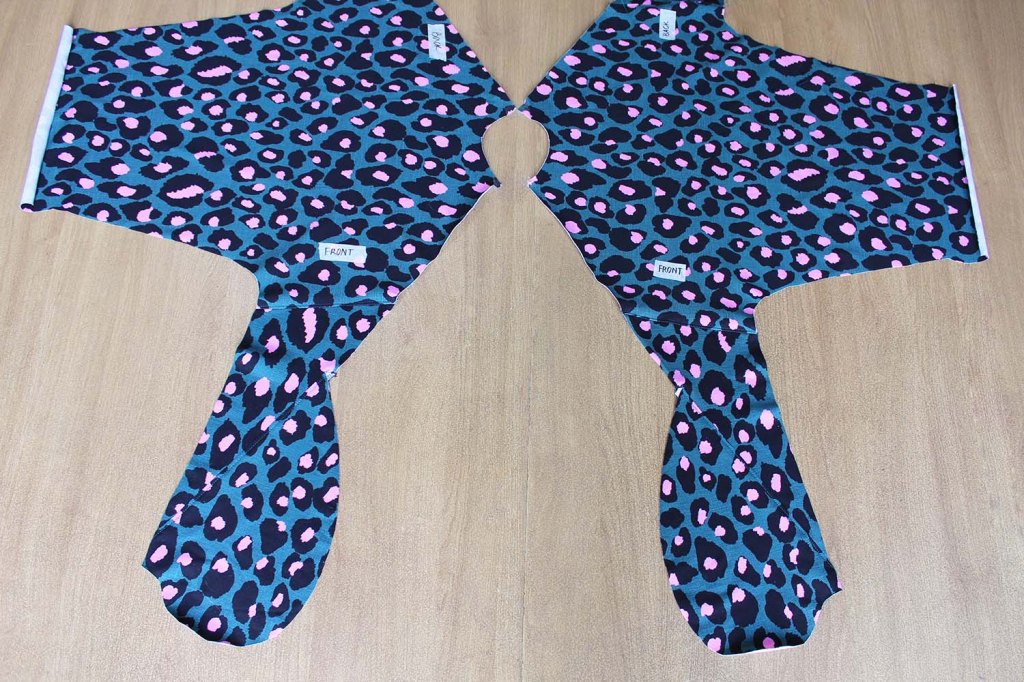
SLEEVES
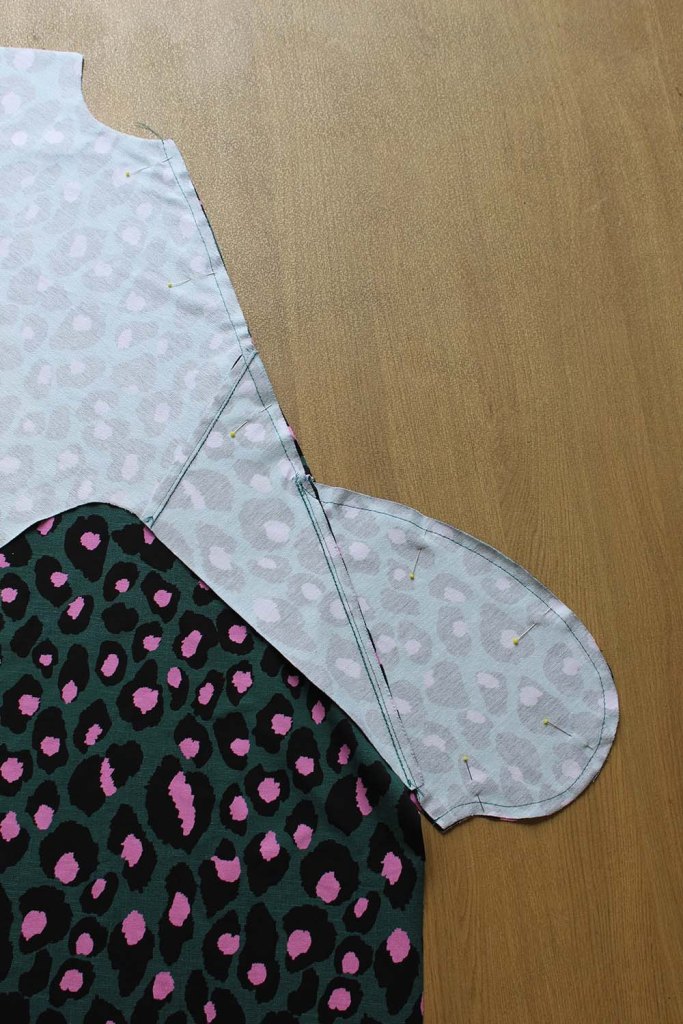
With the RST, pin the Front to the Sleeve front section at the slanted edge, aligning the Pocket outer raw edges. Sew. Press the Sleeve away from the Front with the seam allowances pressed towards the front on the reverse side.
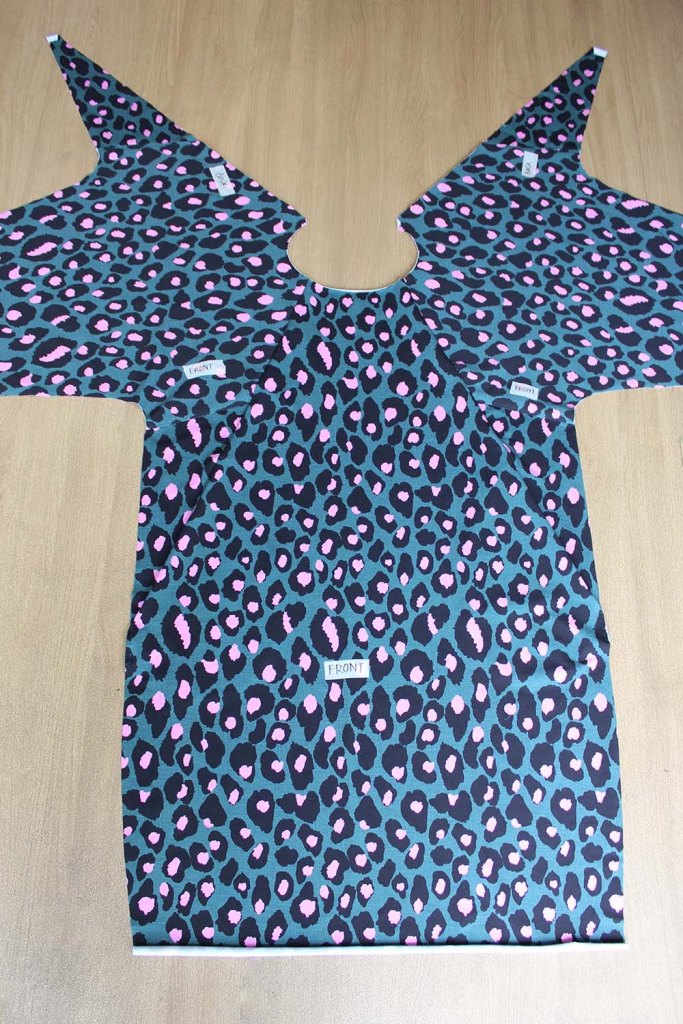
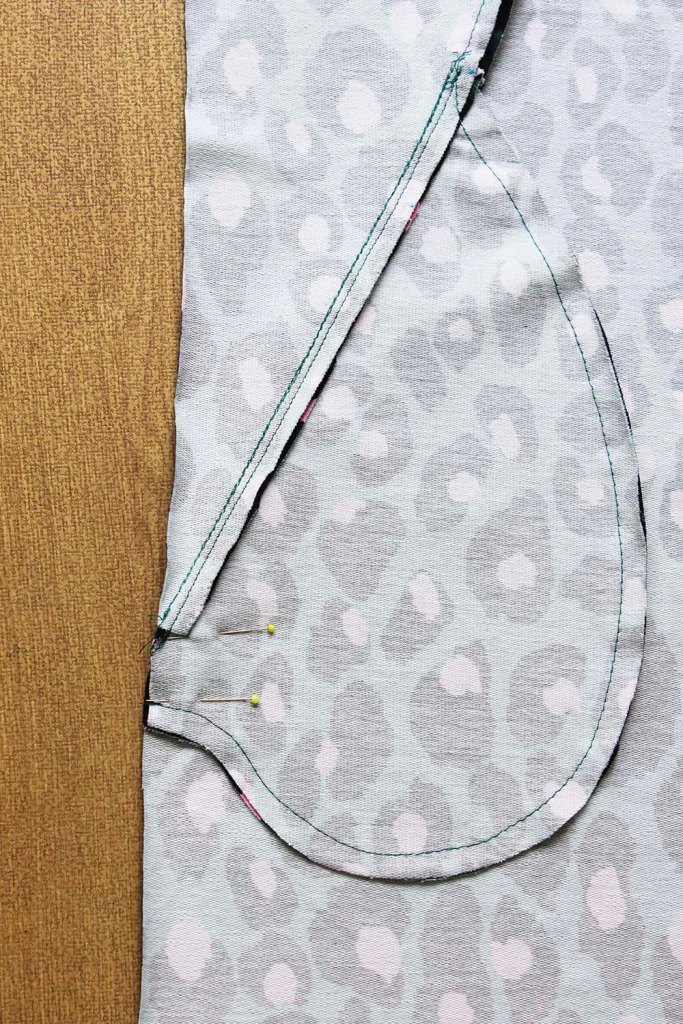
On the wrong side, press the Pockets towards the Front. Match the Pocket short raw side edges to the Front side edge. Pin. Machine tack within the seam allowance.
JOINING THE FRONT AND BACK
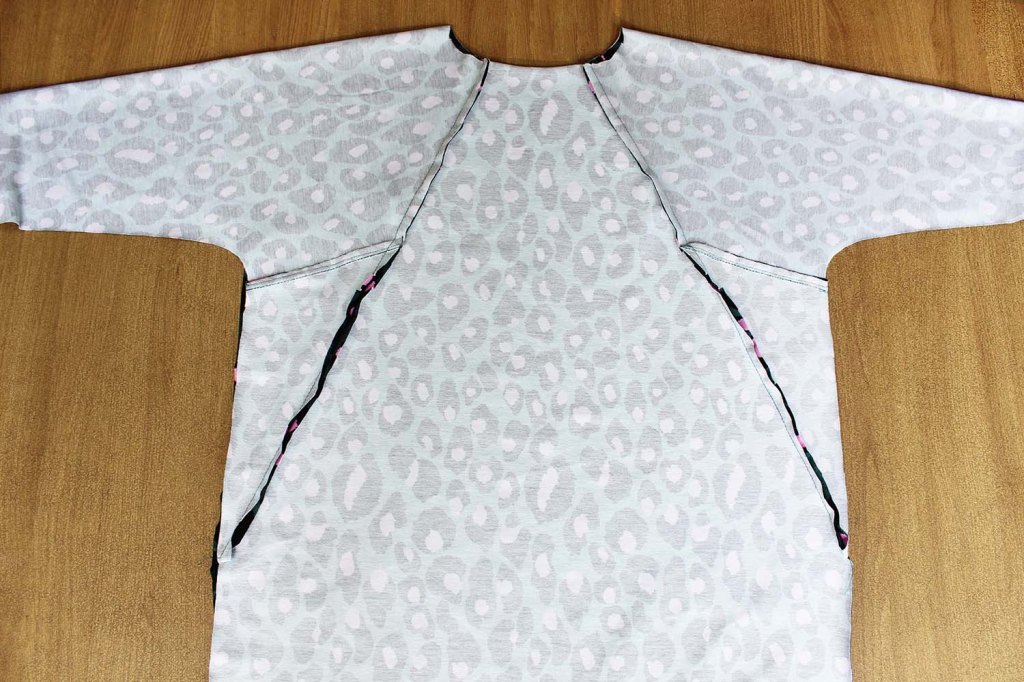
With the RST, pin the Back to the Back Sleeve at the long slanted raw edges each side, aligning the notches. Sew. Press the seam allowances towards the Back.
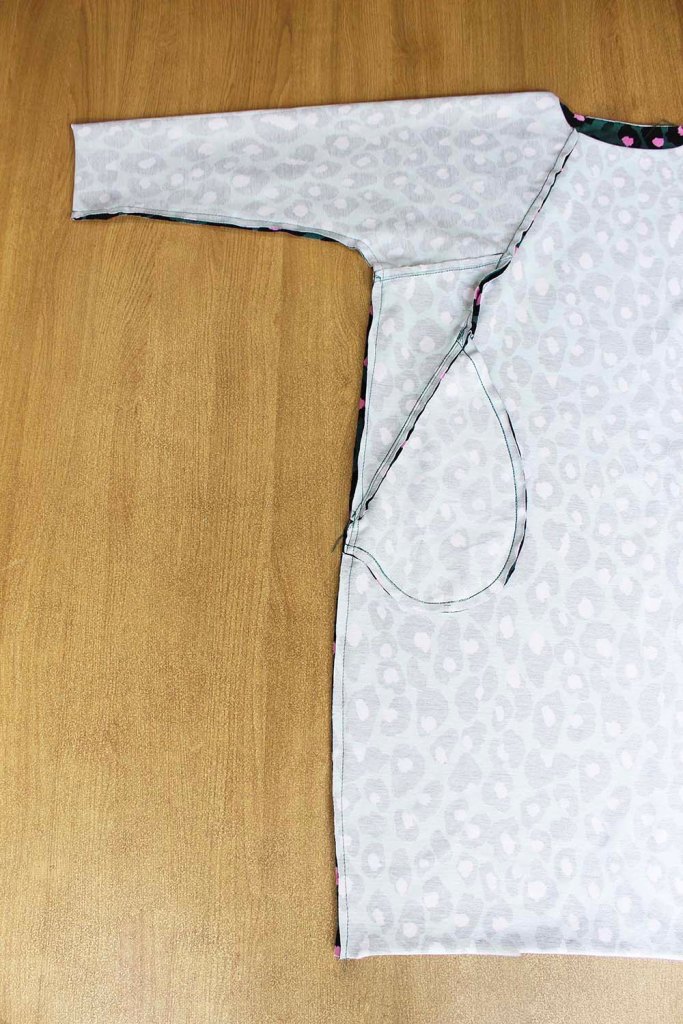
With the RST, pin the Front to the Back at the side edges from the lower hem to the cuff edge, aligning the underarm sleeve cross seams. Sew. Press.
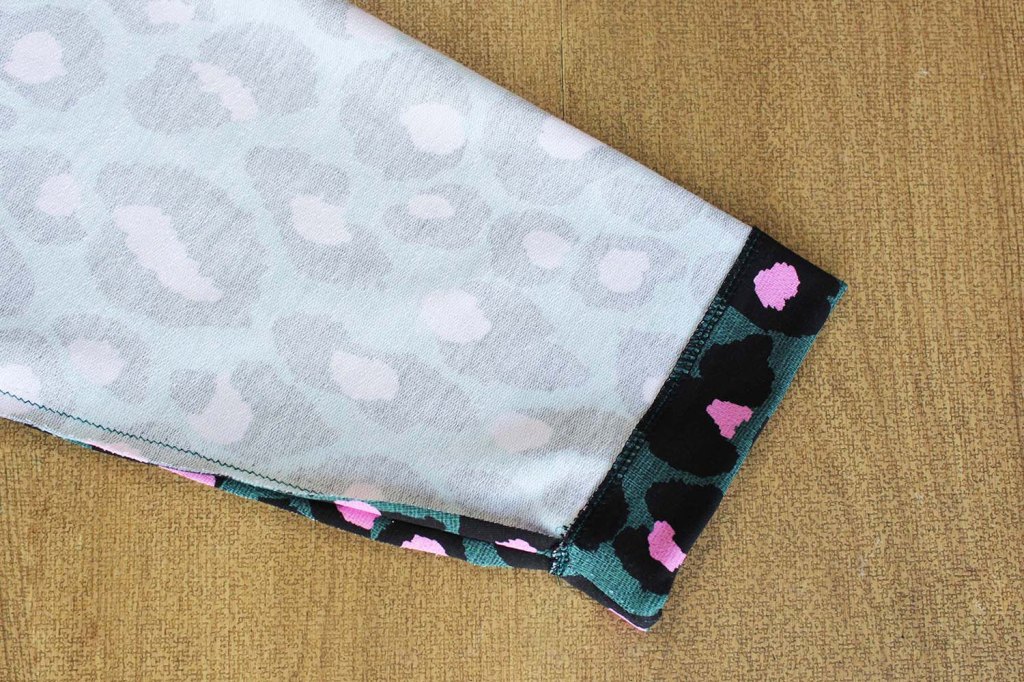
Fold 1cm at the cuff, then fold over 3cm. Stitch all around. Press.
With the dress right side outermost, fold back the cuffs 2cm each side.
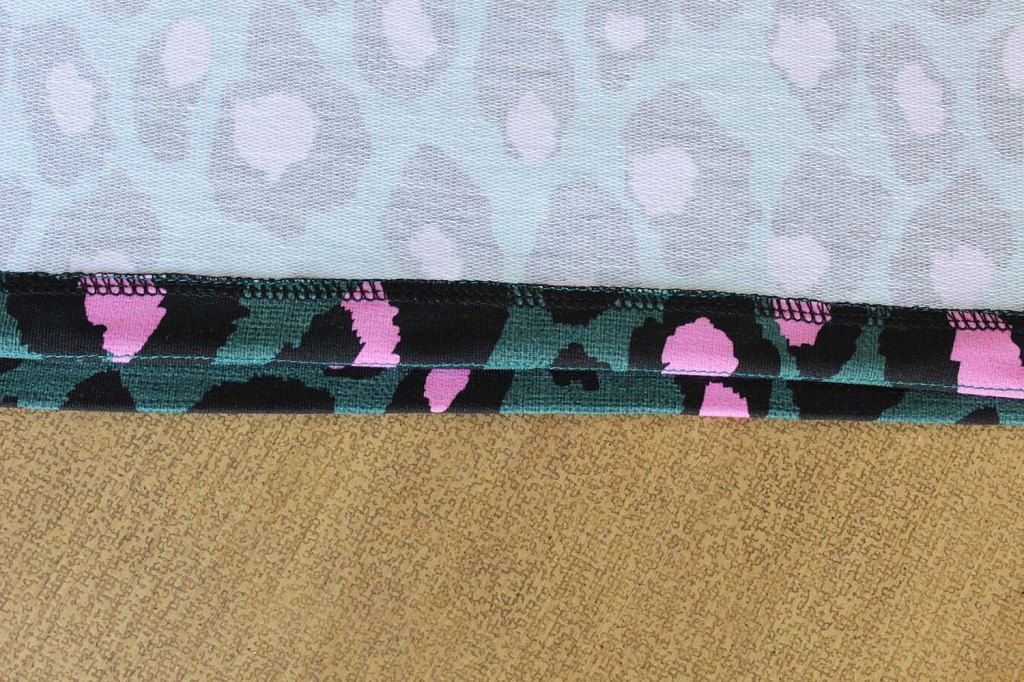
Make a 2cm hem fold at the lower edge of the dress or as required length. Sew all around. Press.
NECKBAND BINDING
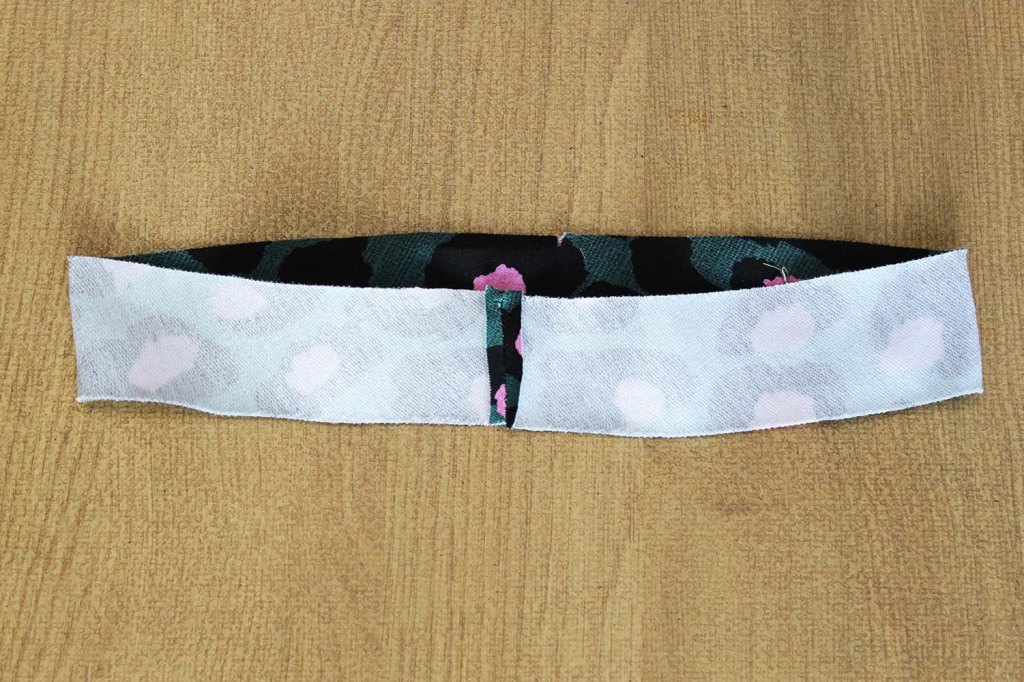
With the RST, join the Neckband (piece 7) at the short sides to make a ring. Trim the seam allowance to 5mm.
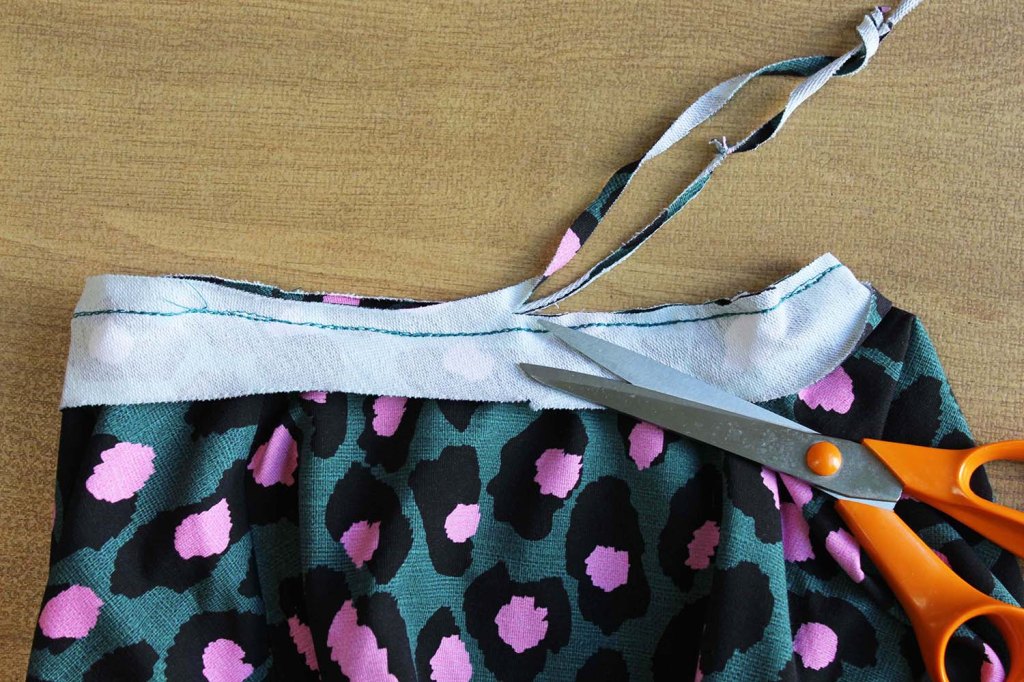
With the RST, pin one Neckband raw edge to the neck all around, aligning the seam to the centre back. Sew.
Trim the seam allowance to 5mm. Press the band away from the dress.
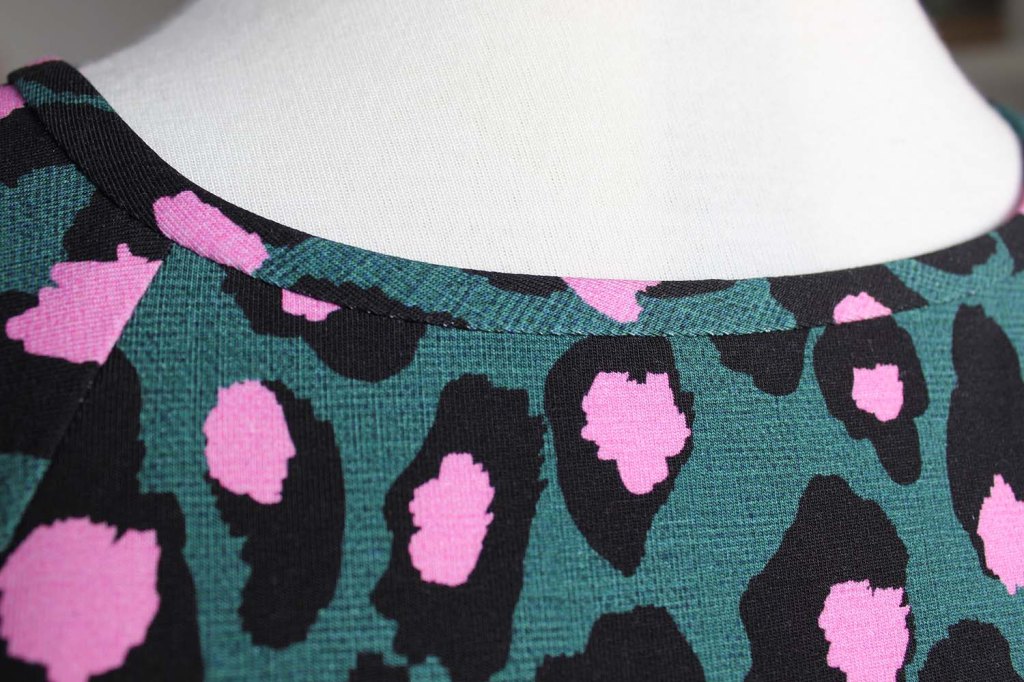
Press under 1cm at the Neckband outer raw edge. Fold the Neckband over, to the wrong side, encasing the raw edges. Pin. Hand stitch all around to secure.
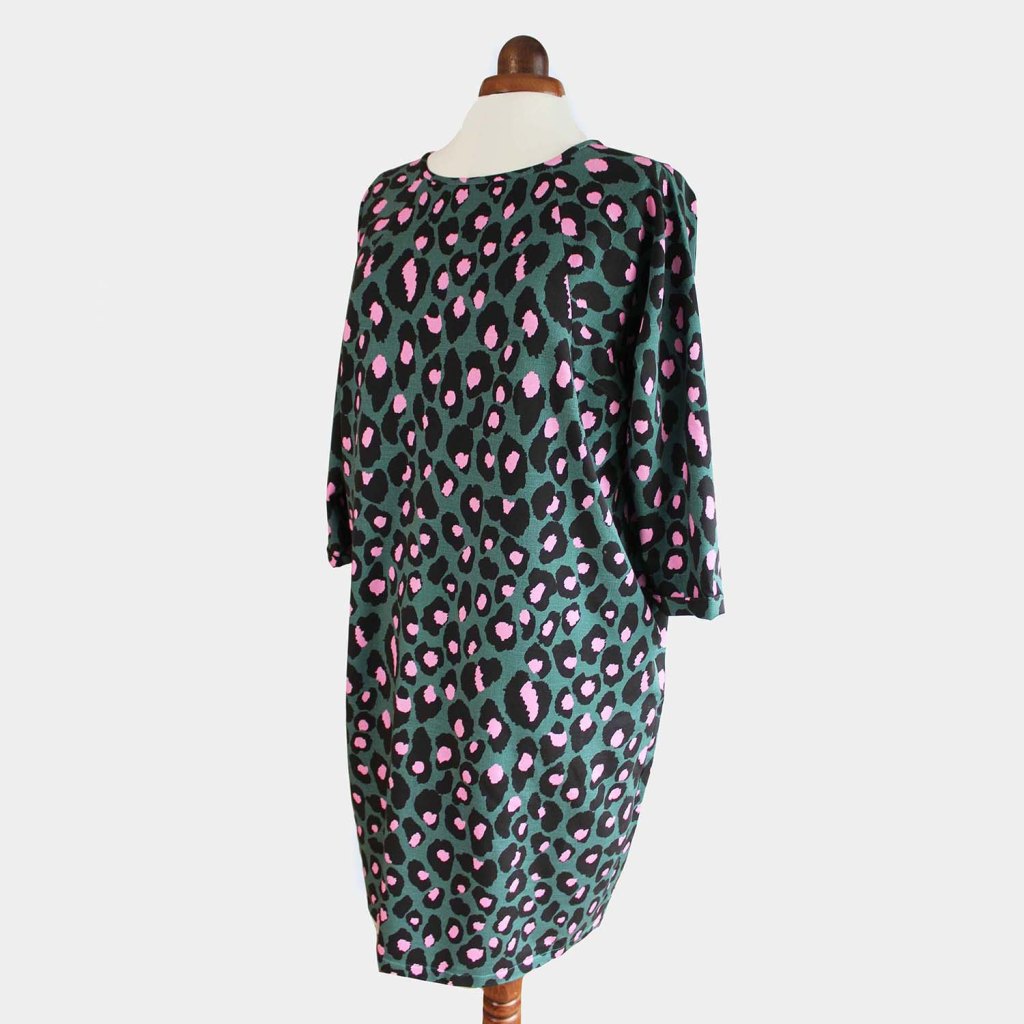
Ta dah! There you have one lovely cocoon dress.
All images and text are copyrighted by Fiona Hesford T/a Sewgirl.
Please ask prior permission if you would like to use any content.
VALERIE SHIFT DRESS WITH OBI BELT
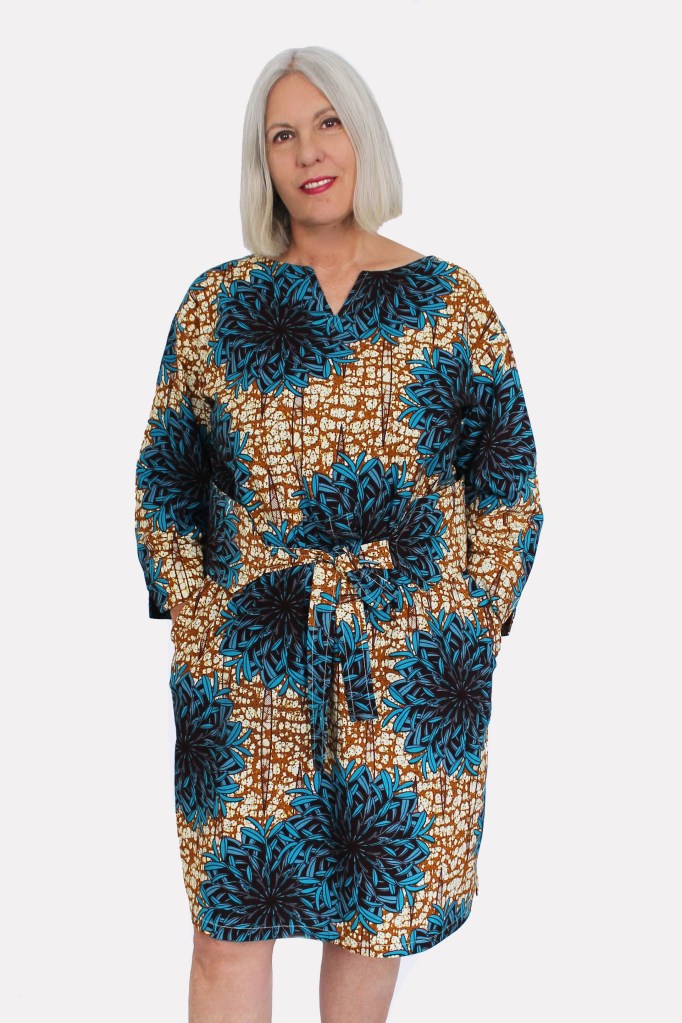

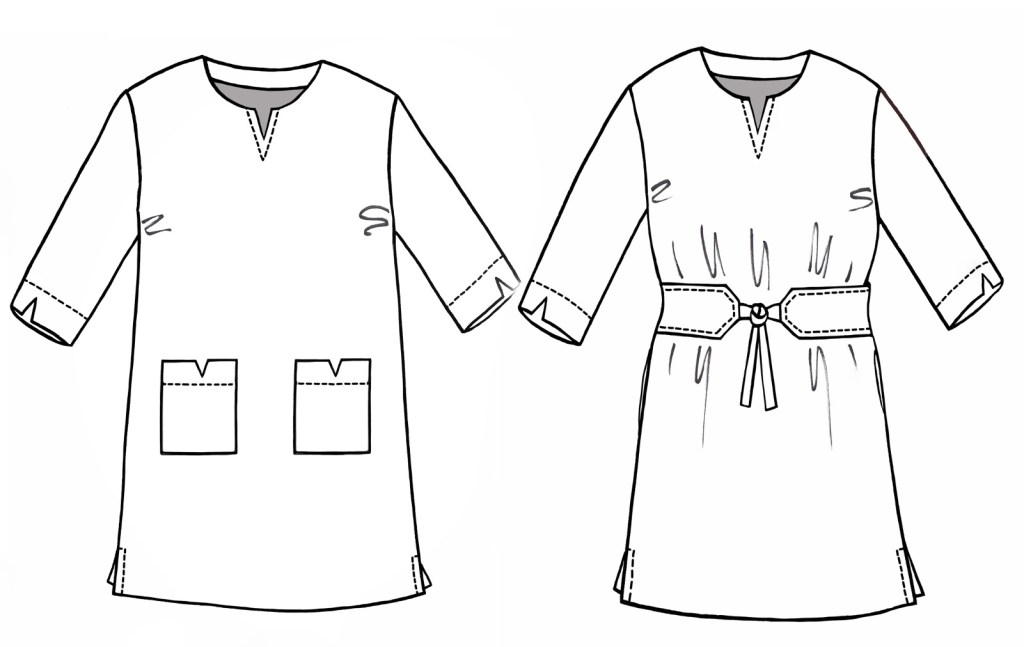
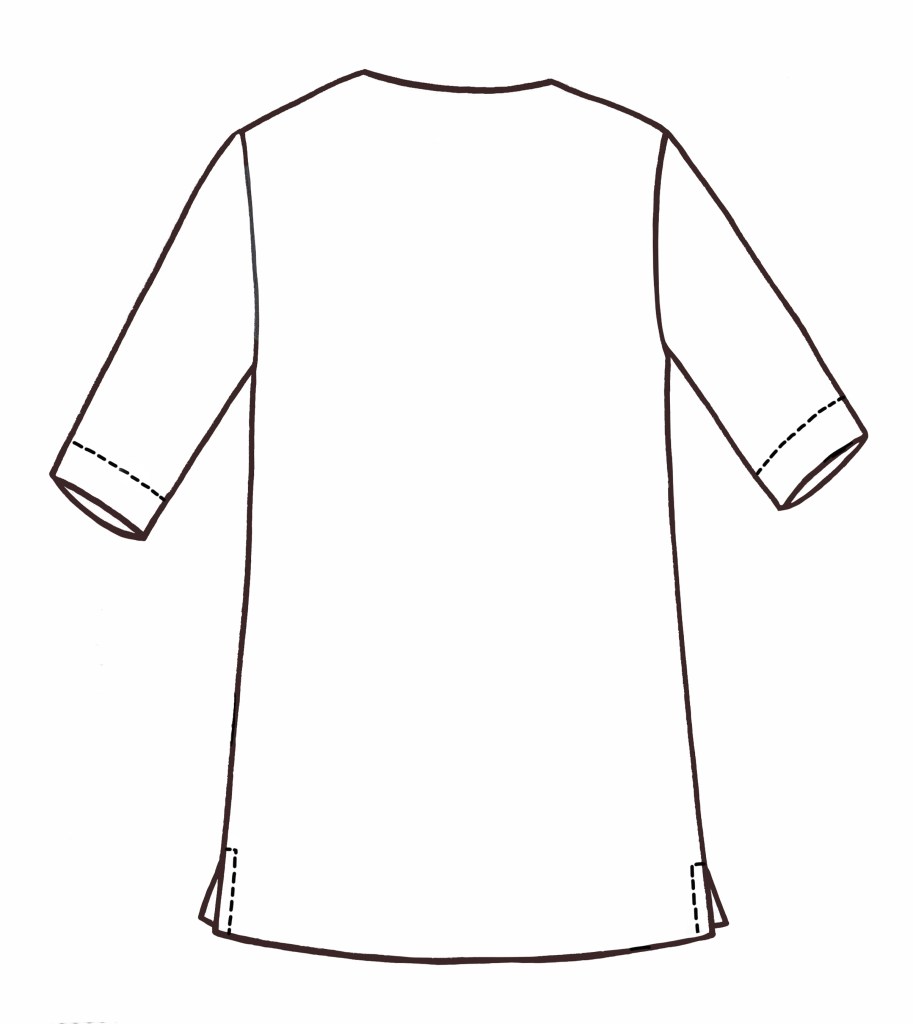
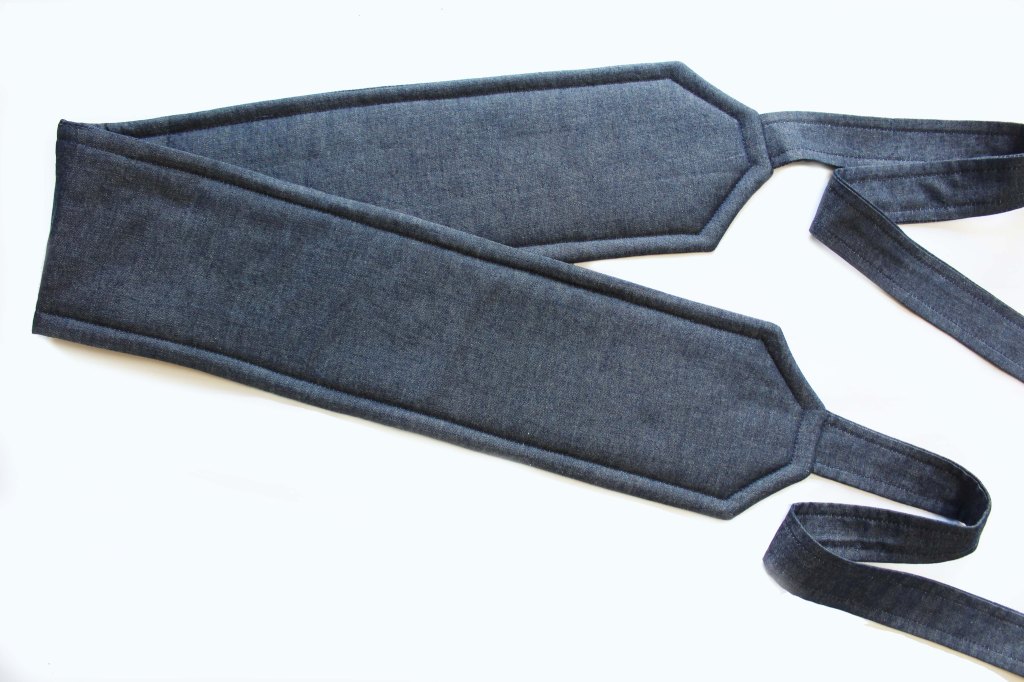
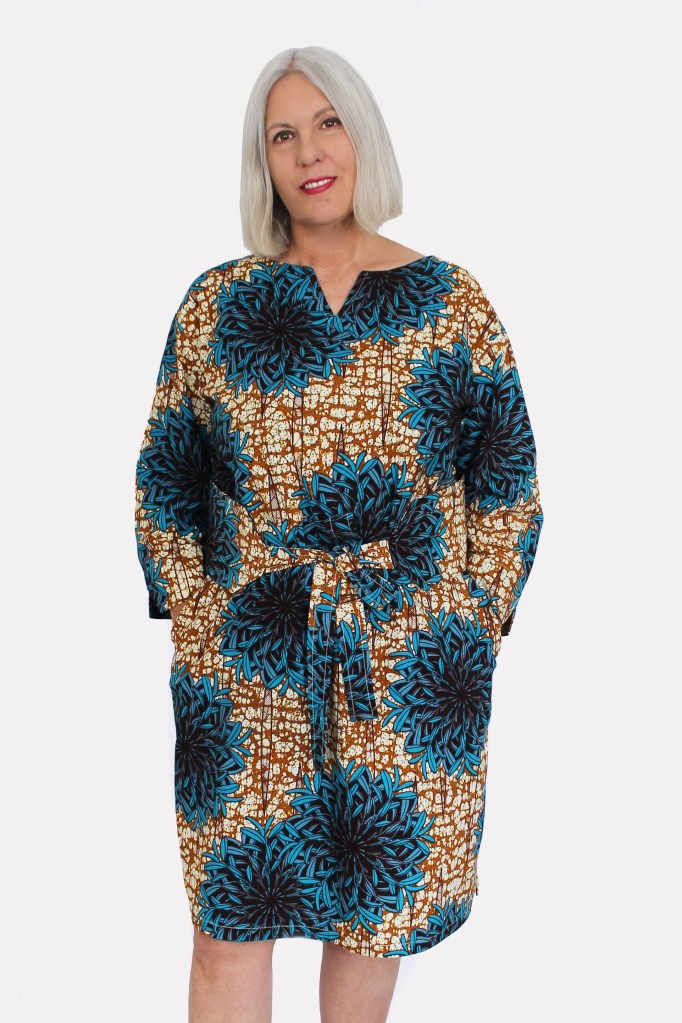
Valerie shift dress is a relaxed fit, beginners pattern, suitable for all seasons. A simple, pop over the head style, with no darts, three quarter length sleeves (short sleeve template is also available to download), a choice of two styles of pockets (patch or side) and an optional Obi belt.
A small V detail at the neck, cuffs and patch pocket edges, gives a modern twist.
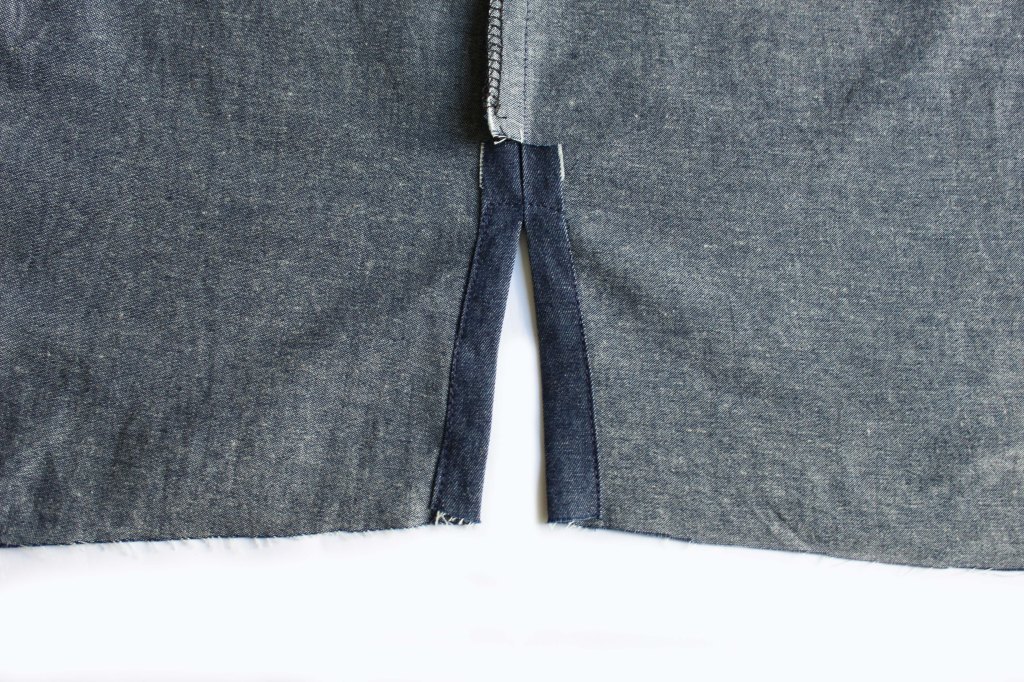
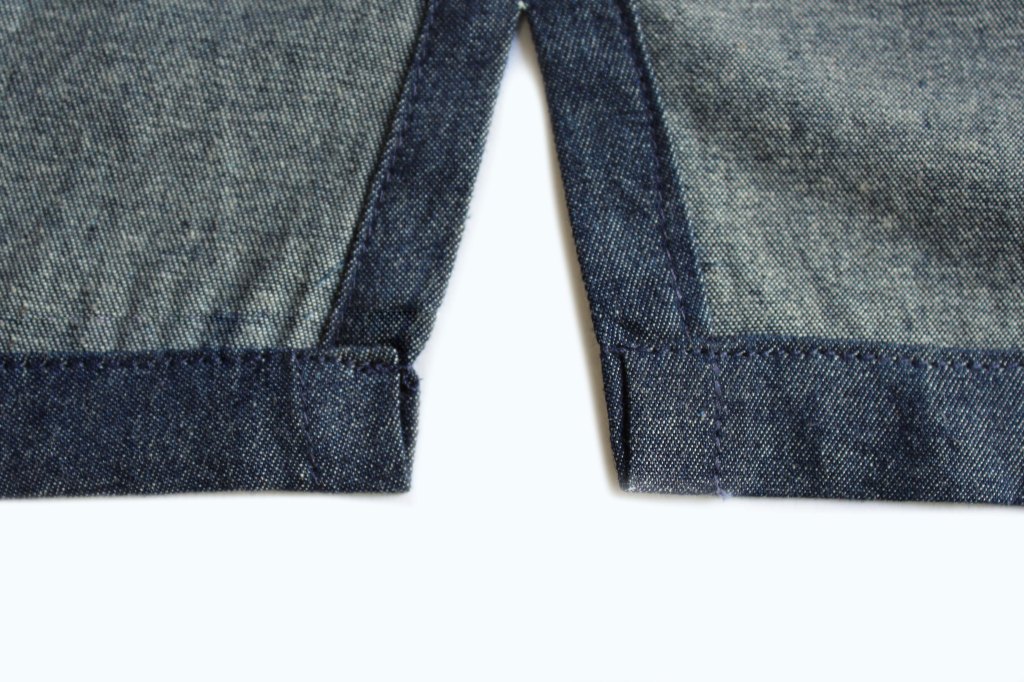
The dress length is designed to extend to just below the knee, with a small slit at each side hem. I designed this shift dress to be an easy project, to make in a variety of fabrics and a comfortable garment, suitable to wear everyday.
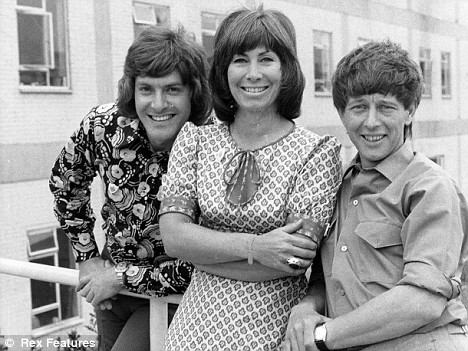
This shift dress pattern was inspired by my childhood TV hero, Valerie Singleton, star of BBC’s ‘Blue Peter ‘ during the 60’s and 70’s. She is a British national treasure and inspiration behind this design.
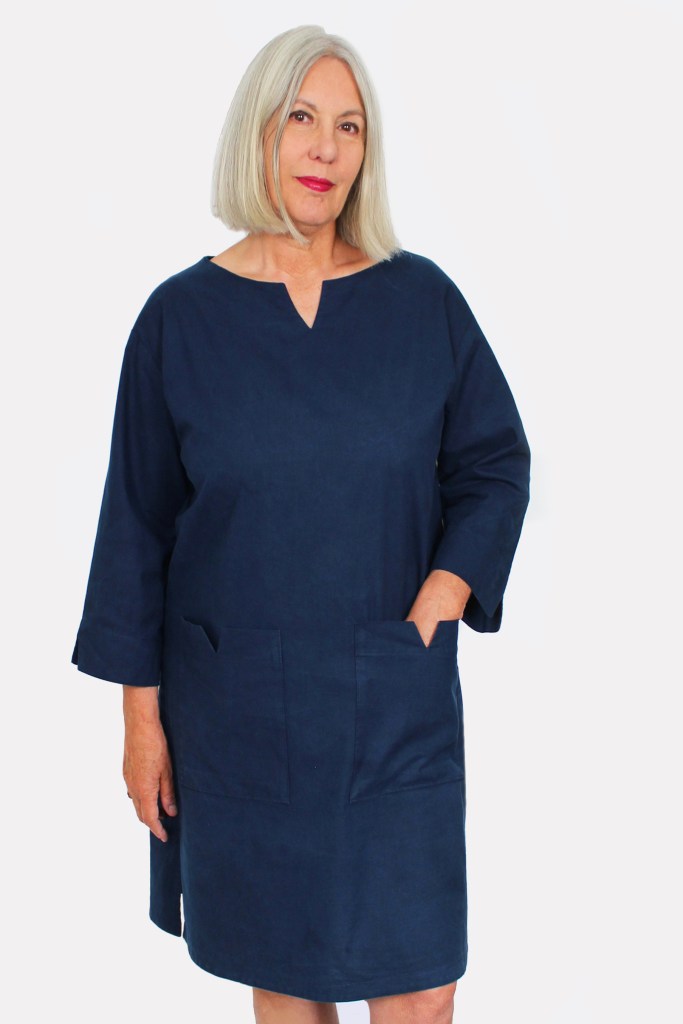
Suitable fabrics to make Valerie- medium weight cotton, denim, poplin, linen, linen /cotton, or needlecord.
EMBROIDERY DESIGN ADD-ON
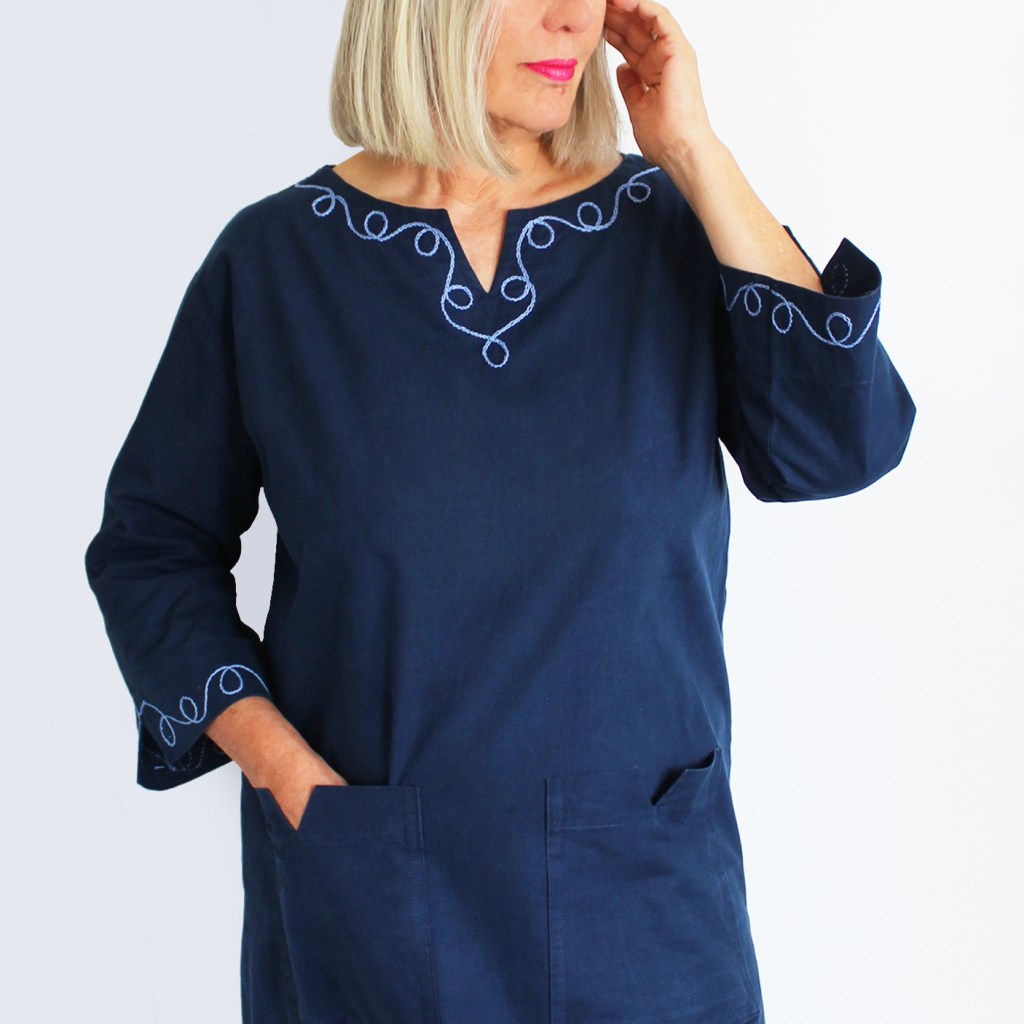
Why not add some embroidery to your shift with this simple chain stitch design around the neckline and cuffs. You can download the design here. Important: Ensure your print settings are at scale 100%. Check the test square before printing off all 3 x A4 pages.
SHORT SLEEVE TEMPLATE ADD-ON
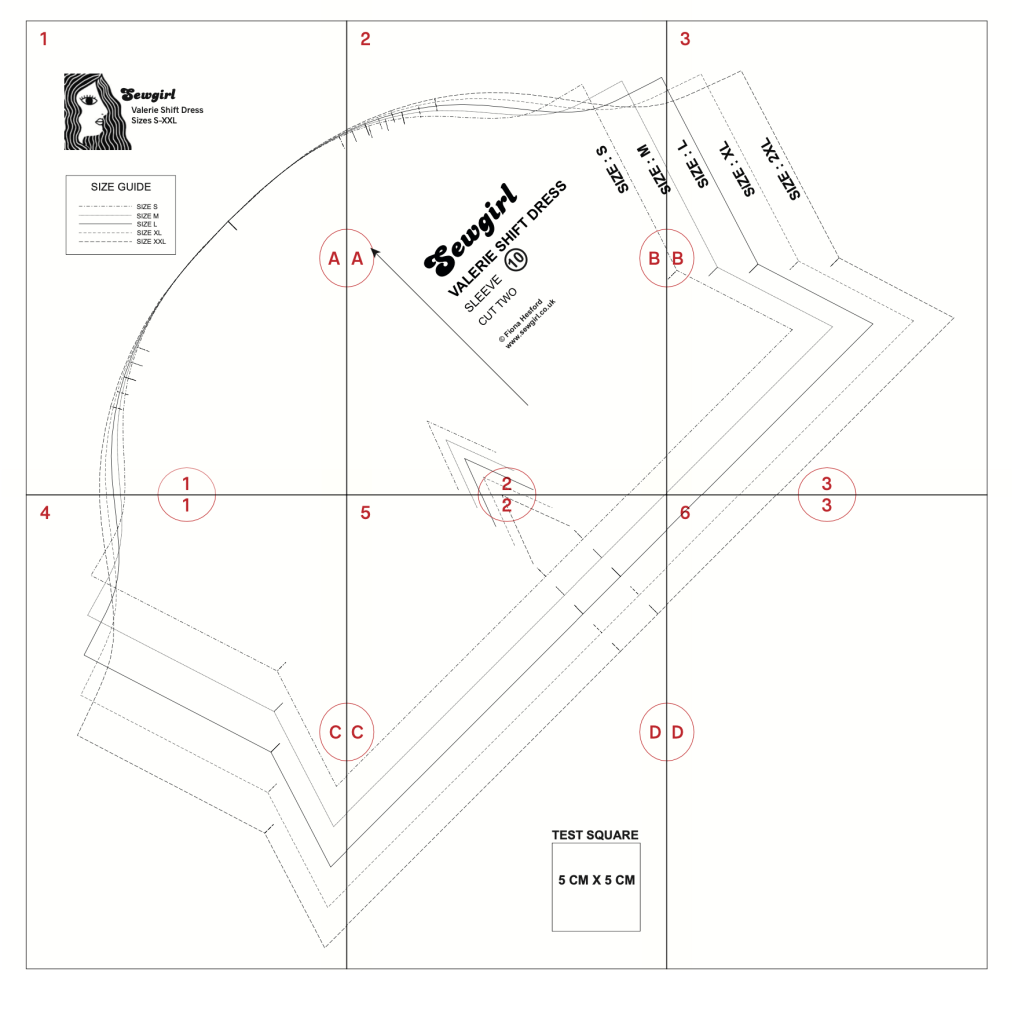
You can also download a free short sleeve template here. Just print off the 6 pages on a home printer on to A4 size paper, cut out the rectangles and stick them together to make a short sleeve piece.
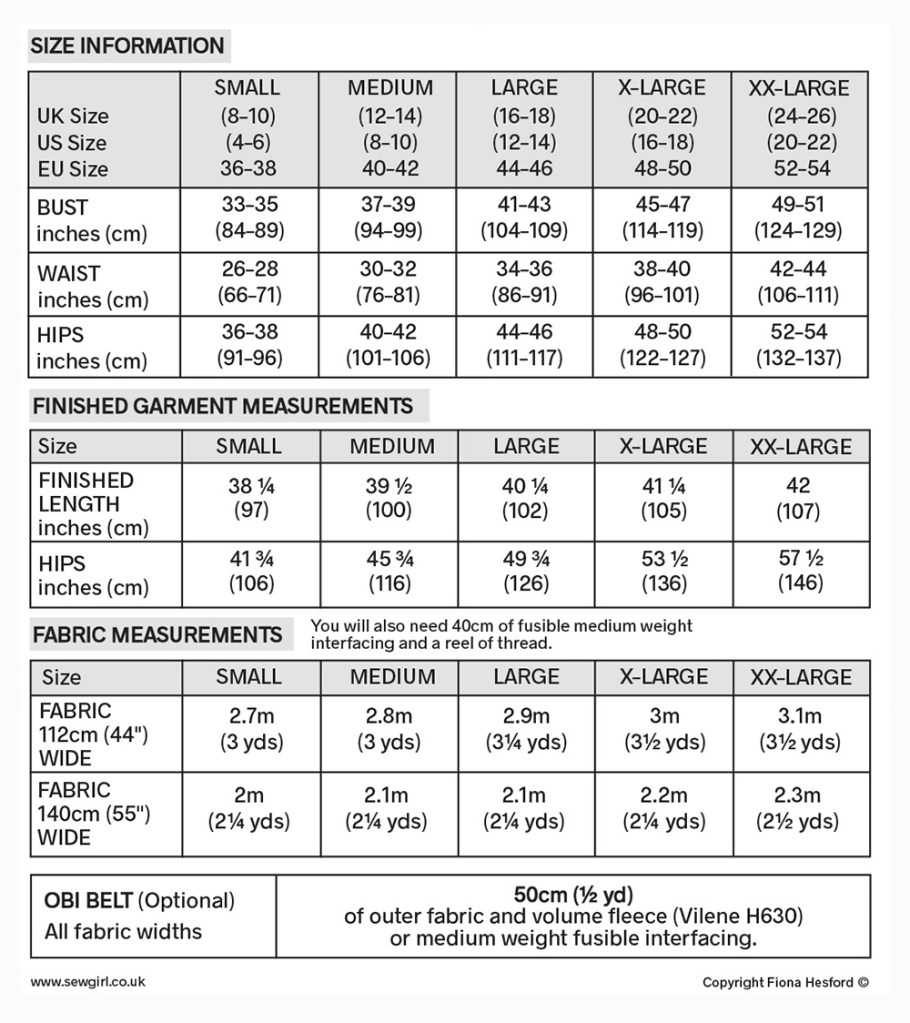
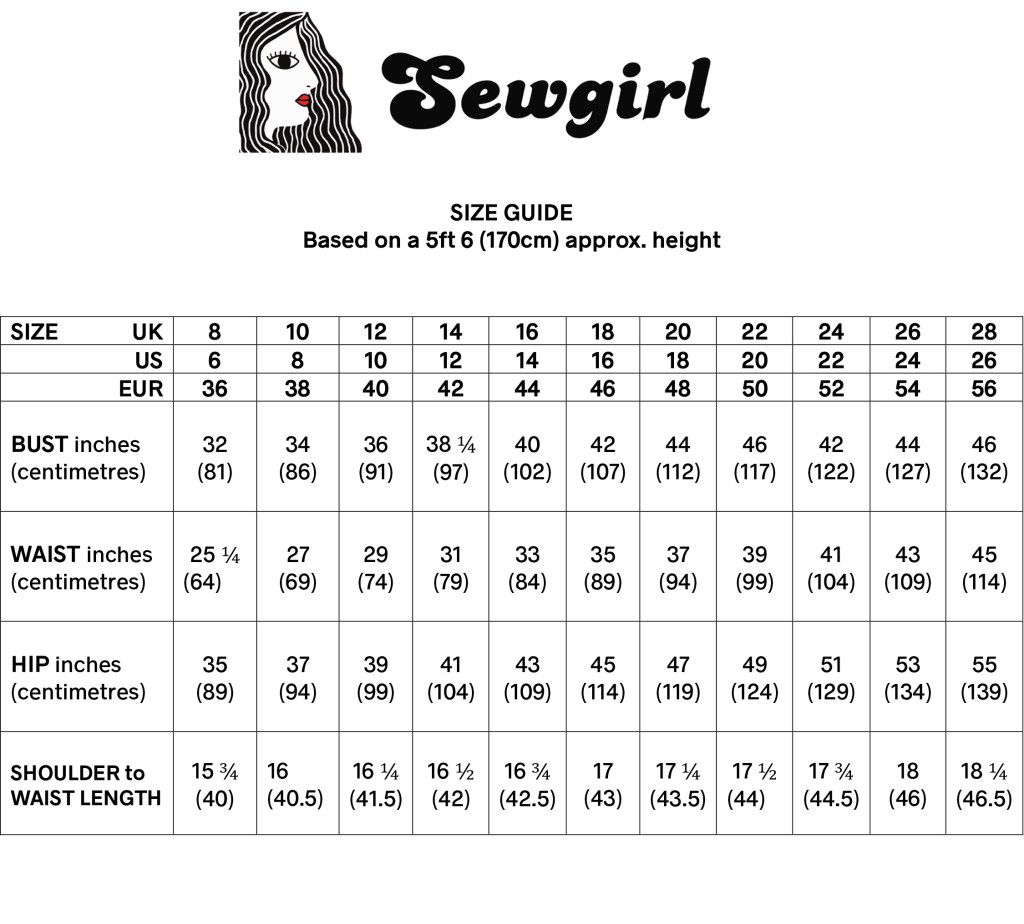
SIZE GUIDE/ FINISHED GARMENT/FABRIC REQUIREMENTS
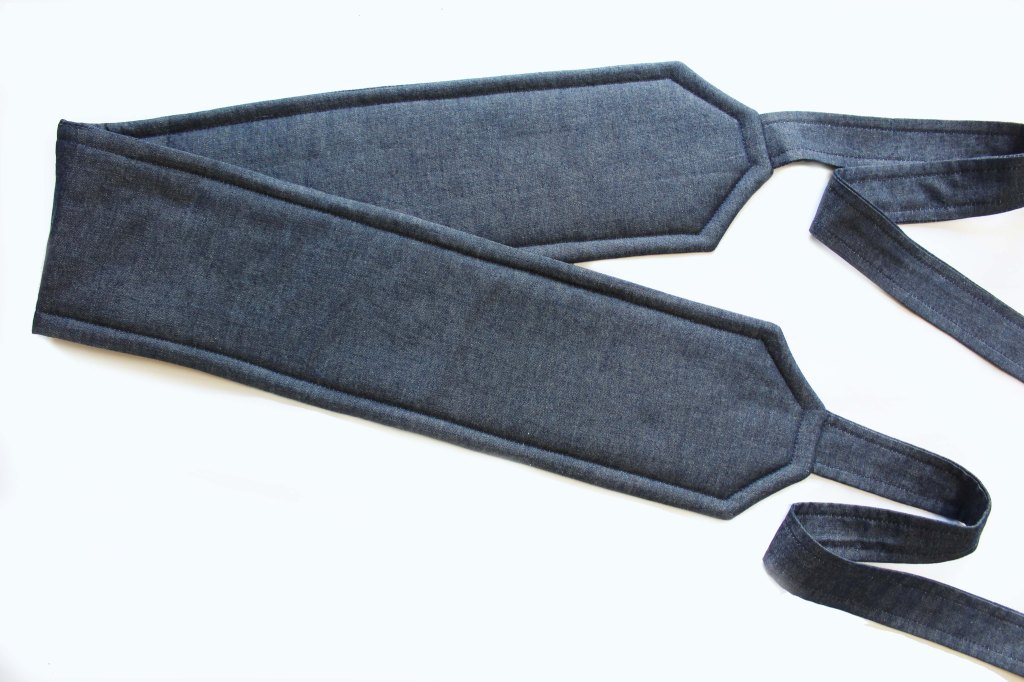
Of course you don’t have to make the dress with the belt, but I have to say that if you make one lined with some fusible fleece (Vilene H630 or H640), its like someones giving you a big hug all day long!
So this is how you make the Valerie Shift. NB. This is an abridged version of the pattern instructions.
POCKETS
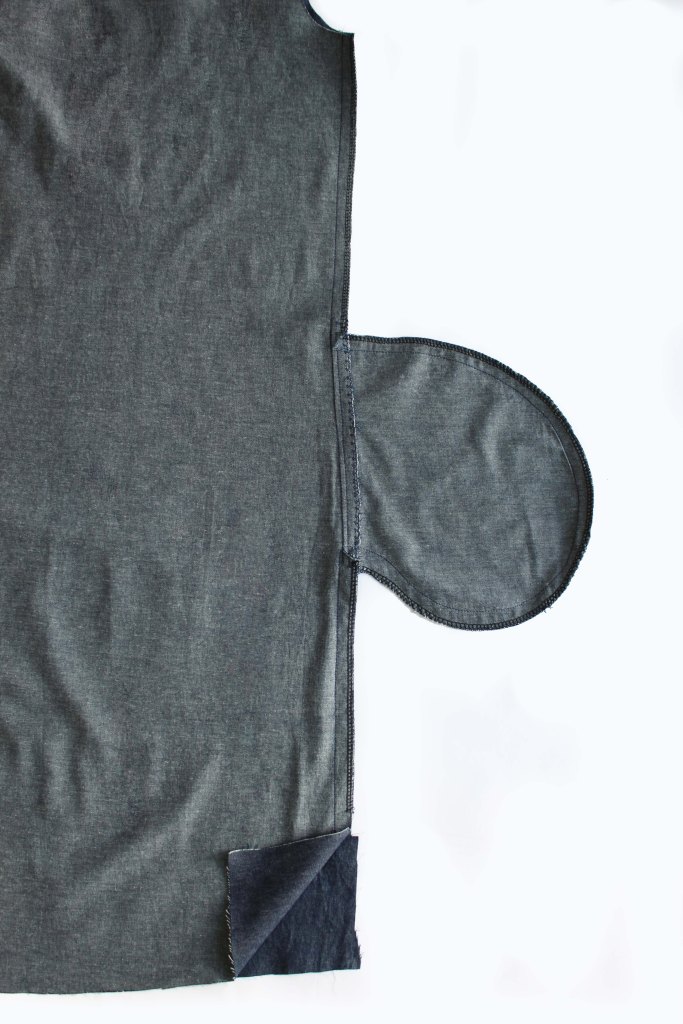
SIDE POCKETS VERSION (optional) For Patch Pocket version go to the next step.
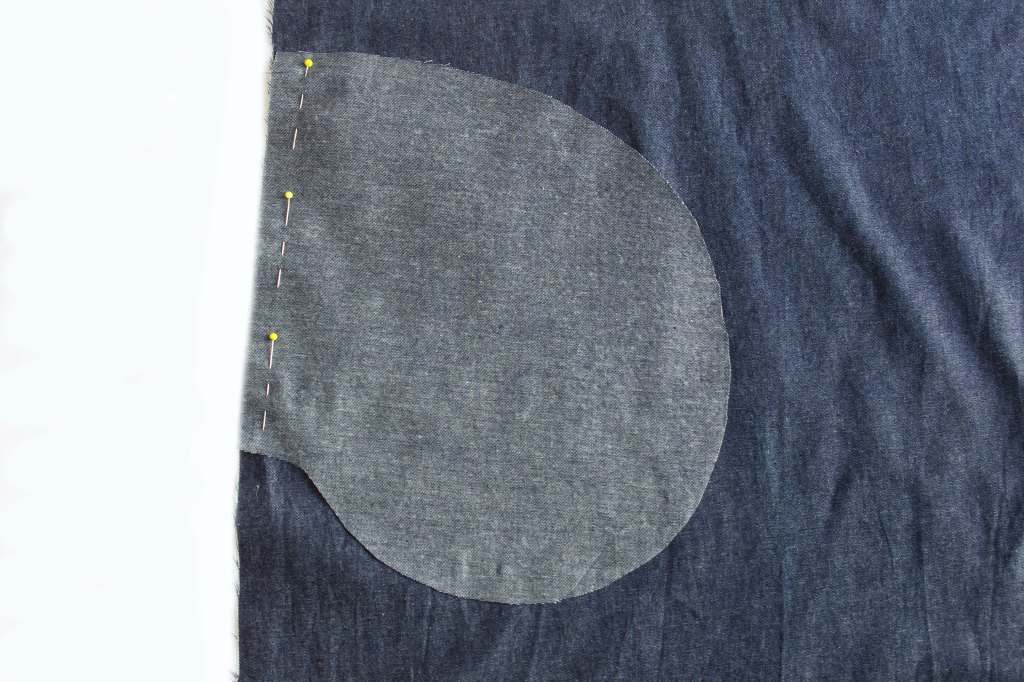
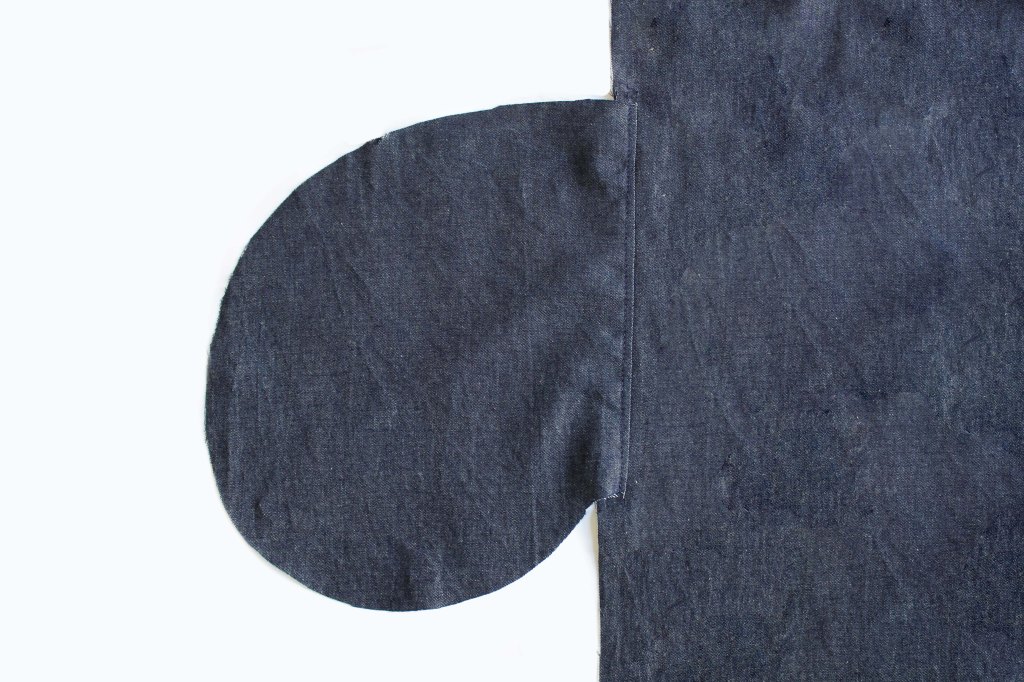
PATCH POCKETS VERSION
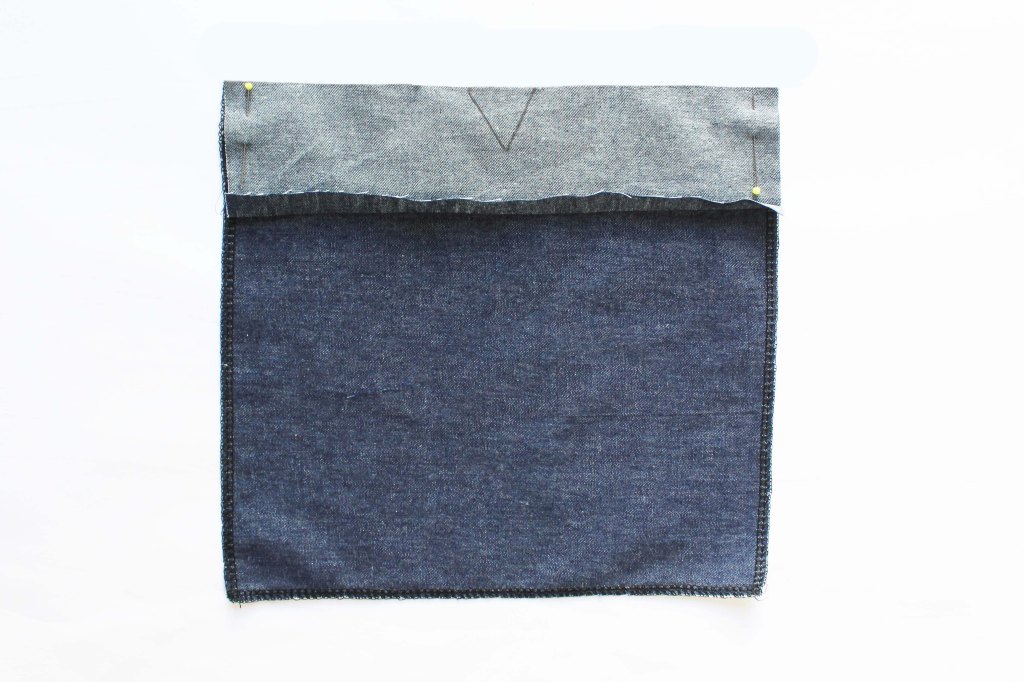
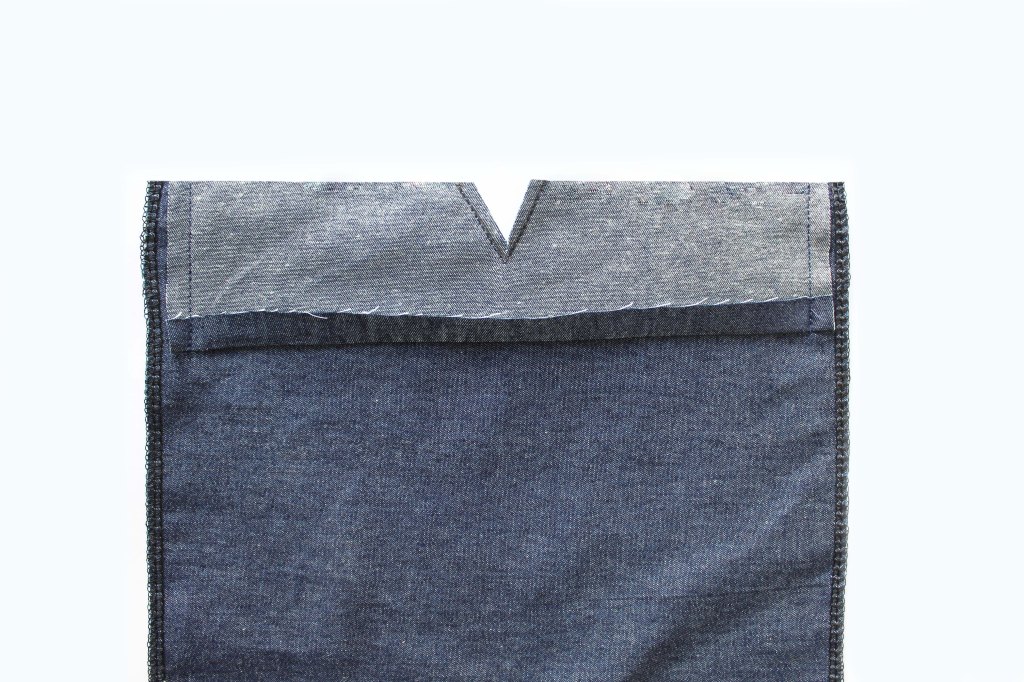
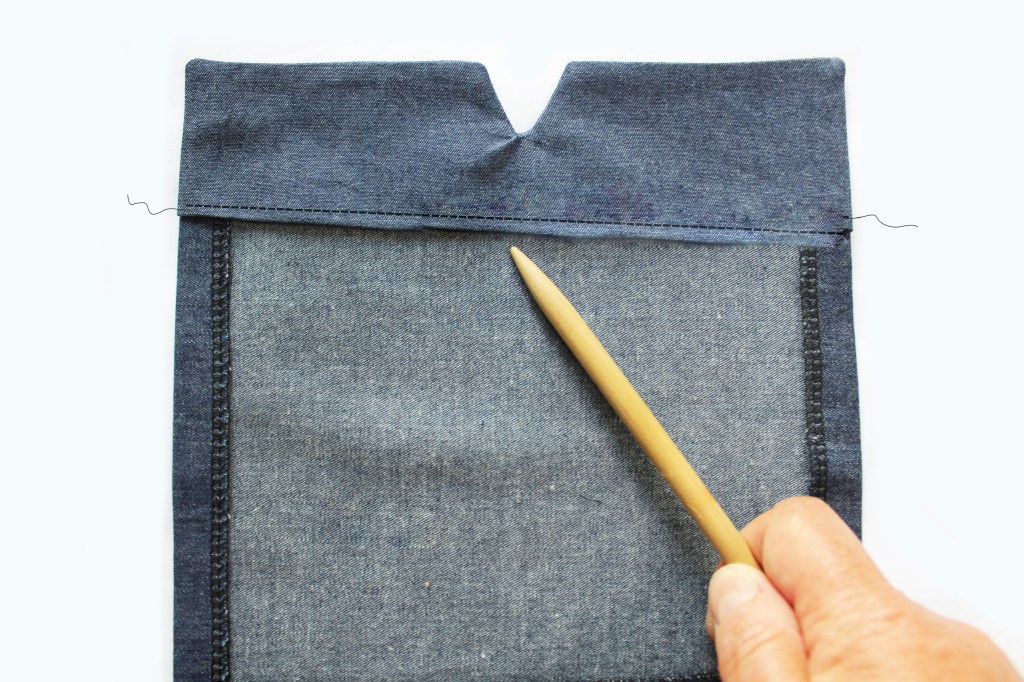
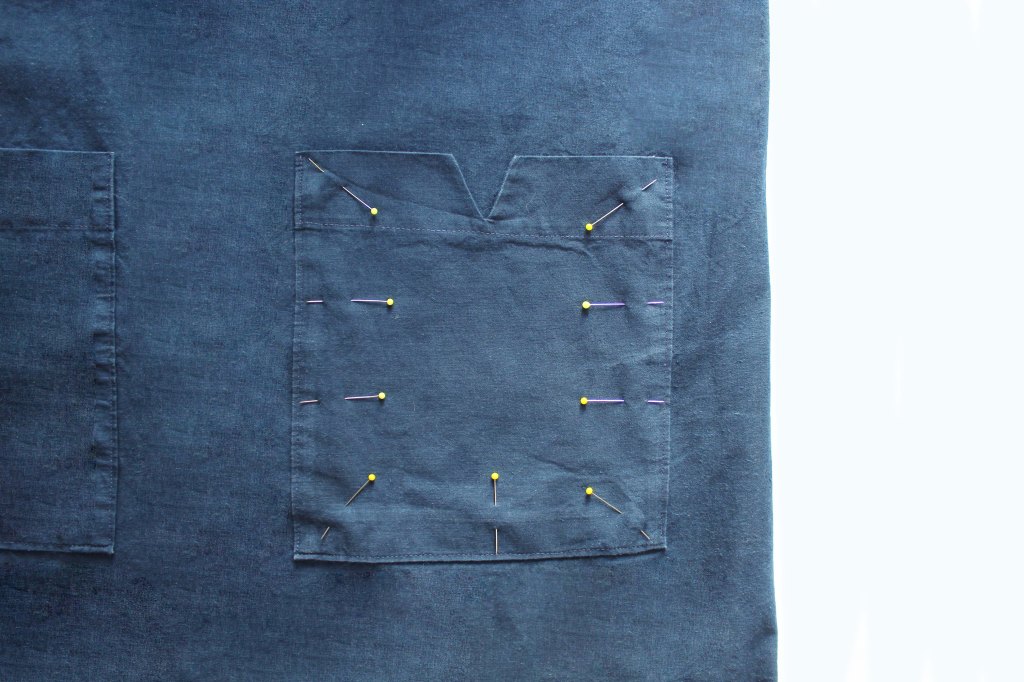
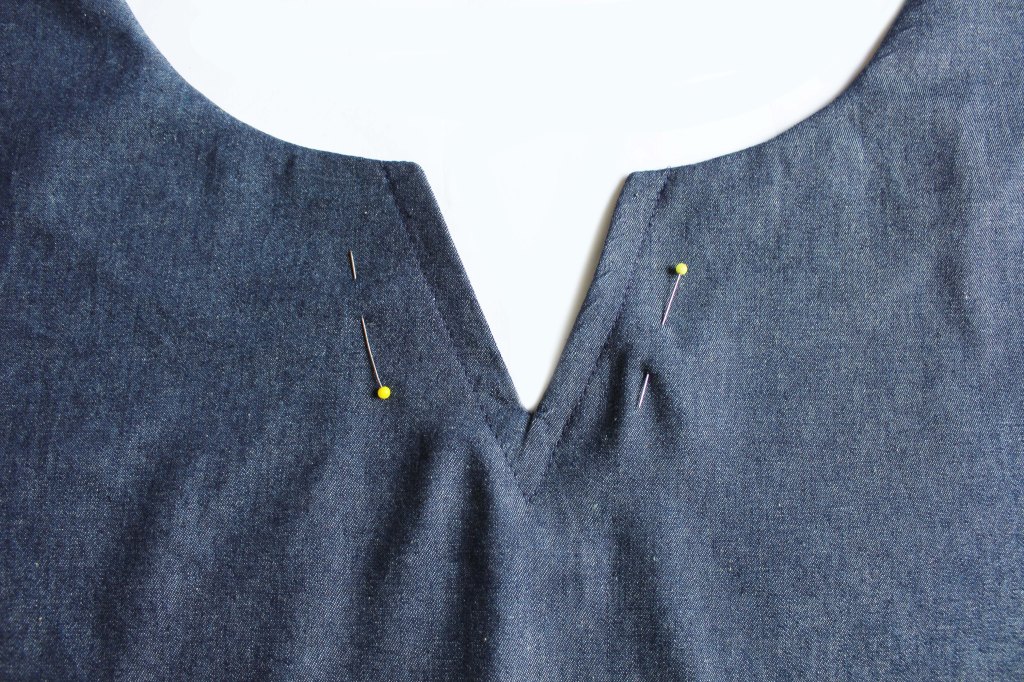
NECK FACINGS
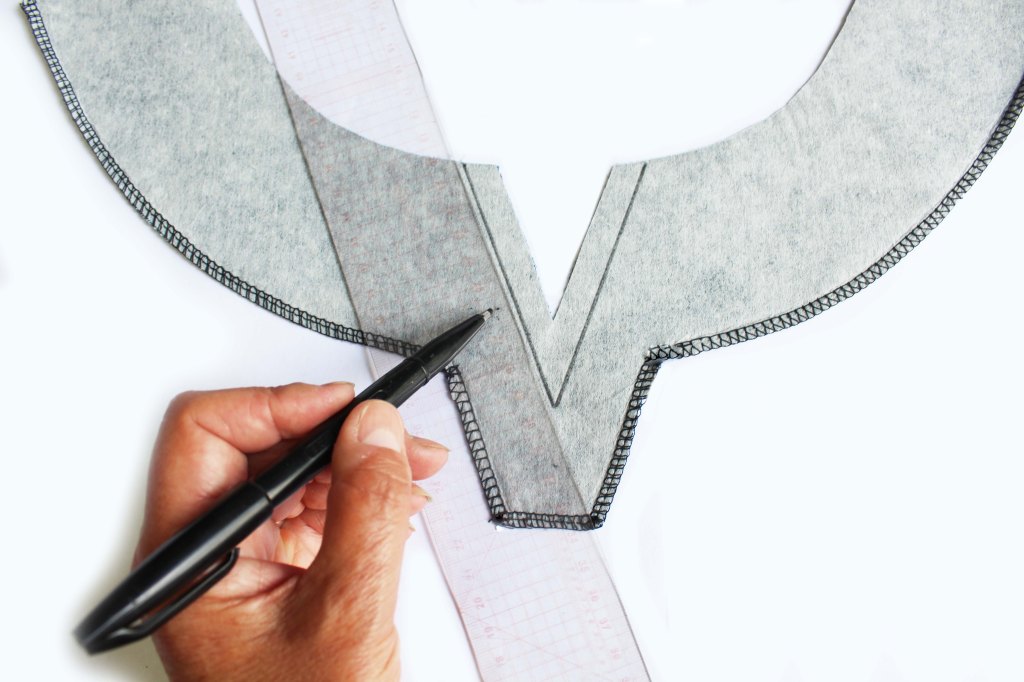
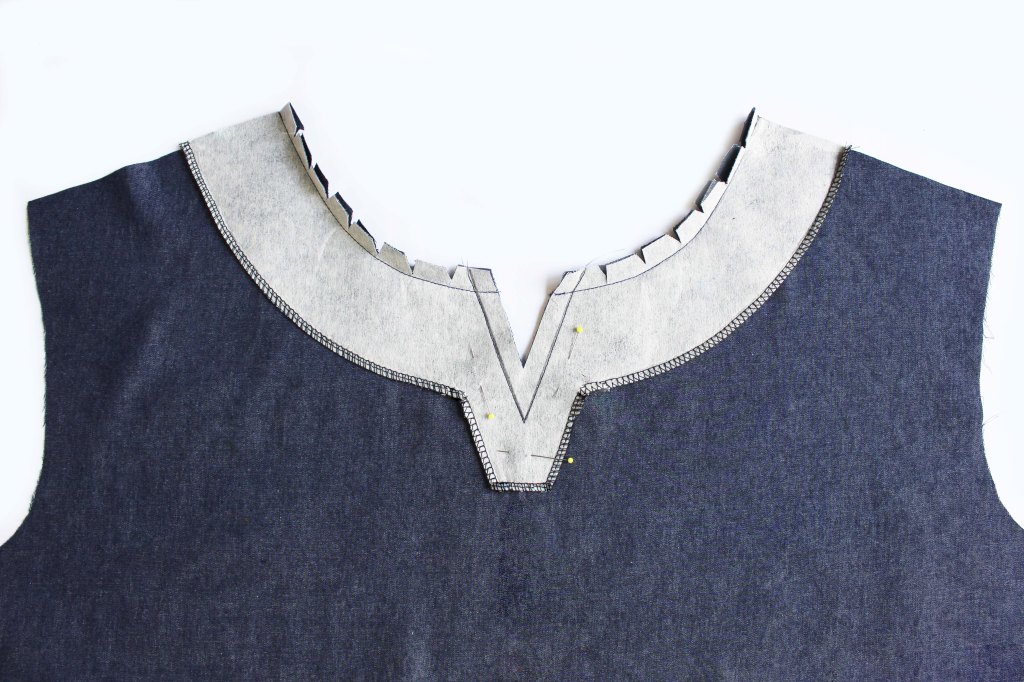
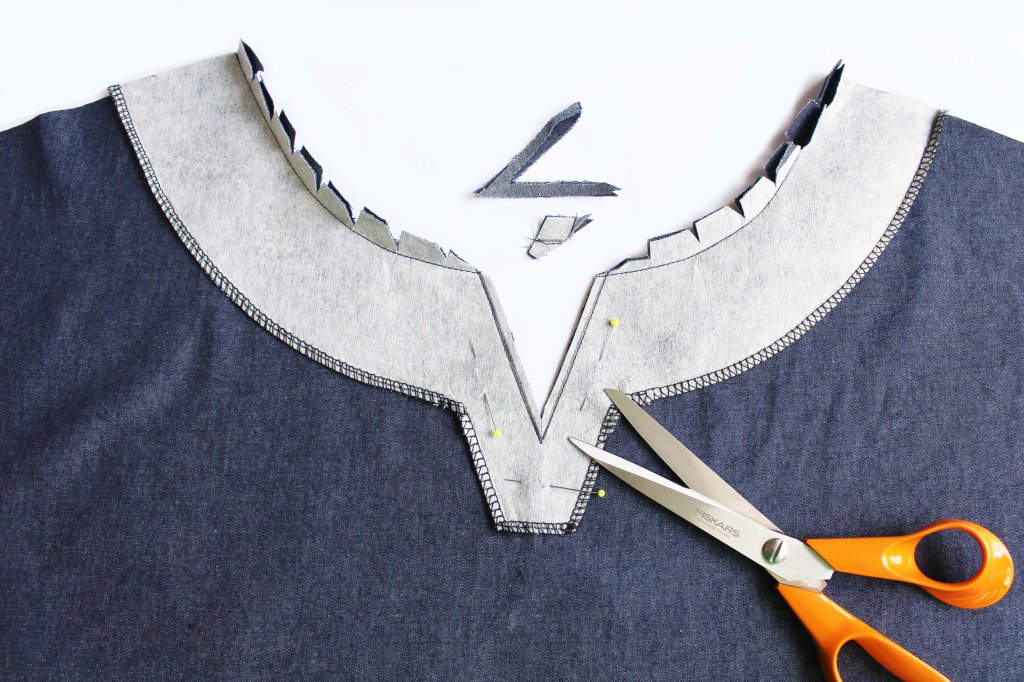
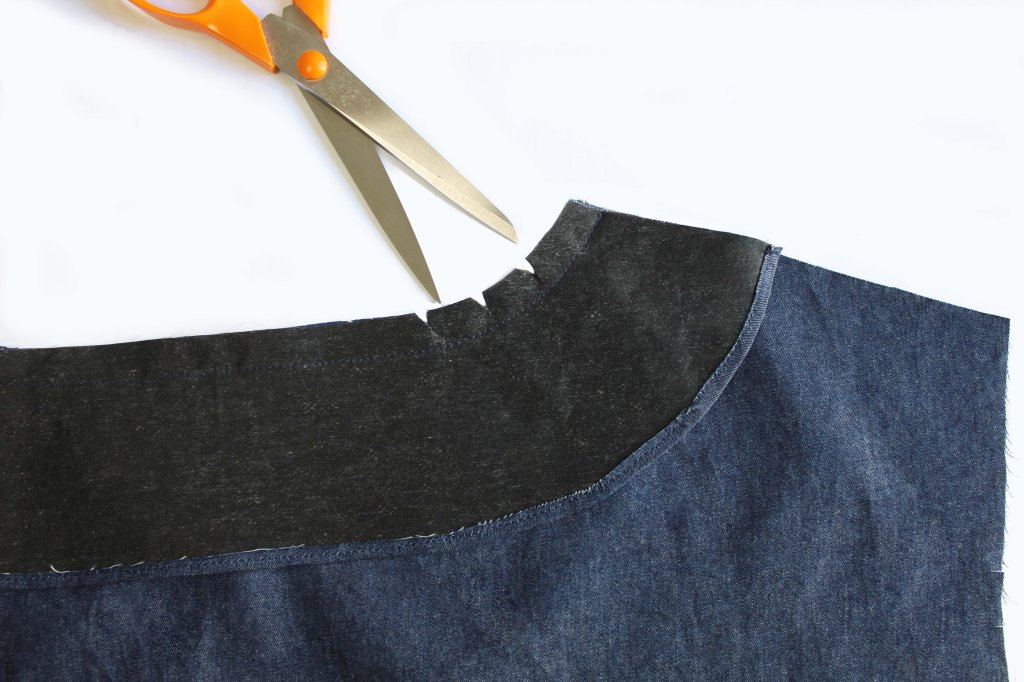
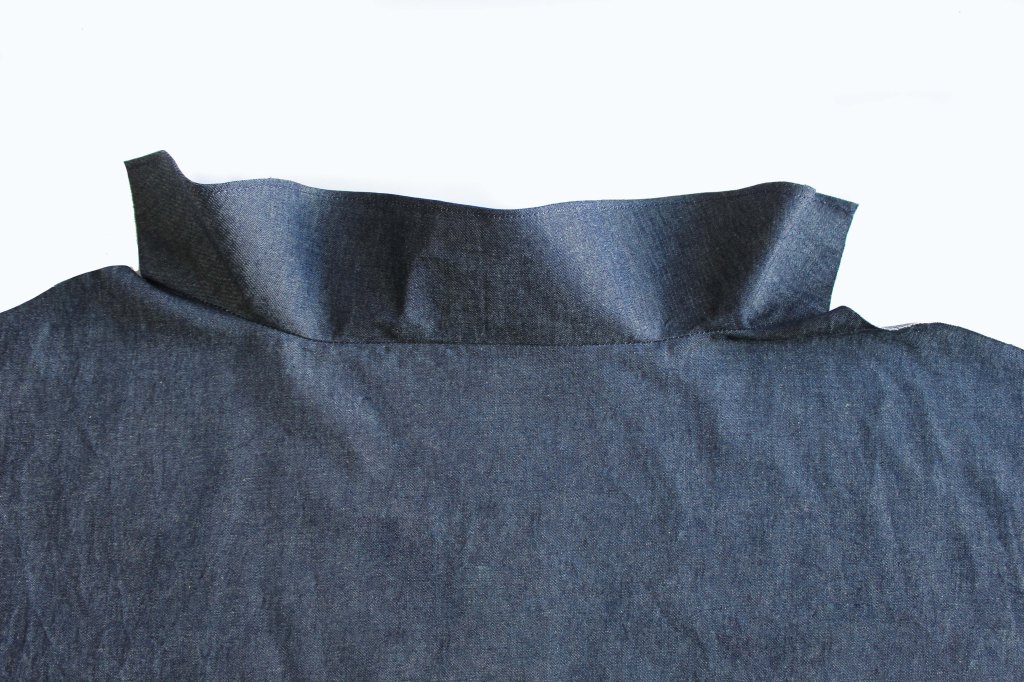
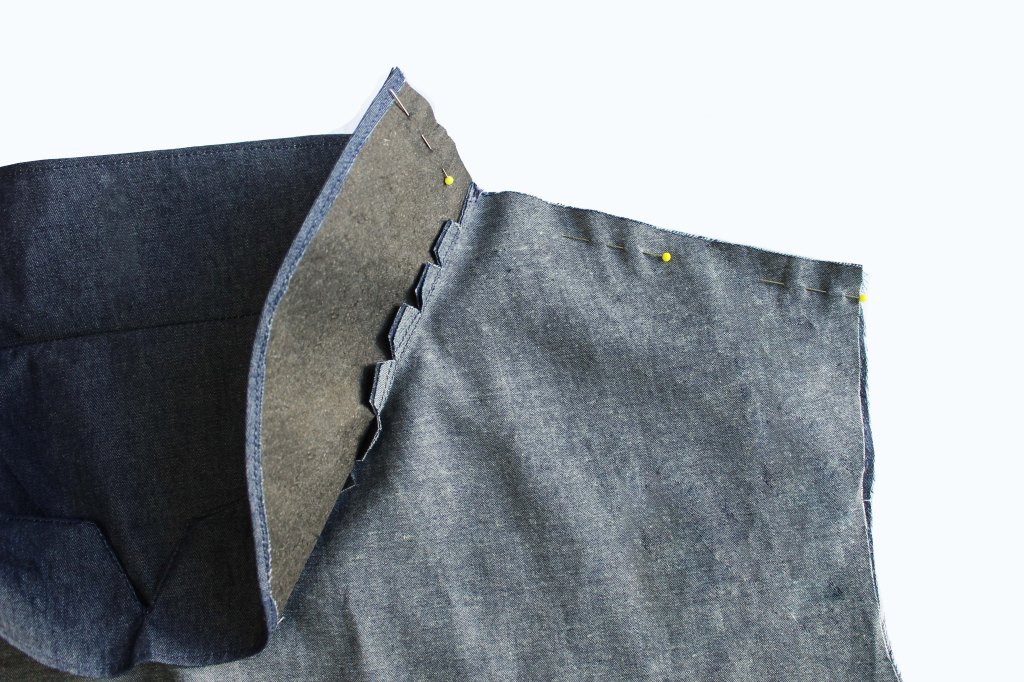
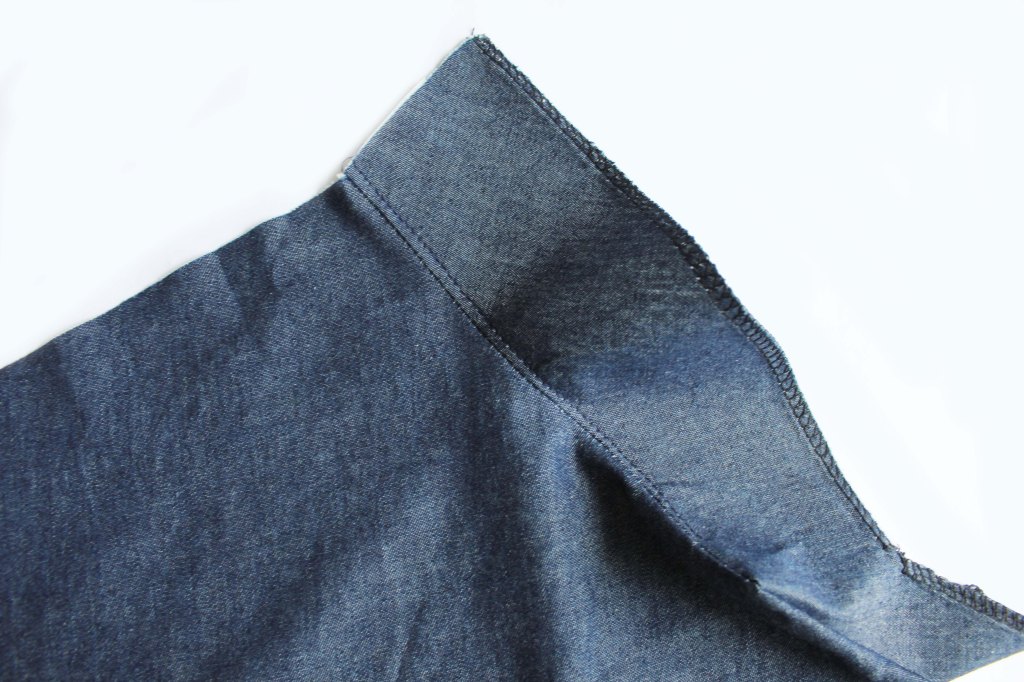
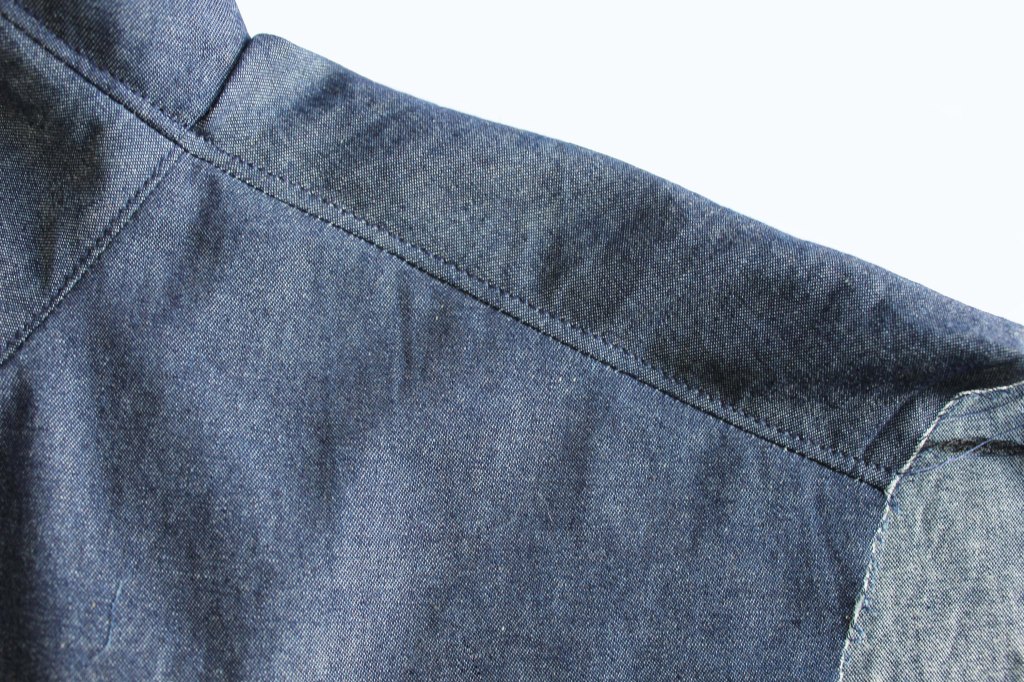
SLEEVES
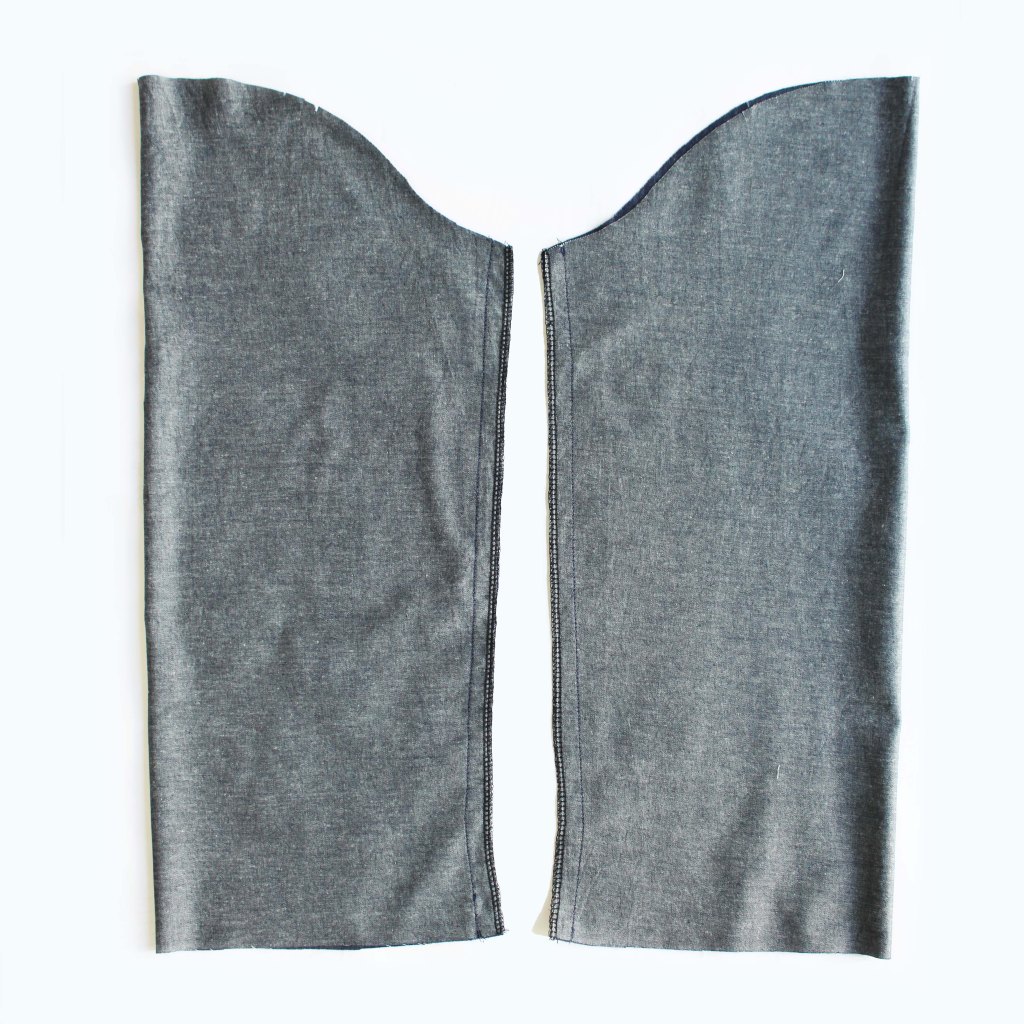
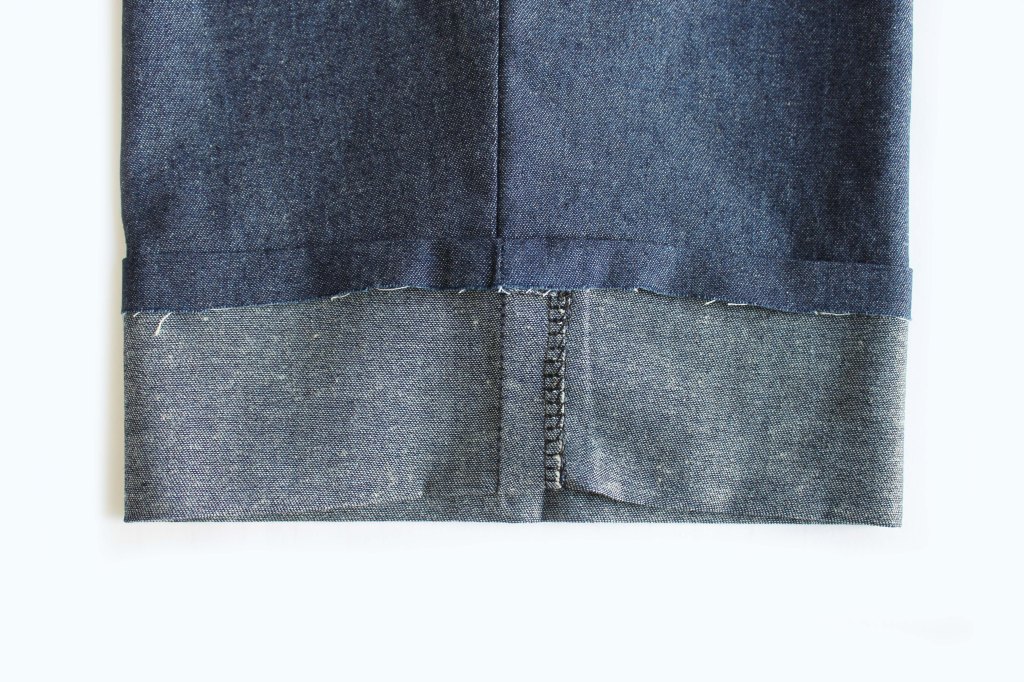
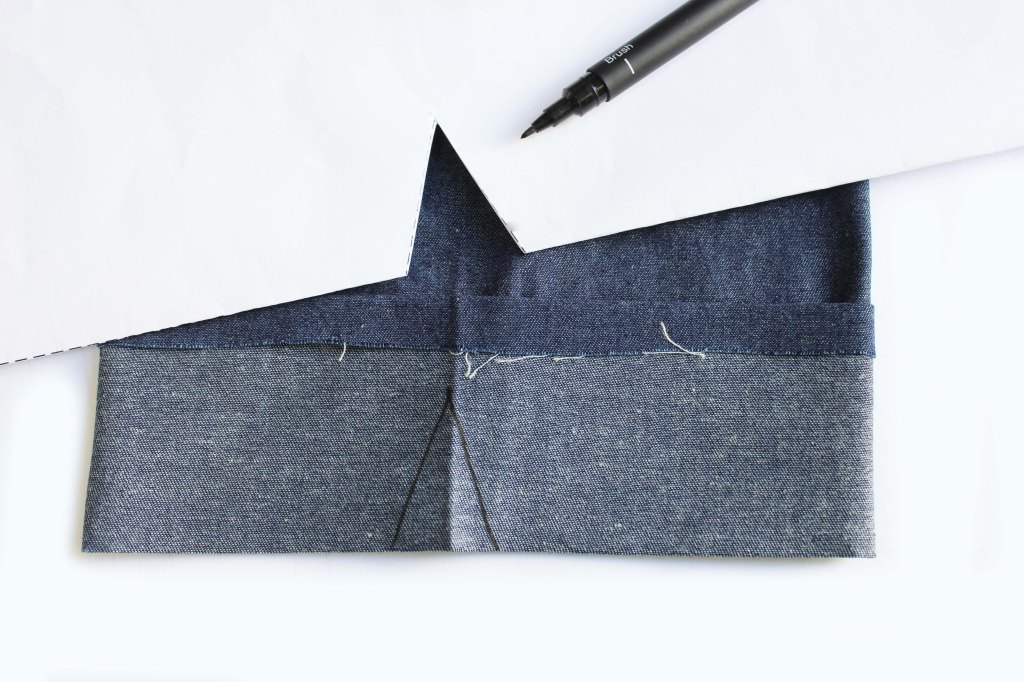
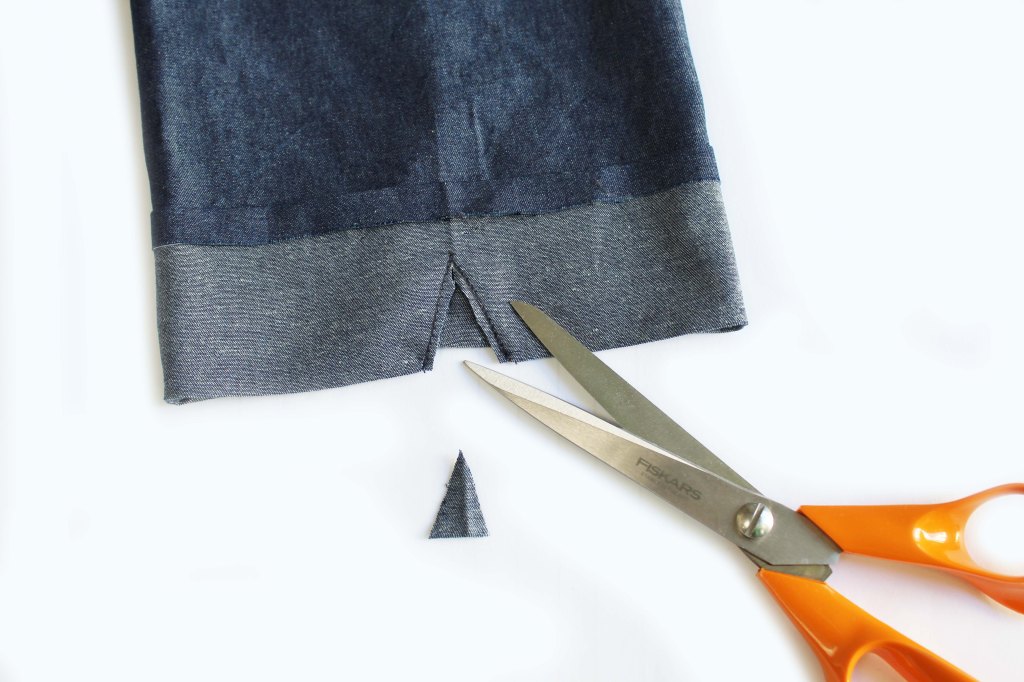
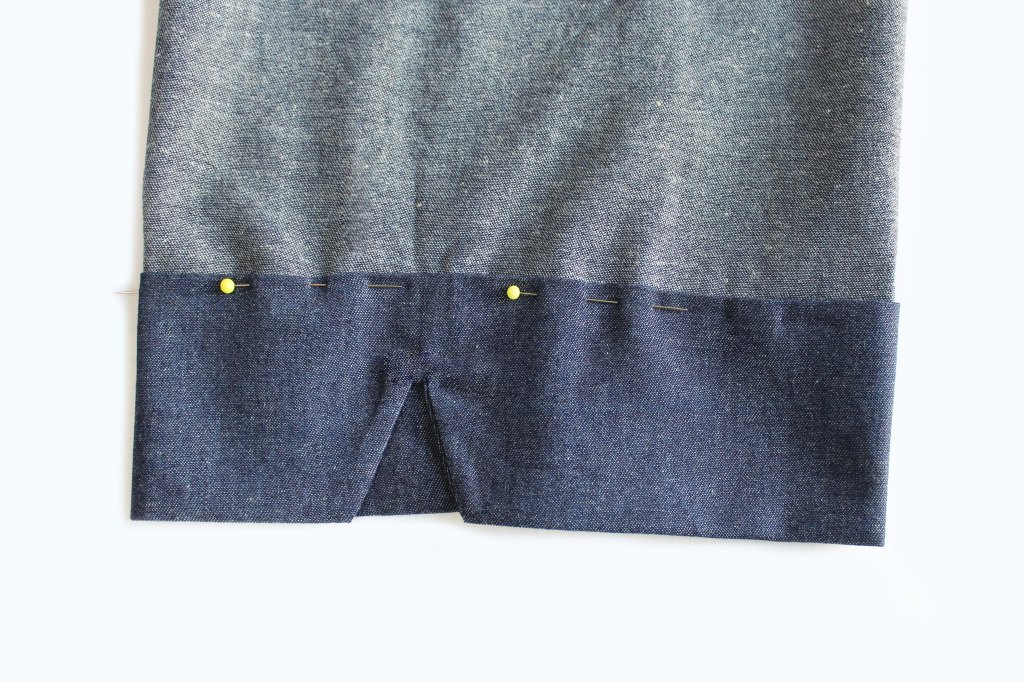
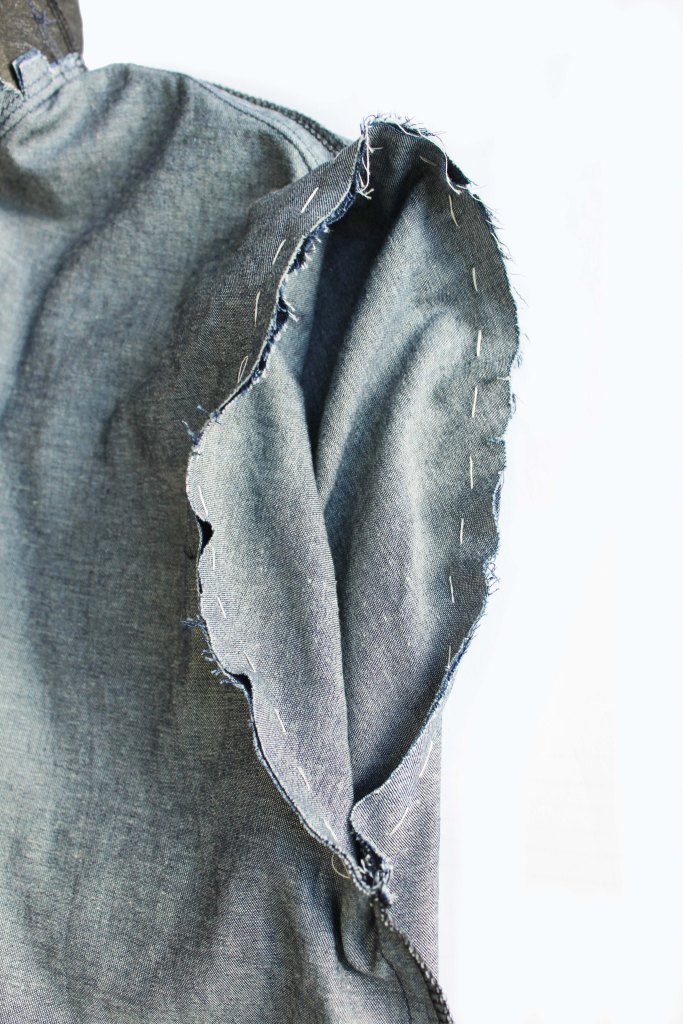
Pin the Sleeve to the armhole. Sew. Press. Topstitch.
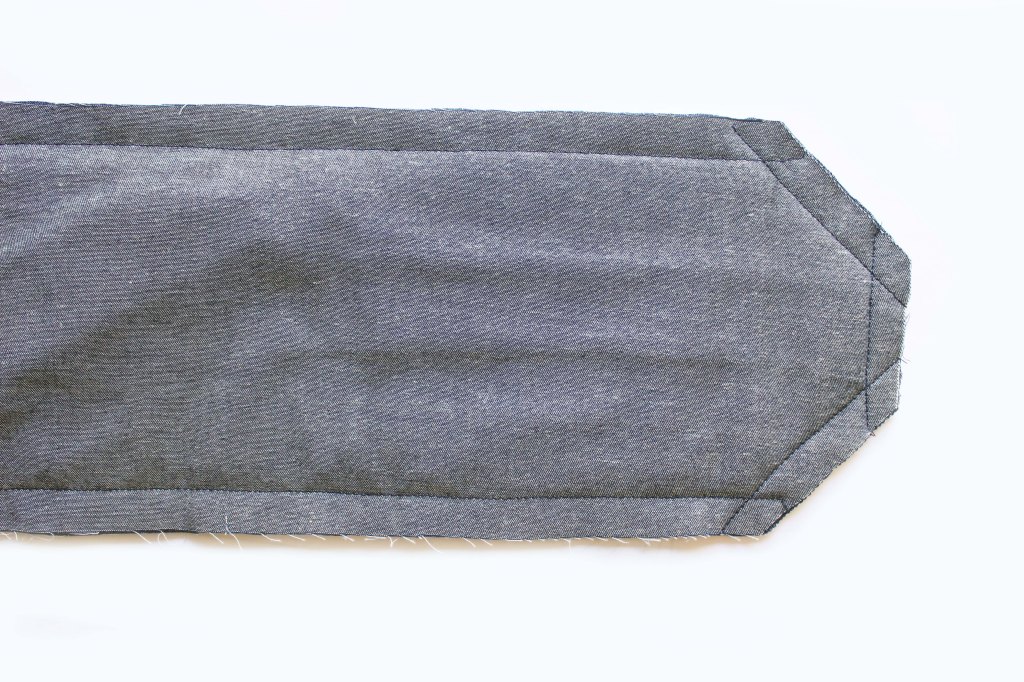
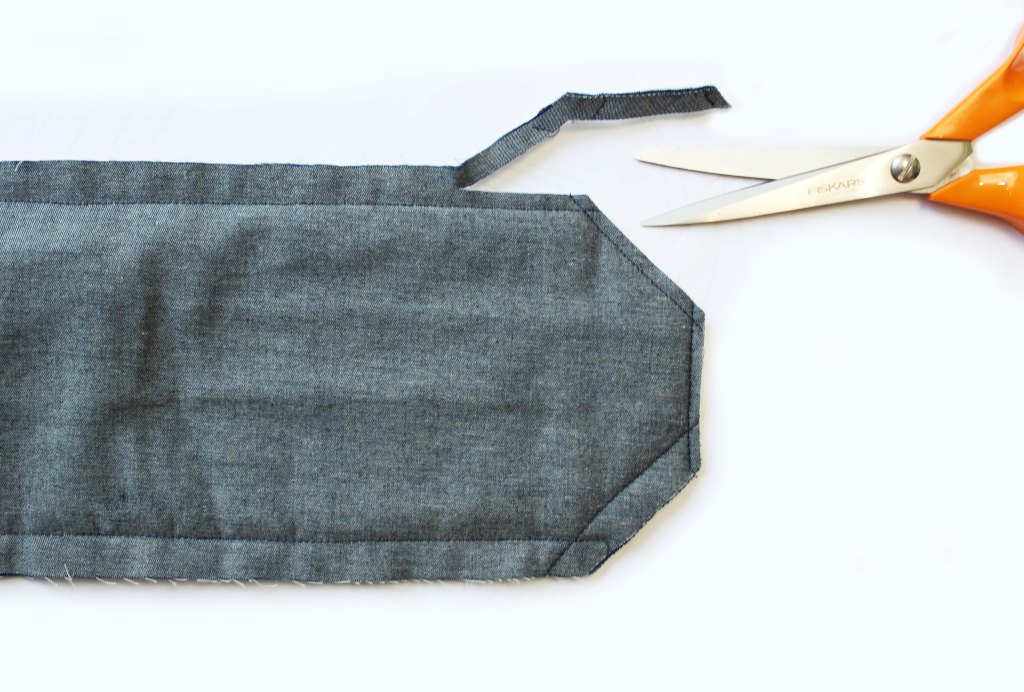
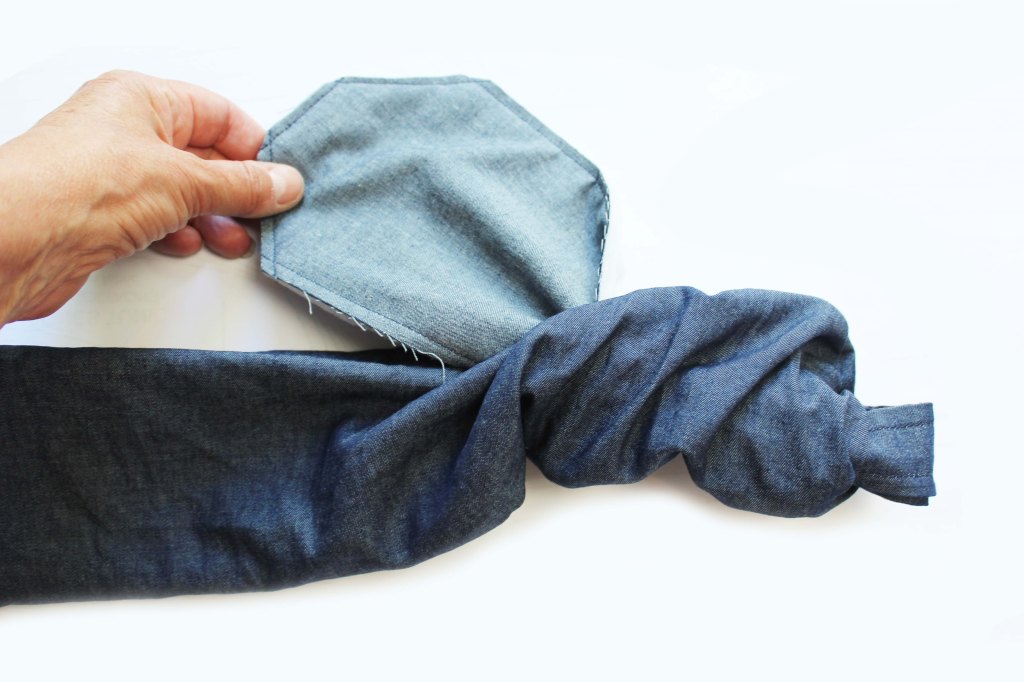
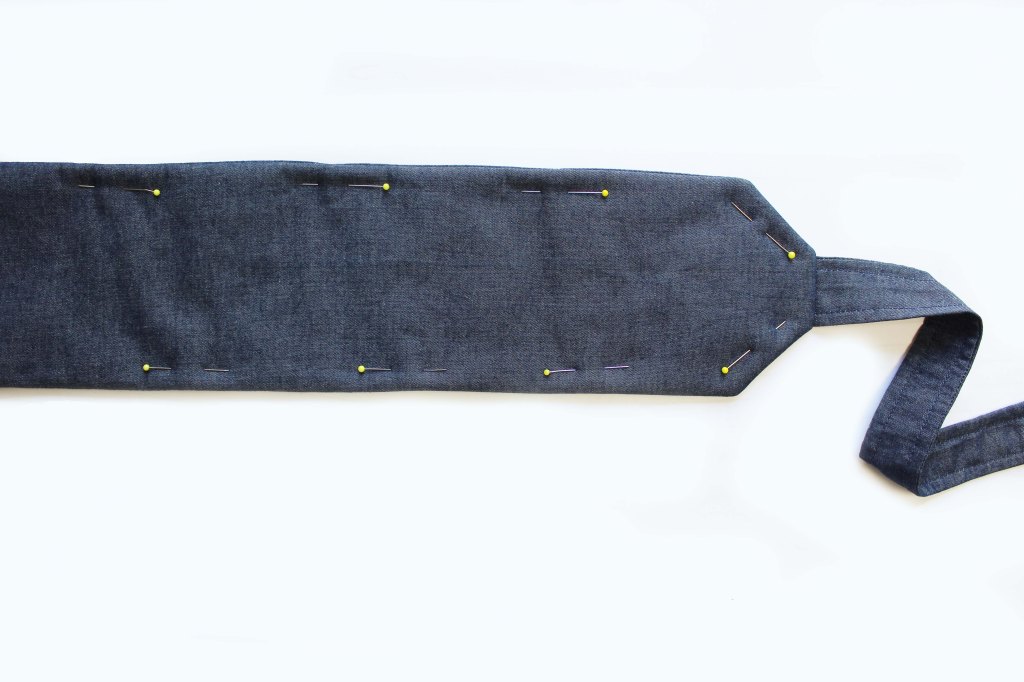
OBI BELT
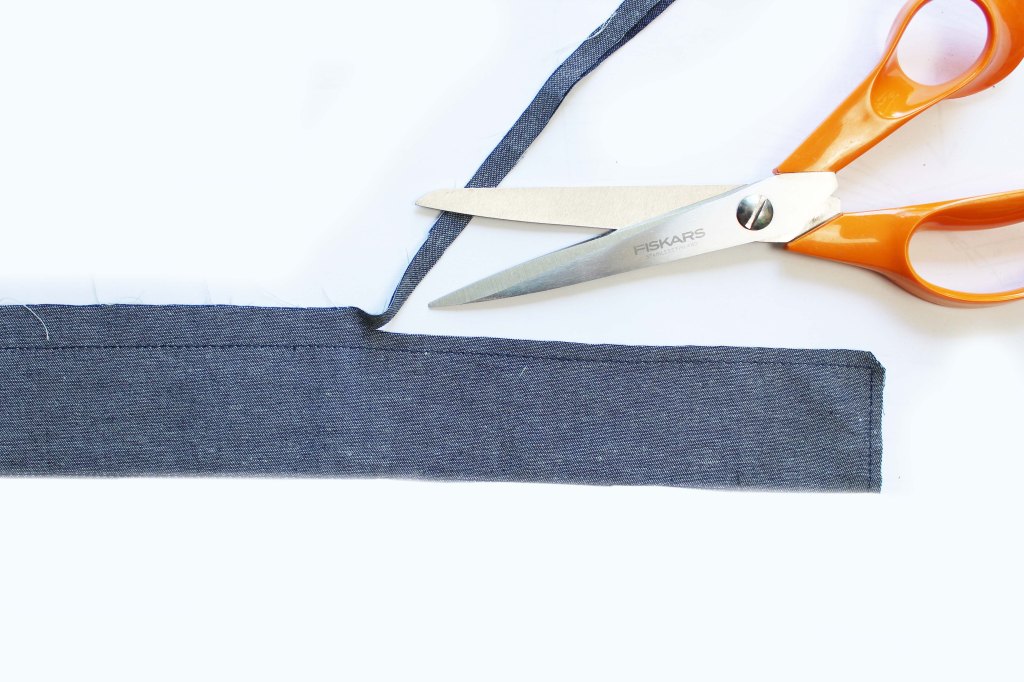
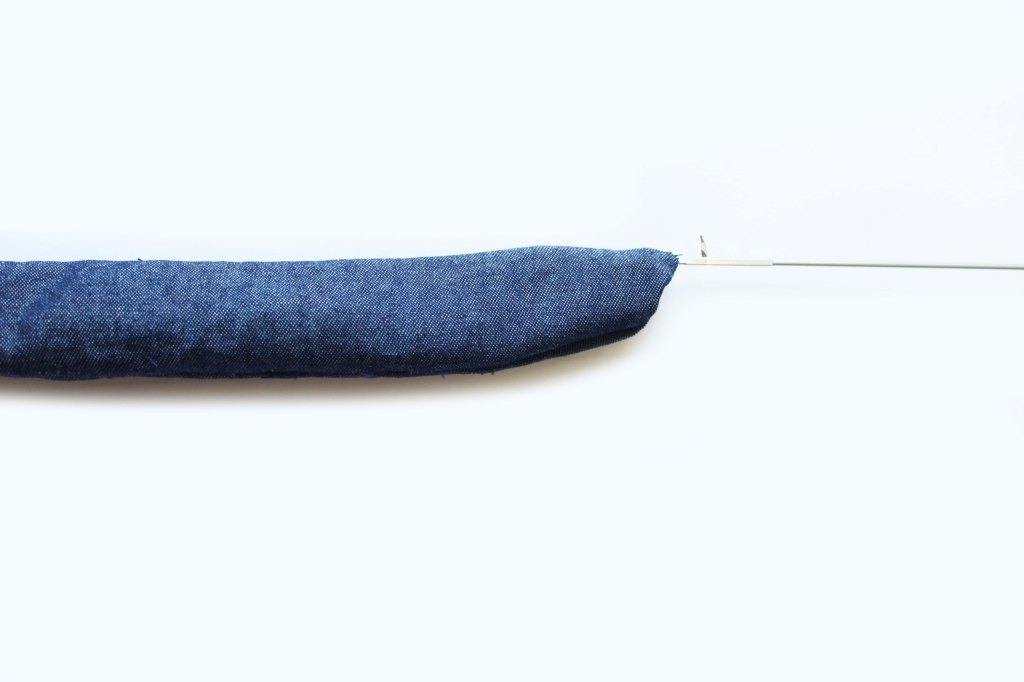
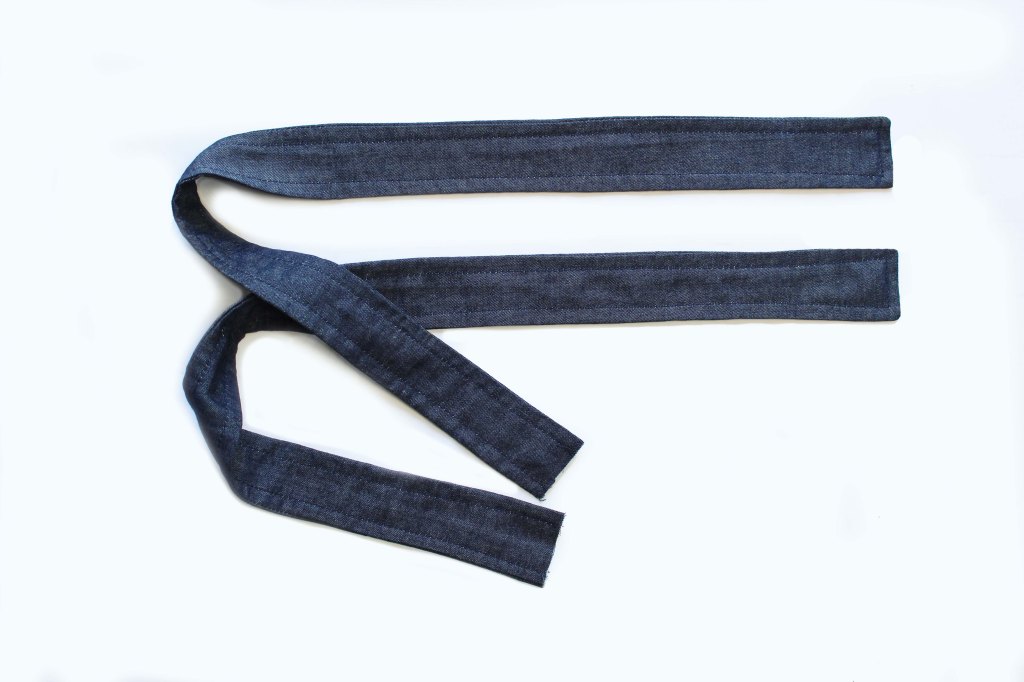
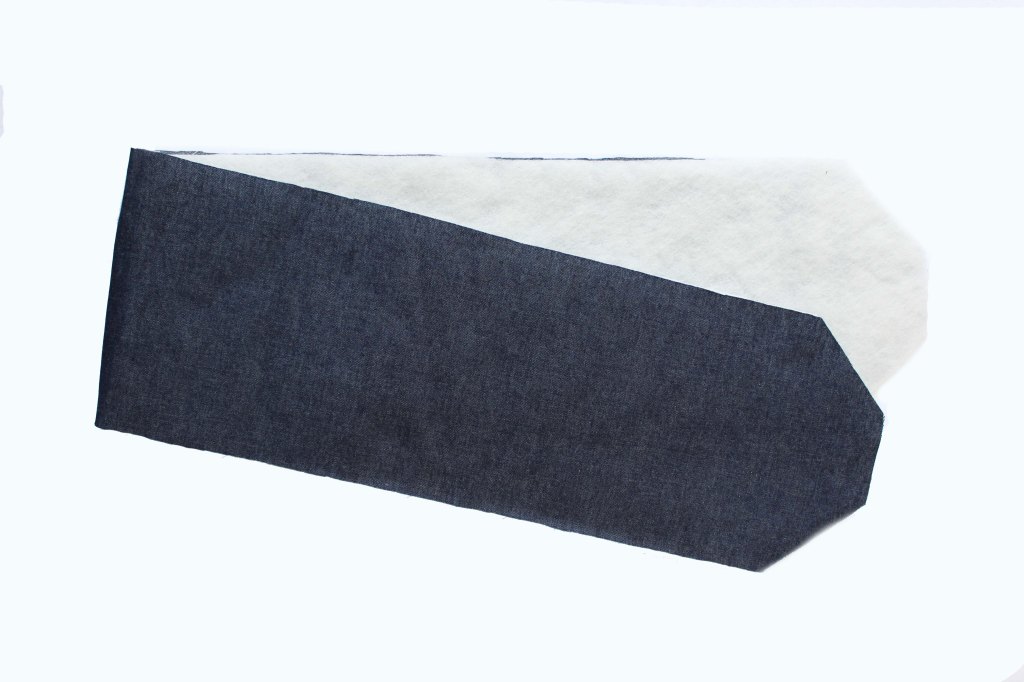
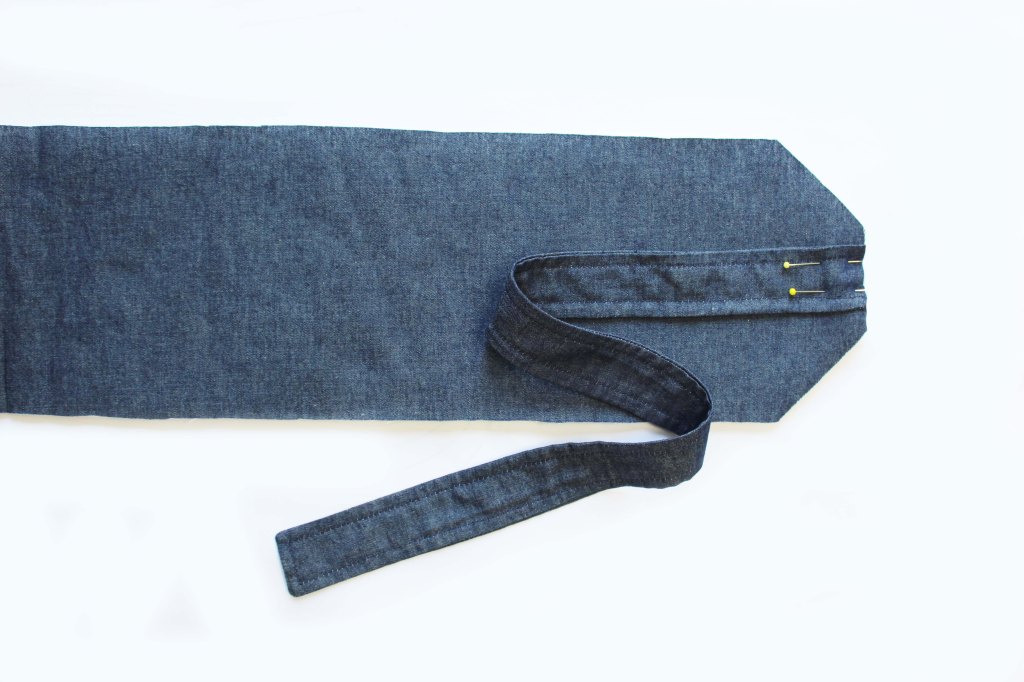
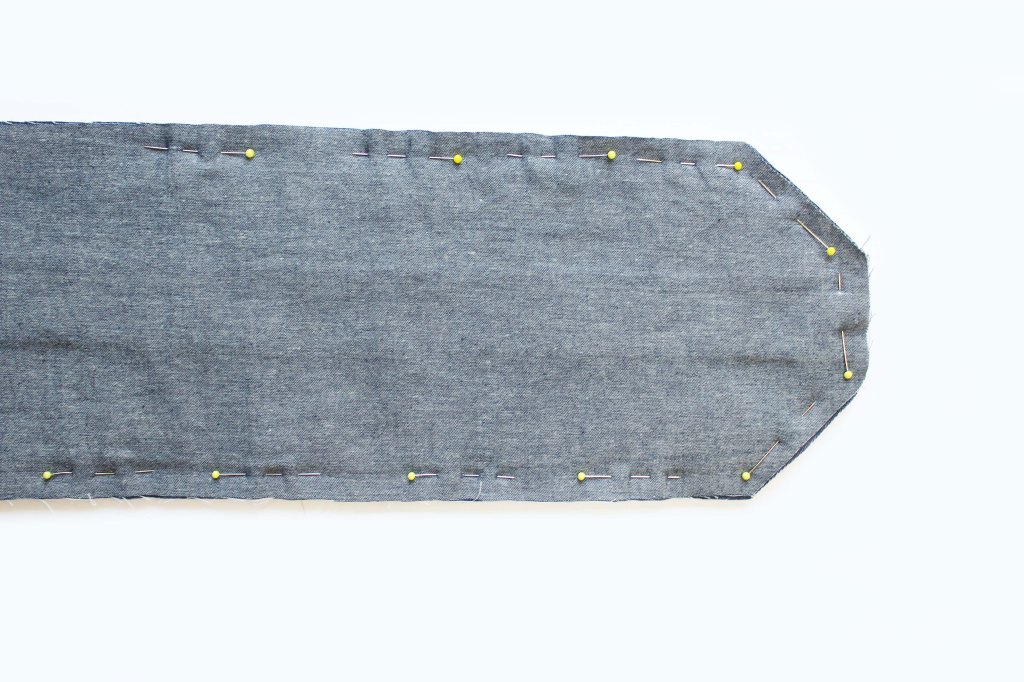

All images and text are copyrighted by Fiona Hesford.
Please ask prior permission if you wish to use any of the content. Thank you.
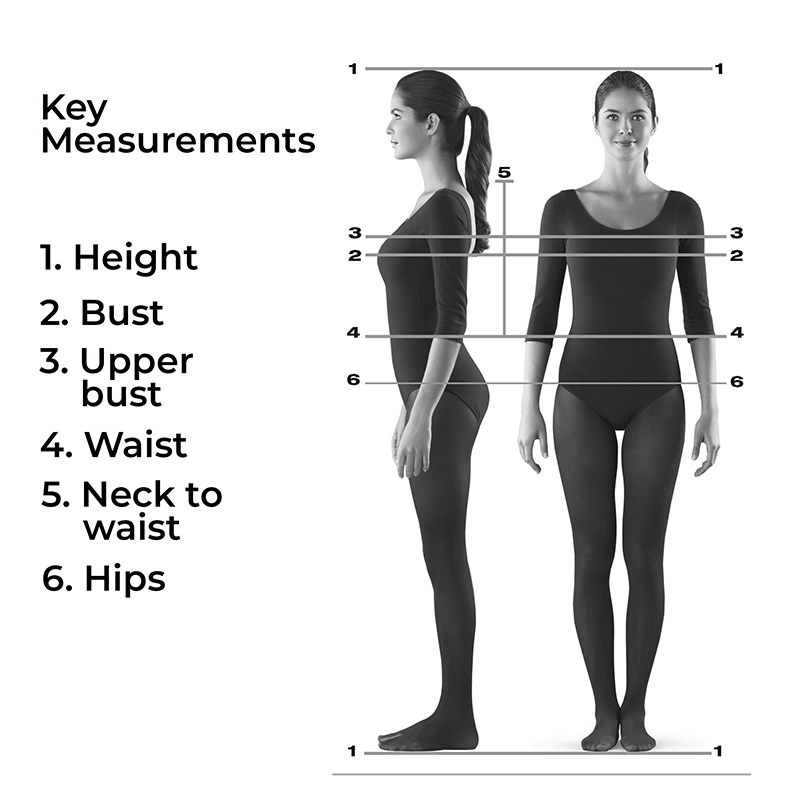
SIZE INFO
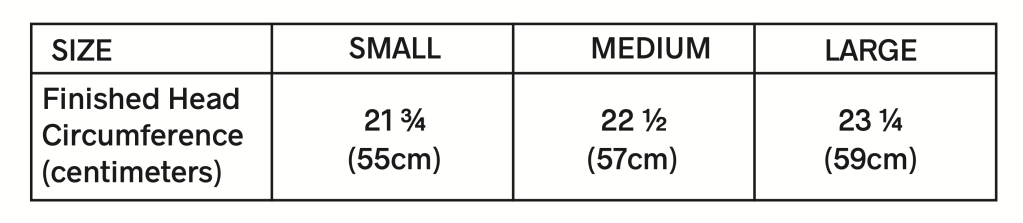
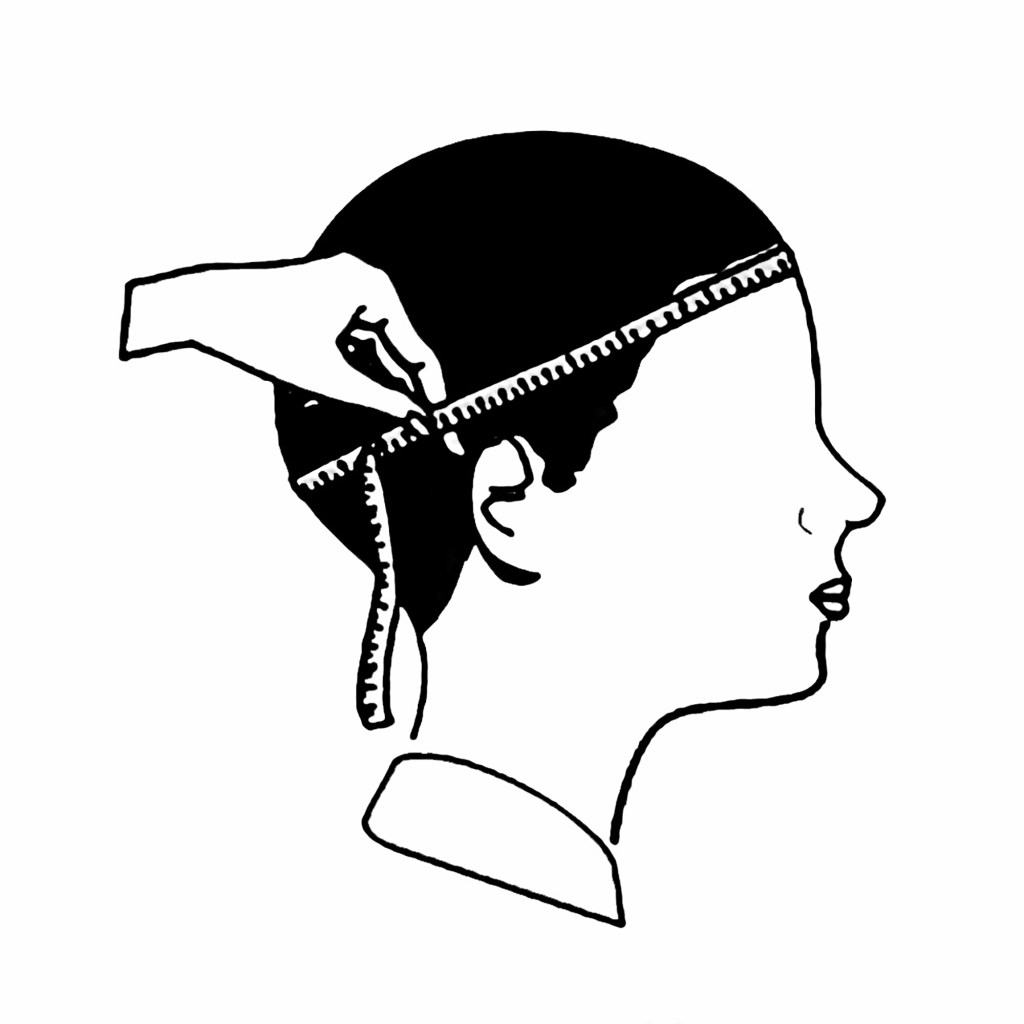
HAT SIZES
TALLULAH TEA DRESS
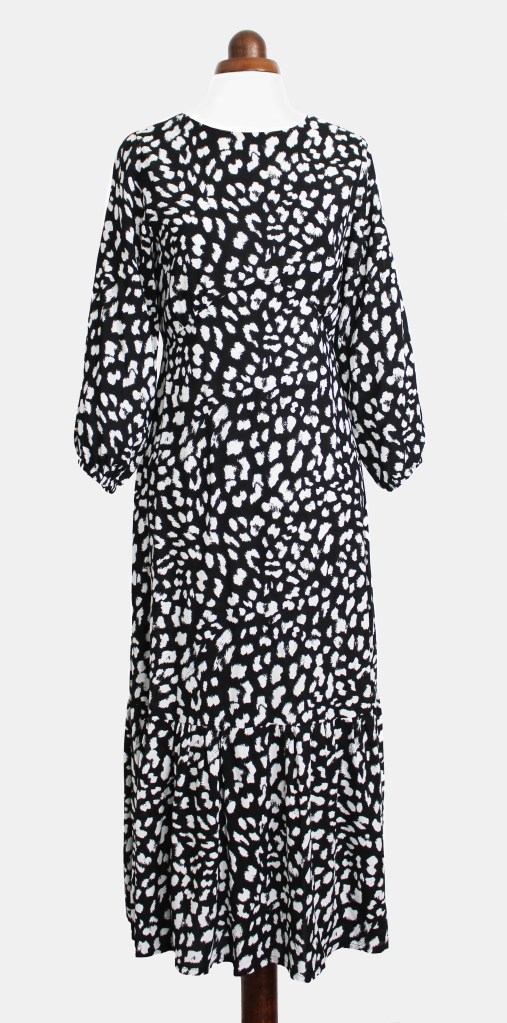
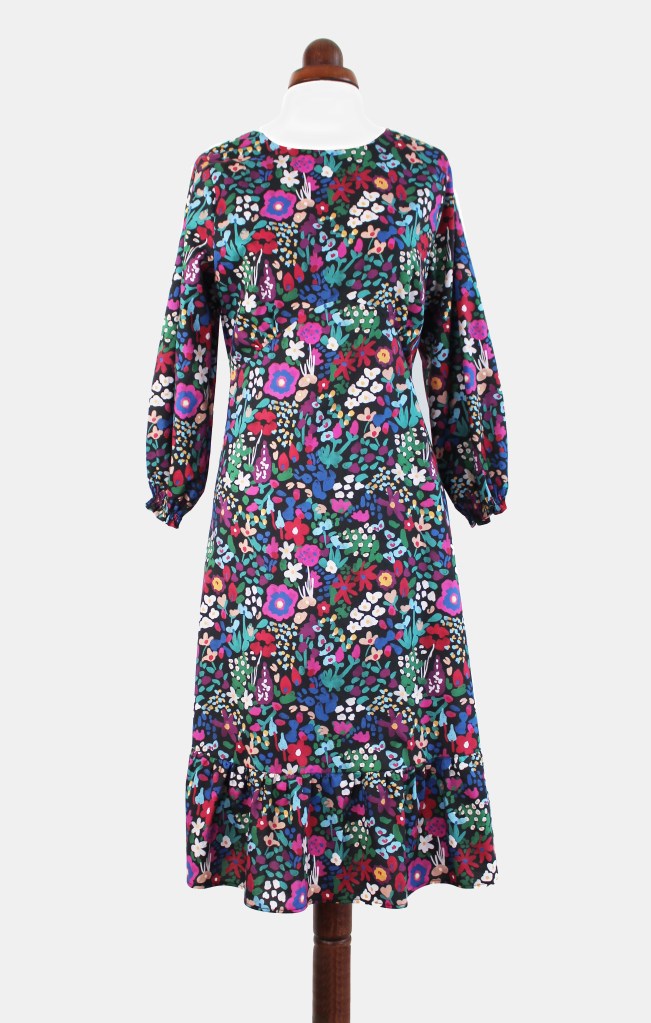
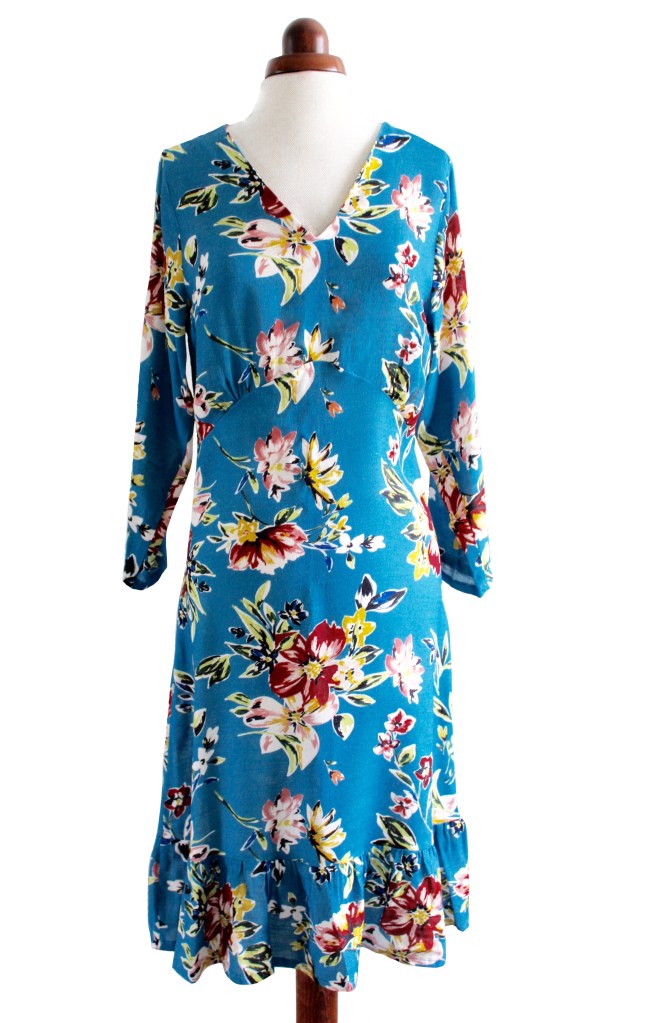
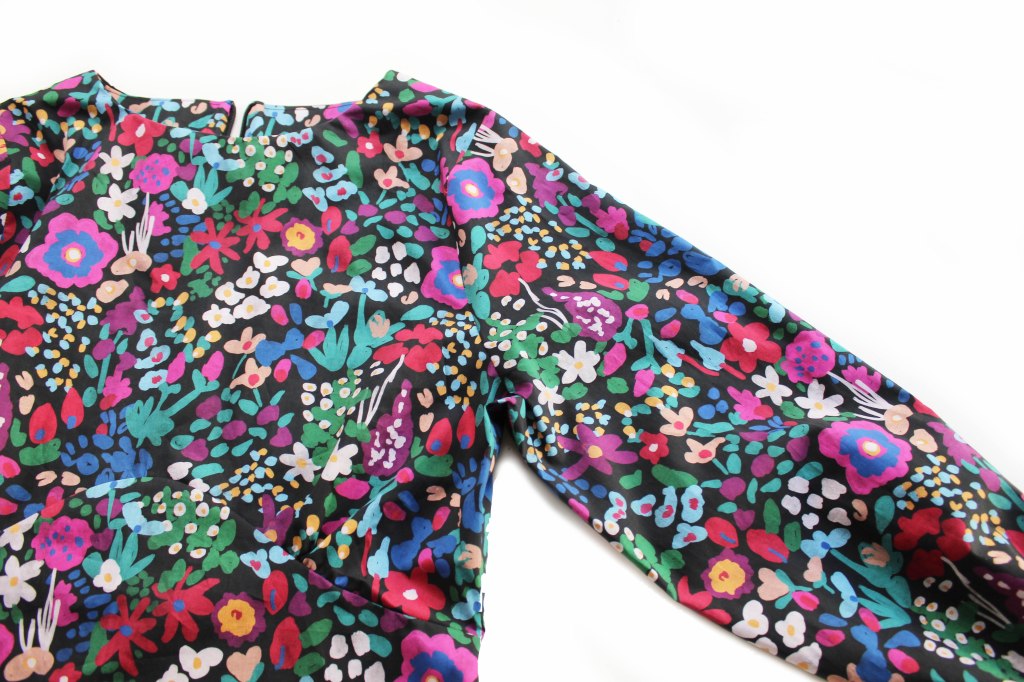
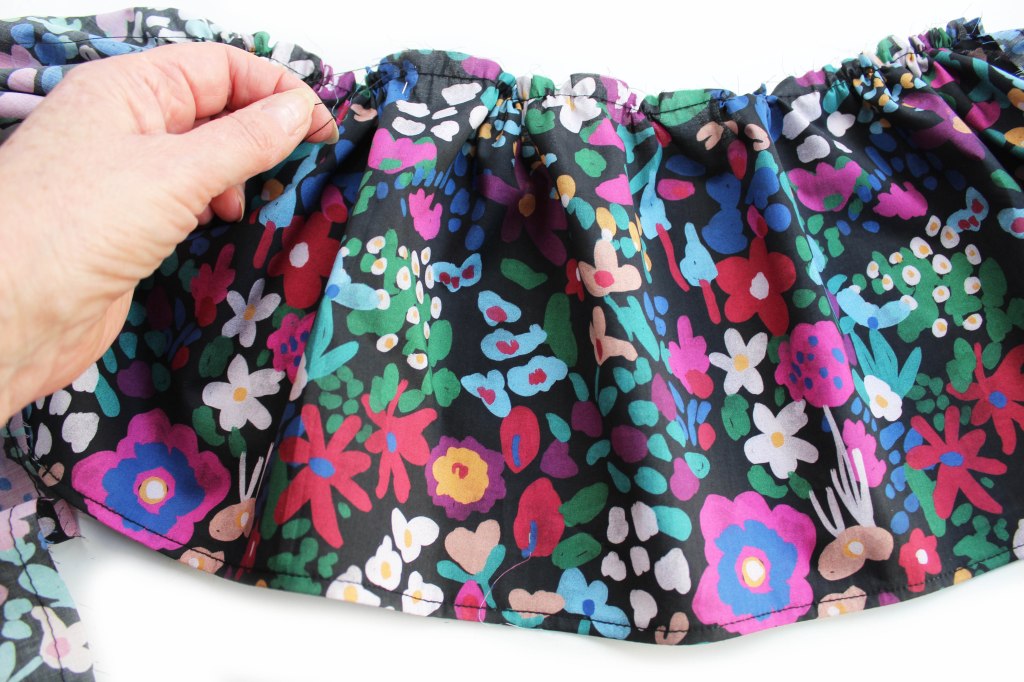
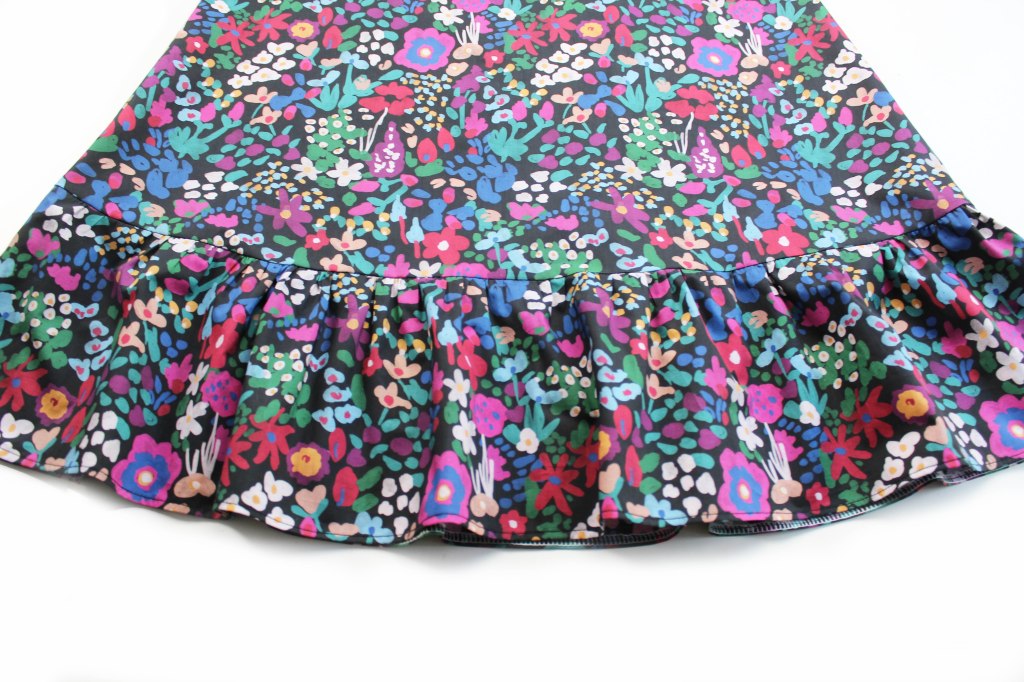
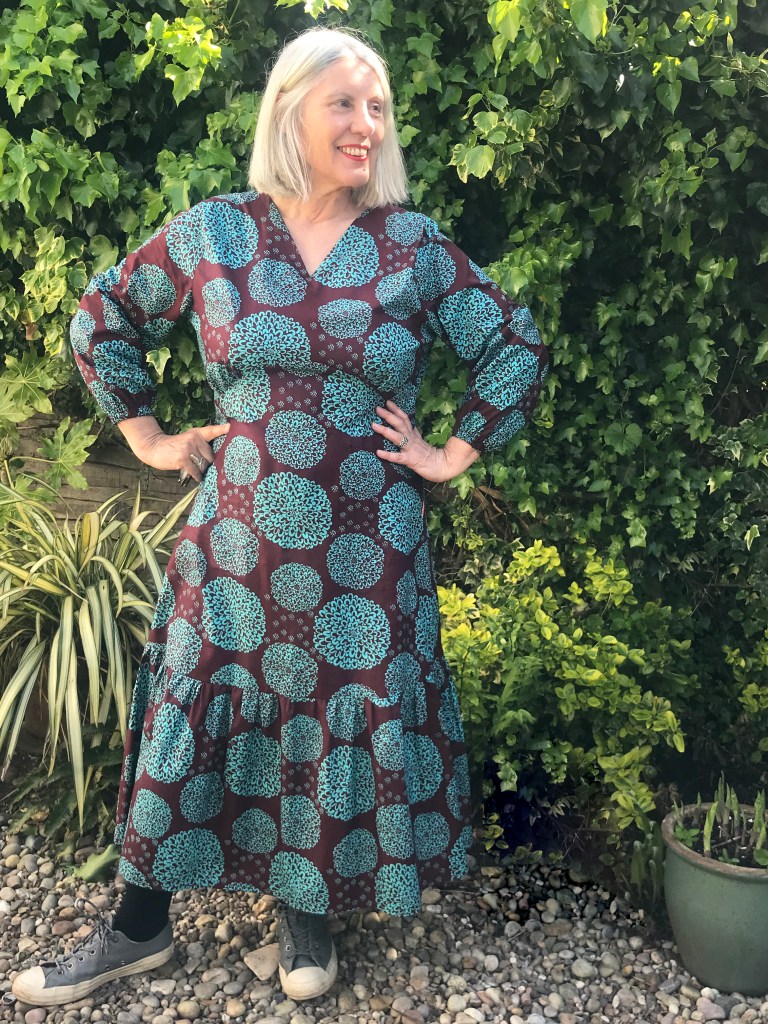
TALLULAH TEA DRESS with a round neck, gathered empire bust line, long sleeves with elasticated cuffs, centre back zip and frill in two lengths making it either midi or maxi lengths.
This slimline dress is not only elegant but a comfortable fit and very on trend, designed to be worn everyday or on special occasions.
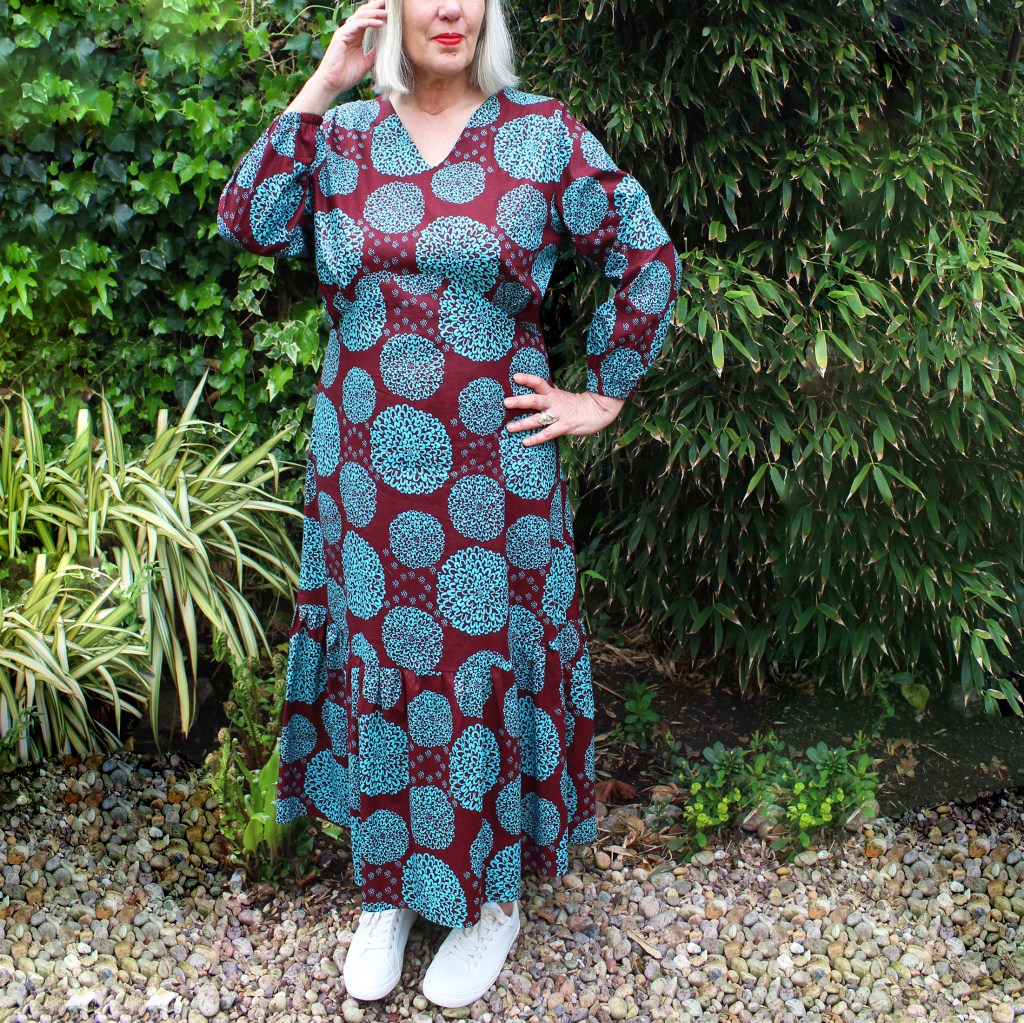
Tallulah dress is simple to make with extra help on the blog when inserting the zip and also a FREE add-on template to make a V-neck option. Just go to menu and click on the TALLULAH HACK page below the Tallulah page. Enter the password which you will find written on the pattern inside back page. On the Tallulah hack page you will find the downloadable pattern which you can print off at home or copy shop on to four A4 pages. Stick these together to make the new Front and Front V-neck facing template. Simple and easy! On the Tallulah Hack page you will also find step by step instructions about how to make a V-neck version.
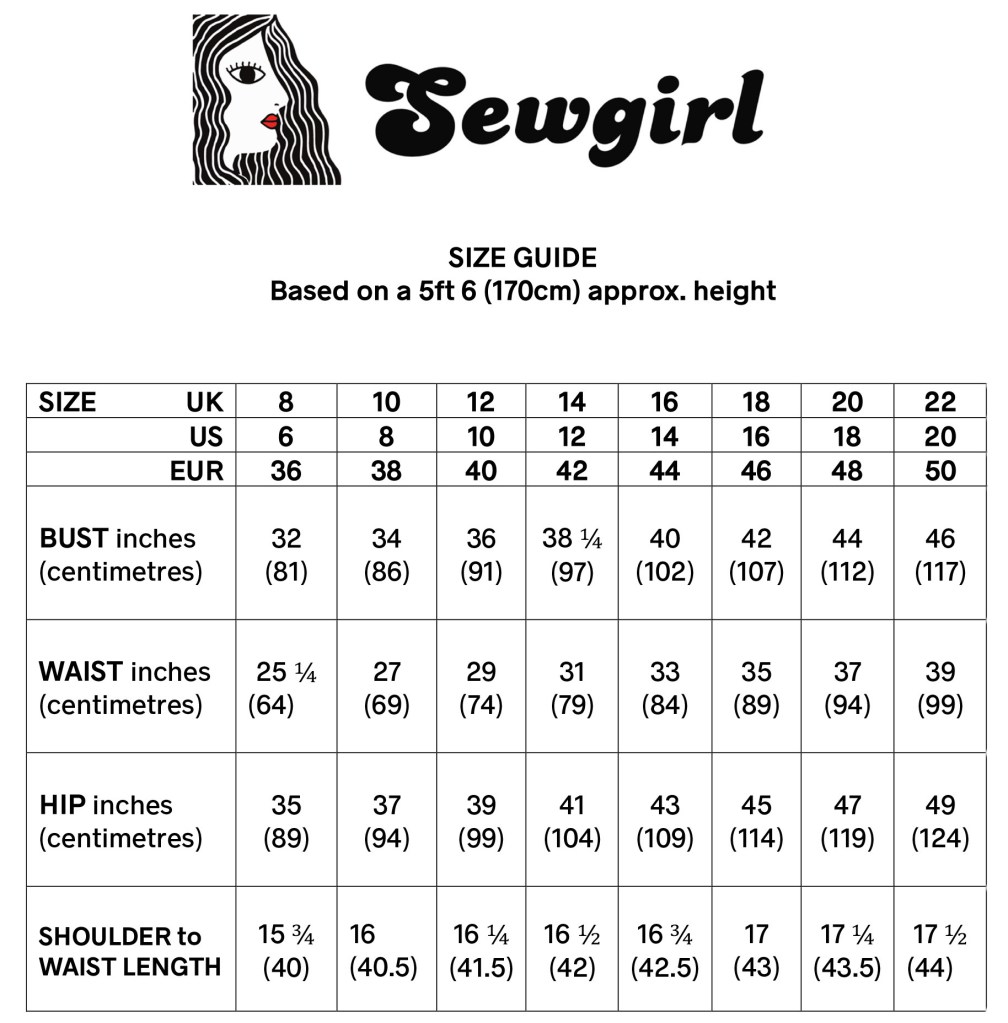
Here is information about sizing, finished garment details and fabric requirements.
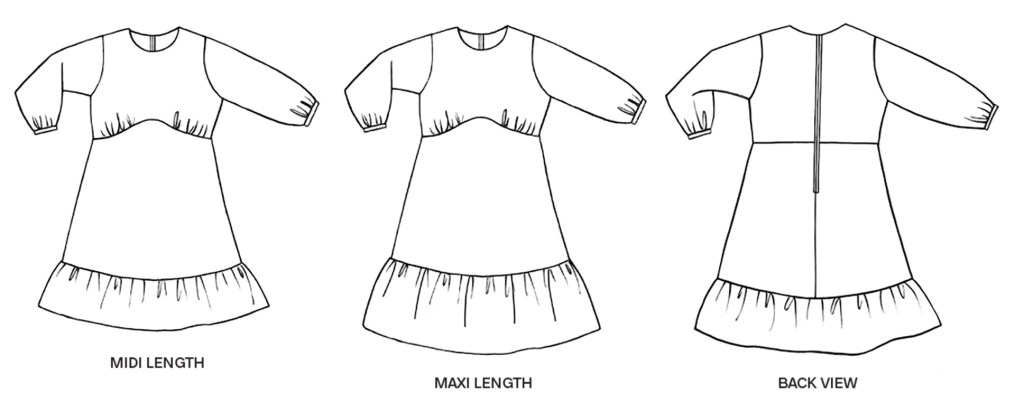
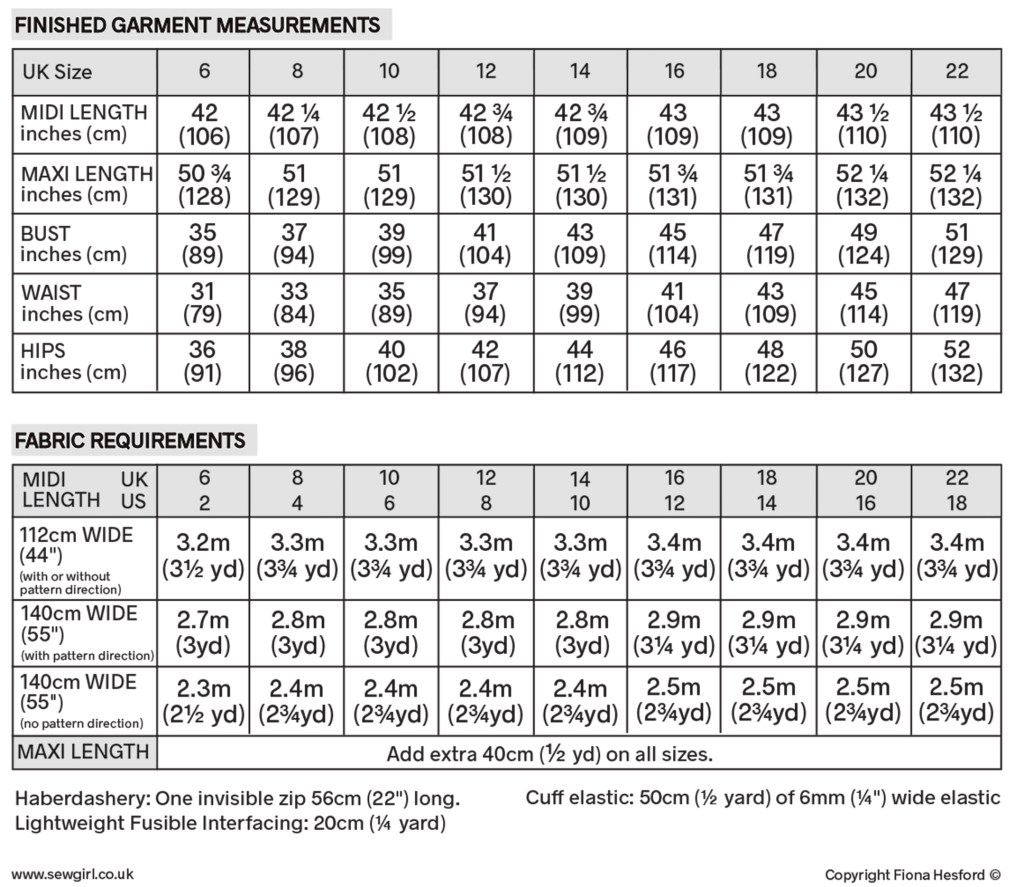
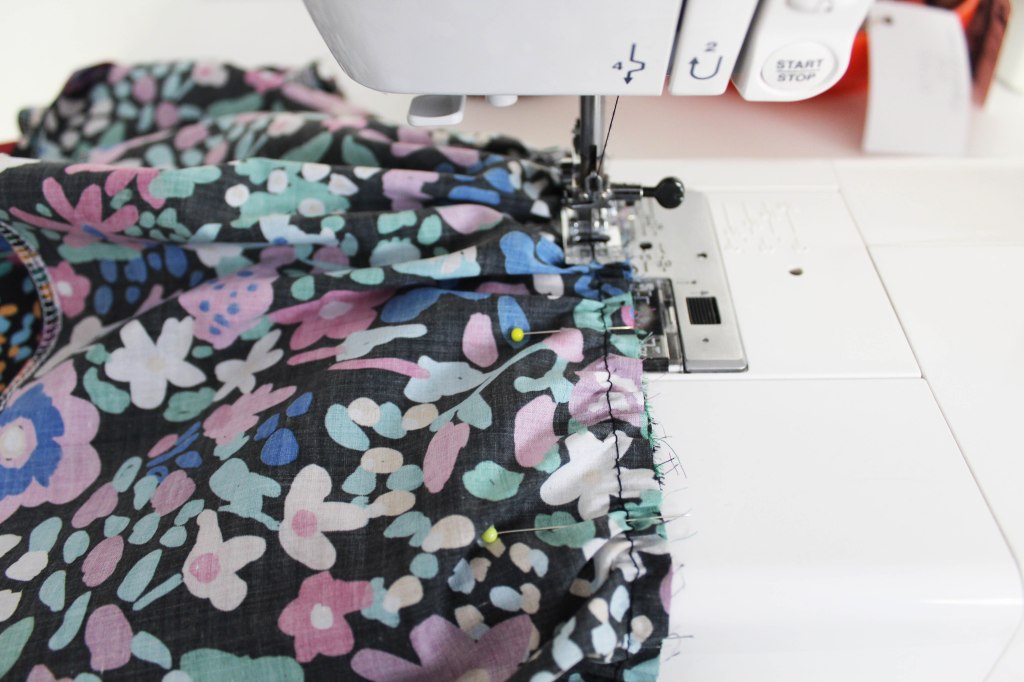
This blogpost shows a condensed version of the instructions which go into more detail in the instruction booklet.
ADJUSTING THE PATTERN
I advise making a toile or sample garment of this dress in cheap fabric (or an old sheet) beforehand to check the fit . You may require some adjustments to the pattern.
The most common adjustment with an empire line pattern is at the bust line, so I have added some tips at the bottom of this page to help you get the right fit with your Tallulah pattern.
Scroll down to the end of this blogpost to see details.
HOW TO MAKE TALLULAH TEA DRESS
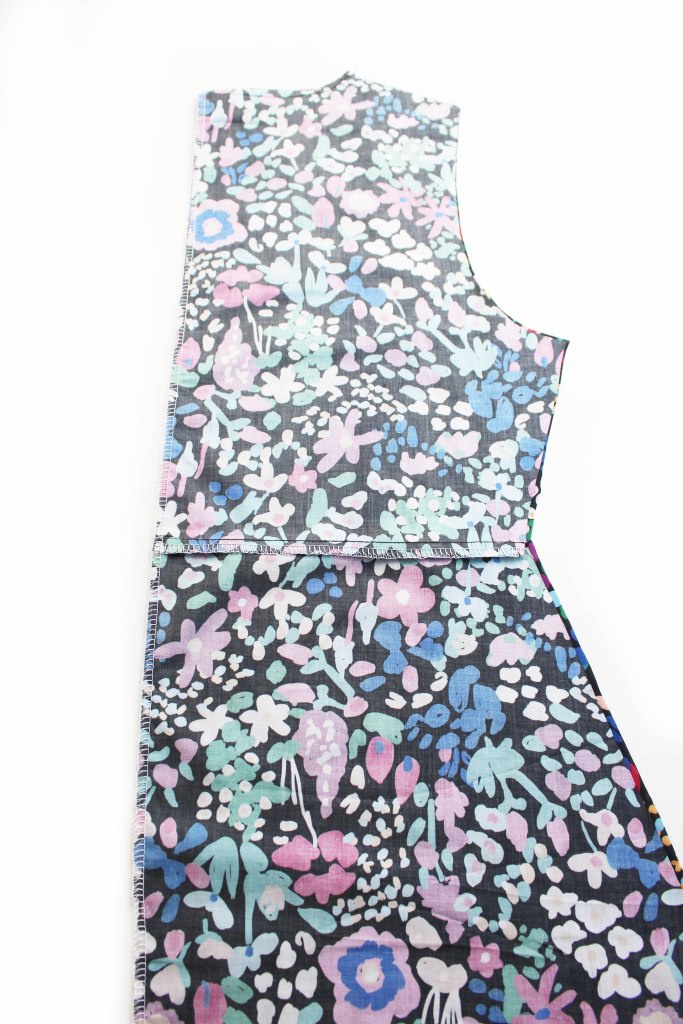
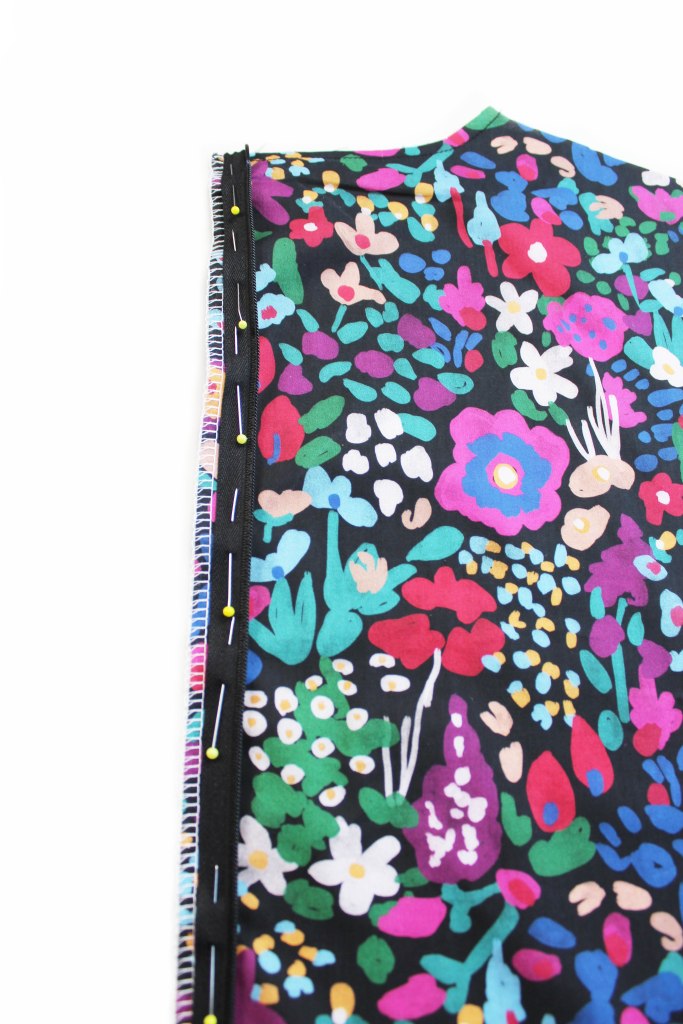
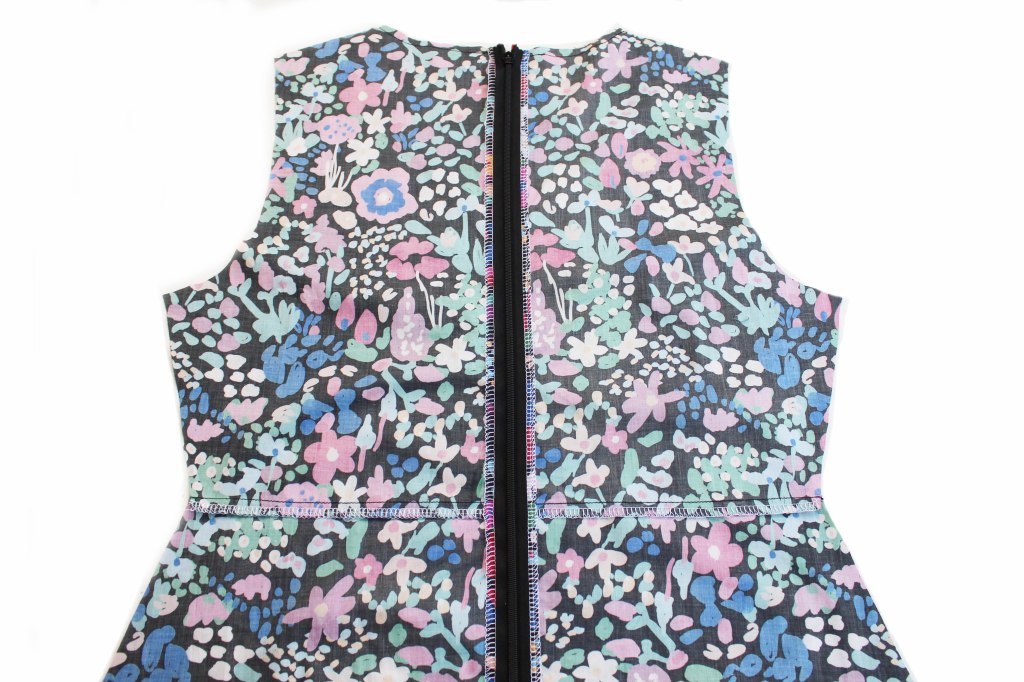
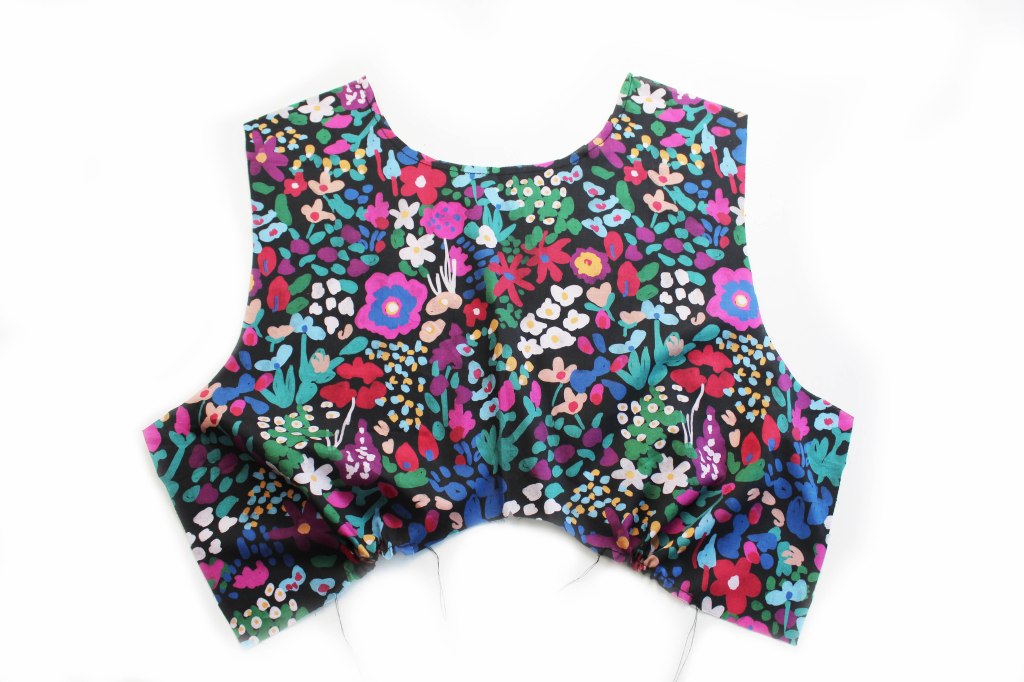
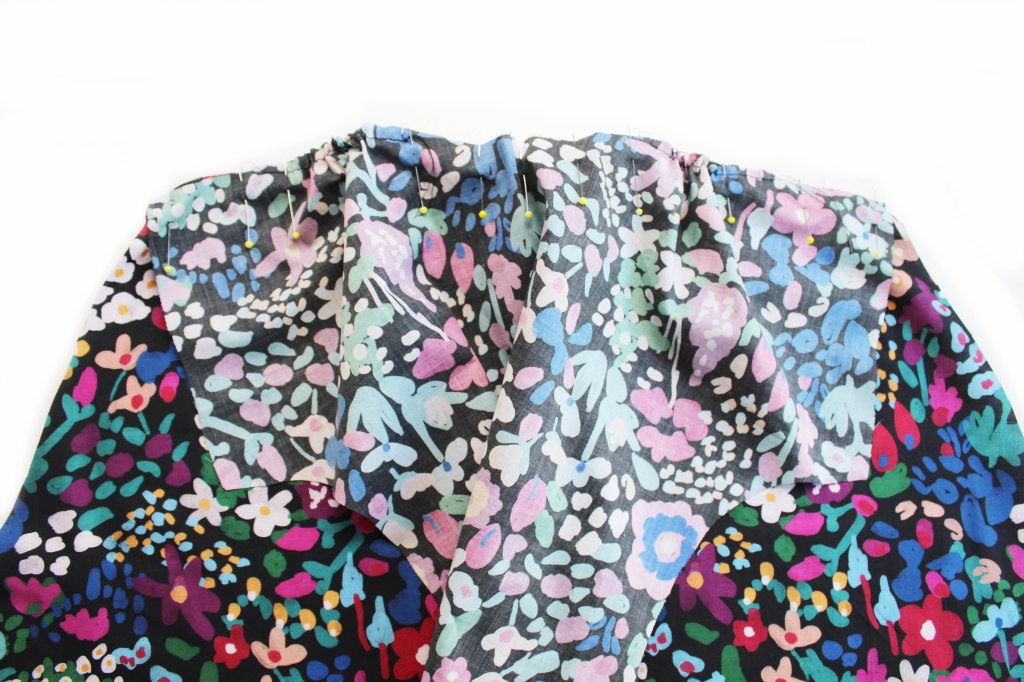
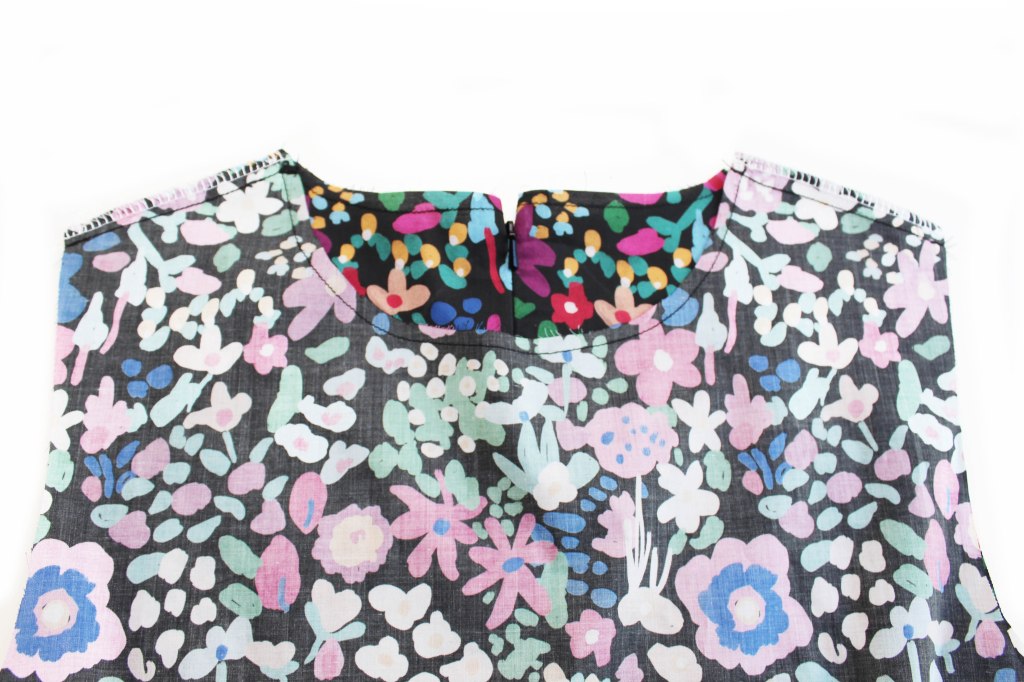
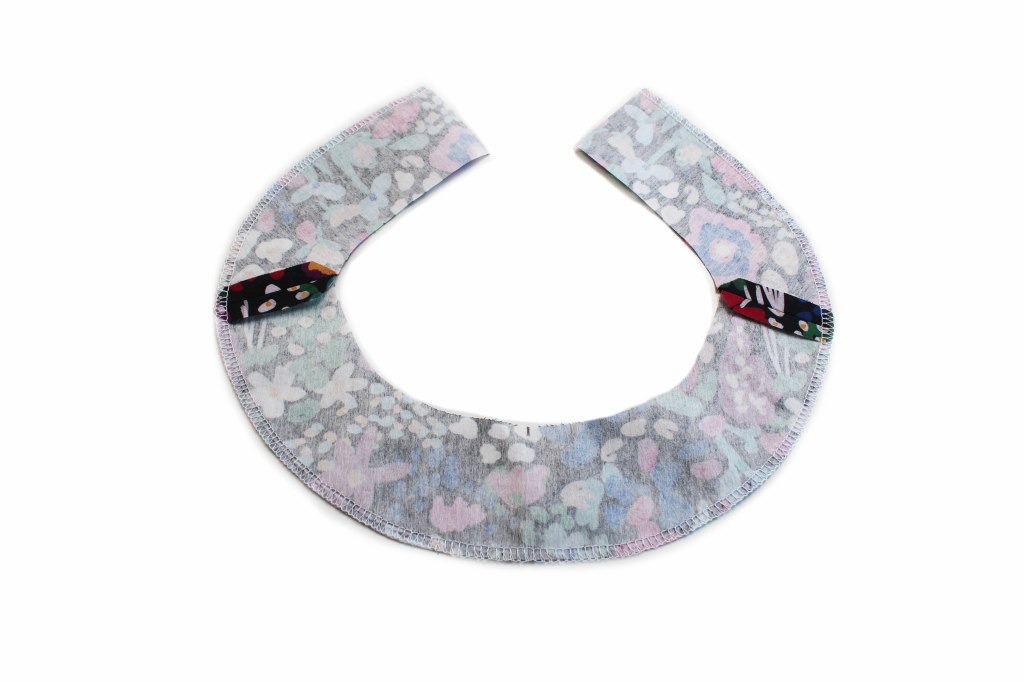
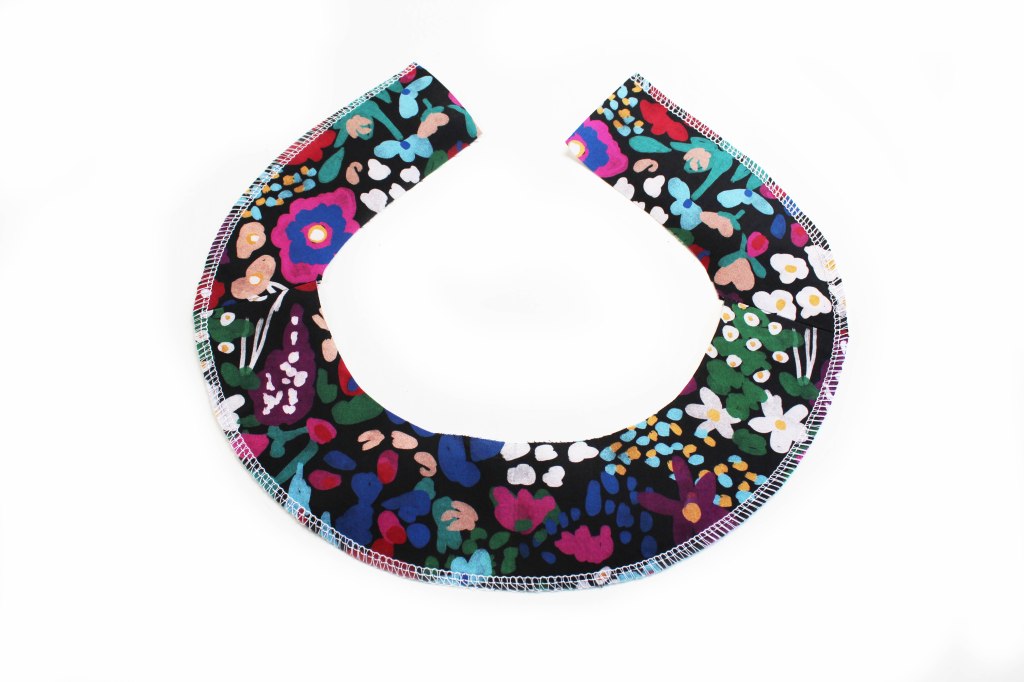
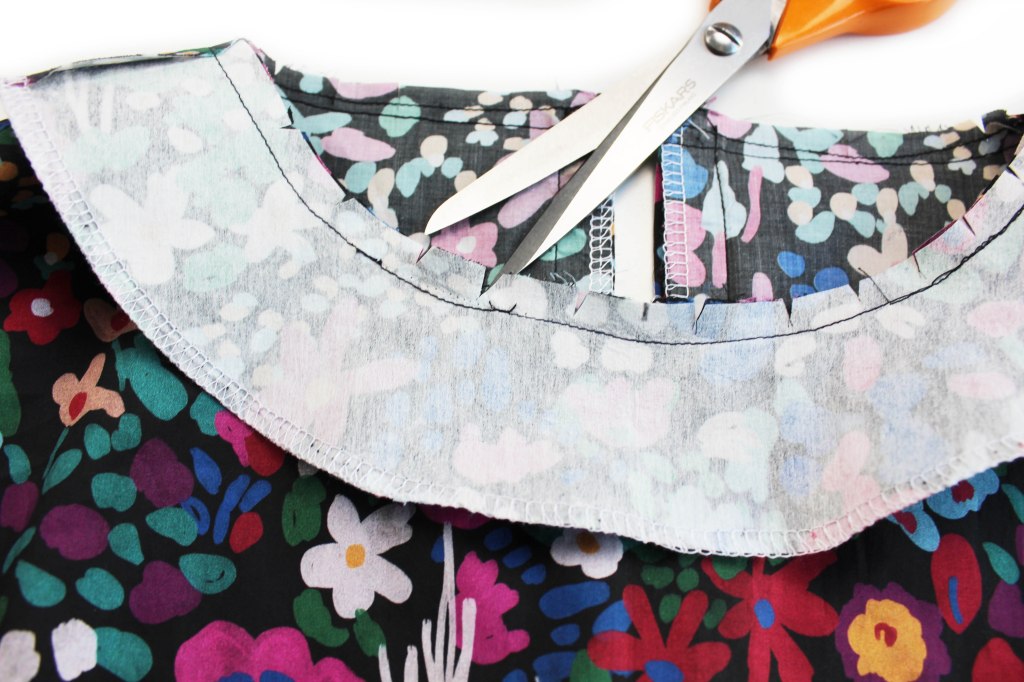
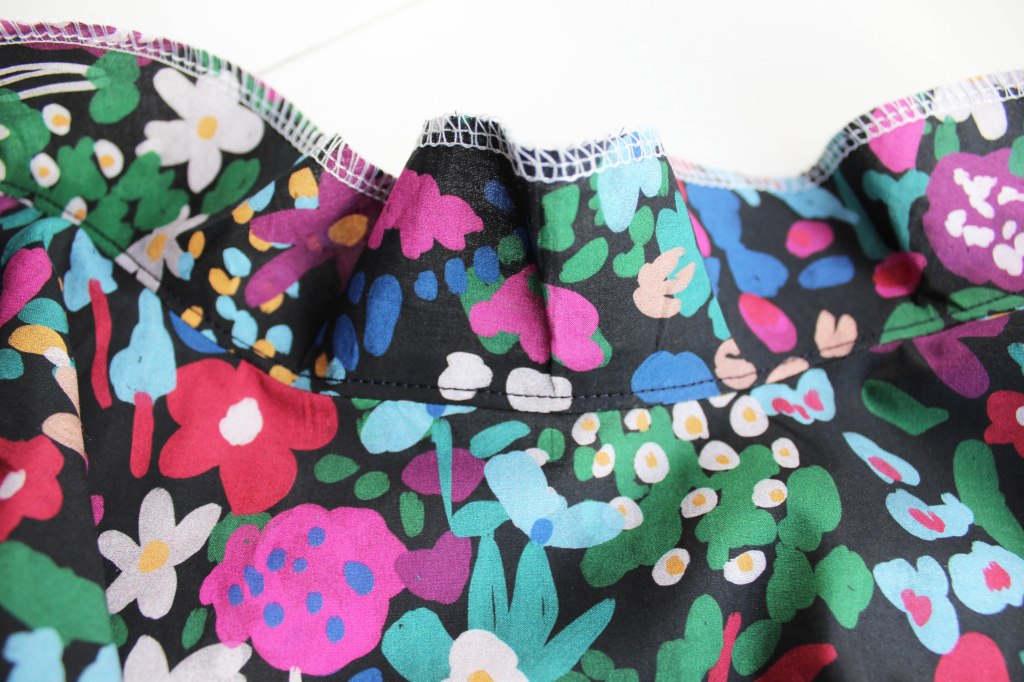
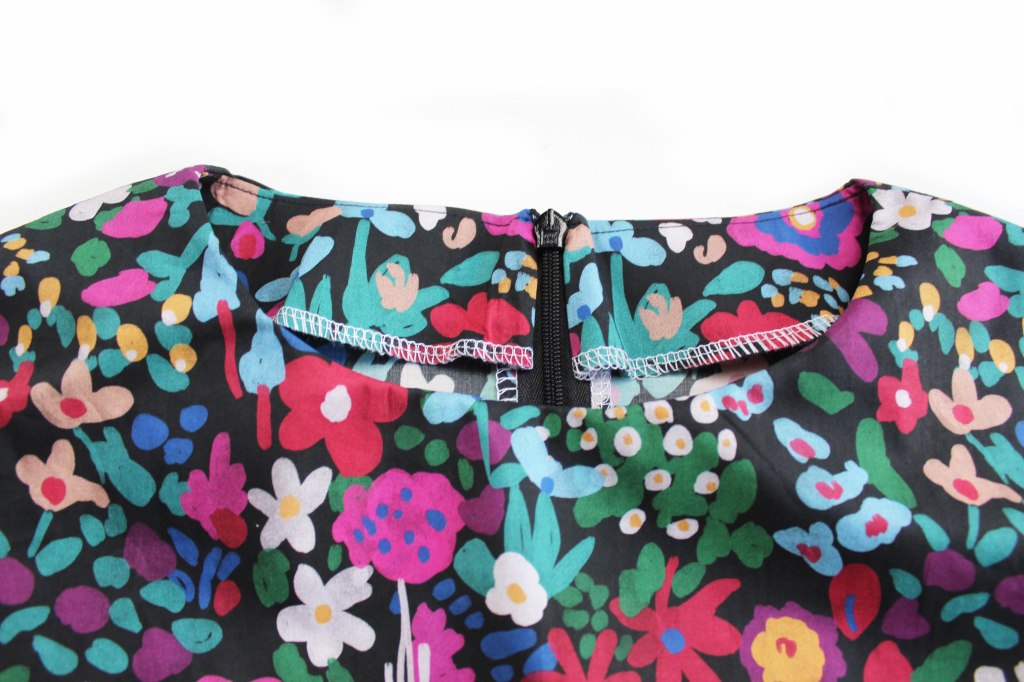
HAND STITCH TO SECURE THE FACING AT THE SHOULDER SEAMS ON THE INSIDE.
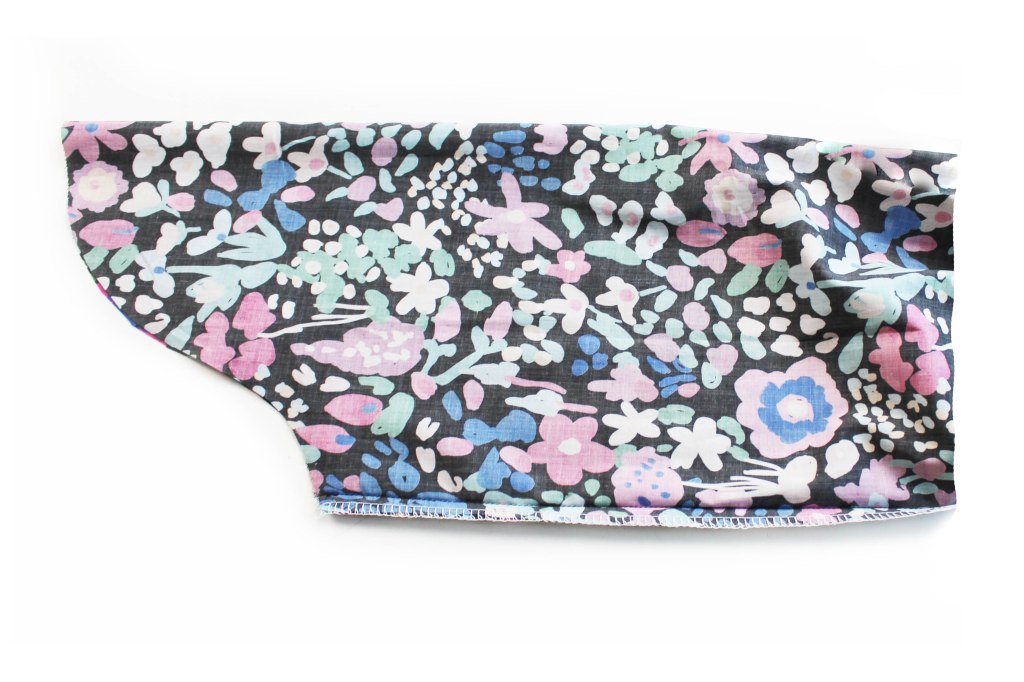
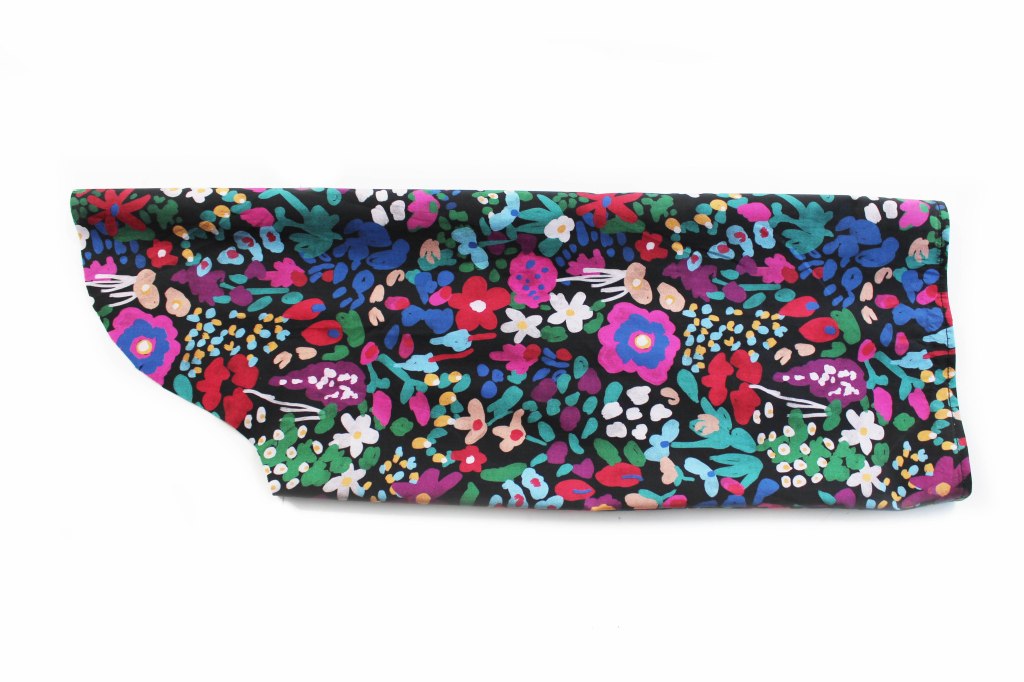
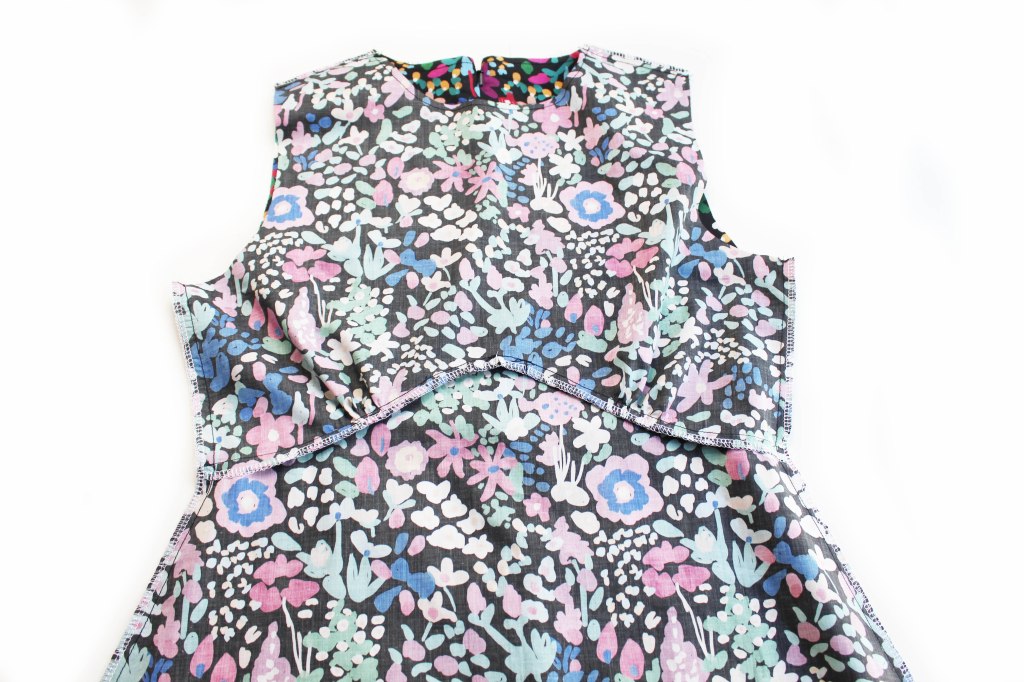
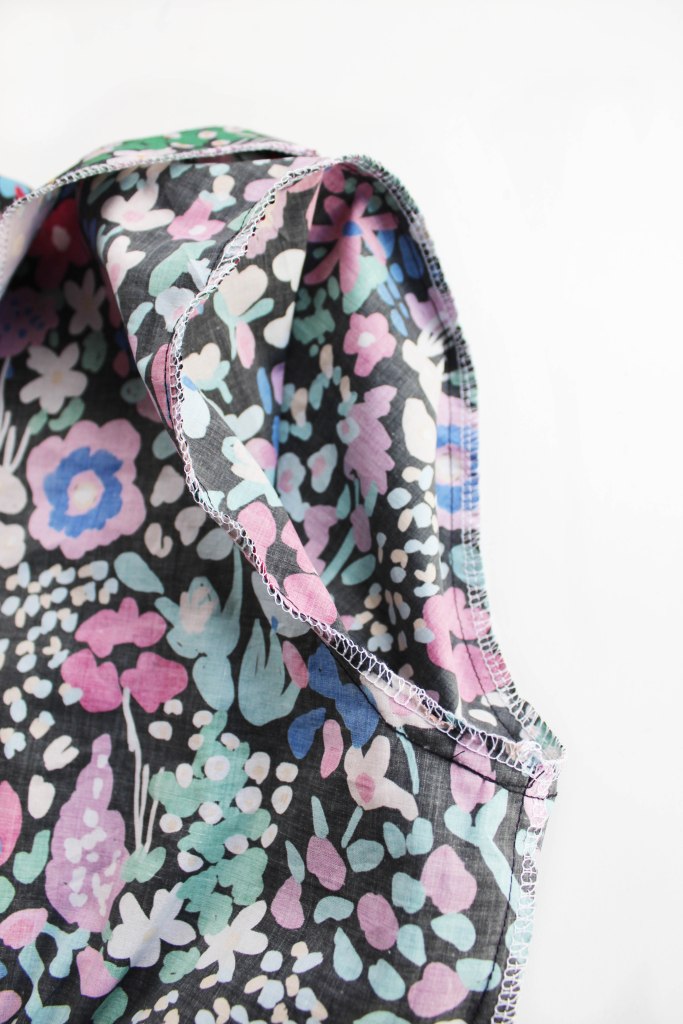
BUST ADJUSTMENT
Adjusting a bust in an empire line pattern is slightly different to a normal pattern with a dart. There are two issues to consider: Bodice length and Bust size.
1. ADJUSTING THE BODICE FRONT LENGTH
So you have made a toile or sample garment and you are finding that the bustline is coming a bit high. It is a common fact that, as we age, our bustline is lower than when we were younger. Having said that, some people may have inherited a longer or shorter bodice than the norm (whatever that maybe!). So for whatever reason you may need to lower (or raise) the bodice bustline. This is how we do it…..
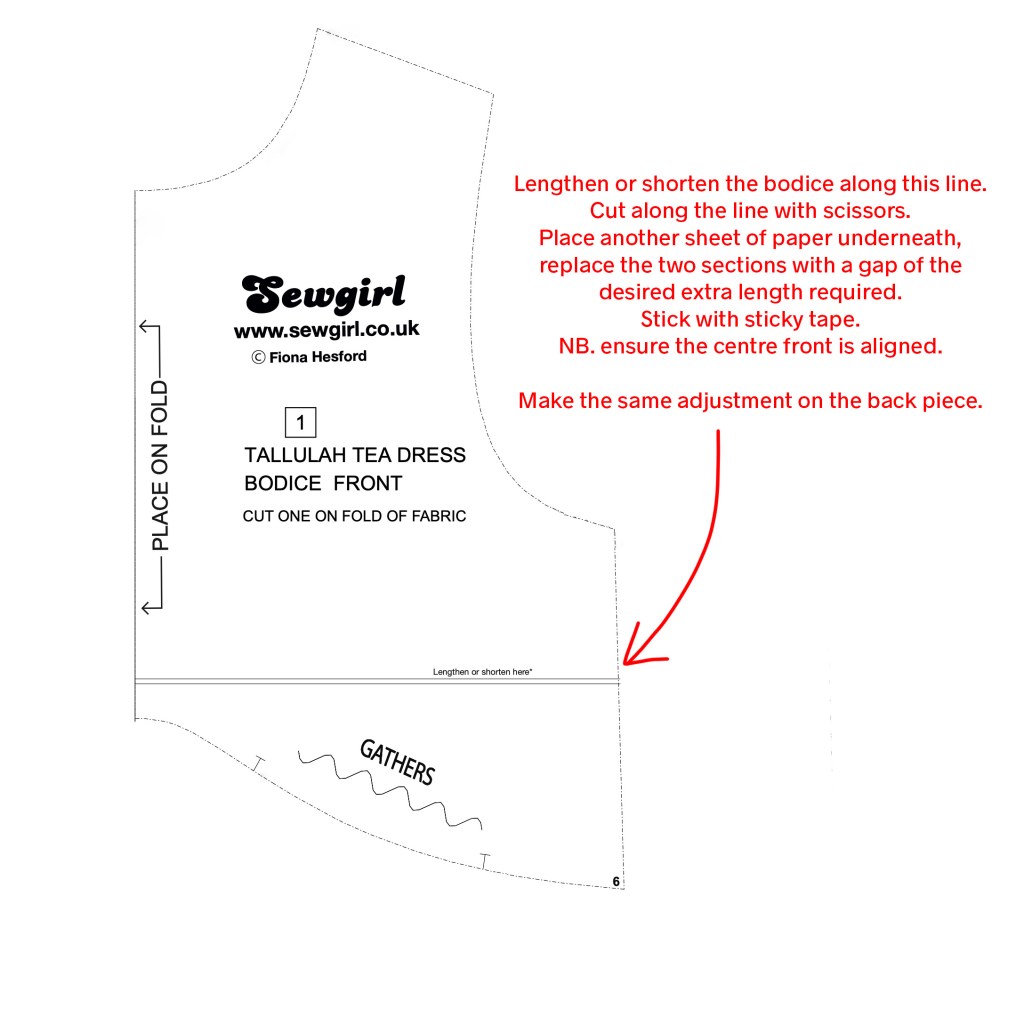
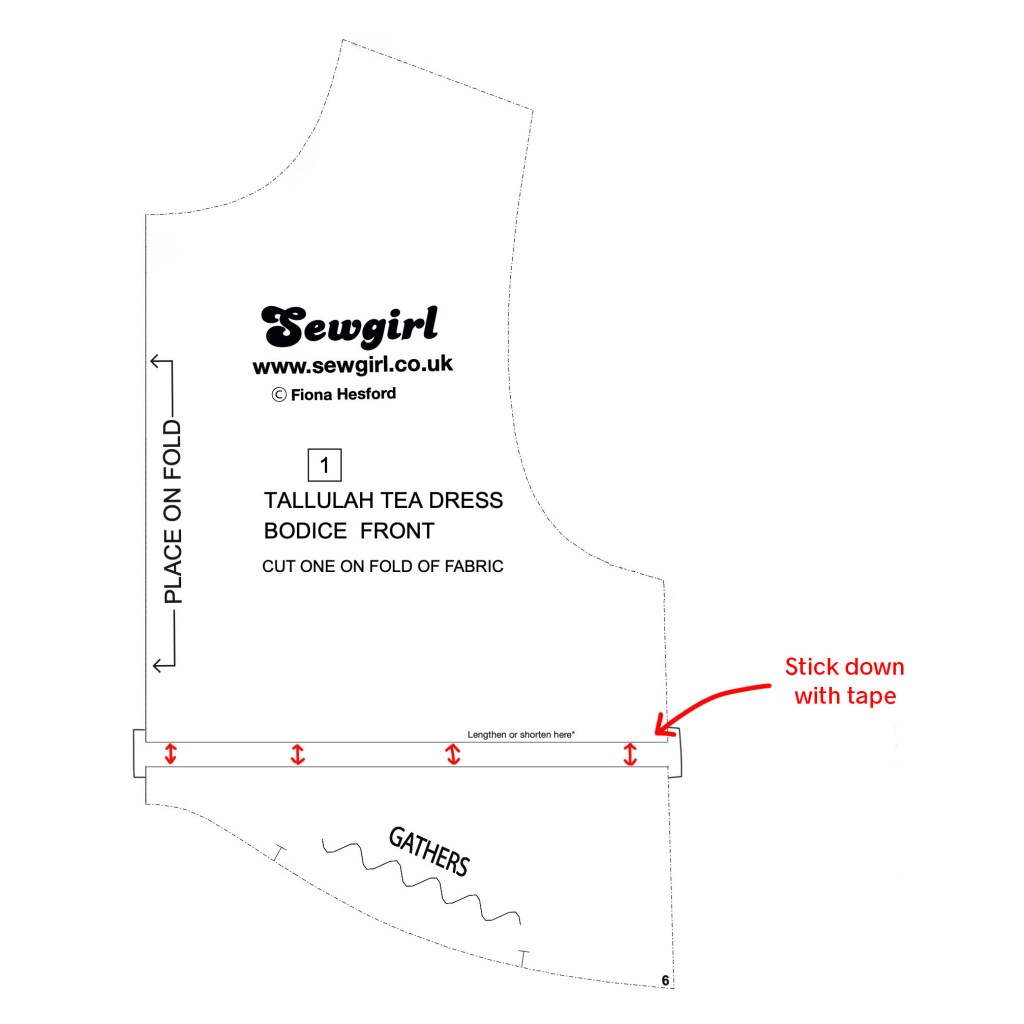
1. ADJUSTING THE BODICE BACK LENGTH
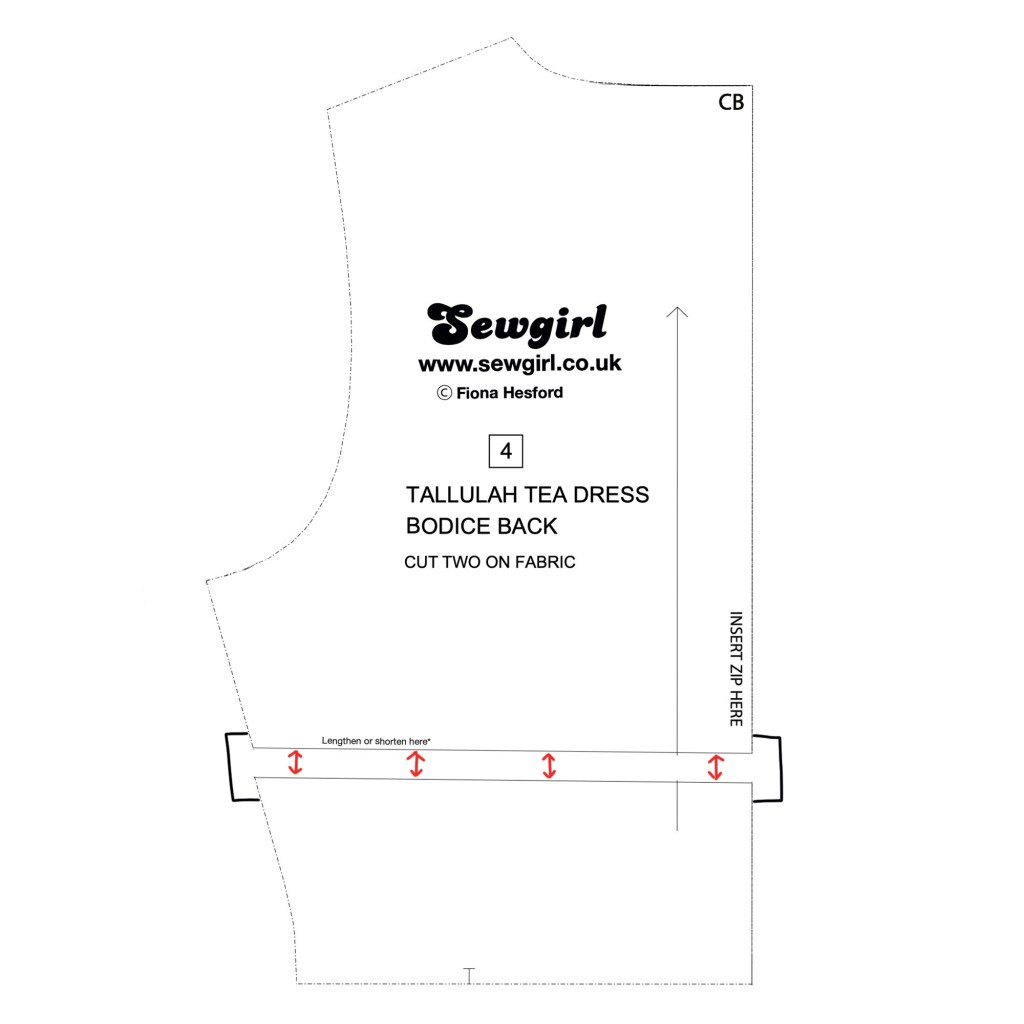
Adjust the Bodice Back in the same way as the Front. Trim along the horizontal lengthen lines. Separate the two pieces to the same measurement as the Bodice Front. Place paper underneath. Stick in position.
You may need to adjust at the outer side edge to align the two pieces. NB ensure that the centre back edges and grainlines are aligned.
OVERALL LENGTH ADJUSTMENT
One last thing worth pointing out when lengthening/shortening the bodice is that the overall dress length will also be shorter/longer. To compensate you may choose to shorten the Skirt Front and Back accordingly, using the lengthen lines on the pattern template. To do this, use the same method as with the Bodice Front and Back.
2. ADJUSTING THE BUST SIZE
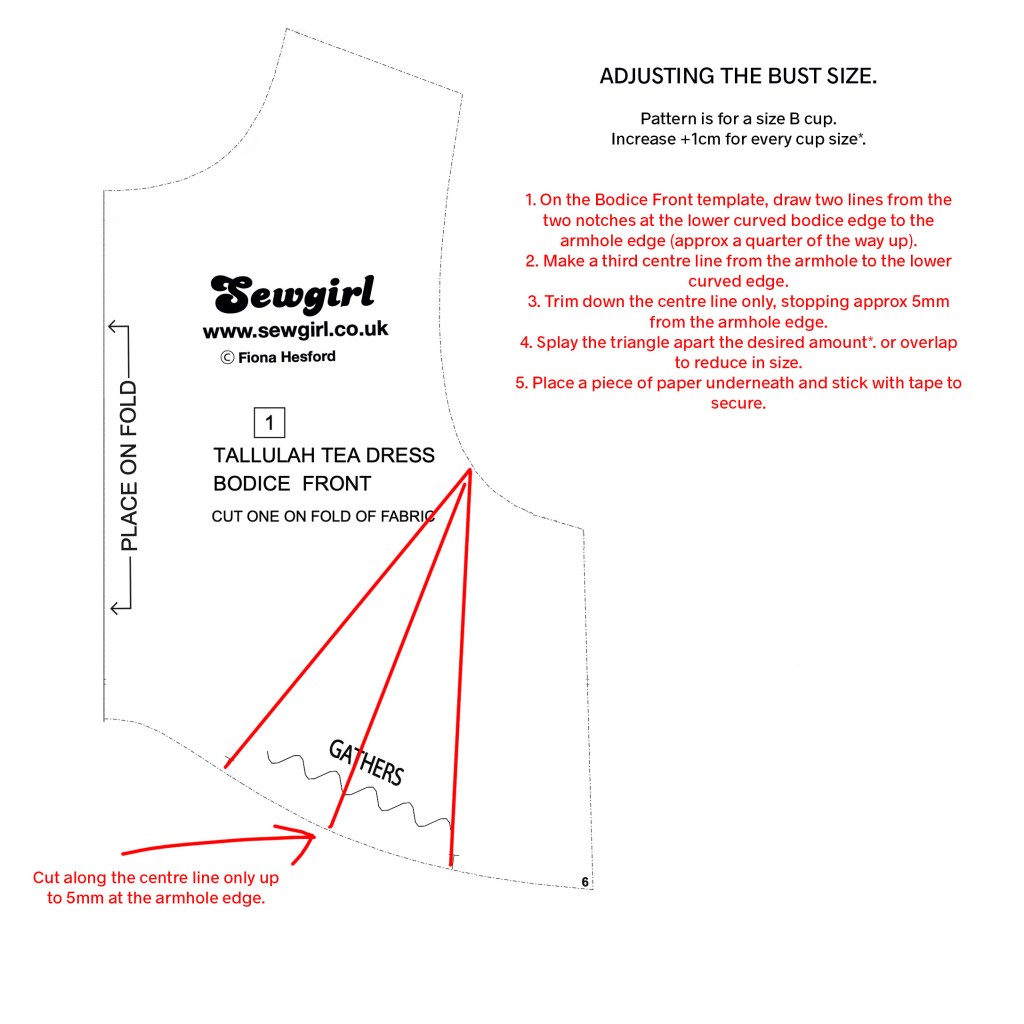
Bodice front needs more room to accommodate a larger cup size? or maybe you want to make the bust smaller?
Fear not ….its so easy to adjust.
Draw two lines from the notches at the lower curved edge, to the armhole edge, approx a quarter of the way up.
Then draw a line centrally between the two lines just drawn. Cut along this centre line, but stop just before (5mm) from the armhole edge. This allows you to splay open or together. Obviously splaying apart the two lines makes the bust bigger and overlapping makes it smaller.
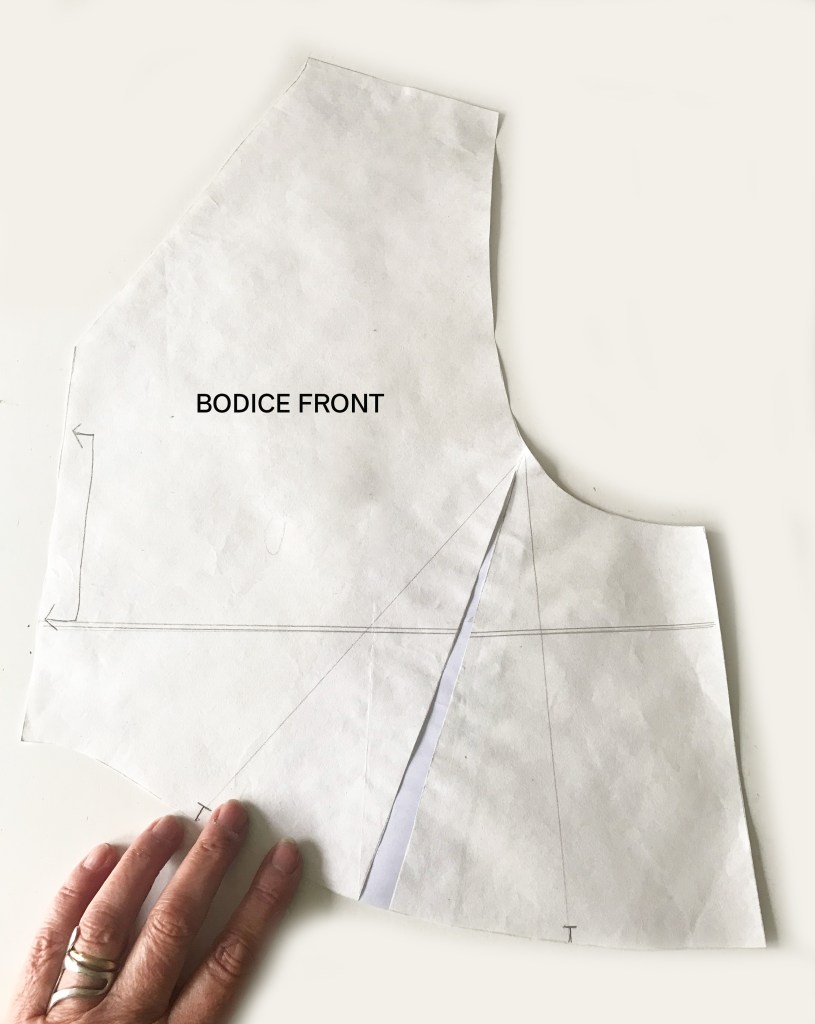
The pattern is designed for a bust cup size B, so if you need to enlarge to a size C then add 1cm between the two lines. Then each size requires a further 1cm. To reduce the bust to A cup- reduce by -1cm.
A= -1cm
B= 0cm
C= +1cm
D= +2cm
DD= +3cm…..
When you have made the correct adjustment, place a piece of paper behind the pattern and tape it down.
Continue as normal with the pattern. You will have a little extra fabric between the notches to gather up for an enlarged bust and a little less to gather up for a decreased bust size. Whichever way, the notches still match up with the Skirt Front and the armhole measurement remains the same. Happy days.
All images are subject to copyright. Please ask prior permission to use them. Thank you.

Protected: TALLULAH V-NECK HACK
BIBI QUILTED JACKET
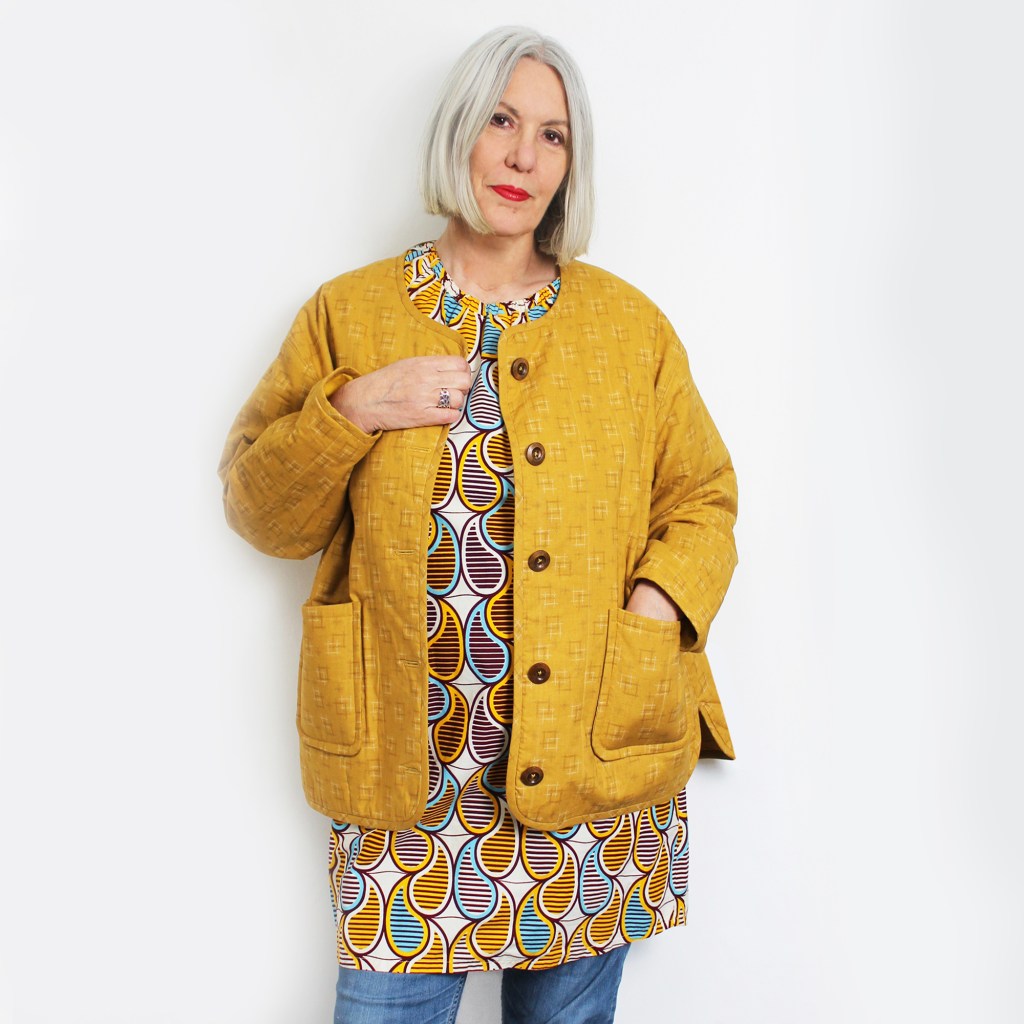
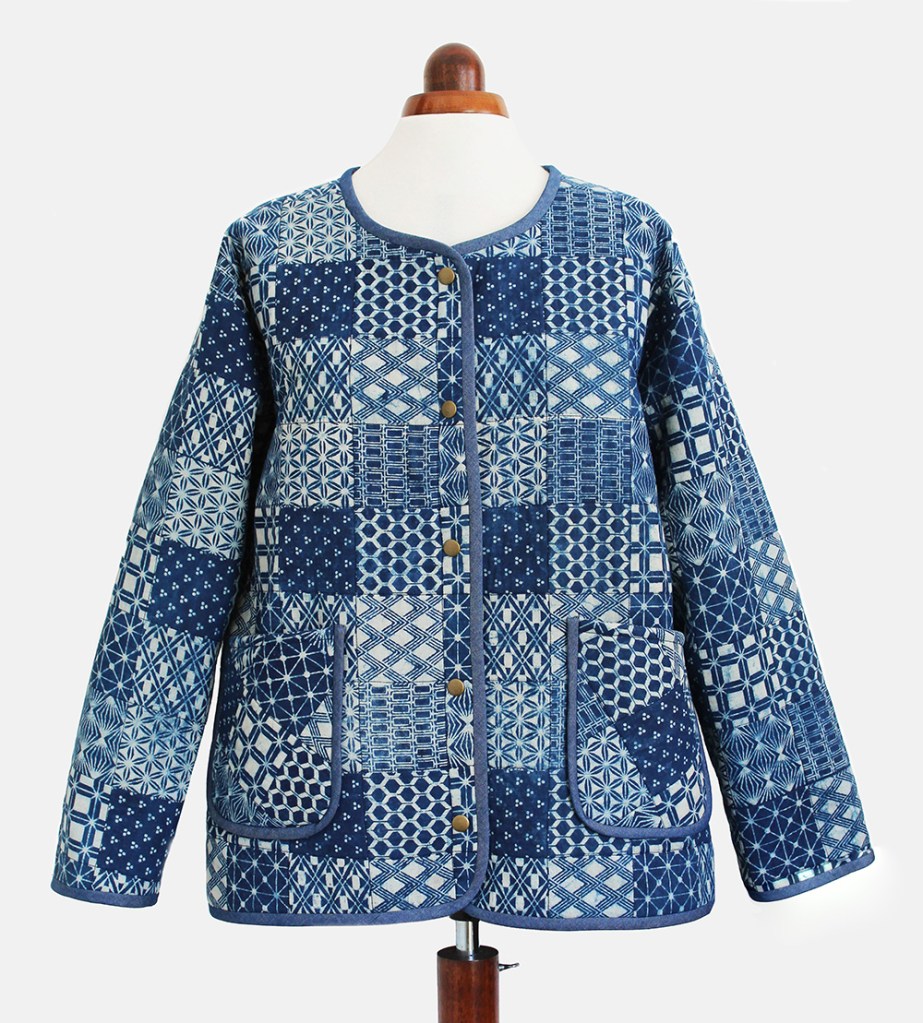

Bibi Quilted Jacket is a timeless garment that you will want to make again and again in lots of different fabrics. It is edged with binding and has curved side edges, two easy quilted pockets and button up fastening. Make in patched fabric, single fabric or pre-quilted- the choice is yours. Its great for making a Kantha style jacket unique to you!
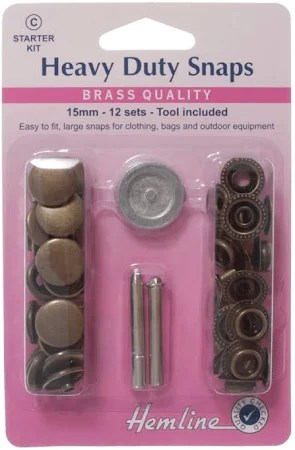
The blue jacket above has been made in pre printed indian block printed patchwork fabric with heavy duty snap fasteners in bronze. Click on the image below to take you to a supplier.

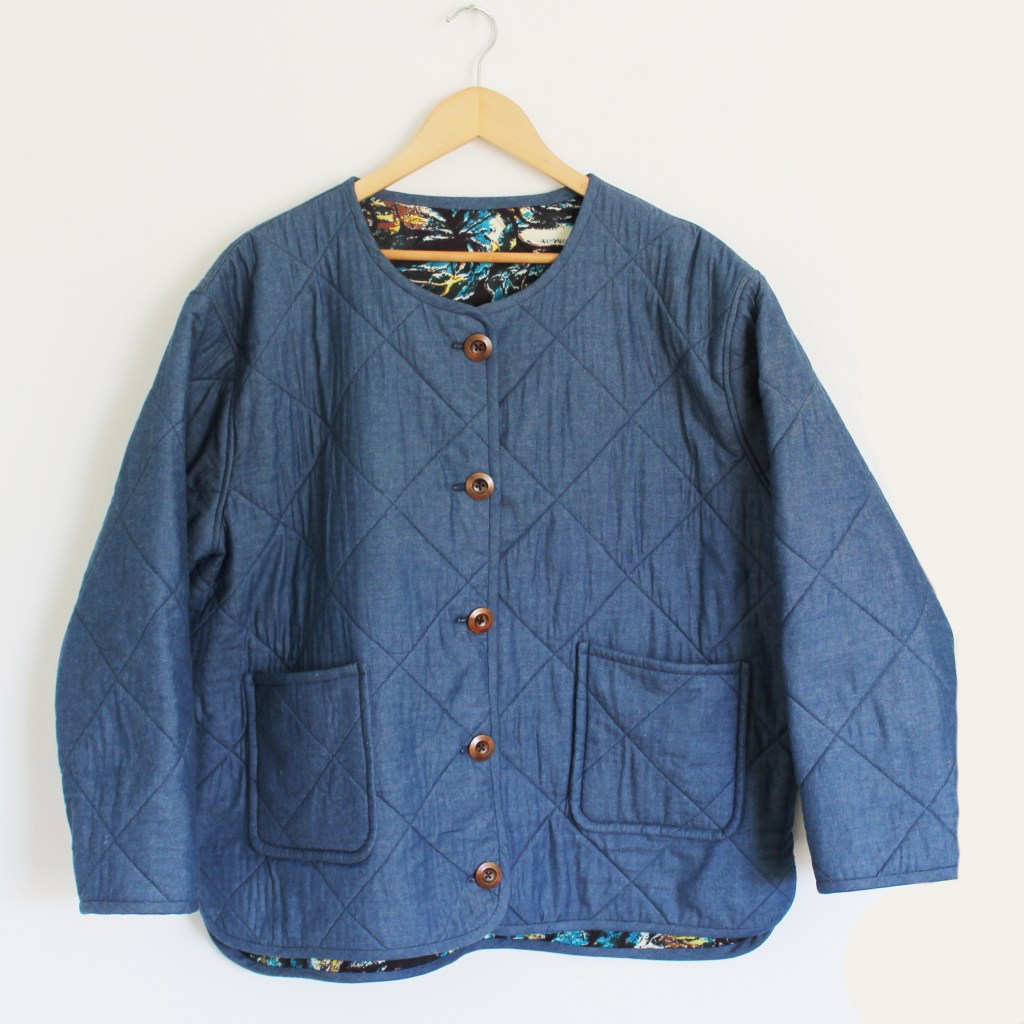
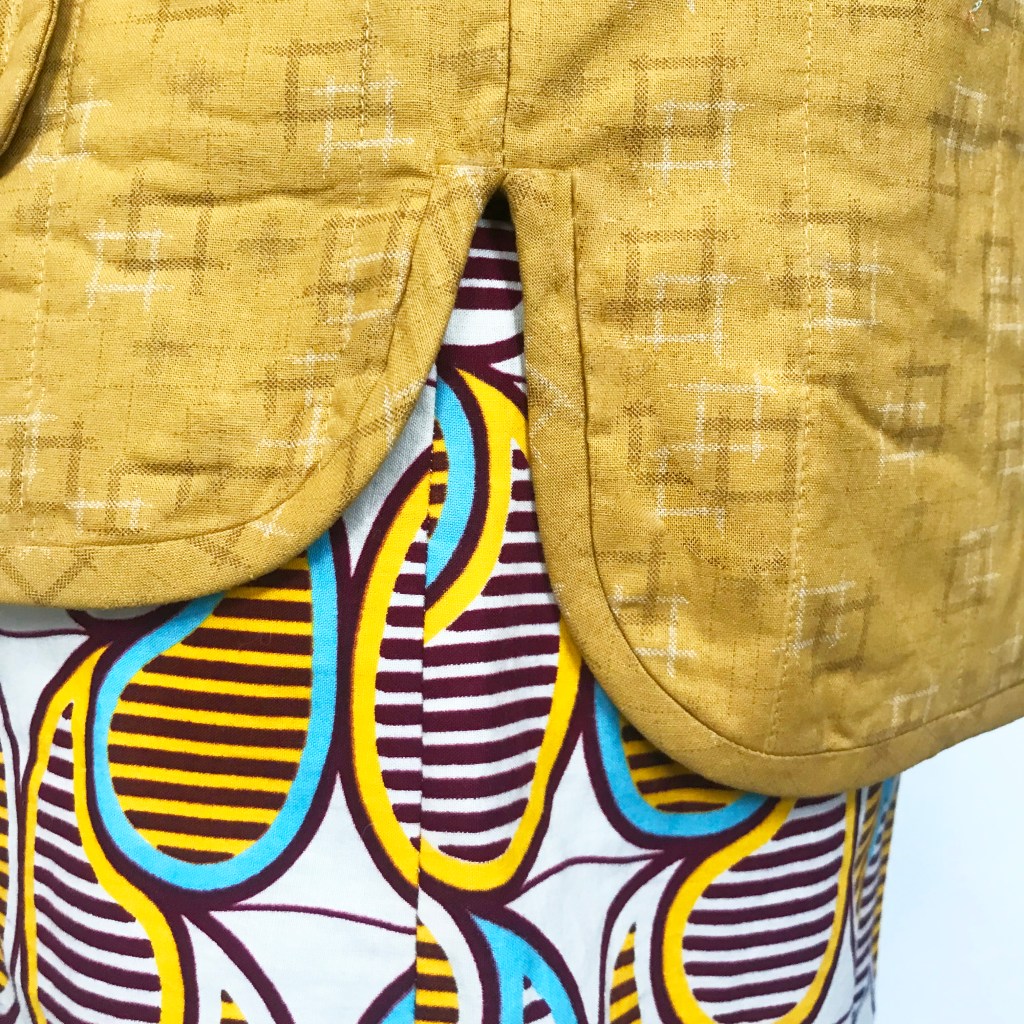
I’ve made this jacket in a lightweight denim with an African fabric lining (as shown above) and another in a mustard cotton in an Ikat design for the outer fabric with a plain cotton lining (left pic). Bibi is a very comfortable relaxed garment suitable for all seasons. It’s a simple make and oh so snuggly to wear.
Here are some measurements and info you will need to know from the back of the pattern.

Making the Bibi Jacket involves some simple quilting. You can choose from sewing tramlines or criss-cross quilt lines its up to you, both are marked out on the pattern. Of course, you could make your own style of quilting lines- or even go freestyle, or why not make a jacket from a piece of patched fabric? Maybe you were going to make a quilt but never quite made it that far. Why not use it for something to wear?
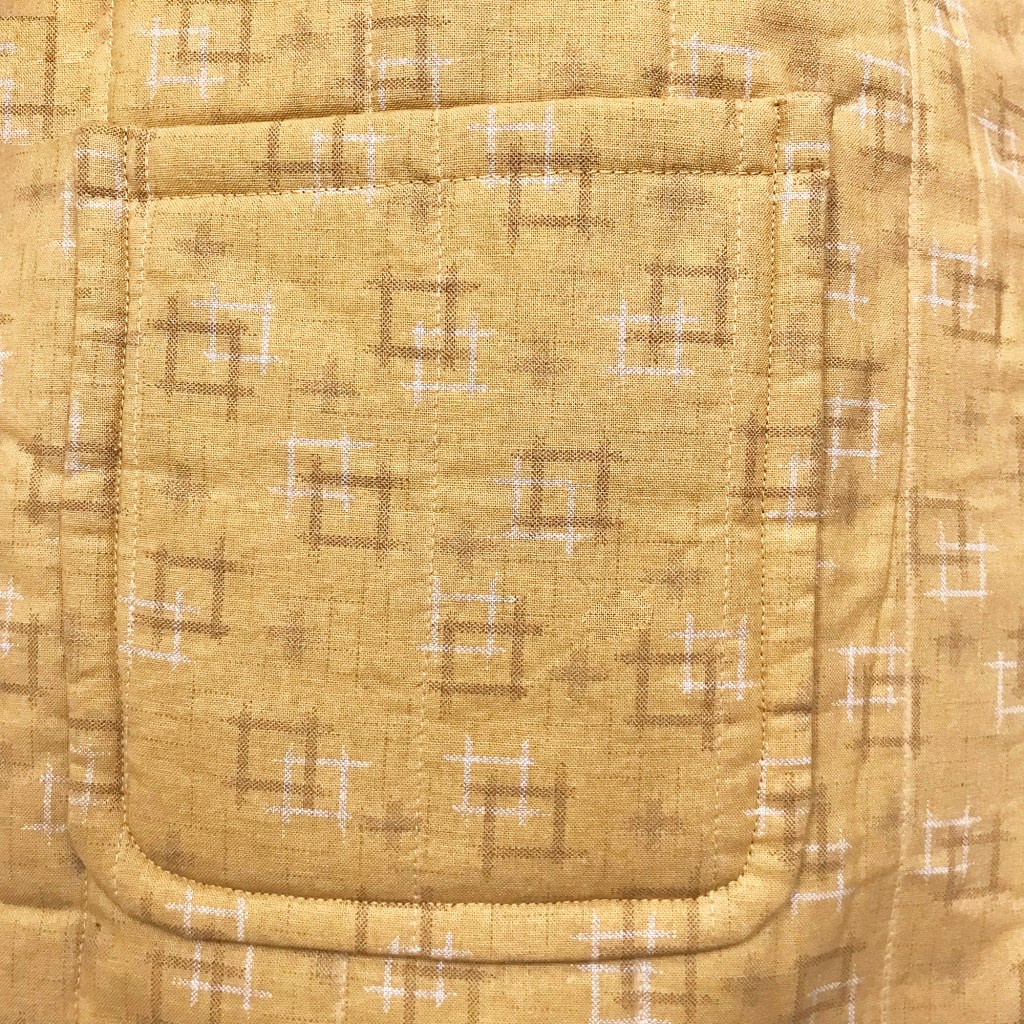
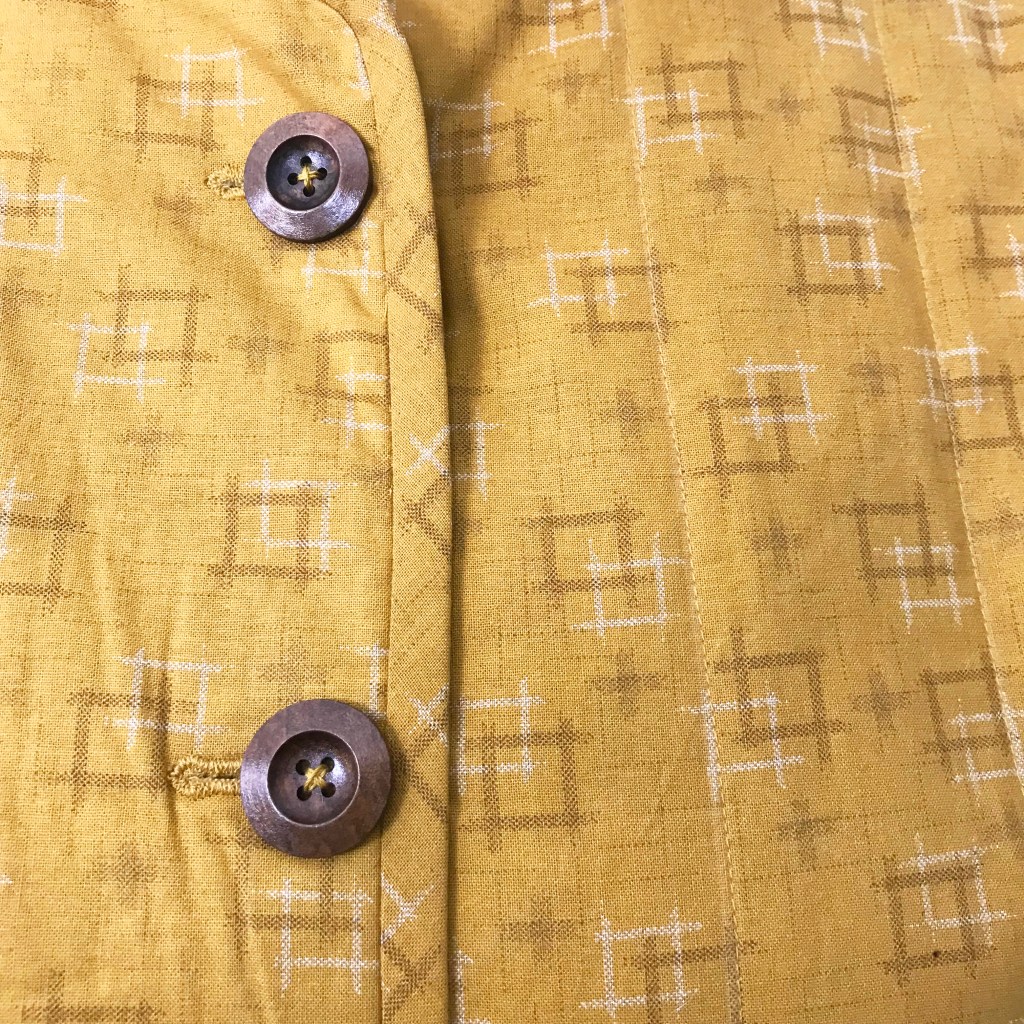
….just sayin!
LETS TALK WADDING!
Ok, so you can buy pre-quilted fabric, but its so much more fun to create your own. You can use just about any type of medium/lightweight fabric for the outer and lining. Remember that it doesn’t want to be too heavy- think light!
Here are some examples of wadding that Ive used….
- Vilene H640/H630 fusible Fleece (loft)- its fusible, made of polyester, very practical because you can just iron it on, but it is on the pricey side, as its not very wide (36″). You would probably need about three metres depending on size. You can get this from Empress Mills.
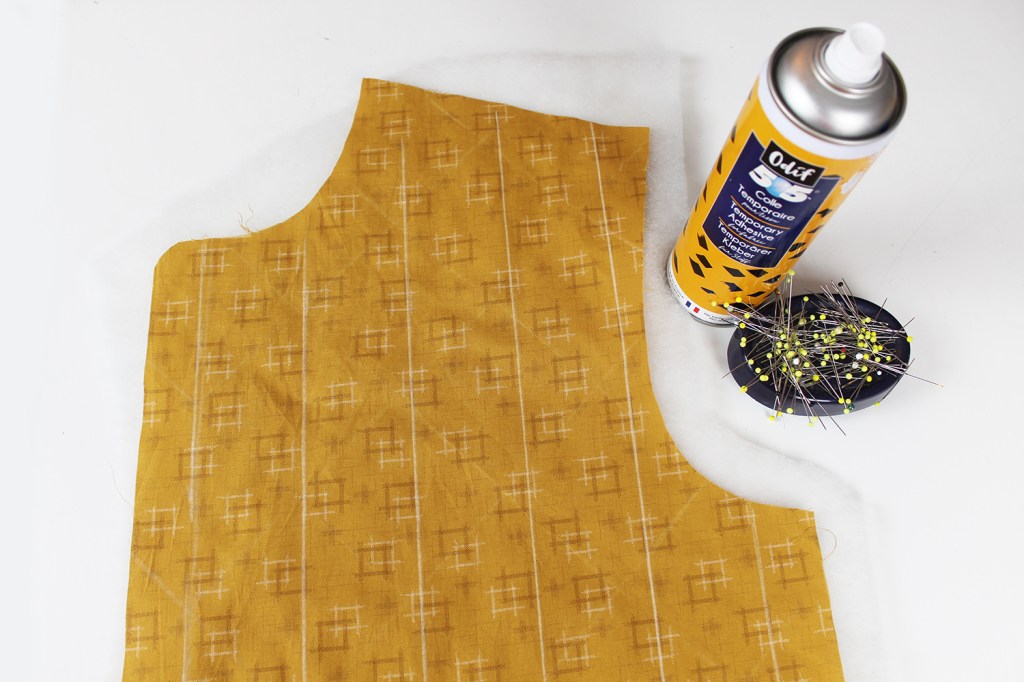
- 2oz Polyester wadding– cheap as chips and a good alternative- use spray textile glue to fix in place or lots of tacking, with a wide width (54″). You would probably need a couple of metres of this depending on size. You can get from Empress Mills .
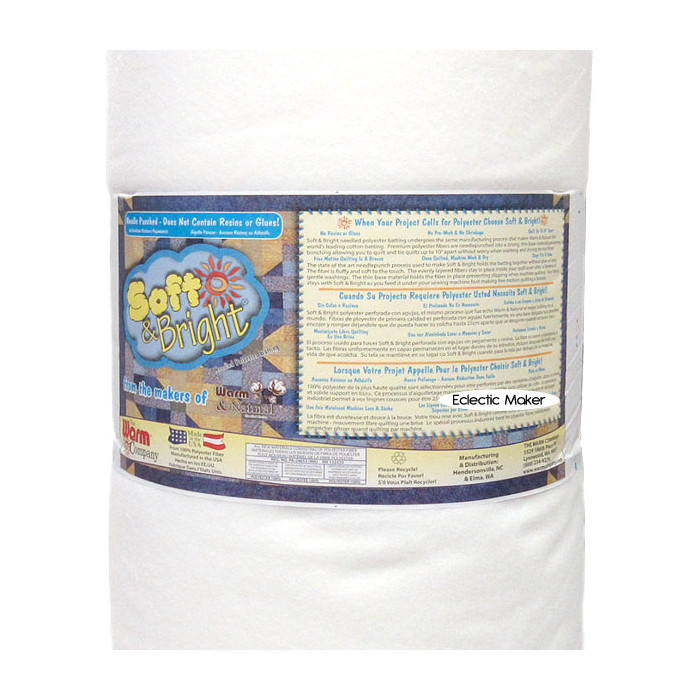
- Quilting batting such as a basic ‘warm & white’ polyester one is a great alternative as its usually very wide you wont need as much. This one ‘Soft & Bright’ available from Empress Mills is 90″ wide so probably 1.5m would suffice depending on size. This one is much thicker and heavier than the other two and not so easy to work with but still makes a good jacket.


HOW TO MAKE THE BIBI JACKET
SEAM ALLOWANCE IS 1CM (3/8″)
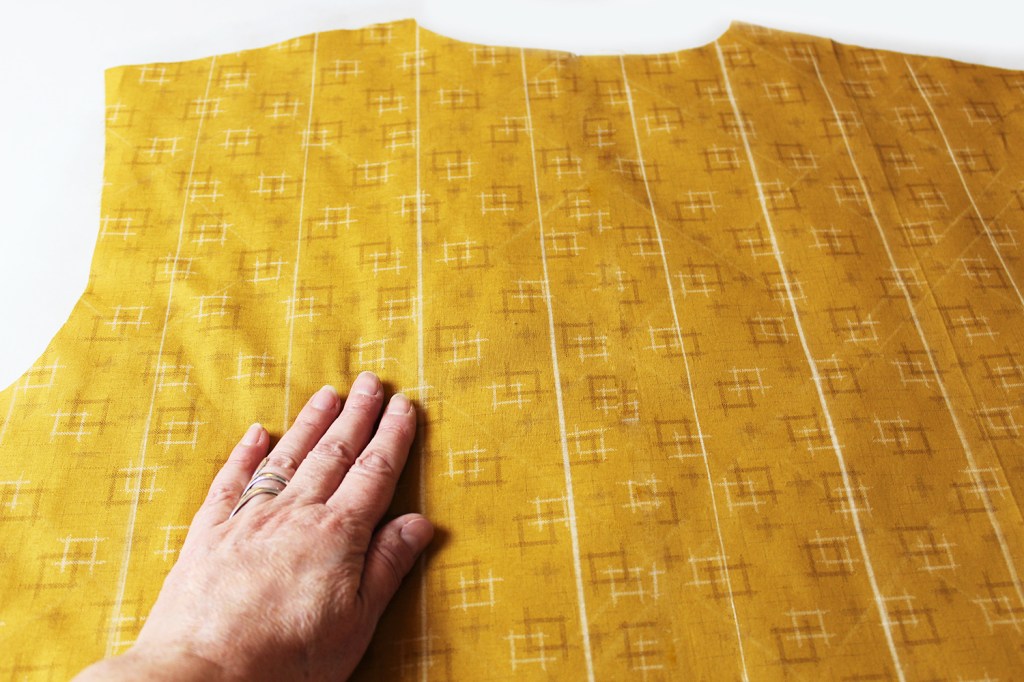
First cut out the fabric pieces from the pattern templates. Mark out the quilt lines with chalk or a fabric marker. Fuse the wadding or fusible fleece to the reverse side of each piece (Fronts, Back, Sleeves and Pockets).
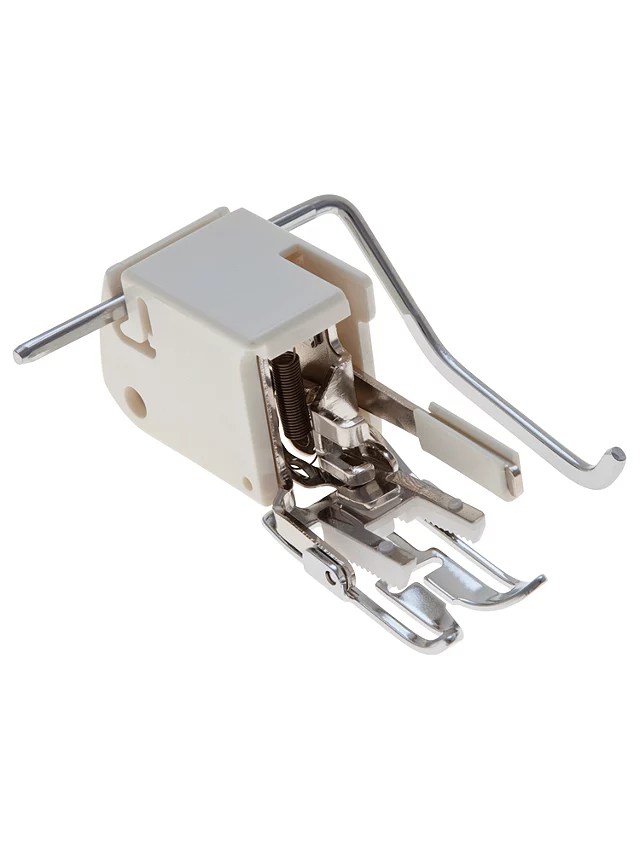
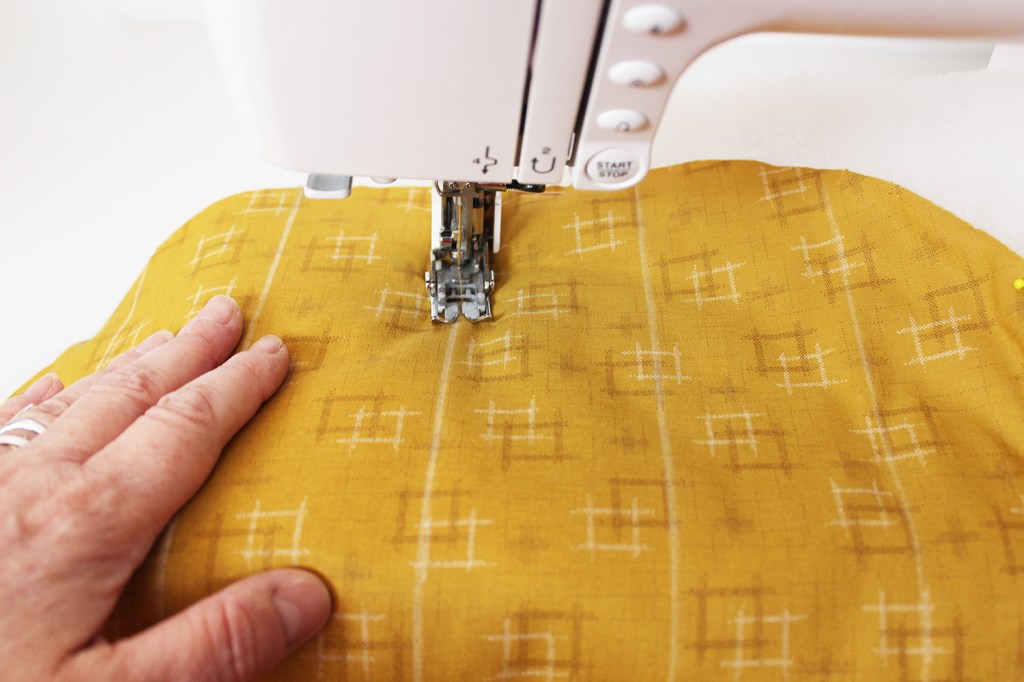
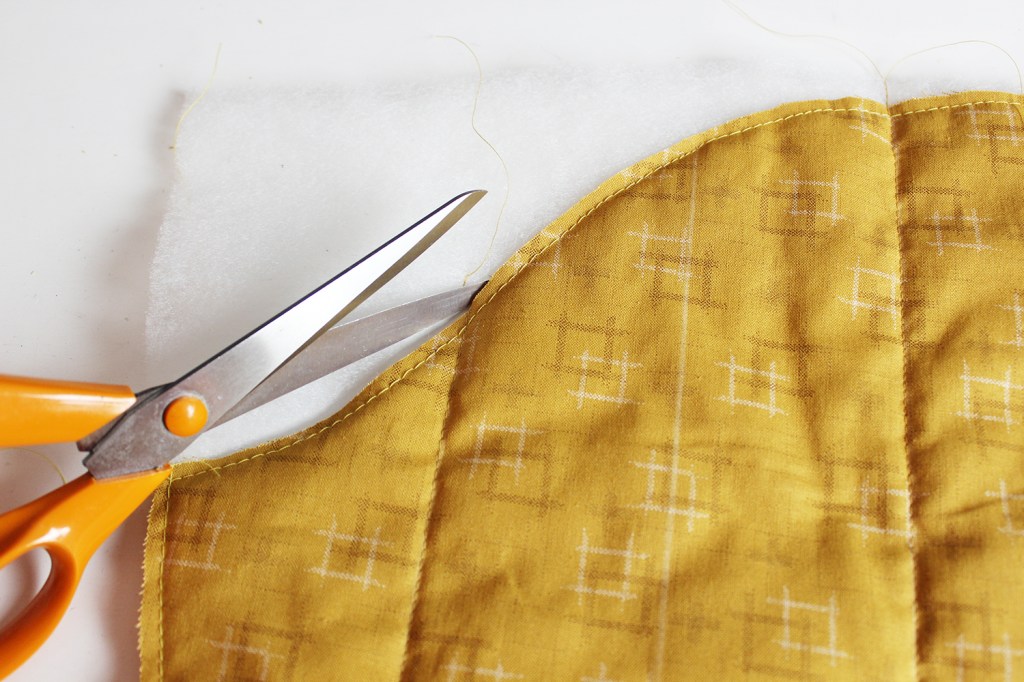
Stitch along the lines with a longer stitch length (2.8mm). Stitch on the right side of the fabric to secure the two layers together. Quilt all the pieces backed with wadding.
QUILTING THE FABRIC

POCKETS
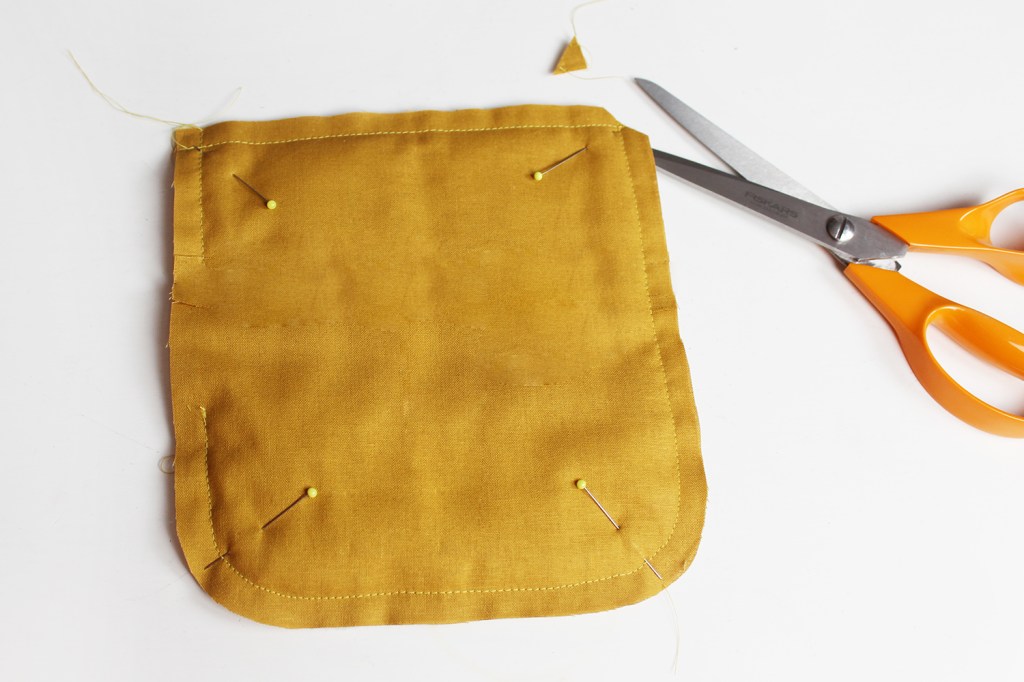
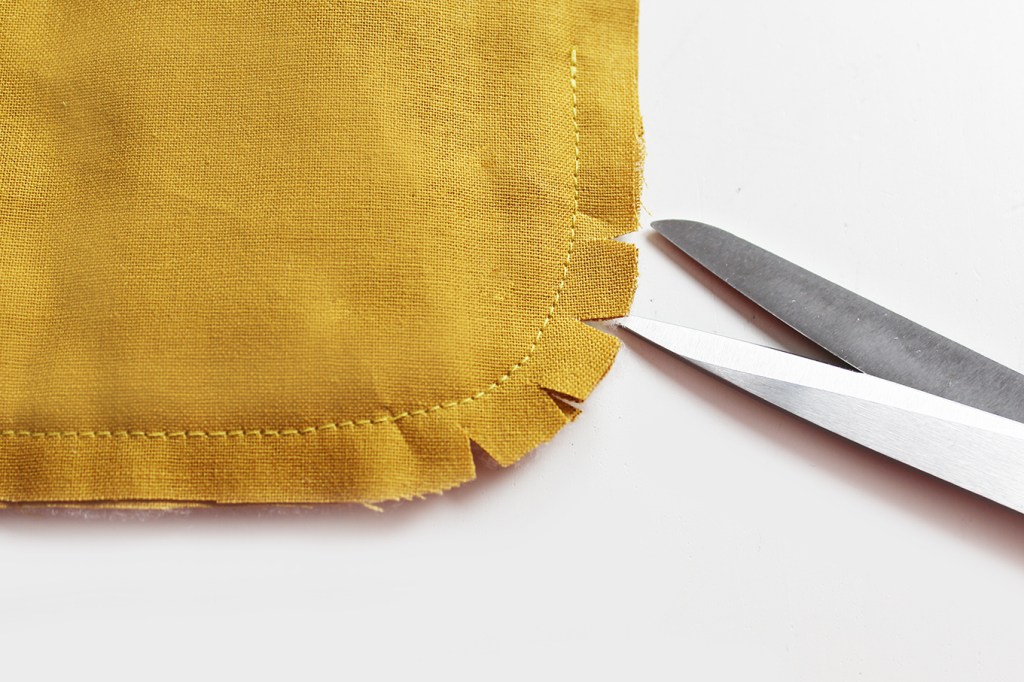
Lay the pocket lining together with the pocket, right sides facing together. Sew all around, leaving an opening on the short side edge of approx 4cm (1 1/2″). Trim across the seam allowance corners. Nick the curved seam allowances. Turn inside out through the opening. Press, pushing out all the edges from the inside with a poking tool. Hand sew up the side opening.
Repeat with the second pocket and lining.

Pin the pocket to the jacket front. See the Pocket position on the template.
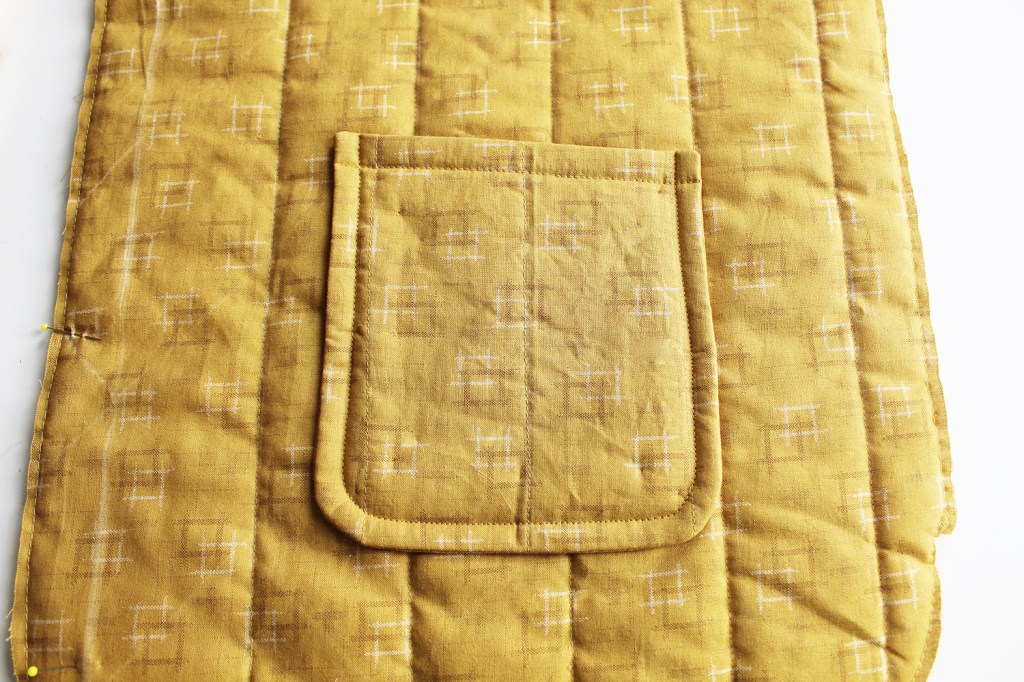
Topstitch the Pocket 1cm away from the outer edge all around leaving the top edge open. Press. Repeat with the other Pocket.
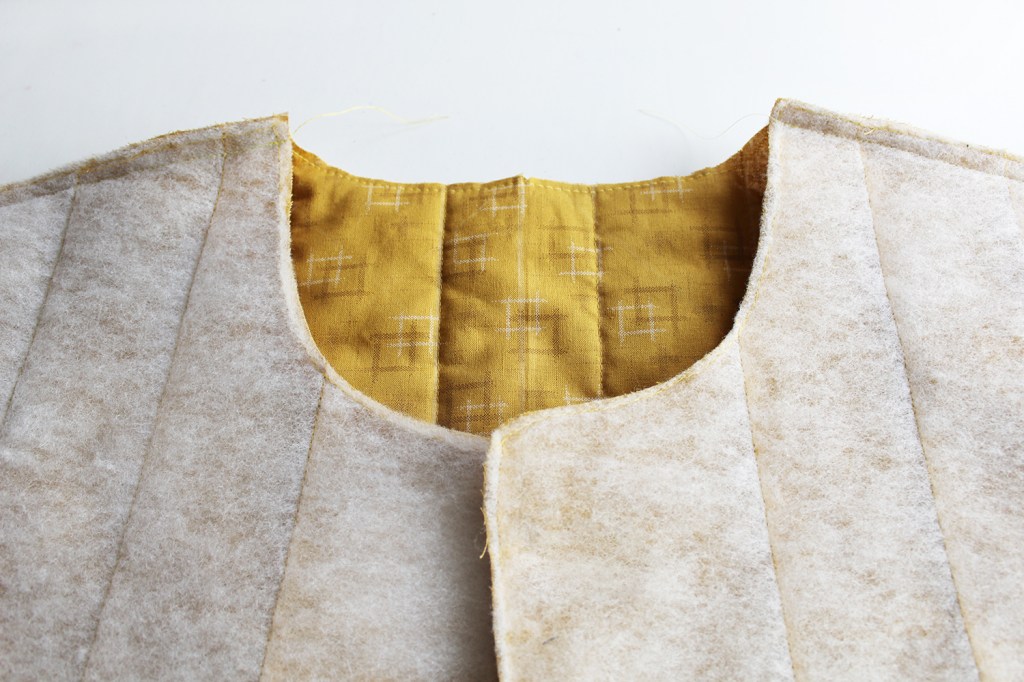
Join the shoulder edges with the right sides together. Press the seam allowances towards the back. Topstitch.

Join the side edges of the front and back below the armhole to the notch. Press the seam allowances open.
SLEEVES
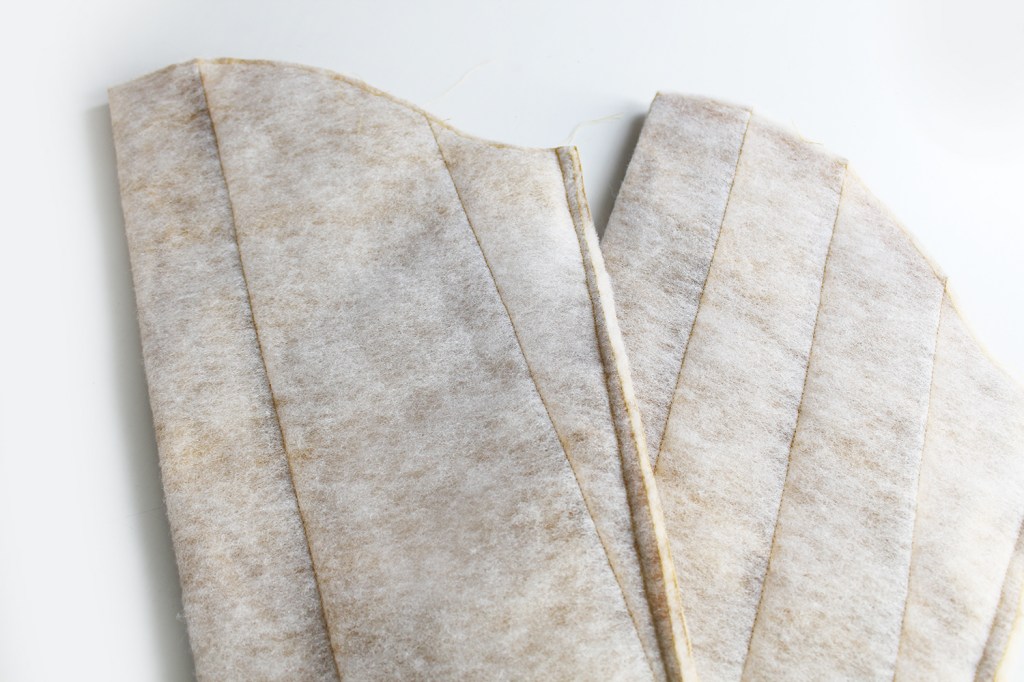
Fold the Sleeve piece in half aligning the long vertical raw edges. Pin. Sew. Press the seam allowances open.
With the right sides facing together, insert the sleeve to the armhole, aligning the raw edges and the back and front sections. Pin. Hand tack. Sew.

Topstitch the sleeve seam. Repeat with the other sleeve.
LINING
SEW THE LINING FRONT TO BACK AT THE SHOULDER EDGES. ATTACH THE SLEEVES IN SAME WAY AS BEFORE WITH THE OUTER FABRIC.
INSERT THE LINING INTO THE OUTER JACKET WRONG SIDES TOGETHER. PIN ALL AROUND MATCHING UP THE RAW EDGES.
Machine tack around the raw edges to secure the three layers together.
BUTTONHOLES
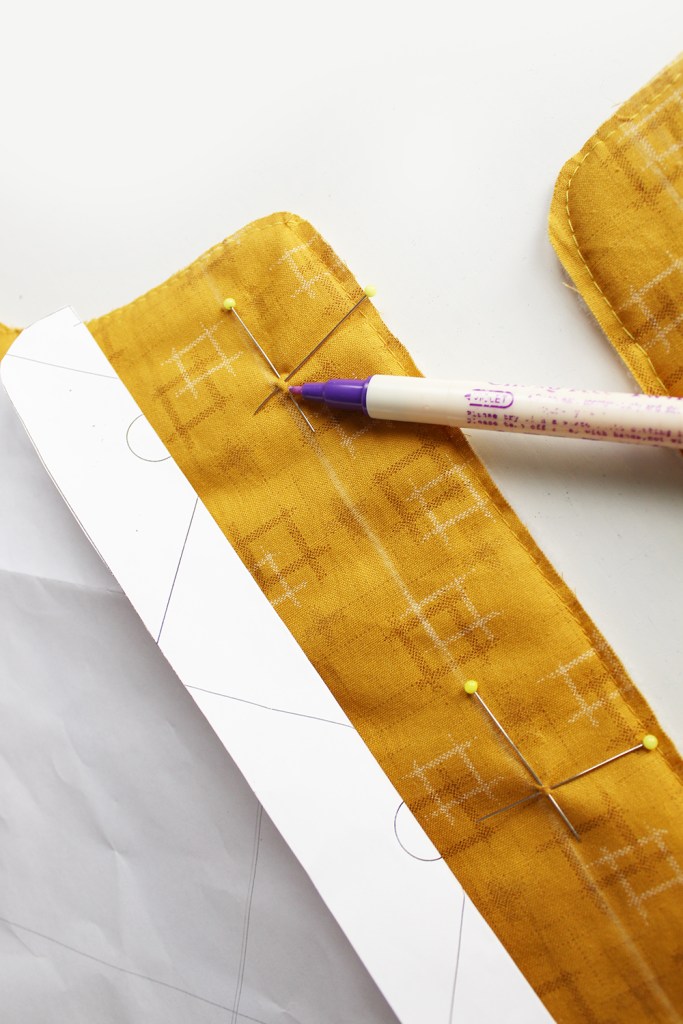
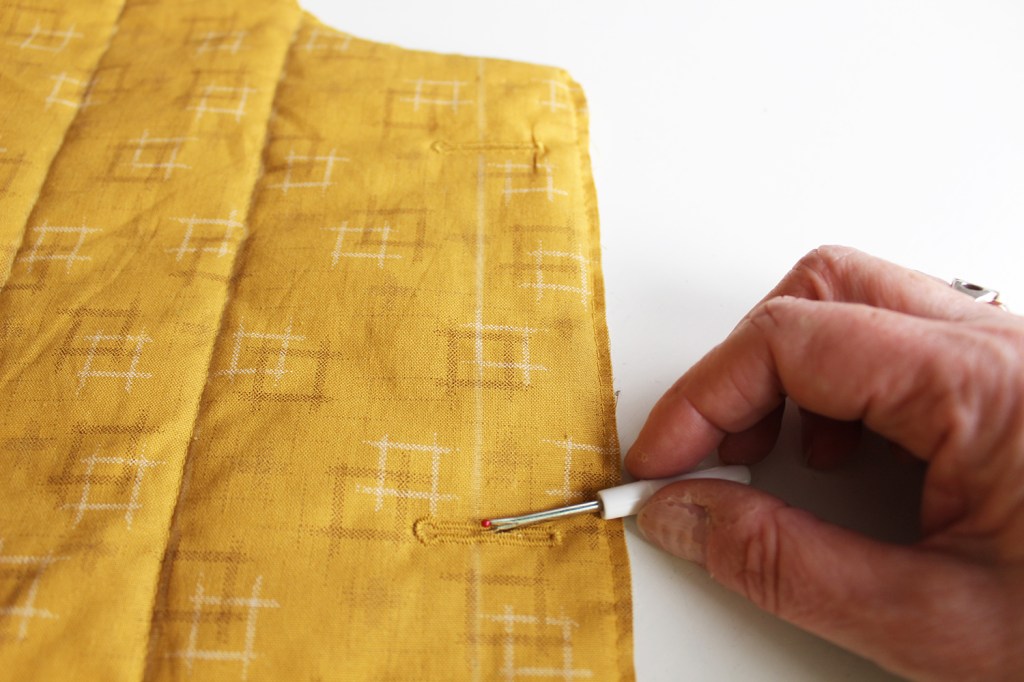
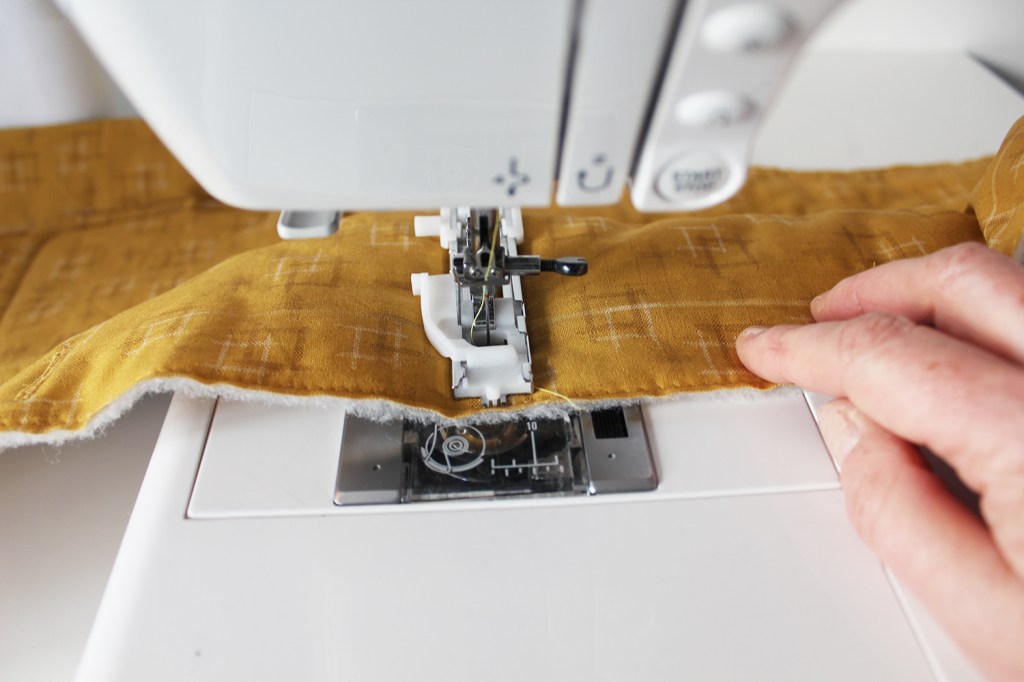
Mark out the buttonholes in position as shown on the template. Sew the five buttonholes. Tip: make a ‘practise’ buttonhole with a leftover piece of the three layer fabric. When you are happy with the size compared to the buttons, use this to mark out the starting point each of the buttonhole positions so that its centre aligns with the jacket centre (as shown by the notch at the neck centre front). Sew the buttonhole away from the centre front raw edge.
BIAS BINDING
Making Your Own (buy ready made 1” (25mm) bias tape as an alternative).
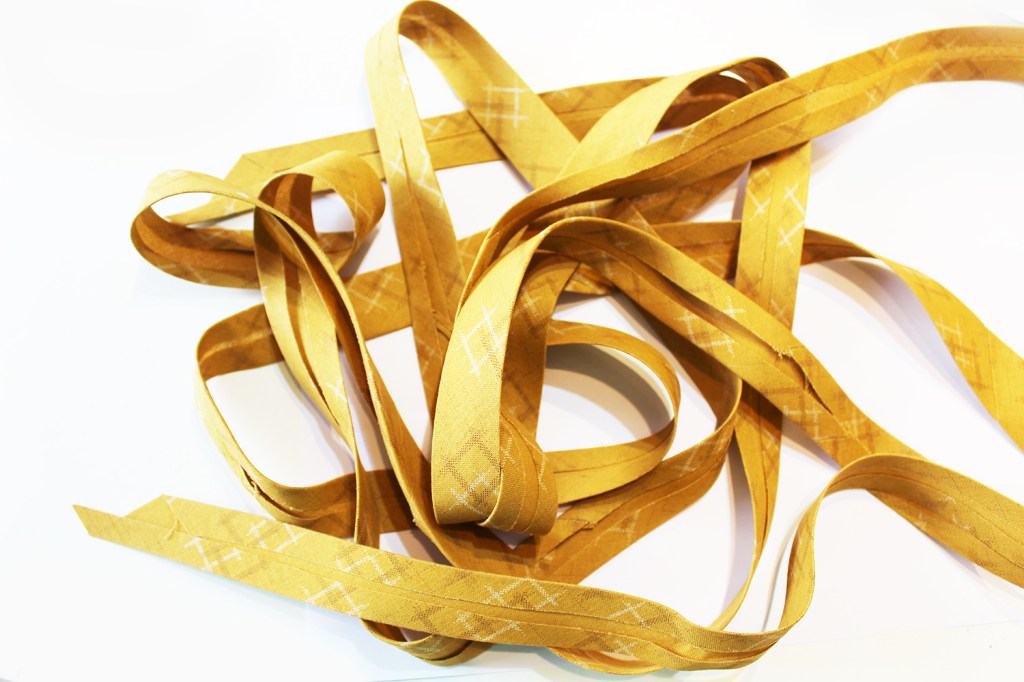
The image below shows step by steps about how to make up to 200″ of bias binding from just a half metre of fabric. It’s a really useful method for saving money and getting the most of your fabric.
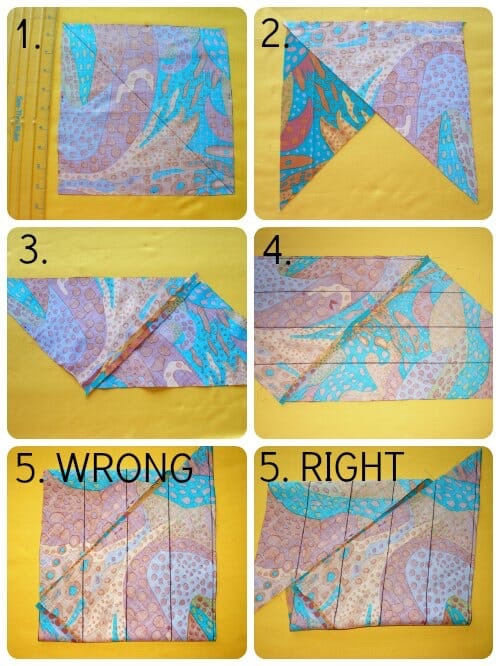
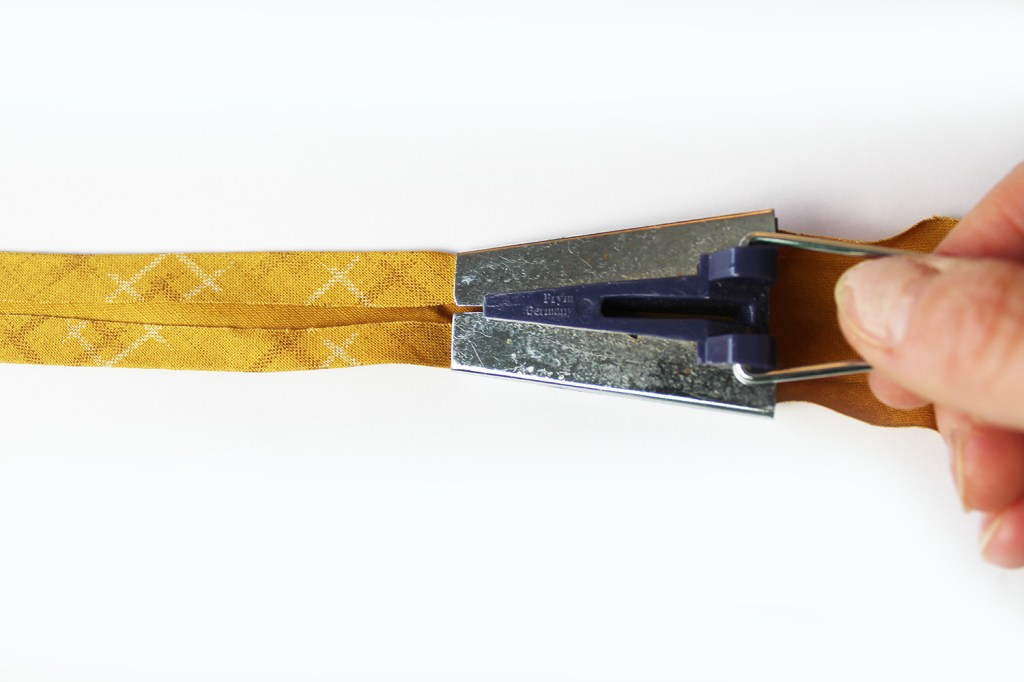
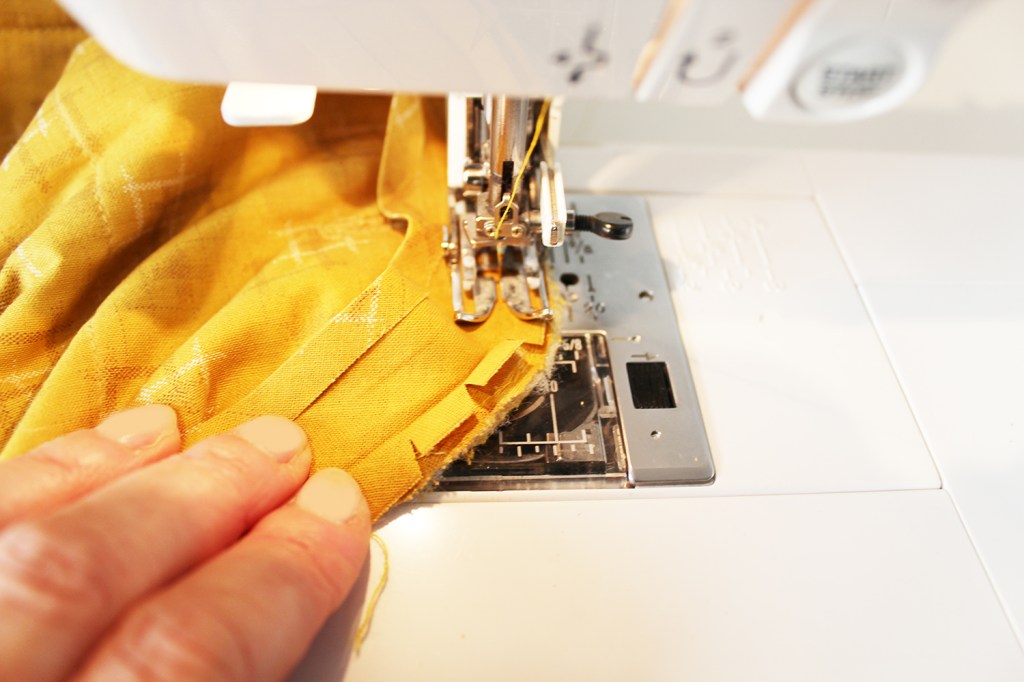
After making your binding strip, using a binding tape maker tool (see below image), fold over the edges of the binding. Pin the binding to the raw edge, starting at the shoulder seam. Sew all around. Fold the binding over to the reverse side. Press. Pin. (Hand tacking really helps to secure the edge before hand stitching all around). Sew the binding edge by hand on the reverse side with small over-stitches to secure the edge all around.
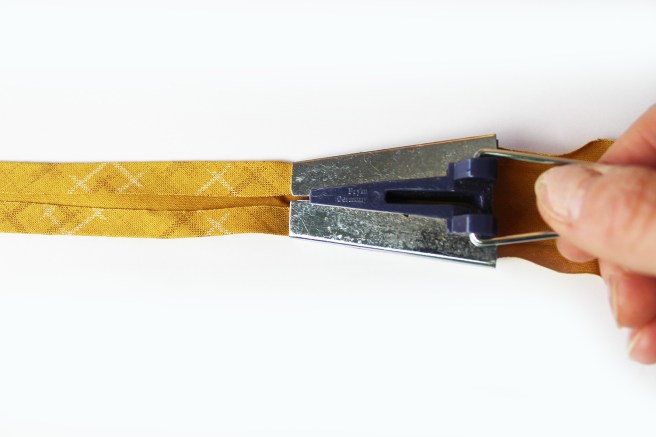
Tip: When you reach the side seam, trim the binding with a small fold under at the far end, then start again on the back with a new binding piece, folding it under at each side seam.
Attach the cuff binding to the cuff edges in the same way as before.
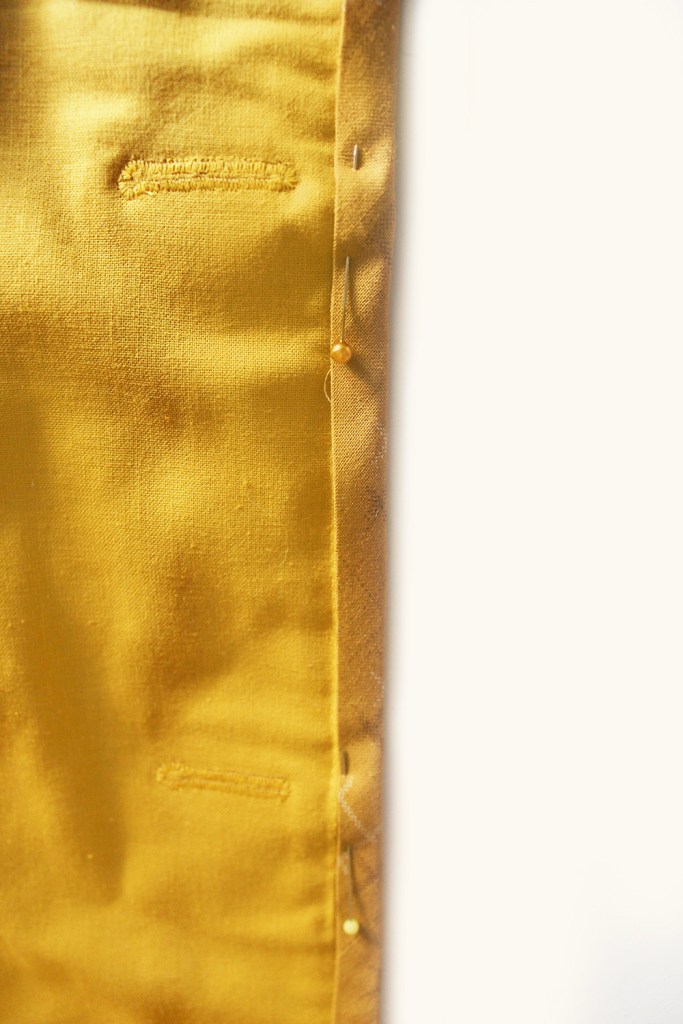
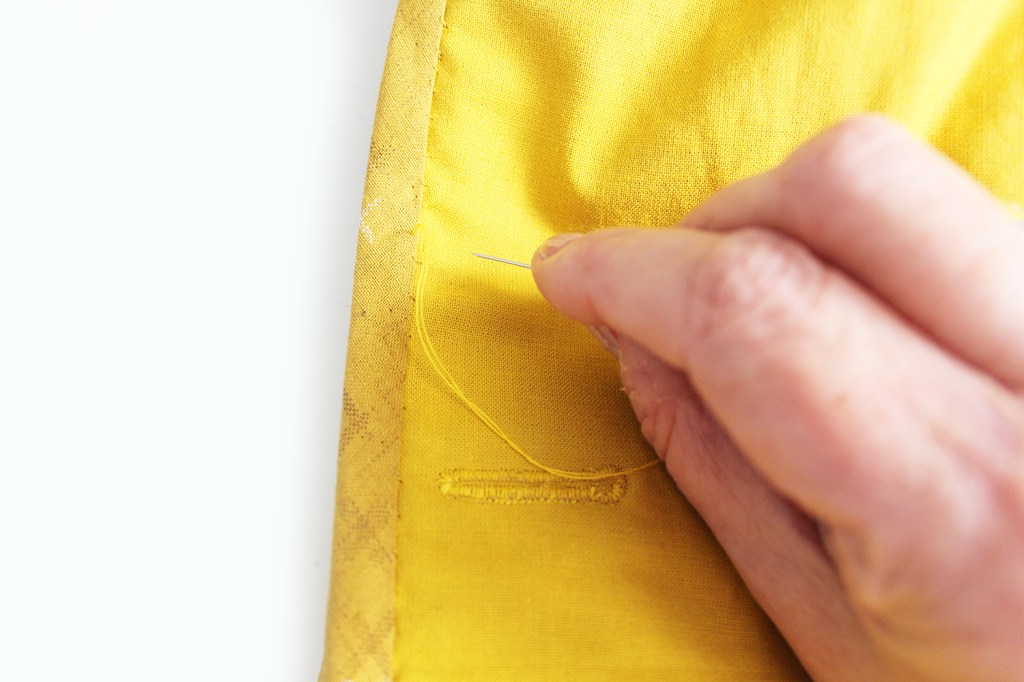
Sew on the five buttons.

And off you go!

All images and text are subject to copyright by Sewgirl. Please ask permission if you wish to use any of the images.
ST IVES UNISEX TOP
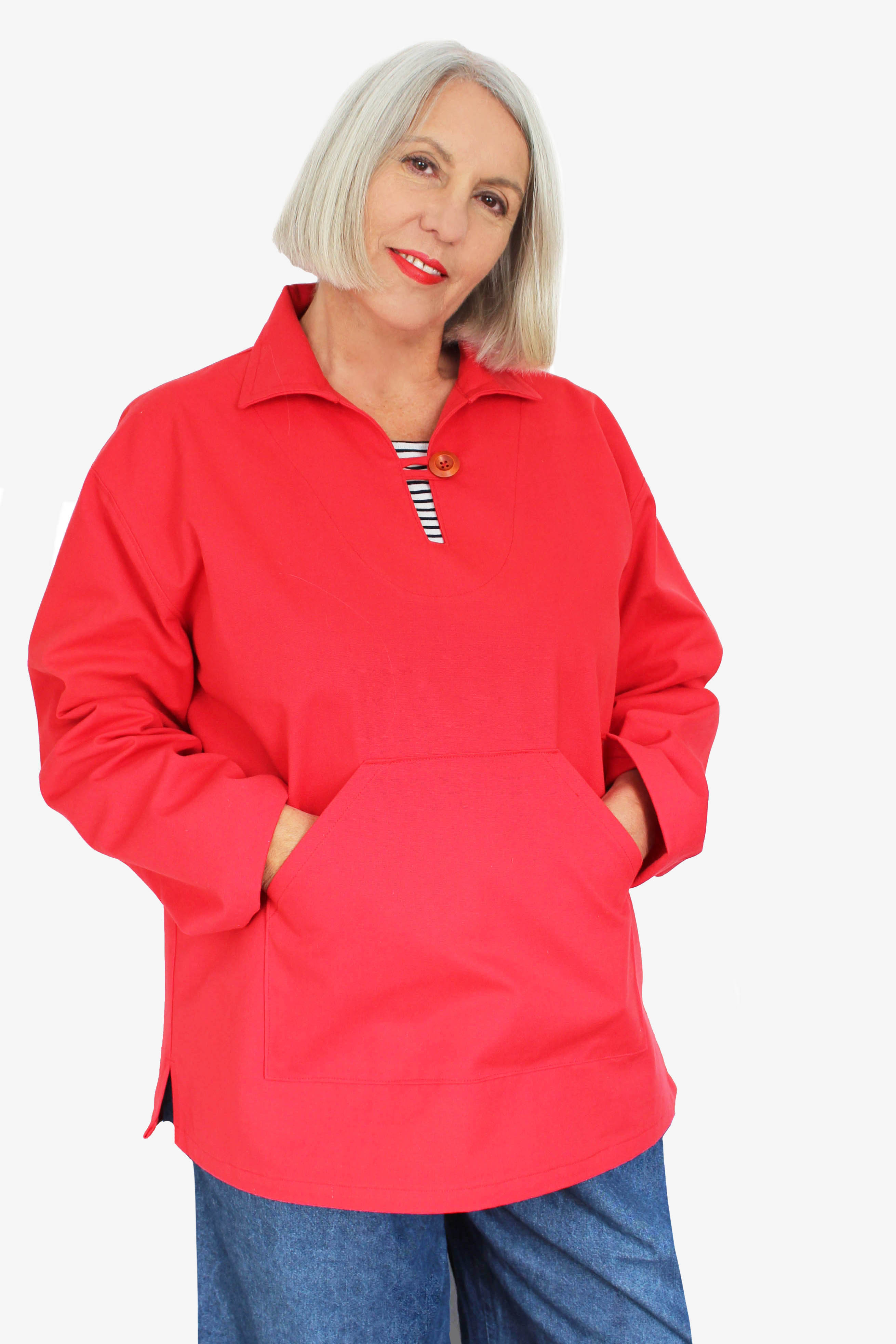
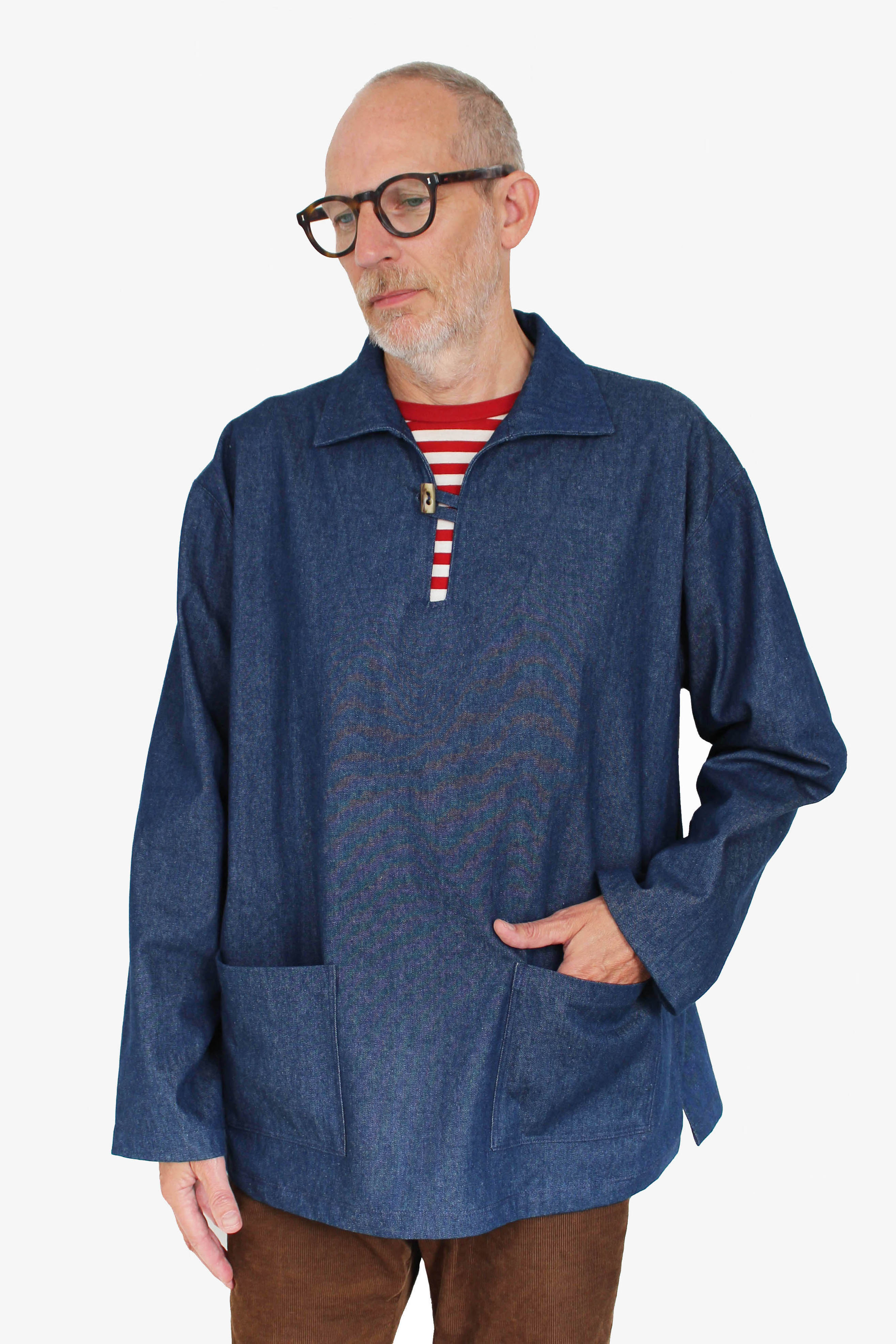
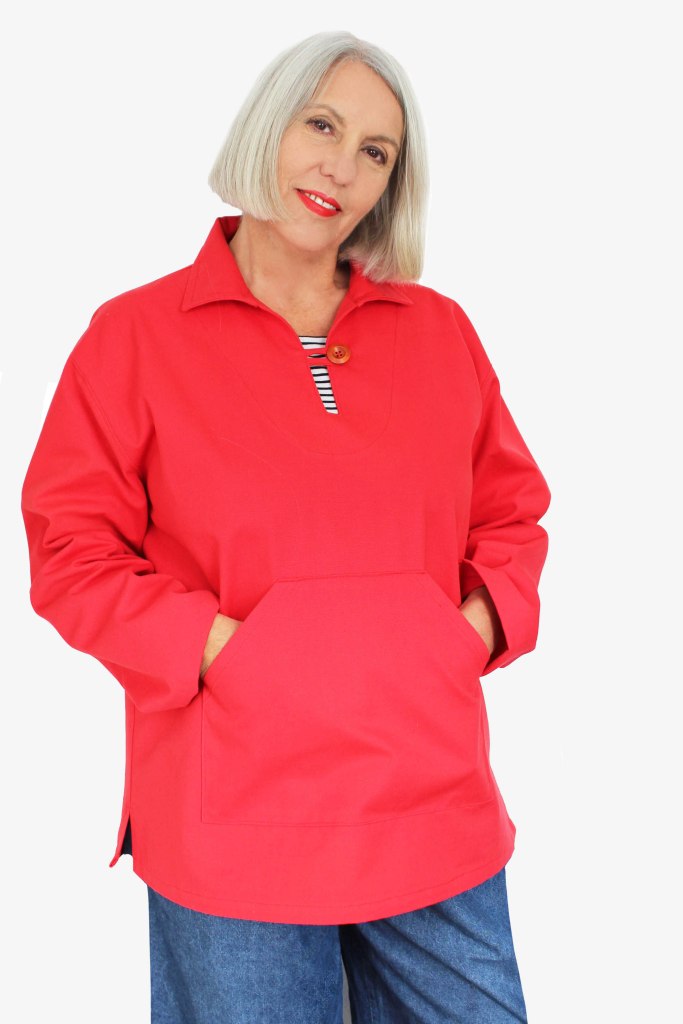
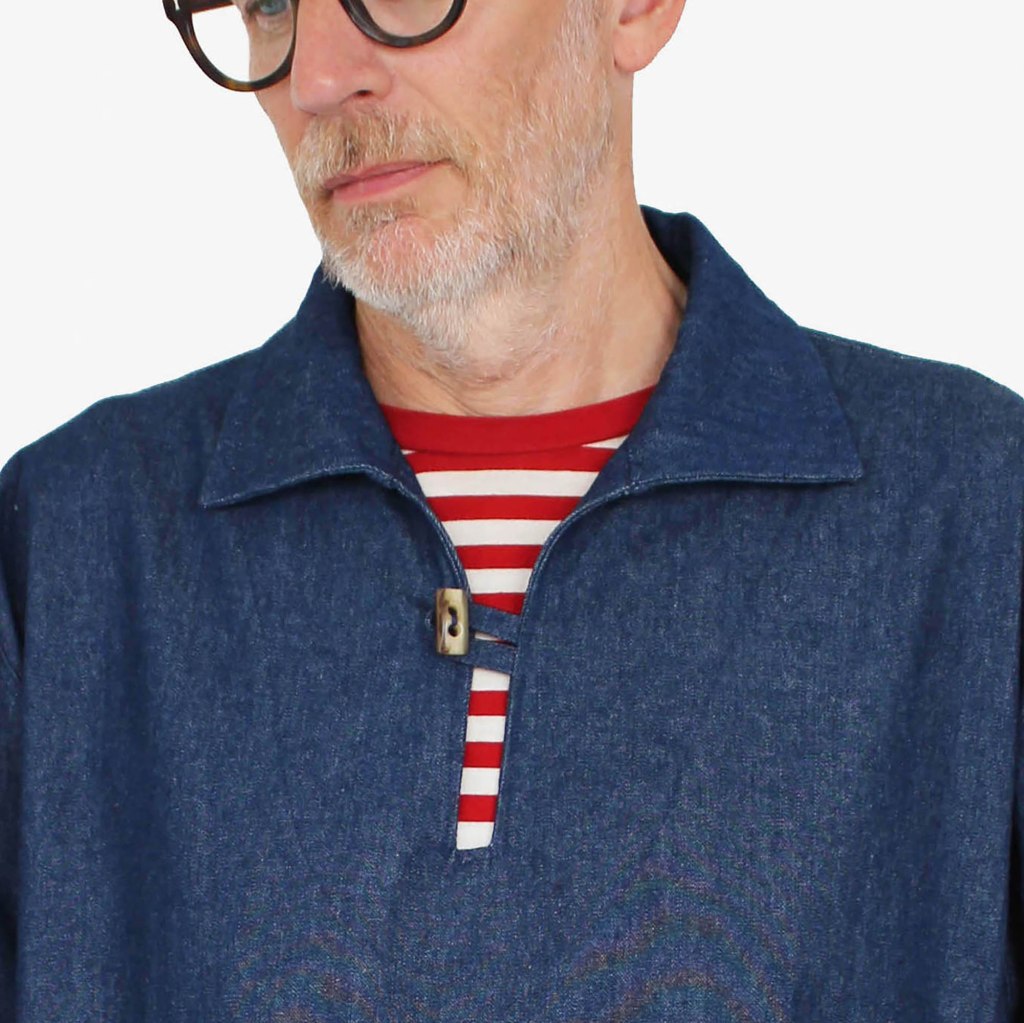
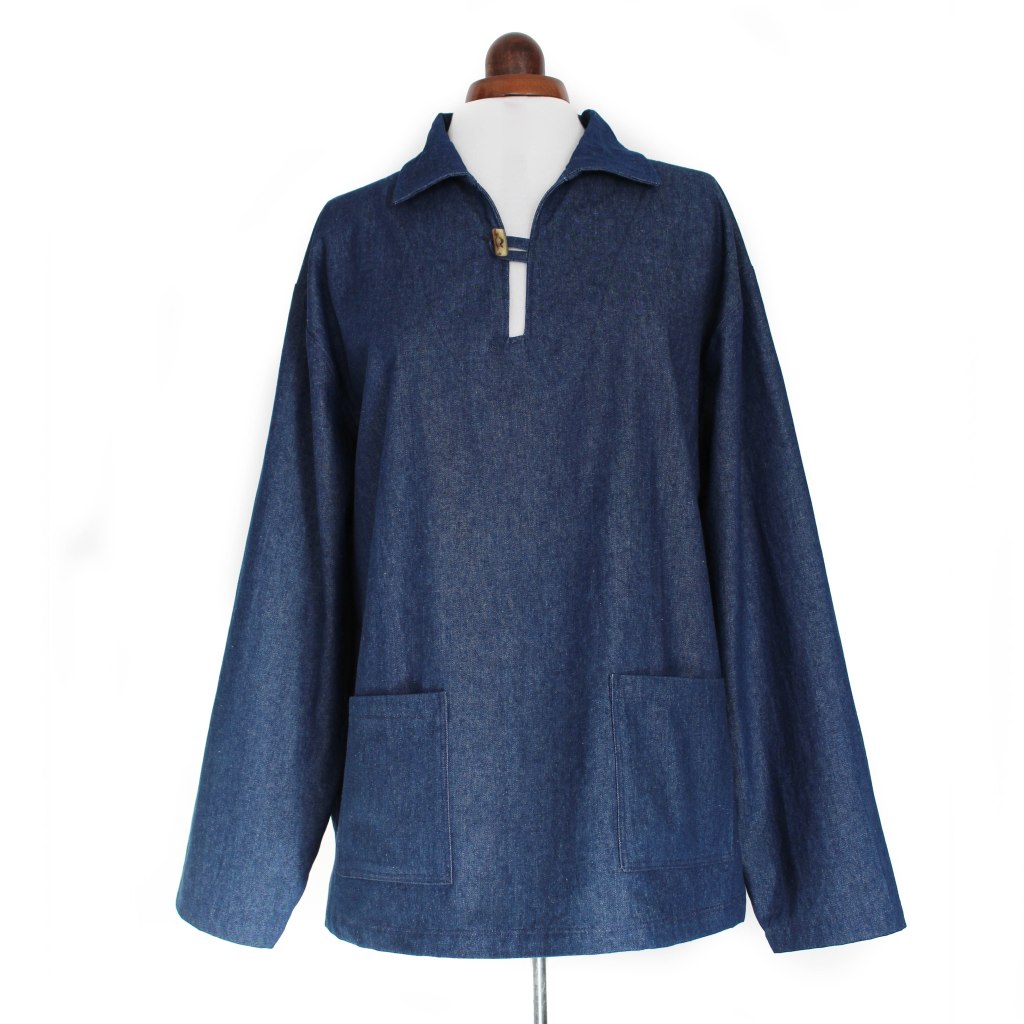
The first Unisex top pattern by Sewgirl and here we are… Mr and Mrs Sewgirl…. wearing our lovely tops! The red canvas one features the Kangaroo pocket feature and the denim blue has a patch pocket version- both pockets are included in the pattern which is sized from Small to 2XL( see size guide for details).
We named this top pattern after one of our favourite places in Cornwall -St Ives- a fishing village on the South West tip of England. It’s famous for its artistic heritage, home to Tate St Ives and many artists who flock to the bay for its amazing quality of light.
We love visiting the sculptress, Barbara Hepworth’s house and garden, it’s also where the artist Alfred Wallis and celebrated ceramicist Bernard Leach lived and worked. Many other artists are connected to this wonderful place nestling on the Cornish coast. Its our homage to a special place.
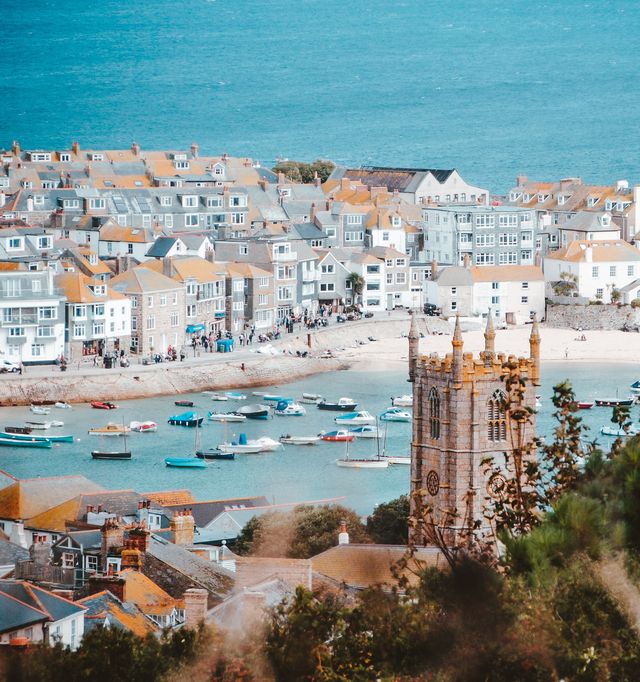
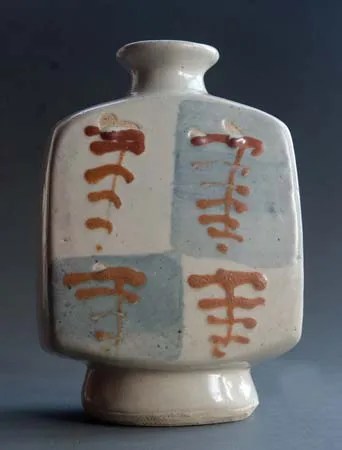
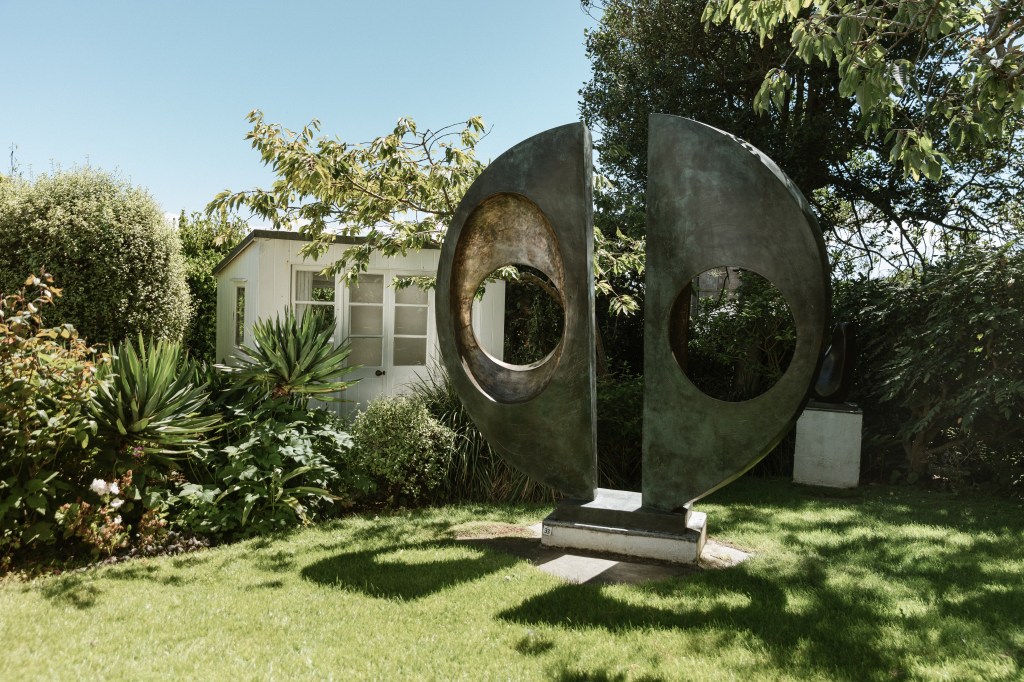
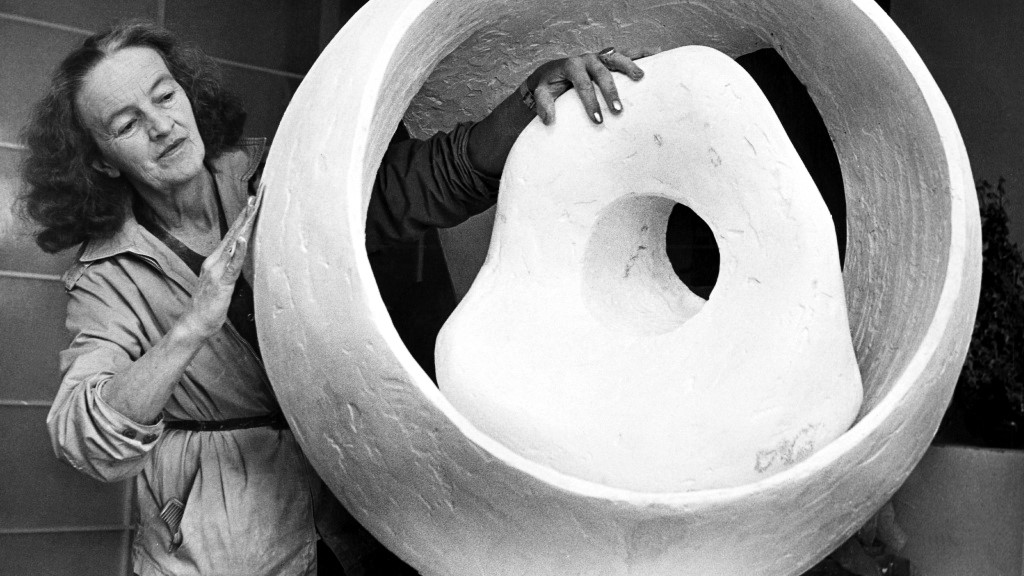
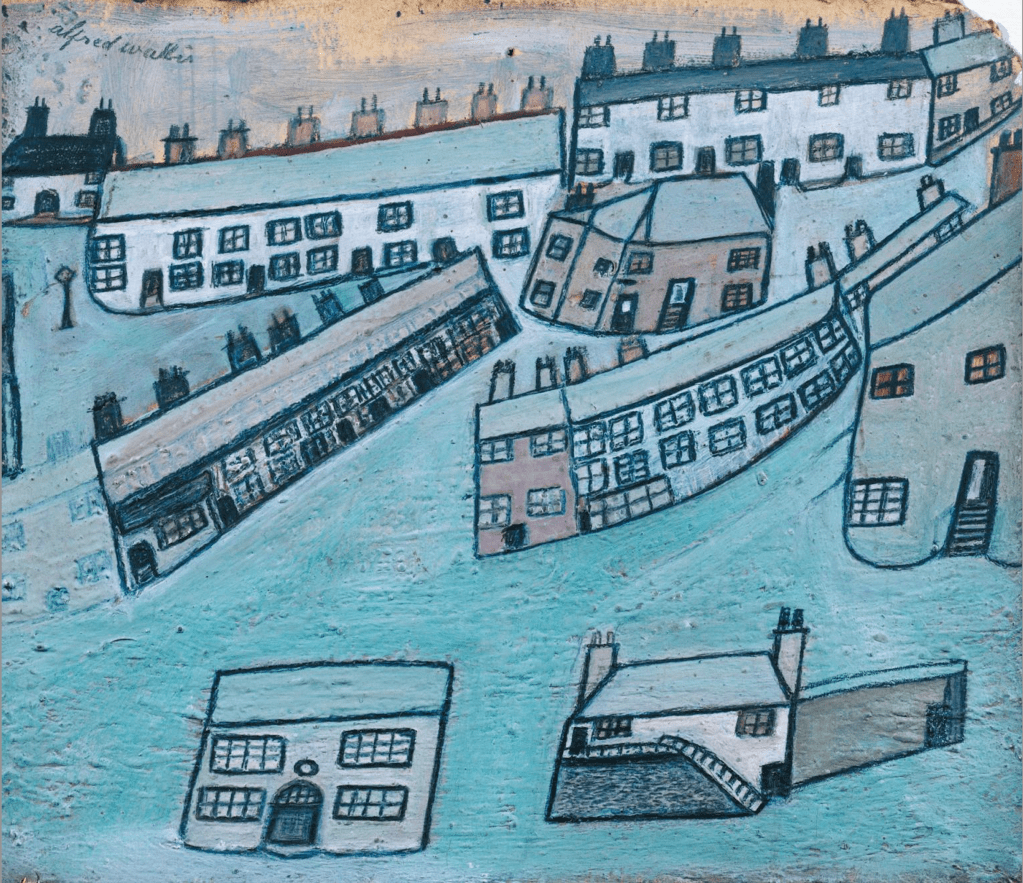
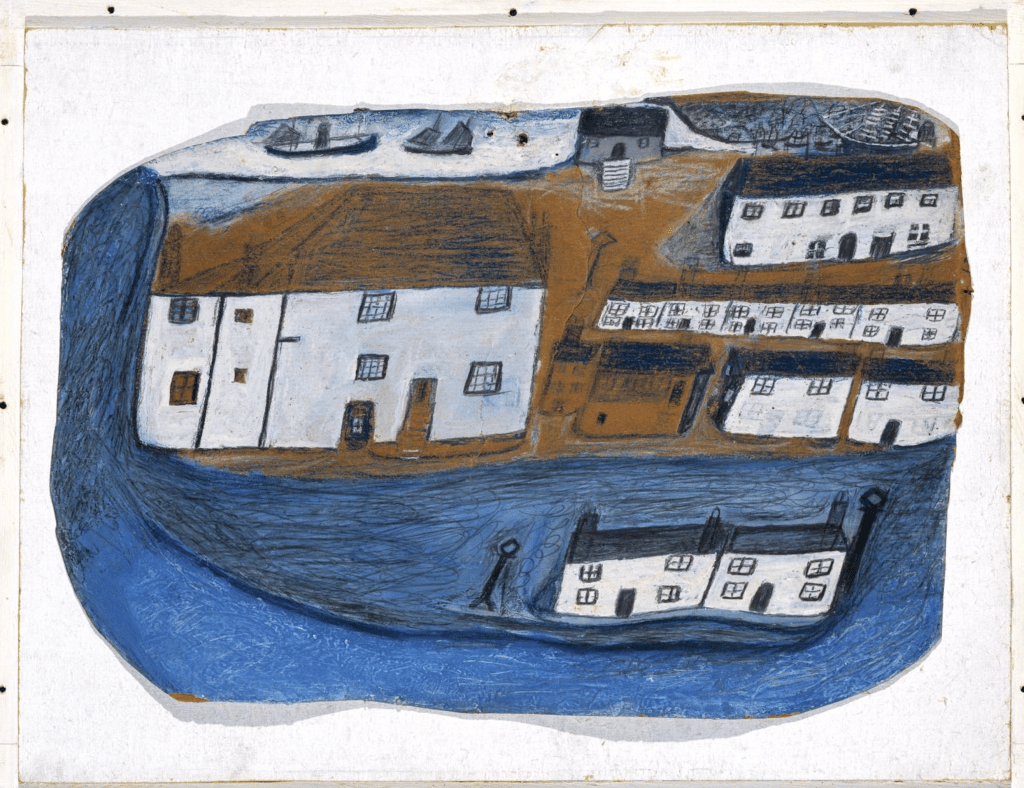
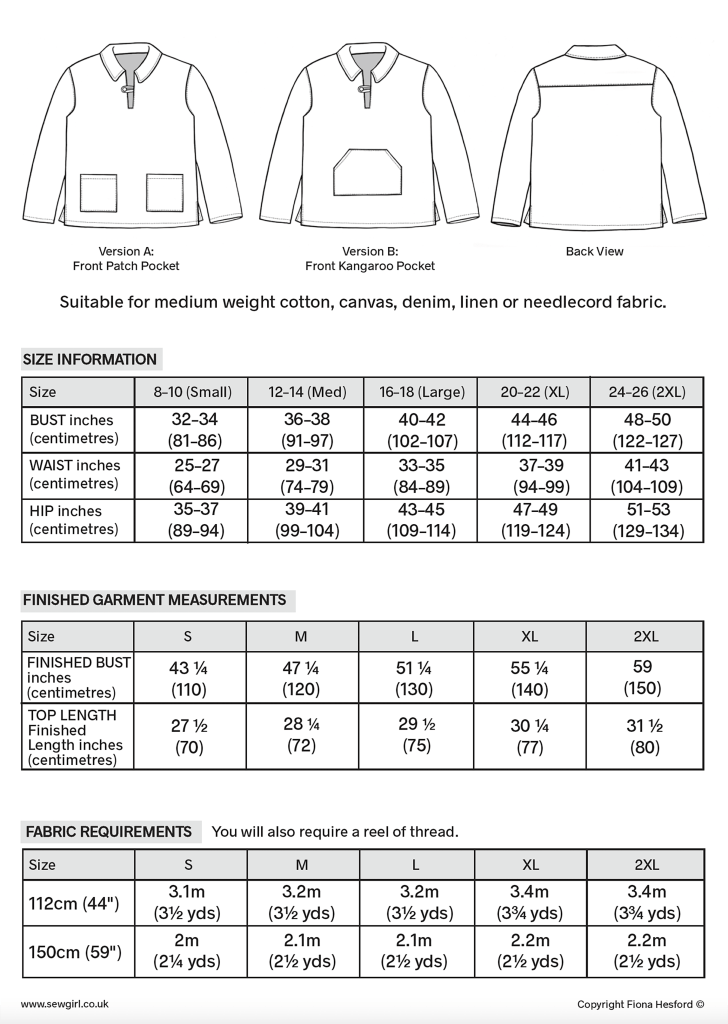
This is a straightforward pattern, loose fitting artists style top suitable for working in, gardening, pottery, sailing or just day to day living. Practical, comfortable and fun to make. Hopefully, like me, you will want to make one for all the family.
Suitable fabrics to make the St Ives top are soft cotton canvas, denim, needlecord, medium weight cotton.
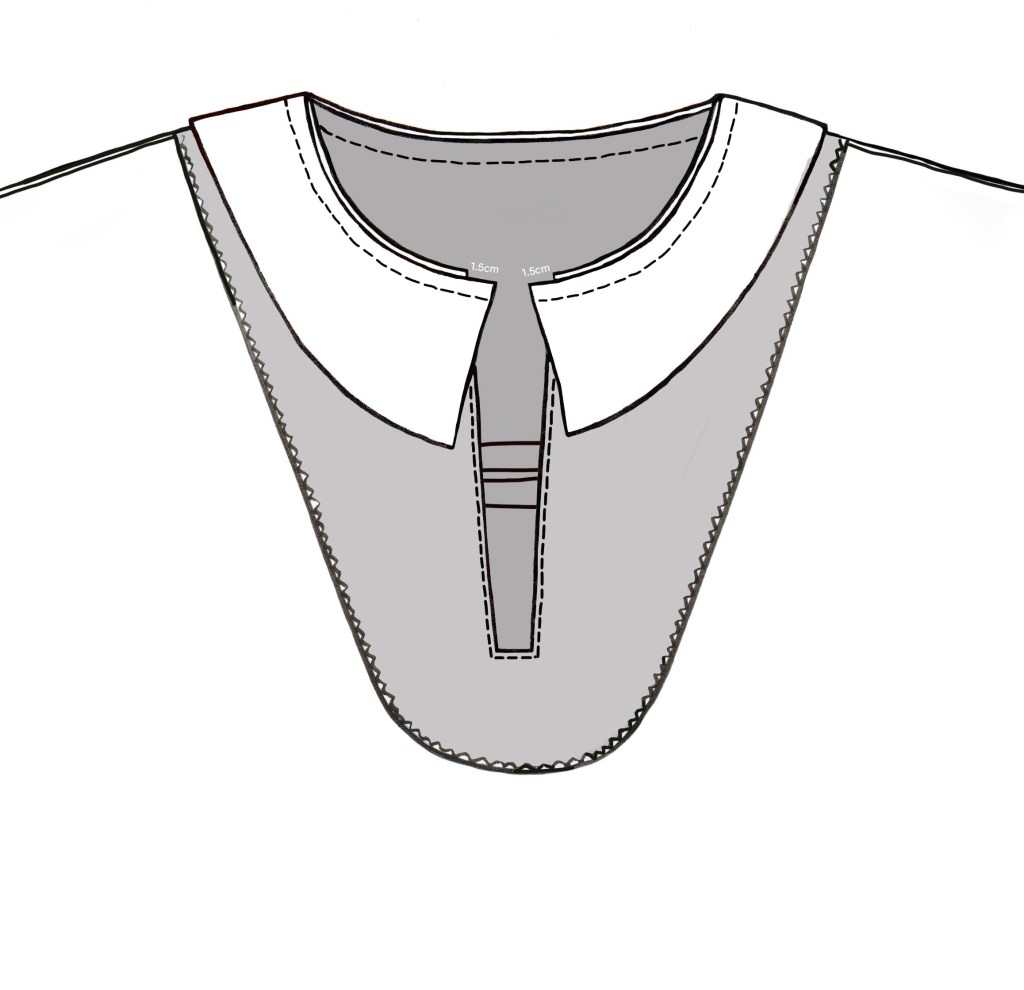
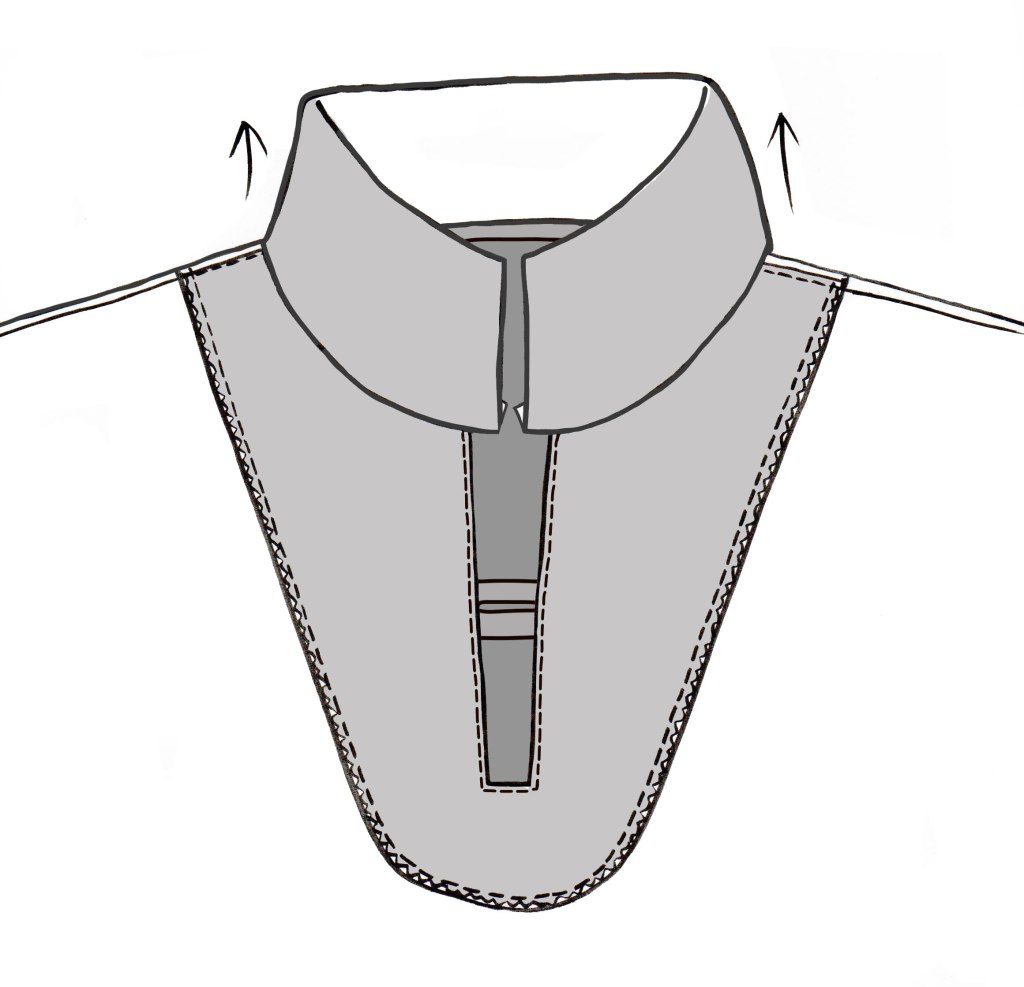
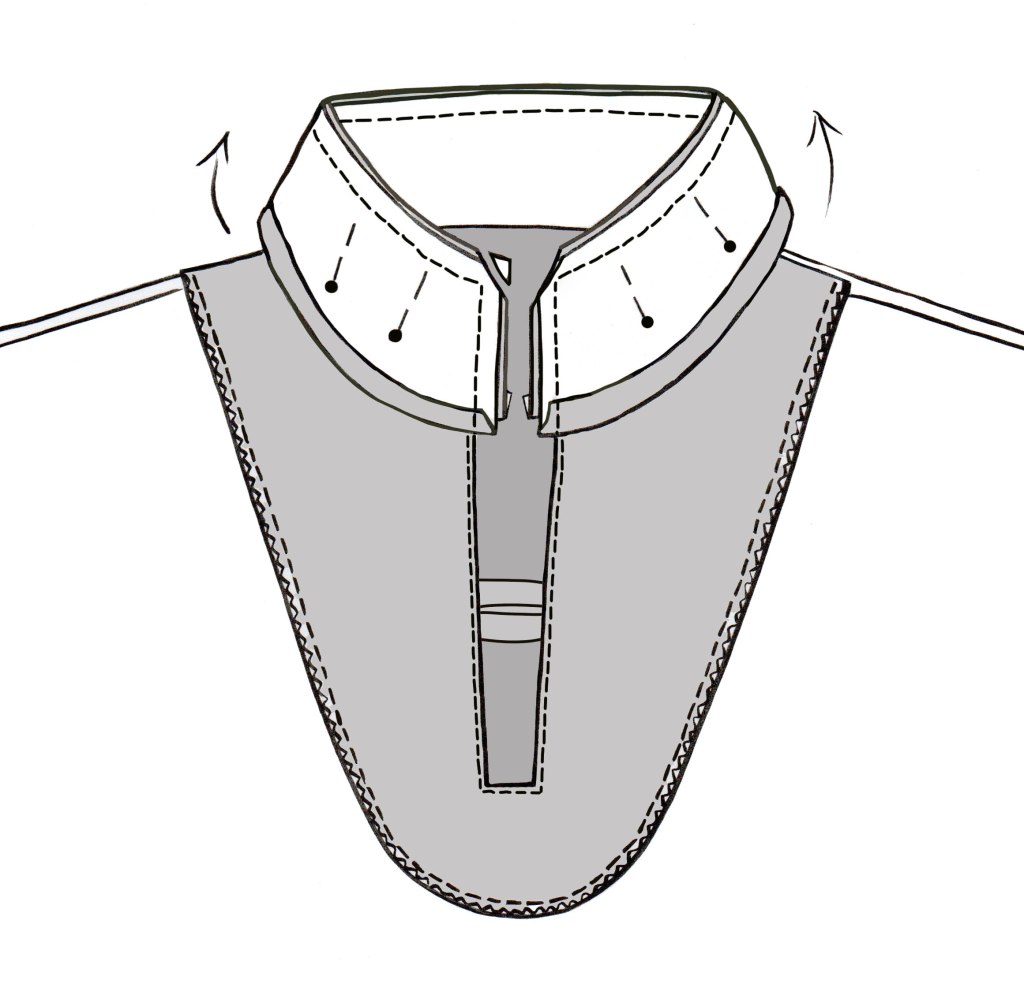
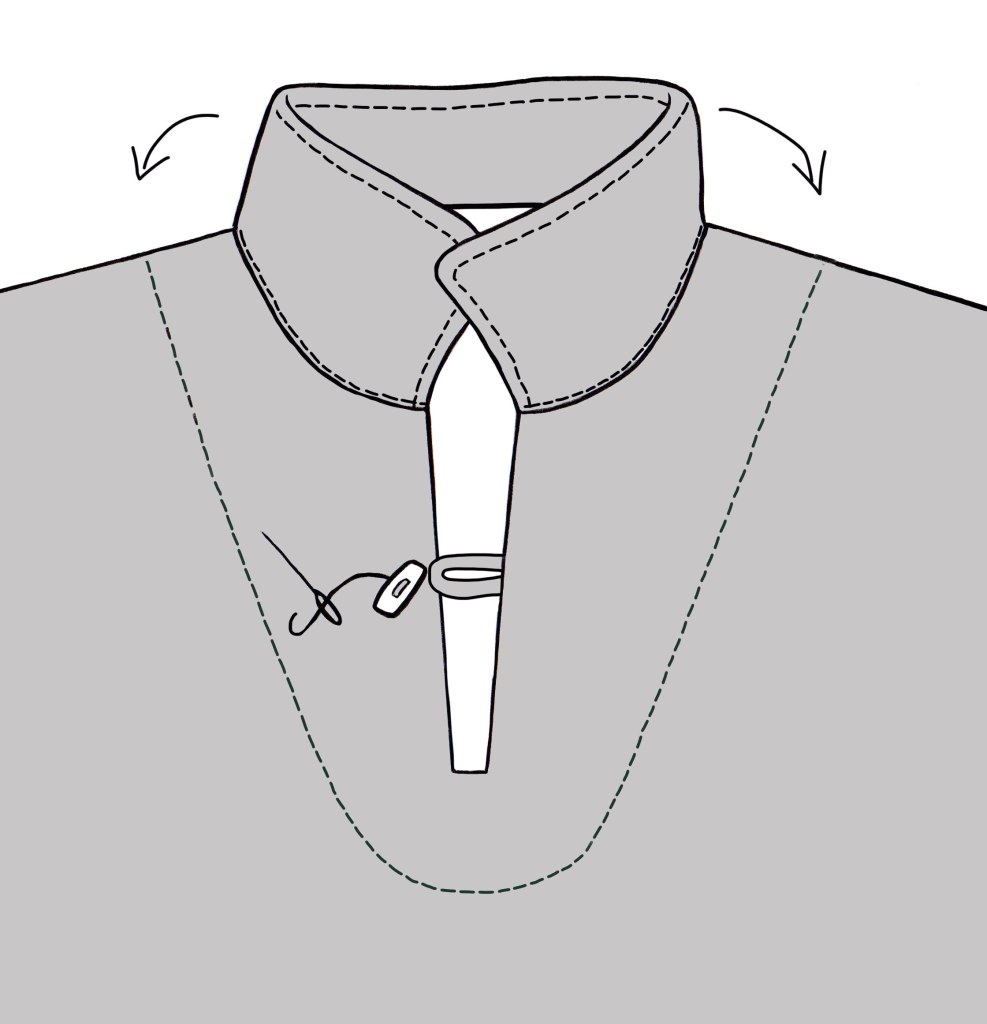
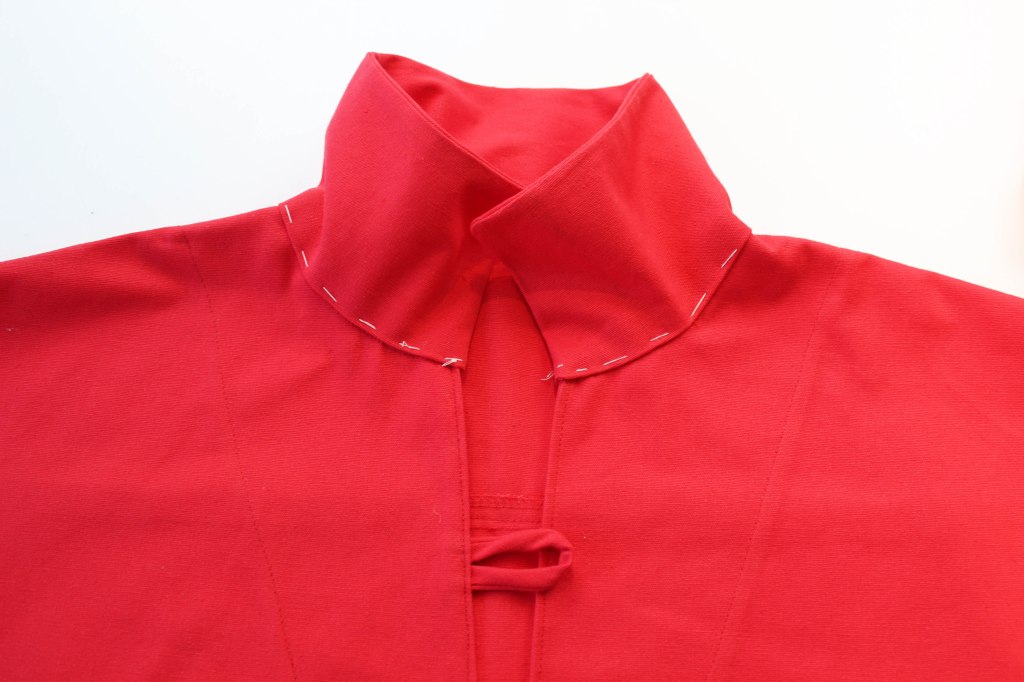
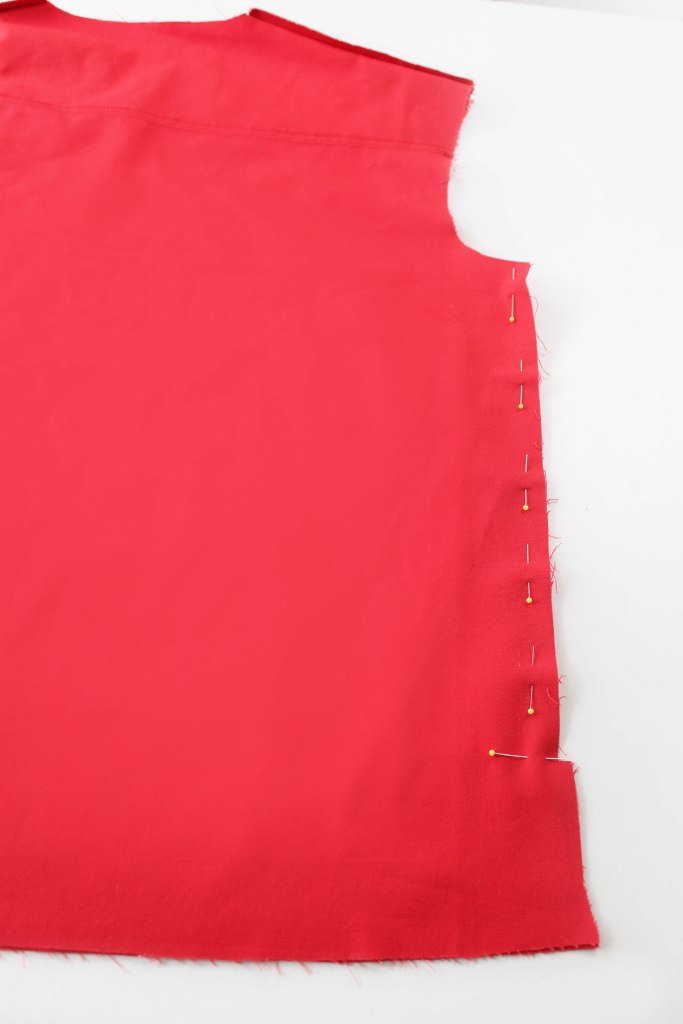
Here are some step by step images which show you how the top is made. More info is written in the pattern. To purchase the pattern click this link will take you to the Etsy Shop.
HOW TO MAKE THE ST IVES TOP
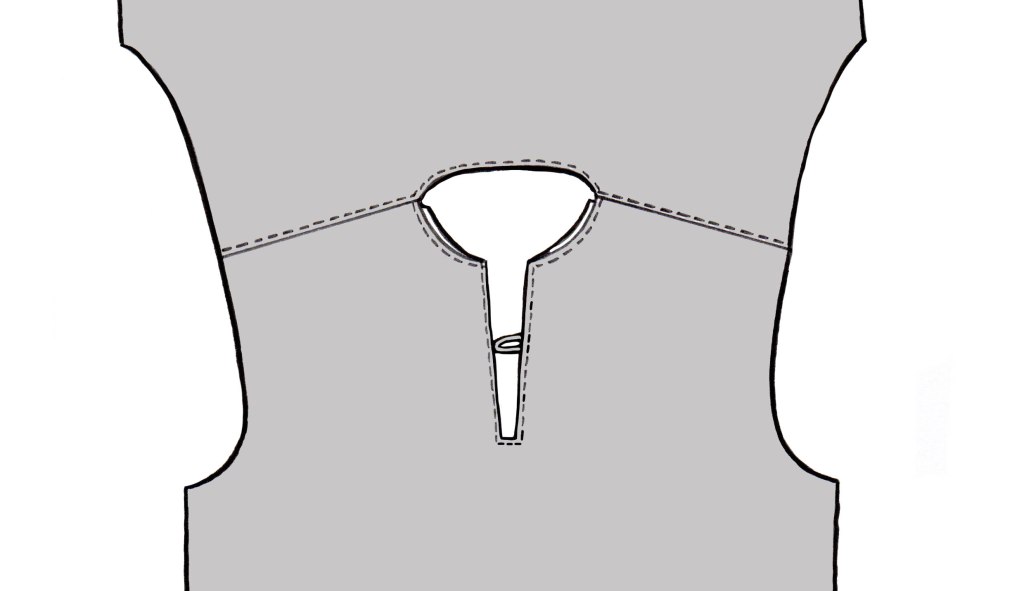
Prepare the Loop.
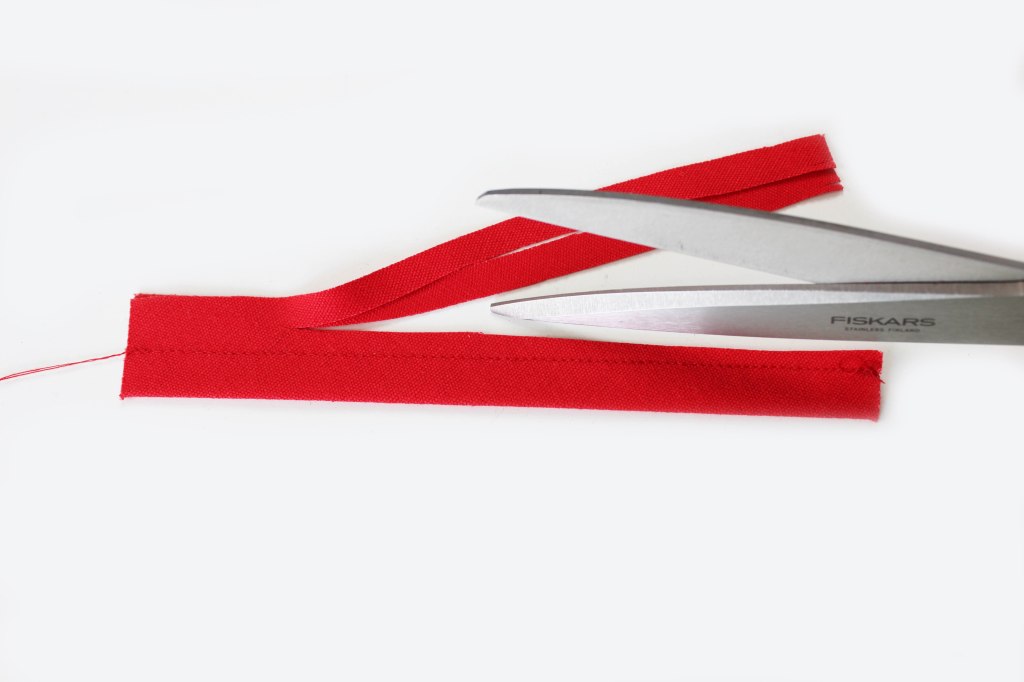
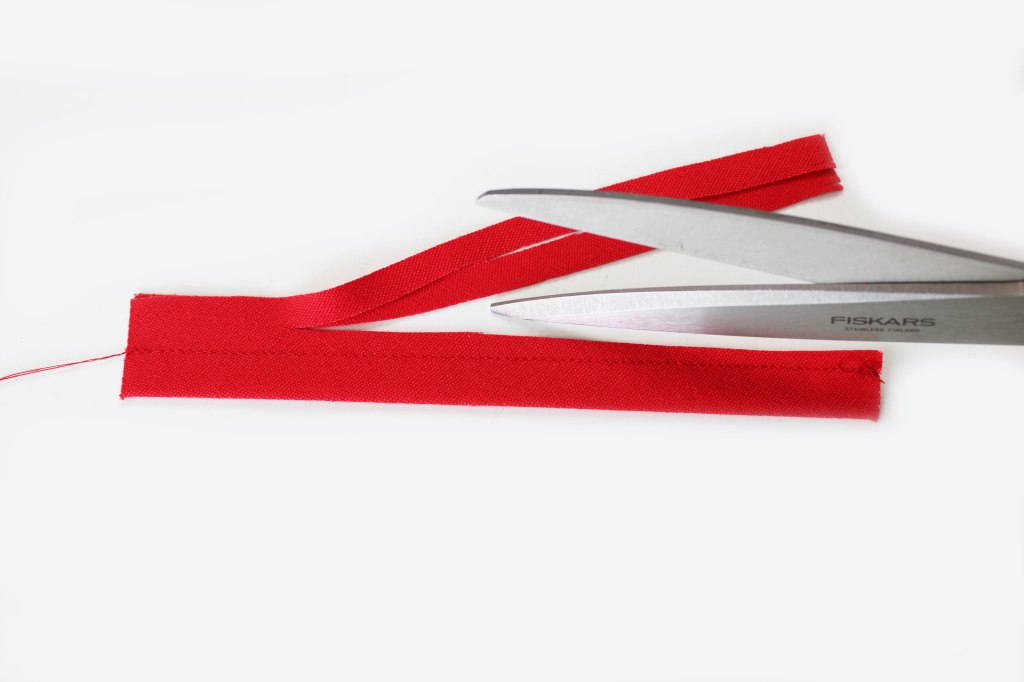
Fold in half, sew along the long edge then trim the seam allowance.
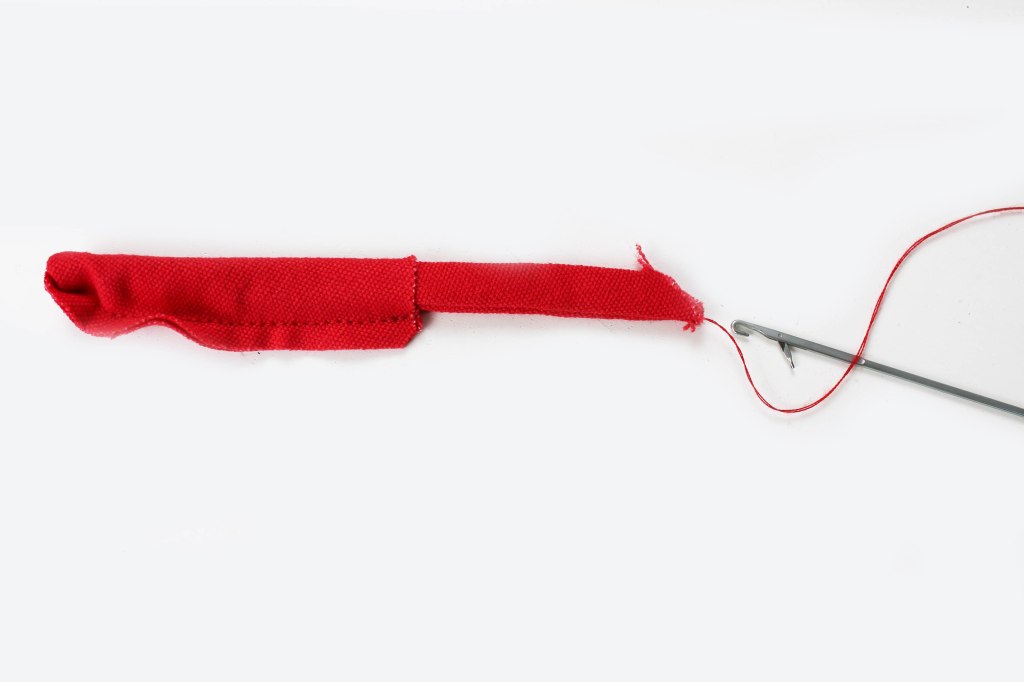
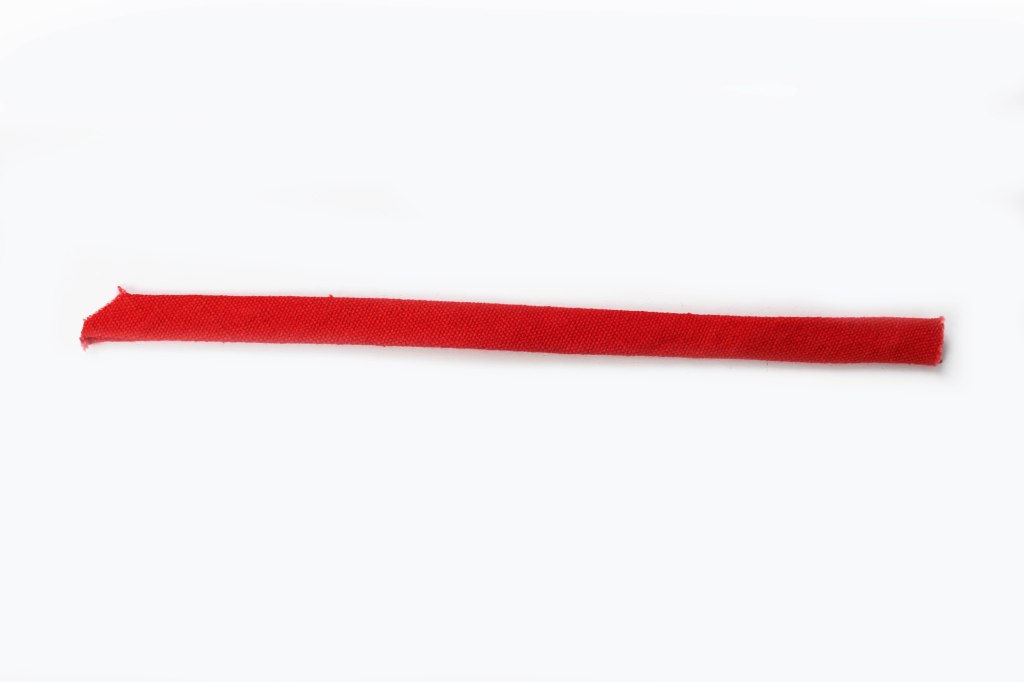
Turn inside out with a Loop Turner (or tie end on to a blunt ended needle if you don’t have one).
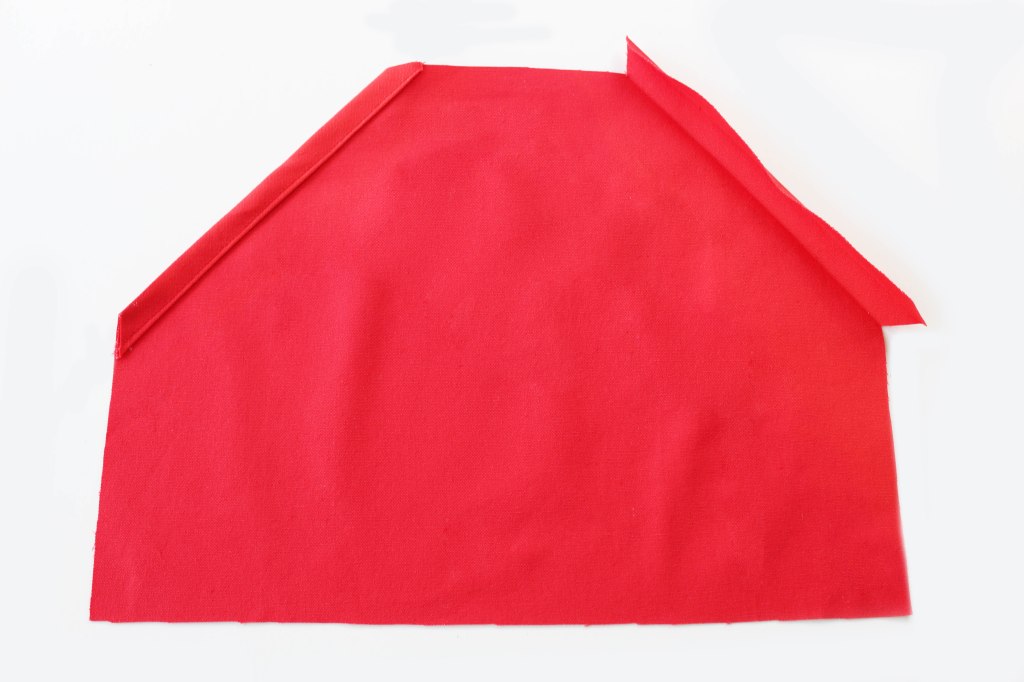
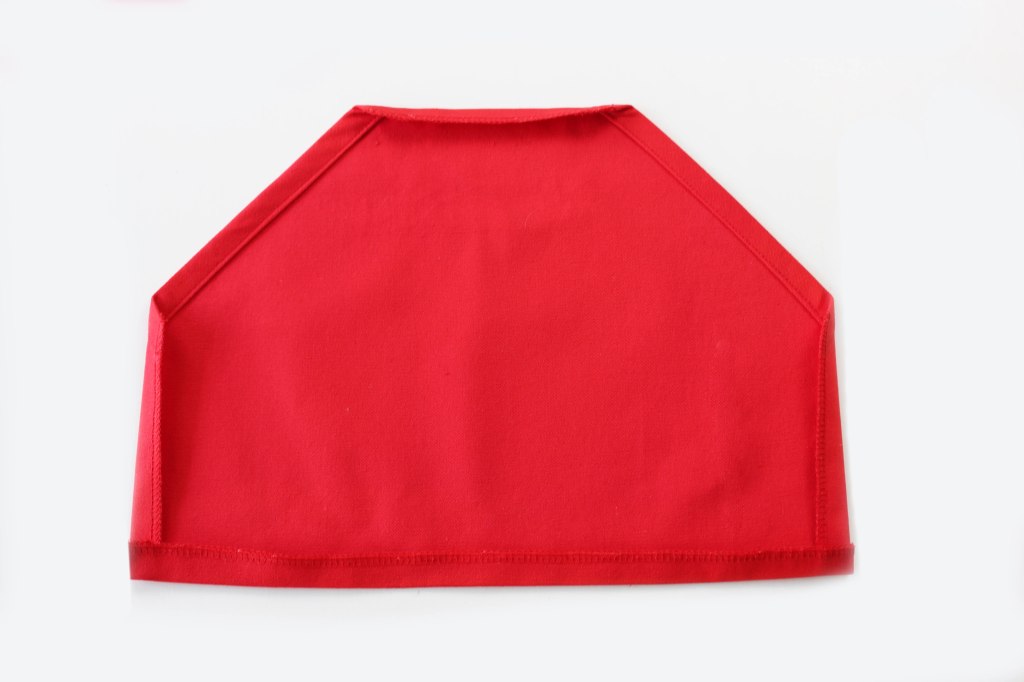
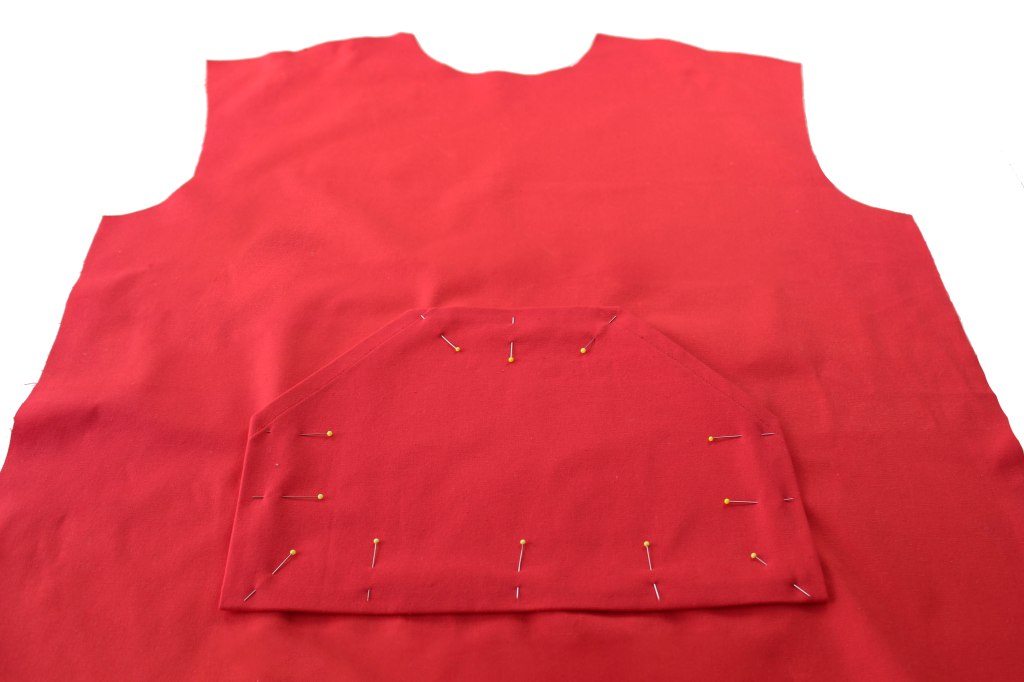
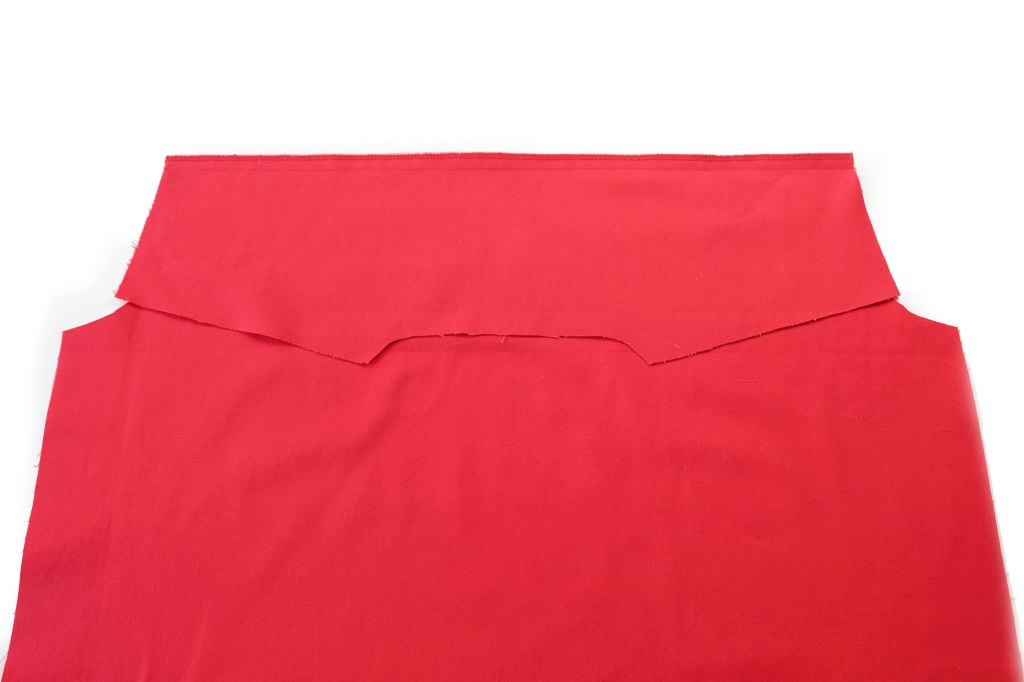
KANGAROO STYLE POCKET
or PATCH POCKETS
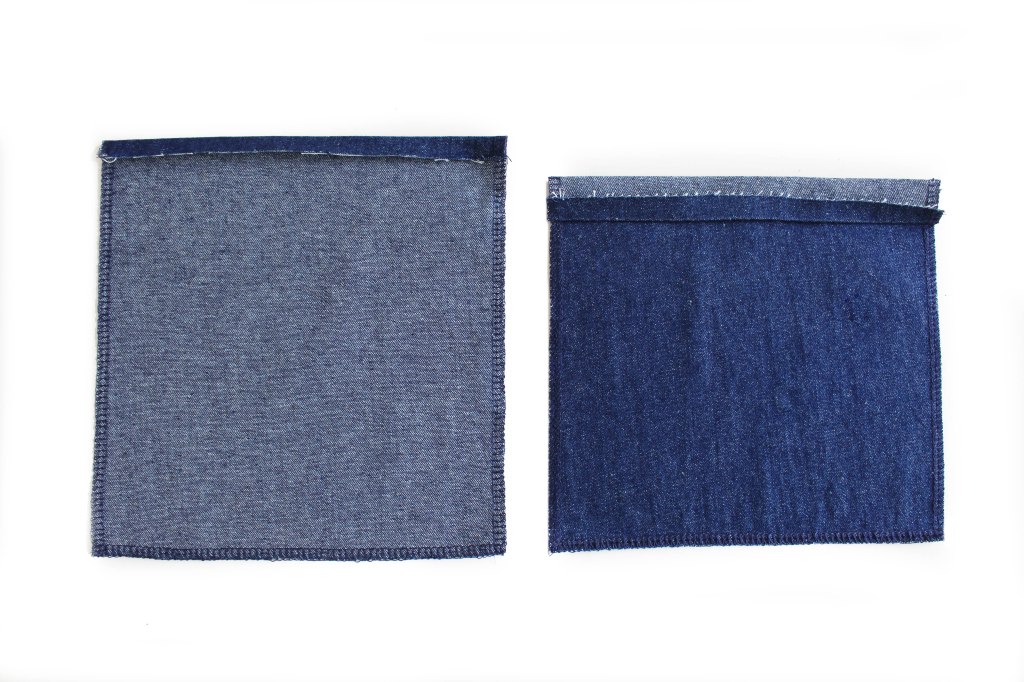
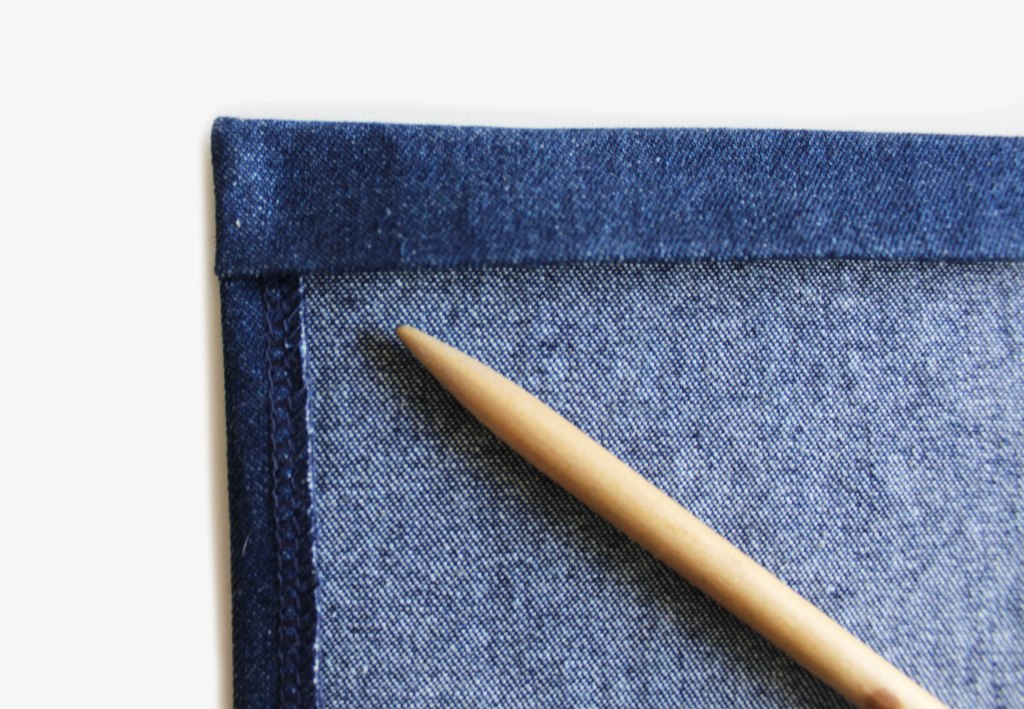
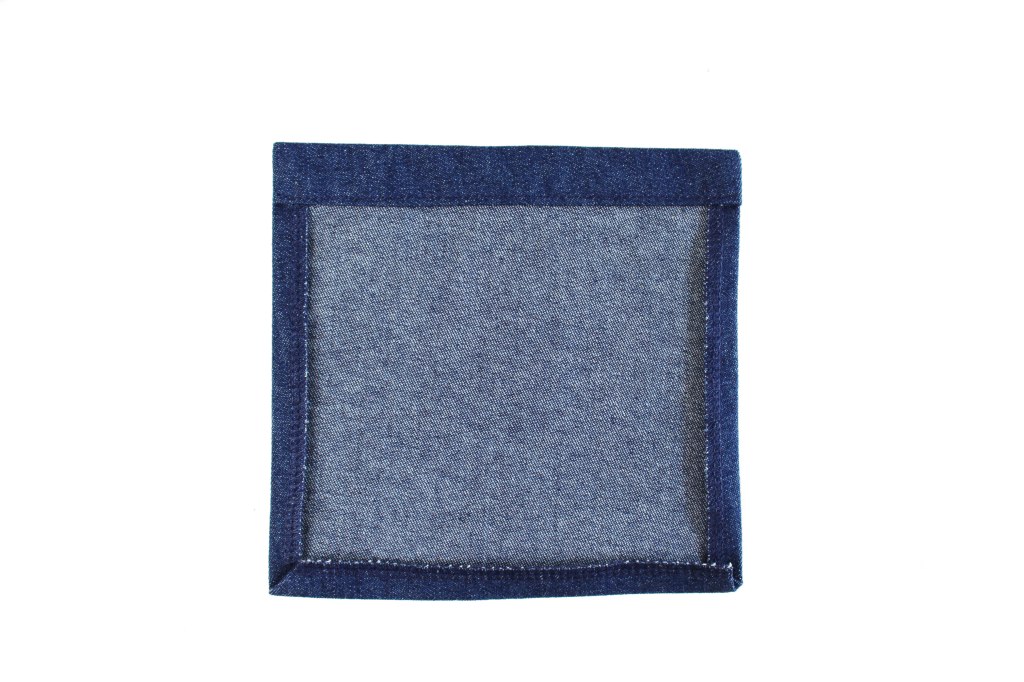
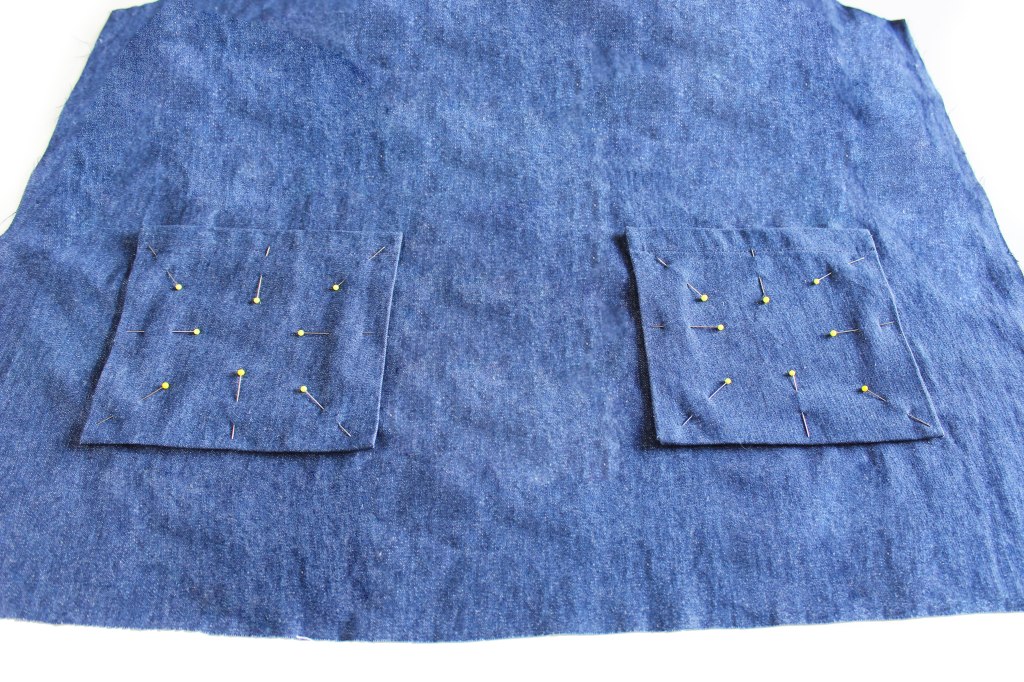
Fold over the top edge of the patch pockets. Stitch. Fold over and press the remaining three edges.
 sewgirlblog.com