Patterns that have a Bodice Front with darts, such as Cecily Dress by Sewgirl, are for a bust size B. As with most patterns of this type, they are designed for a 20 year old with a B-cup size bust. Obviously as we get older, our bodies change, so the pattern dart size and position are intended as a guide which can be altered easily to suit your size and shape.
So, for example, you may need to move the dart position up or down (Step 1), or increase or decrease the bust size to say a bra cup size C or D (Step 2). This blog post, shows you how to alter both the position of the dart and alter the cup size.
First of all you will need to find your Apex* point and mark it on your pattern.
So what exactly is the Apex*? Well, it is the middle of the fullest point of the bust (aka nipple!). To find this, (wearing your normal bra) just measure across from one apex to the other, so with me for example its 18cm that means its 9cm each side of the centre line. Then you need to measure how far down it is situated, so measure from the top shoulder to your Apex* (it usually helps to wear something with a shoulder seam and measure from there). Mine measures 33cm, so I mark on my pattern an X – 33cm down and 9cm away from the centre line of the bodice front. Now a quick way to check its correct, is to place the pattern up against you, and see where your apex* is situated. If it matches with the one you’ve marked then you are all good to go to the next stage i.e to move the dart position or do a bust size alteration (or both).
1. MOVING A DART POSITION
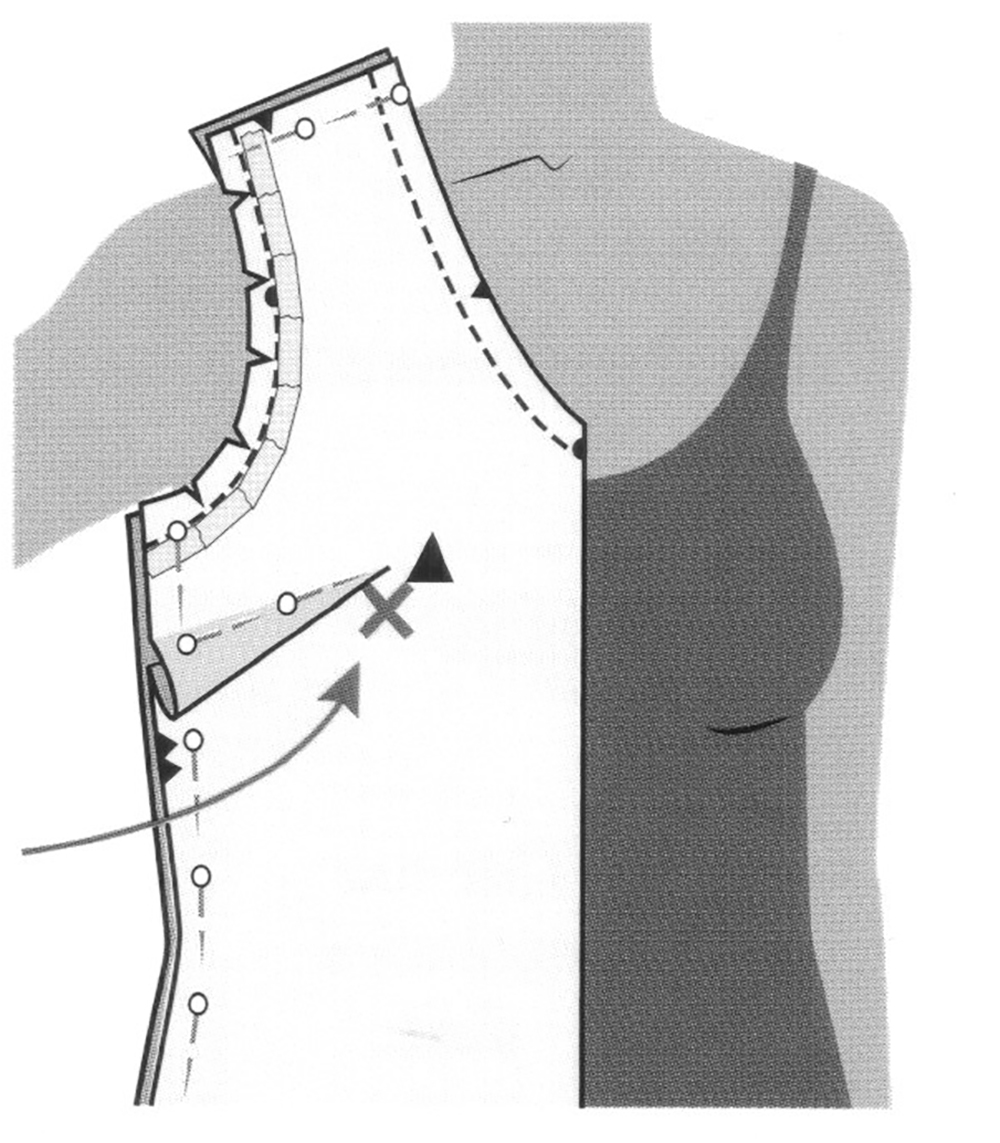
To tell whether your dart is too high or low, you need to see if the line that runs right through the middle of the dart hits the apex point. You can see from this diagram that it is too high, so it will need to be lowered.
It needs to line up as shown in the diagram below…..the angle is not important.To move a dart position up or down you can do by one of two methods:
Slight Adjustment – if you just need just a slight adjustment, you can do this by changing the angle of the dart. So, firstly outline your size dart triangle in red pen, so that you can see it really clearly. Then change the angle and redraw the dart so that it points towards the new apex point. NB. The dart tip needs to be at least 2.5cm (1 “) away from the apex.
2. Larger Adjustment To adjust the dart position more than a centimetre or so, you will need to use a cut and paste method. So, as in the previous method, outline your dart in red pen so that you can see it more clearly.
To maintain the angle of the dart, draw a box around the dart and cut out the box. Move it to the required position, then secure with sticky tape. Fill in the cut out section with paper and tape. NB make sure you keep your box straight and not slanted when you move it.
STEP2. ADJUSTING THE SIZE OF THE DART (akaFULL BUST ADJUSTMENT).
KNOW YOUR BRA CUP SIZE!
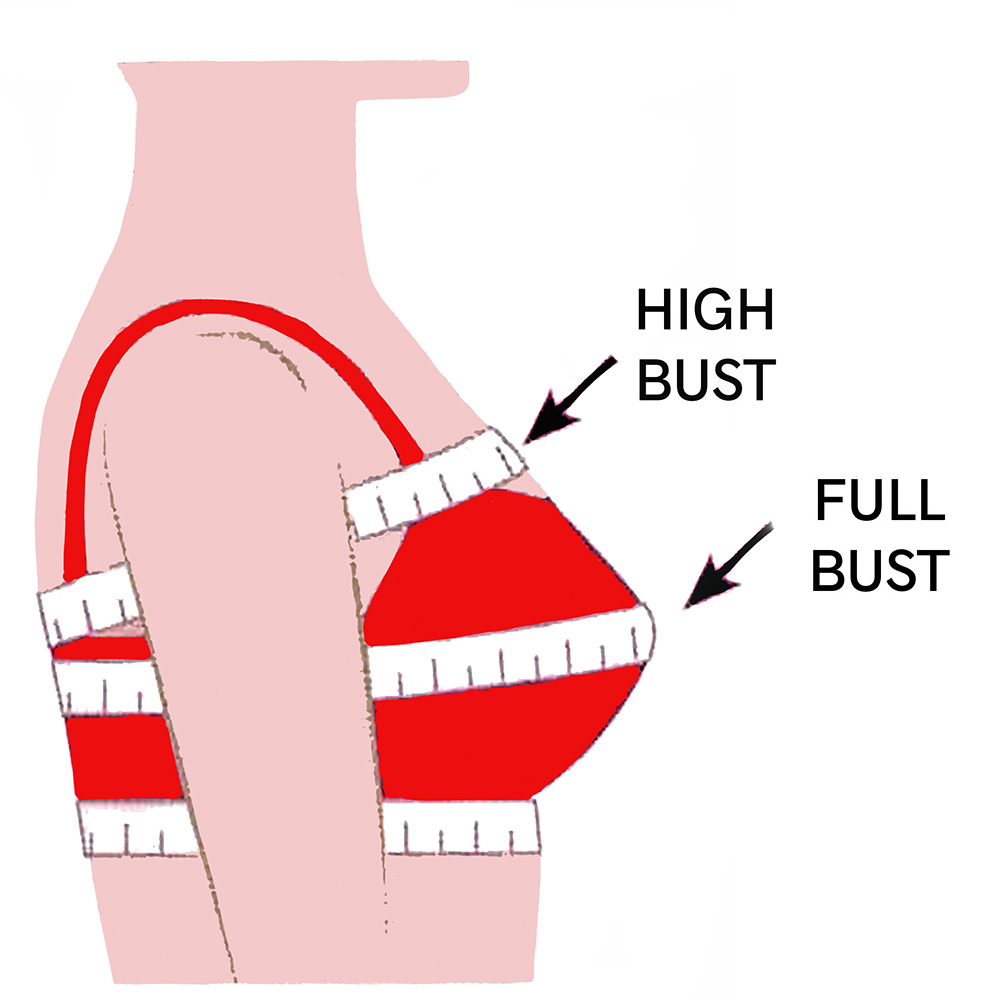
Measuring for your bra cup size- you will need to take two measurements of your bust – High Bust and Full Bust. Then subtract the high bust measurement from the full bust measurement (see the diagram A).
DIAG A
DIAG B
If you are:
less than 2.5cm /1″ then you are bra cup size AA
2.5cm /1″ then you are bra cup size A
5cm /2″ then you are bra cup size B
7.5cm / 3″ then you are bra cup size C
10cm / 4″ then you are bra cup size D
12.5cm / 5″ then you are bra cup size DD
15cm / 6″ then you are bra cup size DDD or UK size E
18cm / 7″ then you are bra cup size DDDD or UK size F
20.5cm / 8″ then you are bra cup size G/H or UK size FF
23cm / 9″ then you are bra cup size I or UK size G
25.5cm / 10″ then you are bra cup size J or UK size GG
The pattern is normally drafted to a size B, so you will need to reduce/increase each dart by the following measurements:
AA cup= reduce by 1cm on the
A cup= reduce by 1.25mm/ 1/2″
B cup = NO CHANGE
C cup= add 1.25cm / 1/2″
D cup = add 2.5cm/ 1″
DD cup= add 3.75cm/ 1 1/2″
DDD cup (UK E) = add 5cm / 2″
DDDD cup (UK F) = add 6.25cm / 2 1/2″
G/H cup (UK FF) = add 7.5cm / 3″
I cup (UK G) = add 8.75cm / 3 1/2″
J cup (UK GG) = add 10cm / 4″
INCREASING A BUST DART SIZE
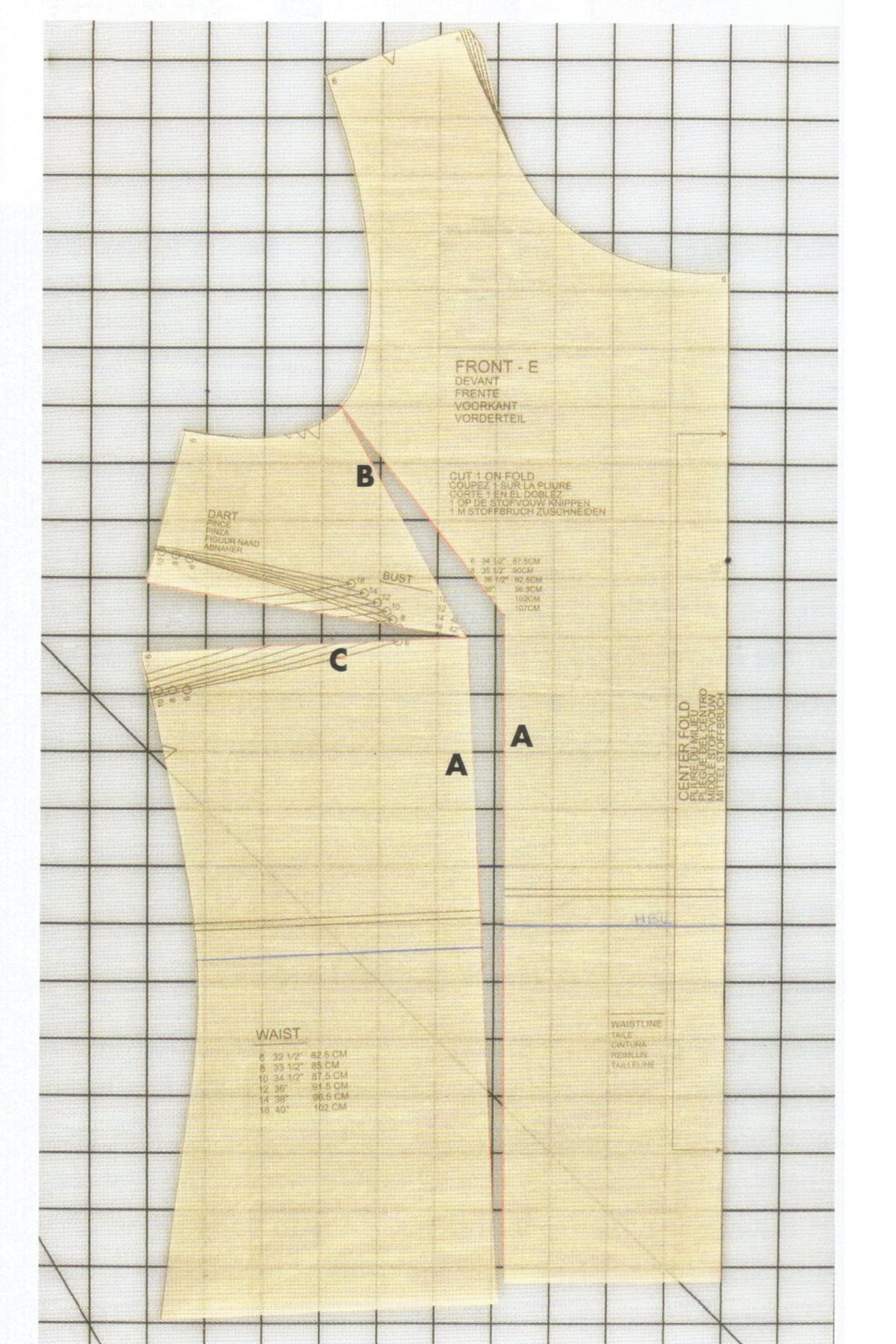
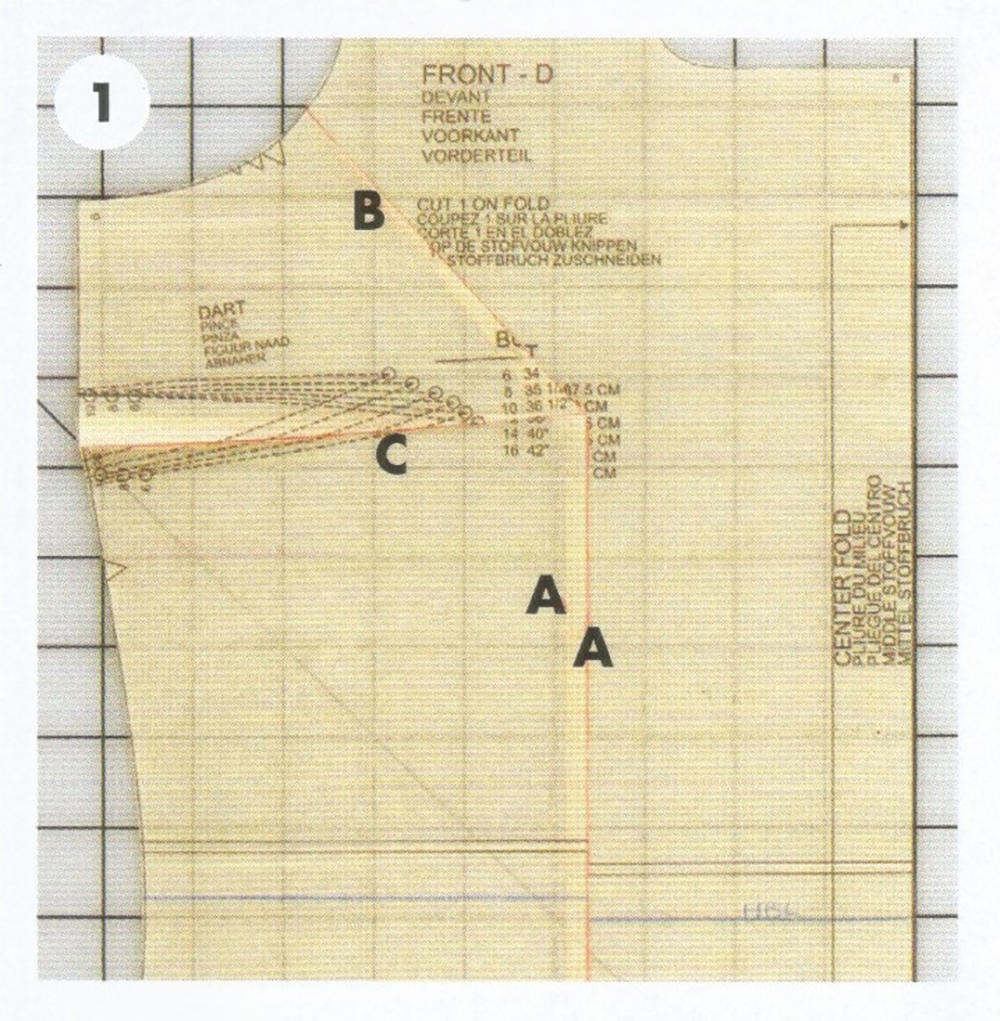
1. Firstly, draw three lines as shown by the red in the picture A, B and C (below)
Line A: extends from the Apex point* vertically to the lower edge.
Line B: extends from the Apex point to a point a third of the way up on the lower armhole.
Line C:extends from the Apex point to the side seam through the middle of the leg of the dart.
2. Cut the lines as follows:
Line A: cut from the apex to the lower edge.
Line B: cut from the apex to the armhole edge but stop a few millimetres before the edge.
Line C:cut from the side seam to the apex but stop a few millimetres before the apex.
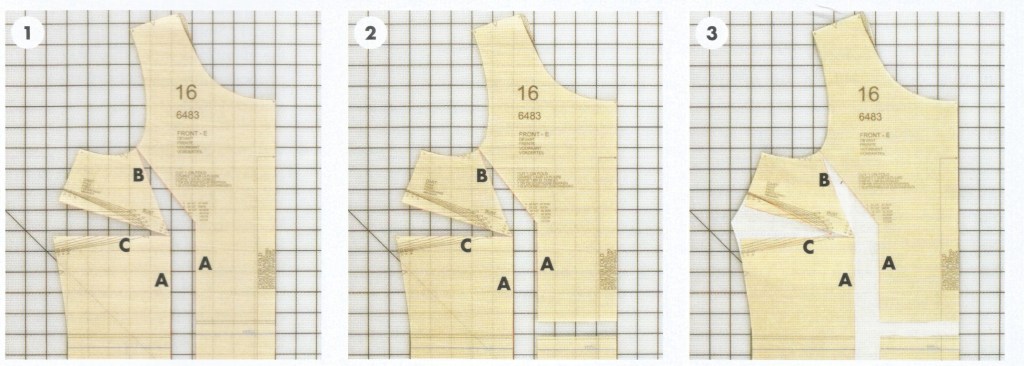
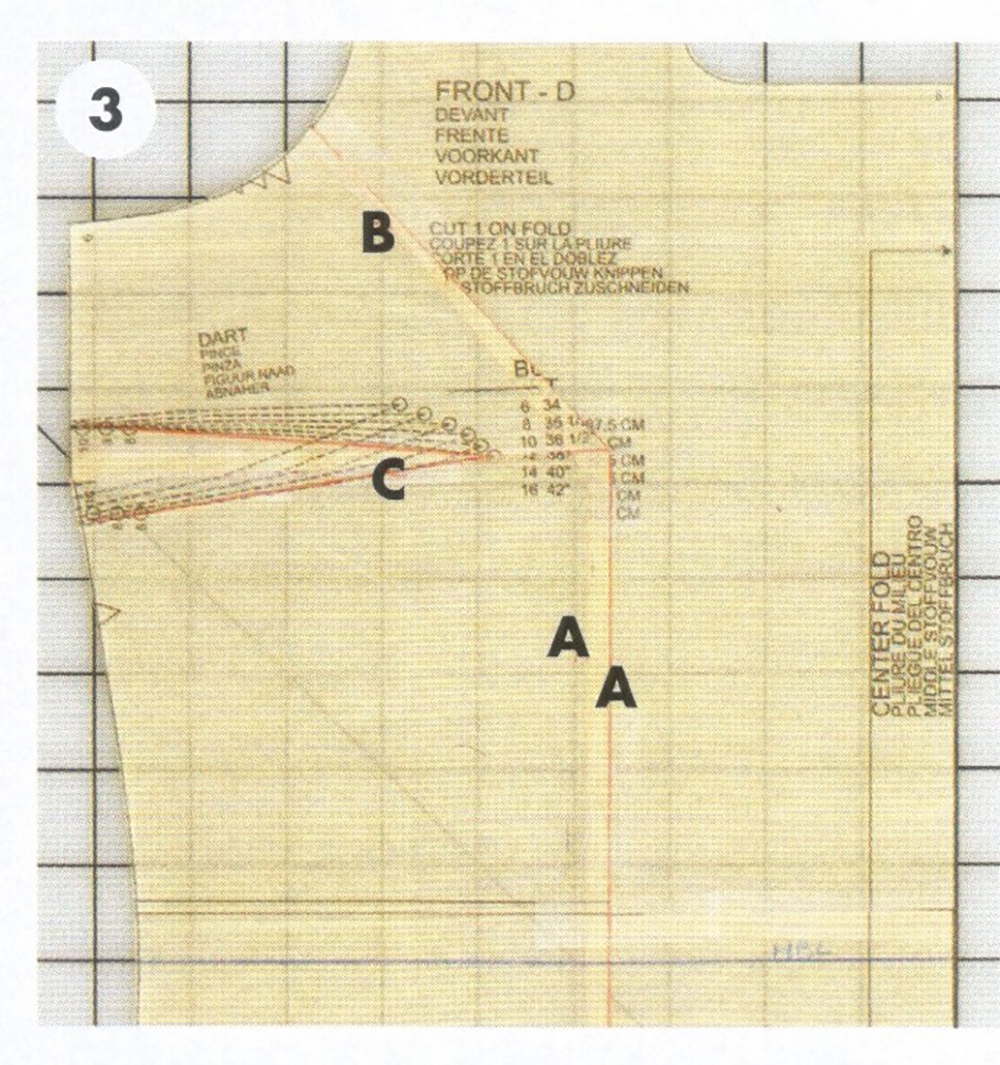
3. Spread the pieces apart adding on extra, according to your cup size shown above in the size guide. NB. Keep the pattern pieces together at the lower side, you don’t want to add on extra width at the bottom edge.
Cut a line across perpendicular to the line A, move so the pattern is aligned at the lower edge. Place a piece of paper behind each open section and tape in position.
This is now an increased bust dart. You will need to adjust the side line to match your lower pattern piece if necessary.
REDUCING A BUST DART SIZE
For cup sizes AA and A, you will need to reduce the size of the dart according to the measurements in the Size guide above. Instead of opening out the sections A, B and C you will need to close them, overlapping the pattern as shown below.
The dart is adjusted in exactly the same way as increasing the dart but in reverse. Secure the overlap sections with sticky tape.
So, with a bit of know how, you can see its easy to make adjustments to your pattern. It pays to spend a little time prior to making your garment to get the fit just right. After adjusting your pattern, why not make a test garment out of cheaper fabric, or make up just a section of the garment beforehand such as just the Bodice Front and Back, It will allow you to relax in the knowledge that, being tried and tested, your project fit will fit correctly and will be a joy to wear. And, of course, after you have made your pattern adjustments, you can use the pattern piece again and again.
All images and text are subject to copyright. Please ask prior permission if you wish to use any of the content of this blogpost.
Ursula adopts a ‘duster coat’ style when made in linen as shown above.
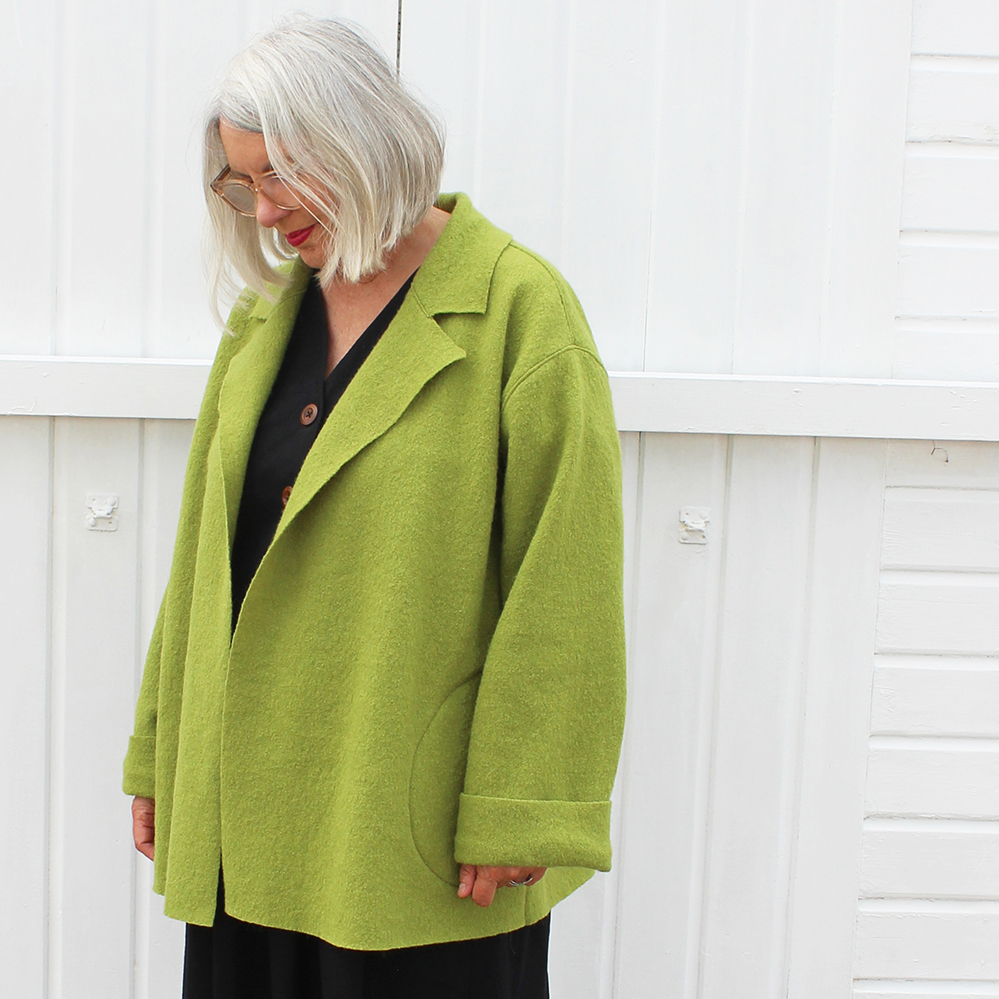
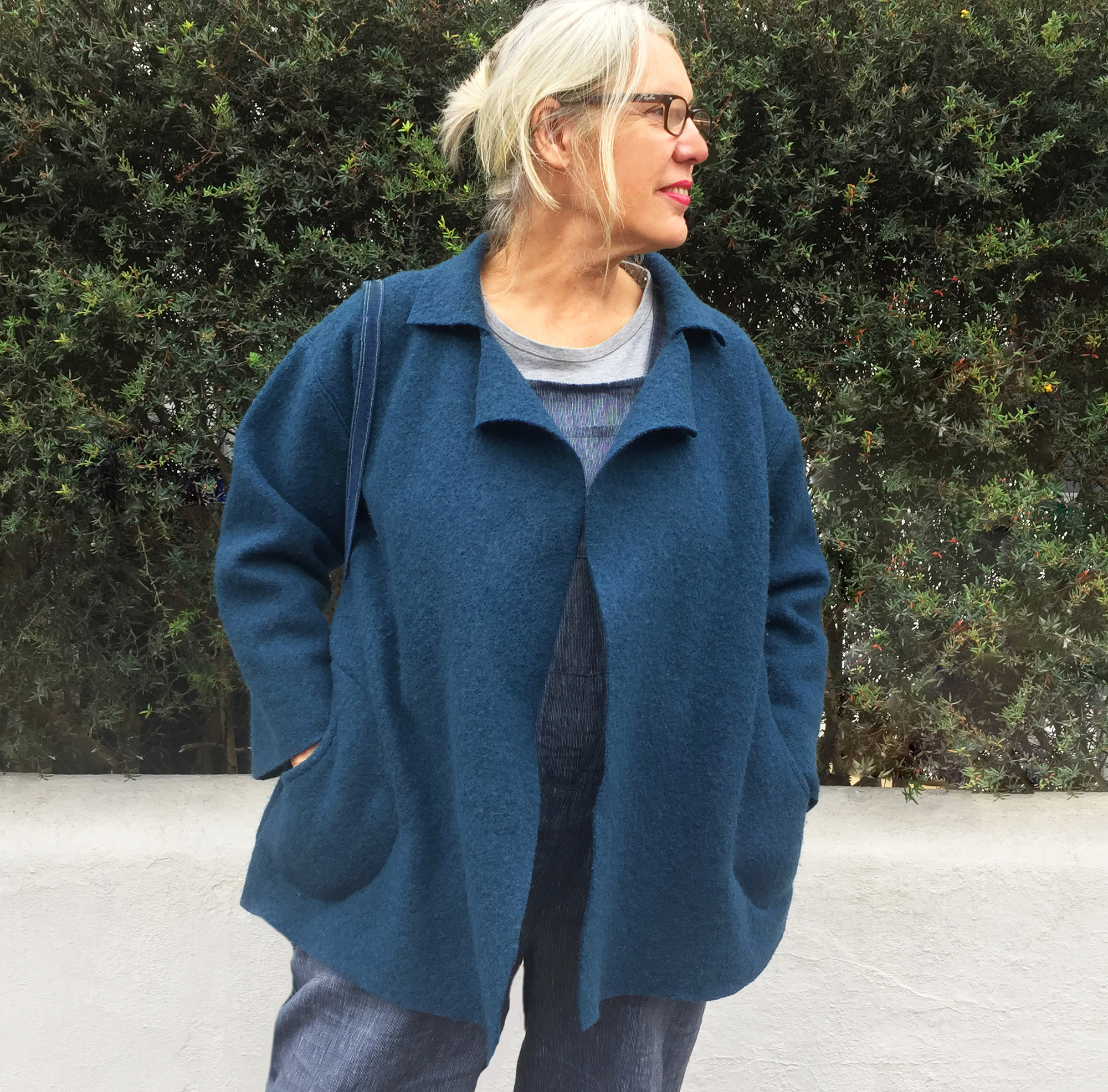
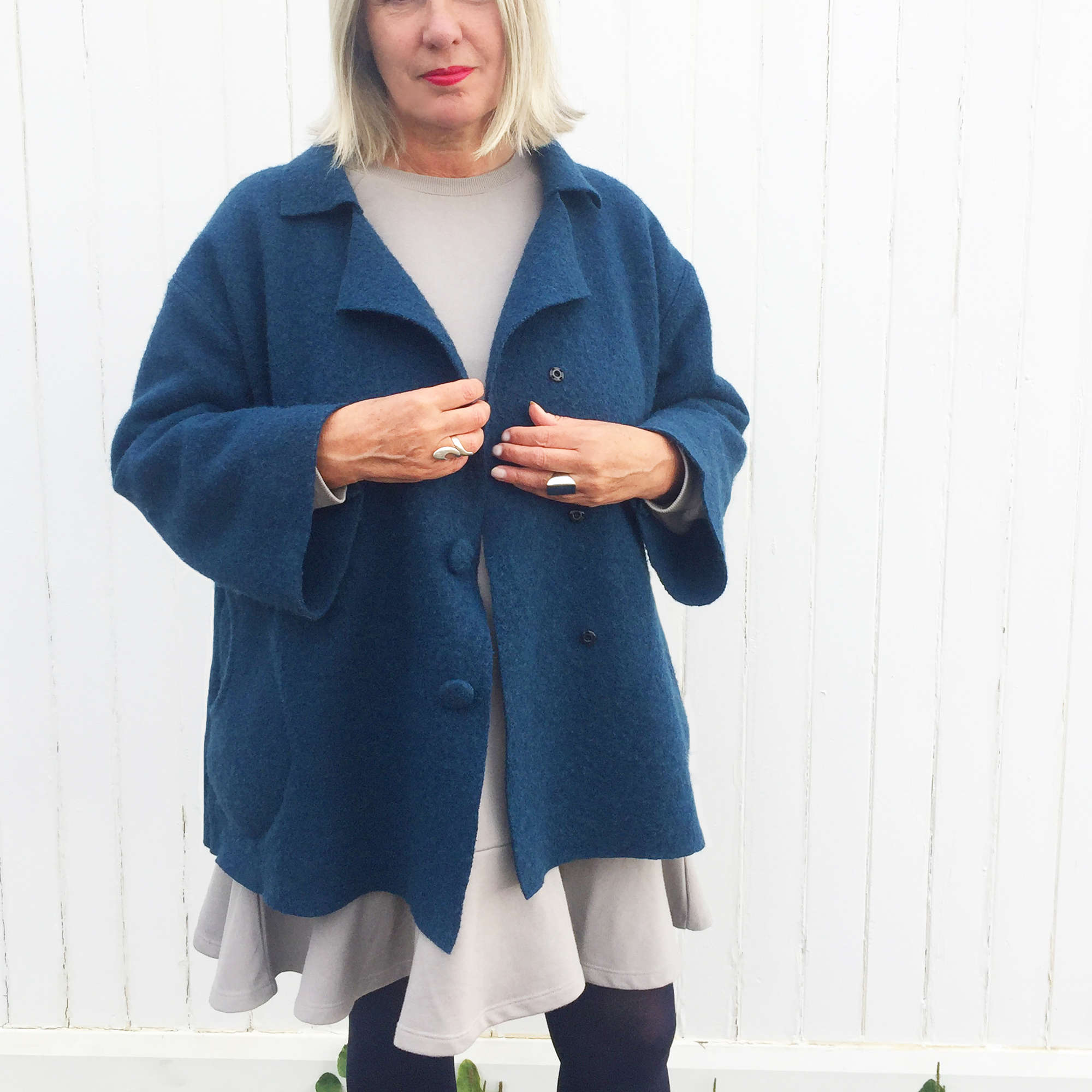
URSULA HACK JACKET IN BOILED WOOL
NEW! Ursula pattern now has a template and instructions included with the pattern to make this ‘Hack’ version using boiled wool. I bought this fab 100% boiled wool fabric from Stitch Fabrics by Rosenberg &son. Here is a link to their site.
This a simple hack, made from the Ursula pattern in a reversible boiled wool, a fabric that looks exactly the same on both sides. This gives it a more relaxed oversized look (this hack is not possible if your fabric isn’t reversible). In a nutshell I left the back belt off, no hems, no facings or front folded edge, just a simple piece (template included with the pattern) added on to the back neck.
You can buy a pattern via my website, click on the link below.
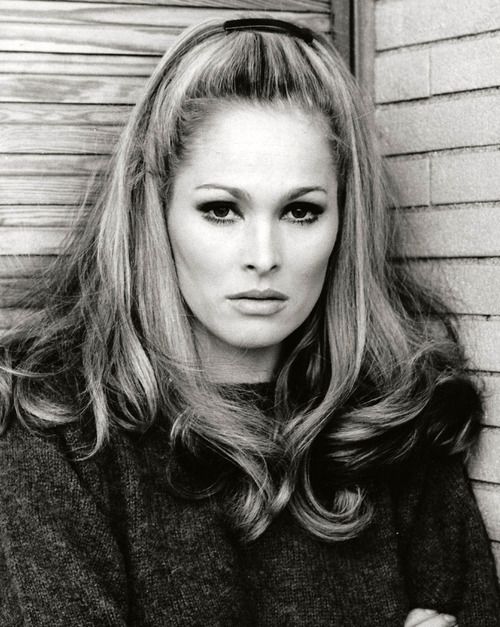
Ursula coatigan, inspired by a bygone era, and her namesake Ursula Andress….what a woman!
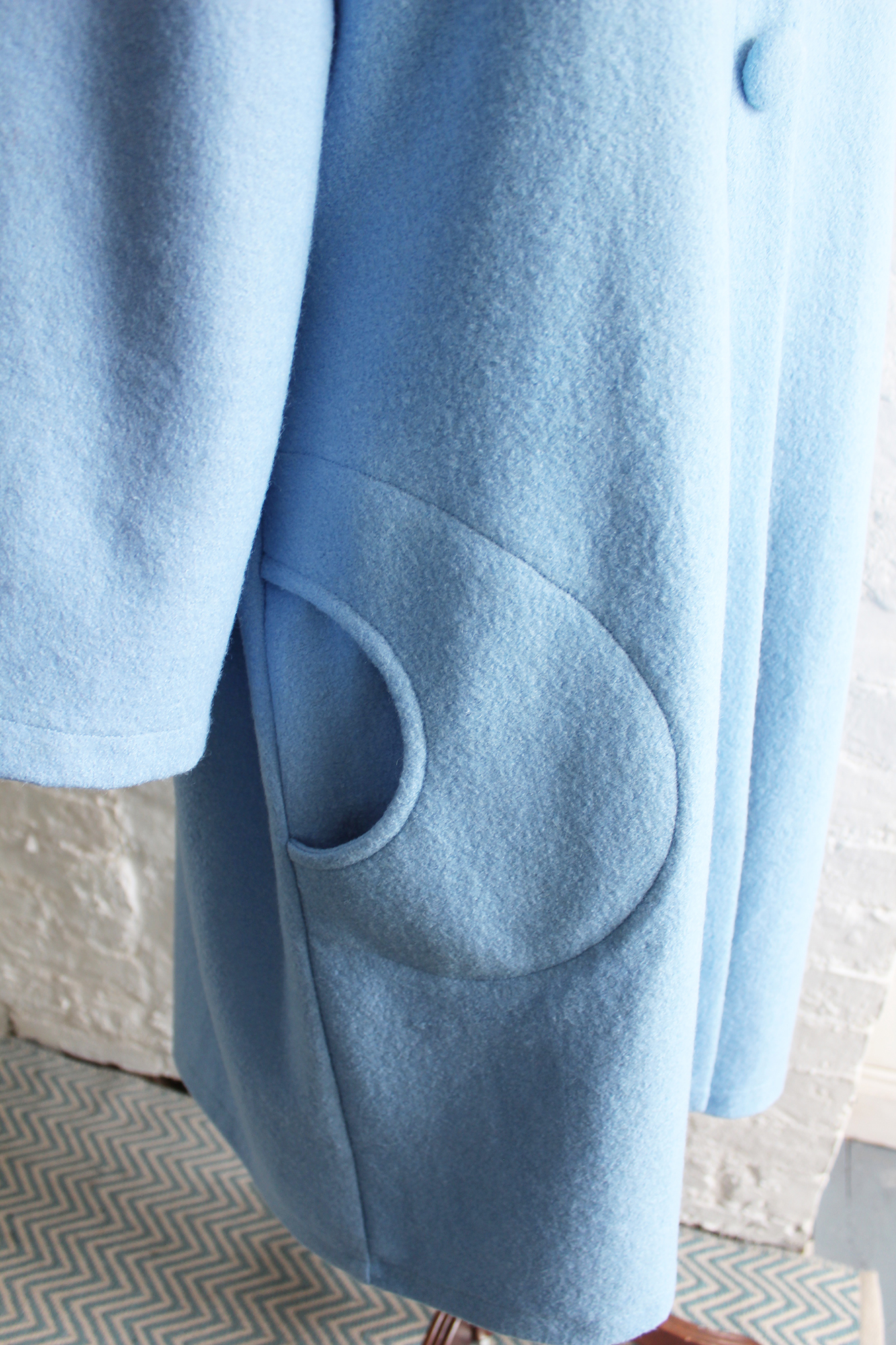
This stylish unlined duster coat/coatigan, round neck in two lengths; long or jacket length, with rounded pocket details, three or four covered buttons with large snap fasteners and the three quarter length sleeves gives an air of the 1960s.
Make in woollens such as wool mix jacquards and checks or plain boiled wool in vibrant colours for Autumn/Winter or Linen and Linen mix fabrics for Spring/Summer. Its a versatile pattern for all seasons! Here is a link to some wonderful British wool fabrics at reasonable prices.
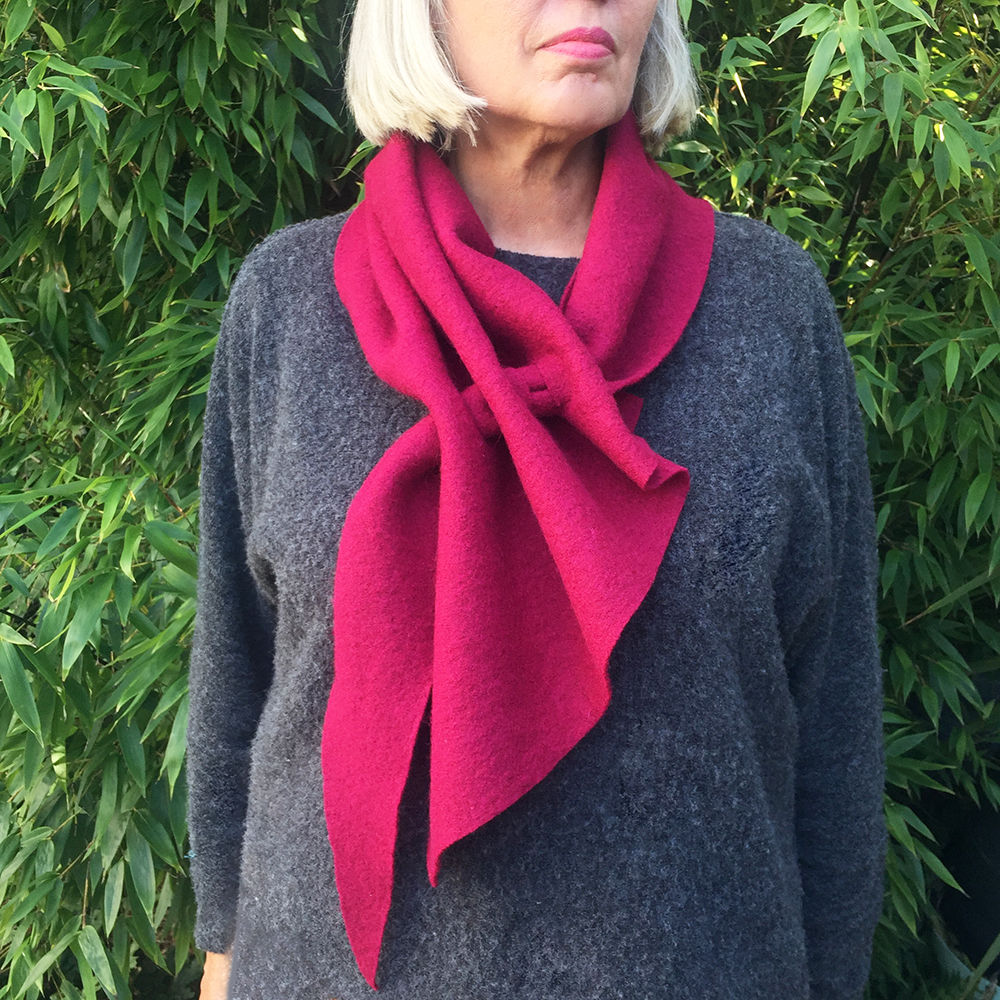
Why not team up with jeggings, jeans, long skirts and a polo neck top for a sixties look. Or, what about making a wrap shawl out of any leftovers like this one.
Scroll to the bottom of this page for the Wrap Shawl step by step instructions.
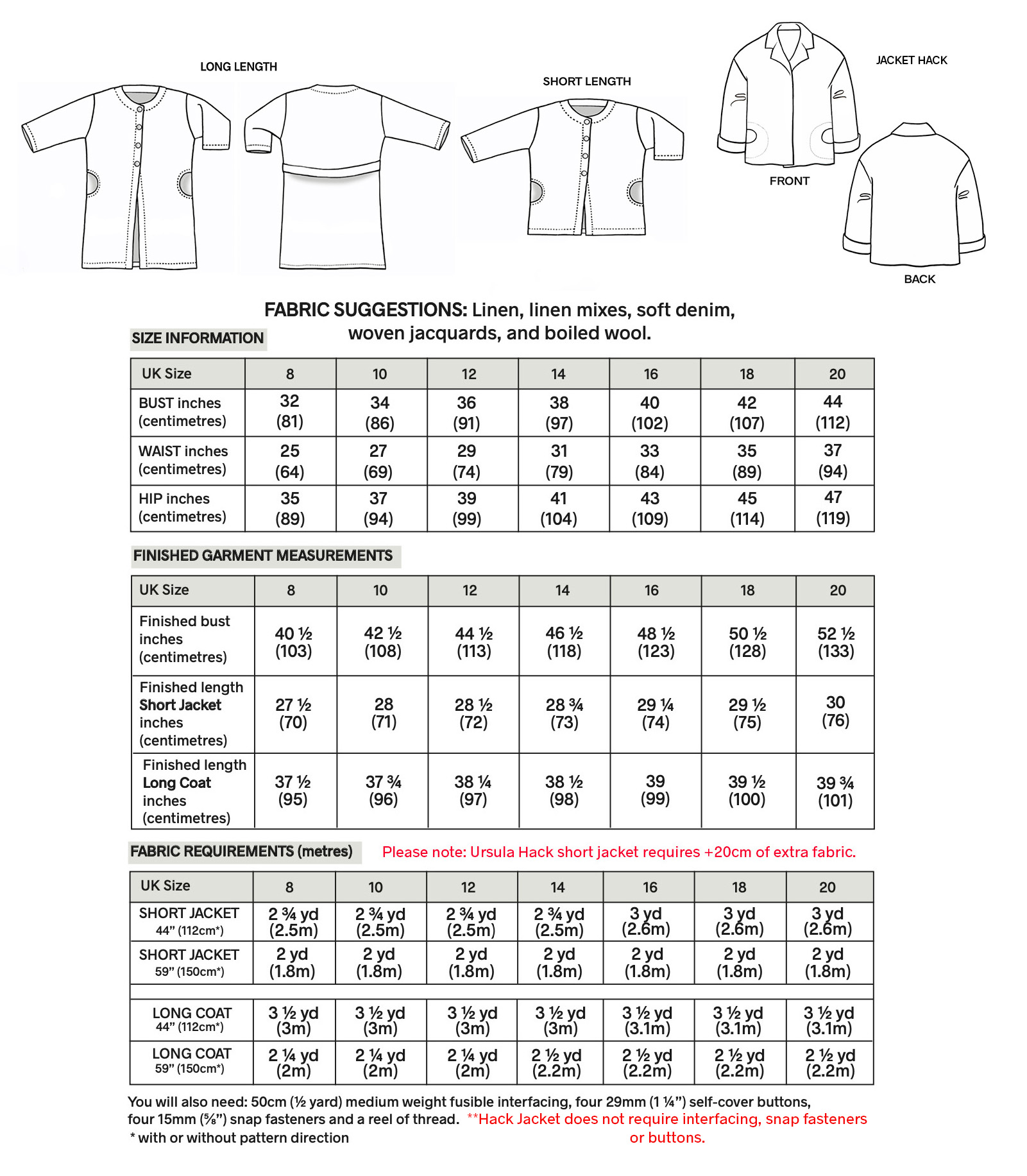
8 Templates: FRONT, BACK, SLEEVE, FRONT FACING, BACK FACING, POCKET, POCKET LINING and BACK BELT
Here is the measurements guide:
Sew 1cm (3/8″) seam allowance unless otherwise specified. Finish raw edges with an overlocker or zigzag stitch or leave unfinished if using boiled wool.
Topstitching –sew 4mm (1/8″) approx. from seam with a straight stitch length at 2.8mm.
Stay stitching- a line of straight stitch to prevent stretching
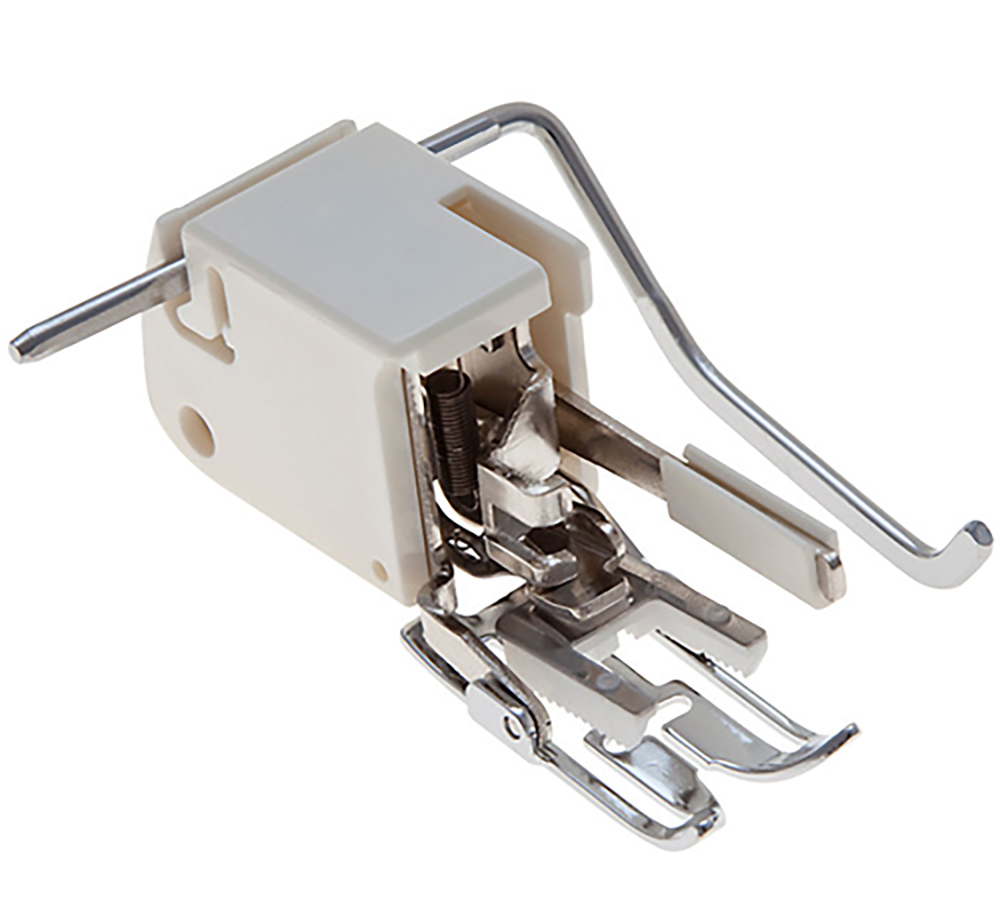
WORKING WITH BOILED WOOL TIP: pop a walking foot on your machine and use a ballpoint needle no.90 which helps give a better sewing experience
HOW TO MAKE URSULA COATIGAN
SEWING THE BACK BELTThe Back belt is optional but I think its nice feature to the rear angle! Stitch down each side, then turn inside out. Press.Top stitch down each side.Pin the back belt to the back piece at each side. Machine tack within the seam allowance.
SEWING THE NECK FACING
Sew the (interfaced) facing pieces RST. Press the seam allowances open. Finish the outer edge.
SEWING THE POCKETS
Finish the outer edge of the pockets and pocket lining pieces. Pin the pocket piece at each side matching the curved edge. Sew. Clip the seam allowances.
Turn to the WS and topstitch 1cm away from the edge..Pin the pocket lining piece to the pocket at the outer edge. Sew.Tack stitch at the sections above the pocket curve to secure.
SEWING THE FRONT TO BACKPin, then sew the front to back at the shoulder edges. Finish the raw edges together. Press towards the back. Top stitch on the right side. Staystitch around the neck edge.
Sew the front to back at the side edges. Finish the raw edge. Hem the lower edge of the front and back piece.Pin the facing to the Front at the top side edge. Sew. Press the seam allowances open.
Pin the neck facing to the neck edge, match up the cross seams. Hand tack stitch all around the neck edge. Sew.Nick the seam allowance all around.Fold over to the reverse side. Hand tack stitch around the neck facing. Fold over 1cm at the centre front edge. Press. Hand tack stitch down the front to secure.
Stitch around the neck facing and down each long centre front band.
SLEEVESPin the sleeves RST at the long side edges. Sew. Finish the raw edge. Press. Turn under the cuff hem, press, pin. Stitch.
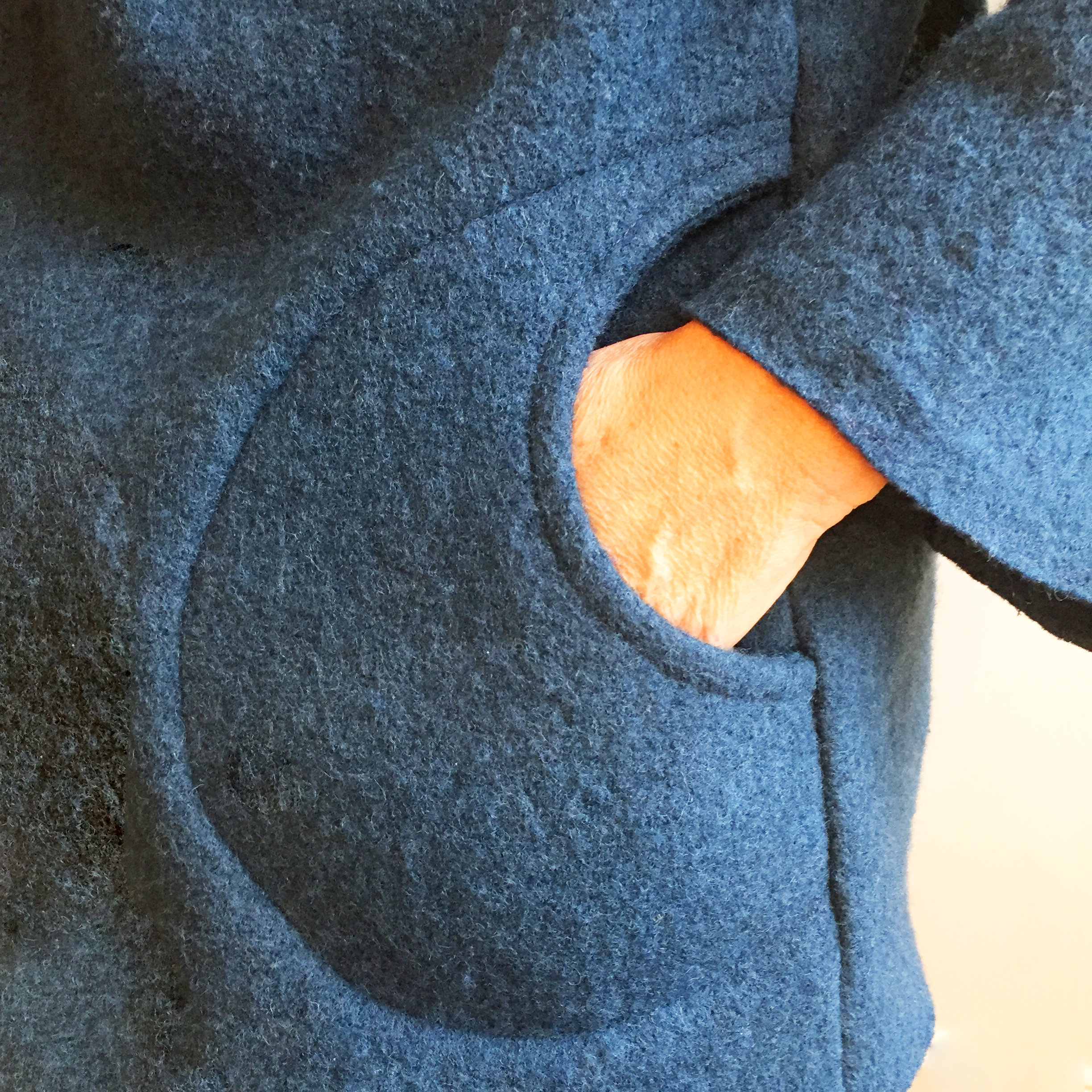
Pin the sleeve to the body, align the back of the sleeve head (see template) to the back. Sew. Finish the raw edge. Press. Topstitch on the RS.Pin, hand tack the pocket to the body. On the reverse side, stitch around the pocket with a longer stitch length. This will define the pocket on the RS. Like this……
TO MAKE SELF COVER BUTTONS (34 x 29mm) So I made up the four large self cover buttons, which to be honest, with this fabric, were quite a challenge. Of course you could use normal large buttons or none at all. Anyway, I did get there in the end, heres a few tips which hopefully may make it easier for you:
Flatten your disc of fabric as much as possible with a steam iron, bash with a hammer or pull it apart so its as thin as possible.
Push your fabric under the claws as much as possible, I used a tool like this one (below), which really helped, but you could use the end of a screw driver or old scissors.
Then, getting the metal button backing disc on was tricky, brute force is needed, but if you really cant get it on then I recommend covering the back with a small disc of fabric with a small slit in the centre for the wire loop then, sewing the button fabric together underneath to hold it together, then stick the disc over the top with fabric glue. In a lot of ways I think this is actually better than getting the metal back on because then you don’t see any metal on the back at all.
Snap fasteners: Then I stitched on the poppers, to match the buttons. You could always use bought buttons rather than self cover ones or have no buttons at all.
One last thing…..
Pilling: By the way, if you are getting pilling with your boiled wool, I’ve read that it helps to spray the fabric with hairspray- I haven’t tried it myself but I’m going to give it a go.
Boiled Wool Washing Instructions – Manufacturer says: A gentle cold-to-lukewarm bath (an actual bath would be good where it can spread out and not need moving about much) with a specific wool wash. Avoid agitation or wringing. Carefully rinse and roll and press in a towel to remove excess water. We strongly recommend testing a small piece first to be sure.
How to make an URSULA HACK JACKET VERSION
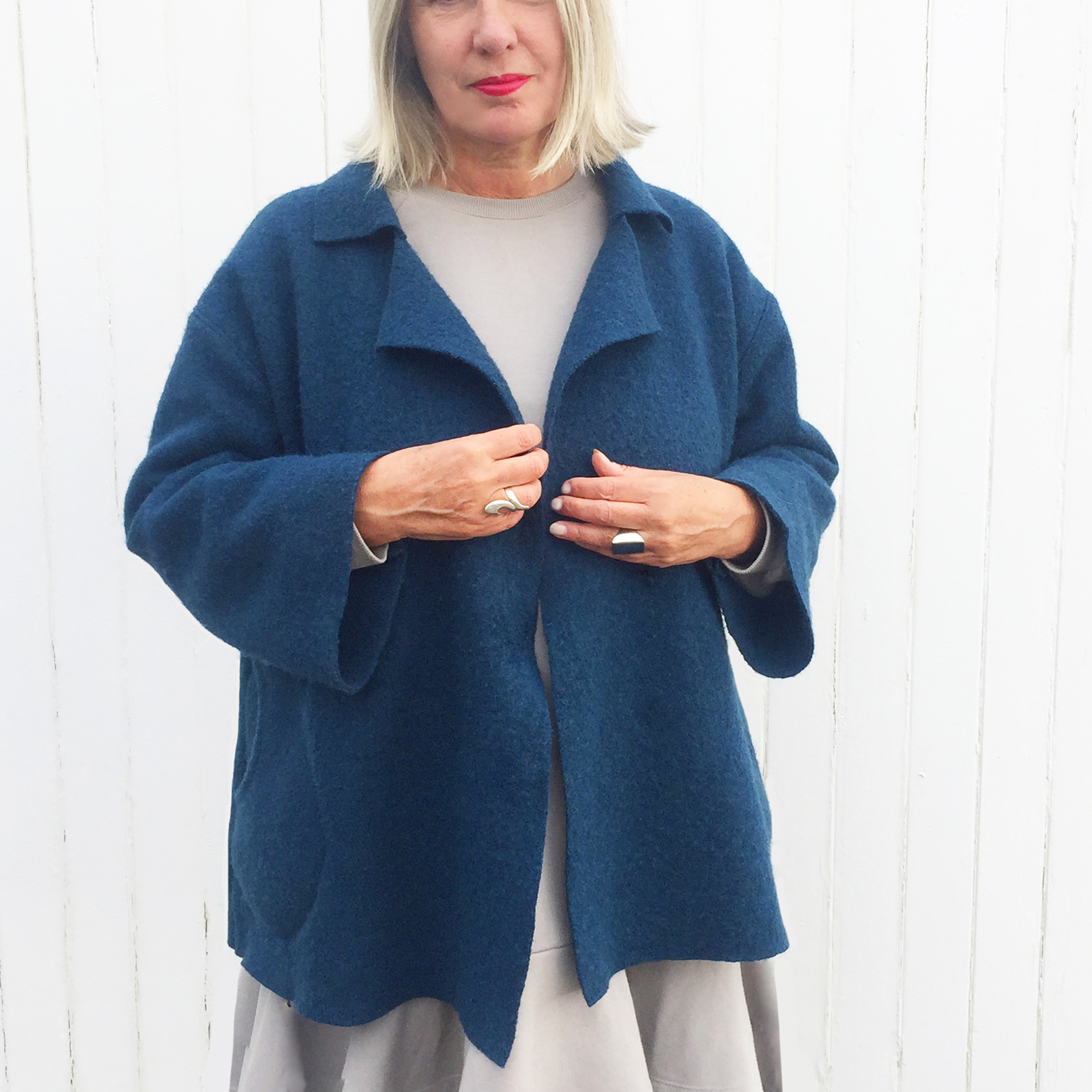
In a nutshell, this hack version is where the front band is left unfolded, no hems at all on the lower edge or cuffs with a back collar piece added to to make a rever fold back collar. It makes for a more relaxed Japanese feel. The pockets are stitched as normal.
So you may have seen my show on the Sewing Street where I demonstrated my Ursula Coatigan. You can catch up here on the YOUTUBE link. Scroll on to the fourth hour for the Ursula demo. I’ll also be doing a demo of this hack version on October 14th 2021. I’ll upload a Youtube link when its ready.
So, the lovely folk at Stitch fabrics sent me some boiled wool to make up a sample and use to demonstrate on the show. When it arrived, I have to say, I was a little bit worried, because it was significantly thicker than other boiled wools I’ve used before. Well, I gave it a go and found that if you used a walking foot (recommended anyway for any bulky fabric), a good strong 90 needle, and made single fold hems on the band and lower hem and cuffs, instead of double fold hems, then you’d be fine.
The boiled wool was like felt, it didn’t fray at the edges at all, so I thought leave them be. This 100% wool fabric was, I thought, a bargain price and would keep you nice and toastie, and no nasty synthetics! Wonderful!
Well I stitched the pockets, and the side edges, inserted the sleeves and all looked good. At this stage, I didn’t hem the lower edge, nor the sleeve cuffs.
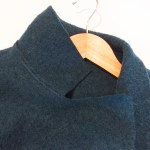
Then to the facing bit. I popped the body on to a mannequin and started to look at Ursula in a new way. The pre-facing, waterfall neckline looked quite interesting, and it gave me an idea.
So I left the facings off, and the back belt, I didn’t fold back the centre front either. I just left it un-hemmed and I thought it looked very Japanese in style. Then I thought- what about if I stitched on a simple rectangle of fabric at the back neck to make a collar? oooo ….nice!
So I’ve now added in instructions and templates to the pattern to make a Hack version, however if you haven’t got this in your pattern already you can download it here for free.
BACK COLLAR & CUFF PIECE CUTTING GUIDE
Please download these instructions and templates for making the Ursula Hack.
You will require an extra 20cm of fabric for the Back neck and Cuffs add on.
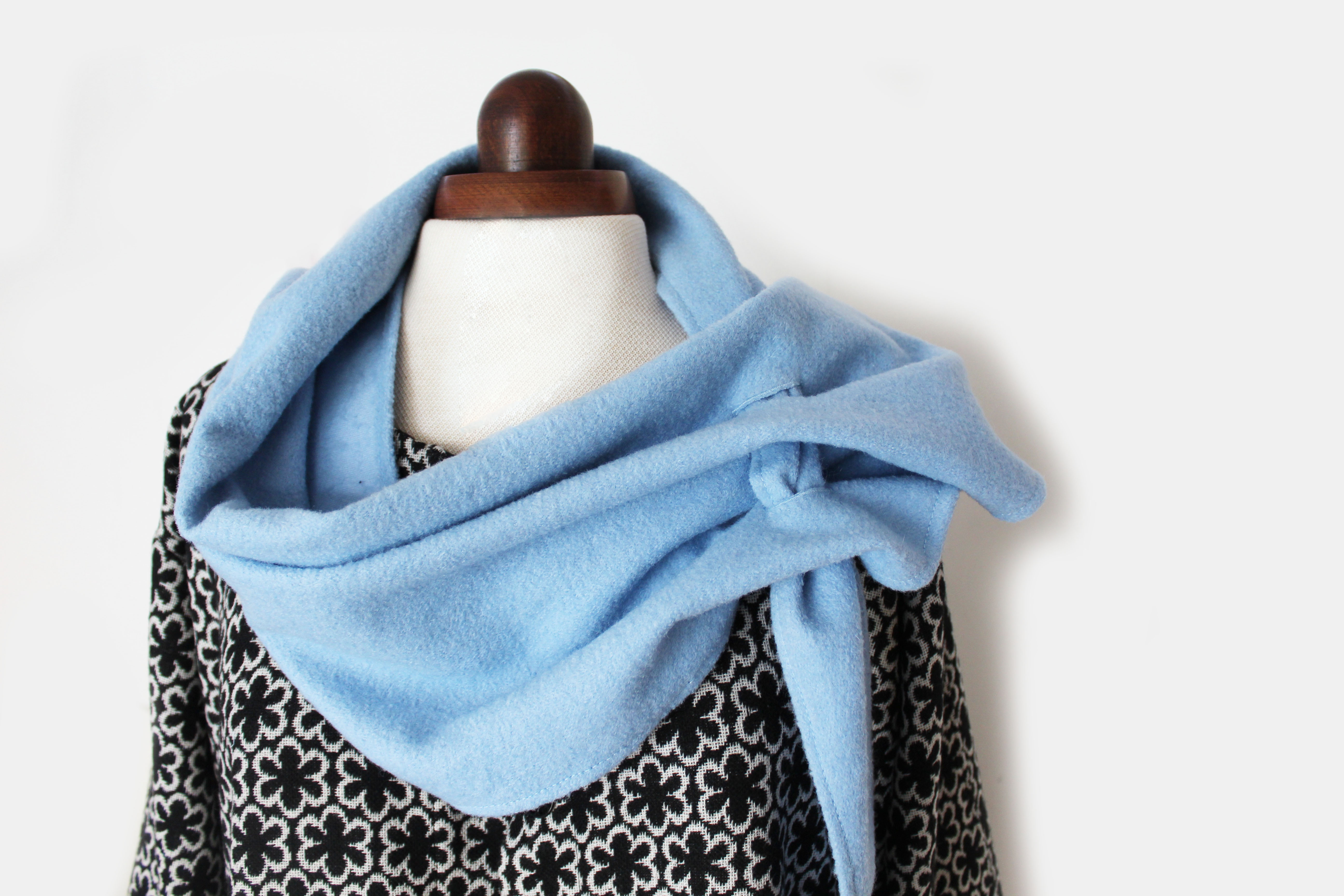
HOW TO MAKE A WRAP SHAWL
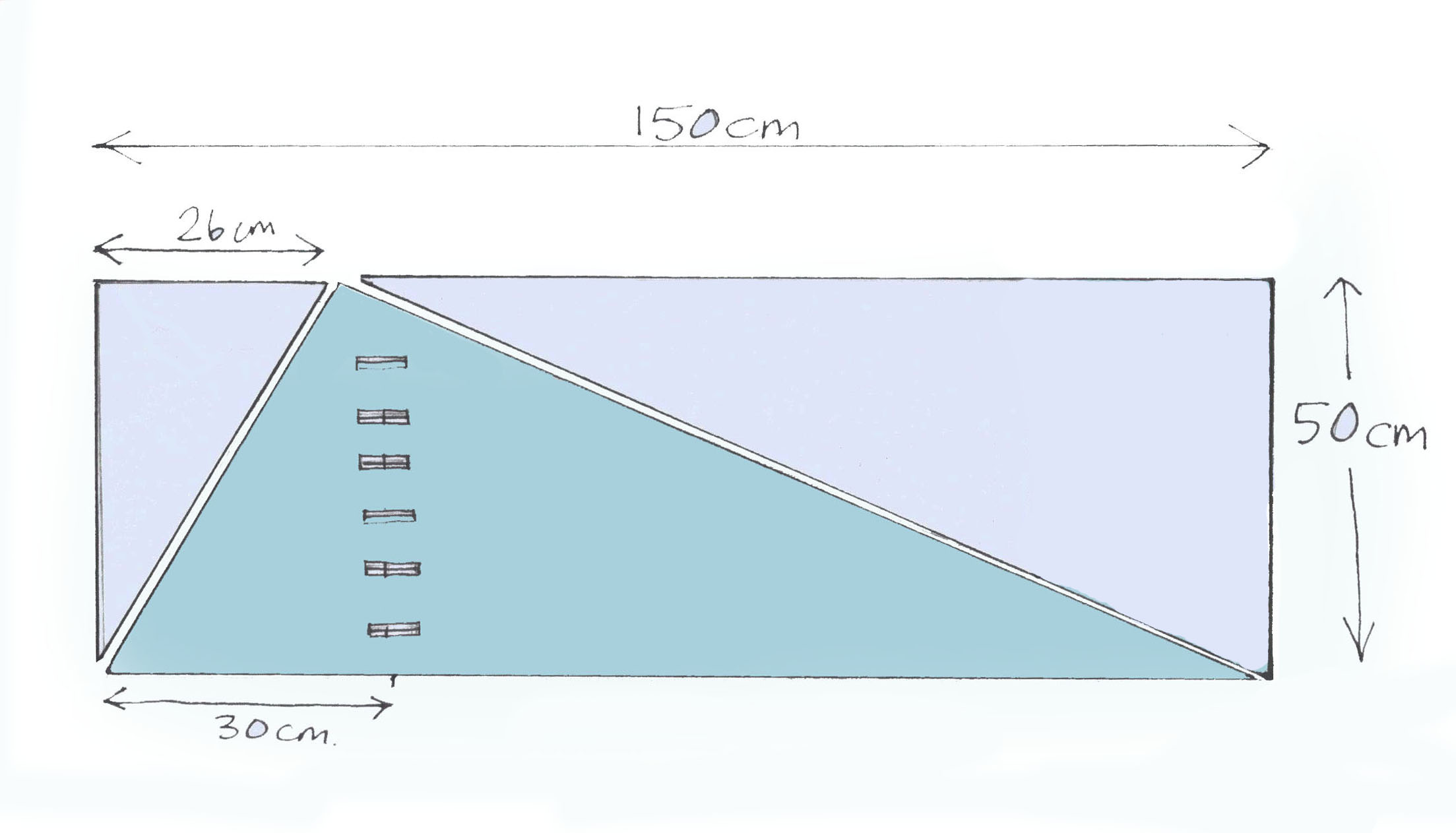
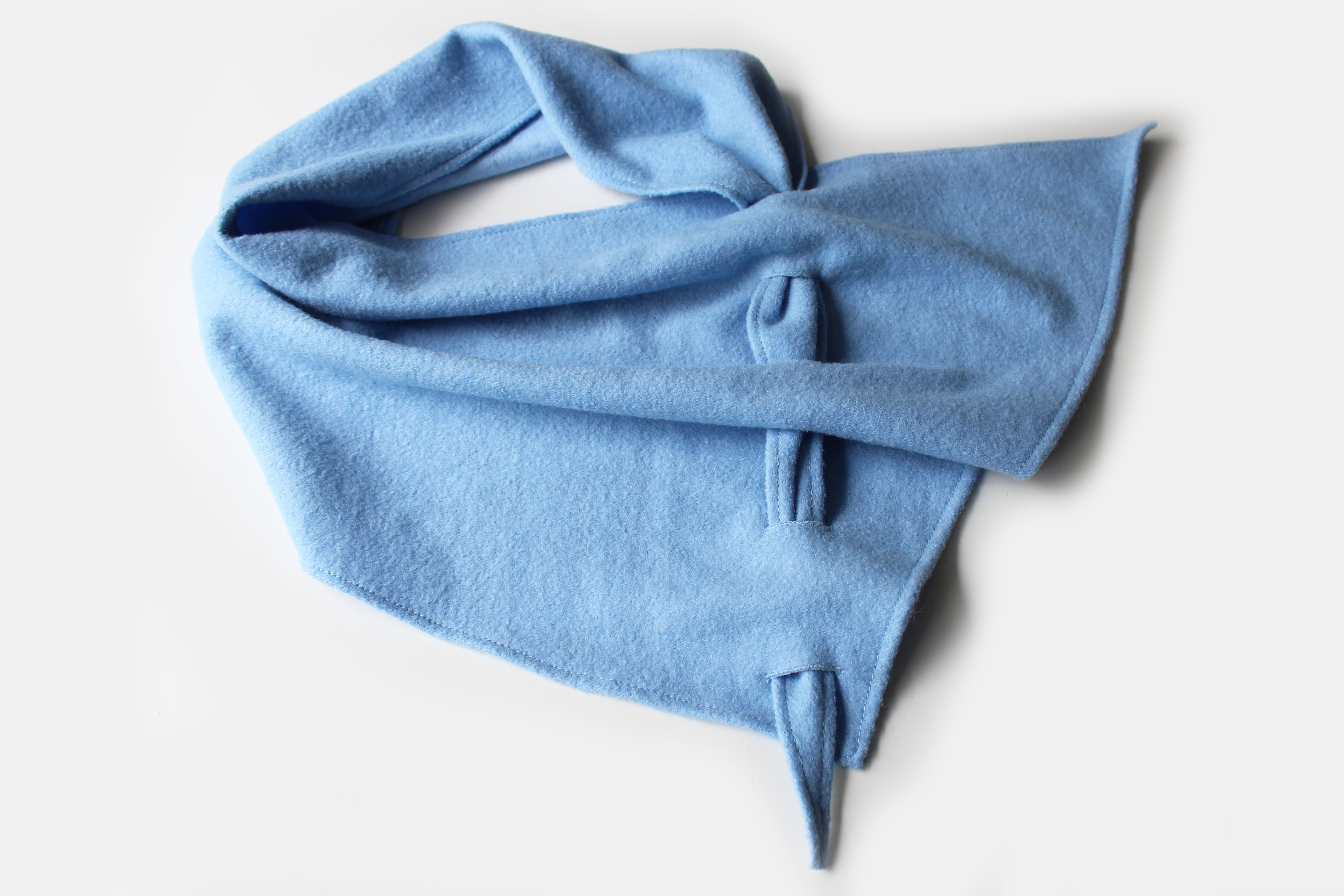
This wrap shawl is perfect for boiled wool. Suitable for beginners, it needs about a half metre of double sided boiled wool fabric (or anything for that matter). With a nifty threading system through a line of holes or buttonholes, you can gather up the folds to make a waterfall effect wrap shawl.
FABRIC REQUIREMENTS WRAP SHAWL (unlined) 50cm x 150cm of fabric such as boiled wool. A reel of thread (If overlocking the raw edges use matching coloured threads).
EQUIPMENT
Use a 90-100 jersey or ballpoint machine needle when sewing knitted or stretch fabrics
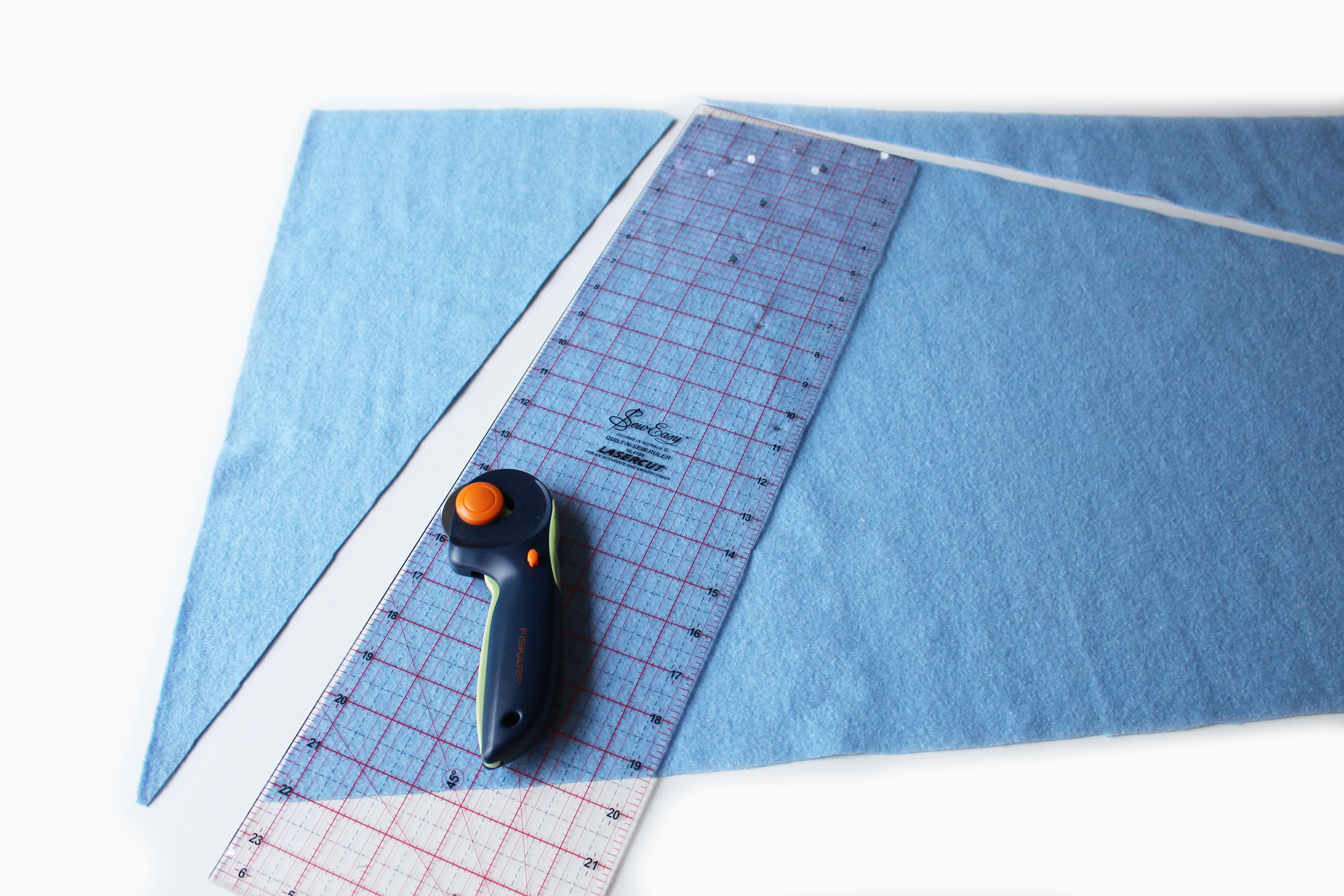
CUTTING OUT Lay out your 50cm x 150cm fabric rectangle, wrong side up on a table. Mark a point 26cm in from one long side. Draw a line from this point to the lower left and right corner points. Cut along this line.
Mark a point 30 cm in from the lower left corner. Draw a vertical line upwards with chalk or invisible marker pen. This line marks the centre line for your buttonholes or just cut holes (if using boiled wool).
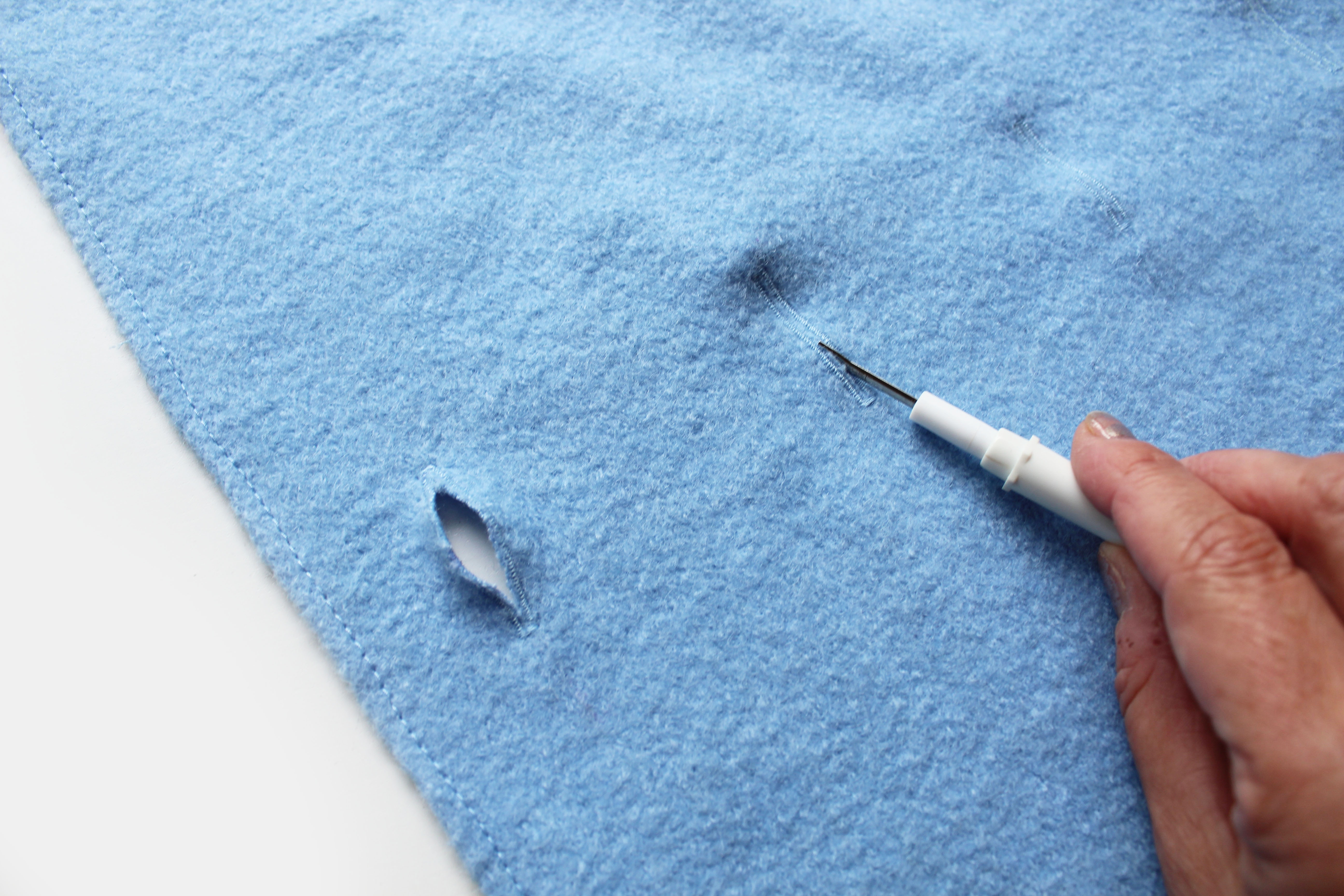
Buttonholes are 4cm wide and run horizontally to the long lower edge. Mark out the six buttonholes positions (each one is 40mm wide) starting with the first at 4cm up from the lower (long) side, then another five buttonholes with a gap of 8cm in between each one.
SEWING THE BUTTONHOLES Cut open using a stitch unpick then trim any ragged edges and loose thread ends with small scissors NB take care not to cut your buttonhole end bar tacks.
Alternatively, if using boiled wool fabric that doesn’t fray, just cut the 4cm holes with an 8cm gap in between and leave unfinished.
FINISHING THE OUTER EDGE if your fabric doesn’t fray you could leave your shawl outer edges unfinished alternatively finish them off with an overlocker with matching colour threads or make a small hem all around the outer edge.
Option 1 – Using an overlocker. With matching overlocker threads, starting with the two long sides at the widest point, finish the raw edges. Finally finish the raw short edge. Sew in all the thread ends.
Option 2– Hemming. Trim off the pointed corner so the end tip is 1cm across. Fold over a minimum hem (5mm approx.) to the reverse side. Commencing at the widest end, sew a small hem at the two long sides. Repeat for the shortest side. Using your thread end, hand stitch the corners to close up the open seams.
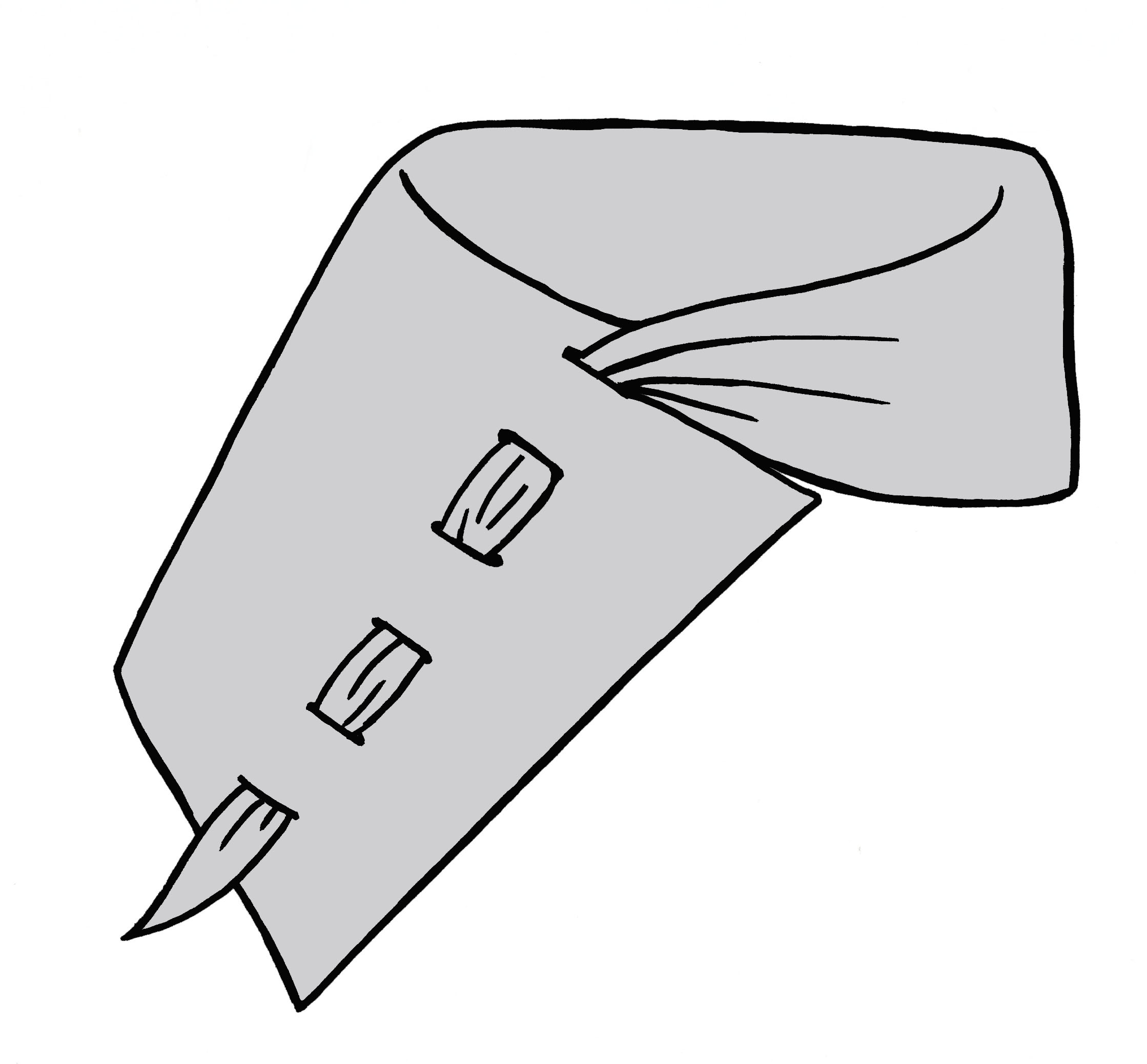
HOW TO WEAR THE SHAWL Thread the point of the shawl through the first hole near the longest edge, then in and out of each hole. Leave the pointed end extended.
Lottie Duster, a coat or jacket depending on which length line you use. Pop it on as an extra layer in Autumn or Spring, its a useful addition to your wardrobe. Easy to make, suitable for an intermediate, its an enjoyable make which really isn’t too challenging.
Make Lottie coat in lovely linen, delightful denim or a cotton canvas. On the Sewgirl Etsy shop there are listings for a fabulous quality 8 oz denim in medium and dark indigo and an extensive range of beautiful linen fabric that would be perfect for making this fabulous jacket.
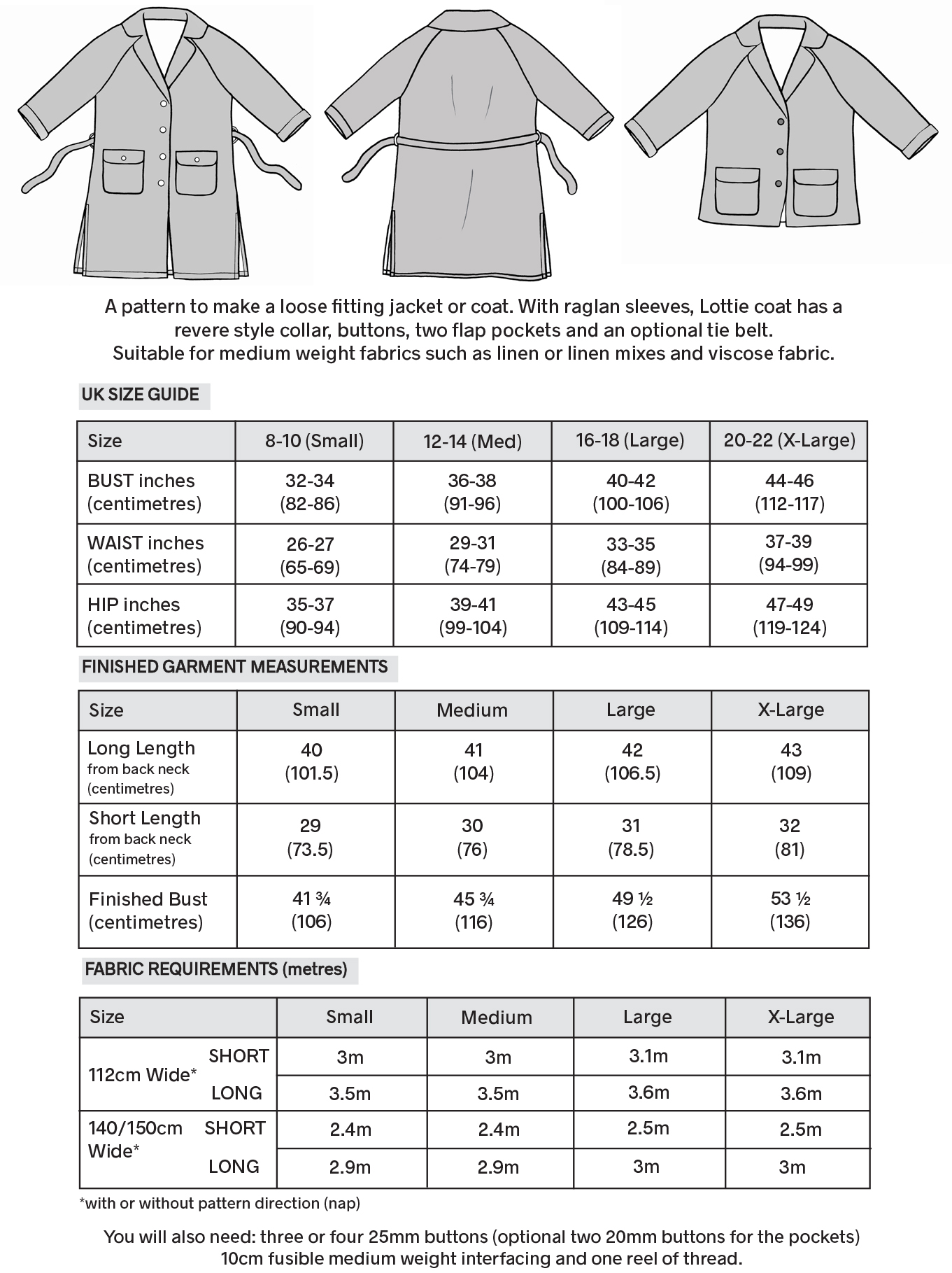
Lottie coat has a four button closure, raglan sleeves, revere collar, optional tie belt and flap detail pockets (or sew standard patch pockets as I have done in the short jacket version)…….Its a classic!
Here are some essential size and fabric requirements information…..
Getting started
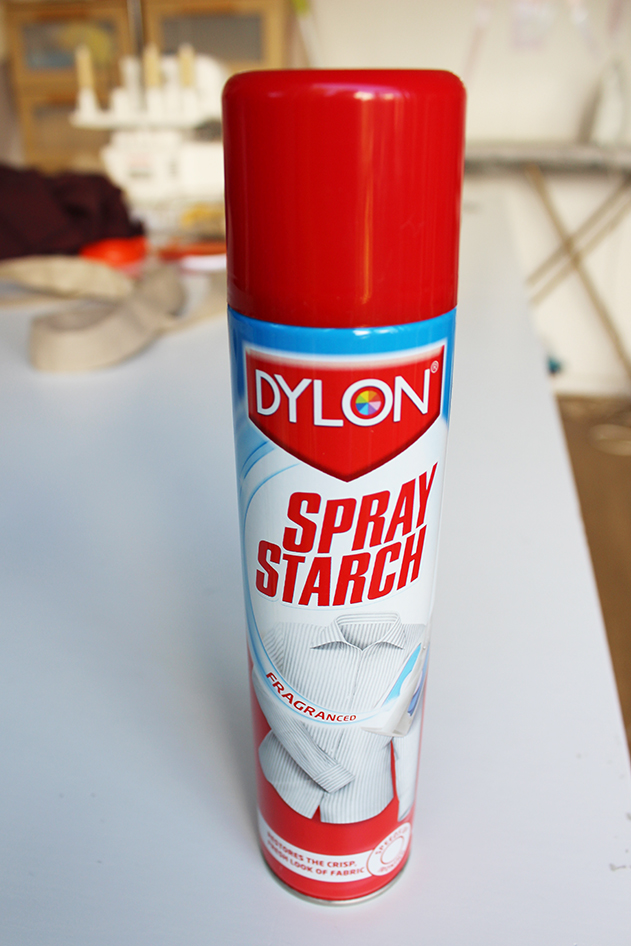
Working with linen is a joy but it does crease rather, so I usually have my bottle of spray starch at the ready.
Firstly iron your fabric, I like to pop a blanket on my work surface and iron my fabric in situ, I find it a lot easier. I use paper weights to keep the larger pieces stable and pin just the smaller pieces. Once you have cut out the all pieces you just need to interface the back neck facing. I don’t interface any other piece because I think the facing needs to be kept soft and fluid.
Here are pictures of the step by step stages of making Lottie coat with edited text from the pattern with a few extra tips, so you can see if its something you might like to make before you buy.
SEAM ALLOWANCE IS 1CM
If you are the smaller end of your size i.e. a size 8/12/16/20 then you could sew a 1.5cm seam allowance to compensate.
Use an overlocker to finish the raw edges or sew a zig zag stitch or pink with pinking shears.
THIS IS WHAT YOU DO……….
COLLARThe collar is made by sewing the outer curved edge without the notches then after nicking and trimming the seam allowance its turned inside out, pressed then top stitched. Then tack stitch along the raw edge to hold together. Place to one side.
FACINGSAfter interfacing the back facing, pin to the front facing at the shoulders. Stitch. Press the seam allowances open.
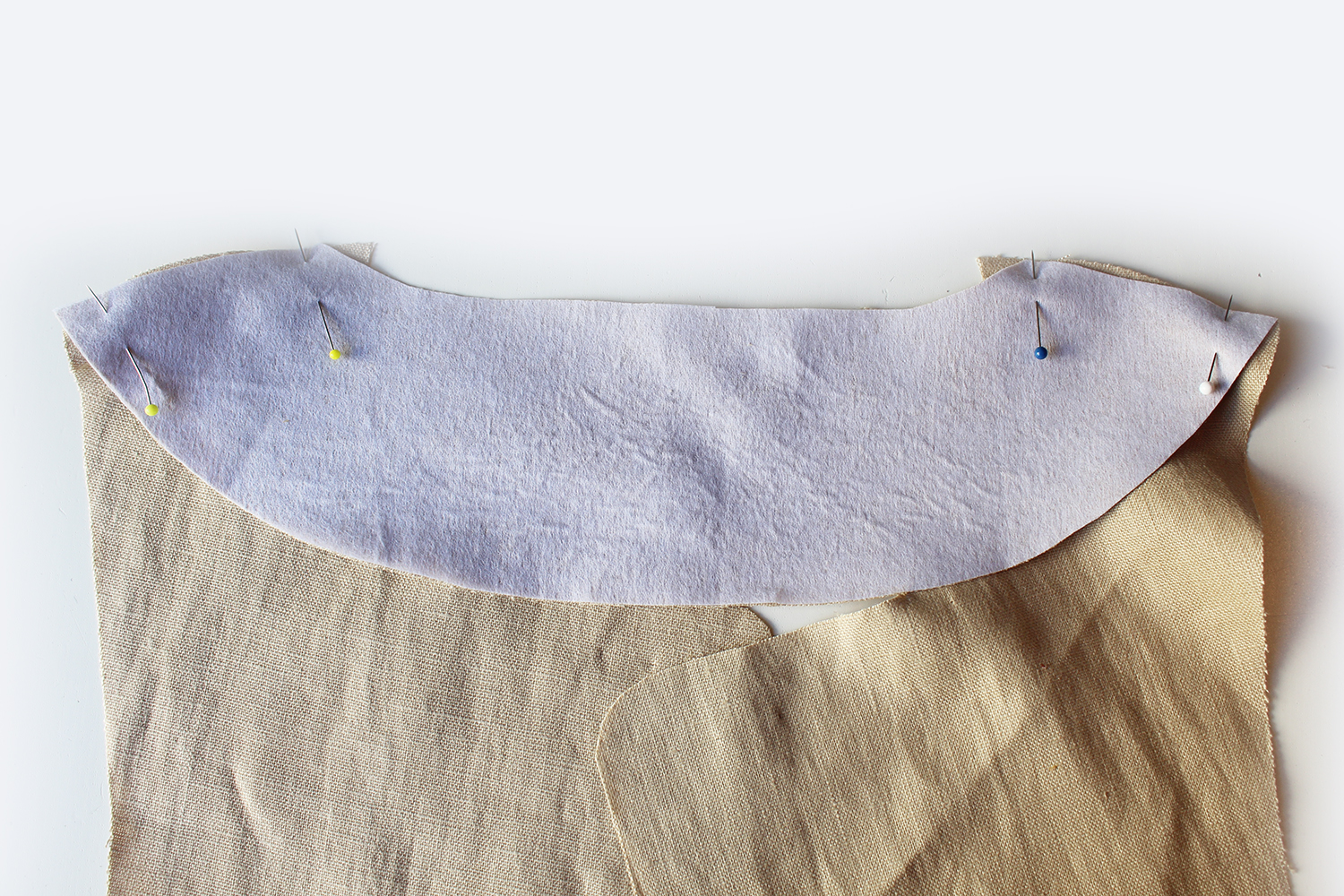
Turn under the outer edge 1cm and press. Then stitch. Turn under the lower edge of the facing 1cm and stitch.
JOINING THE SLEEVES Sew the front sleeve to the front at the slanted edge. Join to the back sleeve. Join the back sleeve to the back. Finish the raw edges. Press. Repeat for the other side.
Join the front to back at the side seams, leave the lower section open for the side slits. Finish the raw edges above the slit section. Press.
SIDE SLITS (the short jacket doesn’t have side slits but you could add them in, just leave 12cm open up from the bottom hem at each side and single fold hem along the side edge, or stitch on a small 4cm x 12cm strip to make a binding at each edge to allow a double fold). Nick the seam allowance just above the slit section to open the seam at the lower section. Fold over the side slits at the raw edge 1cm then again 2cm. Press. Sew.
Press under the hem at the lower front edge 1cm then again 2cm. Sew.
COLLAR & FACINGSStarting at the centre of the back neck, pin the collar at the centre point to the neck edge matching up the notches to the sleeve seams.Starting at the back neck, pin the facing piece at the centre of the back facing with the RS together to the collar.
Pin the facing all the way down the front edge at each side.With the lower edge of the facing turned under and stitched 1cm, align at the lower edge.Hand Tack!You might like to mark the curved stitch line with an invisible pen to help you as it is important that both sides are the same.
Stitch!
Nick the curved seam allowances. Trim the seam allowance to 5mm.Pin to the reverse side and press so that the seam line is aligned with the fold. Push out the collar with a poking tool to get the curves.
Pin the facing all around.
Top stitch all around 1cm from the edge.
Make a hem at the sleeve raw edge. Fold over 1cm then again 3cm. Press. Pin. Stitch.
POCKETS Pin the pockets RS together. Stitch all around leaving a small opening at one side for turning. Trim the seam allowance to 5mm. Nick the curved corners.Turn inside out, push out the corners with a poking tool. Press well, aligning the seam line to the fold. Top stitch all around. Press over the flap section as shown on the template. Pin to the coat in position as shown on the pattern. Tack stitch to hold. Sew all around a second line of stitching close to the outer edge and parallel to the top stitching. Reinforce the corners at the top just below the flap fold. Sew on a button at each pocket or leave without.
CLASSIC POCKET STYLE: if you would prefer classic pockets without the flap, cut your pocket straight at the top edge, at the fold line. Sew all around, turn inside out after nicking and trimming the corners. Topstitch across the top edge. Pin to the front, hand tack. Make a double line of topstitching around the side and lower edge.
TIE BELT (optional)Pin the tie belt pieces RS together. Sew all around, leave a small opening at the centre for turning. Trim the seam allowance and nick the curved corners. Turn the tie inside out and push out the curved ends with a poking tool. Press well so that the seam line is in line with the fold all around.
Topstitch all around the outer edge.
BELT LOOP
Fold the loop piece in half then fold in 1cm each long side. Press. Fold again in half. Press.
Top stitch down each long side. Cut into two equal pieces. Press over 1cm at each end. Attach to the coat at each side in position as shown on the template with a box stitch.Sew your buttonholes. Use the template as a guide to the position.One last thing, you may like to insert small pieces of wondaweb under the facing to secure the facing in place. You could also stitch a few stitches at the shoulder seam to secure the neck facing.
One last thing….why not make a gorgeous neck tie scarf like the one below, with just a half metre of hand woven indian cotton fabric from slubbedprints.co.uk
Voila!
For more Sewgirl news follow me on instagram or sign up to my newsletter via my website.
Edith – An artists smock style loose fitting tunic for everyday wear. Straightforward to make with easy sew long sleeves, a deep round neck, lots of cross seams and topstitching (oh yes I do love topstitching!) and two inset pockets. Edith has an open loop and button back neck detail so its easy to get on and off. Theres lots of room in this tunic to move, eat and do what you will!
The finished length is on the knee or just above. See below for the finished garment measurements.
Please note that the horizontal pocket seam is designed to sit approx 5cm (2″) below the waistline. You can sew a single or double line of topstitching as you prefer.Heres a close up of those nifty inset pockets which are hidden within the seam line. Before you start, its a good idea to measure where the pocket seam line will be on you. If you need to make any adjustments to the length of the upper and lower body sections, you can do this before you cut out. by tracing off the pattern and making alterations. Just extend or shorten the lower edge of the upper front and back by sliding the pattern down or up, then match up at the sides. Repeat for the lower section.
The Back neck opening with a rouleau loop, shown below, is such a good technique to get under your sewing belt.
Or you could also make a sleeveless smock top version like this one:
I made it 12cm shorter on the lower front and back section only. I didn’t attach the sleeves, just turned under a small 1cm hem and stitched a double row of topstitching.
To shorten the pattern just mark out the length up from the lower edge, then slide the pattern down and redraw the lower curved edge.
I also tried topstitched above the pocket seam which is an alternative method which also looks good.
Please note: For a shorter Smock Top version you will need 50cm less fabric than the pattern states for your size.
A Note about Topstitching. If you prefer to have contrast colour top stitching, use a different coloured thread in the needle and the background colour in the bobbin. You don’t have to use a special topstitch thread, which gives a more defined line of stitching like you get on jeans. I used a quilting thread which worked well, but an upholstery thread could also be good.
If using a thread that is the same colour as the background for the topstitching, select one that is slightly darker in colour, you will find that your stitching looks so much better.
The pattern states to topstitch as you go, but if you are using a contrast thread, try to group several stages of topstitching together to avoid having to constantly change your needle thread colour. Better still, you could thread up another sewing machine (if you have one) with the contrast thread.
Extend your stitch length to 2.6 – 2.8mm and sew approx 5mm from the seamline. Sew one or two lines of stitching if you prefer. I like to pop my machine settings on needle position to the far left (there is a setting for this on most machines) and line up the seamline to the centre line on the presser foot which really helps to keep straight and even. When topstitching the front pocket edge, move your needle position to the far left, align the side of the foot to the seamline and sew 5mm approx from the pocket seamline.
Why not try inserting a ‘Stitch in the ditch’ foot attachment (or otherwise known as a. ‘Edge stitch foot’ ) if you have one to help as a guide for topstitching. It looks like this……
AN EDGE STITCH FOOT
There is information about the cutting guide and layplans in the pattern which you can purchase here:
I love making Edith in floppy linen mix fabrics or denim. Here is a link to the Etsy shop where you will find an 8oz denim in dark or medium and an extensive color range of linen fabrics, perfect for making Edith Tunic.
First sew your upper back pieces together. Finish off the seams. Press.Then repeat with the upper front pieces and the lower back pieces.Finish the outer 3 sides of the pockets.Pin the pockets to the upper front and lower front in position as shown on the template.Press downwards on the upper front and upwards on the lower front. Topstitch along the top edge of the 4 pockets in non contrast thread.Pin the upper front to the lower front with the RST (right sides together). Sew across all around the pockets. Press.Join the front to back at the shoulder seams. Press the seam allowance towards the back. Topstitch.
Staystitch around the neck edge all around. This is a line of stitching within the seam allowance all around to prevent stretching.
NECK FACINGS
Interface the reverse side of the neck facing pieces. Join together at the short sides. Press the seam allowances open. Finish the outer raw edge all around.Pin to the neck edge. Hand tack stitch all around .Snip! Clip the curved seam allowances to allow it to sit flat when its turned to the right side. Don’t forget to trim across the corners too.Press to the reverse side. Align the seam line to the fold all around.
MAKE THE ROULEAUFold the loop piece in half lengthways, press. Stitch down one long side at the raw edges leaving a long thread end. Use a loop turner to turn it inside out or if you don’t have one, use a blunt ended needle tied with the thread end, pass through the tube, pulling gently through and out the other end. Press. Et voila!Insert the loop between the neck facing and upper back. Pin, adjust the length according to your button. Sew down the short edge. Trim off any excess loop ends.Turn to the RS. Oop la! one rouleau loop! Snazzy!Hand tack stitch the facing all around to secure it.Machine stitch 4cm from the neck edge all around.Pin the sleeve to the body. Sew. Finish the raw edge. Press away from the body. Topstitch. Easy peasy!Pin then sew the front to back at the side edges with the RST.Clip the curved seam allowances at the underarm section.
Hem the sleeve edge with a contrast thread. Hem the lower edge with the background colour thread.
Of course finish off with a lovely button.
Ta dah!
All images and text are copyrighted by Fiona Hesford. Please ask prior permission if you would like to use any of the content.
Invisible zips are nice to look at, they give a professional finish to your garment and with a bit of practise are actually not difficult to insert when you know how.
This is what a concealed zip looks like…..
FRONT
BACK
You will need to insert on your machine a concealed zip foot or just a standard zip foot will do (actually I prefer it!)
A concealed zip foot looks like the first image but make sure its one thats compatible with your machine. The second one is a standard zip foot.
Invisible zip foot
standard zip foot
This is what it looks like when its been inserted.You can see that also the cross seams are matched up perfectly, if you read on, you will learn how to achieve the same perfect finish. Before you start, take a look at the back of your invisible zipper. See how the coils of the zipper curl toward the back? This is what makes the zipper less visible than a normal zipper. You will need to uncurl those coils by gently ironing the zipper flat first with the tip of a warm iron. This lets you stitch much closer to the coils.
Lay your zipper wrong side up, with the zipper open. Set your iron on warm (or the synthetic setting). Use your fingers to uncurl the teeth of the zipper while pressing it flat with the tip of your iron. Do this on both sides.
Lay your garment right side up, facing you.
Place one side of the open zipper face down on the fabric and lined up one zip outside edge with one side of the fabric raw edge. NB there is a 1cm seam allowance with Cecily dress, however, if you have a 1.5cm seam allowance, then place with a 5mm space between the zip and the outside edge. Pin in position, with Cecily dress start just below the dart. If you have a cross seam (at the waistline for example) then mark the back of your zip each side so that you ensure your cross seams match up after sewing in your zipper. Hand tack.
Now instead of hand tacking, you could use quilters 1/4″ tape to temporarily adhere the zip to the fabric side edge before you sew it in. It saves loads of time and great if you hate hand sewing (unlike me…bring it on I say!).Stick a piece either side of the back of the zip. Place in position on the garment with the right sides of the zip facing the right side of the dress.
Having inserted the invisible zipper foot into your machine, lower the foot down onto the zipper. Make sure that the zipper coil is in the left groove of the foot. If you don’t have an invisible zip foot, use a standard zip foot and nudge the needle over so it lines up with the coil underneath or as near to the teeth as possible.
Make sure your cross seams are aligned.Sew slowly as far as you can and (if you are using a standard foot, as close to the teeth as you can without sewing over the teeth). Stop when you reach the end of the zipper. Backstitch. Repeat for the other side of the zip.
Close the zipper up. Pin together the fabric below the zip and sew a 1cm seam sewing from the previous line of stitching to the end of the fabric. Do the same at the section above the zip.
Press the seams open on the back and press the zip on the right and wrong sides so that the coils spring back into action.
There you have now mastered the art of the concealed zip!
Baggy trousers are surprisingly flattering and I’m a total convert. I don’t wear tight jeans…..ever! I really don’t like them. Don’t get me wrong, I like a pair of stretch jeggings under a tunic but jeans yuk…. I find them way too uncomfortable. These beauties, however, with their elasticated back waist section, are my go to trews for lounging about it or when I want to feel like a Hoxton Hipster ! : ) They also look great with sandals or flatties. Wear with short or long tees. You don’t have to tuck in your tee either, cover any lumps and bumps (we all have them!) with a tee or a tie belt (I love a tie belt).
If you prefer to make your Elsies into drawstring trousers instead of pleated at the front, scroll down to the bottom of the page for a free instructions download.
So Elsie can be made in linen, and funnily enough I do have some fab ones in lovely colours, perfect for making Elsie on my shop. Theres also 8oz indigo denim which is also great for everyday wear. Ive also made a kit available on a separate listing which includes fabric, pattern, elastic and interfacing.
These trousers can also be made in a floppy viscose or polyester fabric for a ‘Palazzo Pants‘ style which are perfect for holidays. Imagine lounging around the pool on a hot evening, sipping cocktails in your palazzos …… (well a girl can dream cant she!).
Elsie has front pleats on to the waistband and an elasticated back waistband (yippee!) so no zips just pull em on! There are also two rather lovely inset side pockets and an optional tie belt…..did I mention that already?
Heres a picture of me wearing a full length version of Elsie made in a fab viscose print fabric by Lady McElroy, its a completely different look being more glam Palazzo pants style.
Drapey Viscose
Actually Ive also made them from African Dutch Wax and I think they look oh so cool, perfect for holidays.
Ankara African Cotton
The pattern comes in two lengths – cropped or full length so if you can check the size chart for more details about the finished measurements and fabric quantities.
I measure 5 ft 7 and my cropped Elsie trousers (pattern cover picture) measure 22cm (9″ approx.) from the bottom of the hem to the ground. You may like to use this measurement as a guide as to how long your cropped trousers should be on you. Some of us have longer legs than others, so you can adapt the length to suit your body if needed.
Here is a chart showing the measurements:
A BIT ABOUT EASE! You will need to allow at least 10-15cm (4-6″) at the waist/hips (whichever is the largest measurement) for ‘ease‘ this allows you to pull them on and off without struggle. Here are the finished waist/hip measurements:
Suitable fabrics for making Elsie trousers- linen, linen mixes or 6-8oz denim (make sure its really nice and soft and has some drape to it). Then viscose, polyester drapey fabrics. Try to avoid anything too lightweight and nothing see through (no VPL s please!).
For cutting instructions and Layplans see the paper pattern. You also need a half metre of 40mm
(1 1/2″) elastic (soft variety) and 20cm (1/4 yd) of fusible light/med weight interfacing.
Here is an edited down version of the pattern instructions to give you an idea about whats involved.
Seam allowance is 1cm (3/8″).
SEWING THE BACK POCKETS
Make a hem at the top edge of the Pocket. Finish the edges all around. Fold over the three finished edges 1cm. Press. Pin to the trouser back each side. Topstitch. (Hand tack first if preferred).
FRONT PLEATS
Pin the pleats as shown on the template on the front only, either side of the centre.
Two on the left hand side of the centre seam.Two on the right hand side of the centre seam.So it looks like this. Machine tack stitch the pleats to hold in position along the top edge so you can remove the pins and the pleats are held in position.
FRONT SIDE POCKETS
Pin the Pocket right sides together, matching the side curved edges.
Sew. Press the seam allowance open.
Fold the pocket to the reverse side. Press.
Topstitch.
Pin a pocket lining to the outer curved edge with the right sides together. Sew along the outer curved edge.
Finish the outer curved edge. Pin the side edges and top edges to the trouser Front to secure the Pocket in place.
With the right sides facing together, pin the trouser leg Front to Back at the side edges.
Sew. Finish the seam allowances together. Topstitch on the right side, all the way down each outer leg seam.
Pin the Front and Back Trouser leg at the inner leg edge. Sew. Finish the seam allowances together.
With one trouser leg right side facing and one wrong side facing, place one leg inside the other and pin, matching the curved crotch raw edges Front and Back, aligning the leg seams. Sew. Topstitch.
Now you have made the trousers, time to make the waistband.
WAISTBAND
First make your tabs for the belt, or omit this if you are not having a belt.
Fold over the Tab long sides 1cm to the wrong side. Press. Fold again in half. Pin, topstitch close to each long side.
Press over 1cm (3/8″)at one short side. Place to one side. Repeat for the other three tab pieces.
SEWING THE WAISTBAND -METHOD 1
This little film link below will help in inserting elastic using method 1
If you have an over locker you could insert the waistband this quick way…for an alternative way see the following section -Method 2.
Interface the front waistband only. Pin and sew RST at the short sides. Press the seam allowances open. Fold in half so the WST (wrong sides are together), match the raw edges.Pin the elastic at the side seams and extend across at the Back section.Machine tack close to the raw edges, making sure you don’t sew in any elastic. Finish the raw edge, also on the trousers front and back top edge.
Pin a tab at the top edge of the trousers in the desired position. Either one at each side seam (see below) or two on the front and two on the back, its up to you.
These trousers I placed the tabs one above the pleats each side and two on the back.
With these trousers I placed the tabs one at each side seam and one at the centre back.
Pin the waistband piece to the trousers top edge, align front and back, match up the side seams. Insert the tab piece short end under the waistband before you stitch, align with the outer pleats and insert two tabs in the same way under the back waistband. Hand tack stitch. Sew all around pushing the elastic beyond the (dropped down) needle as you go, careful not to sew the elastic so push it away from the seam edge or pin it in position.
Press the waistband upwards, seam allowance downwards on the reverse side.
Pin the folded tab end at the top secure with a small stitched rectangle end encasing the raw tab edge.
WAISTBAND – METHOD 2(alternative method) where you encase the raw edges in the waistband.
So just like the previous method you sew the waistband together at the short sides with the RST.
Sew the elastic to the side seams, extend over the the back section.Fold over and press 1cm to the wrong side all around one long raw edge of the waistband.
Pin the waistband unfolded edge to the trousers top edge., match up the side seams and align the back and front. Sew all around. Insert the tabs as in Method 1.Fold the waistband up. Press at the seamline.
Fold over to the reverse side of the waistband encasing all the raw edges, keep passing the fabric along the elastic so you are always working with a flat piece of waistband.
Pin all around then either ‘stitch in the ditch’ or hand sew all around with a small slip stitch to secure the waistband edge. Press.
TIE BELT (optional)Join the tie pieces with the RST. Press the seam allowances open.
Fold the tie in half lengthways align the raw edges. Pin. Sew along one long edge and down each slanted edge leaving a 4cm approx opening at the centre join section. Leave a long end for turning. Trim the seam allowances to 5mm.
Tie the thread end on to a blunt ended chunky needle and pass in between the tie folds and out through the opening. Pull gently to turn inside out. Push out the pointed ends with a poking tool or tease out with a strong needle. Press so the fold is in line with the seam.
Top stitch all around which will close up the opening at the same time. Job done!
Insert through your little tabs and tie in a lovely bow. Esme would be proud. (this won’t make much sense if you don’t watch The Great British Sewing Bee!).
Lastly make a 2cm hem on the lower edge of your trousers.
Ta dah!
ELSIE DRAWSTRING HACK DOWNLOAD INSTRUCTIONS
If you would prefer to make Elsie as drawstring version instead of pleated at the front here are instructions to download and print on two pages of A4. Templates for Drawstring waistband (piece 10) and Drawstring Tie (piece 11) are on a
This is a loose fitting hip length kimono which looks great in all seasons, either for a special occasion or as a loose fitting cardigan. With a wide front band, two optional patch pockets, and french seams on the inside, its an easy, fun and quick to make.
I made this kimono in this beautiful floral viscose fabric such as these ones which are currently available on my Etsy shop. Other suitable fabrics include cotton, linen or any fabric with a fluid drape quality.
Suki can also be made in thicker fabrics for colder days as a kind of jacket, which gives a completely different look. I recently made it in a woven wool fabric and added a belt and also one in a cable knit fabric. Kits of the cable knit Suki are available from the shop.
Here, I am wearing Suki made in an ethnic woven stripe, so its like a jacket, with special guest appearance of Madame Mabelline the cat!
Here is my lovely fam, Becky (fave sis no 2), Patsy (mum), Nilly (niece), Anna (fave sis no 1) and me (big sis), all modelling a kimono at my mums special birthday get together (she’s 21 yet again!).
Suki was demonstrated on The Sewing Quarter TV channel on 23rd April 2019, with the ever so fabulous John Scott, so if you fancy watching me make it here is a You tube link. Just scroll up to 3:00 to watch the one hour show.
Suki Kimono is sized from S-XXL (scroll down to see the finished measurements chart).
ADJUSTING THE PATTERN
You can adjust the size and length. Here is a picture of Suki with the body and sleeves length extended and an added tie belt. Please note the lovely topstitch detail in contrast colour thread. (I love a bit of topstitching!). For topstitching tips, please scroll down to the bottom of this page.
EXTENDING THE OVERALL LENGTH: You can make the kimono longer by using the larger sizes length lines or by extending the length of your pattern. You will need extra fabric if you make your kimono longer, so another half metre should be fine or +80cm, if you want to add length to your sleeves.
The pictures above show a version that I’ve made from glorious floral printed viscose fabric, Ive lengthened the body by adding an extra 25cm and also made the sleeves longer by adding an extra 10cm on the pattern. Make sure that if you do extend the body length, that you also cut the band pieces in the same extended length measurement, so for example, if you make a size Med kimono but use a size XL in length, then cut out two size XL band pieces or, if you lengthen the body by 25cm, then add another 25cm to each band length too ….simple!
One other thing is that you can simply lengthen a further 2cm by making a smaller hem on the lower edge, instead of 4cm as specified on the pattern. LONGER SLEEVE: You can also extend the length of the sleeve by adding on as much as you like, but remember you will need some more fabric. You will need an extra 10cm approx for 140cm wide fabric and 20cm for the 112cm wide fabric if you are extending the sleeve another 10cm.
TIE BELT: To make a tie belt and side tabs cut two strips 100cm x 12cm across the width of the fabric. Join the strips together at the short ends with the right sides together (RST). Press. Fold the strip in half lengthways with the RST, press. Sew down the long side and short raw edges with a 1cm seam allowance, leaving approx 4cm open at the centre join section. Trim the seam allowance to 5mm approx. Turn inside out through the opening pushing out the corners. Press nice and flat so that the seam is aligned with the fold. Topstitch all around or just stitch up the opening. Press.
SIDE TABS: Every tie belt needs side tabs and just two should do nicely. So cut one strip 5cm x 16cm. Fold over and press 1cm each long raw edge. Fold over in half and press, topstitch down each long side. Cut the piece into two equal pieces of 8cm. Fold over 1cm each short end. Pin to the side of the garment at the waist position. (To ascertain this try on your kimono, tie the belt around your waist so its comfortable, room for movement etc. Place a pin at the side seams where the tie belt lays naturally. Place the side tabs at these positions and stitch at each far end to secure them. If you find this a bit fiddly you could always hand tack them on first.
The pattern is available to buy on the website, click on the link below for details.
Scroll down for a photo step-by-step tutorial showing how to make up Suki Kimono.
Tips for sewing silk/satin/ viscose:
When sewing silk use a finer thread and insert a ballpoint needle in your machine.
Use sharp pins and pin in the seam allowance to avoid leaving holes in the fabric.
Make sure scissors are also sharp and nick free.
Try not to handle the material unnecessarily which can cause it to fray.
Adjust your iron to a ‘silk’ setting and take care with steaming, it can cause water marks.
Lay a sheet, old blanket or duvet underneath your fabric when cutting out to prevent it moving about.
How to sew a FRENCH SEAM *Sew seams using a french seam. This is a technique used to conceal seams which are visible by stitching twice, once with the wrong sides of the fabric facing, then again with the right sides of the fabric facing. Its an ideal technique for fabrics that are light and prone to fraying and garments where the inside seam is exposed. To make a french seam, firstly pin, then sew a 5mm seam with the WRONG SIDES together. Next, fold your fabric pieces so the RIGHT SIDES are together and press and pin so that the seam is aligned to the fold. Stitch again, this time with a 1cm seam allowance, encasing the raw edges inside. Finally, press your french seam to one side.
FABRIC REQUIREMENTS: See the chart below for fabric requirements.
You will also need: a reel of thread, an iron, pins, a hand sewing needle, a poker (a chunky knitting needle is good or a chopstick).
Pattern pieces for FRONT (1), BACK (2), SLEEVE (3), FRONT BAND (4), POCKET (5)
LAYPLANS S-L
Here we go!
CUTTING OUT THE PIECES –
Using the Layplans above as a guide, cut out the following pieces:
FRONT (1)– Cut two.
BACK (2) – Cut one on the fold.
FRONT BAND (4) – Cut cut two pieces.
POCKET (5)– Cut two pieces.
SLEEVE (3)– Cut two pieces on the fold of the fabric.
SEAM ALLOWANCE IS 1CM
SEWING THE KIMONO
Pin the front pieces to the back at the shoulder seams with the right sides together. Sew. Finish the raw edges with a zig zag or overlock to prevent fraying. Press the seam allowances flat towards the back piece. Topstitch on the right side. See the bottom of this post for tips about topstitching.Now pin your sleeve piece to the body at the armhole edge, sew.
Press the seam allowance towards the sleeve. Top stitch. Repeat for the other sleeve.
FRENCH SEAMS
Pin the front to back at the side edges with the WRONG sides together. Sew a 5mm seam.
Turn inside out so the RIGHT sides are together, press with the seam aligned with the fold. Pin. Sew another 1cm seam encasing all the raw edges. Press.
NB. To avoid seams ‘bunching’ under the armhole, make the french seam narrower at this section, or nick the seam allowance at the underarm section before and after making your french seam. Ease out any puckering with a good steam press.
HEMMING
On the lower edge all around, fold over and press to the wrong side 1cm then again 3cm. Pin. Sew. Remember, you can make your kimono a little longer by making a smaller hem at the lower edge.
Make the same hem on the sleeve raw edge.
SEWING THE FRONT BAND
Join the front band pieces at one short side to make one long strip with a 1cm seam allowance. Press the seam allowances open. Topstitch either side of the seamline.
Fold over and press 1cm all along one long side of band.
Starting at the centre of the back neck and with the right sides facing together, pin the unfolded long side of the band to the back neck and front at each side, pin all around to the front sides either side, aligning the raw edges as you go and make sure to leave 1cm of band fabric extending beyond the body front lower edge on each side.
Stitch a 1cm seam allowance all around from front left side to front right.
Press the band away from the body with the seam allowance pressed towards the band on the reverse side. Top stitch on the band right side.
At the far ends of the front band at each side, fold the strip ends in half widthways with the right sides together and the raw edges matching, opening out the 1cm fold a little at each end. Pin, then stitch across in line with the body front lower edge up to the fold line.
Trim the seam allowance to 5mm, cut across the corners of the seam allowance then turn inside out to right side, pushing out the corners gently with a poker.
Press the band over to the wrong side all around so that all raw edges are encased inside. Pin, then hand stitch the band at the folded edge all around with small slip stitches. Its a good idea to line up the fold of the band to the line of stitching previously made. Make sure your stitching is as neat as possible. If you would like to have front ties** on your kimono scroll to the bottom of this page for instructions to make and insert before sewing the band.
Finally press your kimono.
POCKETS (optional)
Finish the raw edges of two longer sides and one short side of the pocket pieces.
On the unfinished side, fold over to the wrong side 1cm, press then again 2cm. Press. Stitch.
Fold over and press 1cm on the 3 un-hemmed sides to the wrong side.
Place in position on to the kimono. Pin. Top stitch all around, reinforcing the top corners.
**FRONT TIES (optional)
Cut two pieces 60cm x 4cm.
Fold over 1cm to the wrong side each long side and press. Fold the piece over again in half so you have a piece 60cm x 1cm. Tuck under one raw end. Tip: secure the folded short end with a small piece of quilting tape or wondaweb. Stitch close to the folded edge. Press.
Insert your ties raw edge under the band approx 1cm s cure with a few hand stitches before hand stitching your front band.
MATCHING QUILTED CLUTCH PURSE
What a nice quick project to make out of the leftover fabric and a perfect accessory to match your kimono. This easy to make quilted clutch purse makes a lovely addition to any outfit for a special event. With its optional loop handle, useful for carrying lipstick, powder compact, money and keys.
Finished size: 23cm x 16cm approx
You will need:
Outer fabric
One piece 41cm x 25cm (bag) and one piece 5cm x 30cm (handle).
Lining fabric
One piece 41cm x 25cm.
Wadding
One piece 41cm x 25cm in fusible H640 fleece Visilene wadding or wadding with fabric spray glue.
A magnetic clasp.
One gorgeous button
An invisible marker pen.
This is what you do…..
1. First spray glue your wadding to your outer bag piece or fuse with an iron if using the H640 Visilene.
2. Mark out lines at a 45 degree angle and 5cm or 2″ apart with a fabric invisible marker pen.
3. Stitch along the lines to make a criss cross quilting trellis pattern with a stitch length of 2.6.
4. Place your quilted piece on top of the lining piece with the right sides together. Pin together. Round off the two top corners using a saucer or small plate to mark out the curves, then trim.
5. Sew all around the edge of the piece with a 1cm seam allowance, leaving an opening of approx 4cm at the lower un curved edge at the side for turning. Nick across the corners and curved seam allowance with small V’s.
6. Turn your piece inside out and push out the corners. Press.
7. Make your loop handle. Fold in each long side 1cm and press. Fold in half lengthways. Press. Top stitch down each long side.
8. Insert your magnetic clasp (masculine side) at the rounded flap side, positioned at the centre, 2.5cm (1″) down from the top edge of the lining.
9. Fold your bag piece straight side up 13cm, with the wrong sides facing. Pin at the sides. Insert the handle loop raw ends, sandwiching them in between the folds, so the loop section is extended beyond the bag. Top stitch down each side 4mm (1/4″) from the edge.
10. Insert your magnetic clasp (female side) at the straight side, positioned at the centre, 7cm (2 3/4″”) down from the top edge of the outer fabric to match.
11. Stitch on a button at the flap outer side in the same position as the magnetic clasp.
There you have it!
TOPSTITCHING TIPS
Who doesn’t leerrvve a bit of topstitching? Well I certainly do! But, like everyone, I like it to look nice and neat. So as well as extending the stitch length to 2.8-3.00, I also like to pop one of these little guys on my machine. Its called an Overcast or Overedge foot. I would really recommend them for perfecting the art of topstitching. If you haven’t already got one in the darkest depths of your sewing machine box of attachments, you can buy them for around a fiver, just check that its compatible with your machine. This attachment can also be used when zig zag finishing raw edges by the way and also ‘stitch in the ditch’ sewing. You need to be able to shift your needle over to the required position for topstitching, and the little bar sits in the ditch of the seam and acts like a guide to keep your topstitching nice and straight and even. Bliss!
All content is subject to copyright by Fiona hesford. Please ask prior permission if you would like to use any images or text. Thank you.
Here are some pattern weights that I made myself and I find really useful when using a more sturdy paper pattern. I use them instead of pins which not only saves time but also keeps the pattern flat as you cut.
I make them out of scraps of fabric but actually this fabric was printed with squares in exactly the right size, but you could use any fabric you like. Its fun to use all one type of fabric, like Liberty fabric if you are a fan or just mix up your favourites from your stash.
I like to put something like corduroy on the bottom because I think it makes them a bit sturdier underneath and stops slipping around, but its not essential.
The weights measure approx 5cm x 5cm but you could make bigger ones if you prefer.
I also put a bit of good old poly stuffing in mine so I can stick my pins in them as I work which is pretty good.What you need:
Square metal washers 5cm x 5cm which you can get at any good hardware store or online here . Screwfix also do packs of 10 for a fiver which are slightly bigger.
Cut out two pieces of fabric 6cm x 6cm for each weight. (or add 1cm seam allowance to the widths of your weights all around if you are making ones in a different size).
Polyester stuffing or scraps of wadding are good, wire wool (for scrubbing pots could be a good alternative as it would keep your pins nice and sharp) although I haven’t tried it yet.
Thread.
This is what the metal washers look like.Sew your pieces with the right sides together with a 5mm seam allowance. Clip the corners and turn inside out. Poke the corners out or tease out with a needle.
Insert your metal washer. Add some wadding under the top section only.
Turn under the raw edges of the opening and hand stitch. i sometimes do a fancy bit of blanket stitch here with some embroidery thread to make a feature of it.
There you have it. Also good for needles, don’t want them to feel left out!
Ta dah!
I also like to make a simple mini zip bag in matching fabric to put them all in. But that’s another post for another day.
Below shows a couple of Cecily dresses in different African wax fabrics….And here is a denim version with long sleeves. If you have purchased the pattern without the long sleeve, you can download the sleeve pattern here.
Here I’m out and about in Brighton in Cecily with a stand out African print.
Striped linen is a more sensible option….This Cecily dress is made in fabulous Italian 100% fine linen pinstripe fabric (bundles available on my Etsy shop) Ive turned the fabric on its side for the bodice, so the stripes run horizontally and then vertically on the skirt section. I really like the effect it gives and I have to say, I wear this a lot when going somewhere special.
When I wear Cecily dress, I feel amazing, like I’m making a real statement about who I am, so I tend to make it in bold prints but it also looks great in more subtle fabrics such as the Kaufman railroad denim or the grey pinstripe linen (shown above).
So this is a time to show yourself off….. you are amazing….. as we all are!
You can make this frock with or without the tie belt, but I prefer it with one (I just love a tie belt). This pattern has cap sleeves but on the latest addition of Cecily I have added a short sleeve template for those of you wanting a slightly longer sleeve.
Cecily is designed to be loose fitting on the waist so its more comfortable to wear, it has a side concealed zip too, but I can pop mine on without undoing the zip, so if you feel that inserting a concealed zip is beyond your skill level, try making it without. Of course, having a side zipper does make it easier to get on and off, and inserting a concealed zip is for some people easier than a standard zip. I have popped a concealed zip tutorial link here, so have a peek to see what you think or why not have a go, you will never look back if you conquer this technique.
PREPARATION/ADJUSTING THE PATTERN
It’s a good idea to check your measurements against that on the pattern. If you are, like me, a bit top heavy, go for the larger size that fits your bust measurements, you can always adjust to fit afterwards. The pattern is suited to a bust cup size B. If you need to make bust adjustments, see my useful blogpost for a bust adjustment tutorial:
You may also need to lengthen the shoulder to waist length so measure your body from these points and adjust accordingly. Its a good idea (especially if you are using expensive fabric) to make up the bodice section in cheaper fabric or calico first to see how it fits and to determine whether the pattern needs adjusting. It doesn’t take long to do and like that you can feel more confident, secure in the knowledge that the fit will be right. I want you to make lots of Cecily dresses (like I have), so tweaking it at the outset will give better results in the long run.
You will also need a 30cm concealed zip and 20cm of lightweight fusible interfacing
A NOTE ABOUT INSERTING A CONCEALED ZIP
Although getting the dress off and on is easier with a side concealed zip, it is perfectly possible to make this dress without it as the neckline and waist width are wide.
If you would prefer to sew a 1.5cm (5/8″) seam allowance then just add 5mm (2/8″) to the outer edge of the pattern (except for the edges which are marked ‘cut on fold’).
Finish all raw edges with an overlocker or zigzag stitch.
Here is an over view of the pattern instructions which are included in the pattern along with a few extra tips. It will give you a taster of how to make this charming frock:
BUST DARTS
On the pattern you can see lots of lines for each Dart size. Each size has two lines: one (outer line) is the ‘cutting’ line and one (inner line) which is the ‘stitch’ line. See the diagram below, Ive marked size 8 Dart lines in yellow (cutting line) and pink (stitch line), to show you more clearly. Its a good idea to mark the required two lines as I have done on your pattern to make them easier to see.
Once you have cut out your Bodice, it should look like this.
Fold the dart so that the RST(right sides together) and the dart raw edges are aligned. Mark your stitch line using a ruler and pencil which runs 1cm parallel to the cutting line.
Then sew your dart along the marked ‘stitch’ line. Run the stitches off the tip of the dart leave long thread ends which are tied together and trimmed. Press the dart downwards.
Sew the Bodice Back pieces together. Press.
Join to the Bodice Front at the shoulders. Press seam allowances towards the back.
Topstitch.
NECK FACINGS
Block press your Front and Back Neck Facing pieces on to fusible interfacing. Trim all around.
Join the facing pieces at the sides with the RST. Press. Finish the outer edge.
Pin to the neck raw edge of the Upper Front and Back bodice piece.
Hand tack.
Nick the curved seam allowance. Tip: reduce the bulk of the side cross seam allowances. I like to also trim off approx 5mm at the bulky cross seam allowances at each side.
Press the seam allowance open, then fold over to the wrong side. Press again. Pin in position all around.
Hand tack.
Stitch evenly all around, go carefully as this stitch line will be seen on the right side so it’d better be good! I like to take it slow at this part and follow the centre of the line or edge of the overlocking, I know I will be safe then.
LOWER SKIRT SECTION
Mark out your pleat positions with pins or notches on the front and back skirt section top edge. There are four pleats on each side , two either side of the centre point. Each pleat has three marks, the centre (V) and two notches either side where you make the fold inwards each side. Here are some diagrams to and photos to help you.
SKIRT FRONT AND BACK
Fold the box pleats. This picture shows the right side view.
BOX PLEAT (RIGHT SIDE VIEW)
BOX PLEAT WRONG SIDE VIEW
Machine tack stitch along the top edge within the seam allowance (i.e 5mm from the edge).
Sew to the upper front bodice with the right sides together.
Press. Tip: why not top stitch on the right side close to the seam on the bodice side.
POCKETS
Pin to the left side of the skirt (see template for the position). NB if you are left- handed you may prefer to insert the pocket on the opposite side.
Press away from the skirt. Top stitch.
Insert the side concealed zipper here. Here is a link to my tutorial about how to insert a concealed zip with either a standard zip foot or a concealed zip foot.
After sewing in the zip, pin then sew the seam together below and above the zipper.
Join the front to back at the side edges from underarm to lower hem all around pocket.
SLEEVES
Sew the sleeves together at the sides. Press.
Hem the lower edge.
Pin to the armhole, align the back section of the sleeve to the back body. Hand tack.
Sew, making sure there’s no puckers!
TABS
Fold over and press 1cm to the wrong side of each long side.
Stitch along each long side close to the edge. Press over 1cm each short side.
Pin to the body 2cm in from each side. Stitch down with a small rectangle at each far end.
TIE BELT (optional)
Join the tie pieces at the short sides with the right sides together. Press seam allowances open.
Fold the tie piece in half with the right sides together. Stitch down the long side and at a 45 degree angle at each far end to make a point, leave an opening of 4cm approx at the centre point. Trim the seam allowance to 5mm and Nick the corner point. Turn inside out through the opening.
Press. Topstitch all around which should close up the opening at the same time.
Tie a big Esme* (from the Sewing Bee) style tie at the front on your lovely dress.
Esme loves a bow
There you are! You can also wear without a belt if you prefer. Now time to pose!
Matching bike, bag and shoes……for goodness sake!
Here is a tutorial download file about Lining the Bodice to Cecily dress.
I absolutely adore wearing this tunic. It’s stylish and roomy, due to the pleat at the front neckline and has two whopping side pockets. A perfect holiday tunic, or ideal for just about any occasion. Oh ….and did I mention? Its also very easy to make!
I made another Hilda in hand block printed Indian Indigo cotton, shown below, which I think works so well.
Hilda suits fabrics such as linen, viscose challis, lightweight cotton or any medium to lightweight fabric that drapes nicely.
Tunic is in two size ranges: 8-18 and 20-28. Prior to making, please check the size guide and finished garment measurements below to see which size suits you. This garment falls above the knee on me and Im 5 ft 7ins. Altering the length is a simple task and with an extra 10-15cm added on can transform it into more of a dress than a tunic.
I made a longer length Hilda (+15cm) and added a sleeve frill add on, like this one shown below. The add on instructions are included in the pattern. I’ve also made a Hilda without the sleeves so if you would like to know how to do these simple alterations, see the ‘Hilda Hack’ at the end of this post page.
Linen
You will also require 20cm of light/med weight fusible interfacing
LETS TALK ABOUT FABRIC….By the way, I do have some fabrics on my shop suitable for Hilda, such as this 4oz denim in med and dark colours (as shown in the very top picture). I think it looks great in ethnic batiks and African fabrics alike.
Alternatively you might like to use one of these fabulous indian block printed cotton fabrics from slubbedprints.co.uk.
There are many to choose from and I think they are just fabulous!
HOW TO MAKE HILDA ……….
Firstly iron all your fabric pieces.
Tip: It’s a good idea to trace off the pattern pieces on to dressmaking pattern paper, newsprint or wide baking paper, keeping it intact. The pattern templates are printed on sturdy paper, so I would advise ironing the pattern pieces after cutting them out with a cool iron (no steam!).
Cut out the following pieces using the above Layplans above as a guide:
FRONT (1): Cut one piece with pattern lined up to the fold of the fabric.
BACK (2): Cut two (align pattern to the vertical grain of the fabric)
FRONT FACING (3) & BACK FACING (4): Cut one piece with pattern lined up to the fold of the fabric. Interface both pieces with fusible interfacing to the reverse side.
SLEEVE (5): Cut two on fold of fabric.
POCKET (6): Cut four (two pairs)
SEWING GUIDE:
Seam allowance is 1cm which is included on the pattern.
Finish all raw edges with an overlocker or zig zag stitch.
Press in between stages of sewing to obtain a better finish.
RST= Right sides together. WST= Wrong sides together.
MAKING THE FRONT PLEATMake an inverted box pleat at the centre front neckline as shown on the template. Stay stitch all around 5mm from the raw edge to secure the pleats. Here is a diagram to help you….
2. POCKETSNext pin your pockets at each side of front and back with the RST in position as shown on the template.Sew down each straight side of the pockets (NB seam allowance is 1cm).
I like to finish the raw side edges at this point, but you could do this after the side seams are sewn together if you prefer.
Press the pocket away from the tunic. Top stitch the seam line 3mm approx on the pocket side.
3. SEWING THE FRONT AND BACK TOGETHER
Now, pin, then sew, the front to the back at the shoulder edges with the RST. Finish the raw edges and press them towards the back.below shows the reverse side view …
4. MAKING THE NECK FACING With both facing pieces interfaced on the reverse side, pin then sew them together at the short sides with the RST. Press the seam allowances open.Finish the raw outer edge only all around. If you don’t have an overlocker you could fold under and press the outer edge 5mm approx and sew all around, it makes it look much neater. Or for a quicker job just overlock it.
Here is a picture of a neck facing in another colour with an edge turned under 5mm approx. to show you what it should look like.
Pin the neck facing to the neck raw edge with the RST, aligning the cross seams at each shoulder. Sew all around. Nick the seam allowance at the curved edges with small V’s and reduce the bulky side seam allowances to 5mm. I also trim the cross seam allowances at the side seams to 5mm to make it less lumpy.
Turn the neck facing to the reverse side and press so that the fold is aligned with the seam line all around.
Now, its not written on the pattern, but sometimes I like to Understitch the neck facing. So, you sew a line of stitching all around the neck facing, a few millimetres from the seam on the facing side, this helps to hold the facing in place, its not essential, I have left this out on many occasion, but with some fabrics it helps to keep the facing in place.
Secure each side of the neck facing at the shoulder seam allowance with a few hand stitches to secure in position. Now heres a tip: if you have some wondawebwhy not sandwich a few pieces here and there underneath all around and press to secure the facing a little more in position, especially at the centre front and back.
5. SEWING THE SLEEVESPin the sleeve curved edge to the body at sleeve edge with the RST aligning the centre point to the shoulder seam. Sew. Finish the raw edge. Repeat for the other sleeve.
Press the seam allowance towards the sleeve.
Top stitch on the right side, 3mm from the seam line on the sleeve side.
6. SEWING UP THE TUNIC
With RST, pin the front to back at the sides, under arms and all around pockets. Sew. Finish the raw edges. Press. Just a couple of snips under the arm at the seam allowance will prevent it bunching up.
Fold over 1cm then make a nice big 3 or 4cm hem at the sleeve edge, alternatively if you would like the addition of a frill, follow the instructions shown below and omit the sleeve hem.
Sew approx. 3mm in from the inner fold.
Fold over 1cm then make a 2cm hem at the lower edge and stitch as before or hem to the desired length. If you would like to keep the tunic as long as possible you could hem it using bias seam binding or make just a small 1cm hem.
HILDA HACKS
HILDA WITH SLEEVE FRILLS.
Sleeve Frill measurement: cut two rectangles 15cm x the following widths for your size:
Cut one frill piece for each sleeve, see above for the measurements for each size. Join together at the short side edges with the right sides together. Finish the raw side edge, press to one side. Make a small hem at one long edge. On the opposite long edge, gather the fabric, to do this, sew a line of longest length straight stitches. Pull the top thread only to gather up the fabric. Distribute the gathers evenly all around the frill piece. Next, pin the frill piece at the gathered edge to the sleeve edge. Sew. Finish the raw edges together. Finally, press the frill away from the sleeve.
If you would like to extend the length, measure how much extra you require on the length, allowing approx 2cm for hemming and 1cm seam allowance. Extend the line downwards by the extra you require, following the curved line of the bottom hem. Follow the pattern as normal.
There you have a lovely floaty Hilda, with some really simple additions, makes a completely different style. Love it!
HILDA SLEEVELESS
Leaving the sleeves off Hilda for a cap sleeved version, is a pretty nice idea too. Ideal for popping on under a cardigan and, as you see in the pic, I’ve made a matching mini bag too. This is made in a crisp African Dutch Wax cotton fabric which Im a big fan of!
HOW TO MAKE A SCARF OUT OF THE REMNANTS
So heres a lovely quick accessory to make out of the scraps you would probably just chuck away. Suitable for floppy viscose fabrics which make great scarves, probably not for more medium weight fabrics but hey give it a go.
So first cut two equal strips of fabric the longest and widest length possible from whats left.
Join them together at the short sides. Press.
Fold in half width ways aligning long raw edges. Pin. Fold over at a right angle triangle at each far end and press.
With a 1cm seam allowance, sew along one long edge and across the triangle end, using the foldline as a guide. Trim the excess fabric. Remember to leave an opening at the centre for turning inside out.
Turn inside out through the opening. Push out the corners. Press so the seam is in line with the fold.
Finally stitch up the opening by hand with a small slip stitch.
Ta dah! There you have it!
Simple but oh so lovely.
For more Sewgirlnews follow me on instagram or sign up to my newsletter via my website. All the very best X Fiona
All images and text are the copyright of Fiona Hesford. Please do not copy without prior permission. Contact info@sewgirl.co.uk for details.

 To move a dart position up or down you can do by one of two methods:



 Cut a line across perpendicular to the line A, move so the pattern is aligned at the lower edge. Place a piece of paper behind each open section and tape in position.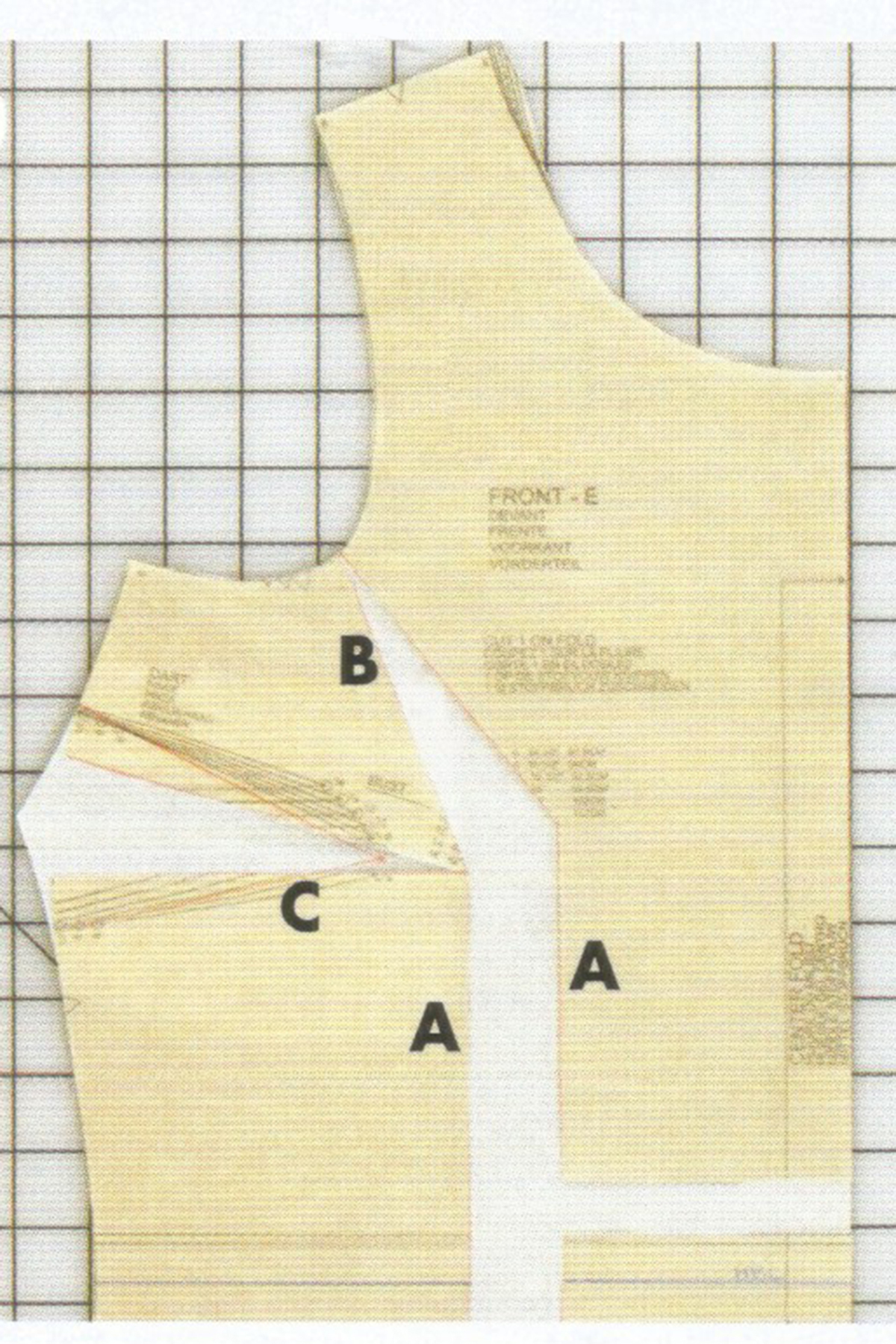



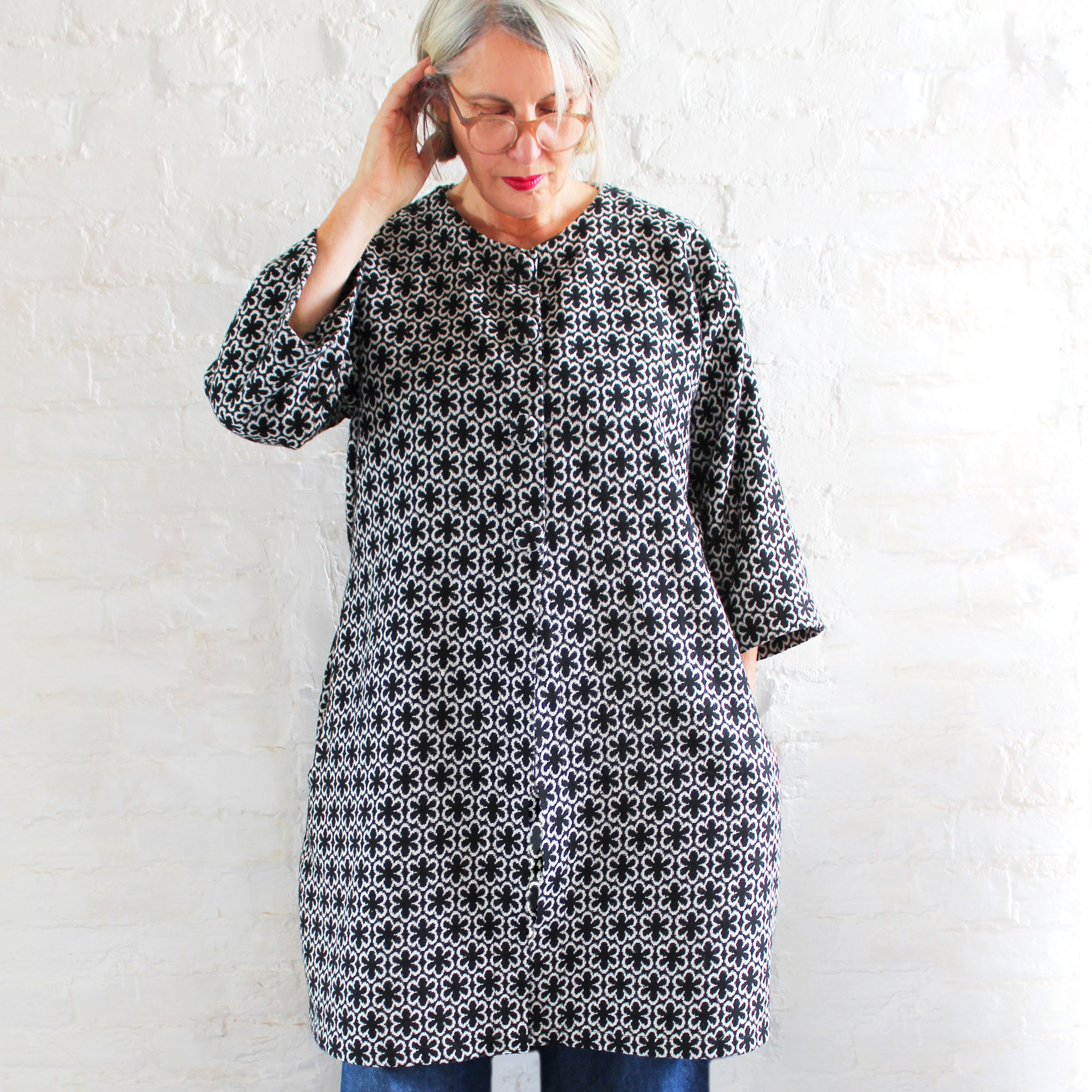
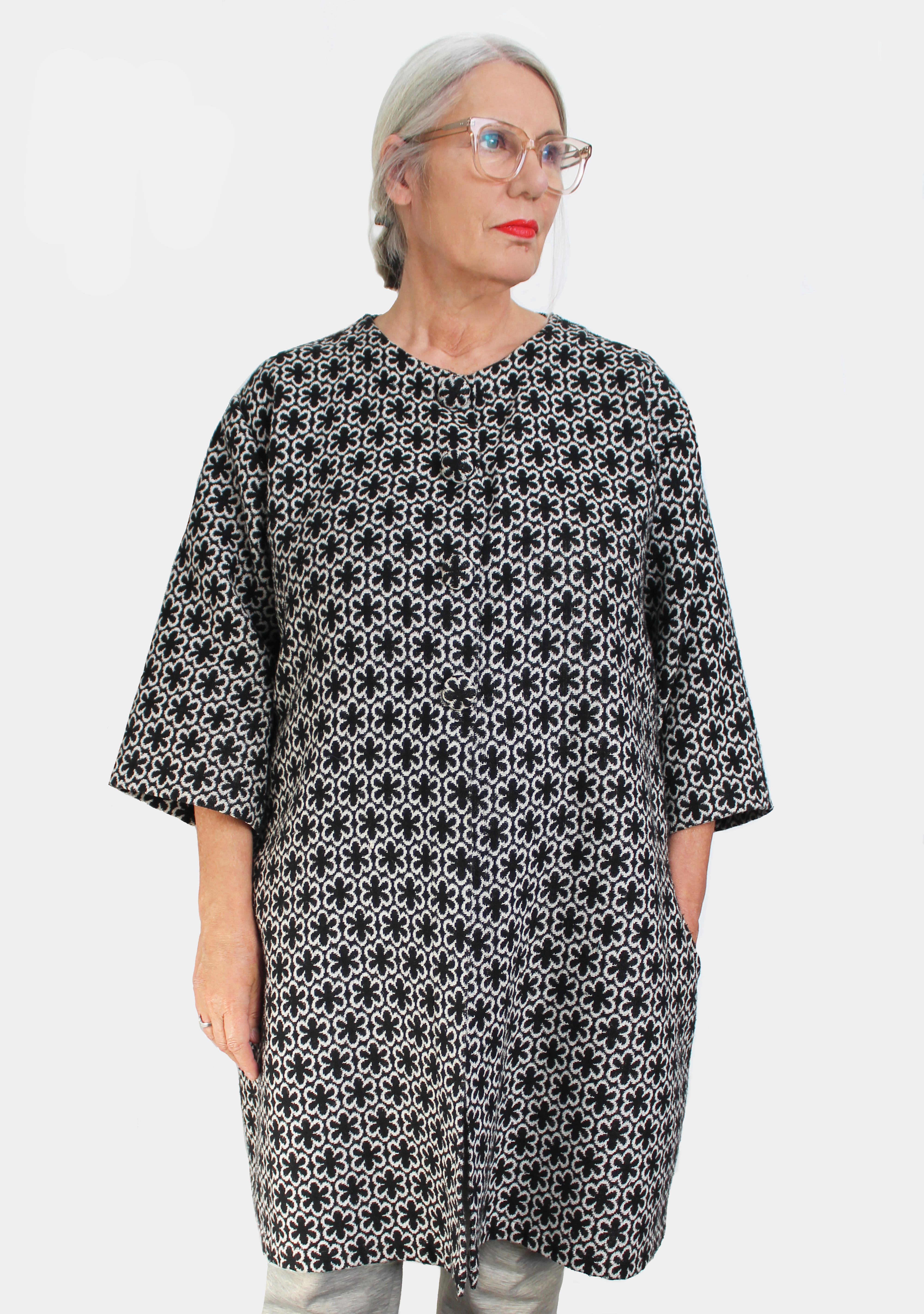 Long version front view in wool mix jacquard.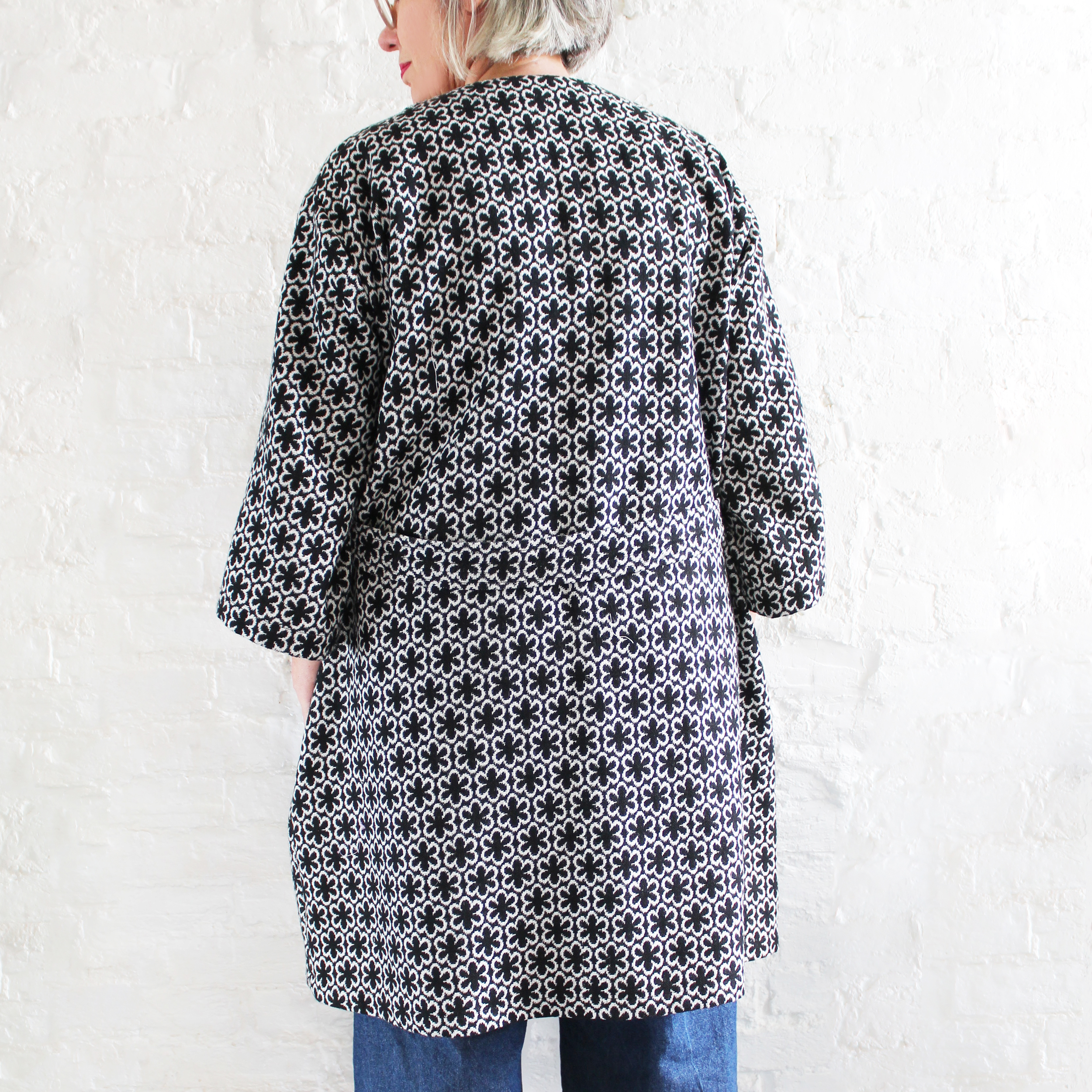
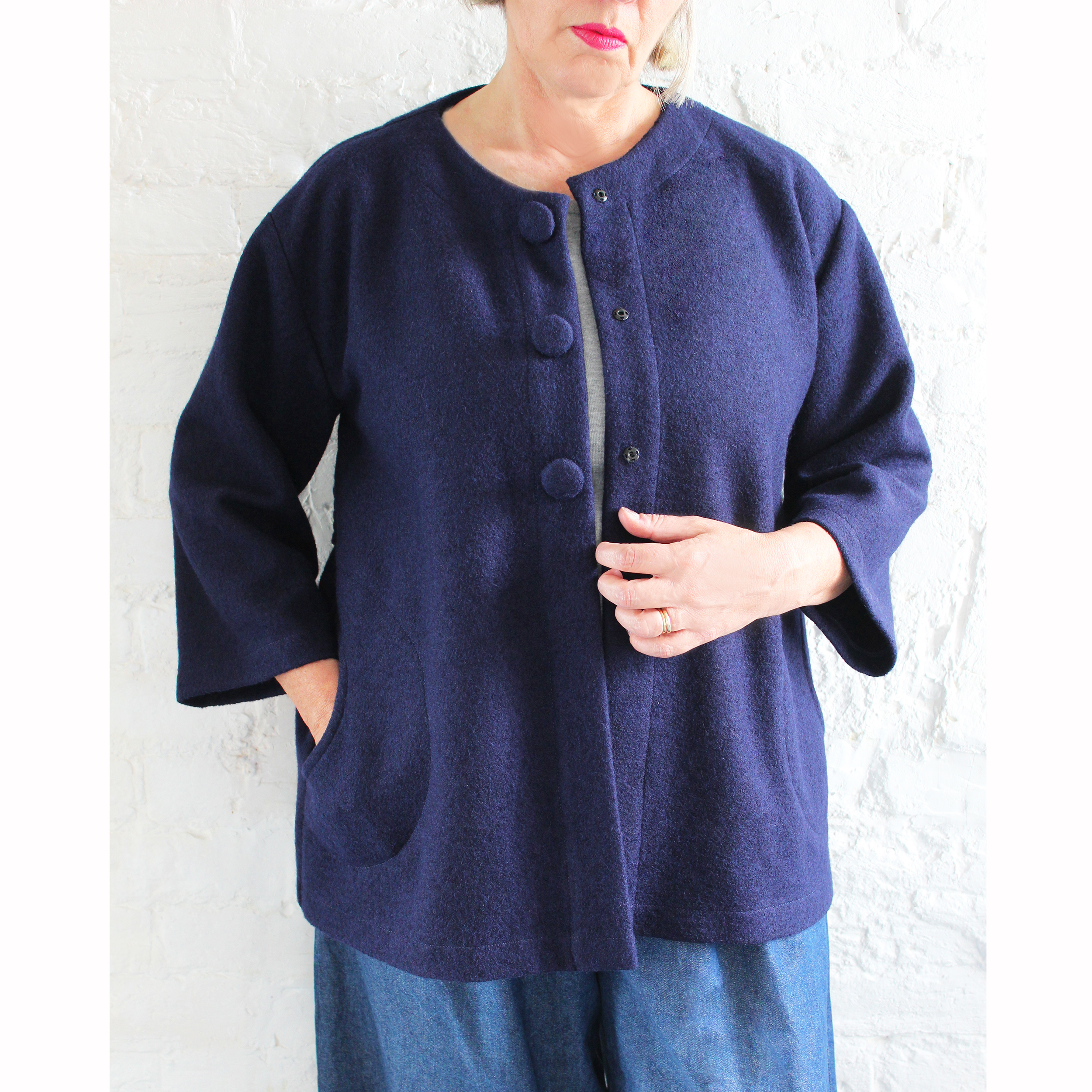 Short jacket version in boiled wool
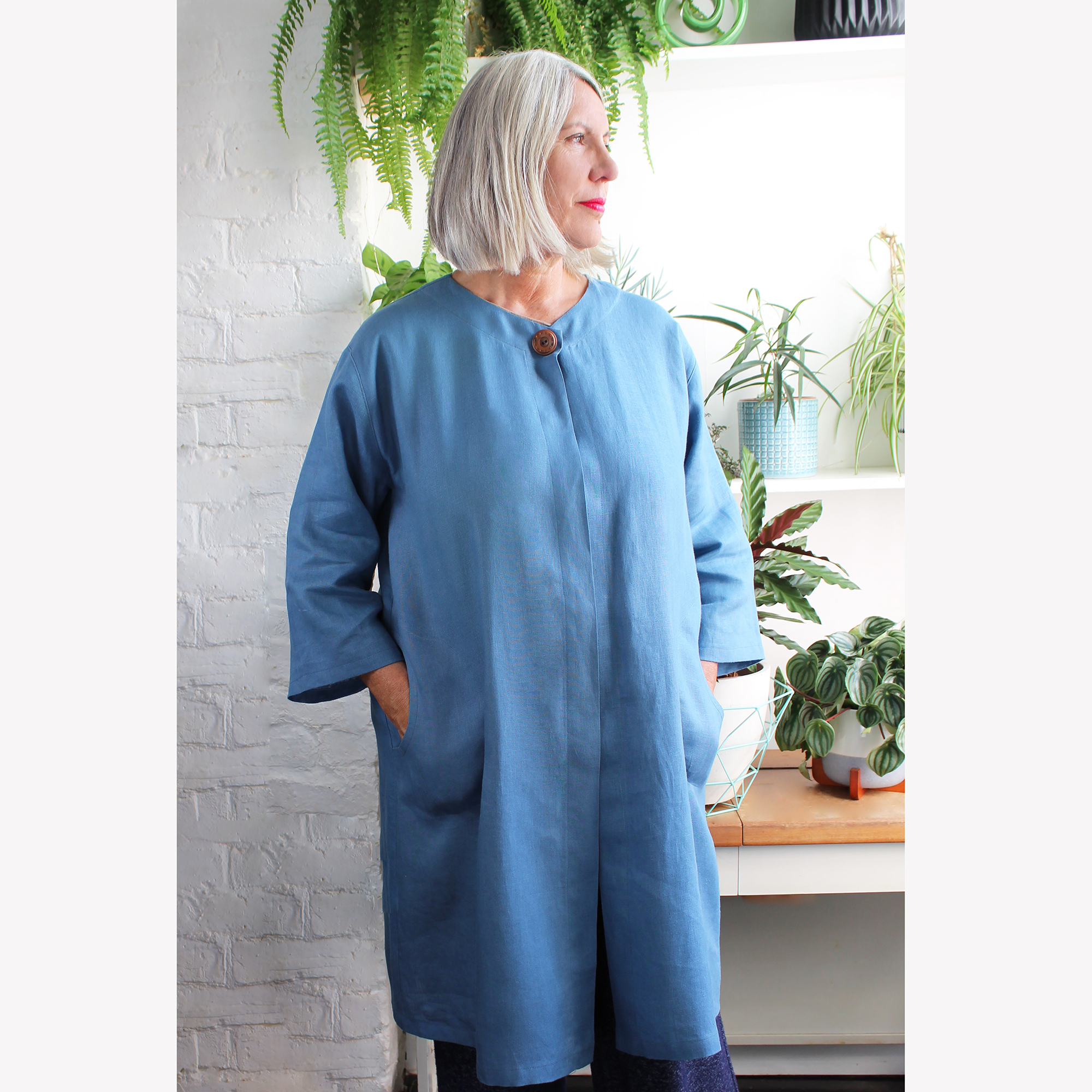 Ursula adopts a ‘duster coat’ style when made in linen as shown above.
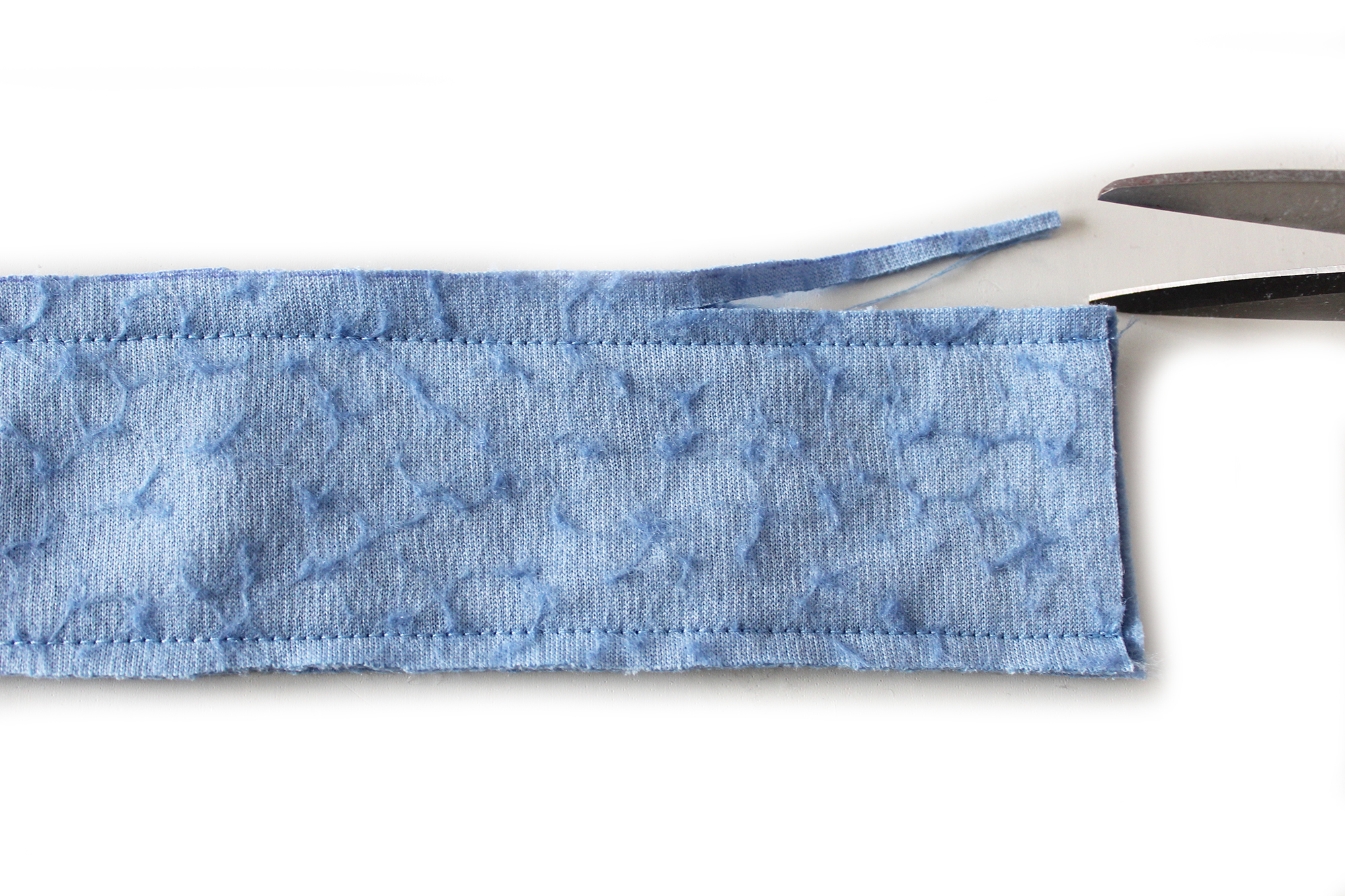 The Back belt is optional but I think its nice feature to the rear angle! Stitch down each side, then turn inside out. Press.
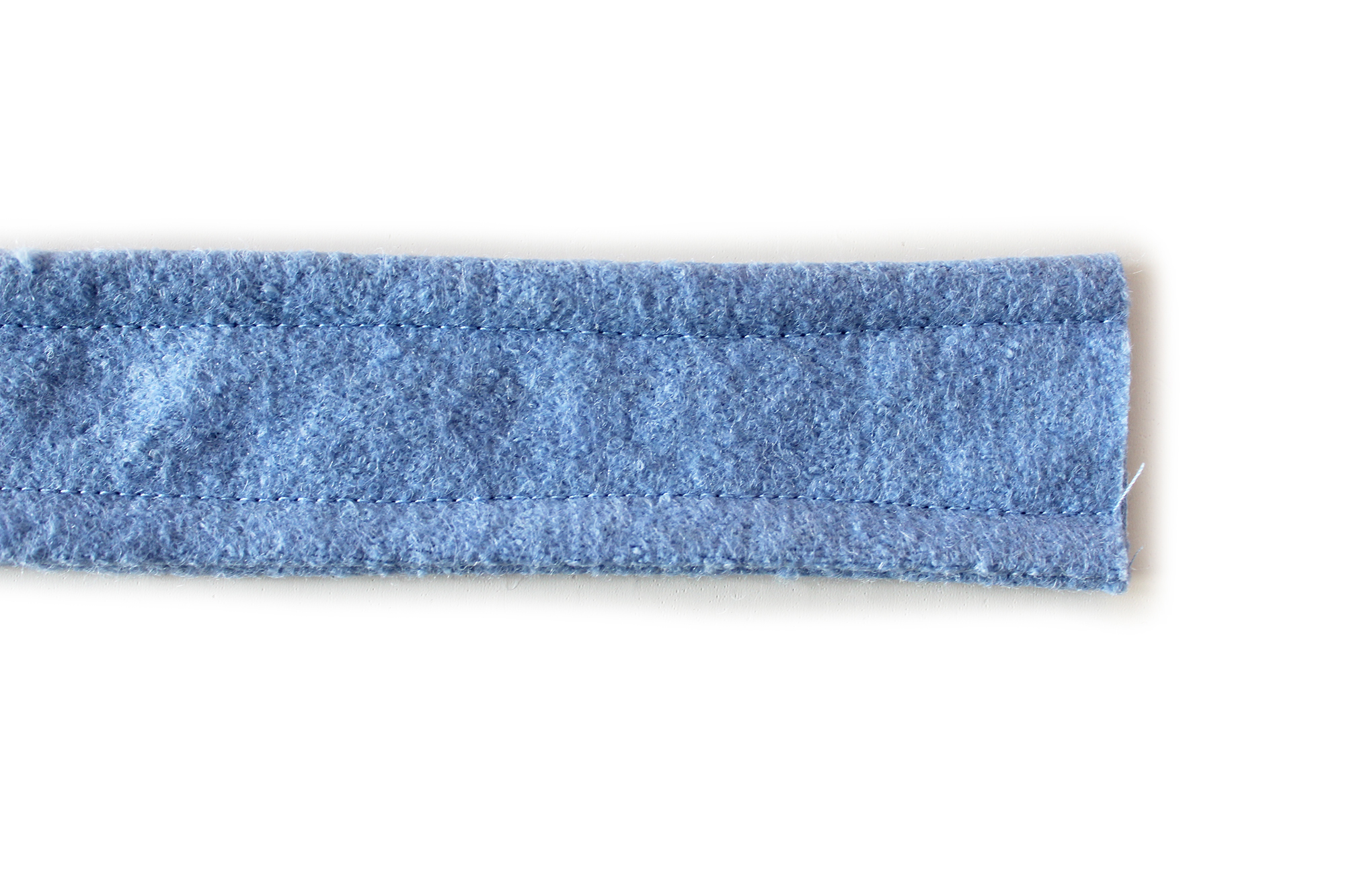 Top stitch down each side.
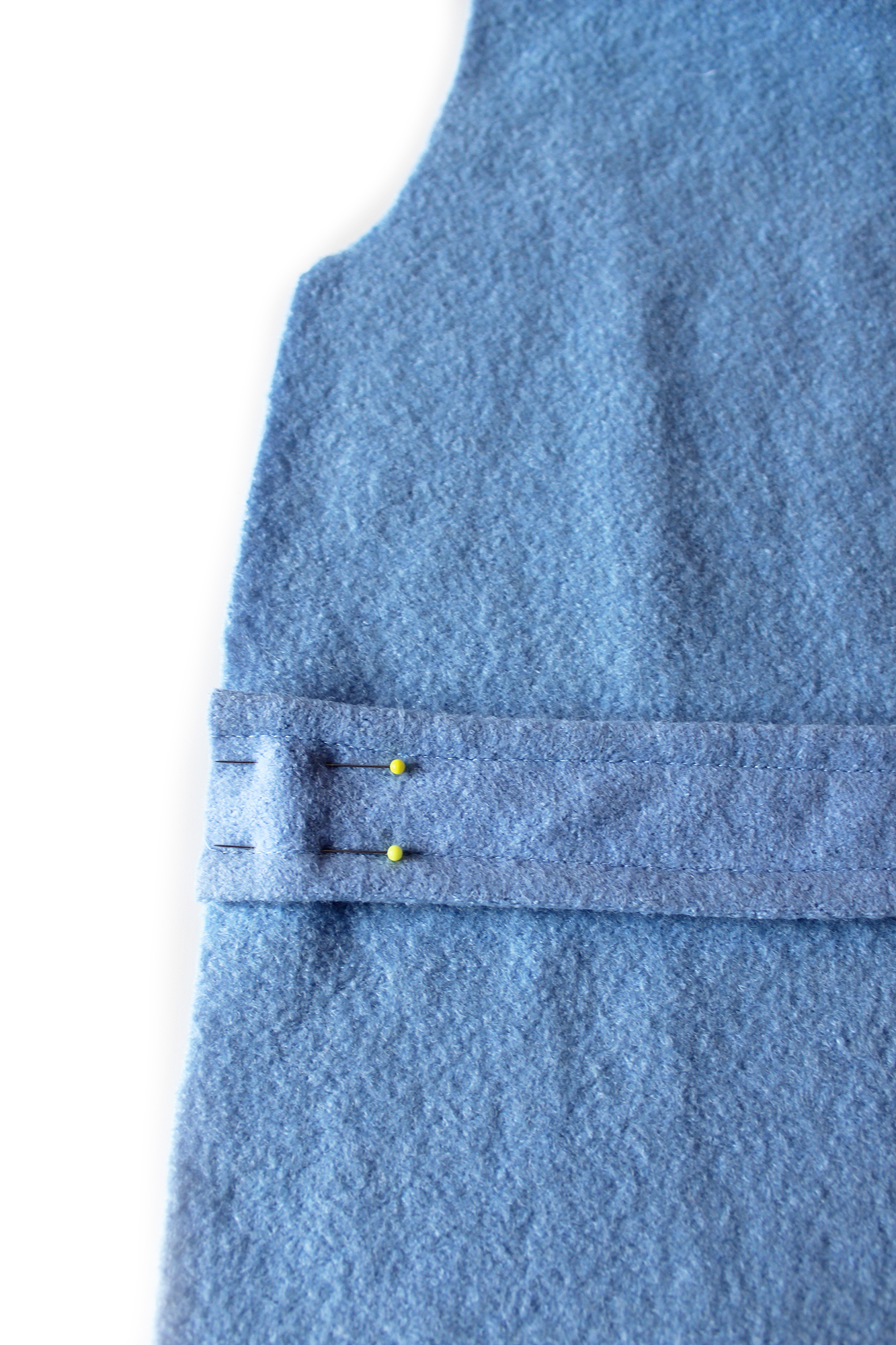 Pin the back belt to the back piece at each side. Machine tack within the seam allowance.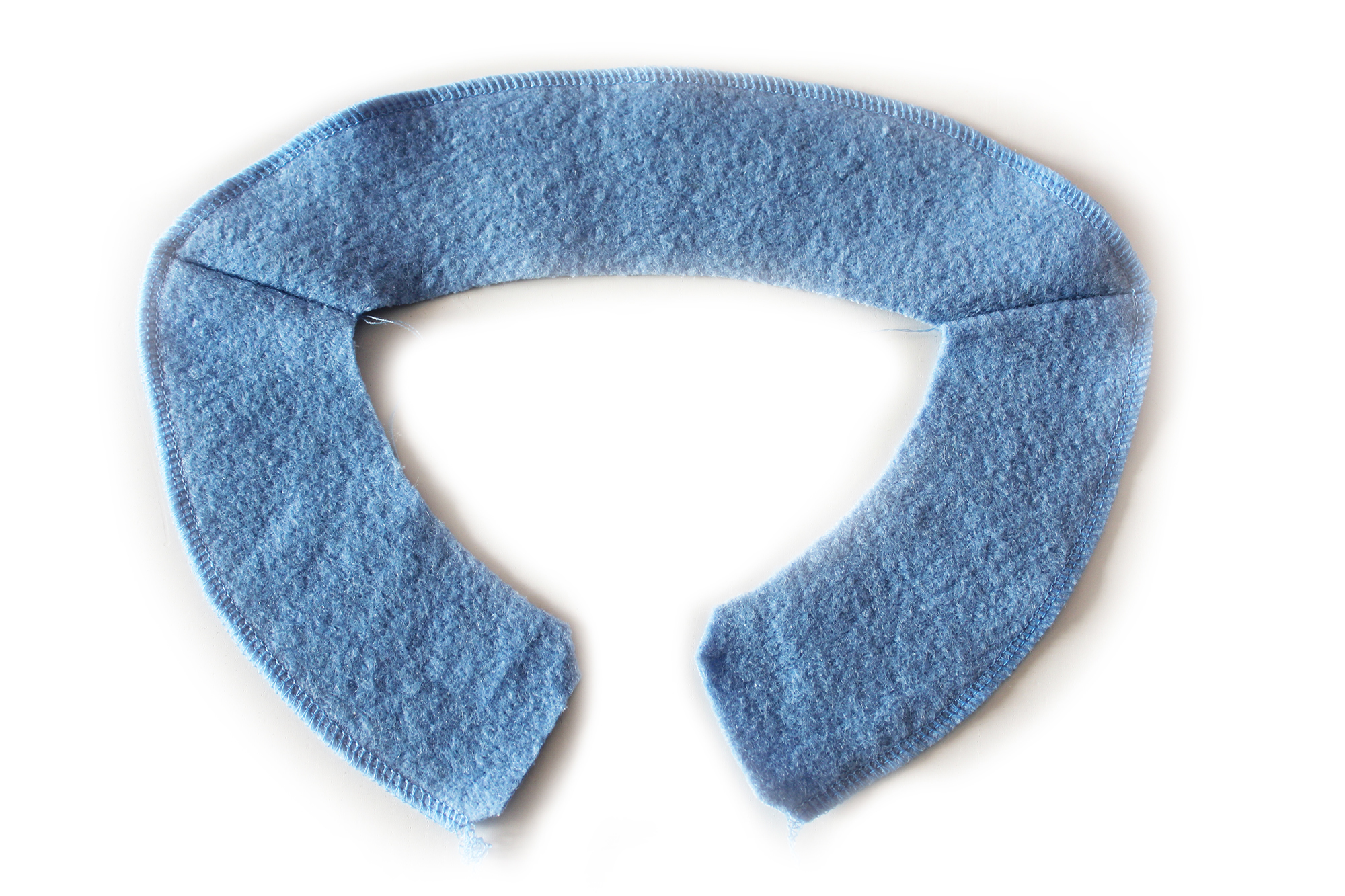
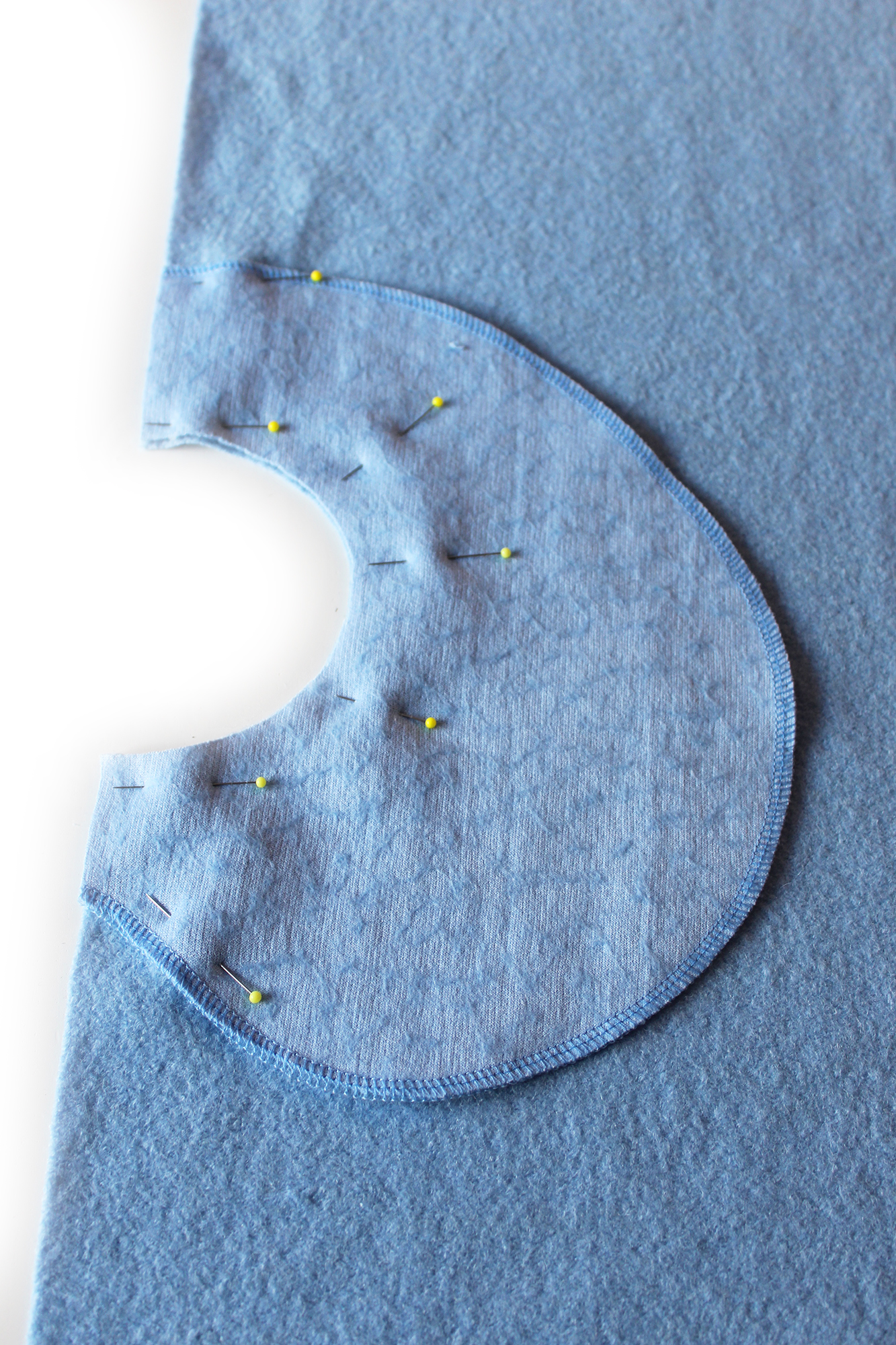 Finish the outer edge of the pockets and pocket lining pieces. Pin the pocket piece at each side matching the curved edge. Sew. Clip the seam allowances.
 Turn to the WS and topstitch 1cm away from the edge..
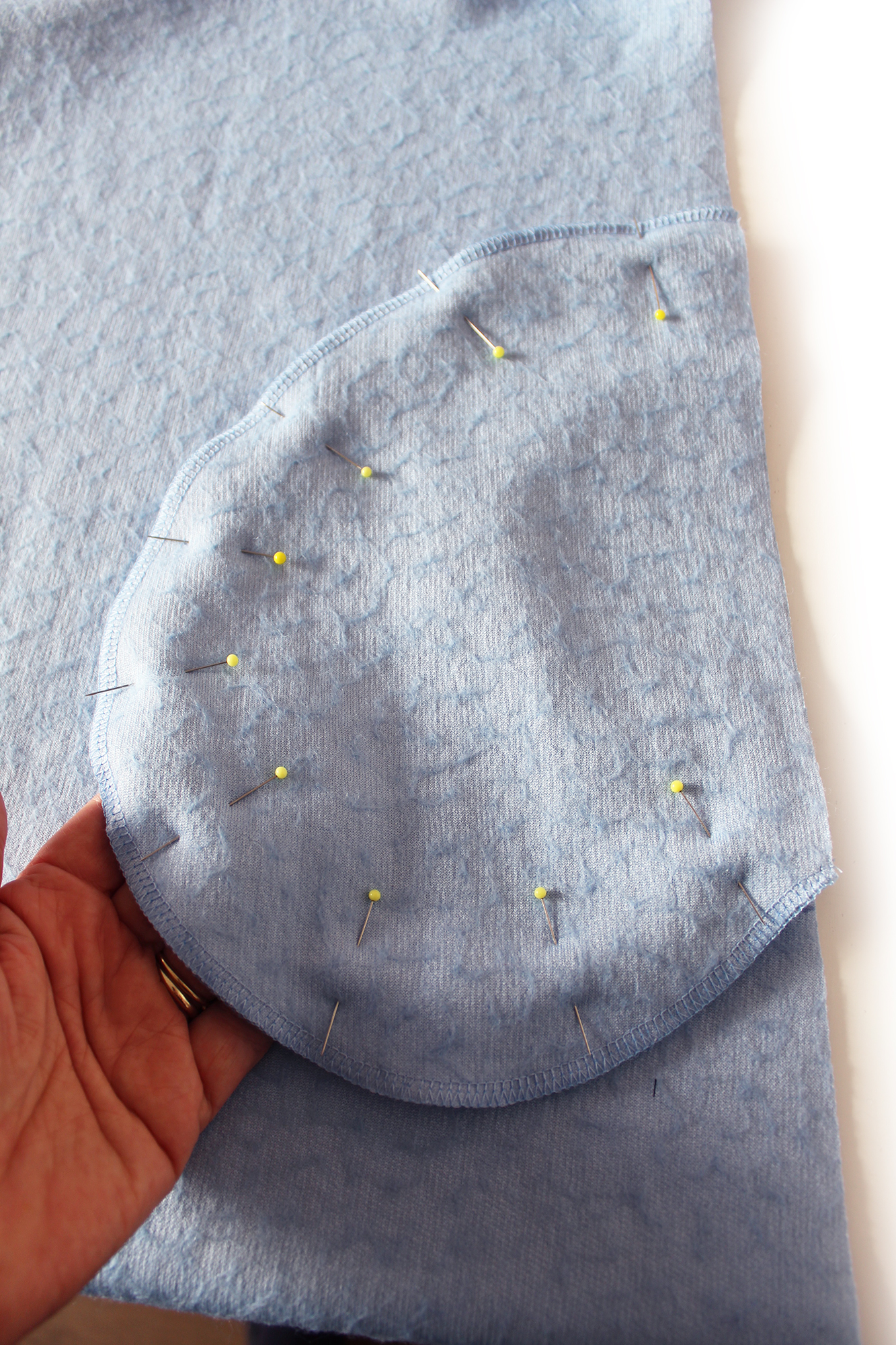 Pin the pocket lining piece to the pocket at the outer edge. Sew.
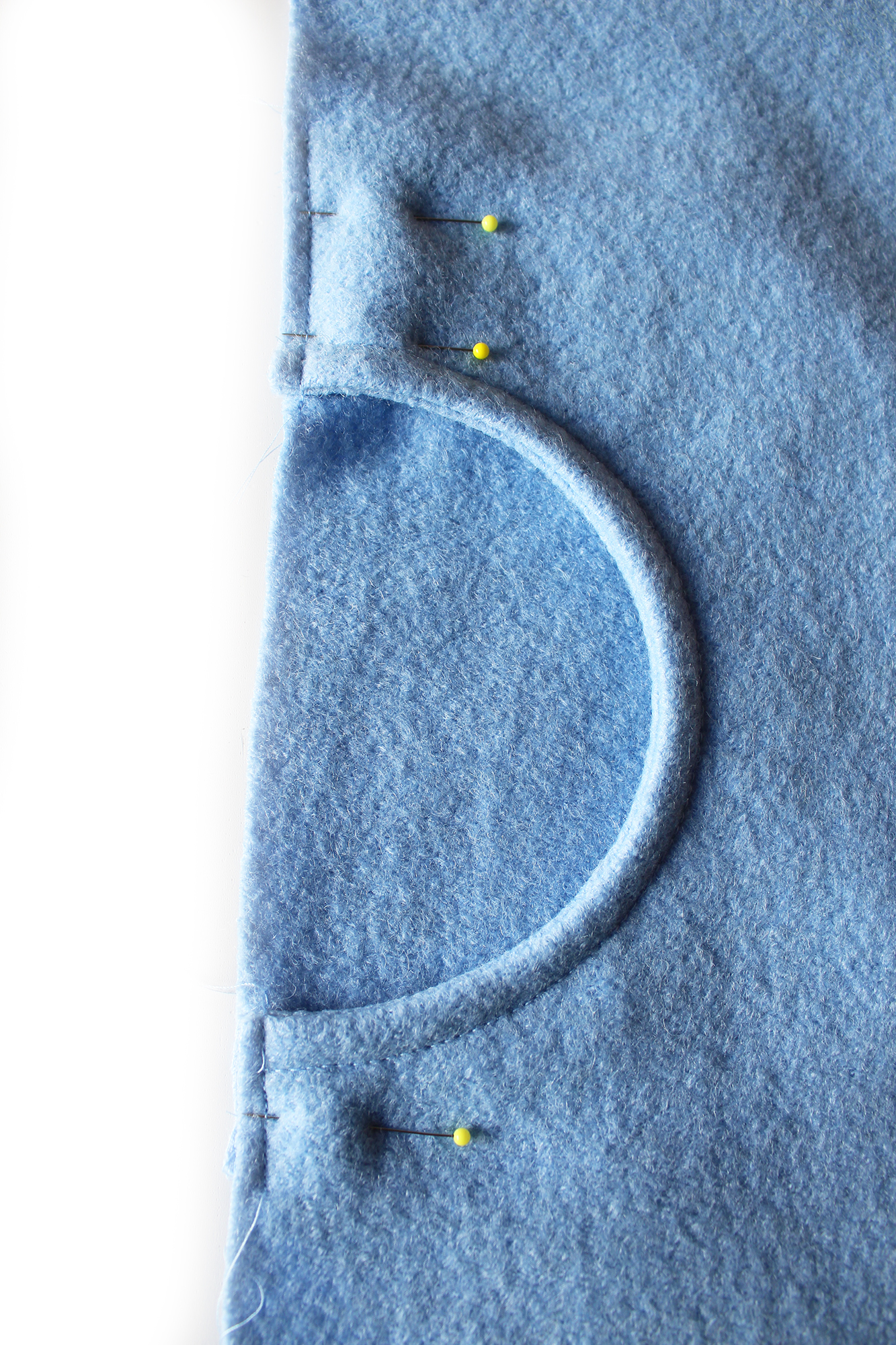 Tack stitch at the sections above the pocket curve to secure.
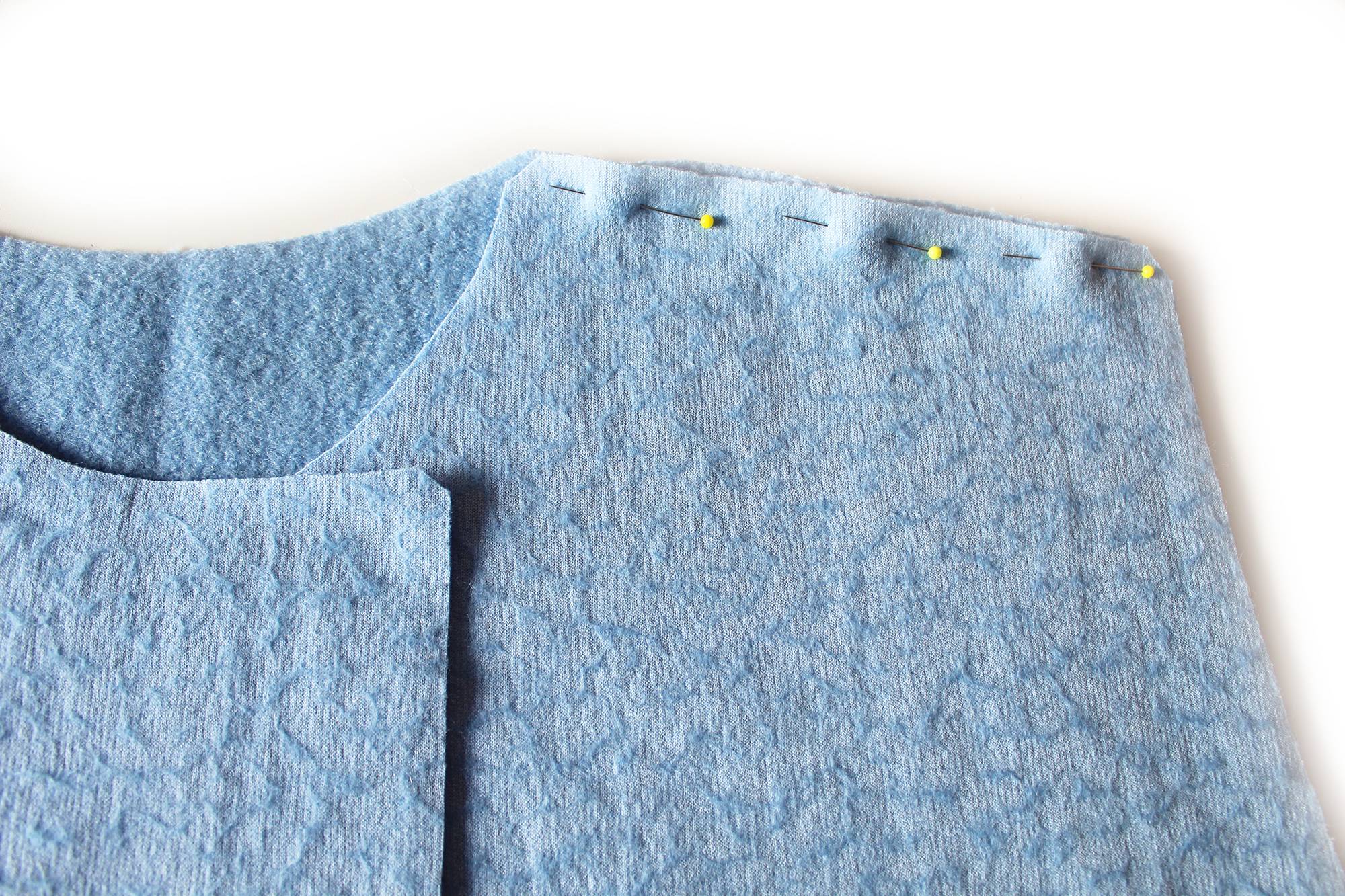 Pin, then sew the front to back at the shoulder edges. Finish the raw edges together. Press towards the back. Top stitch on the right side. Staystitch around the neck edge.
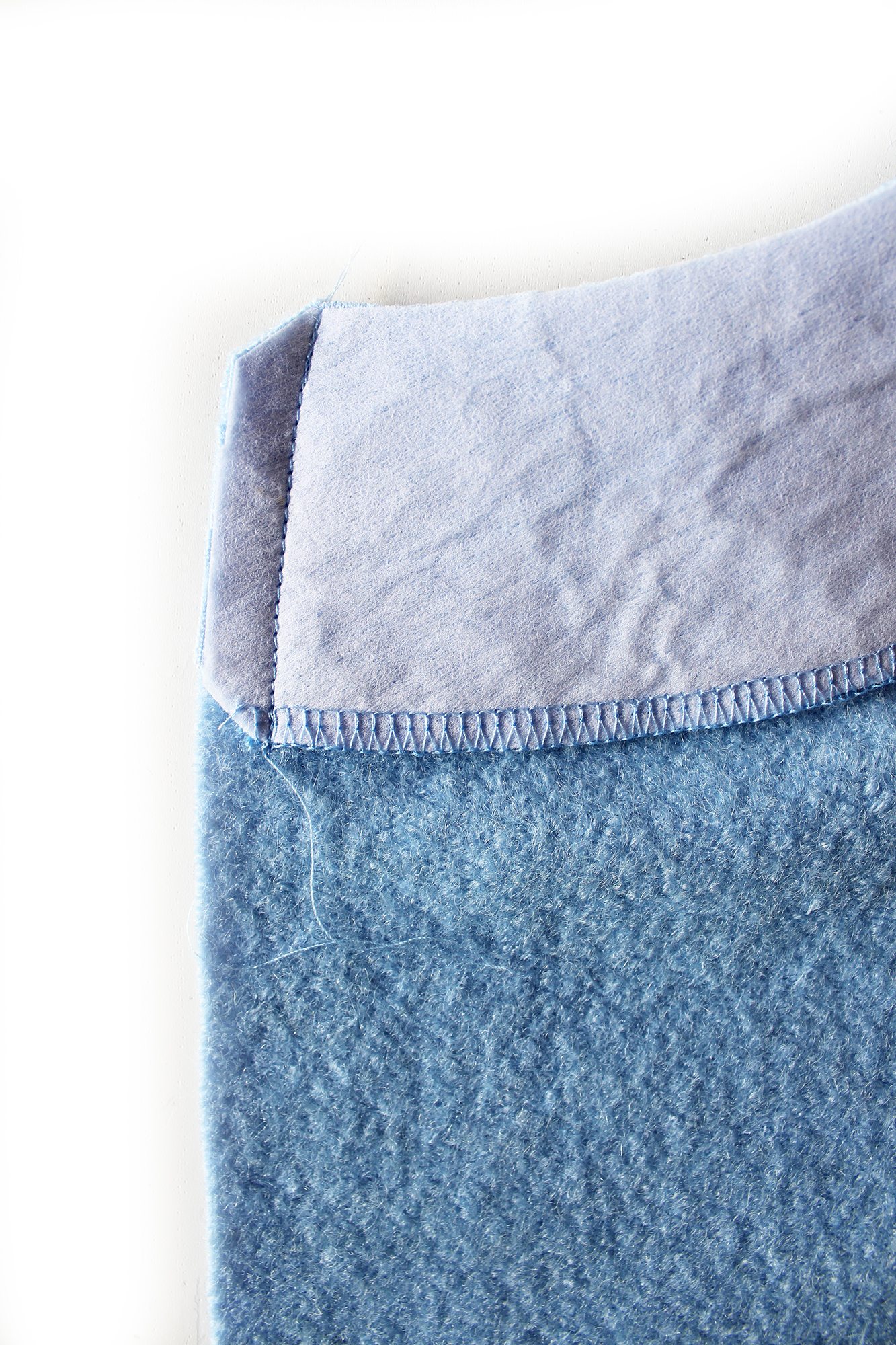 Pin the facing to the Front at the top side edge. Sew. Press the seam allowances open.
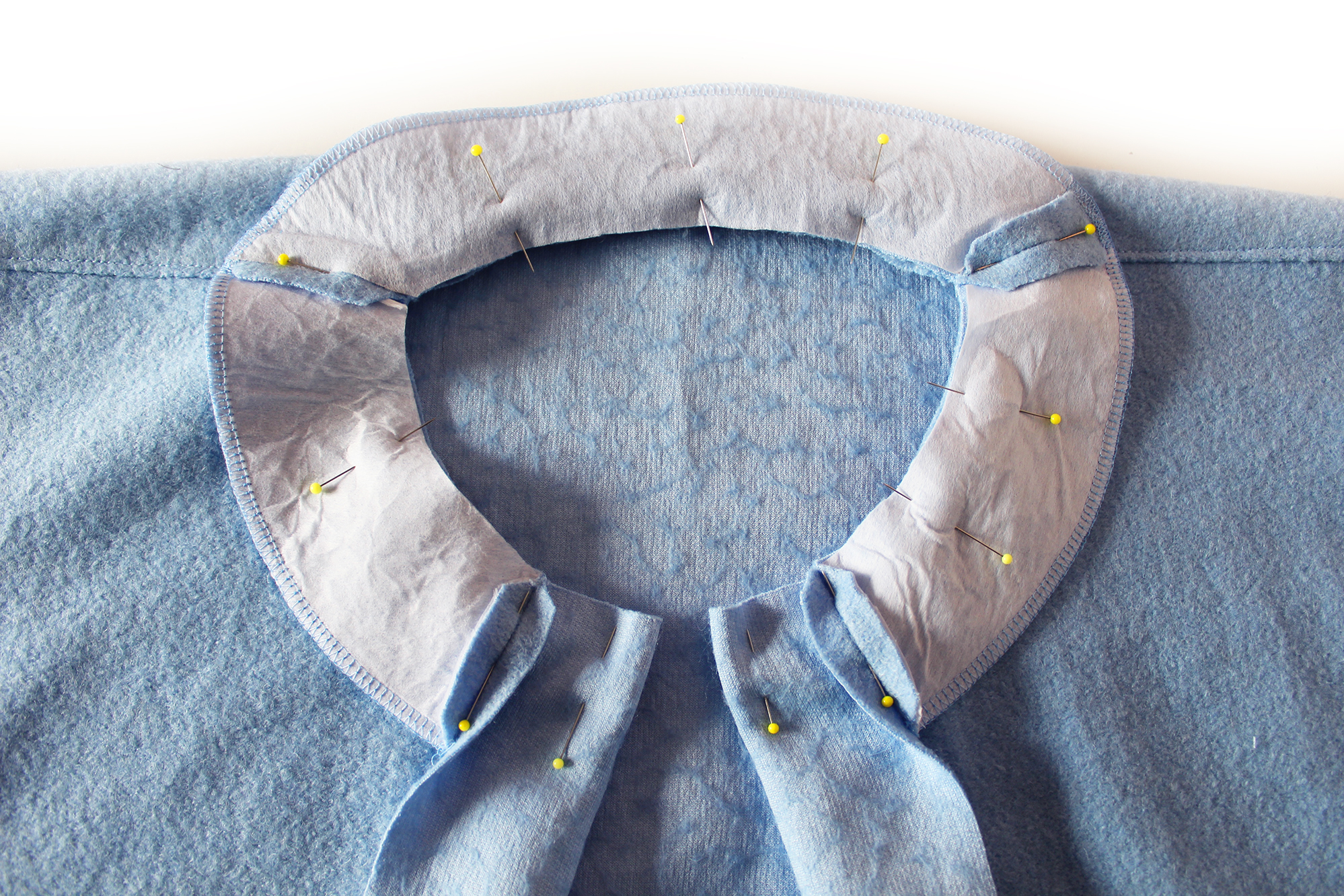 Pin the neck facing to the neck edge, match up the cross seams. Hand tack stitch all around the neck edge. Sew.
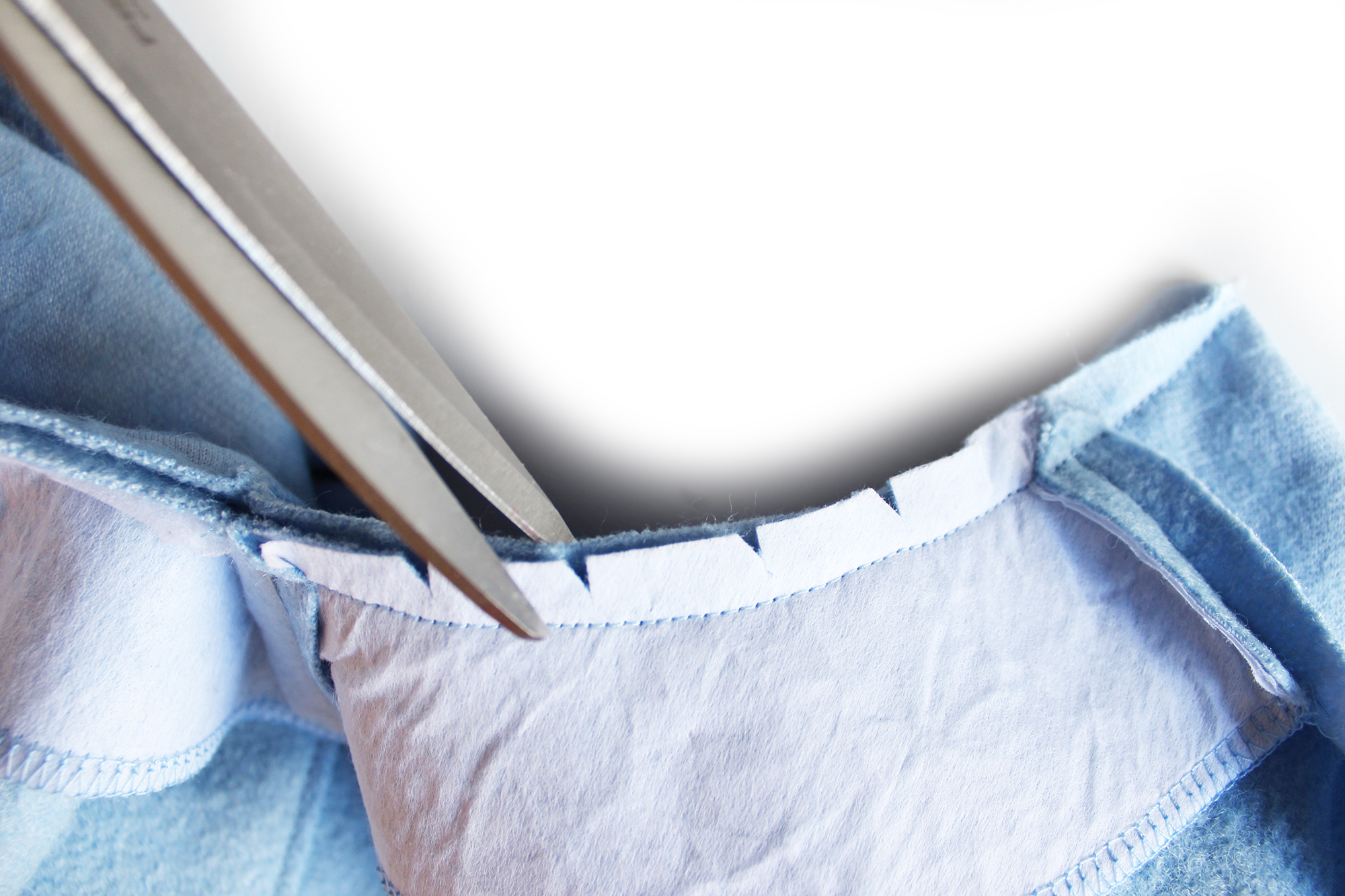 Nick the seam allowance all around.
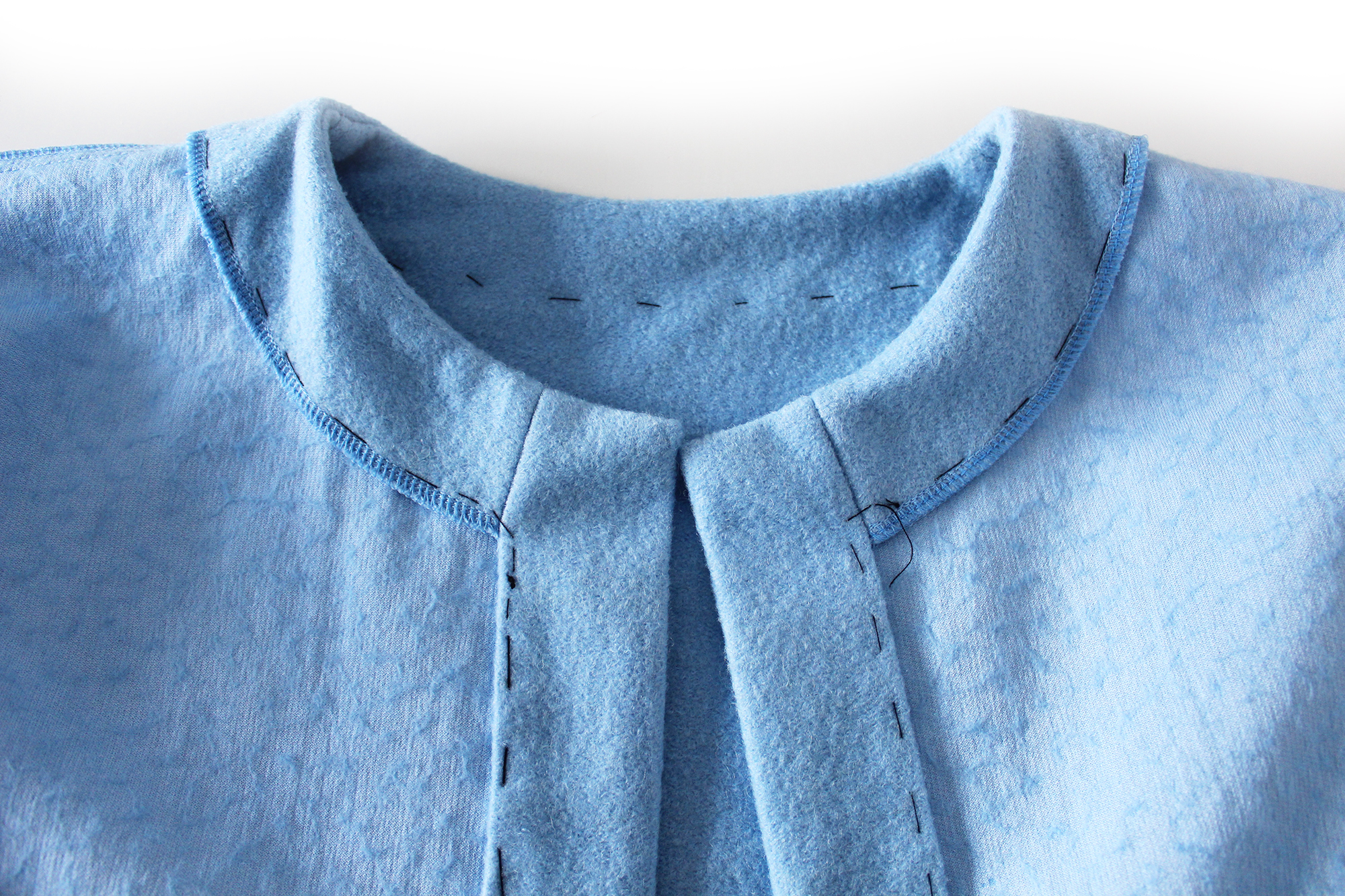 Fold over to the reverse side. Hand tack stitch around the neck facing. Fold over 1cm at the centre front edge. Press. Hand tack stitch down the front to secure.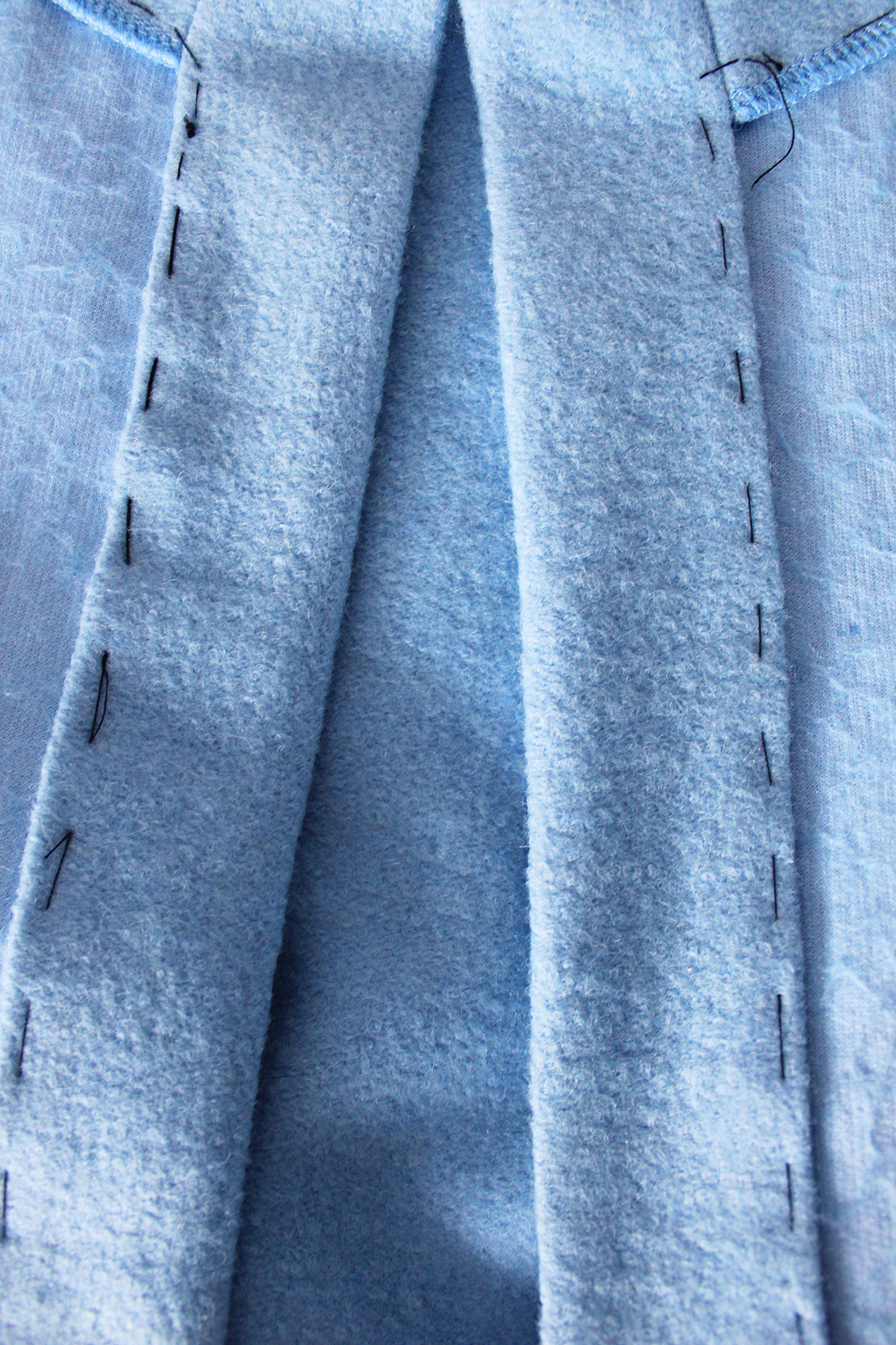
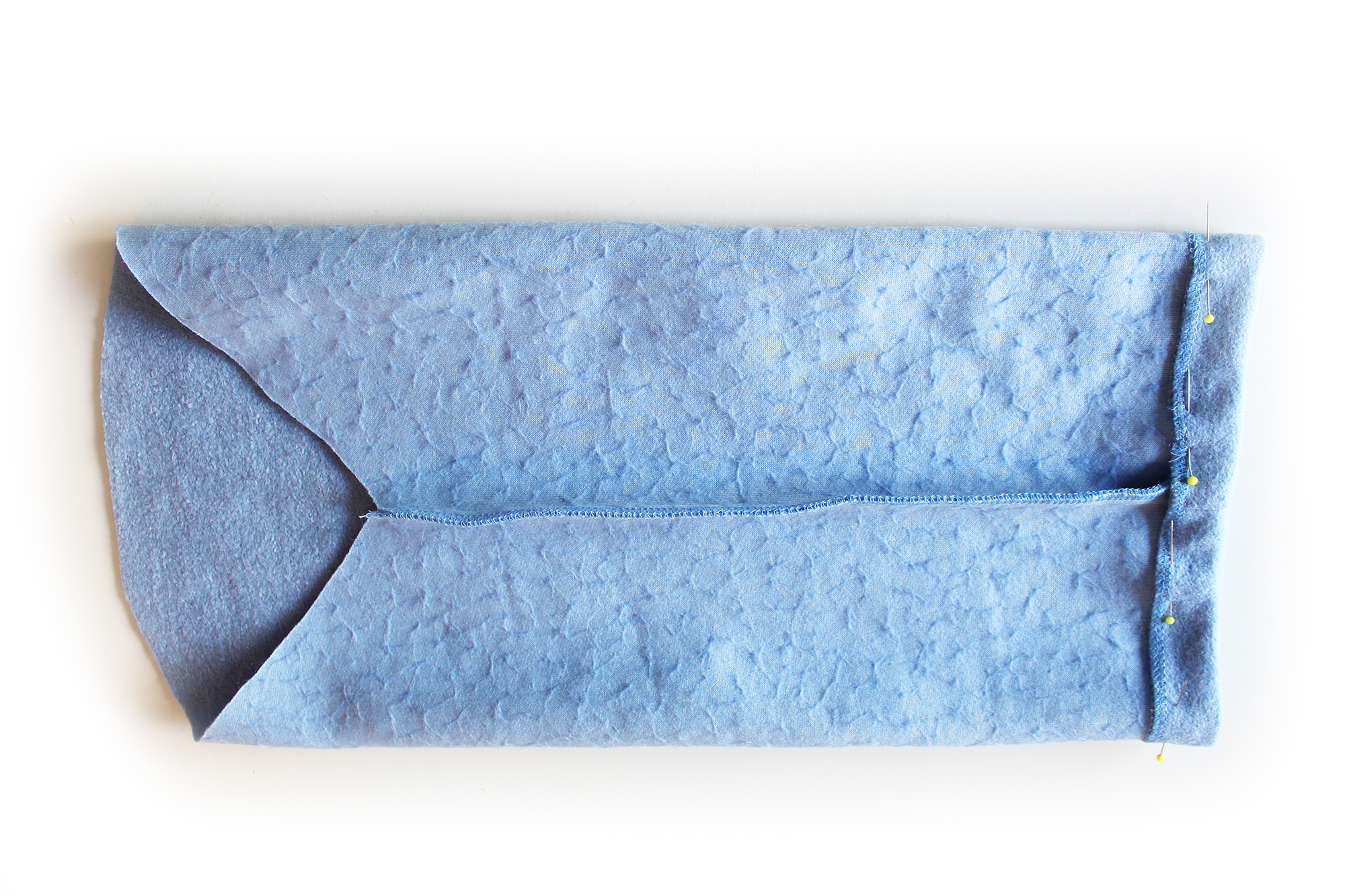 Pin the sleeves RST at the long side edges. Sew. Finish the raw edge. Press. Turn under the cuff hem, press, pin. Stitch.
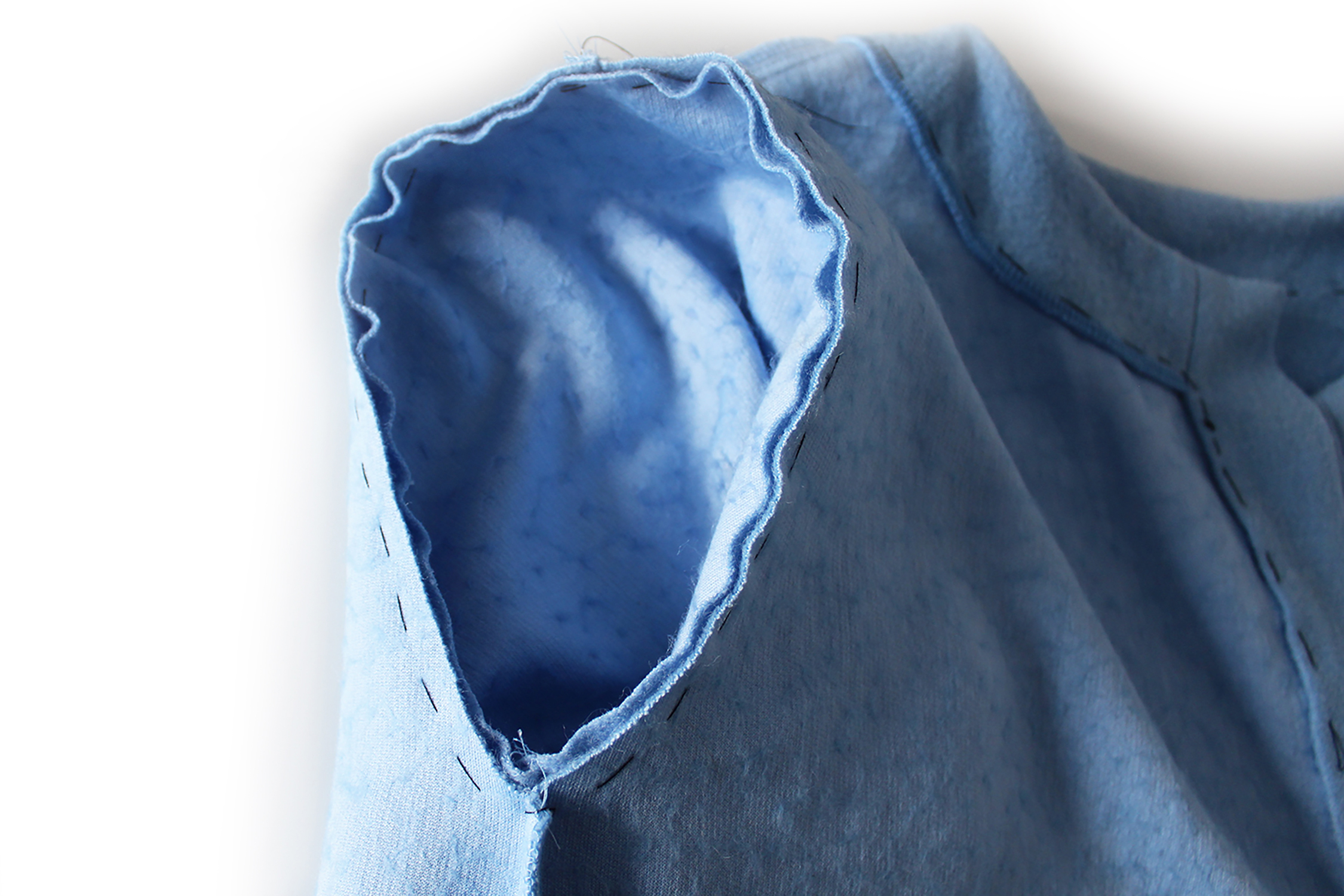 Pin the sleeve to the body, align the back of the sleeve head (see template) to the back. Sew. Finish the raw edge. Press. Topstitch on the RS.
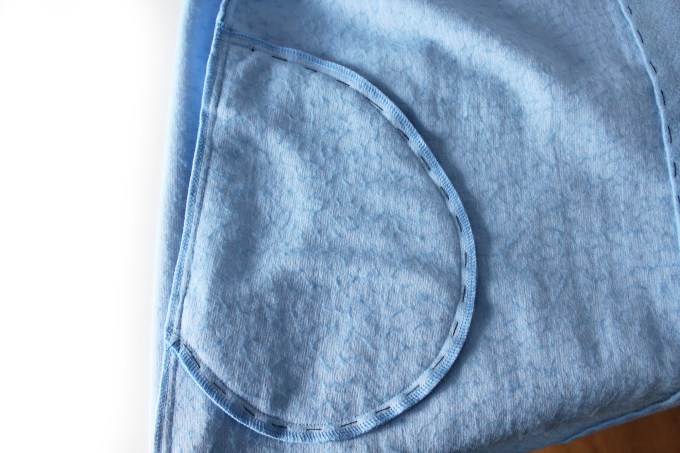 Pin, hand tack the pocket to the body. On the reverse side, stitch around the pocket with a longer stitch length. This will define the pocket on the RS. Like this……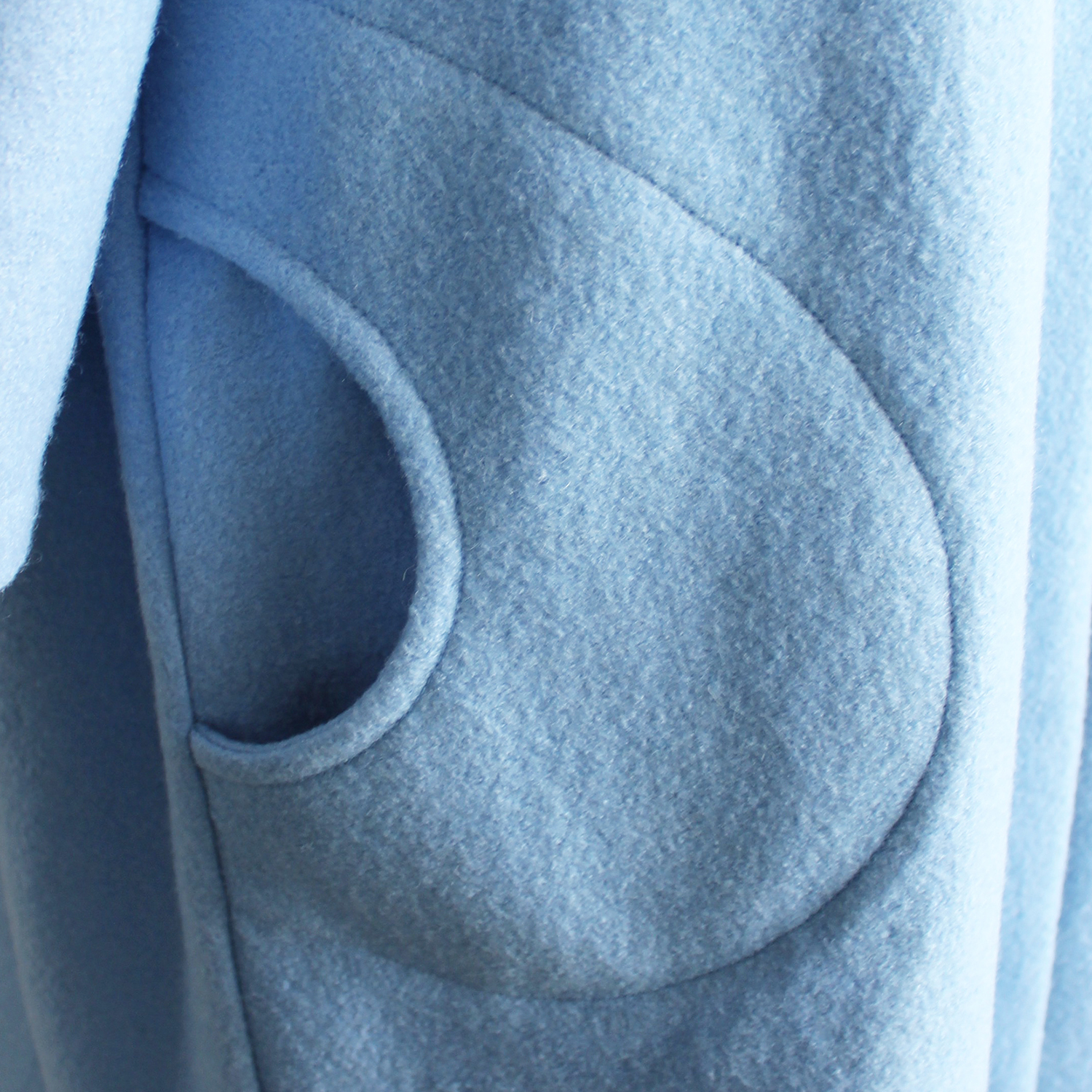
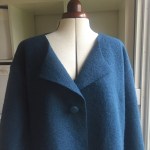
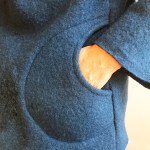
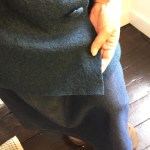
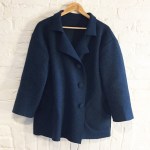

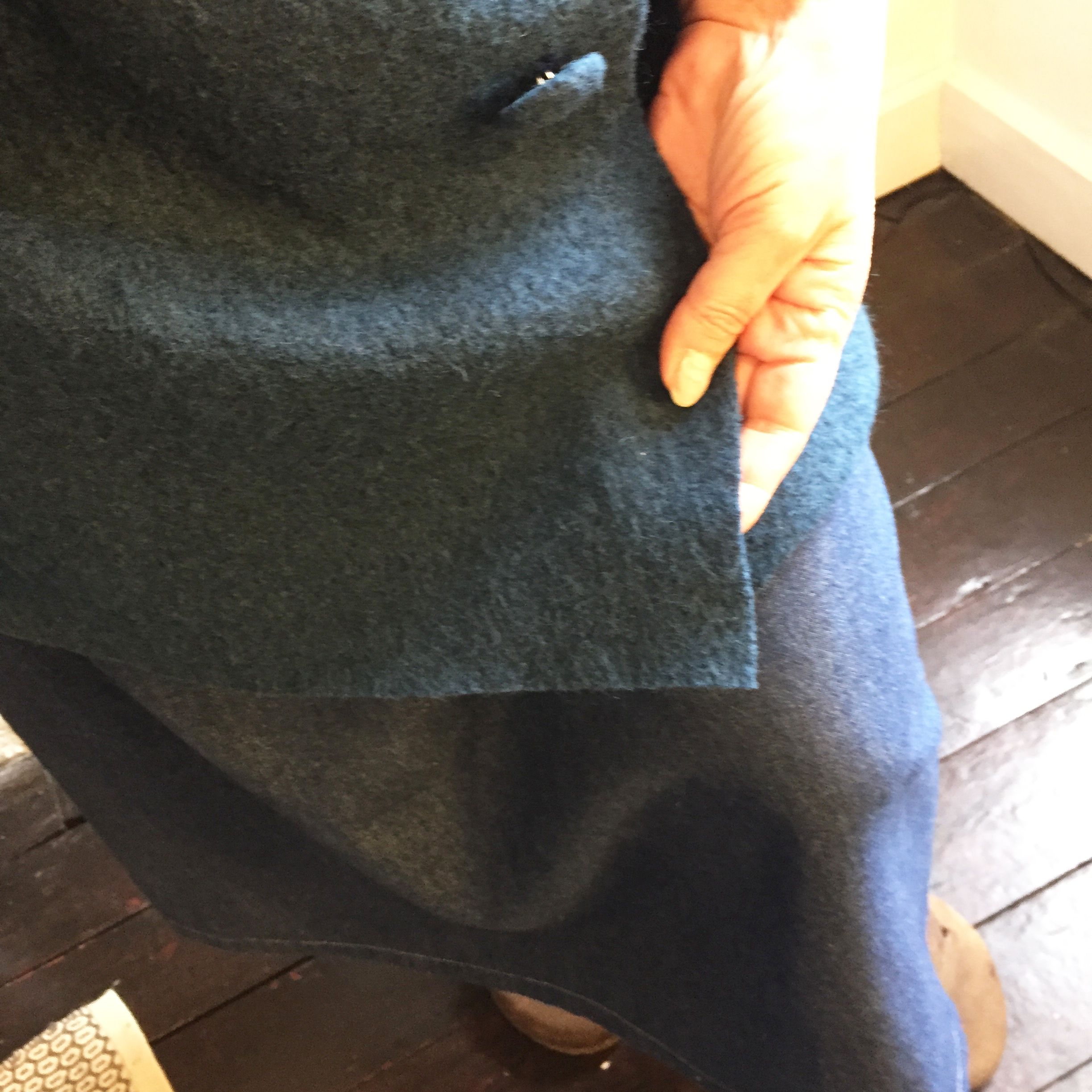 The boiled wool was like felt, it didn’t fray at the edges at all, so I thought leave them be. This 100% wool fabric was, I thought, a bargain price and would keep you nice and toastie, and no nasty synthetics! Wonderful!
 Then to the facing bit. I popped the body on to a mannequin and started to look at Ursula in a new way. The pre-facing, waterfall neckline looked quite interesting, and it gave me an idea.
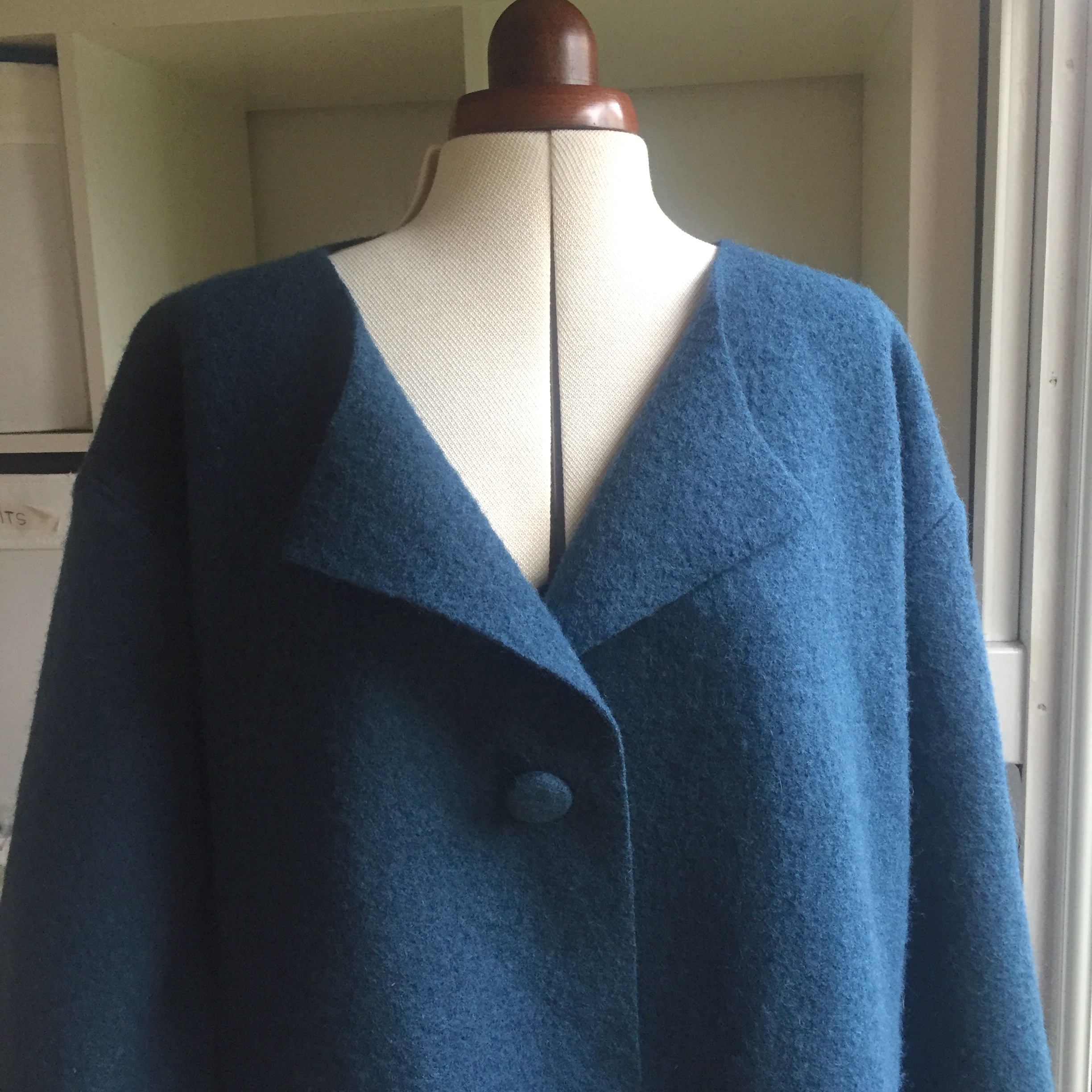 So I left the facings off, and the back belt, I didn’t fold back the centre front either. I just left it un-hemmed and I thought it looked very Japanese in style. Then I thought- what about if I stitched on a simple rectangle of fabric at the back neck to make a collar? oooo ….nice!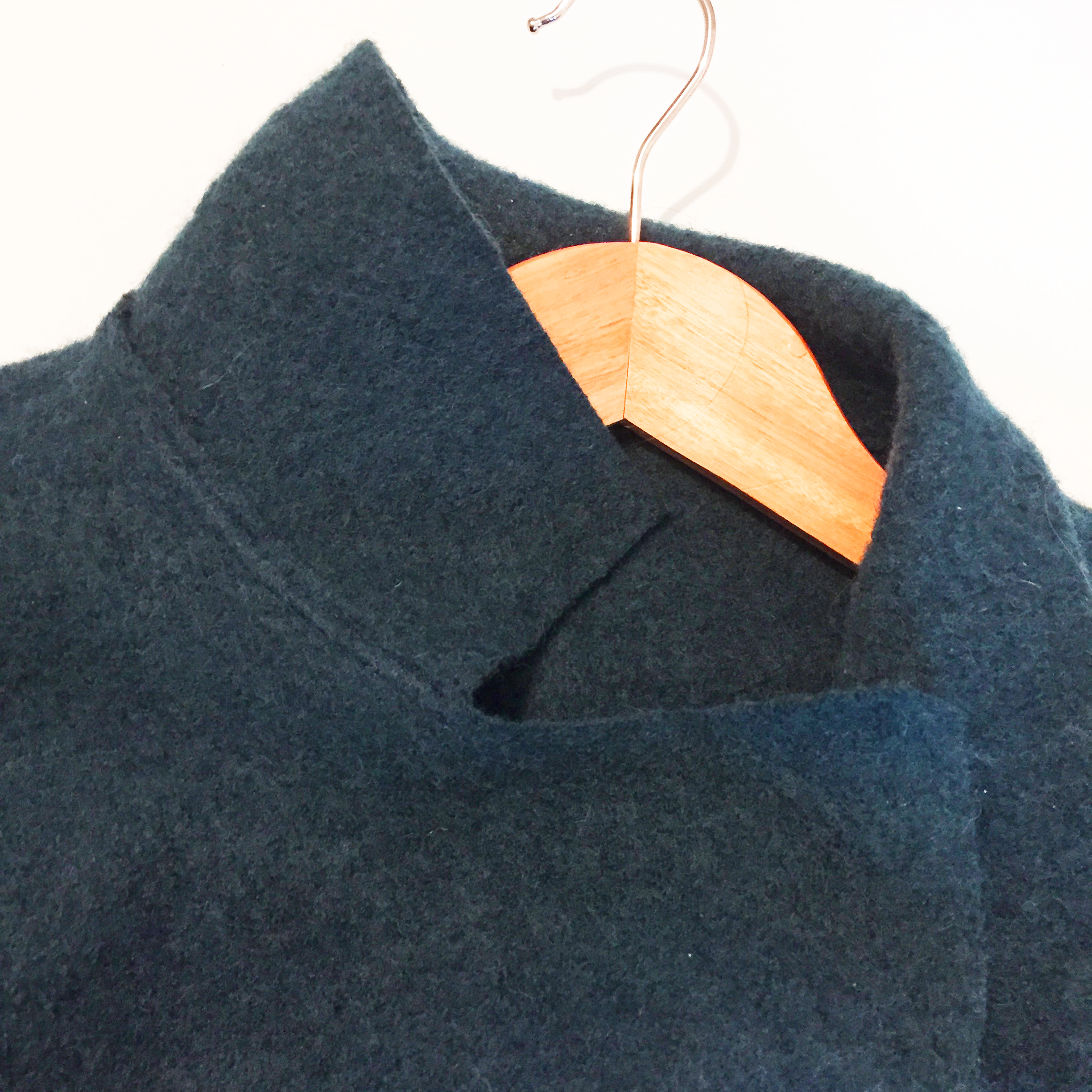

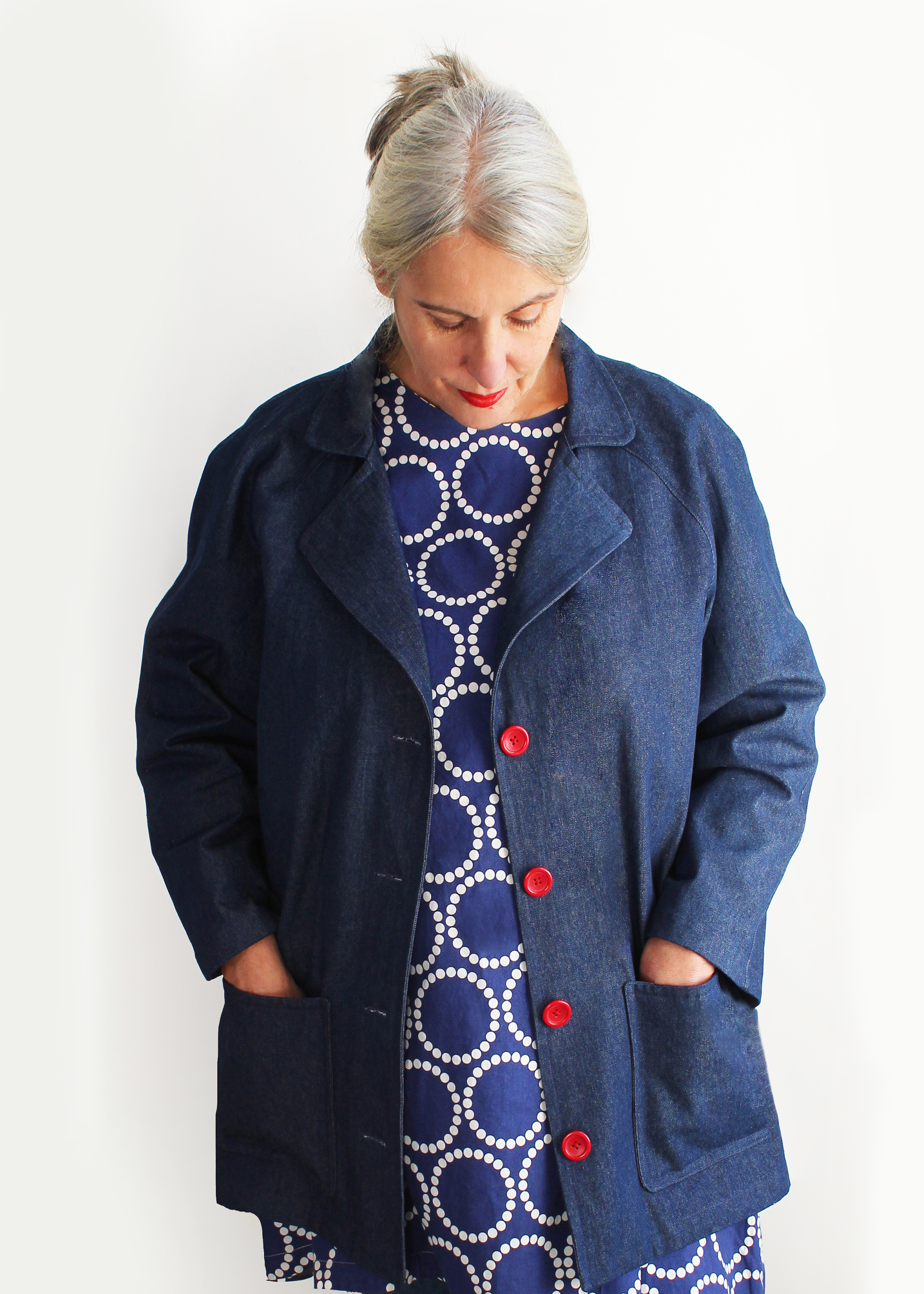
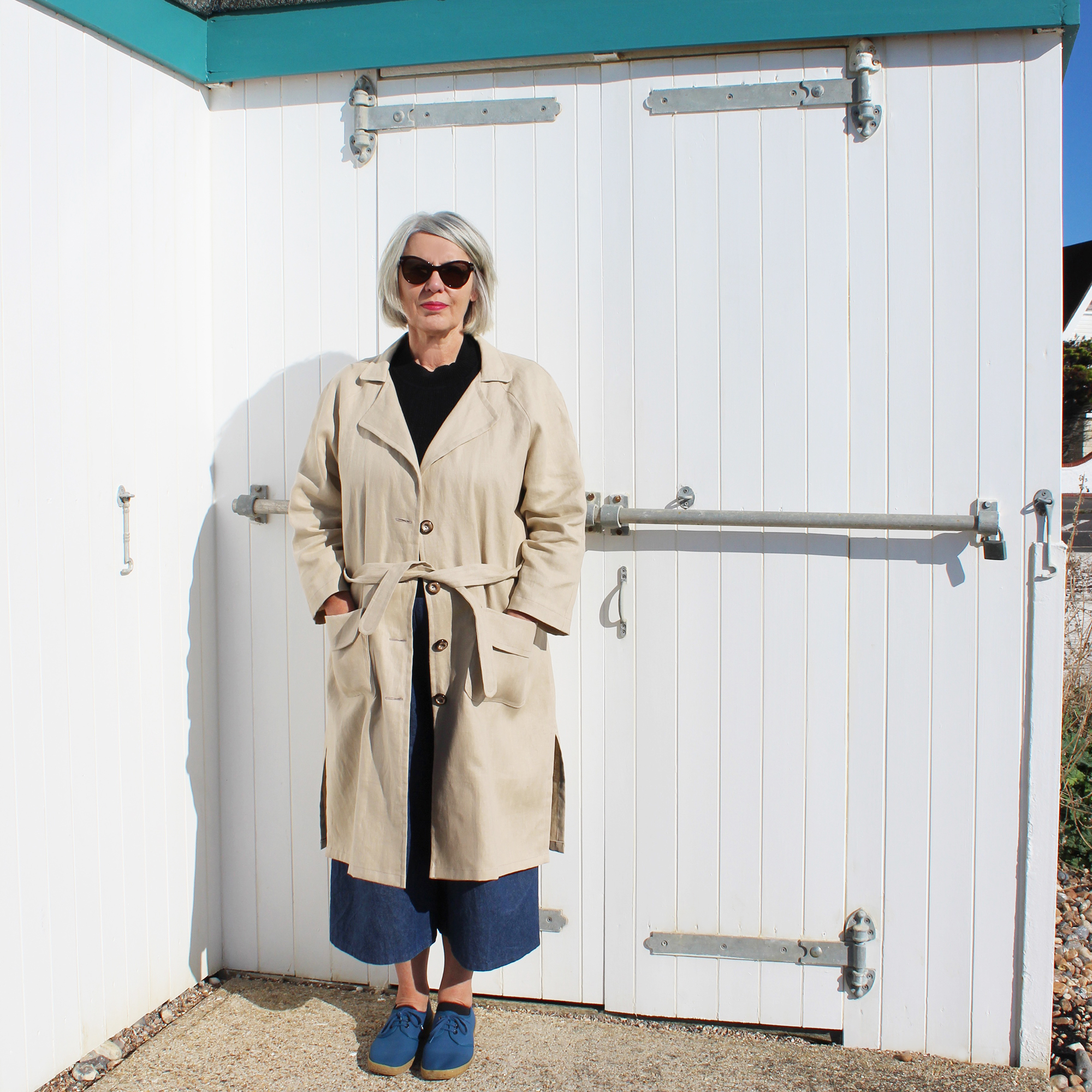
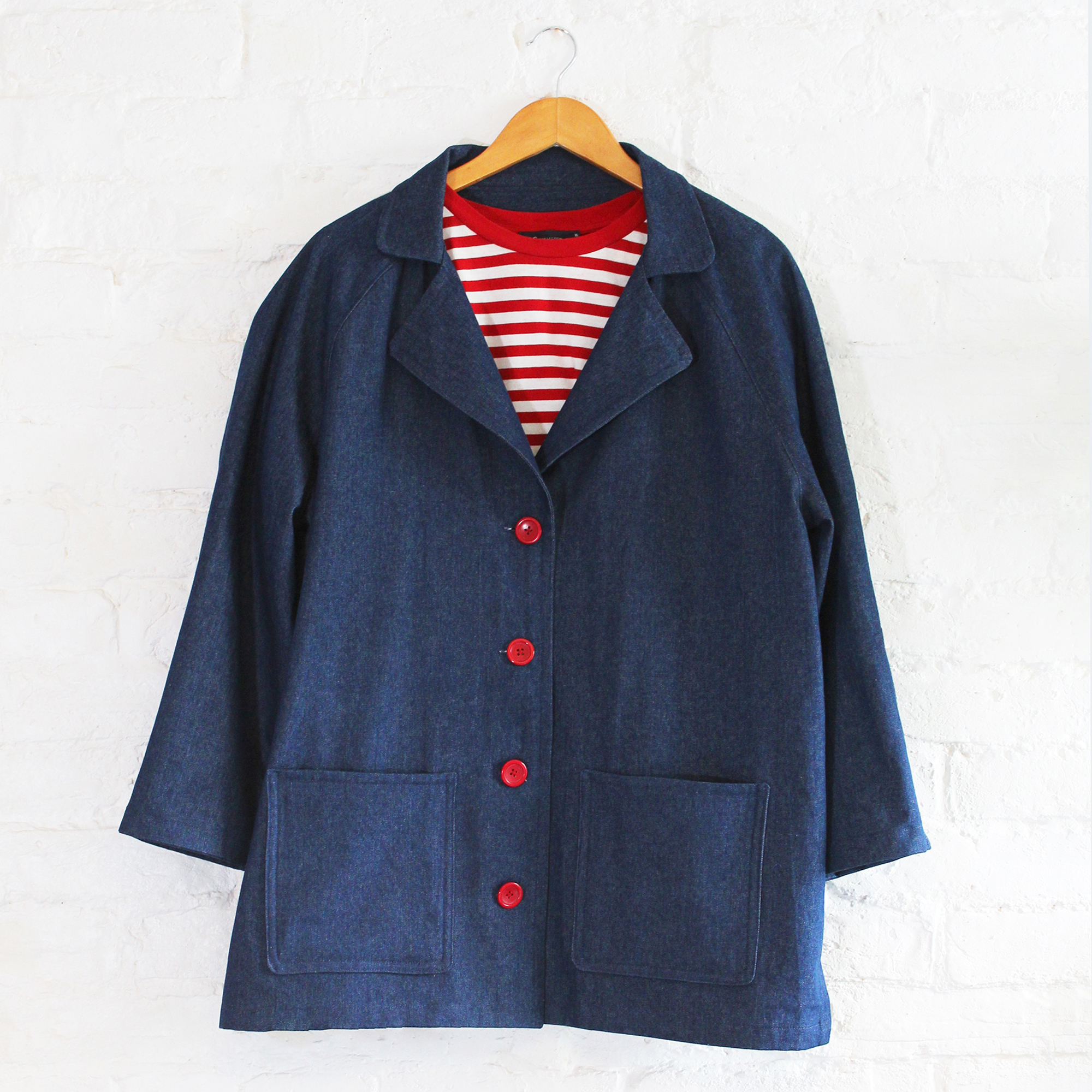 Lottie Duster, a coat or jacket depending on which length line you use. Pop it on as an extra layer in Autumn or Spring, its a useful addition to your wardrobe. Easy to make, suitable for an intermediate, its an enjoyable make which really isn’t too challenging.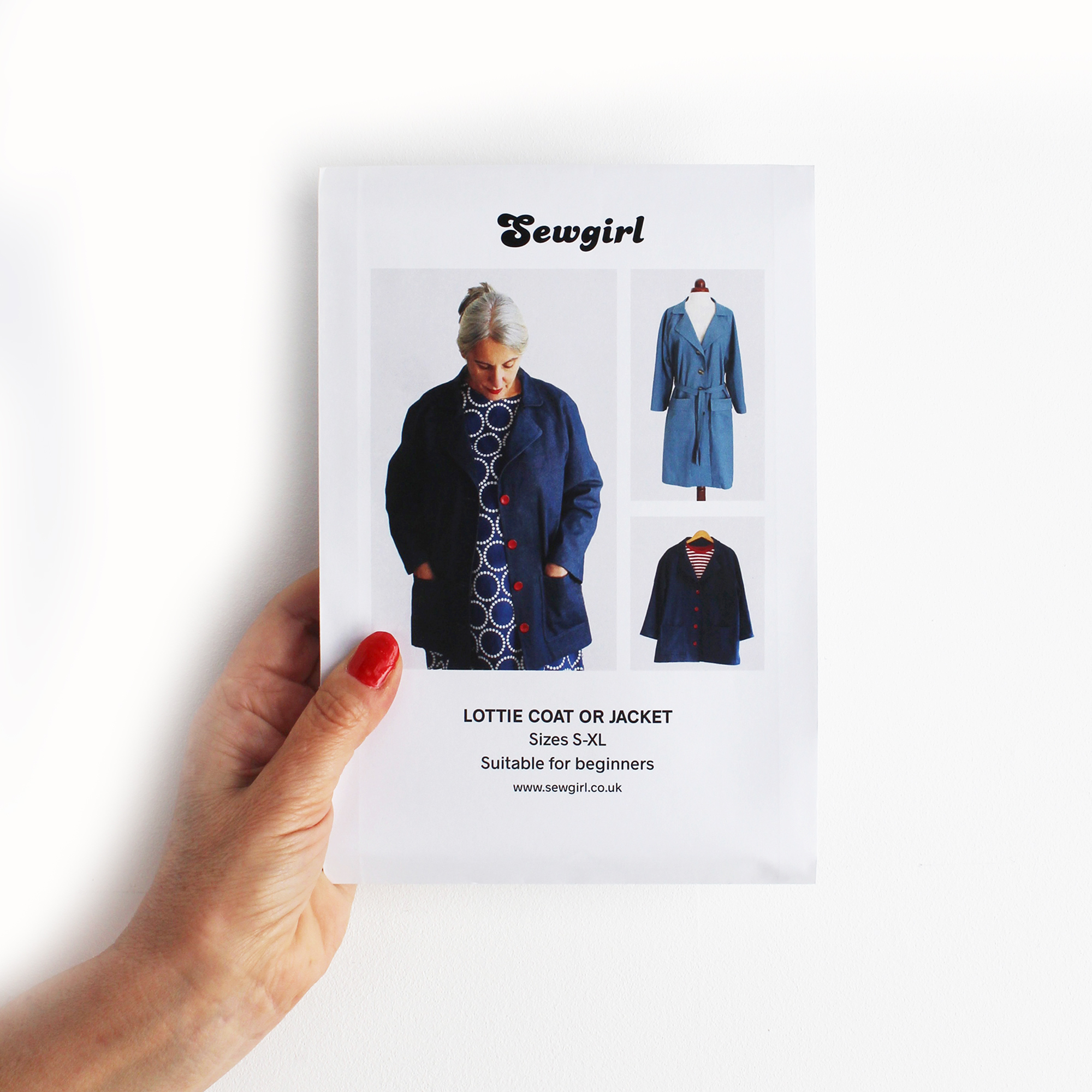
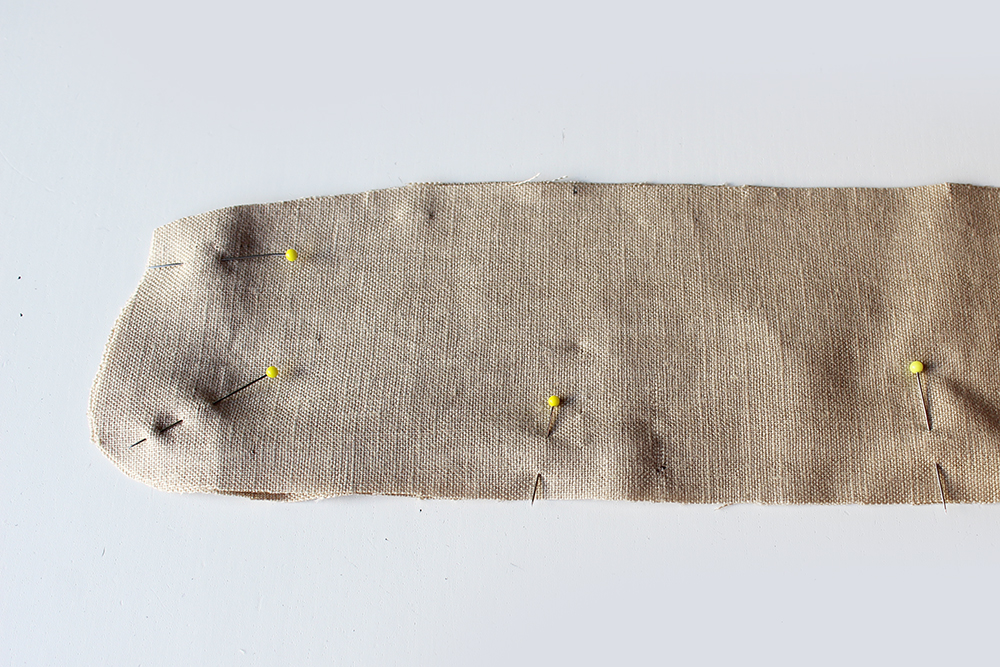
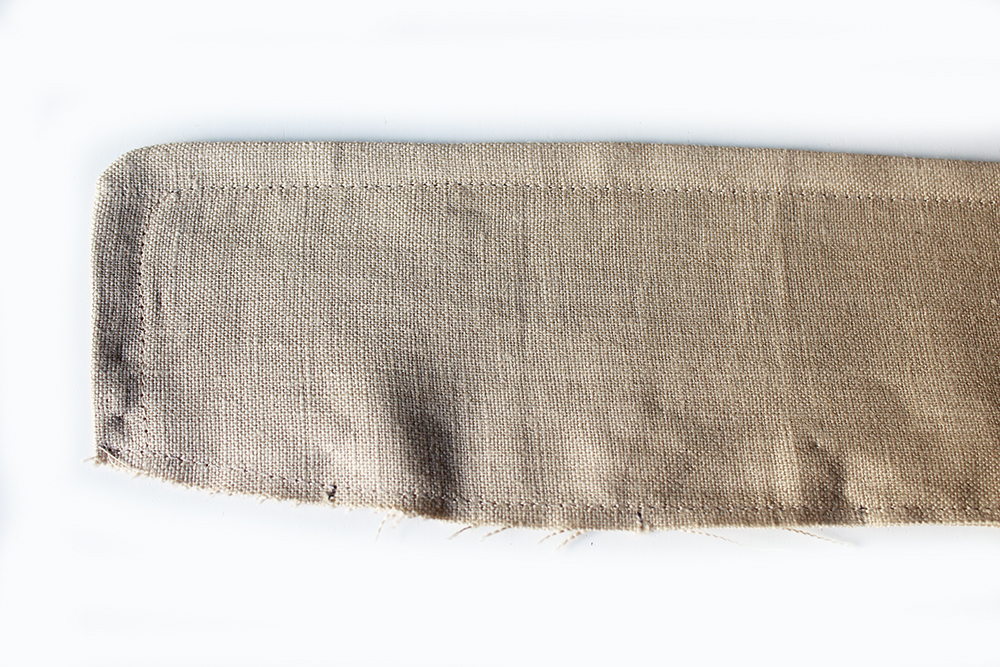 The collar is made by sewing the outer curved edge without the notches then after nicking and trimming the seam allowance its turned inside out, pressed then top stitched. Then tack stitch along the raw edge to hold together. Place to one side.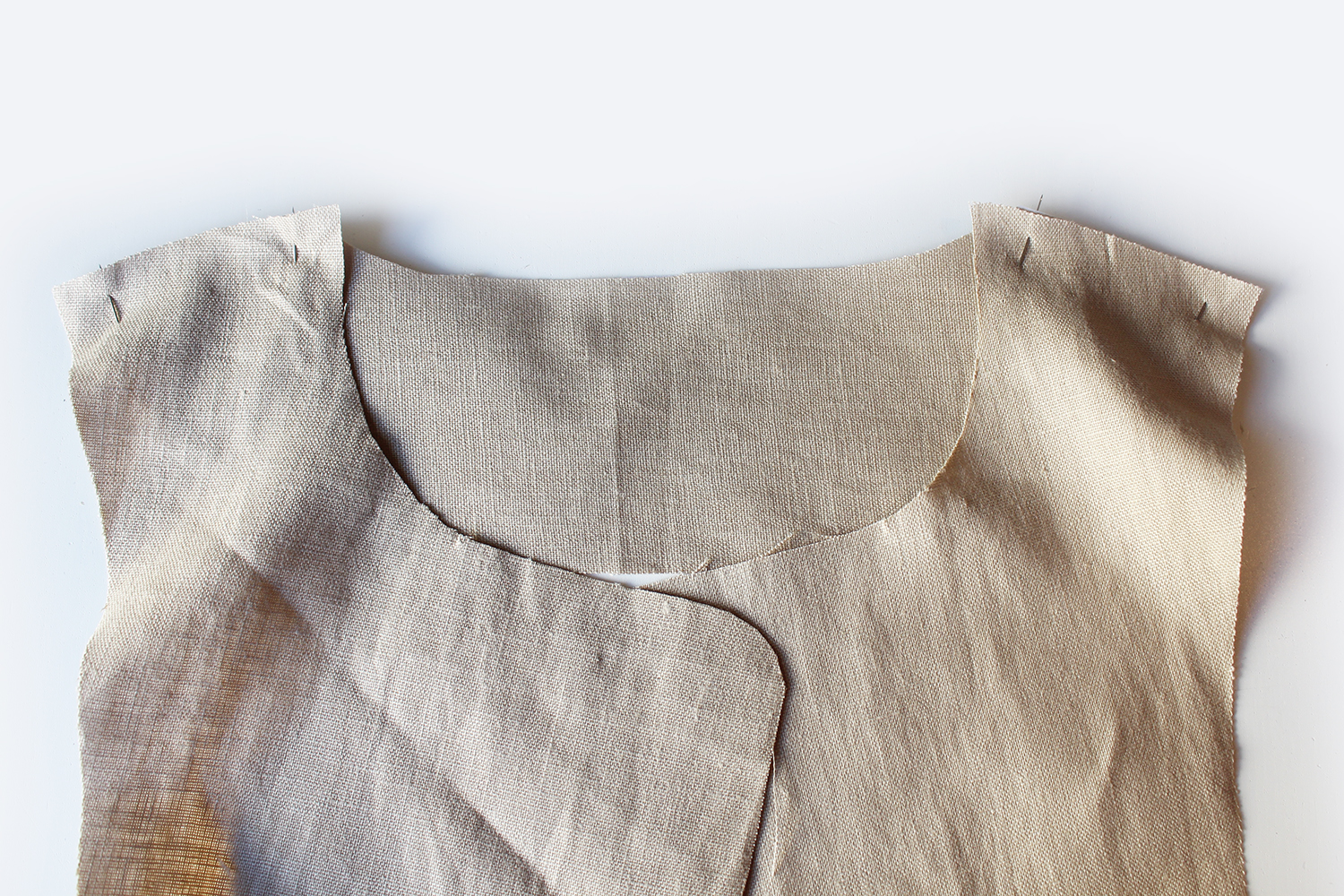
 After interfacing the back facing, pin to the front facing at the shoulders. Stitch. Press the seam allowances open.
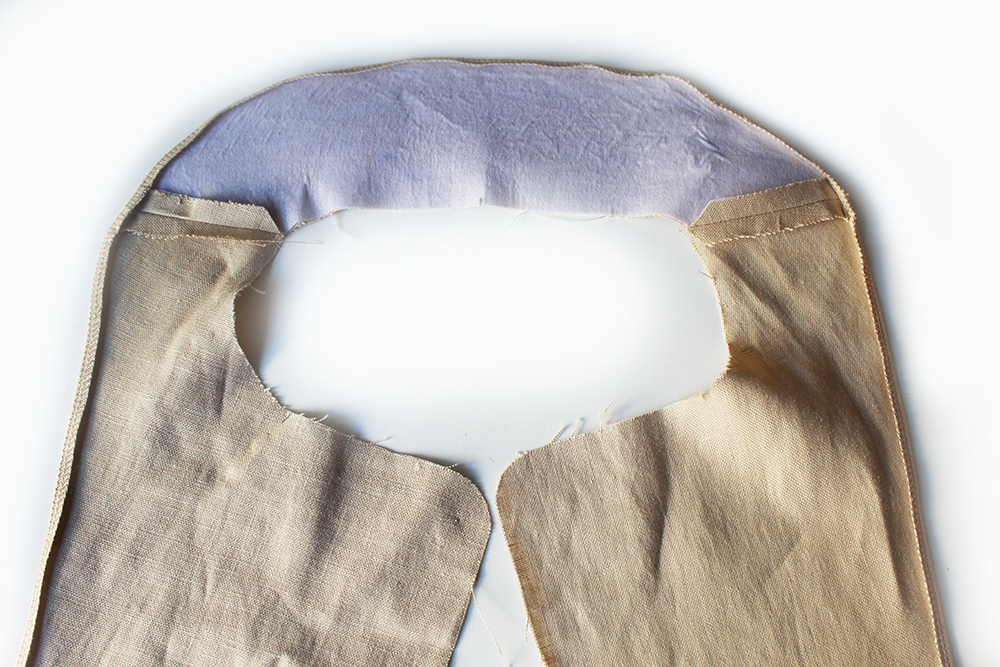 Turn under the outer edge 1cm and press. Then stitch. Turn under the lower edge of the facing 1cm and stitch.
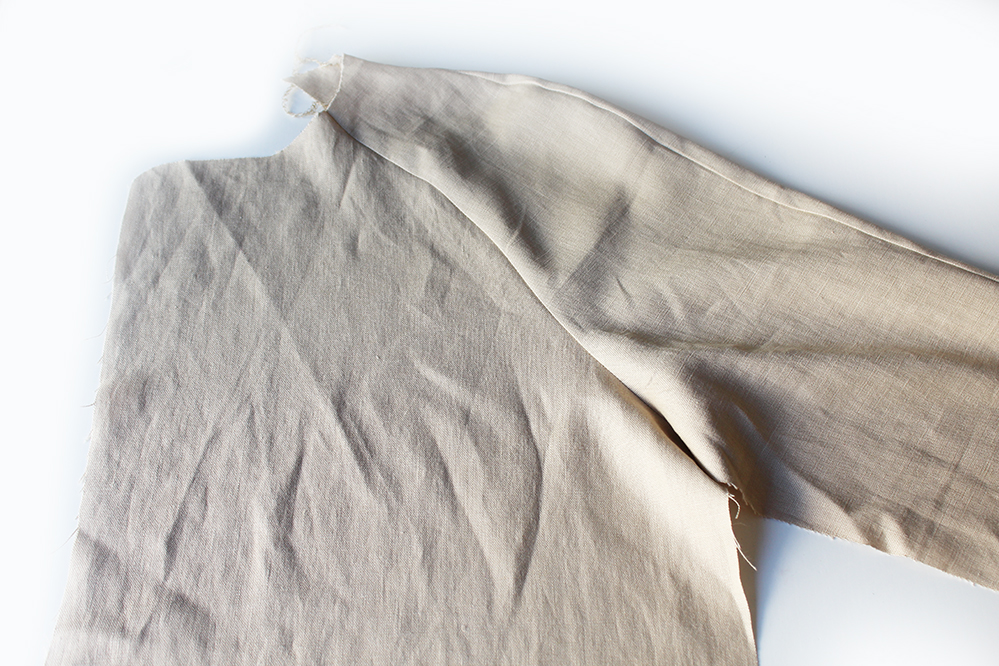 Sew the front sleeve to the front at the slanted edge. Join to the back sleeve. Join the back sleeve to the back. Finish the raw edges. Press. Repeat for the other side.
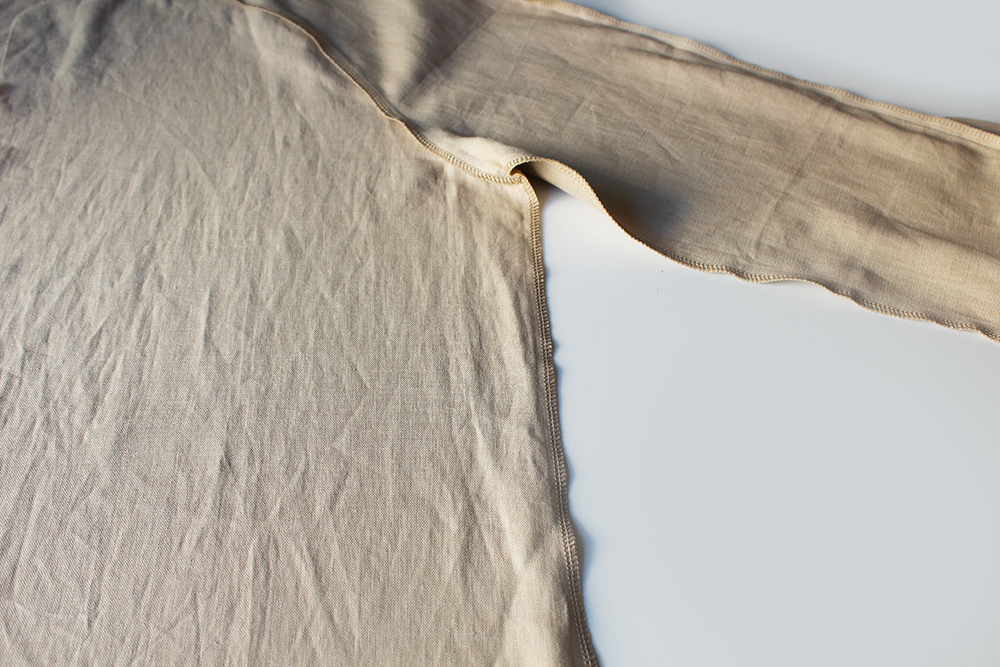 Join the front to back at the side seams, leave the lower section open for the side slits. Finish the raw edges above the slit section. Press.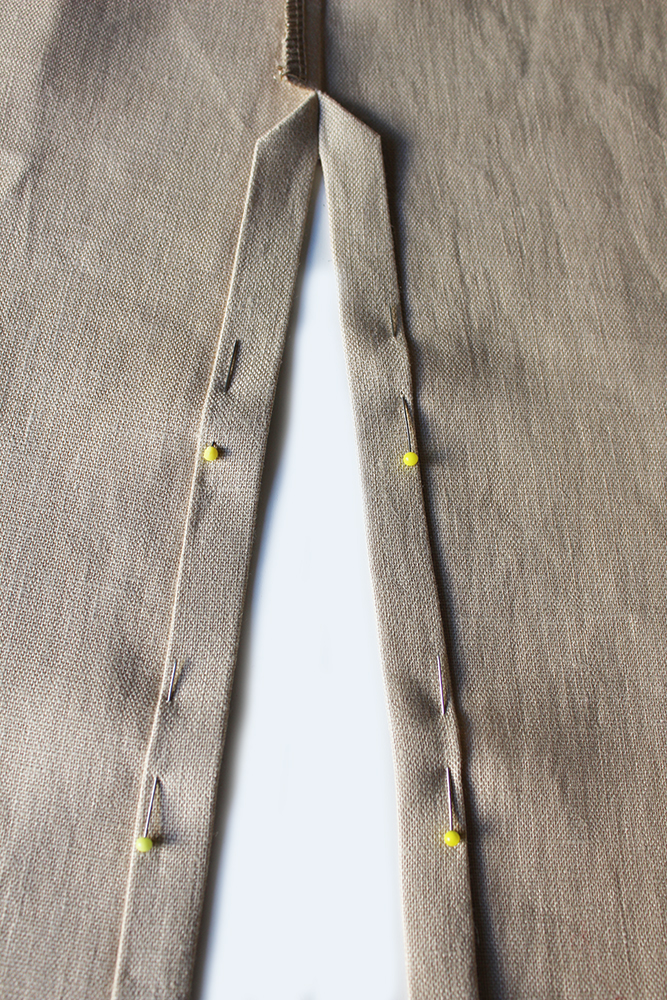
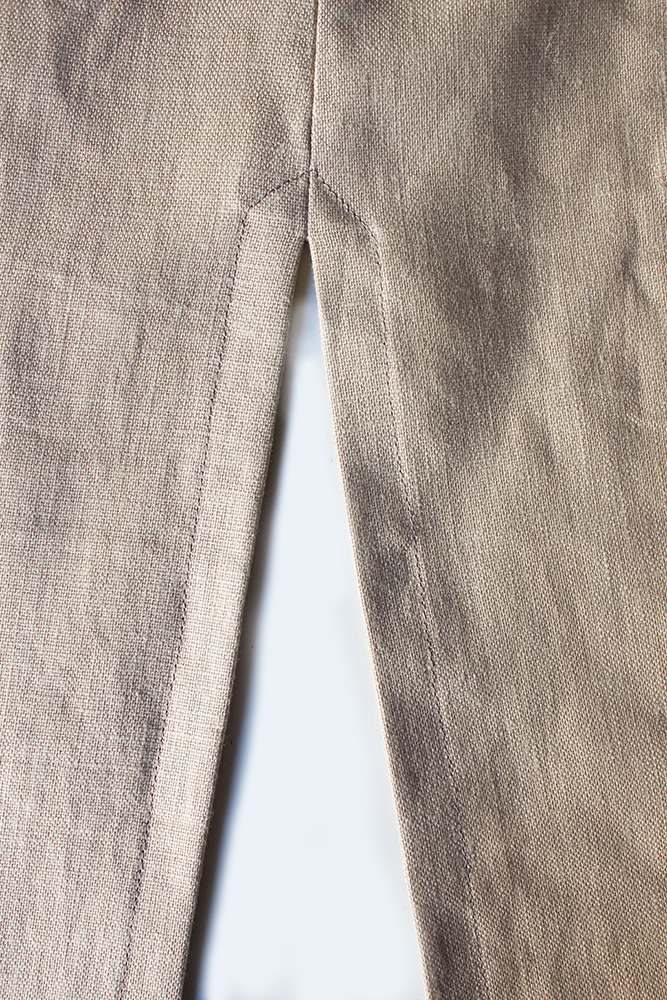 Nick the seam allowance just above the slit section to open the seam at the lower section. Fold over the side slits at the raw edge 1cm then again 2cm. Press. Sew.
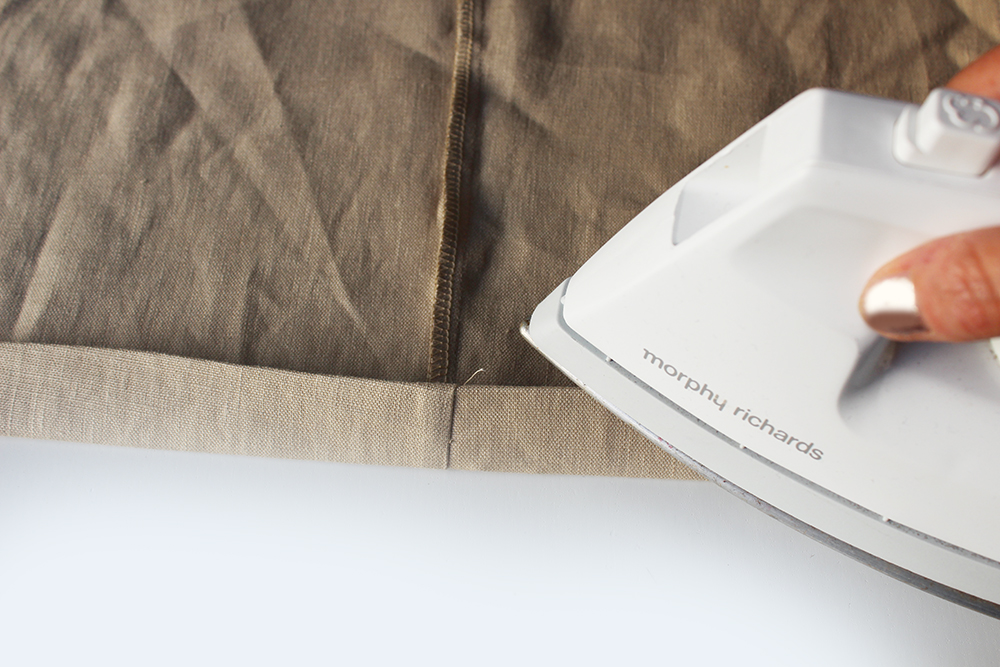 Press under the hem at the lower front edge 1cm then again 2cm. Sew.
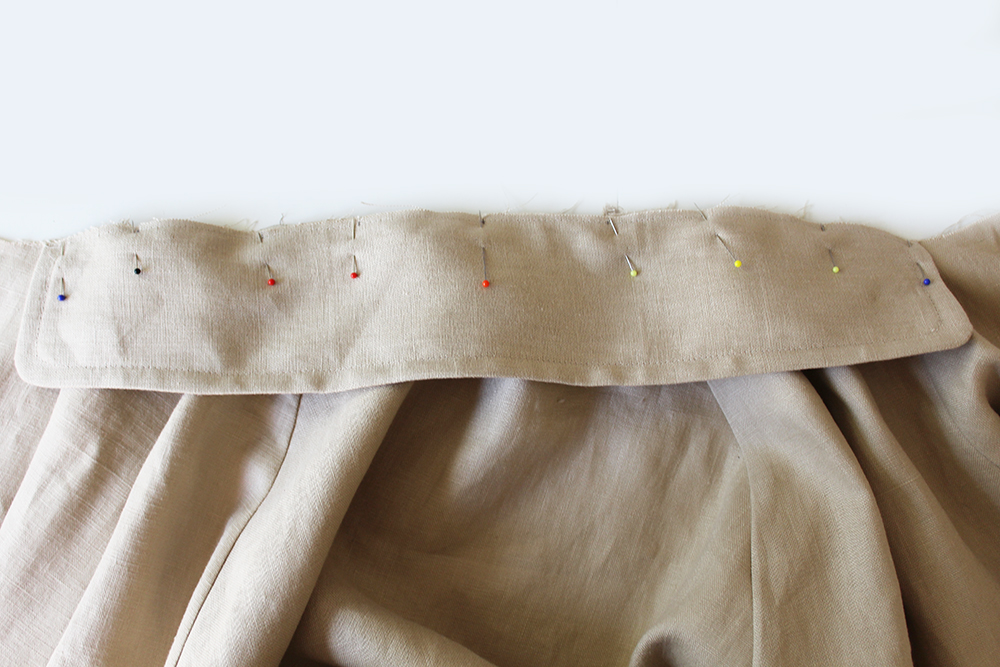 Starting at the centre of the back neck, pin the collar at the centre point to the neck edge matching up the notches to the sleeve seams.
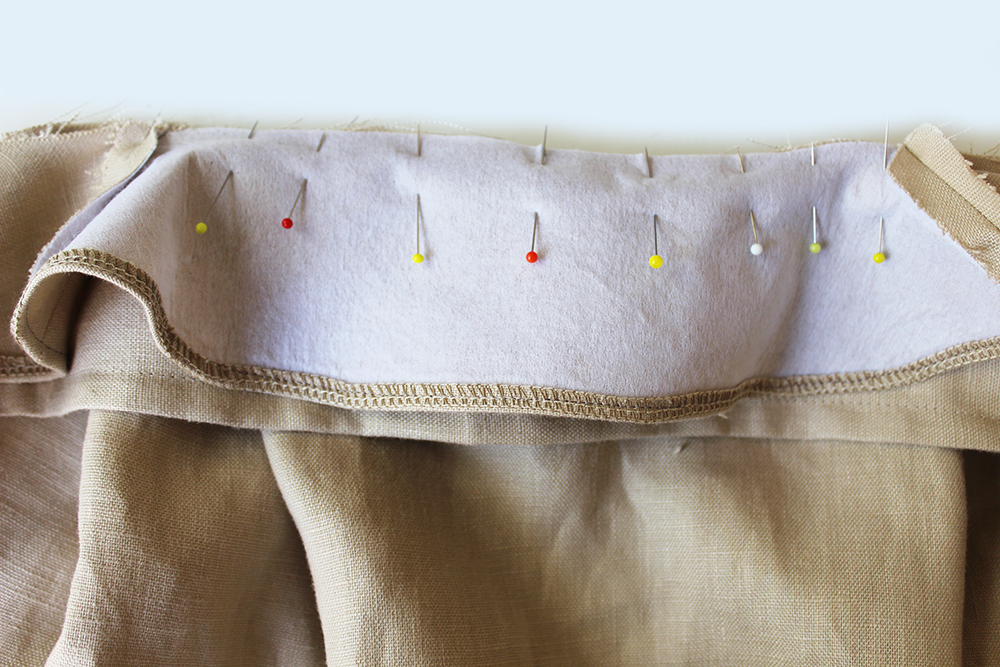 Starting at the back neck, pin the facing piece at the centre of the back facing with the RS together to the collar.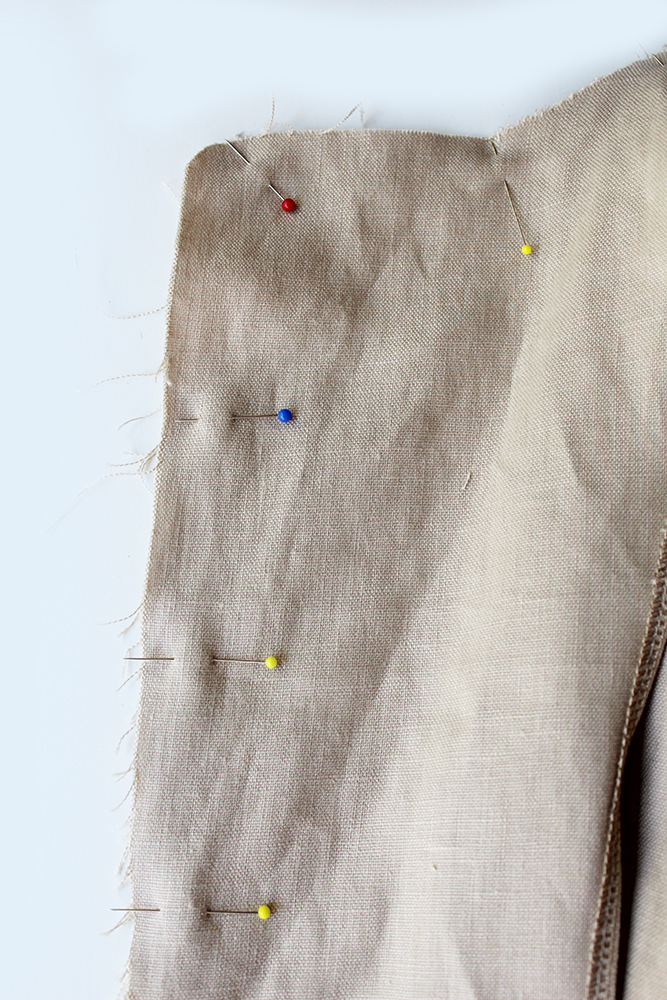
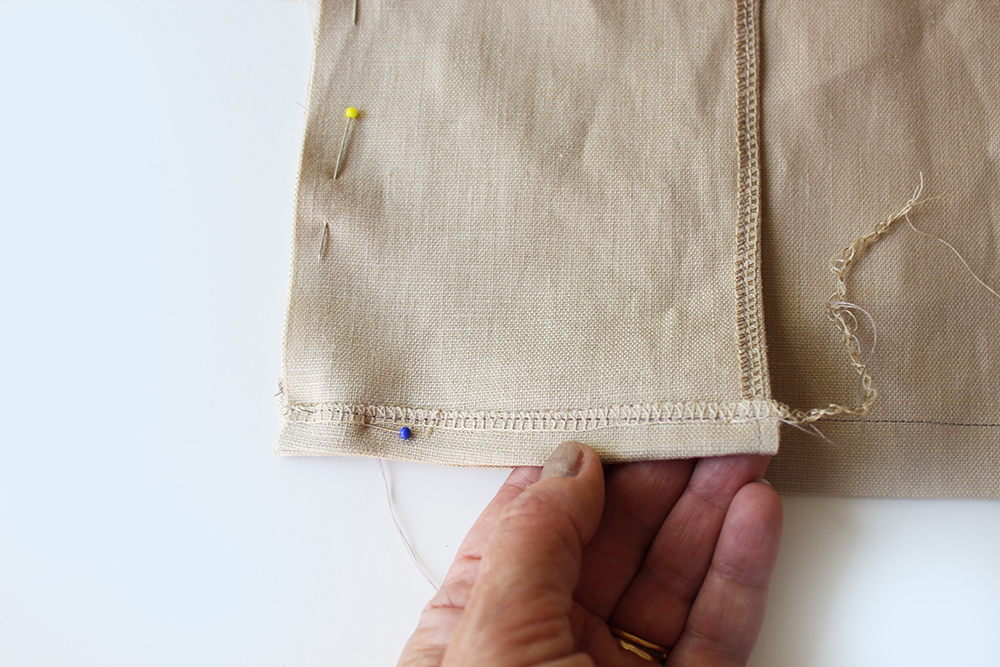 With the lower edge of the facing turned under and stitched 1cm, align at the lower edge.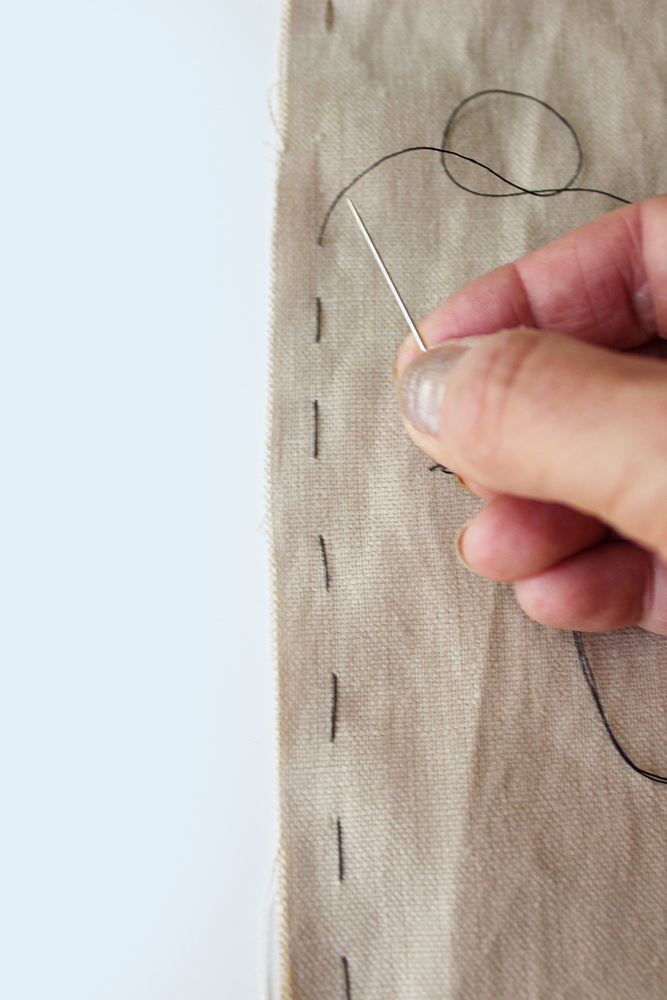
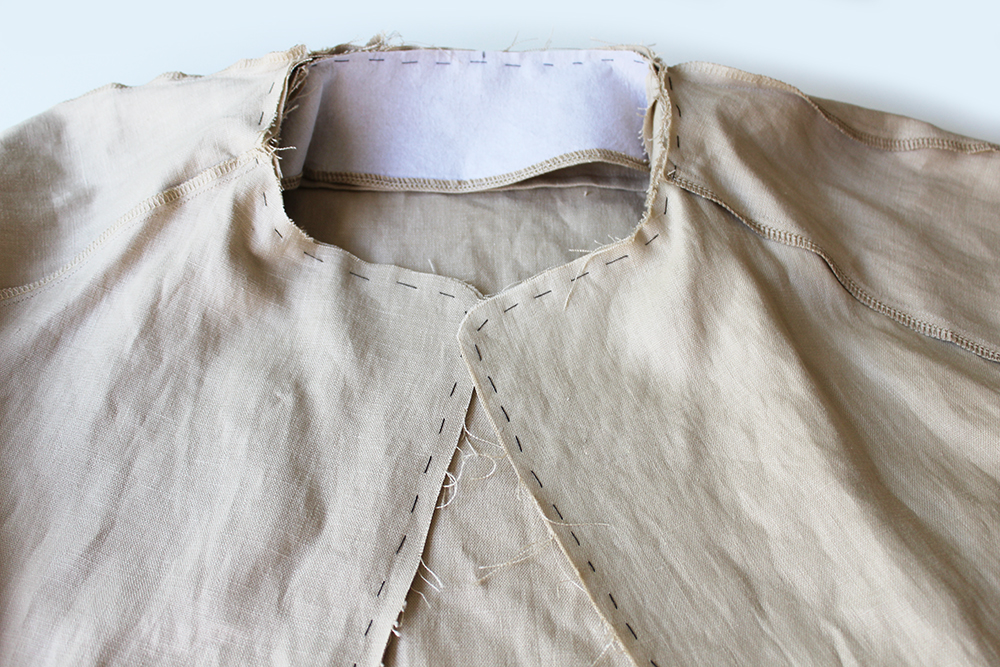 Hand Tack!
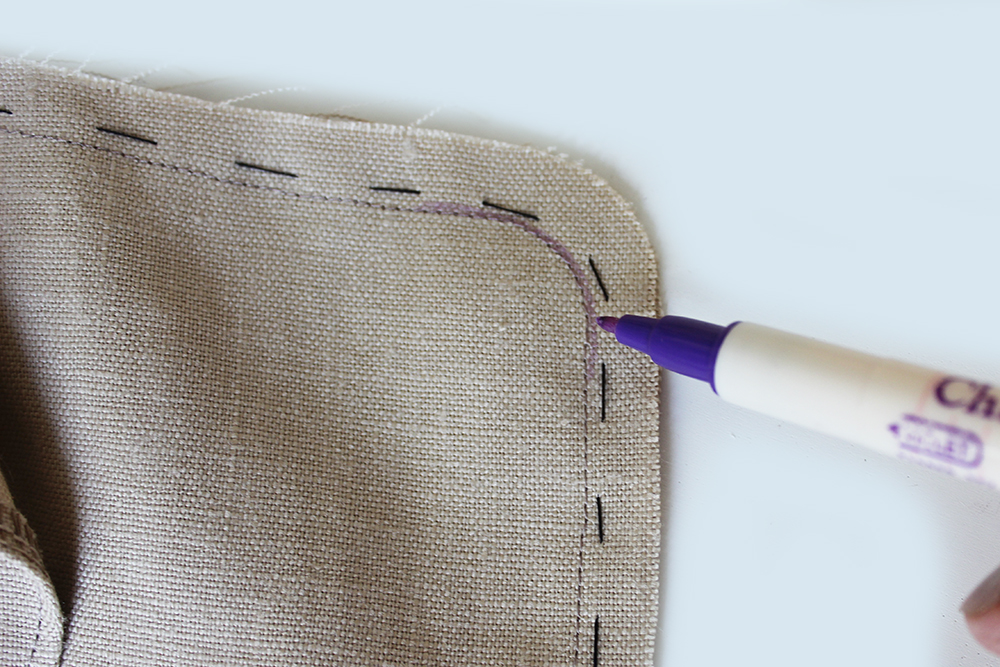 You might like to mark the curved stitch line with an invisible pen to help you as it is important that both sides are the same.
 Stitch!
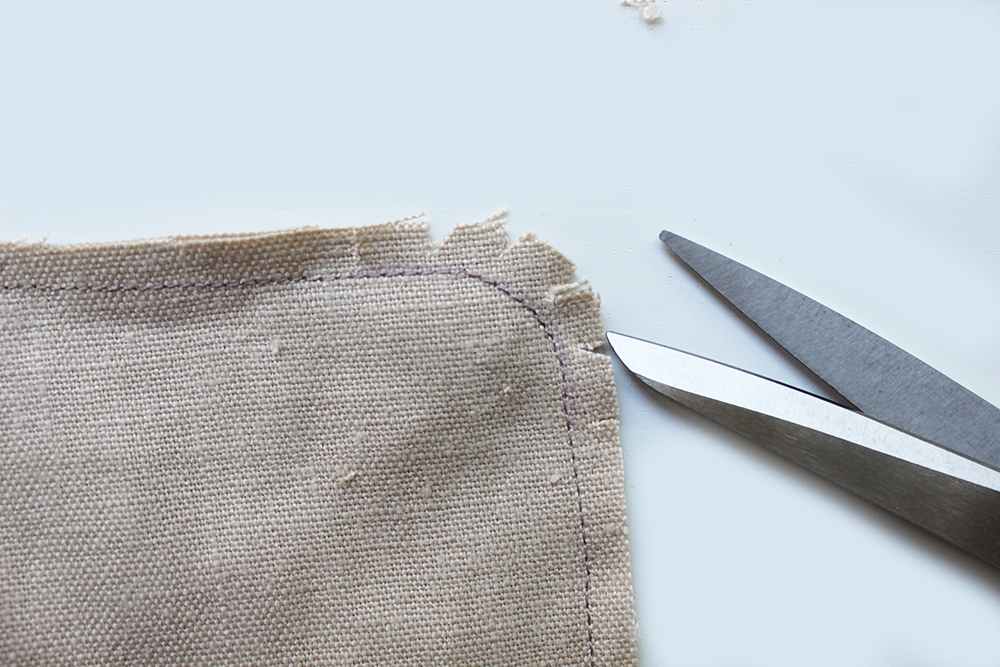 Nick the curved seam allowances. Trim the seam allowance to 5mm.
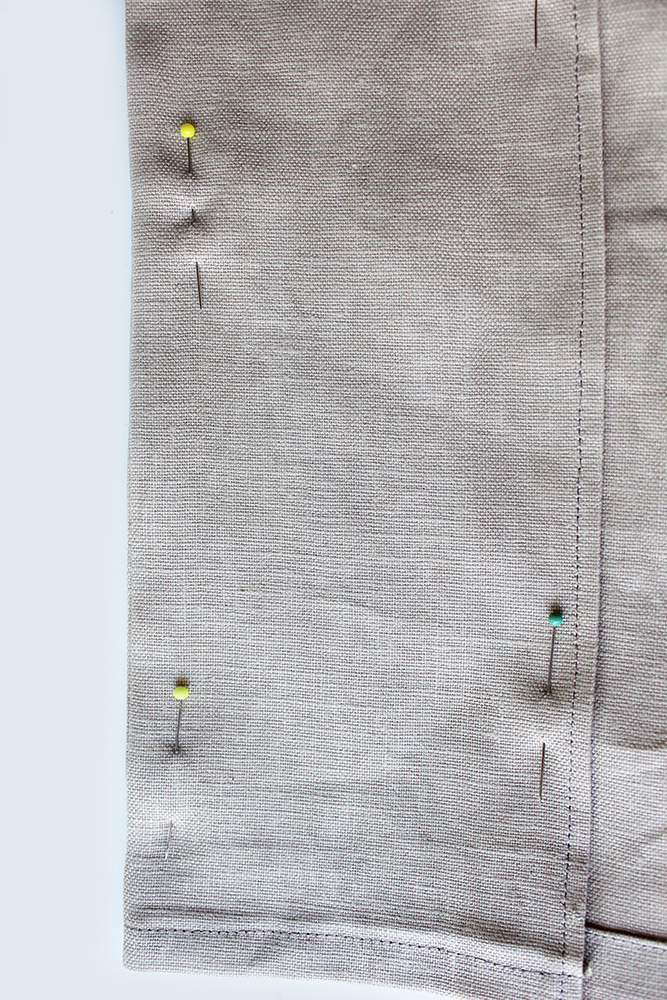 Pin to the reverse side and press so that the seam line is aligned with the fold. Push out the collar with a poking tool to get the curves.
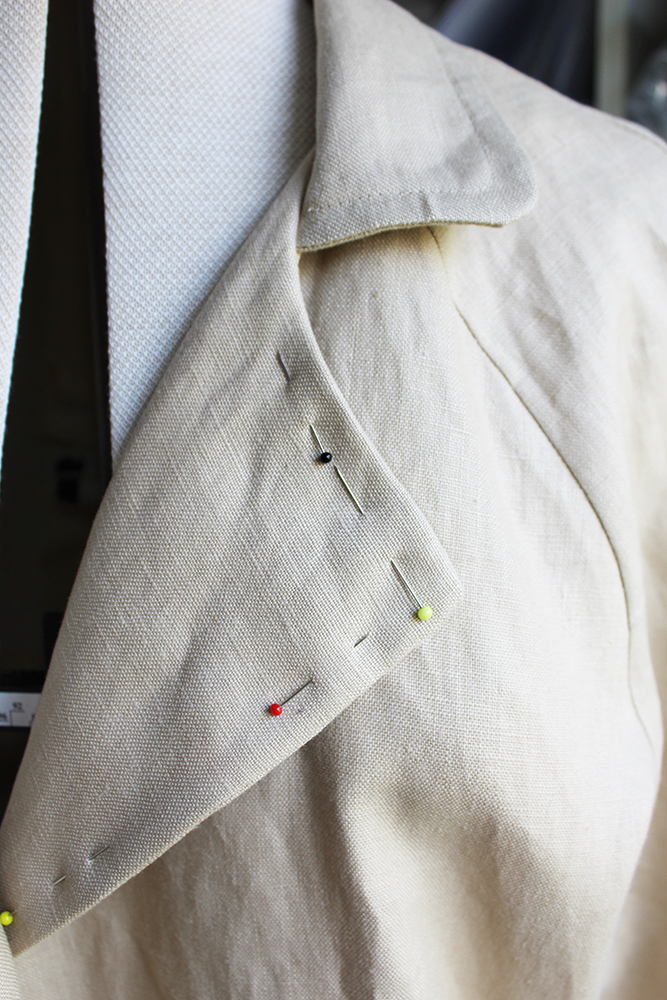 Pin the facing all around.
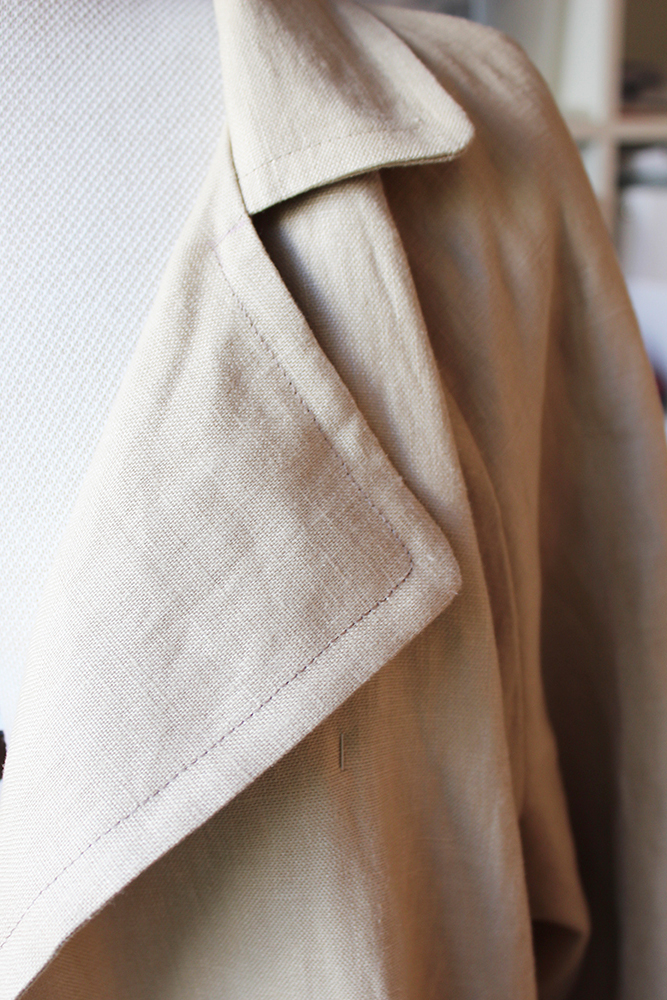 Top stitch all around 1cm from the edge.
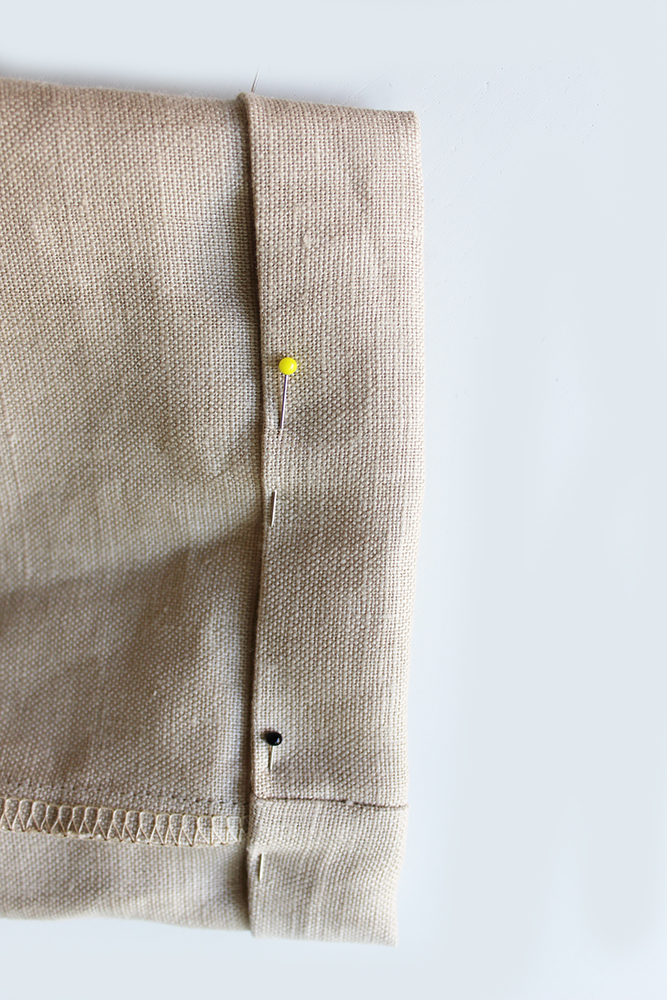 Make a hem at the sleeve raw edge. Fold over 1cm then again 3cm. Press. Pin. Stitch.
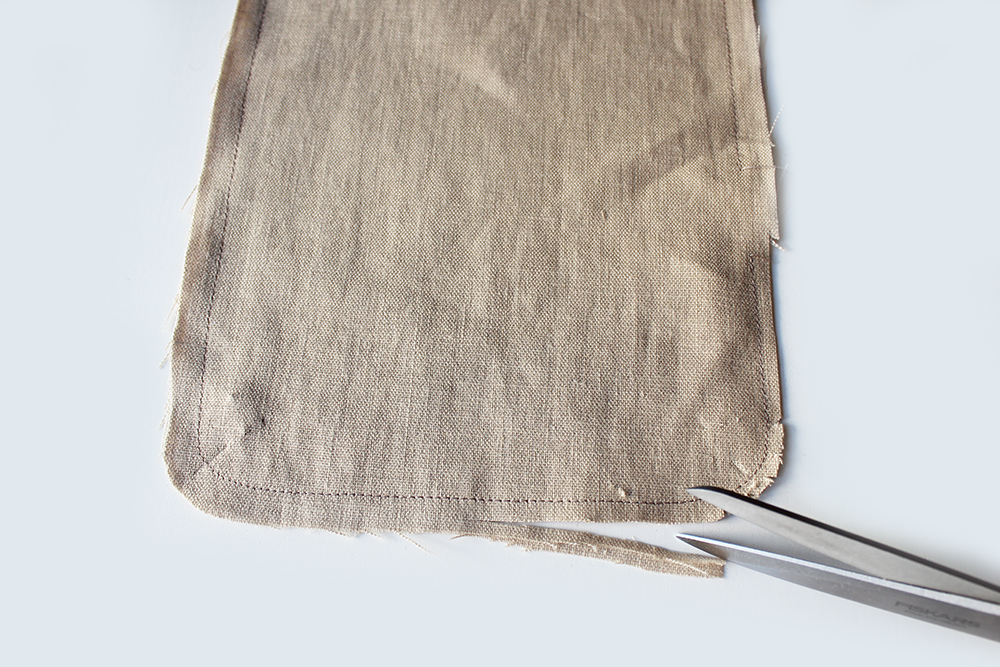 Pin the pockets RS together. Stitch all around leaving a small opening at one side for turning. Trim the seam allowance to 5mm. Nick the curved corners.
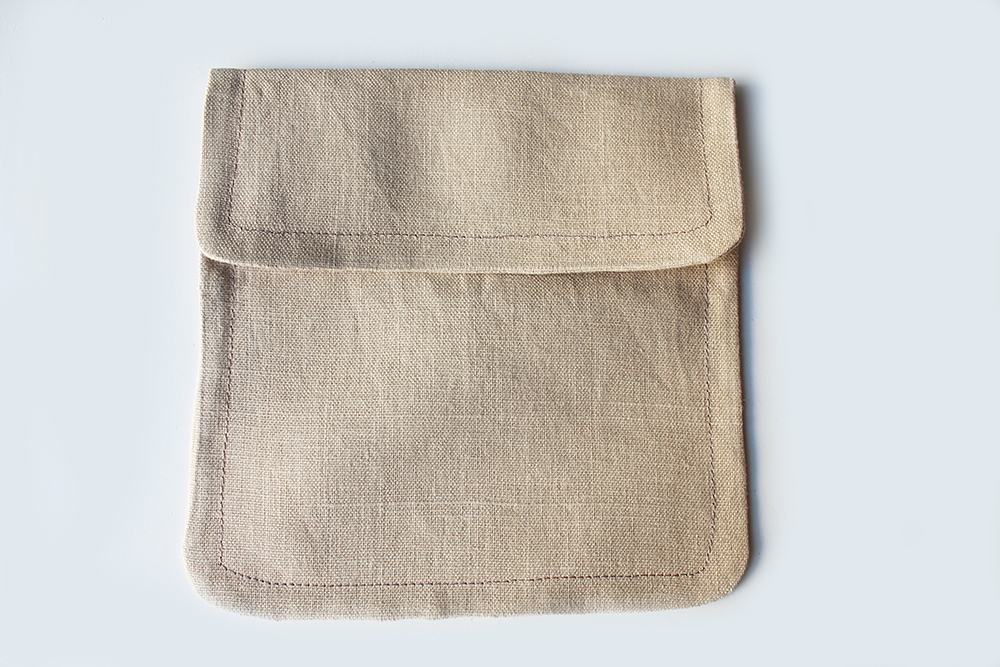 Turn inside out, push out the corners with a poking tool. Press well, aligning the seam line to the fold. Top stitch all around. Press over the flap section as shown on the template.
 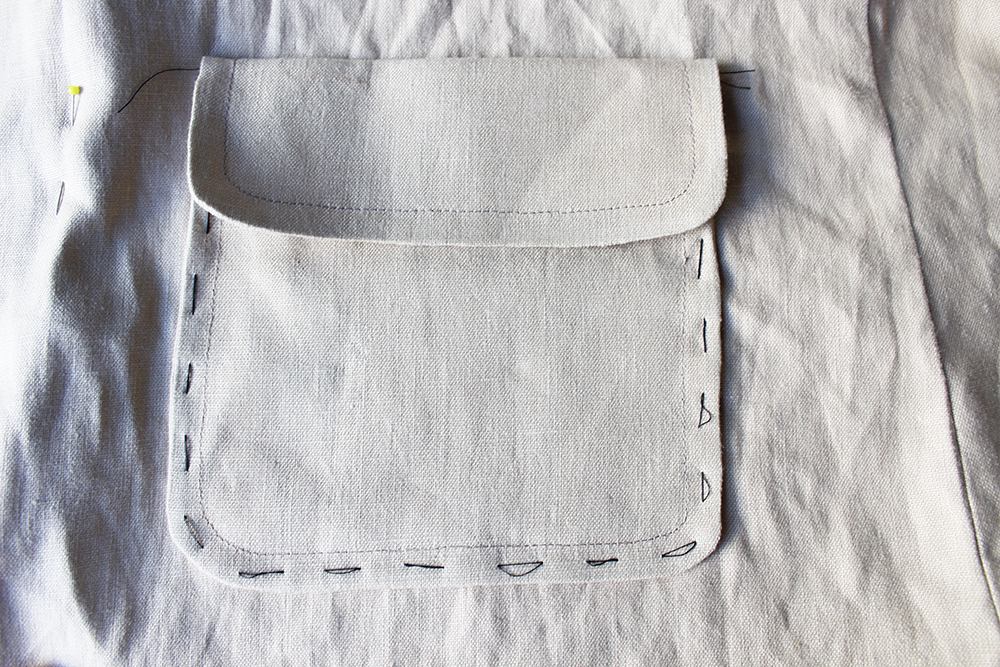 Pin to the coat in position as shown on the pattern. Tack stitch to hold. Sew all around a second line of stitching close to the outer edge and parallel to the top stitching. Reinforce the corners at the top just below the flap fold. Sew on a button at each pocket or leave without.
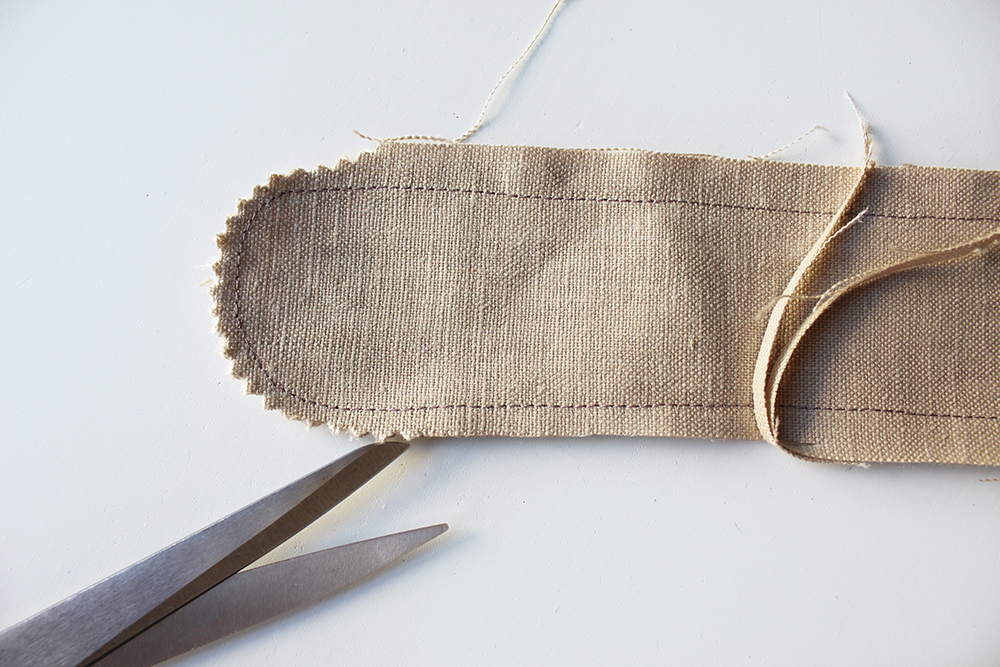 Pin the tie belt pieces RS together. Sew all around, leave a small opening at the centre for turning. Trim the seam allowance and nick the curved corners.
 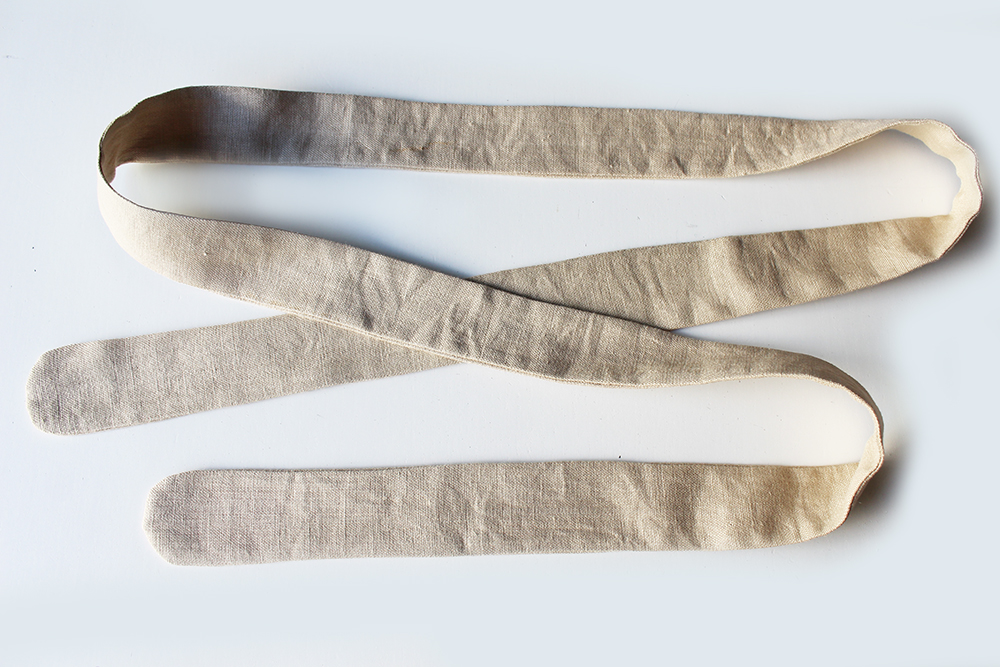 Turn the tie inside out and push out the curved ends with a poking tool. Press well so that the seam line is in line with the fold all around.
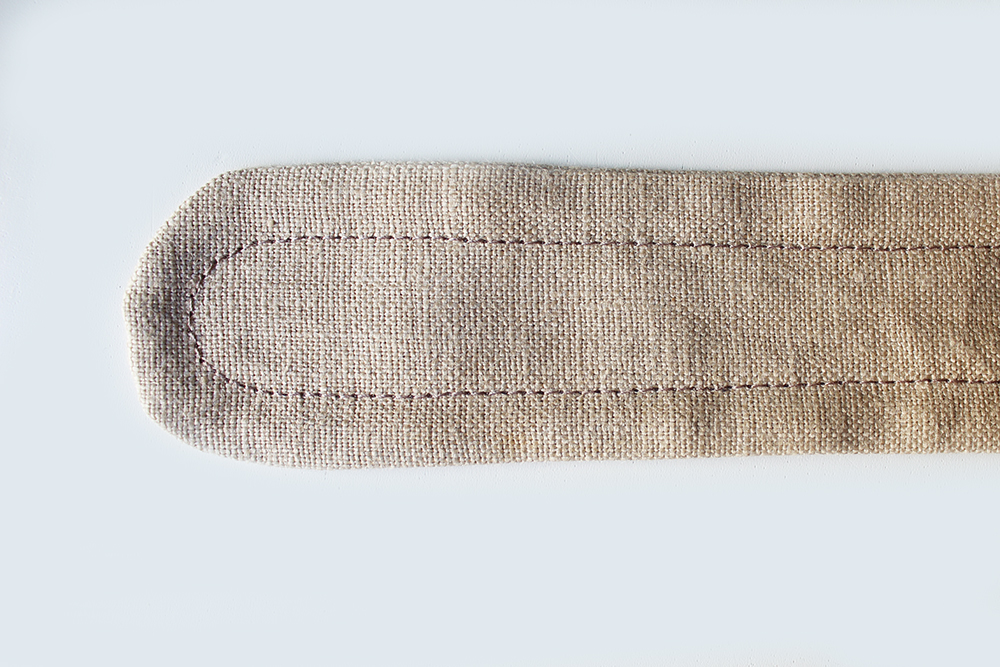 Topstitch all around the outer edge.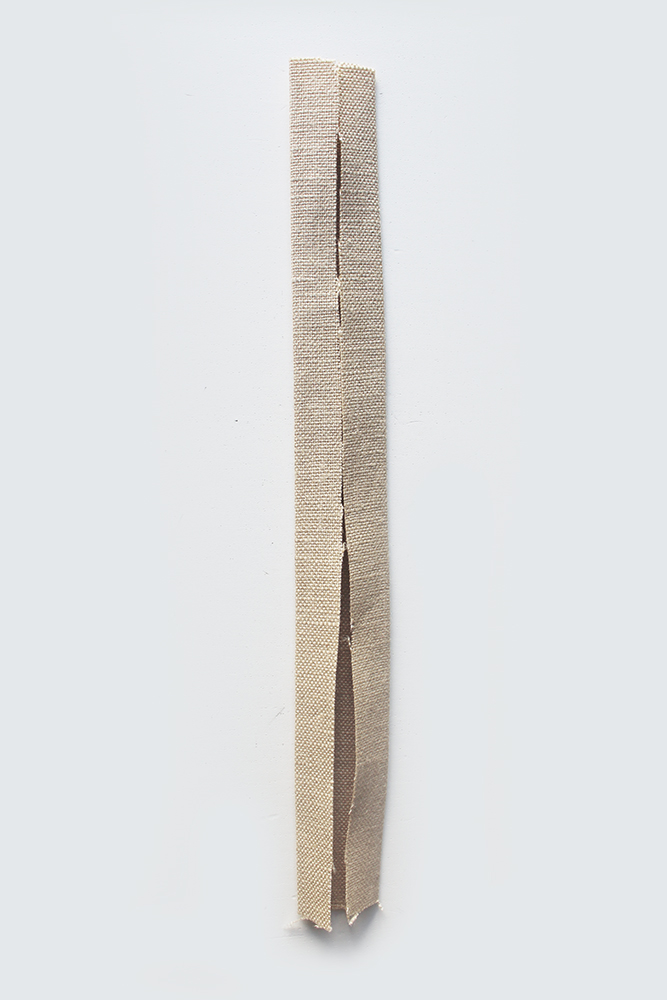
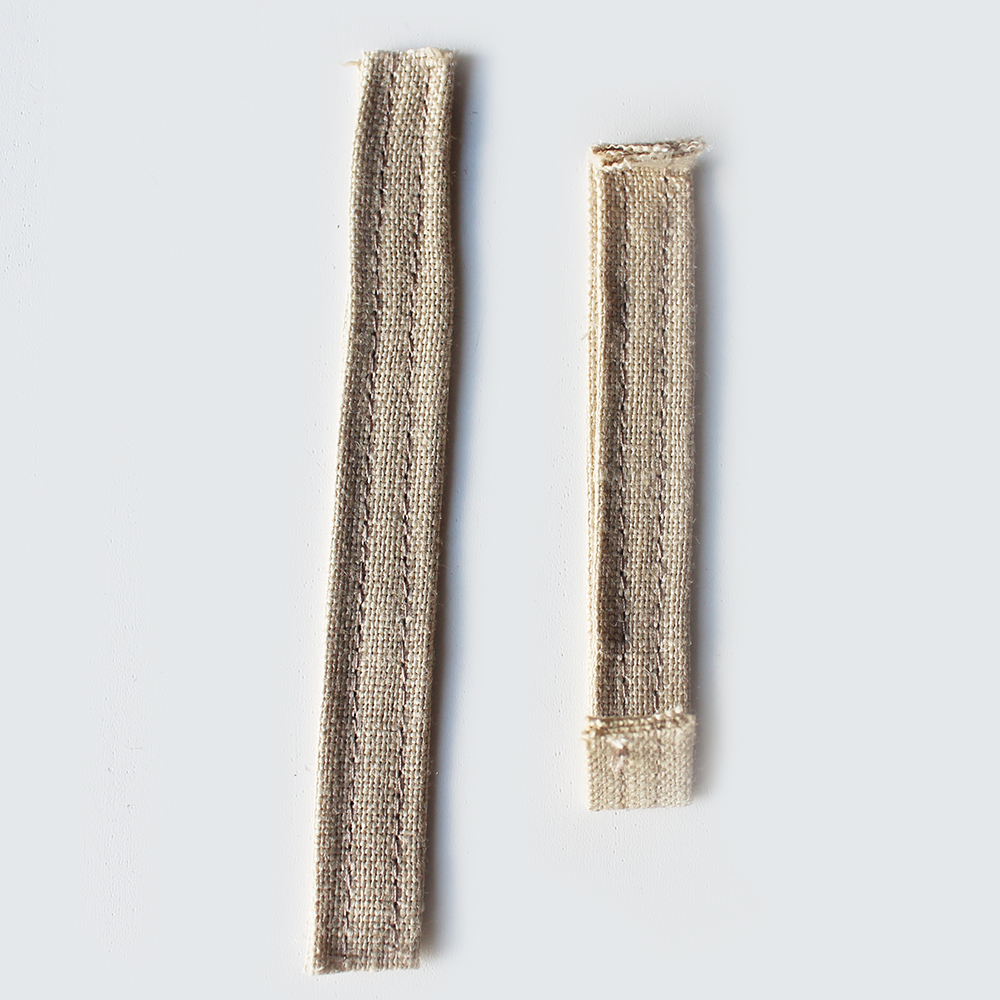
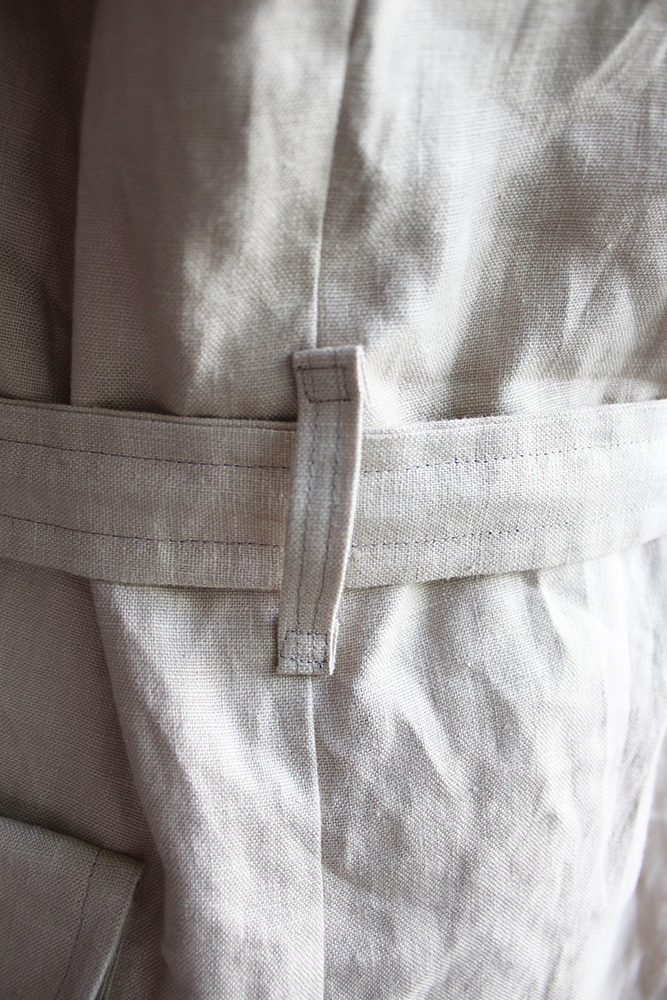 Attach to the coat at each side in position as shown on the template with a box stitch.
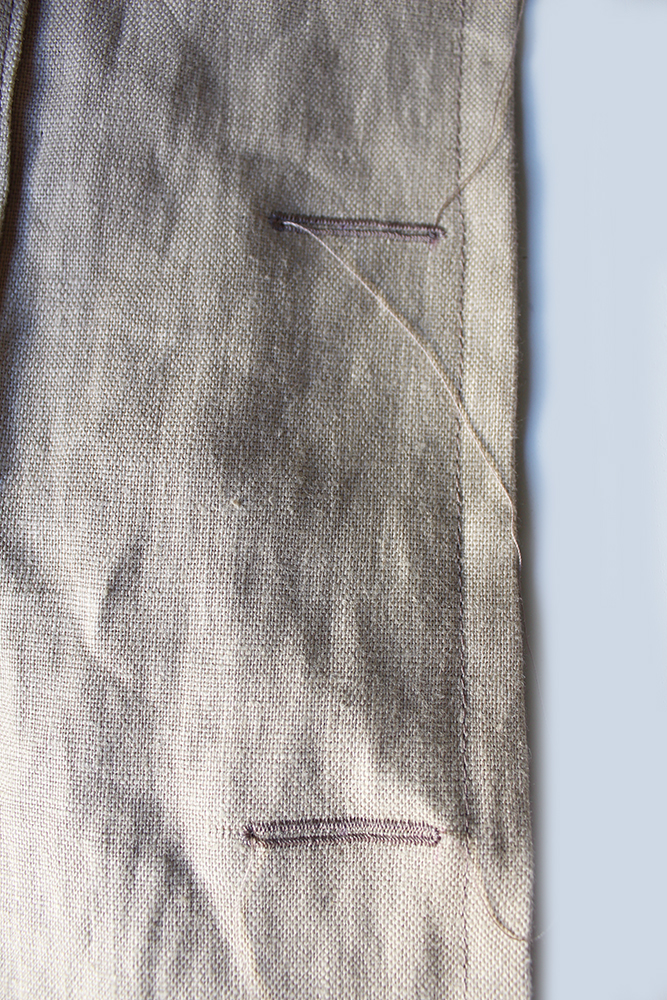 Sew your buttonholes. Use the template as a guide to the position.
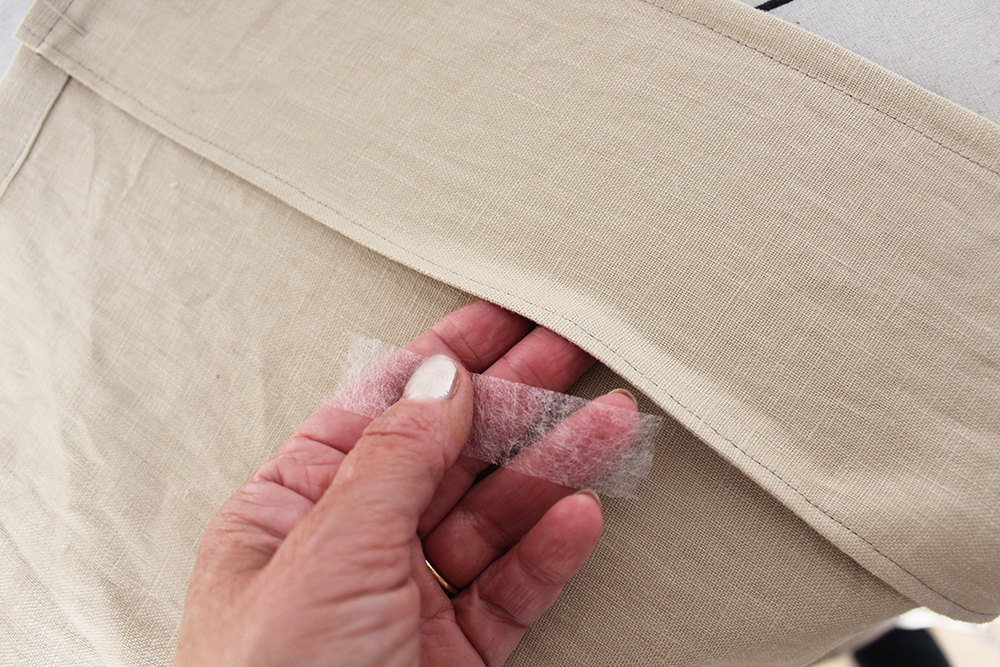 One last thing, you may like to insert small pieces of wondaweb under the facing to secure the facing in place. You could also stitch a few stitches at the shoulder seam to secure the neck facing.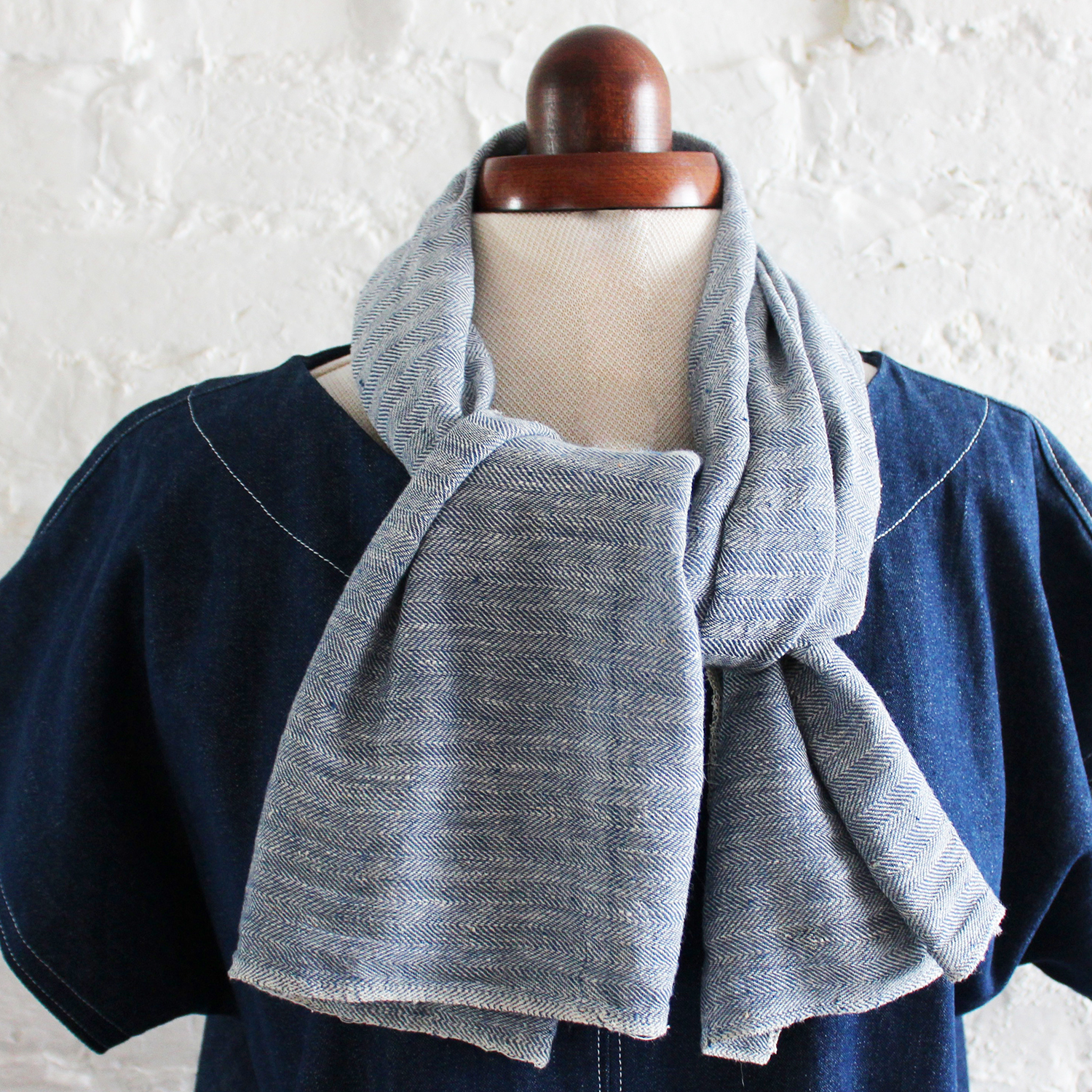


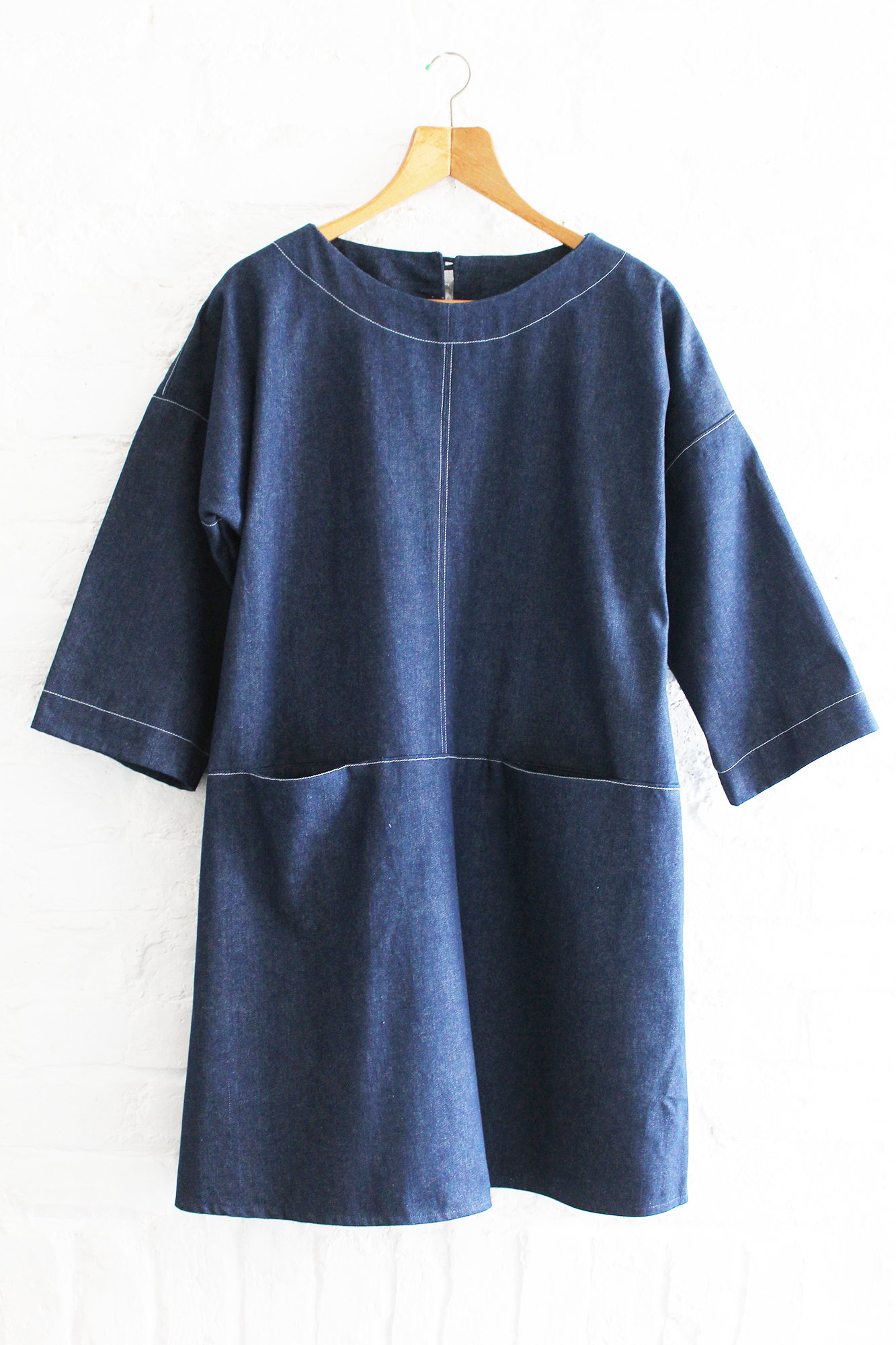 Edith – An artists smock style loose fitting tunic for everyday wear. Straightforward to make with easy sew long sleeves, a deep round neck, lots of cross seams and topstitching (oh yes I do love topstitching!) and two inset pockets. Edith has an open loop and button back neck detail so its easy to get on and off. Theres lots of room in this tunic to move, eat and do what you will!
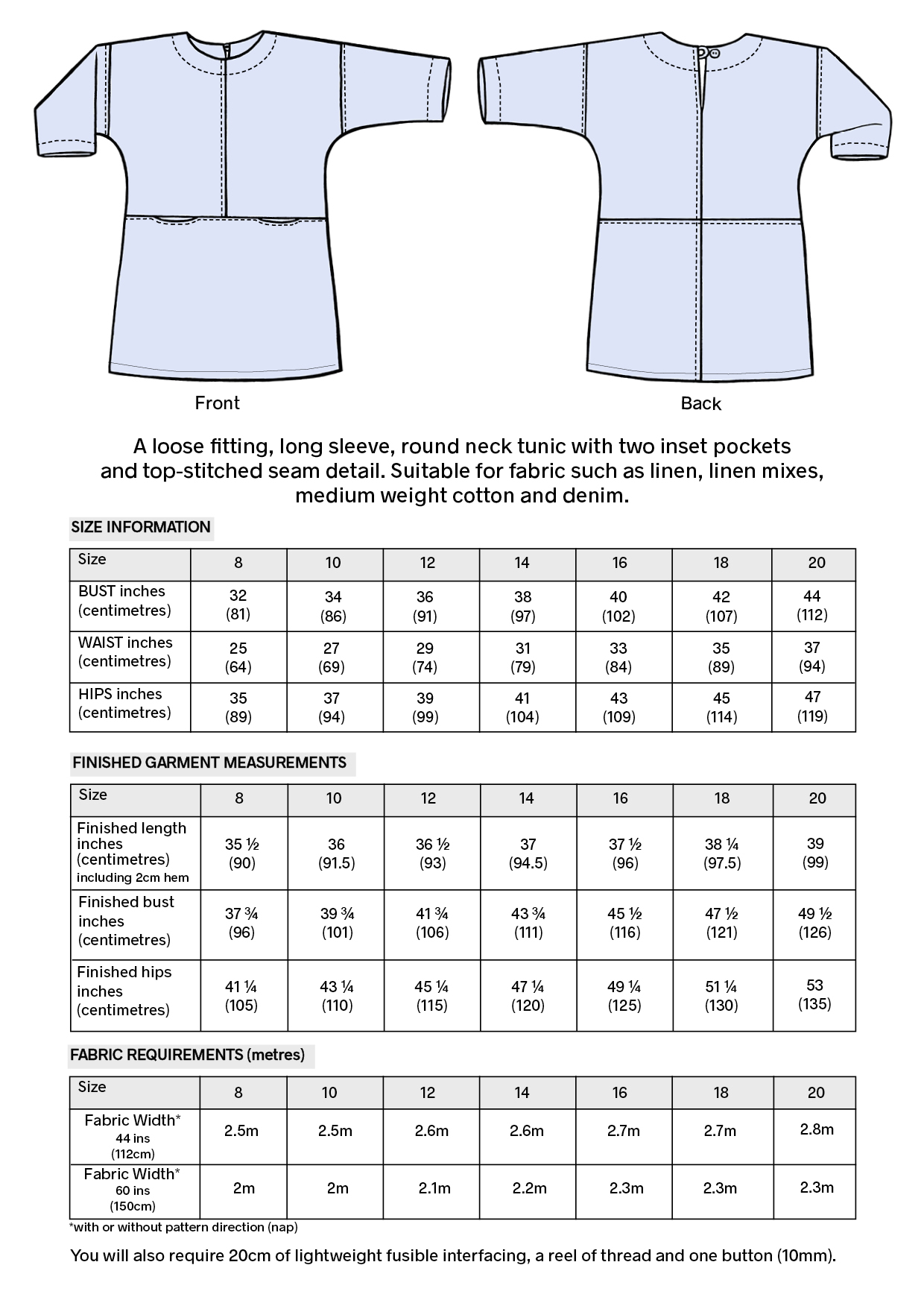 You can sew a single or double line of topstitching as you prefer.
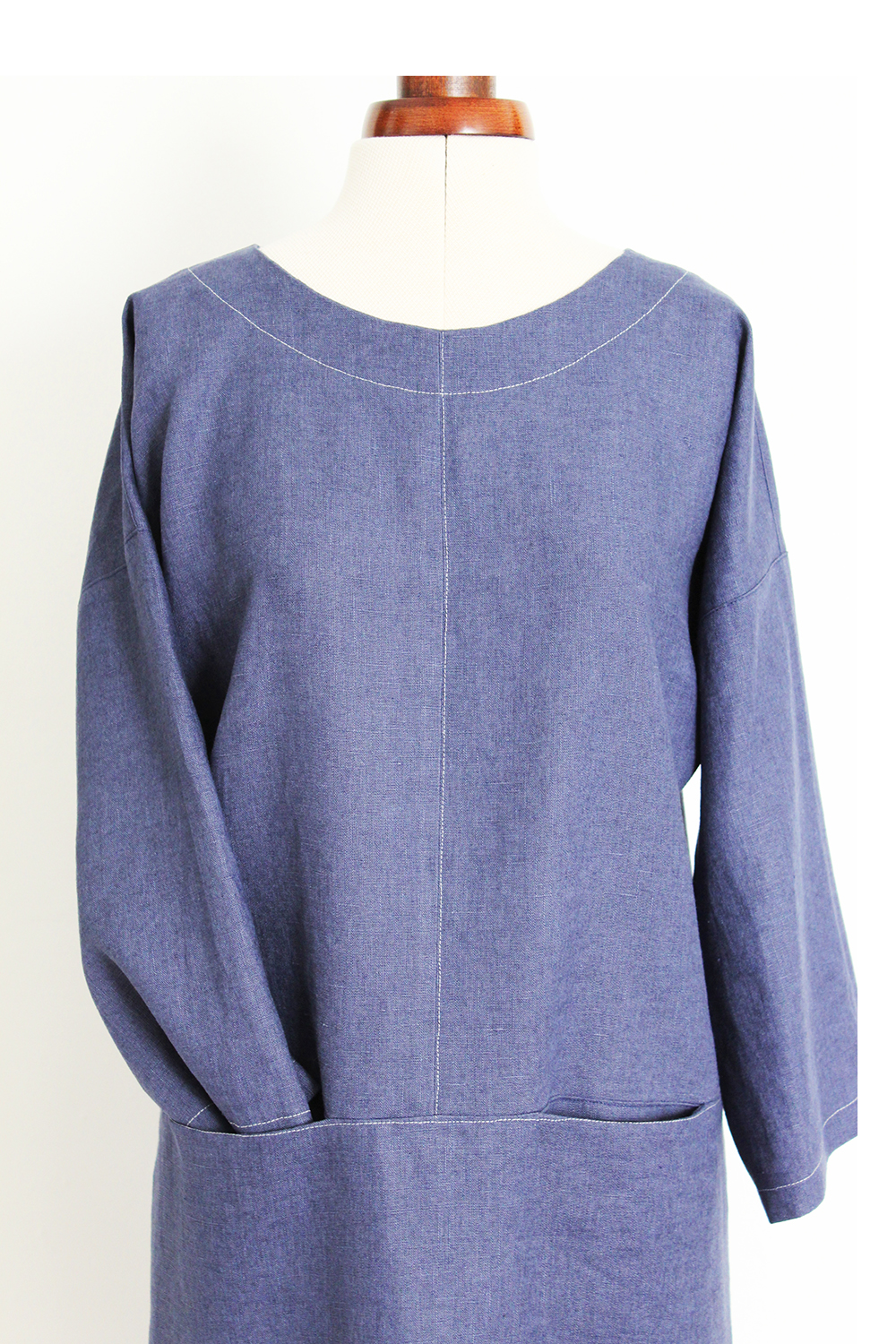 Heres a close up of those nifty inset pockets which are hidden within the seam line. Before you start, its a good idea to measure where the pocket seam line will be on you. If you need to make any adjustments to the length of the upper and lower body sections, you can do this before you cut out. by tracing off the pattern and making alterations. Just extend or shorten the lower edge of the upper front and back by sliding the pattern down or up, then match up at the sides. Repeat for the lower section.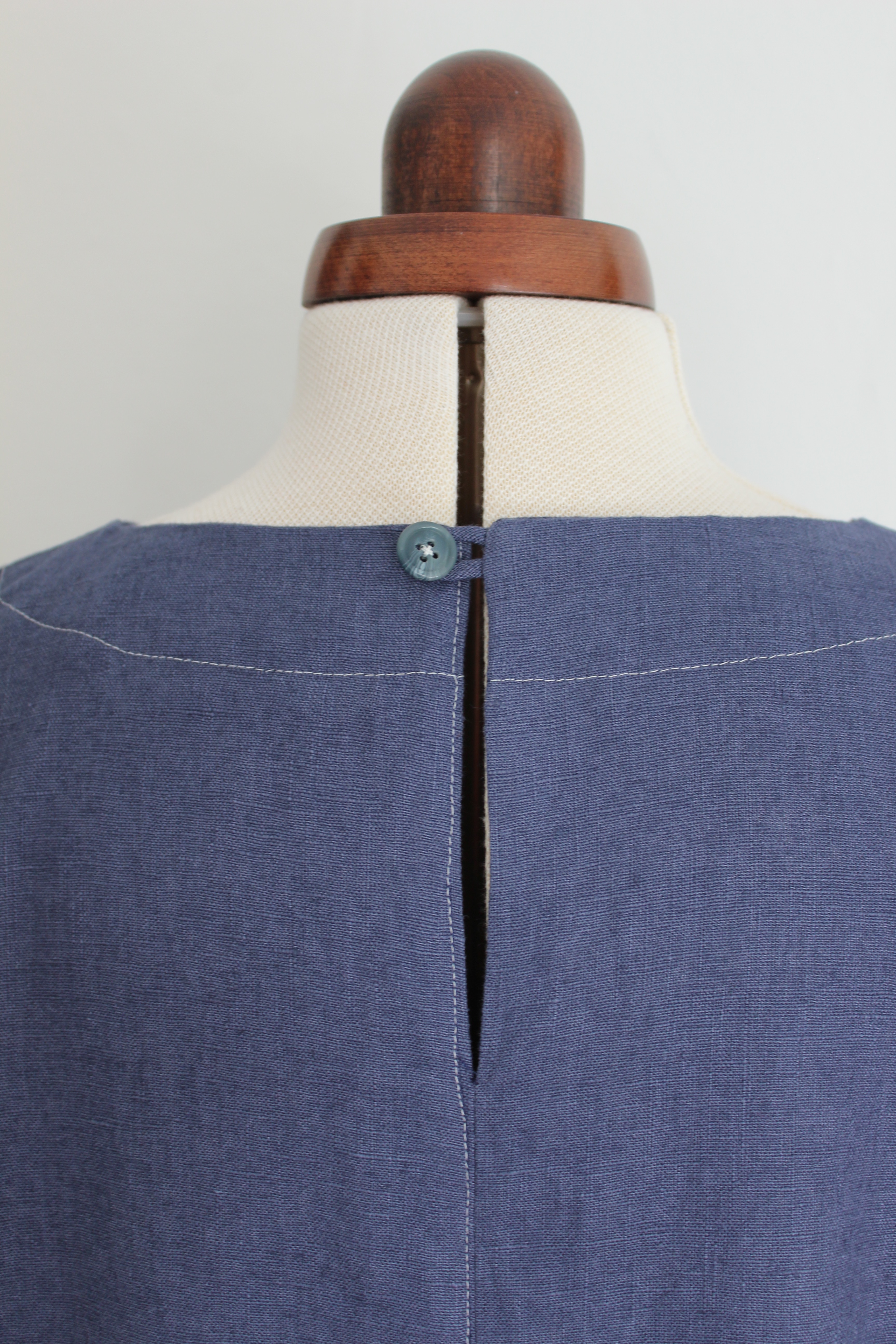
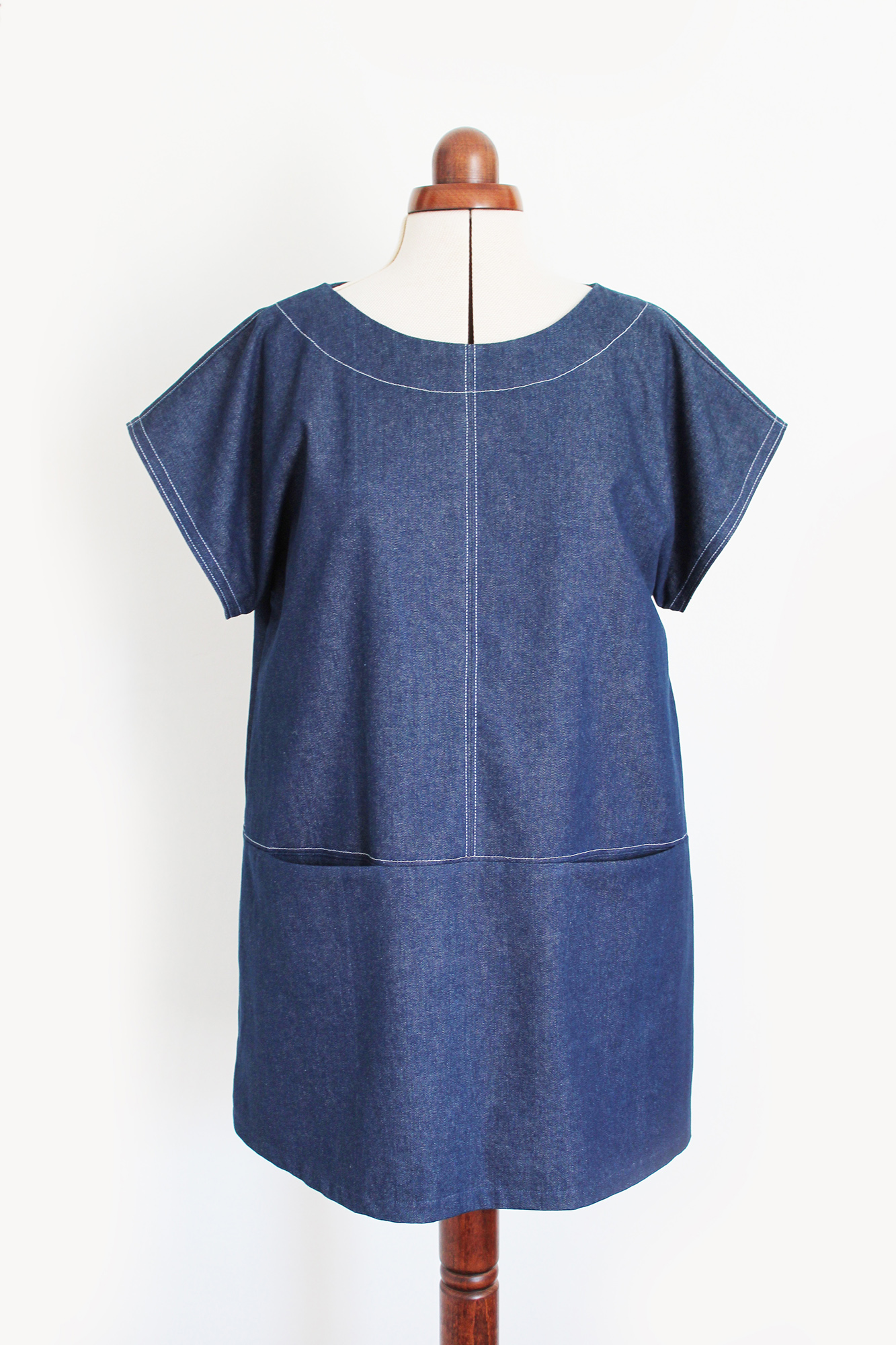 I made it 12cm shorter on the lower front and back section only. I didn’t attach the sleeves, just turned under a small 1cm hem and stitched a double row of topstitching.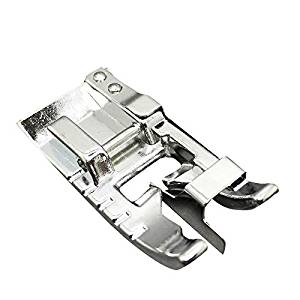
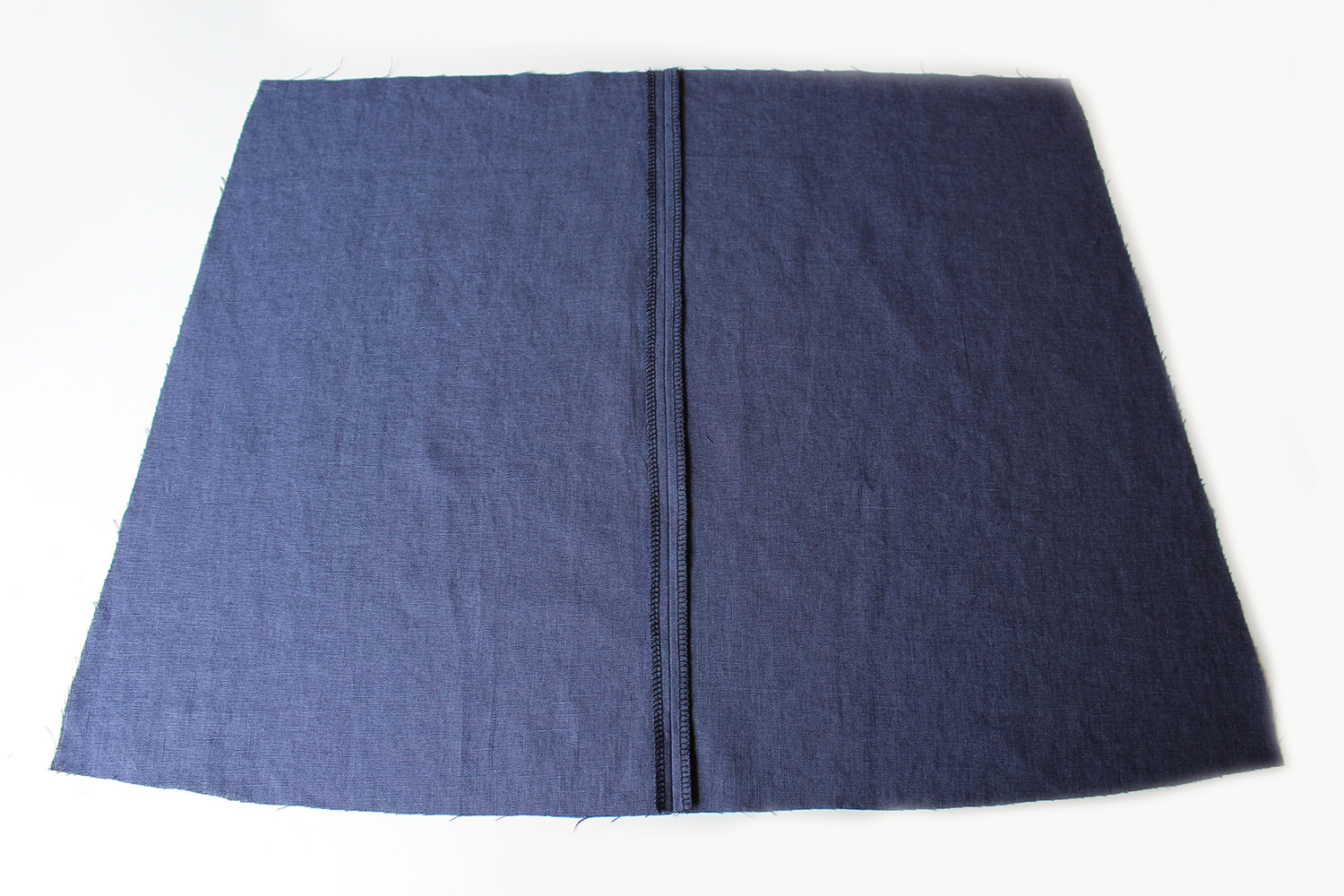 Then repeat with the upper front pieces and the lower back pieces.
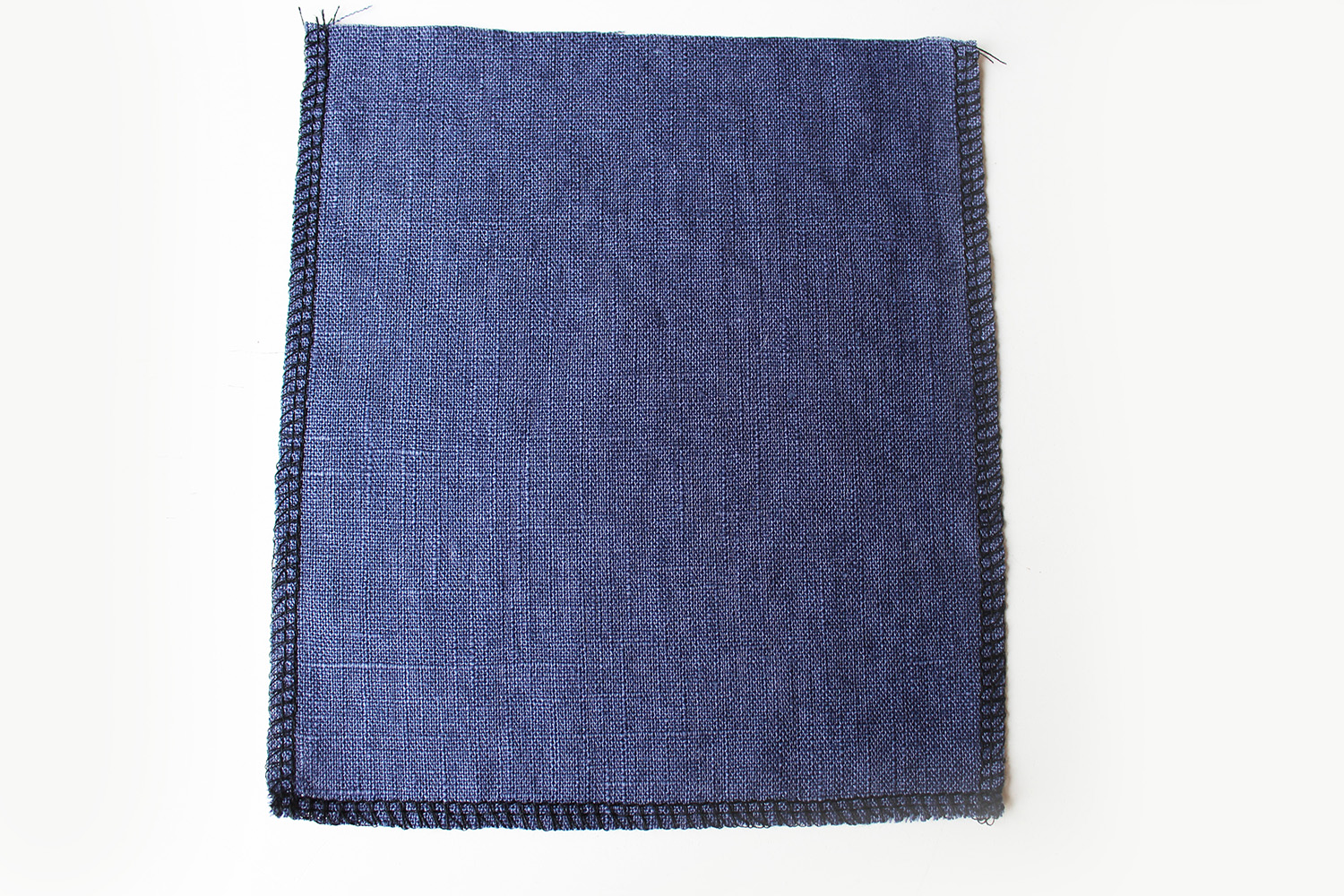 Finish the outer 3 sides of the pockets.
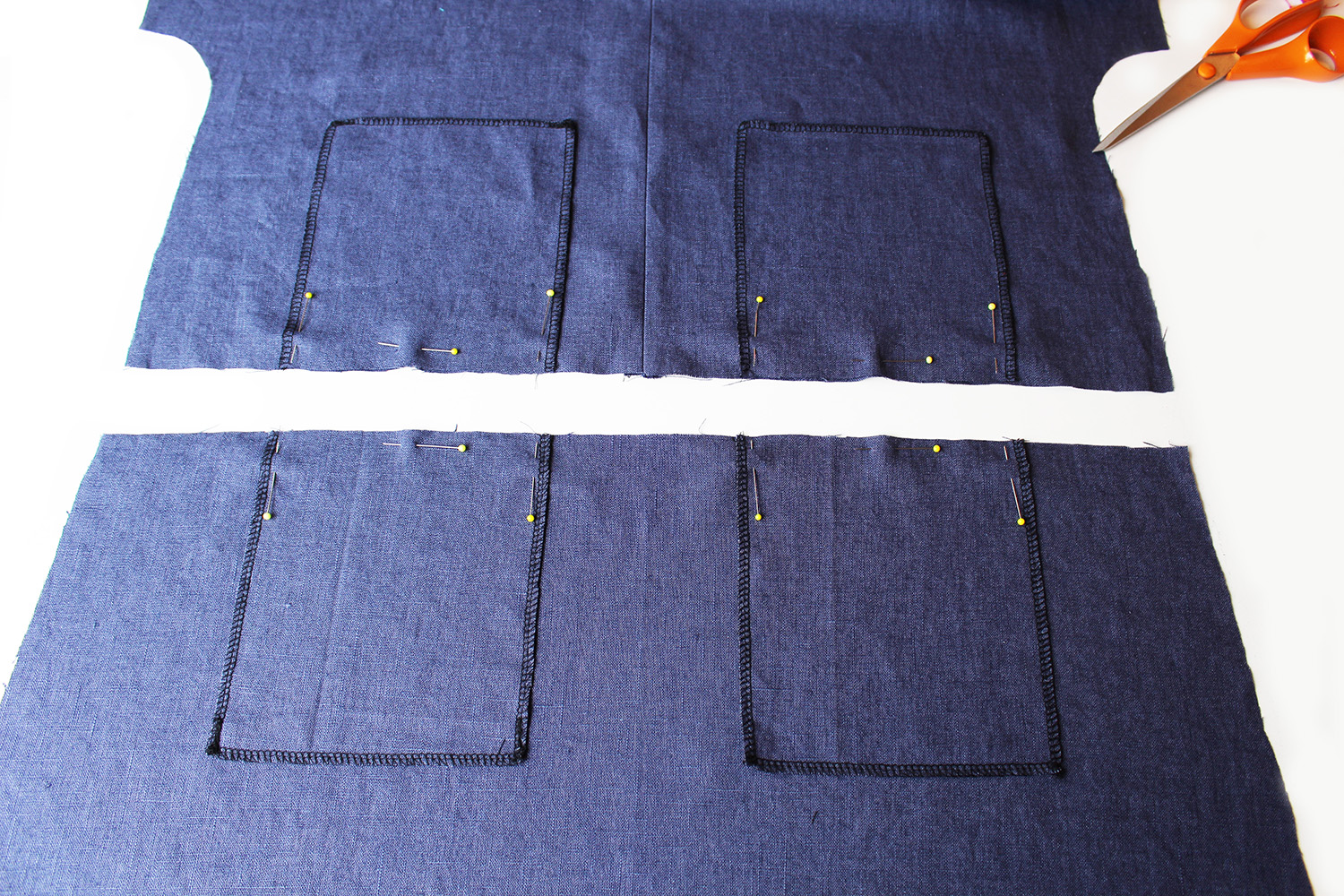 Pin the pockets to the upper front and lower front in position as shown on the template.
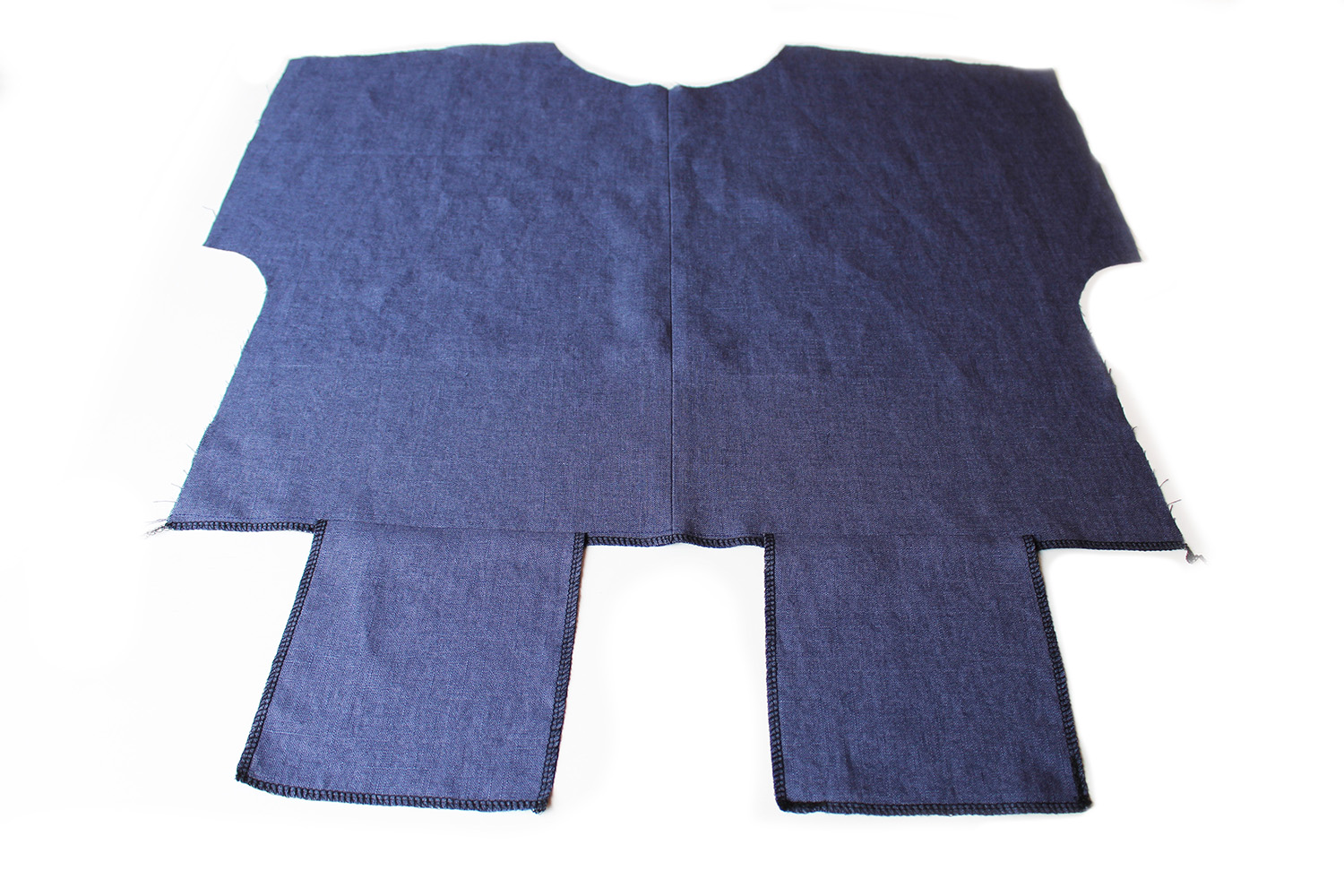 Press downwards on the upper front and upwards on the lower front. Topstitch along the top edge of the 4 pockets in non contrast thread.
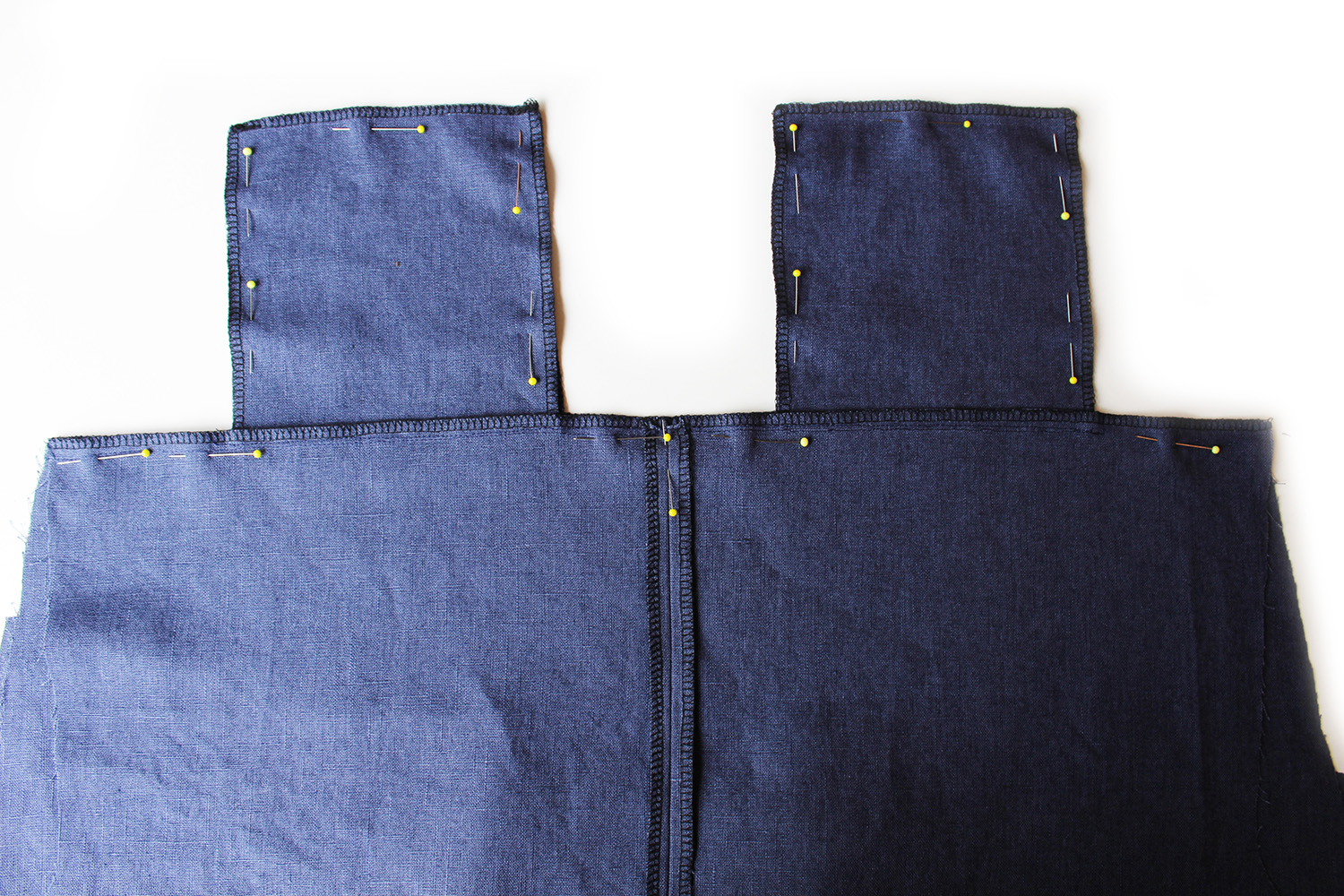 Pin the upper front to the lower front with the RST (right sides together). Sew across all around the pockets. Press.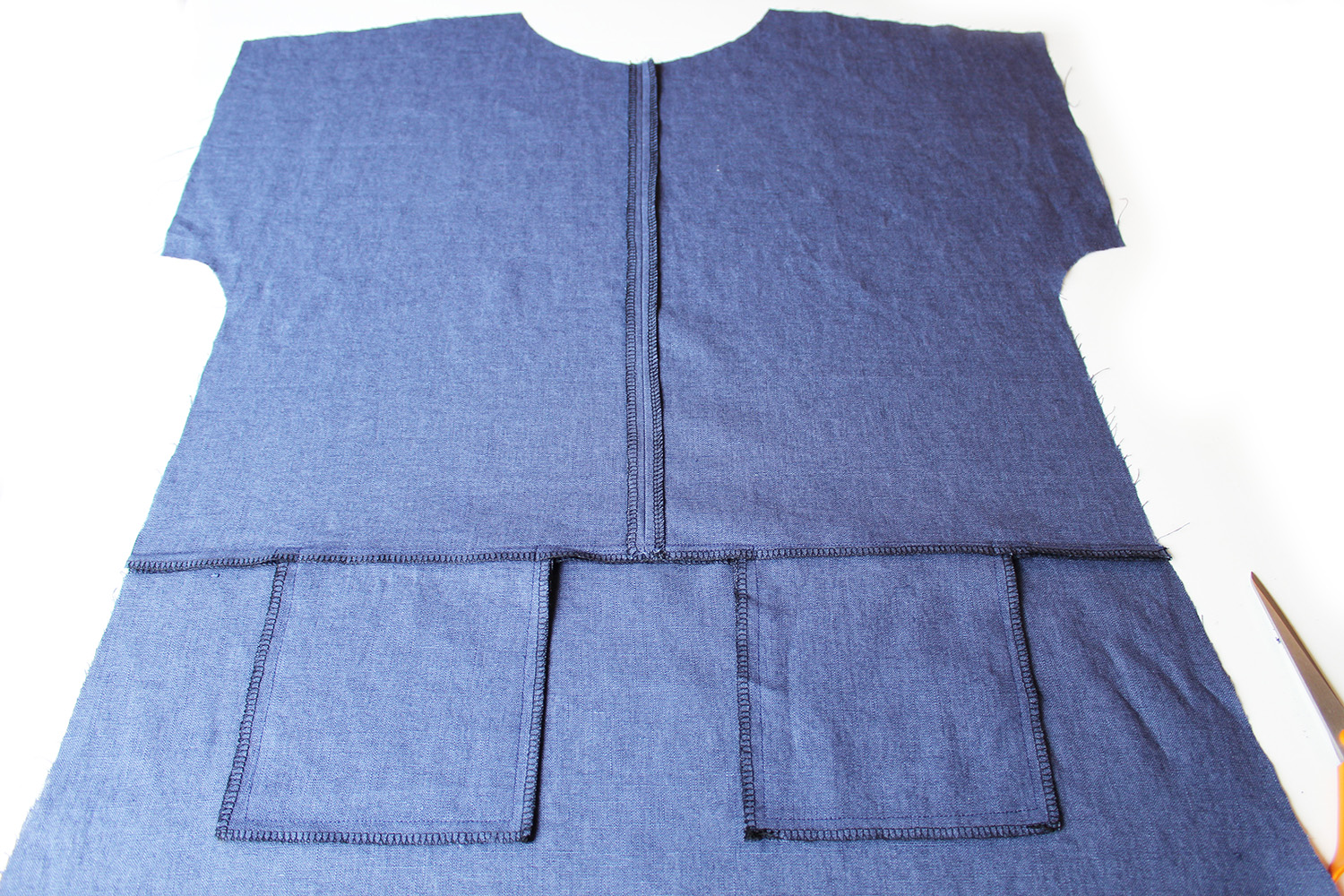
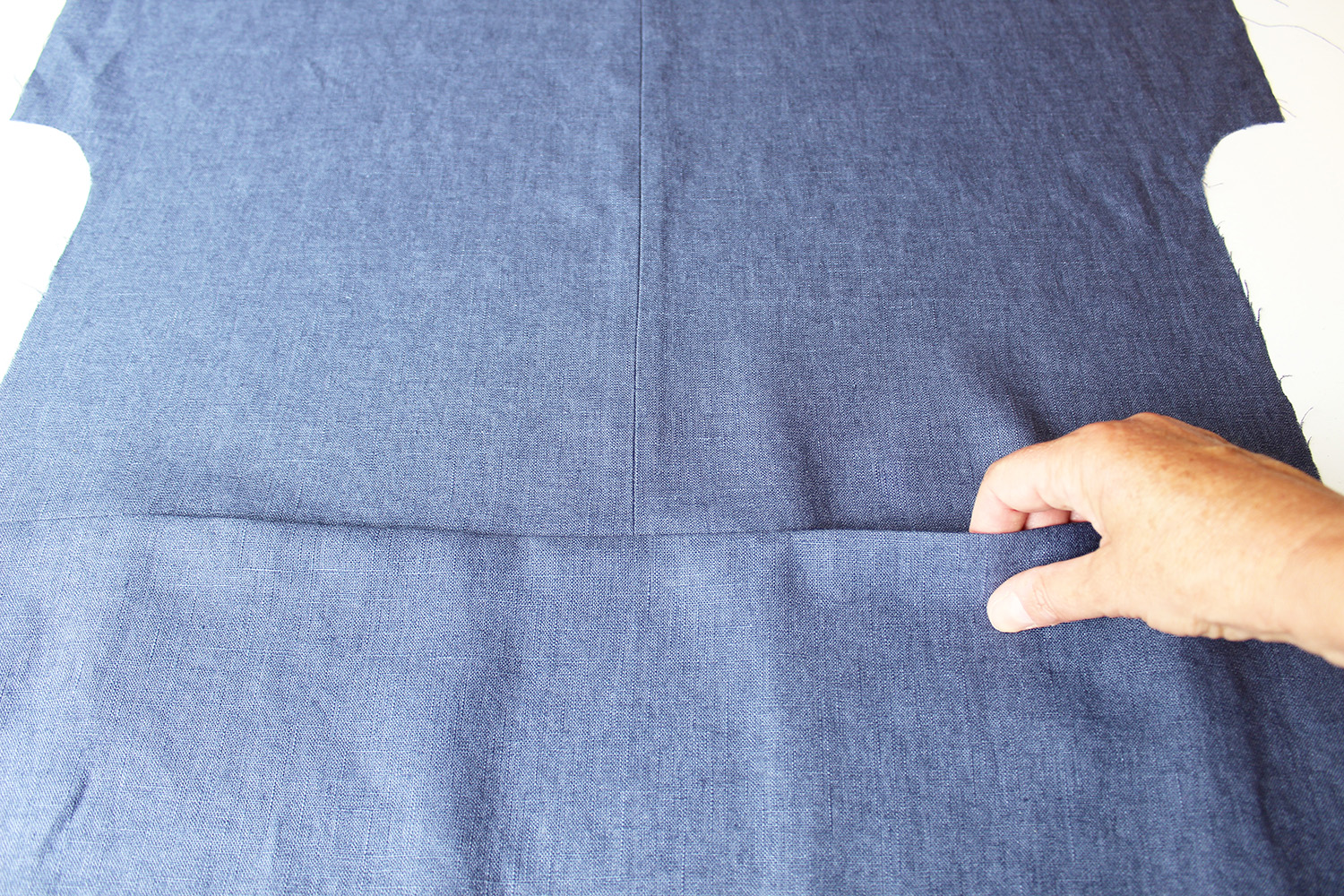 Join the front to back at the shoulder seams. Press the seam allowance towards the back. Topstitch.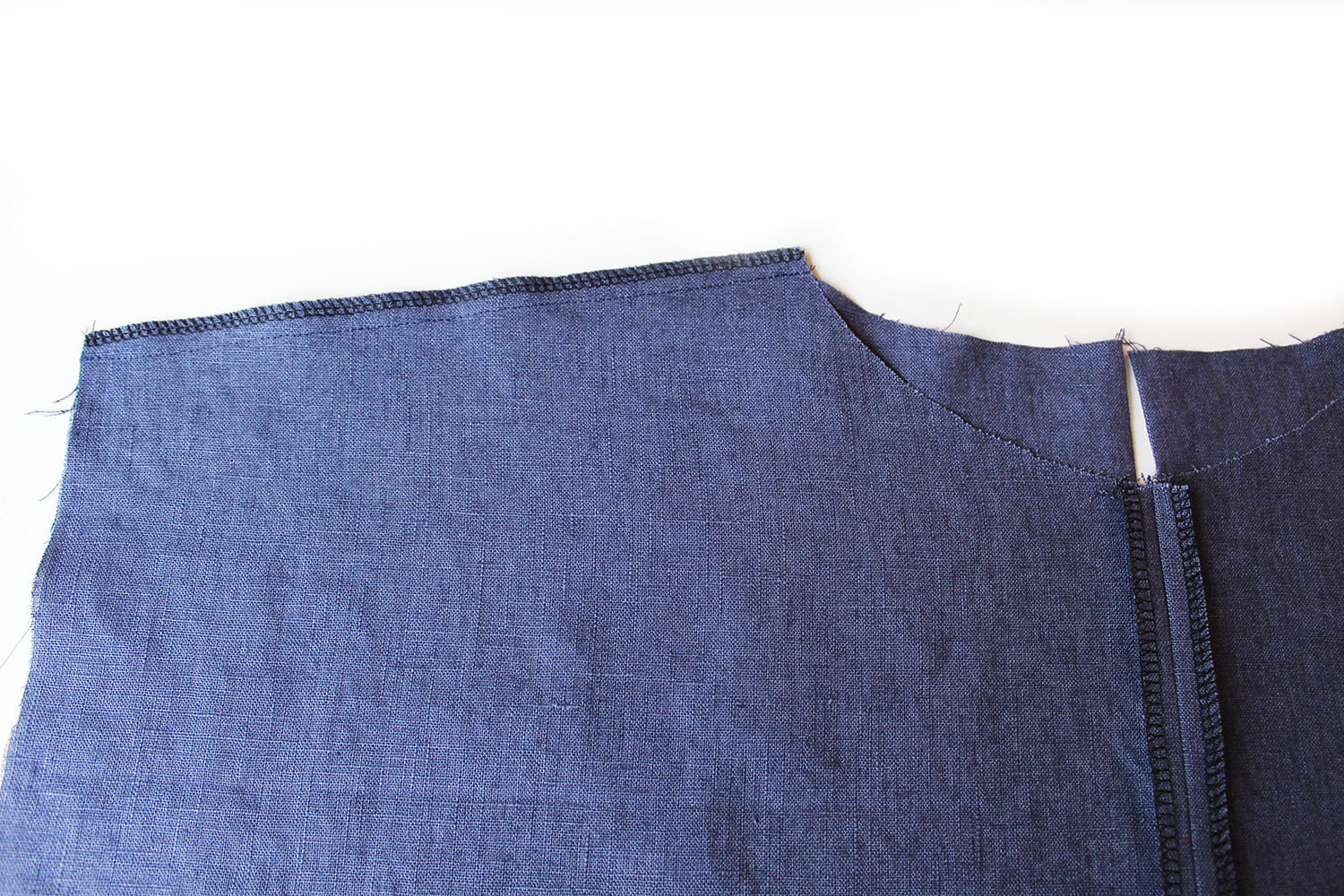
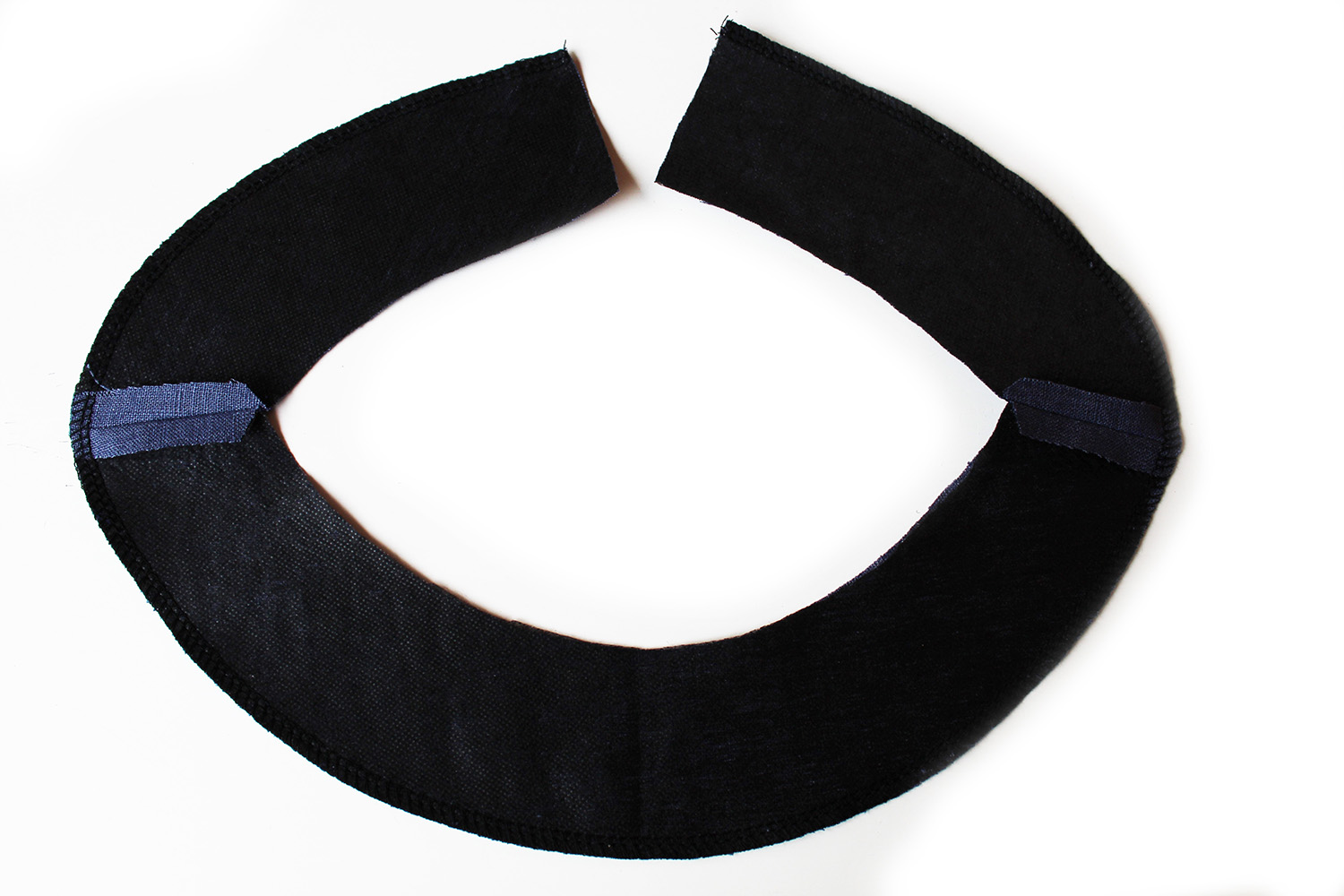 Interface the reverse side of the neck facing pieces. Join together at the short sides. Press the seam allowances open. Finish the outer raw edge all around.
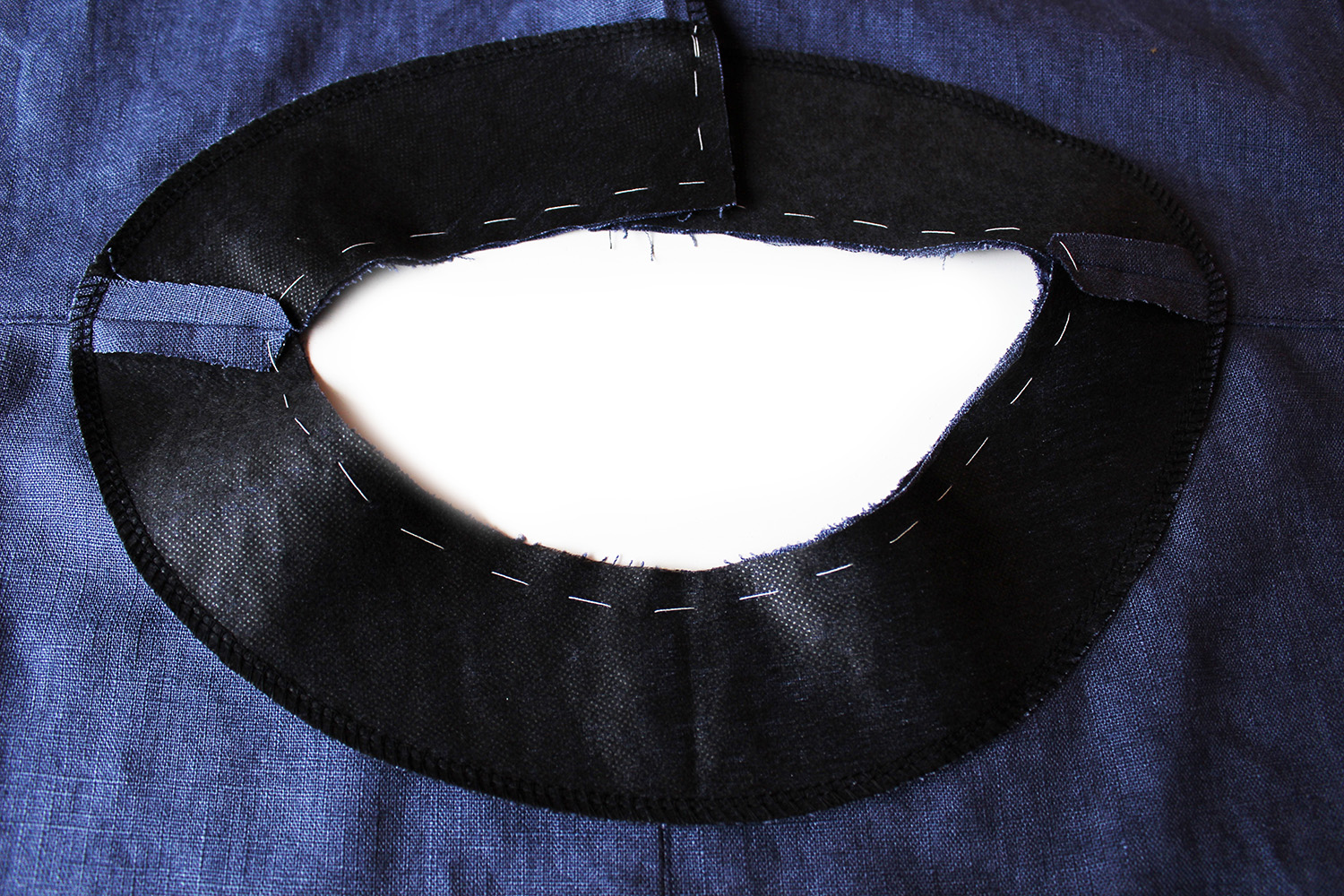 Pin to the neck edge. Hand tack stitch all around .
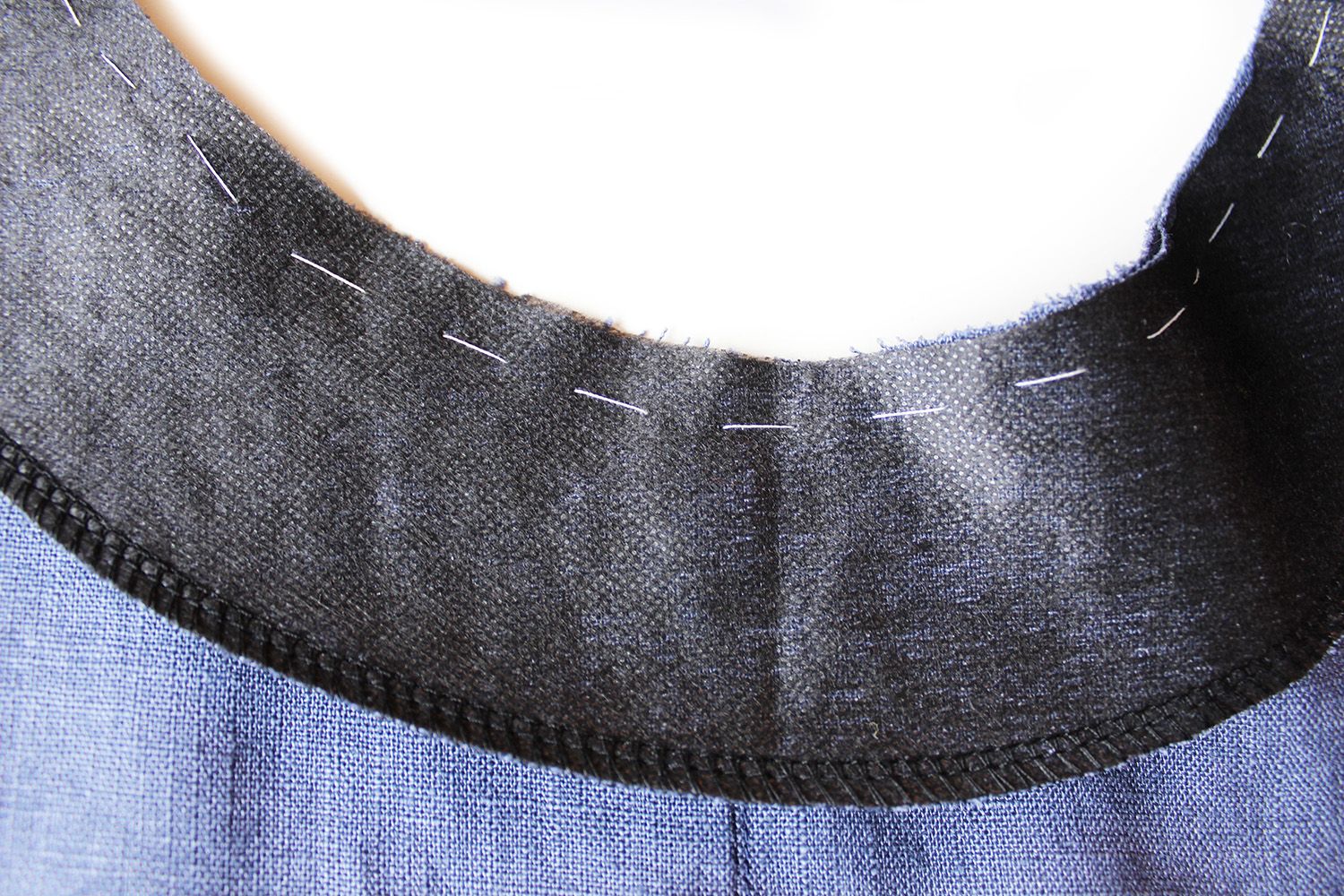 Snip! Clip the curved seam allowances to allow it to sit flat when its turned to the right side. Don’t forget to trim across the corners too.
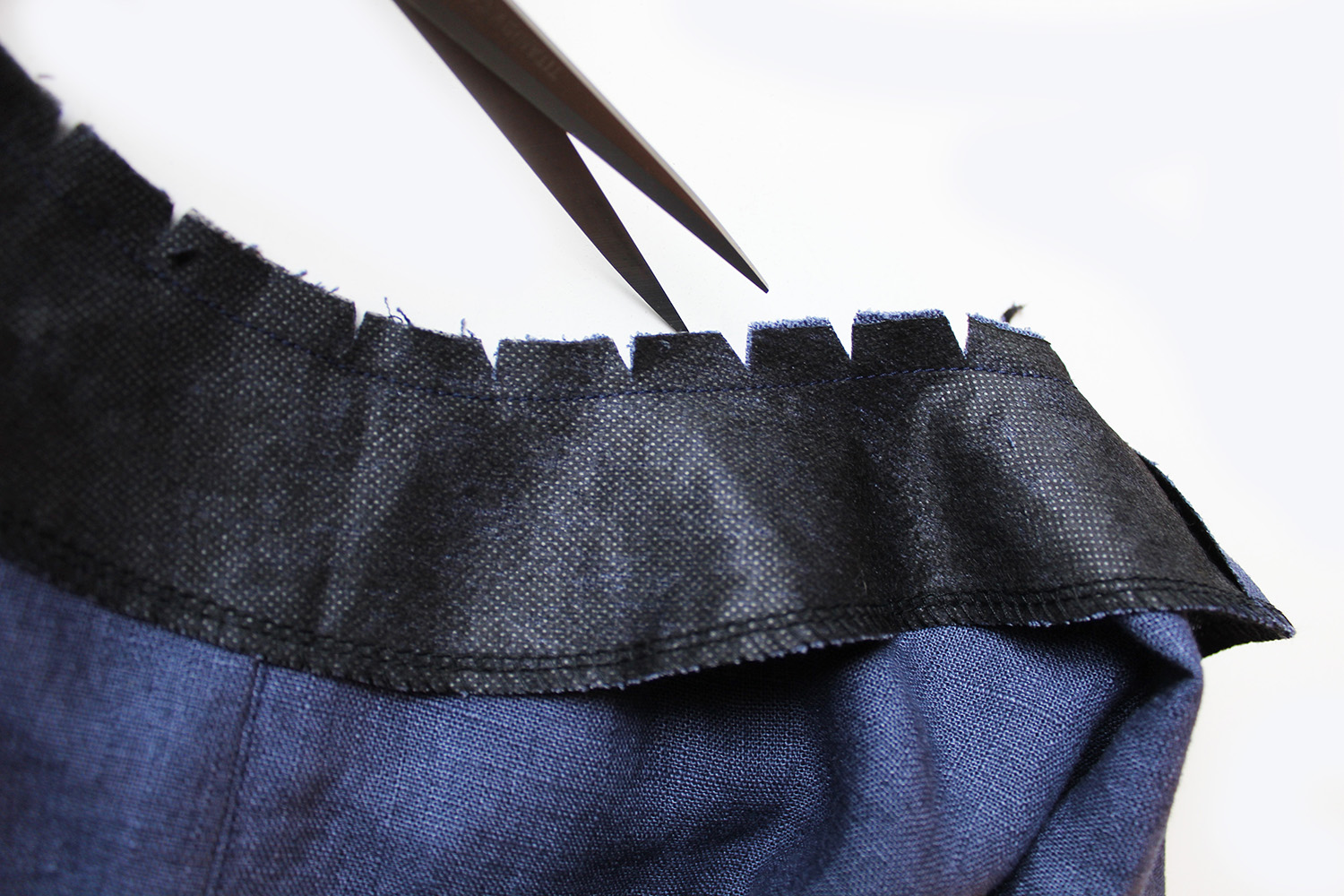 Press to the reverse side. Align the seam line to the fold all around.
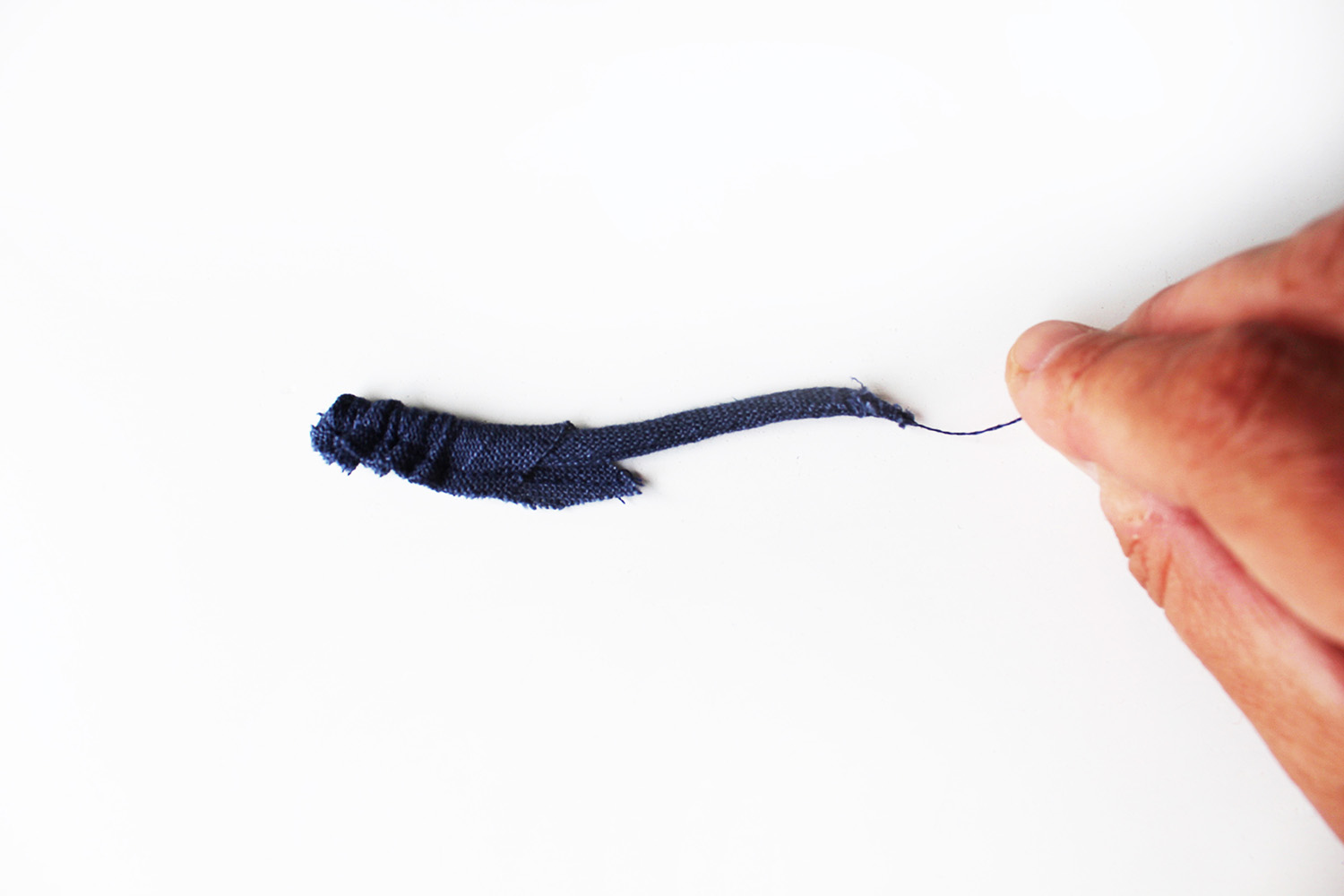 Fold the loop piece in half lengthways, press. Stitch down one long side at the raw edges leaving a long thread end.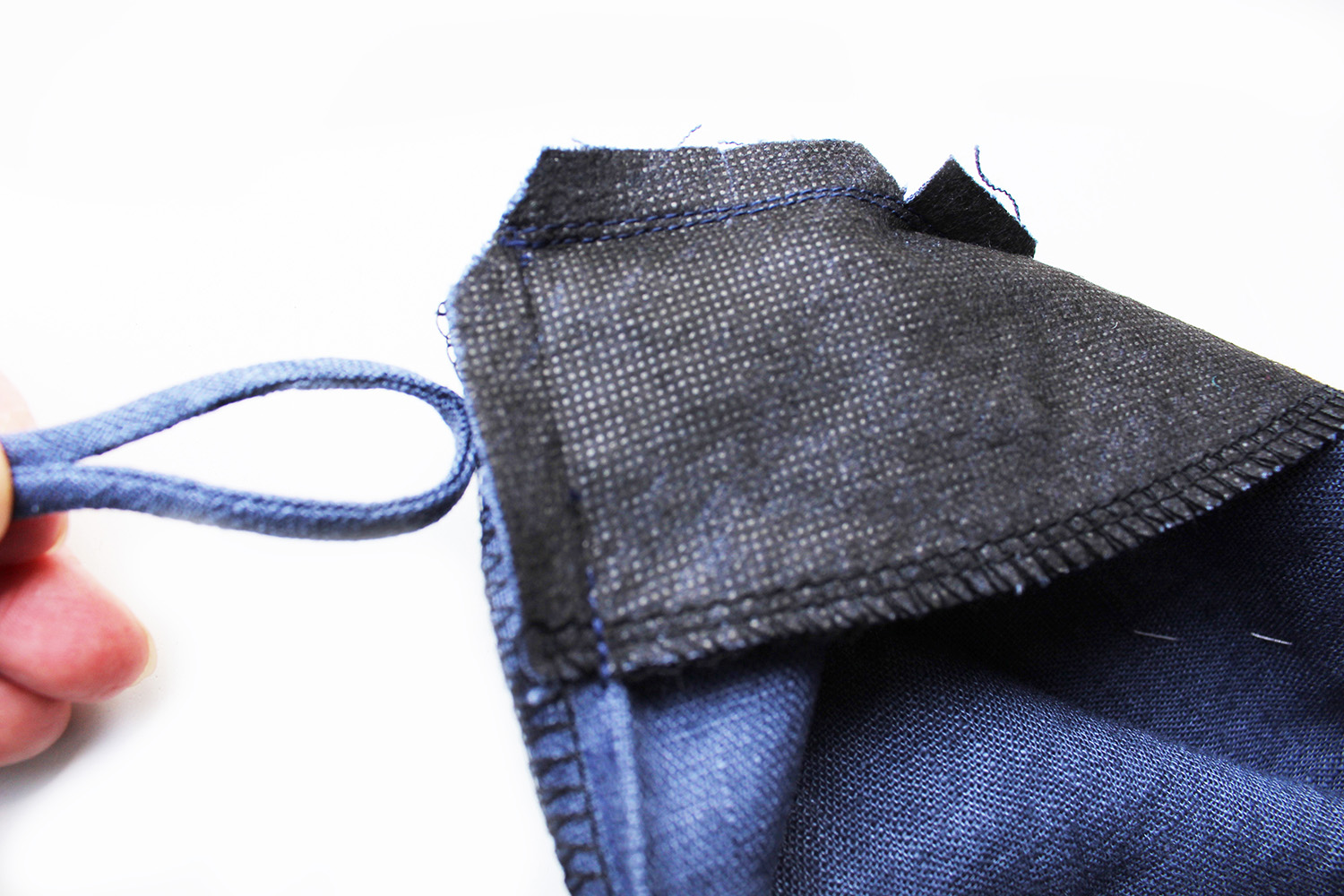

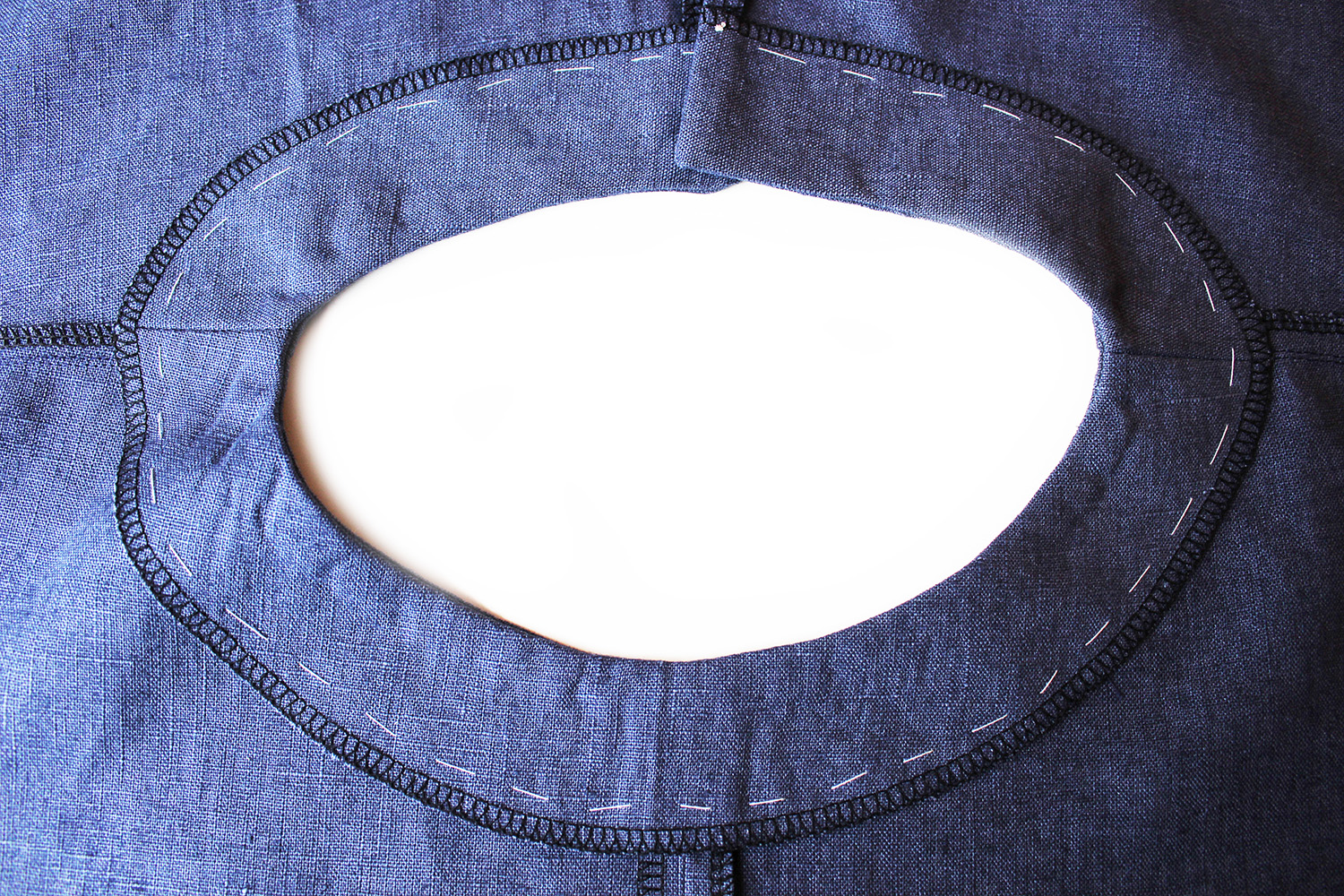 Hand tack stitch the facing all around to secure it.
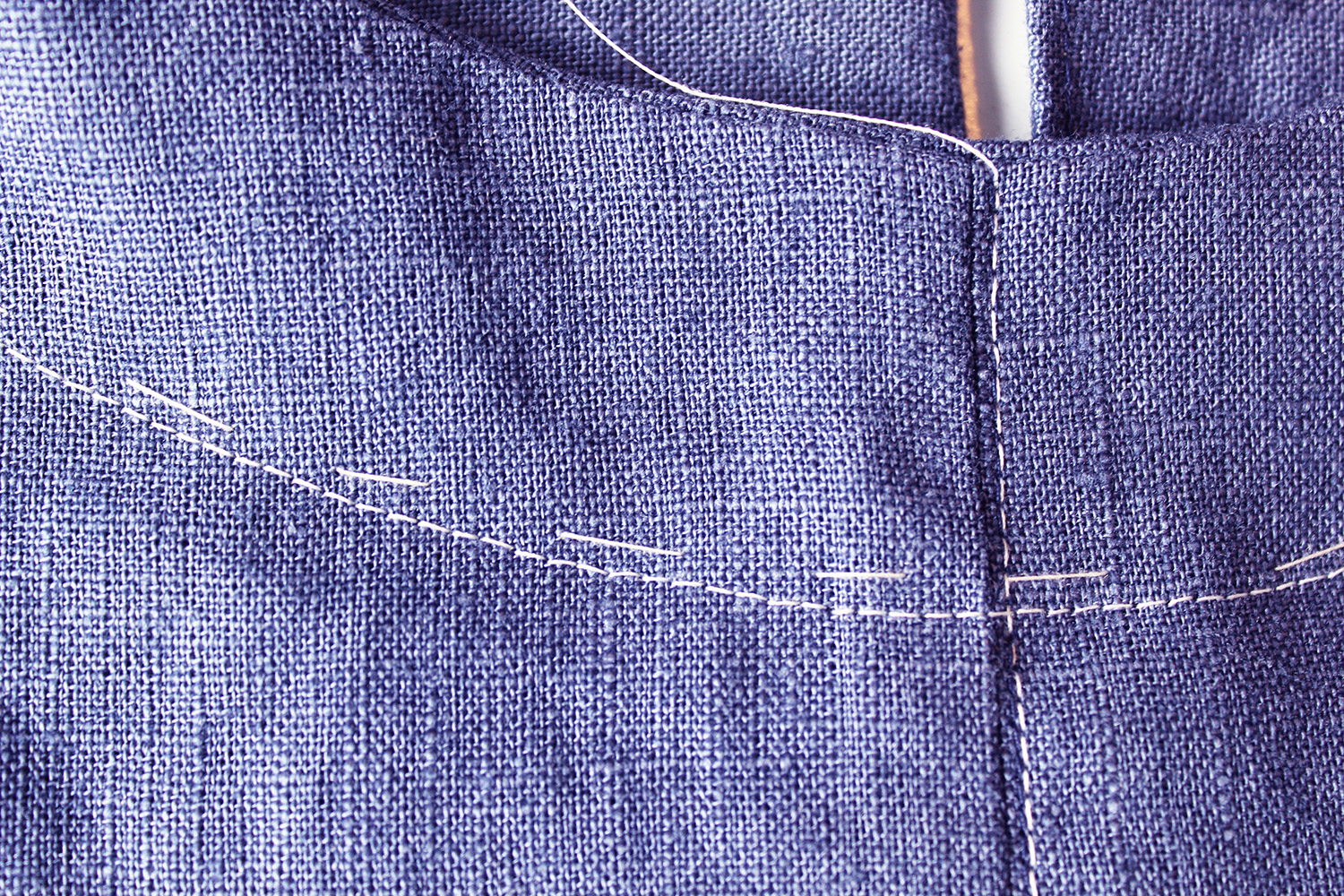 Machine stitch 4cm from the neck edge all around.
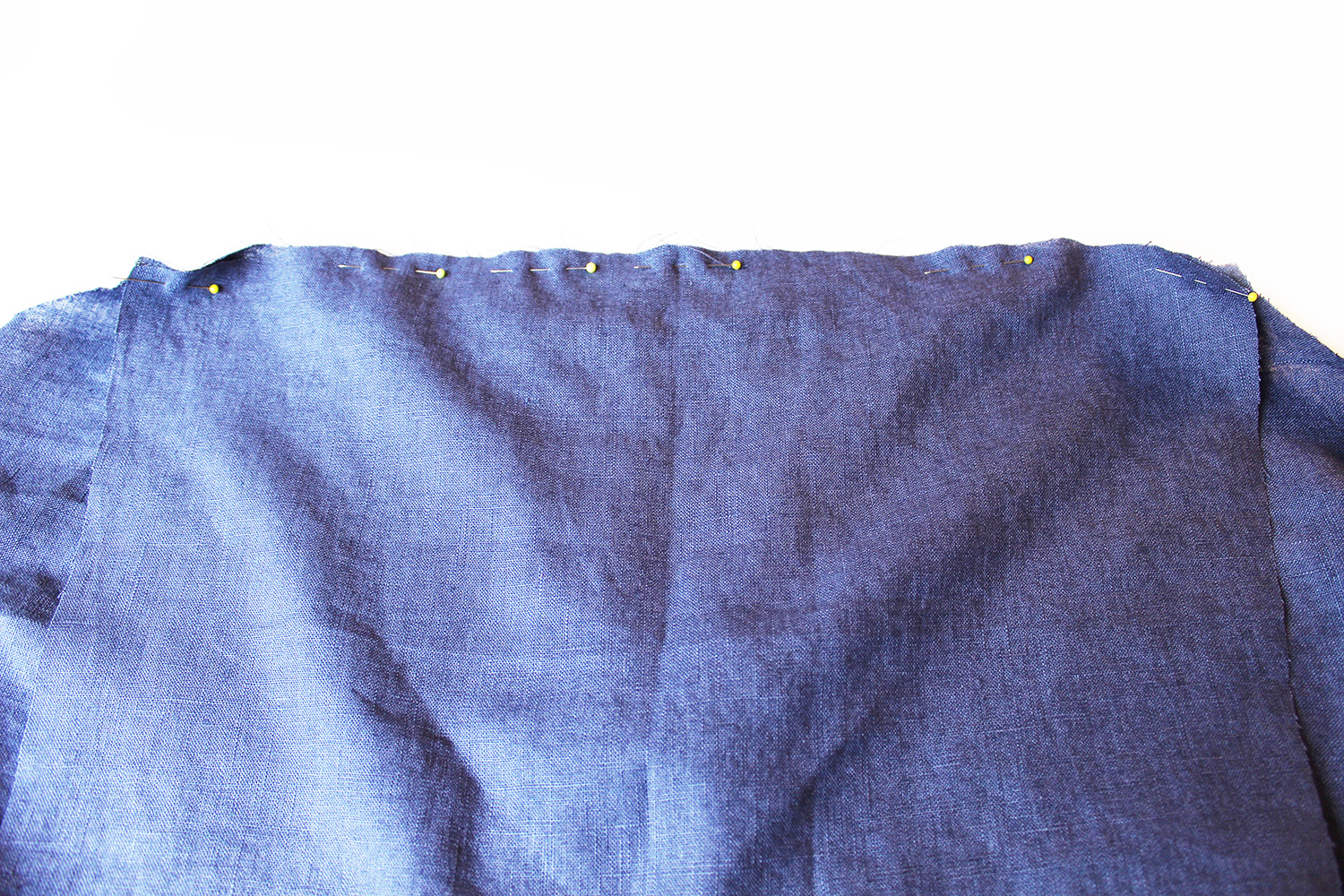 Pin the sleeve to the body. Sew. Finish the raw edge. Press away from the body. Topstitch. Easy peasy!
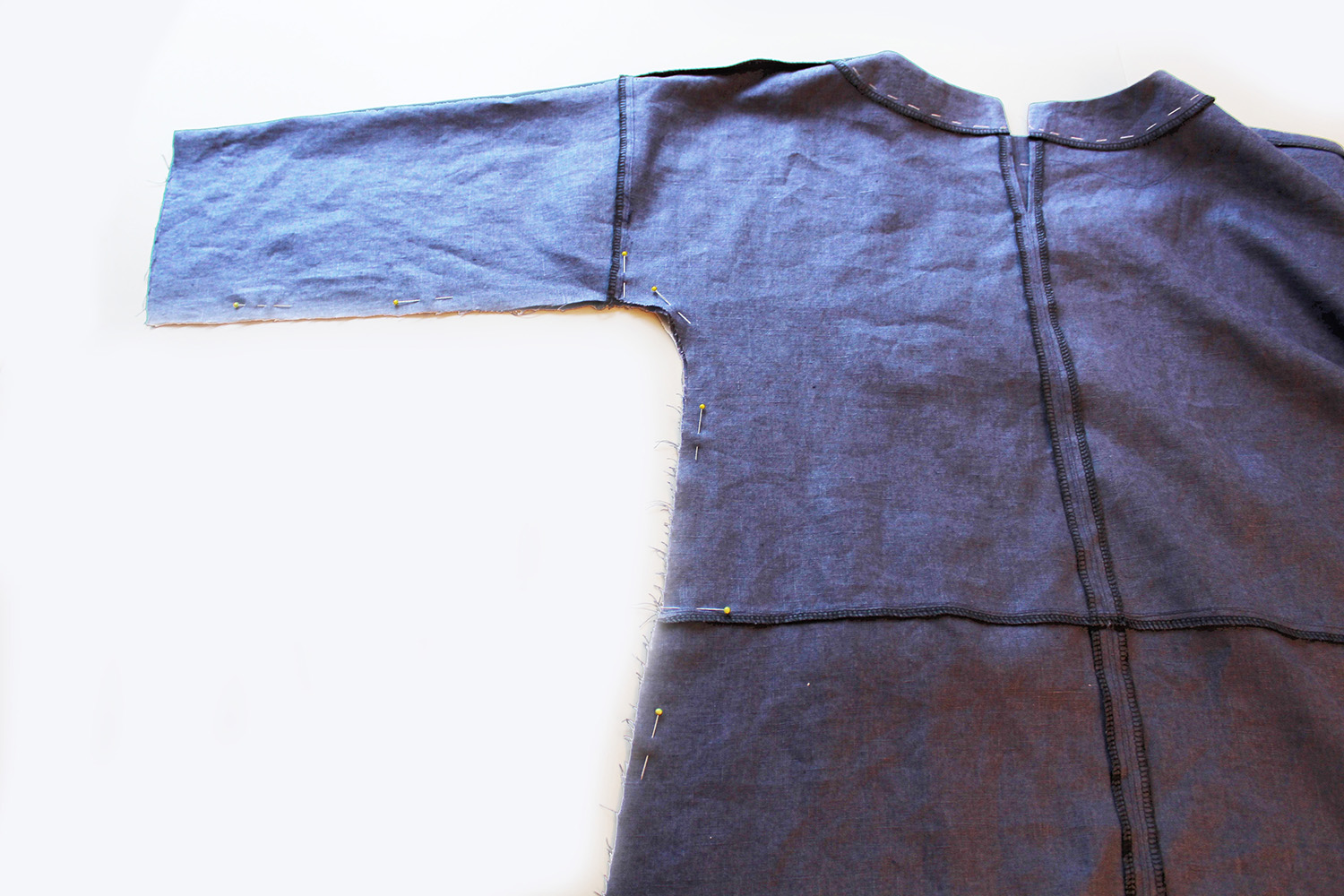 Pin then sew the front to back at the side edges with the RST.
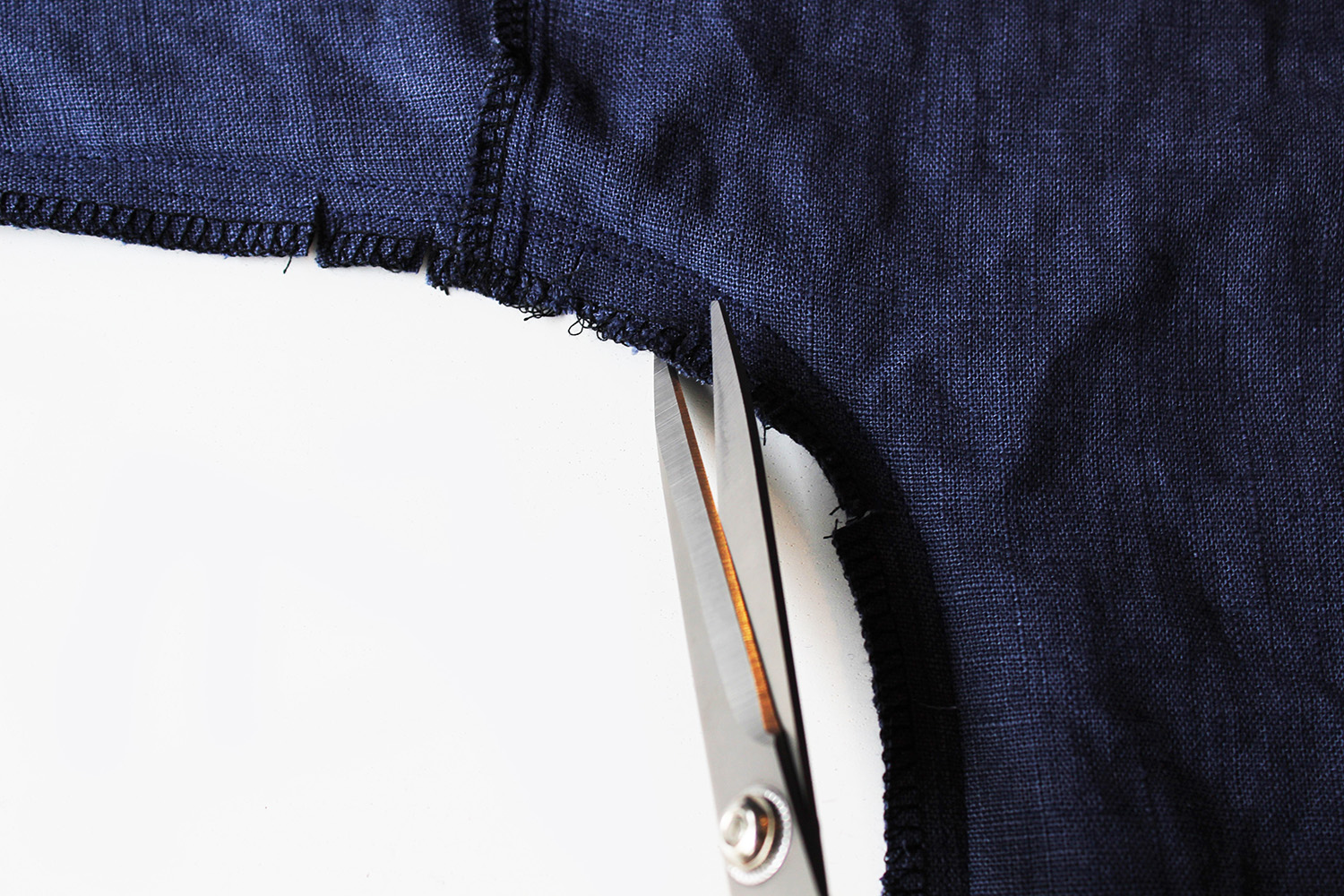 Clip the curved seam allowances at the underarm section.
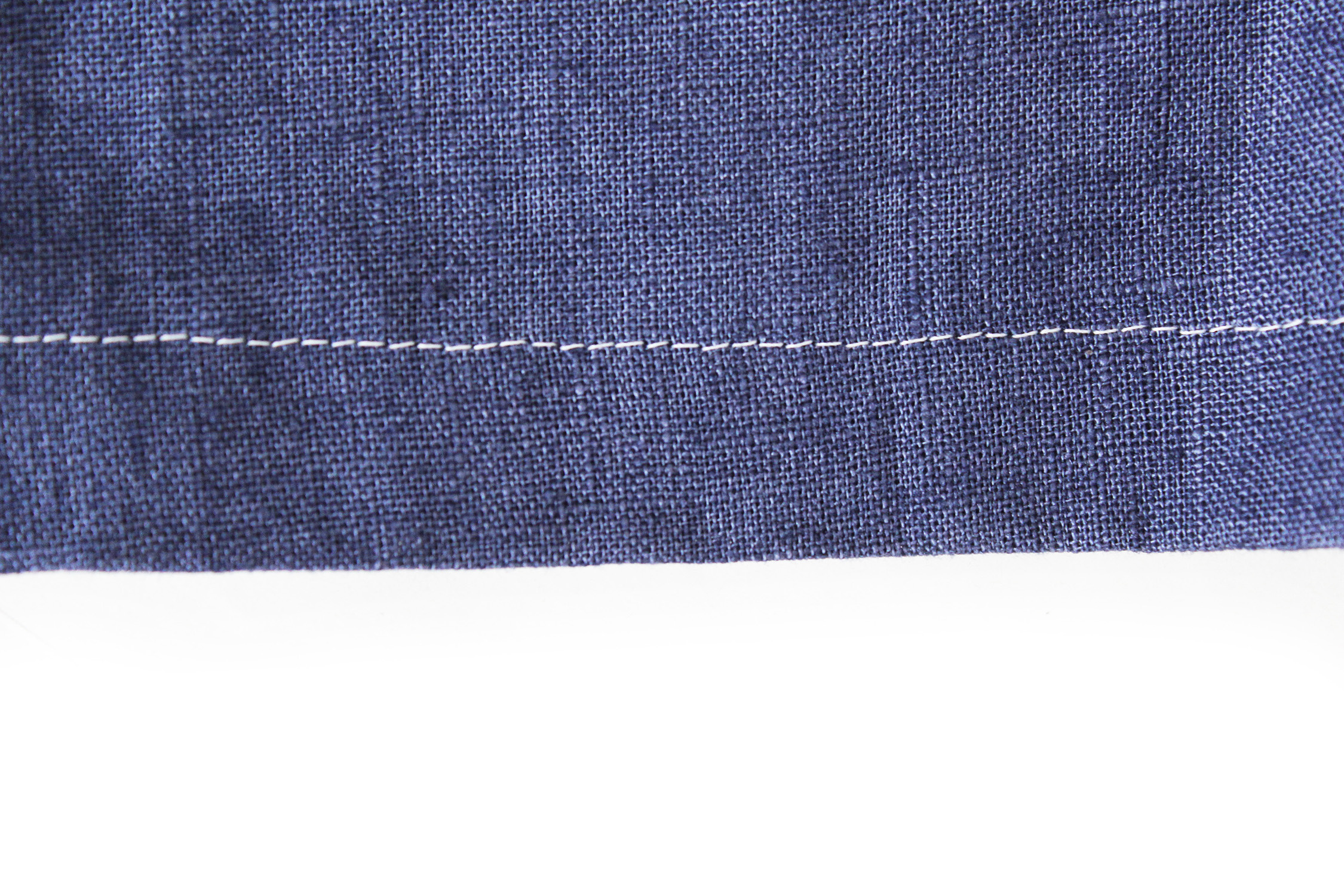 Hem the sleeve edge with a contrast thread. Hem the lower edge with the background colour thread.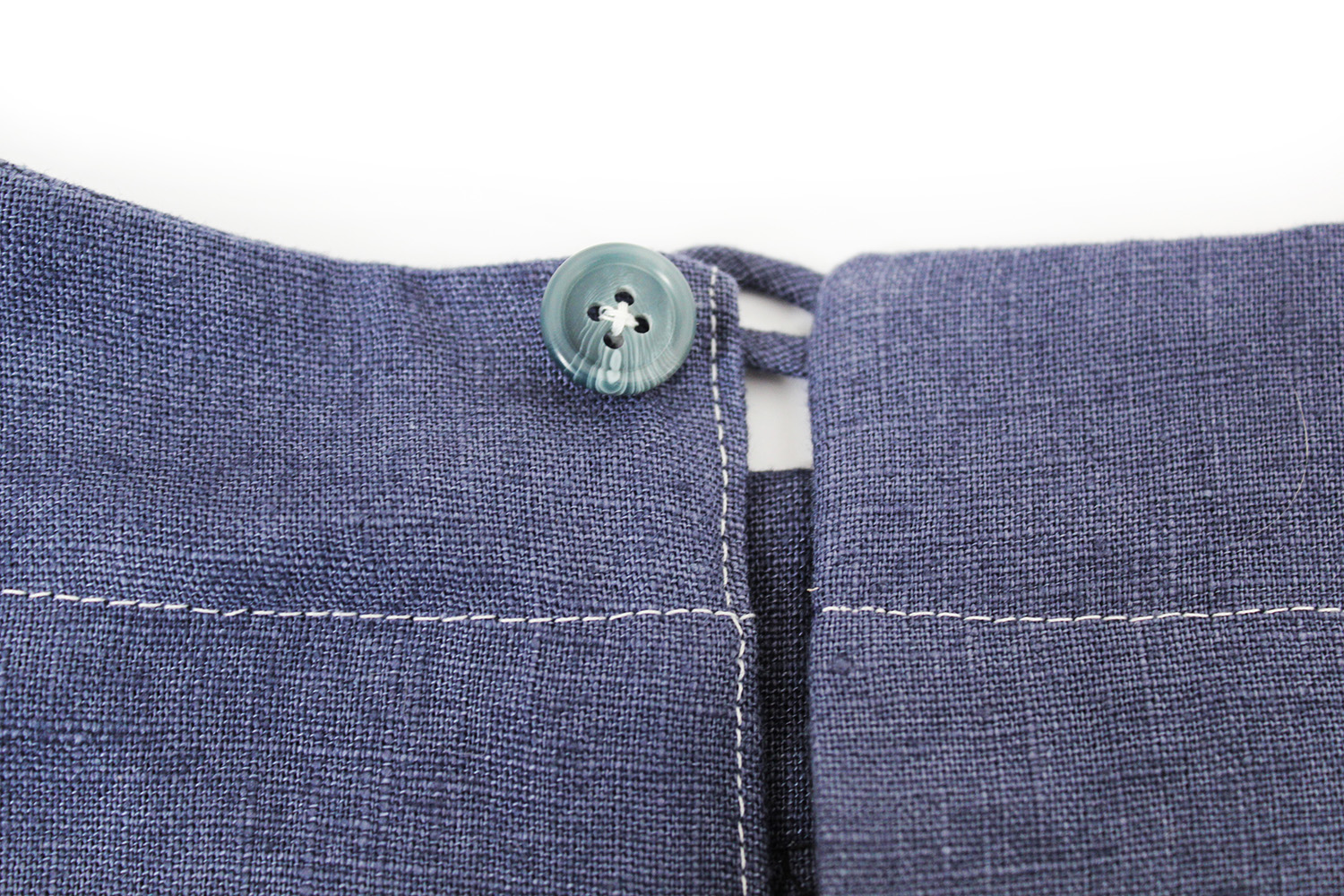
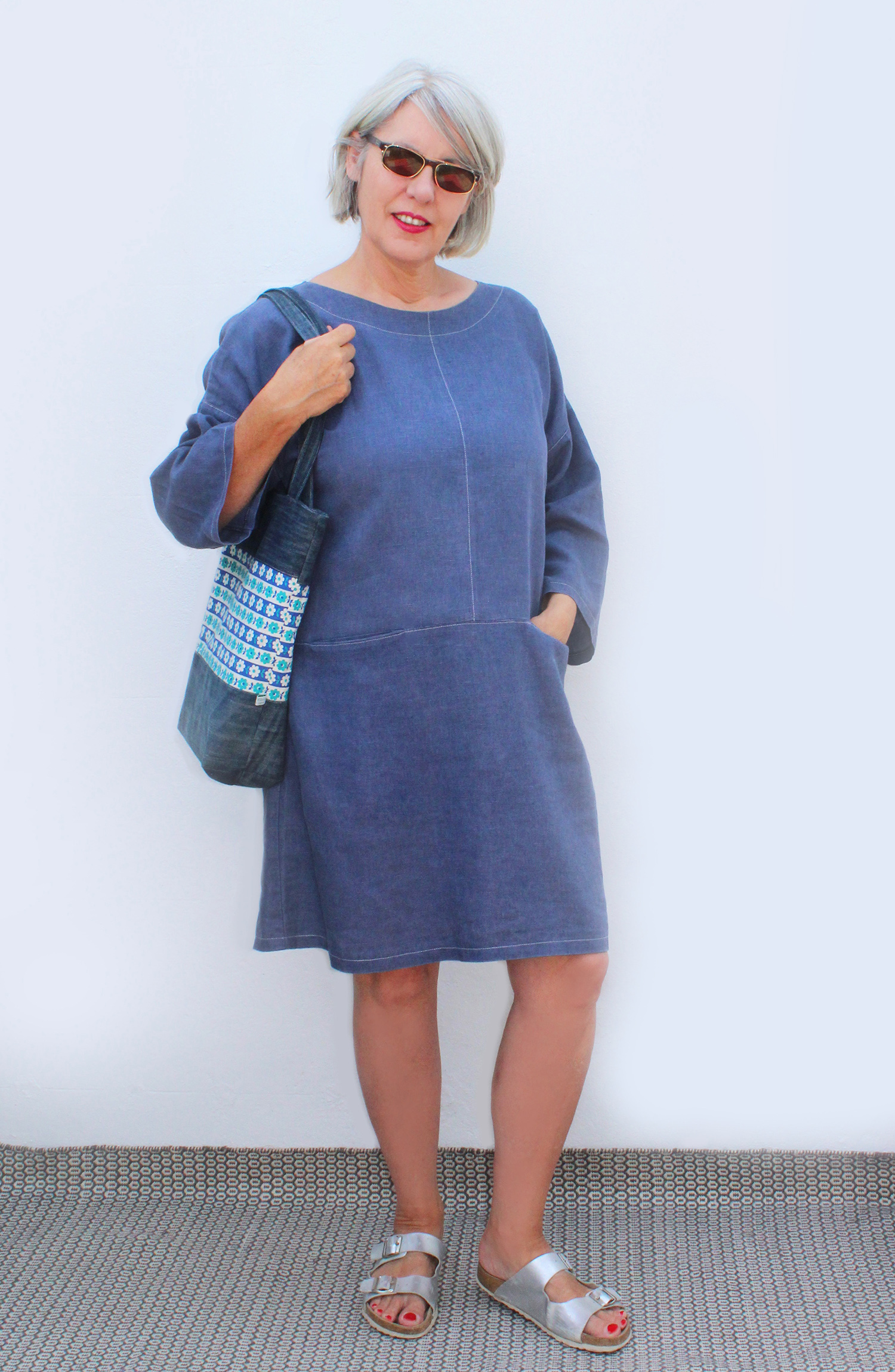
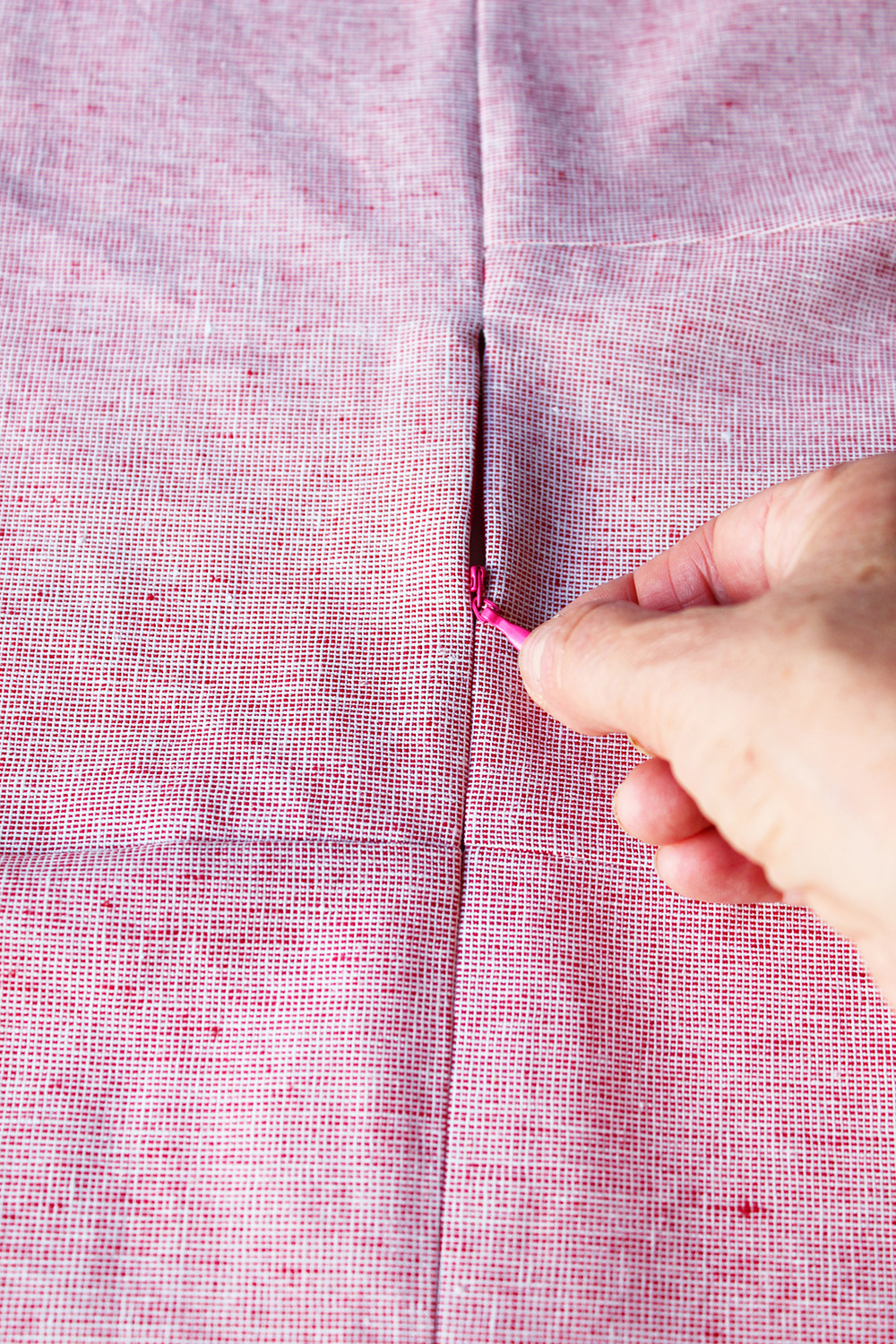 Invisible zips are nice to look at, they give a professional finish to your garment and with a bit of practise are actually not difficult to insert when you know how.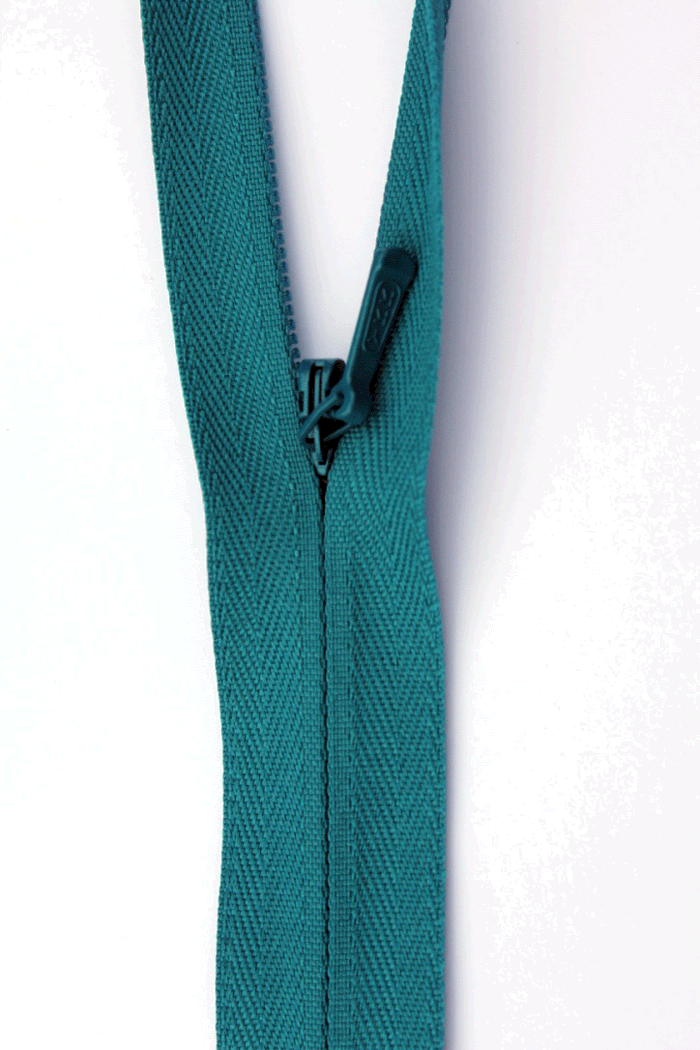
 BACK
BACK

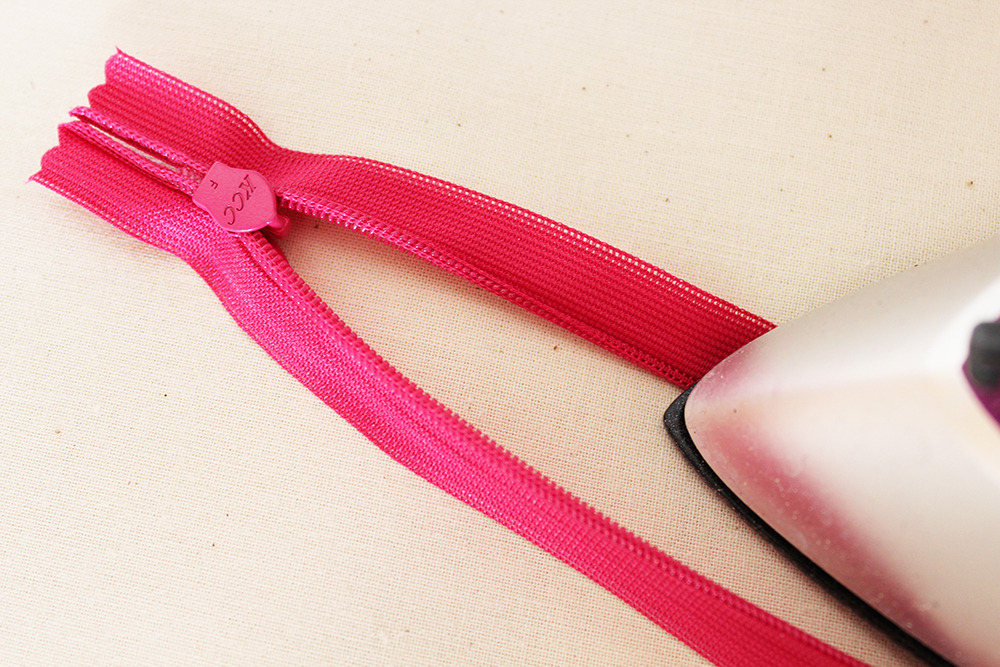 Before you start, take a look at the back of your invisible zipper. See how the coils of the zipper curl toward the back? This is what makes the zipper less visible than a normal zipper. You will need to uncurl those coils by gently ironing the zipper flat first with the tip of a warm iron. This lets you stitch much closer to the coils.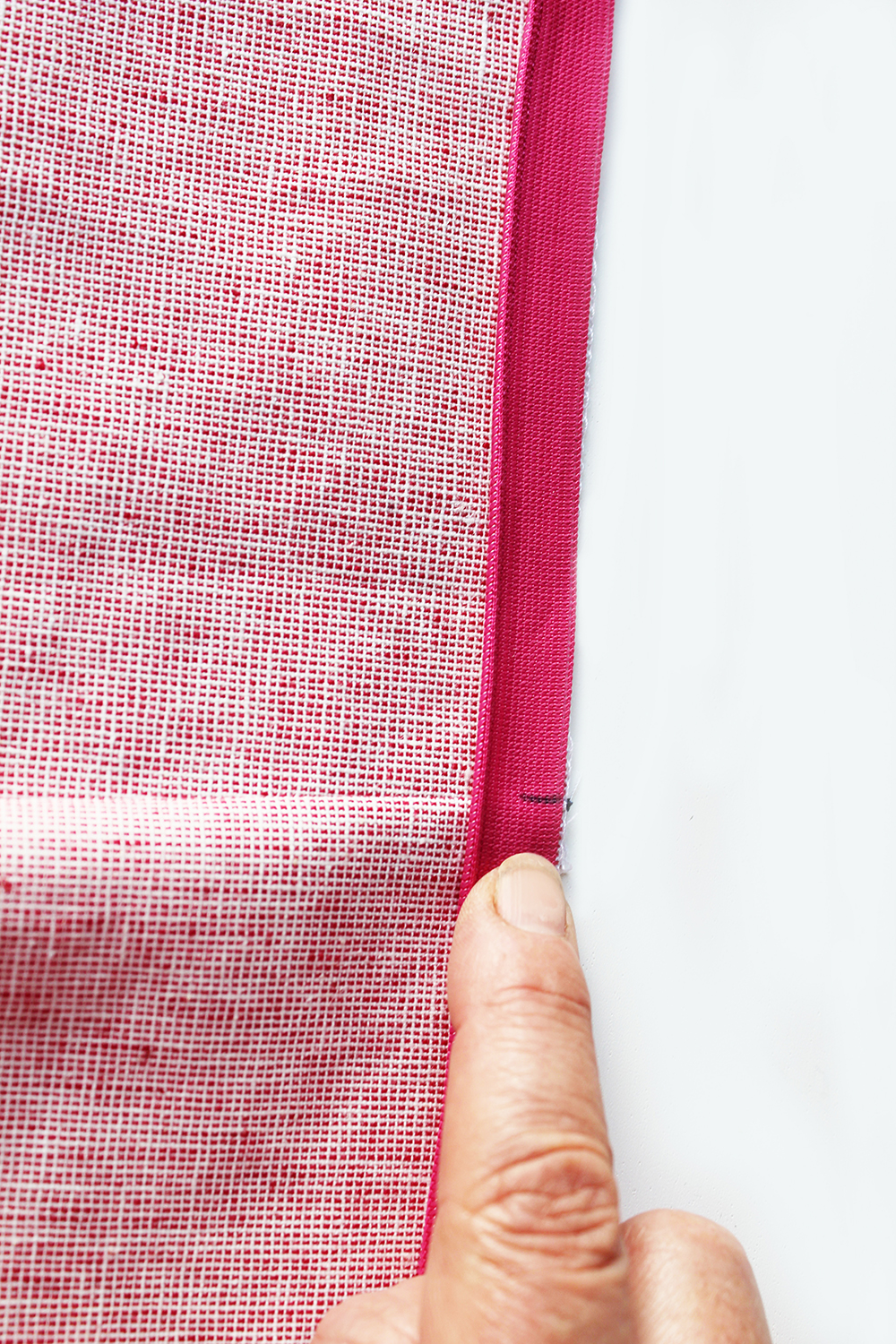
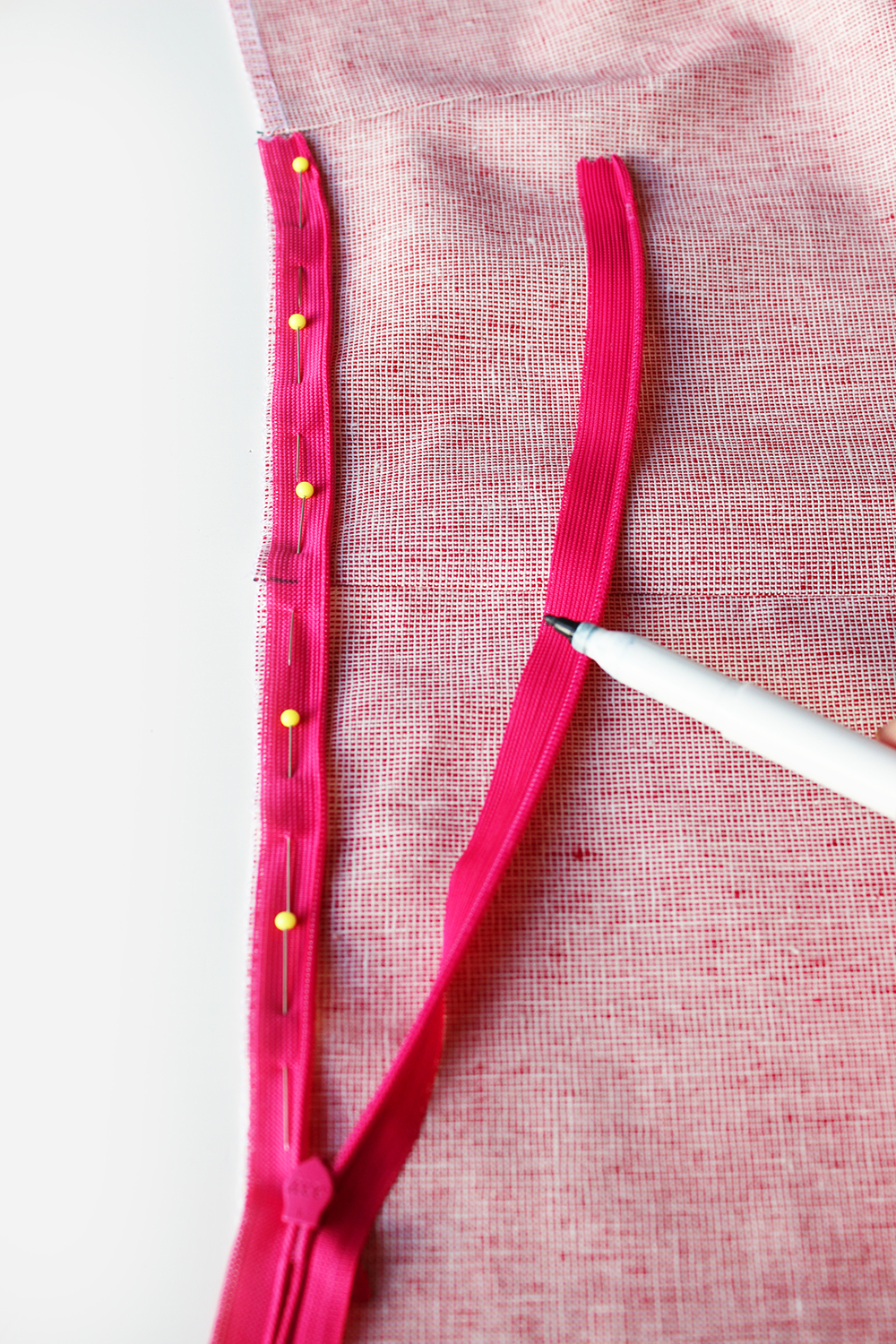 Lay your garment right side up, facing you.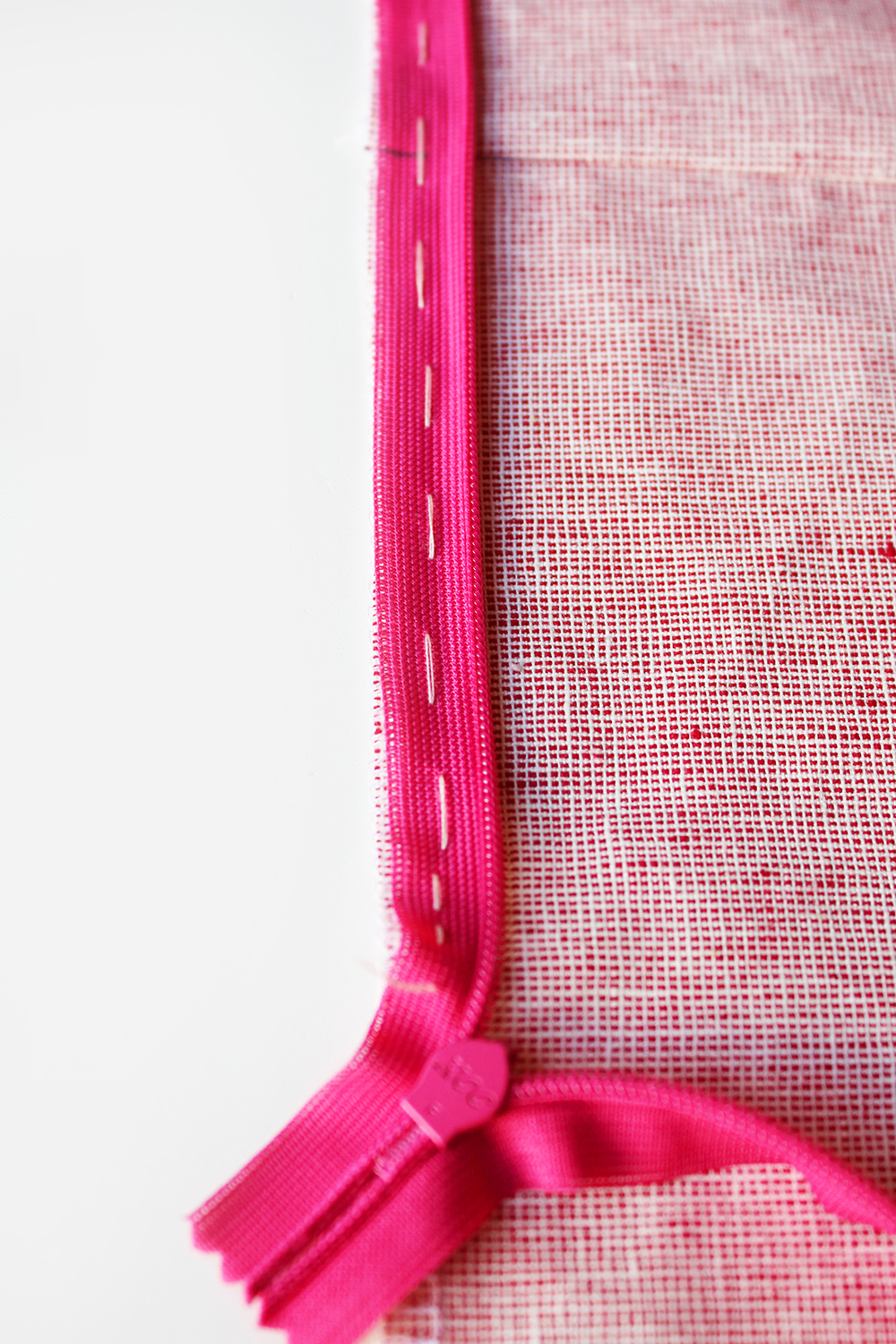
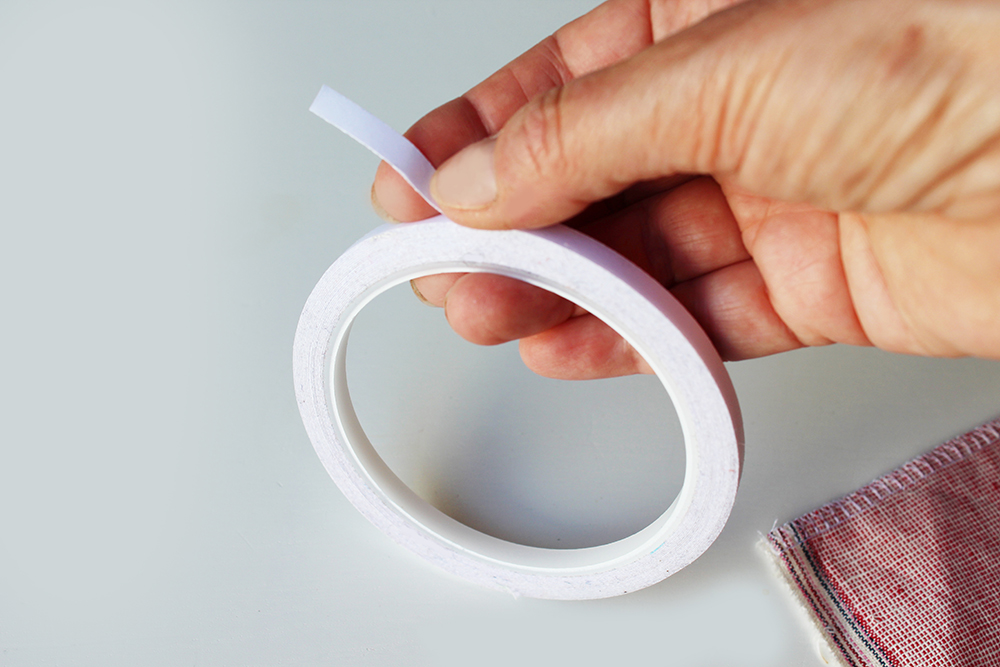
 Stick a piece either side of the back of the zip. Place in position on the garment with the right sides of the zip facing the right side of the dress.
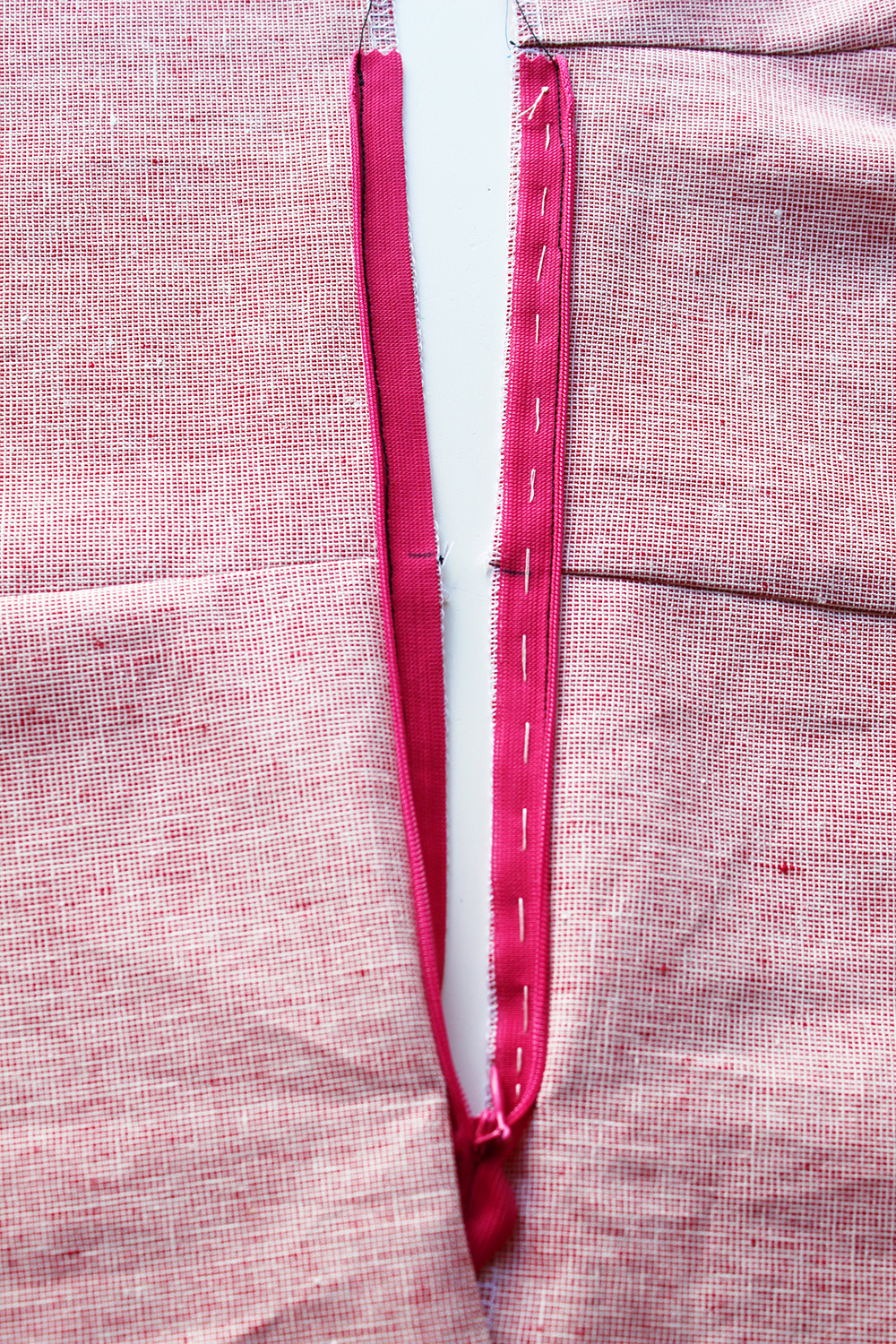 Having inserted the invisible zipper foot into your machine, lower the foot down onto the zipper. Make sure that the zipper coil is in the left groove of the foot. If you don’t have an invisible zip foot, use a standard zip foot and nudge the needle over so it lines up with the coil underneath or as near to the teeth as possible.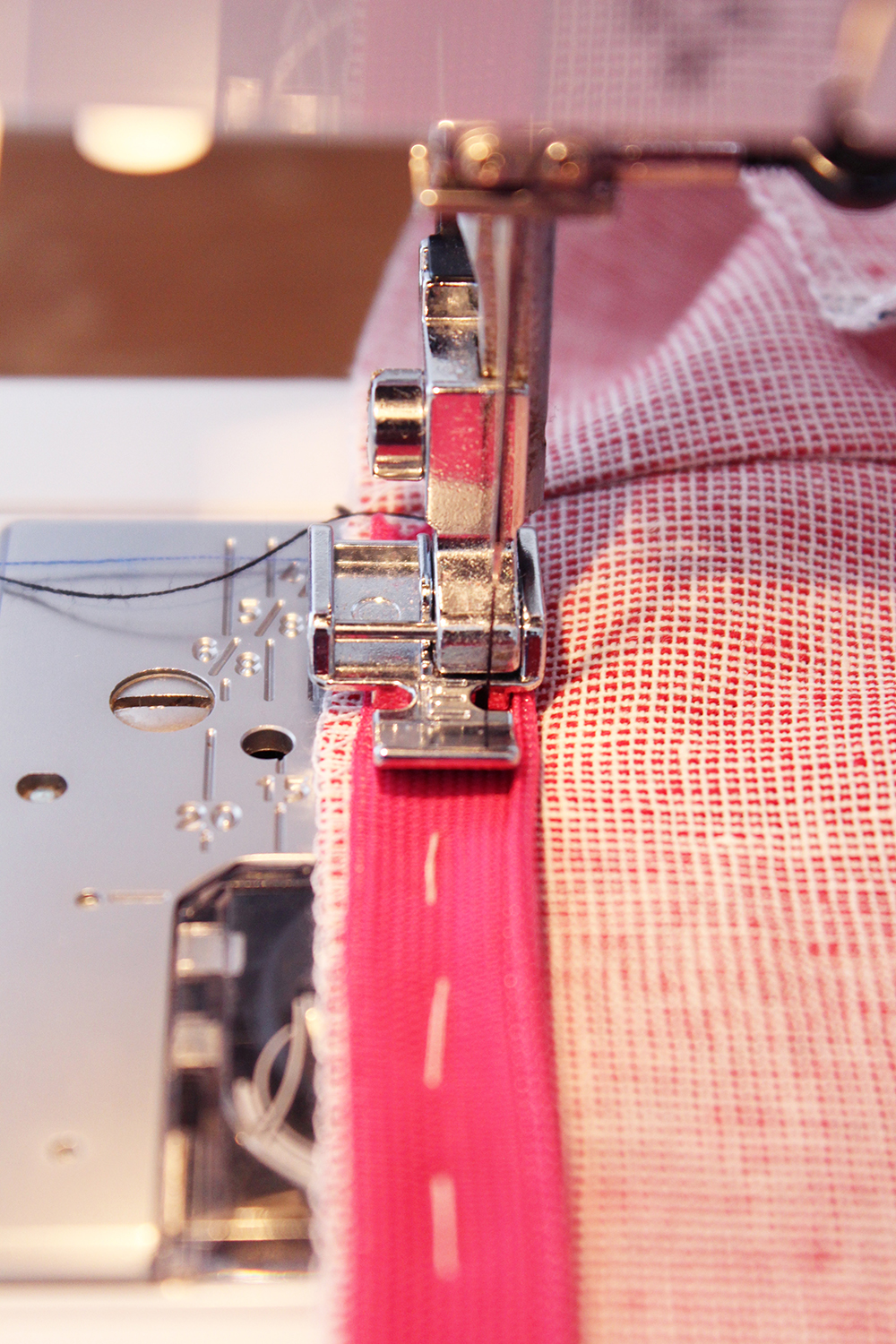
 Sew slowly as far as you can and (if you are using a standard foot, as close to the teeth as you can without sewing over the teeth). Stop when you reach the end of the zipper. Backstitch. Repeat for the other side of the zip.
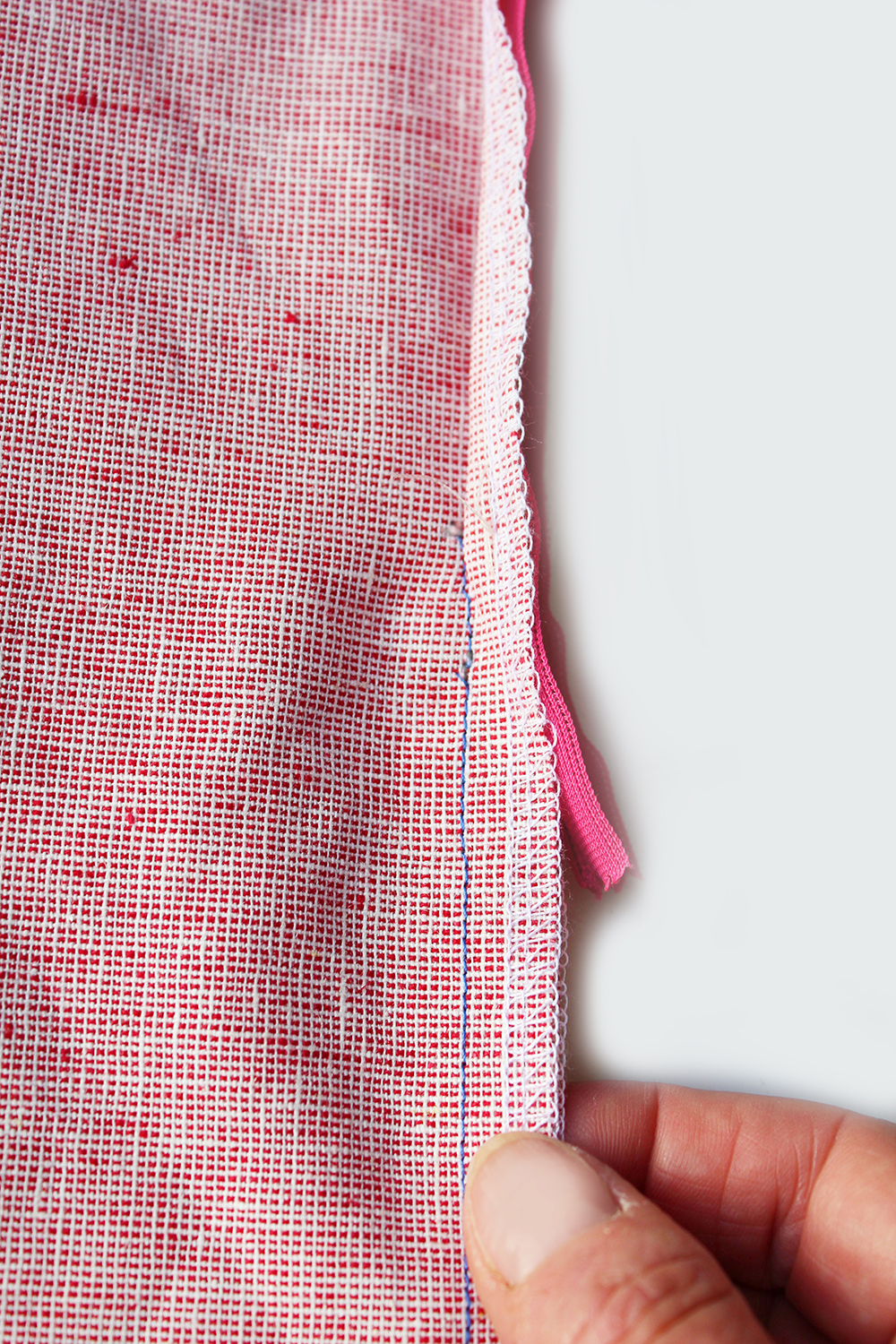 Press the seams open on the back and press the zip on the right and wrong sides so that the coils spring back into action.
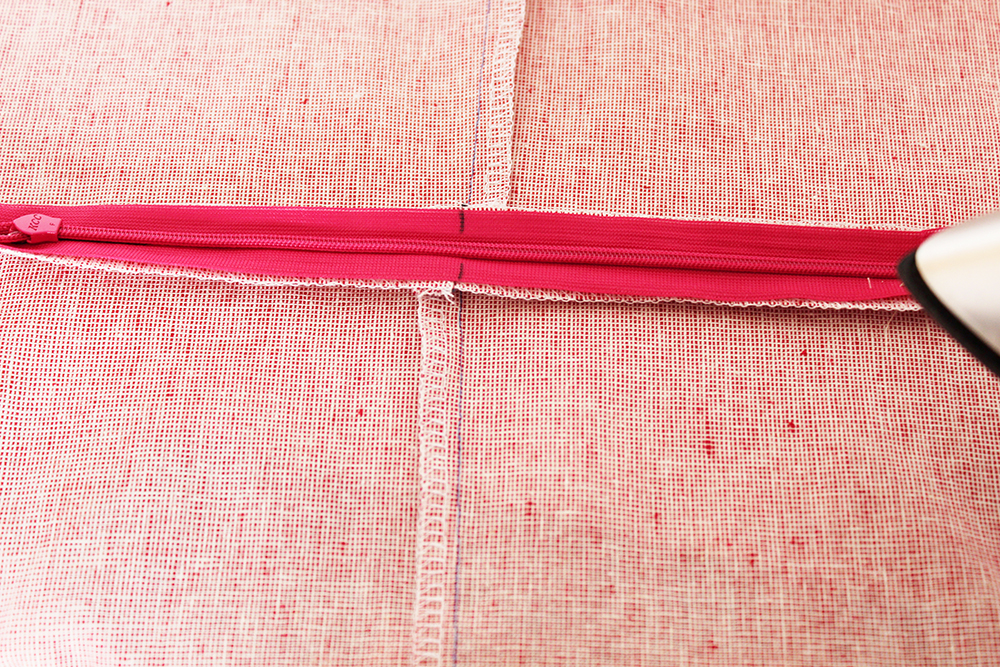 There you have now mastered the art of the concealed zip!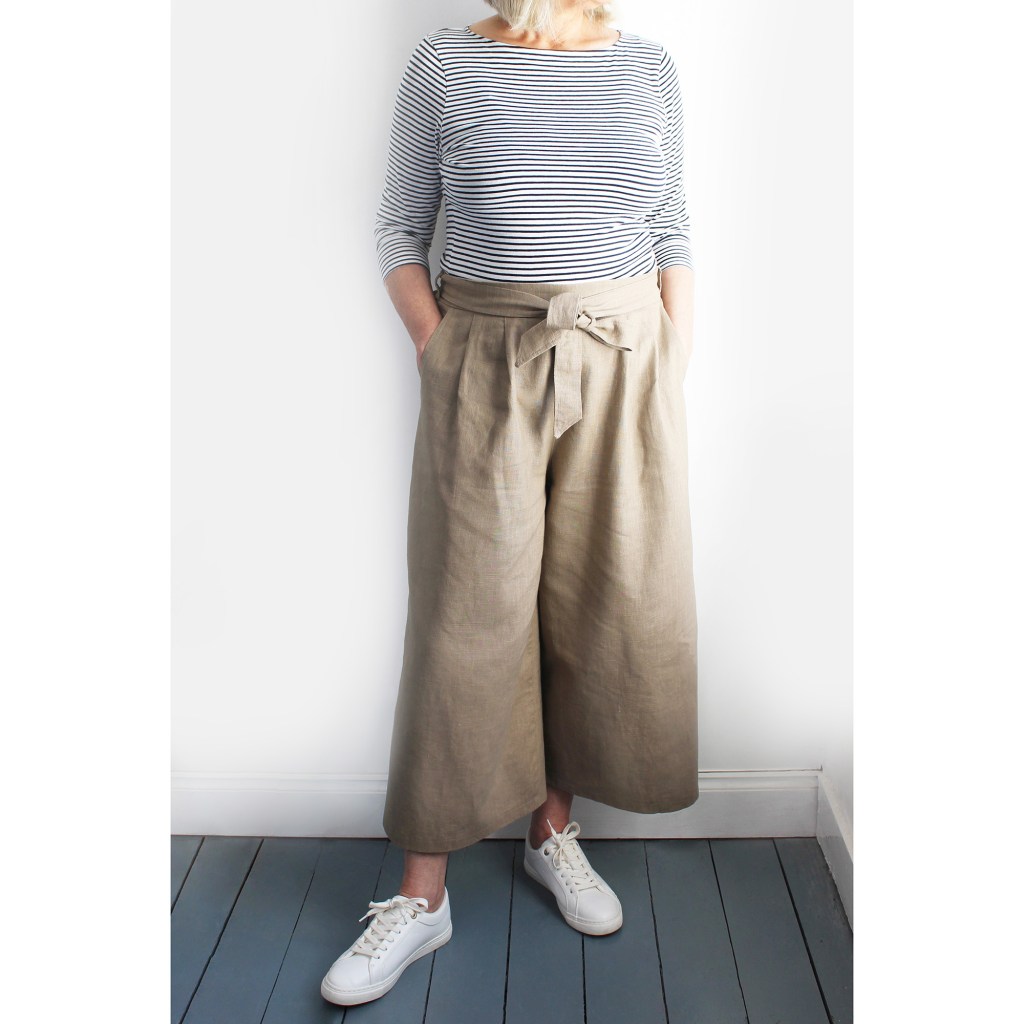
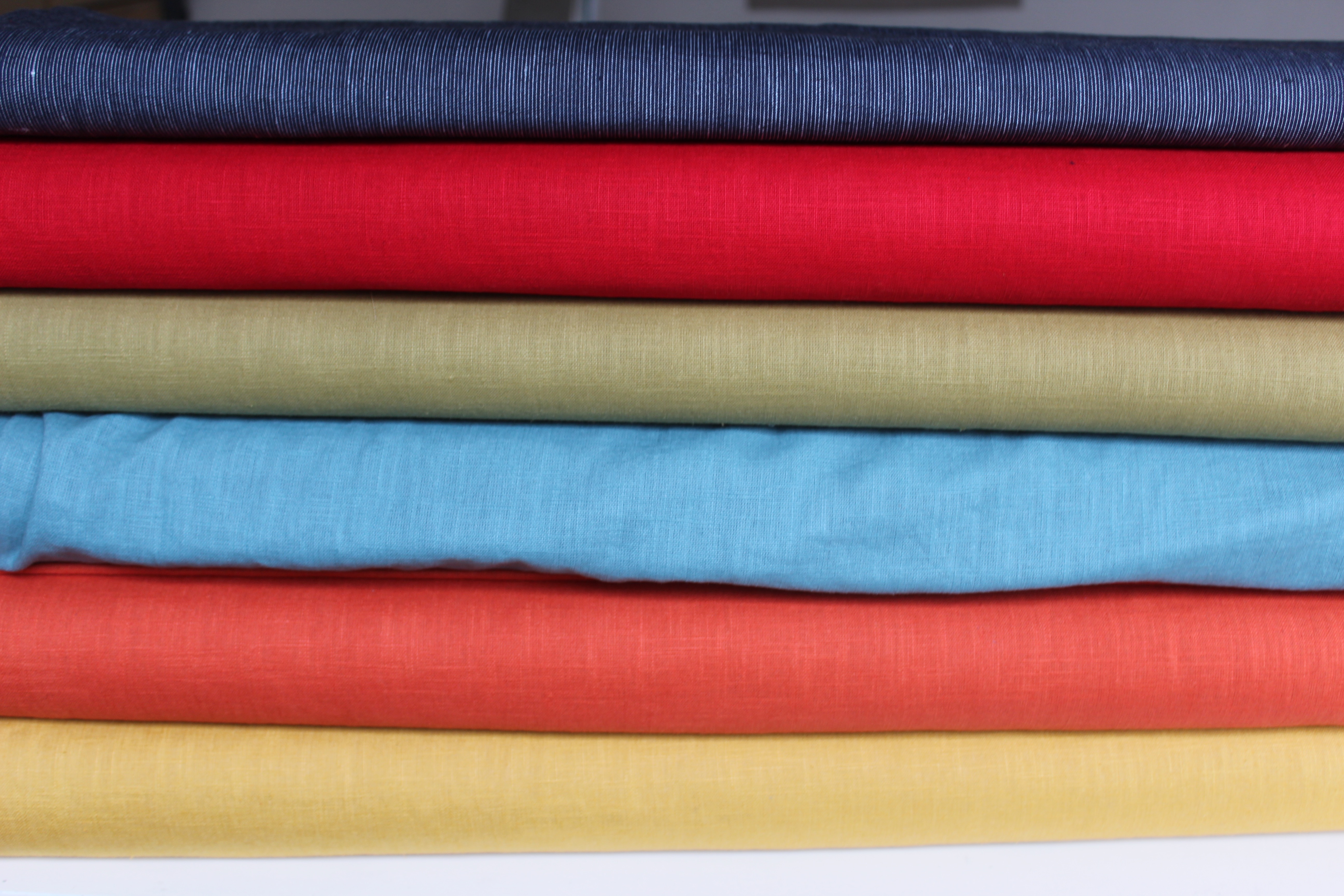
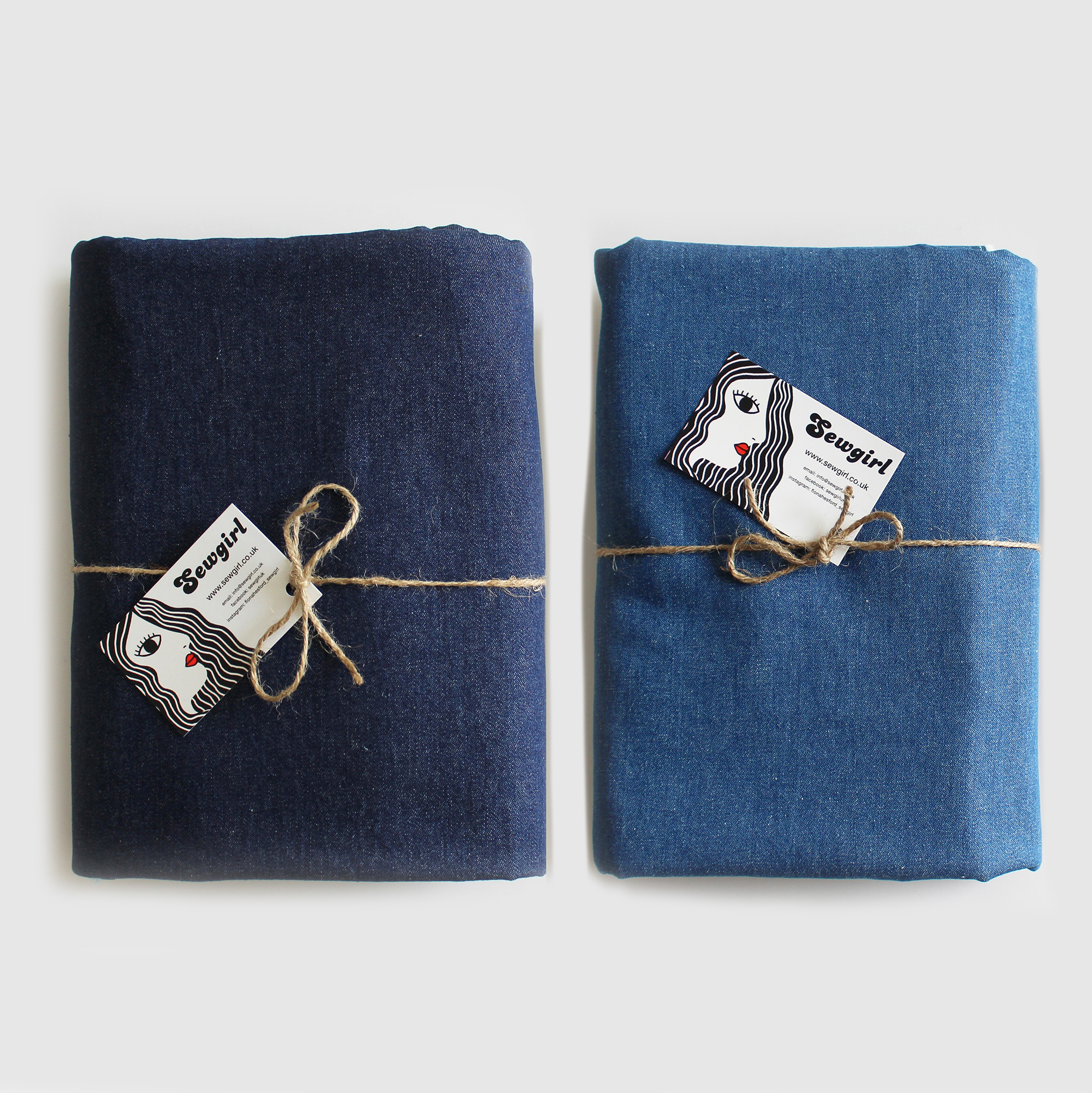
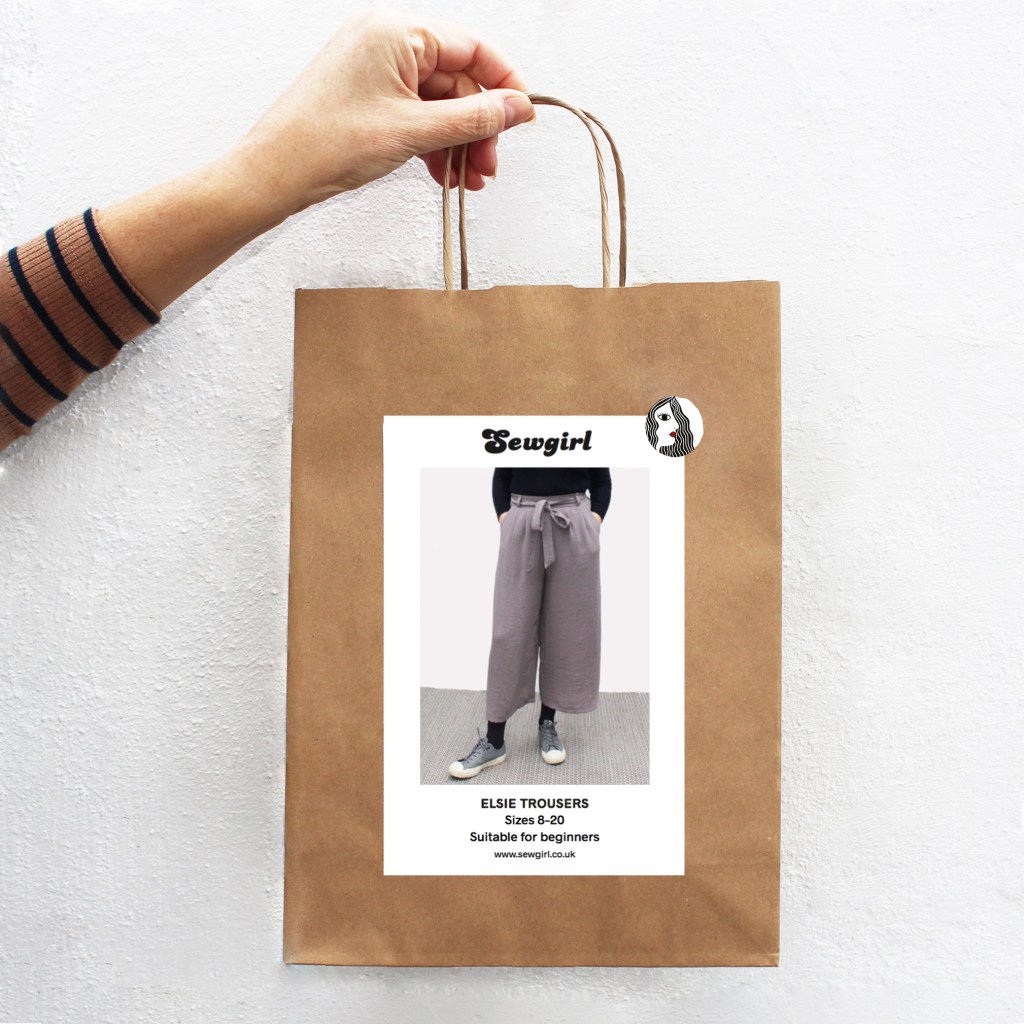
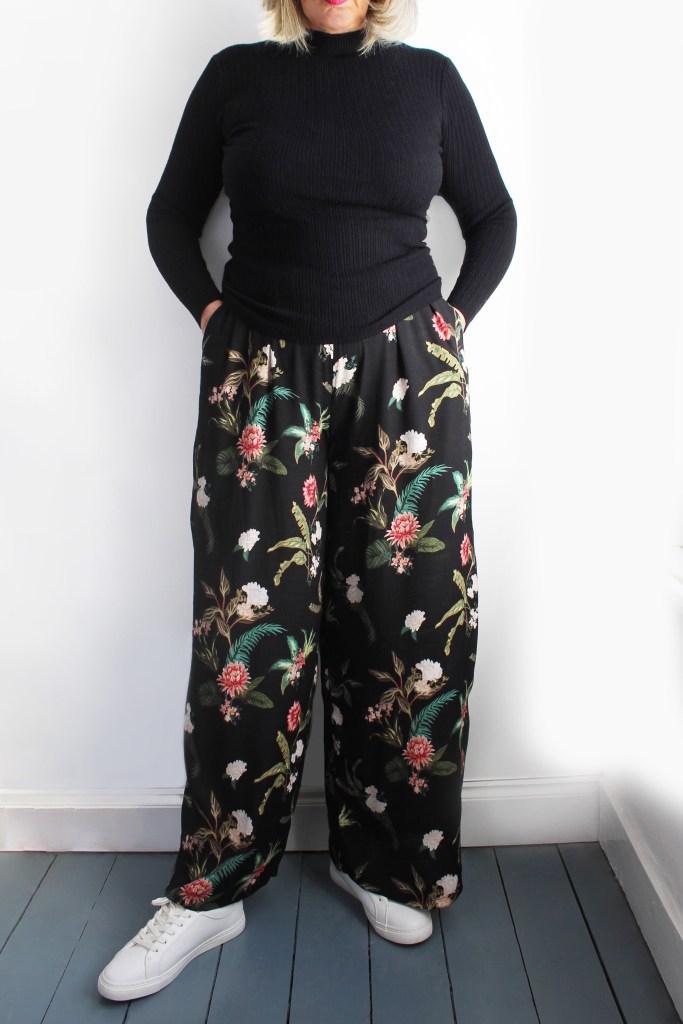
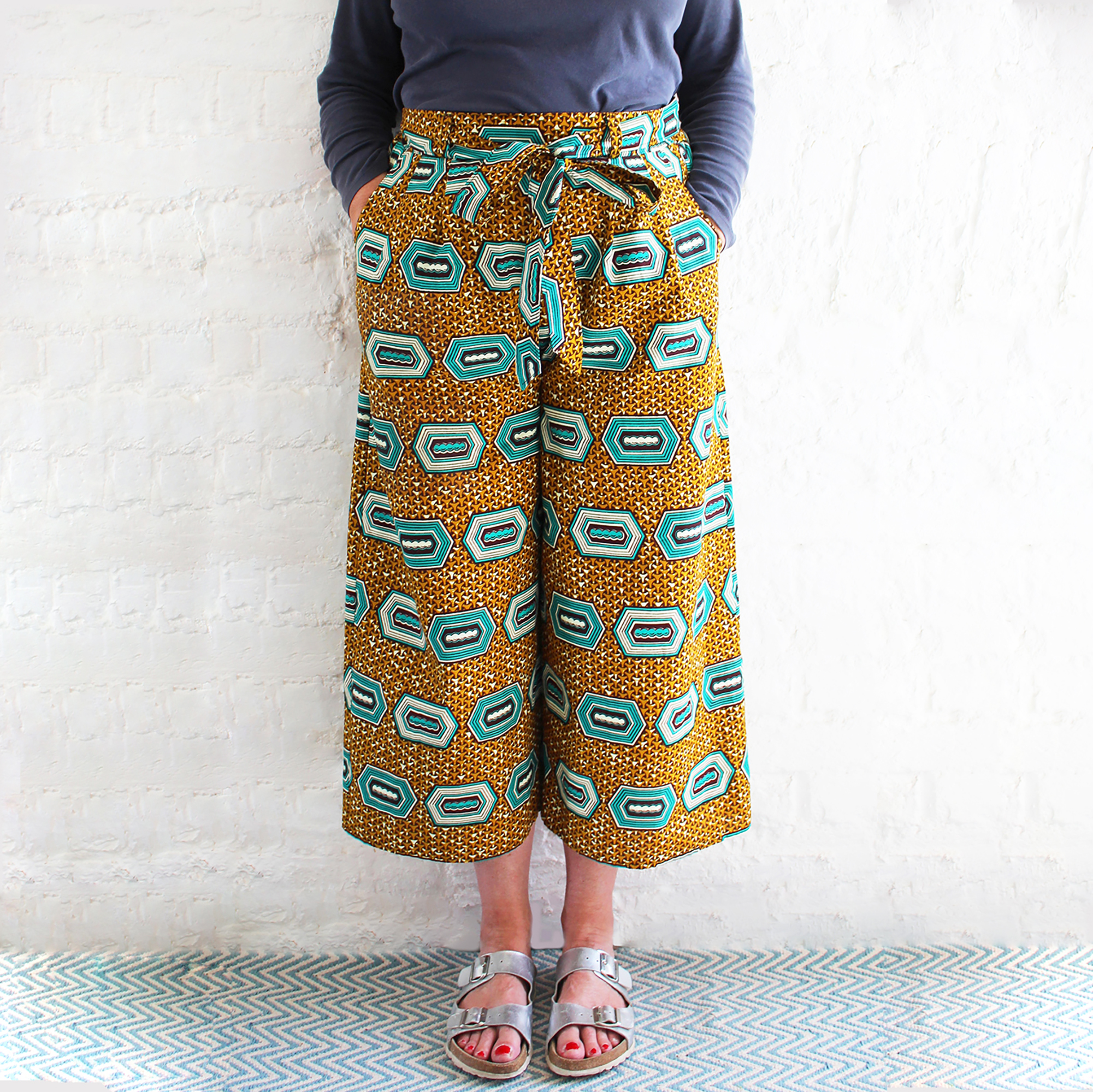
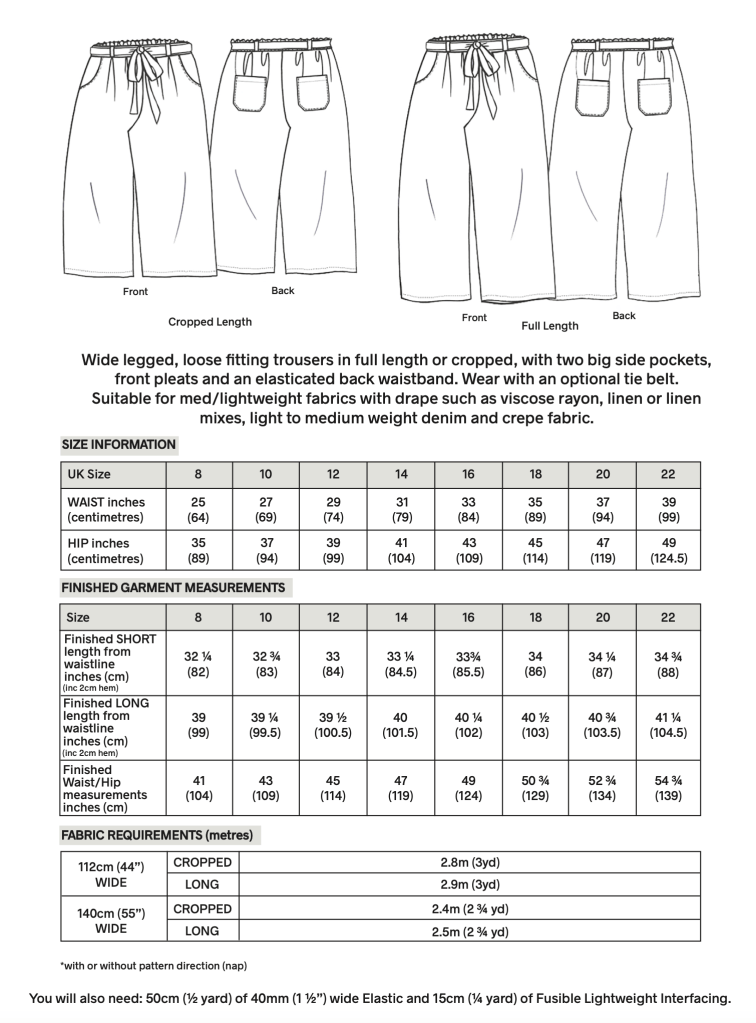
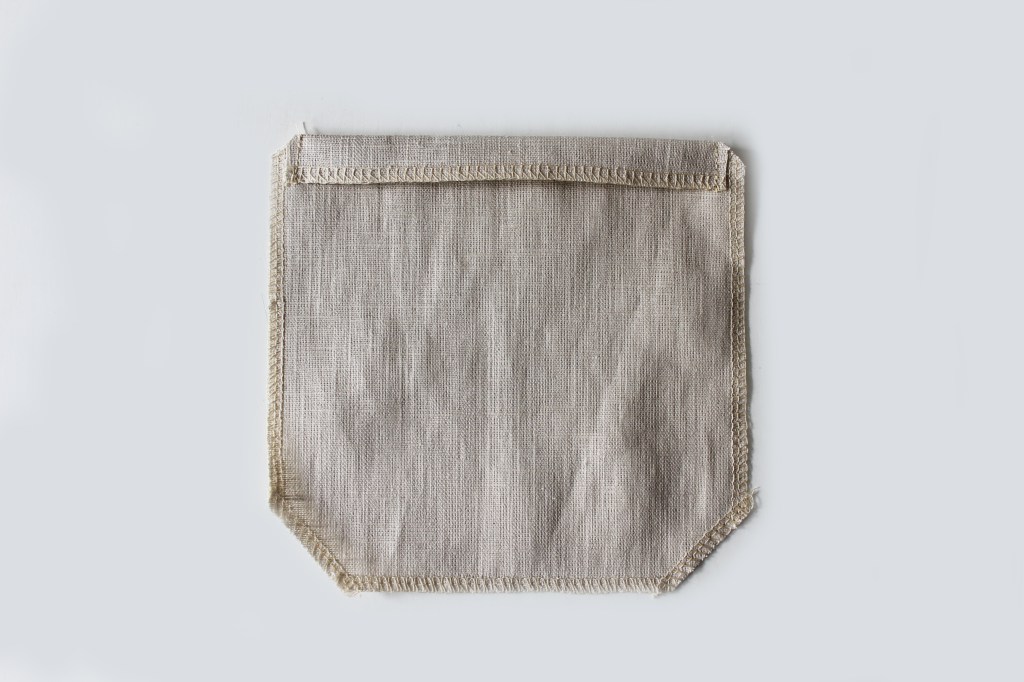
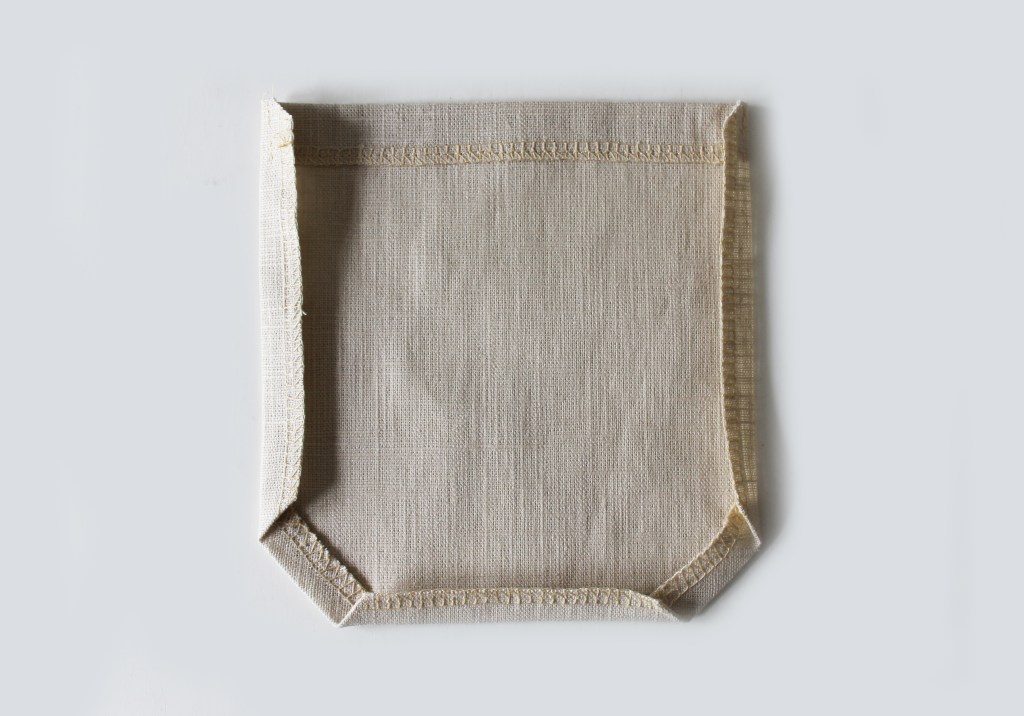
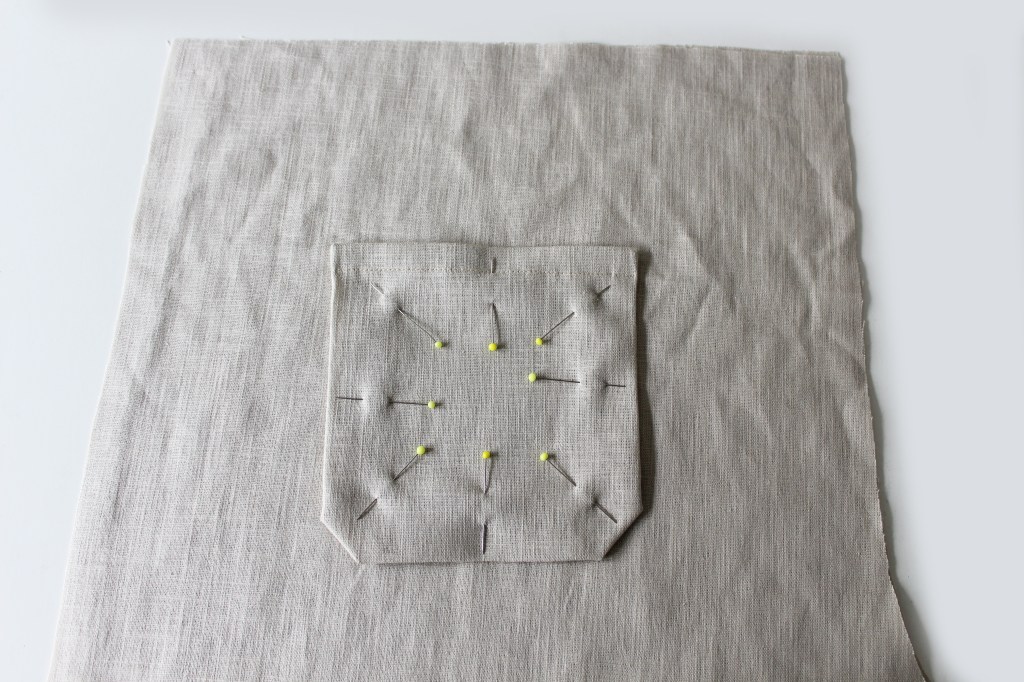
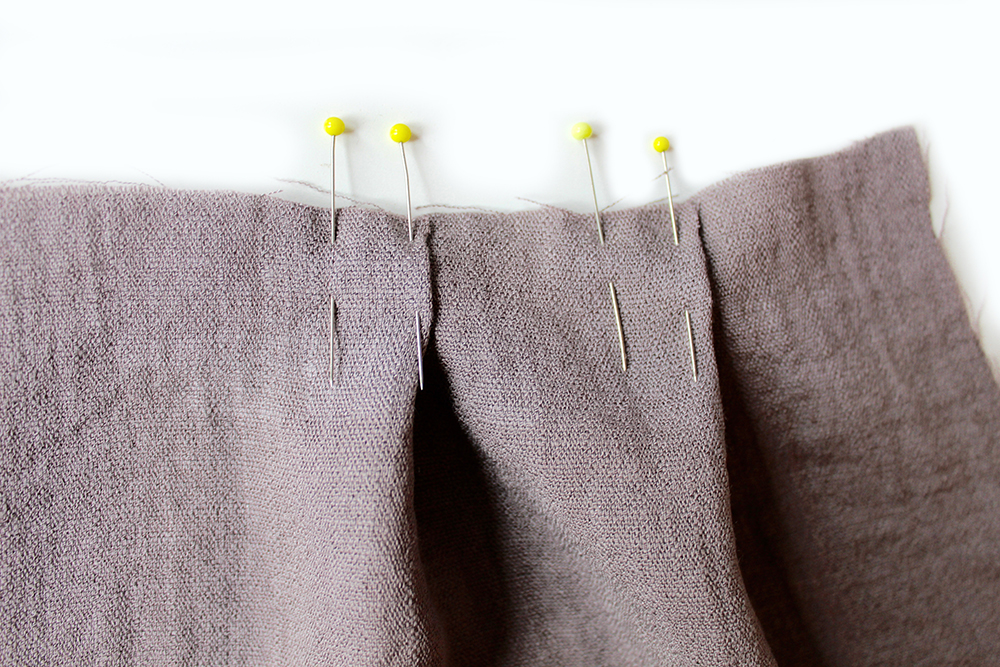
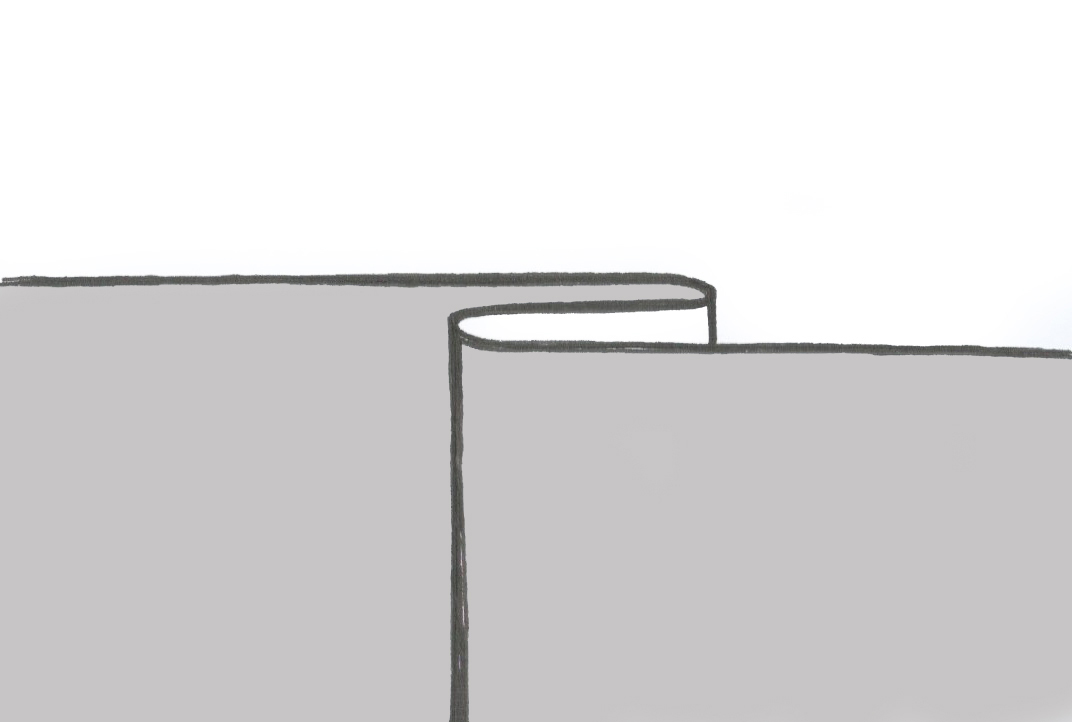
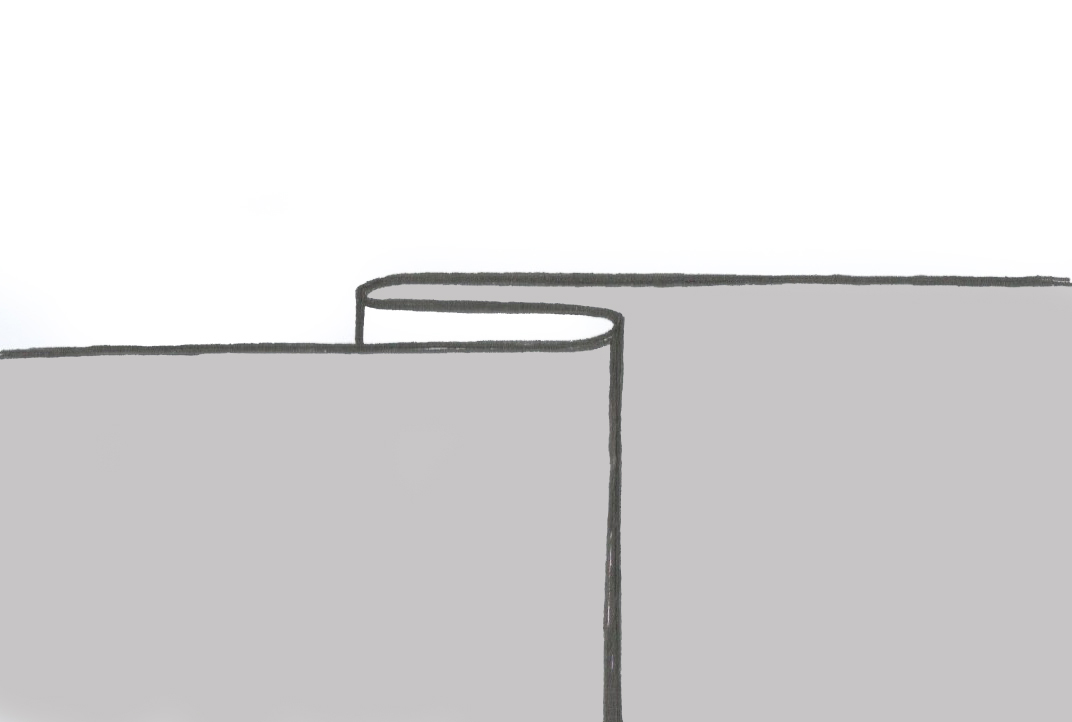 Two on the right hand side of the centre seam.So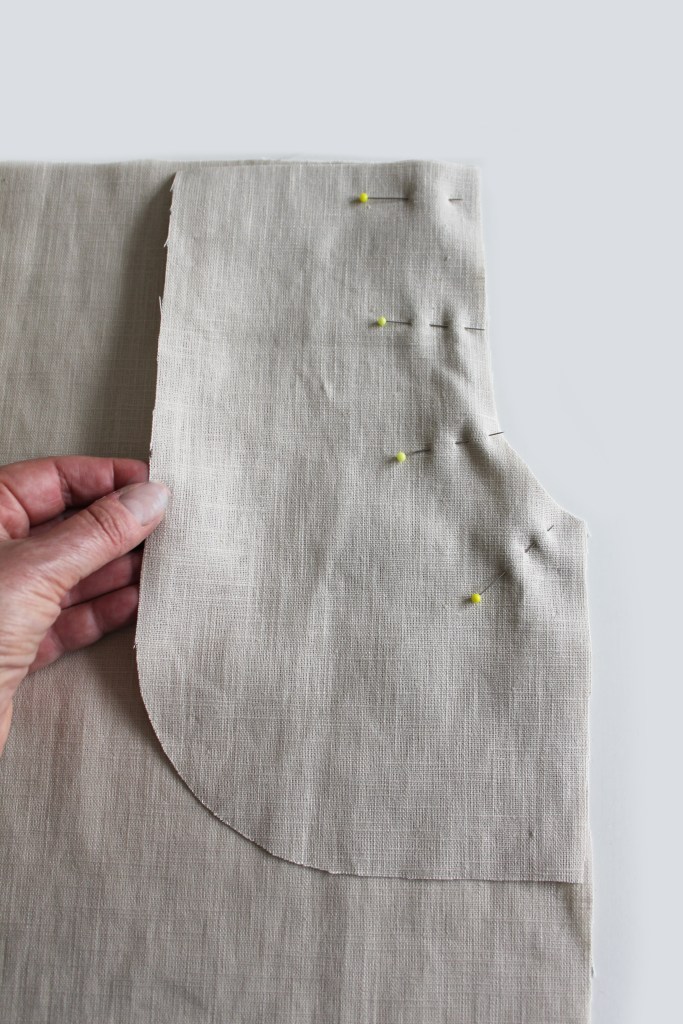
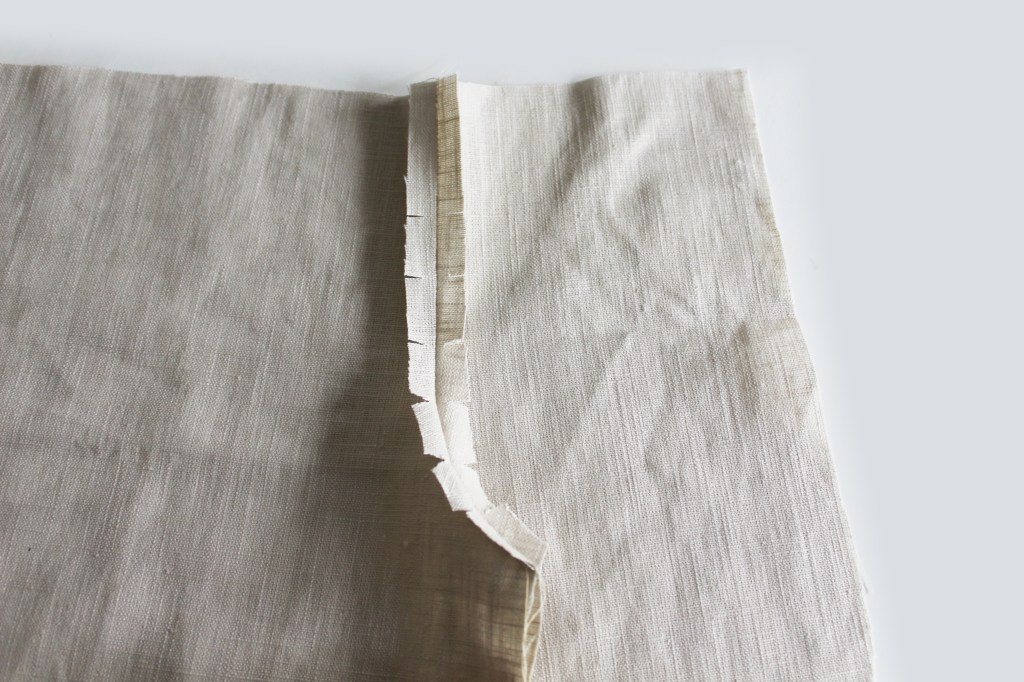
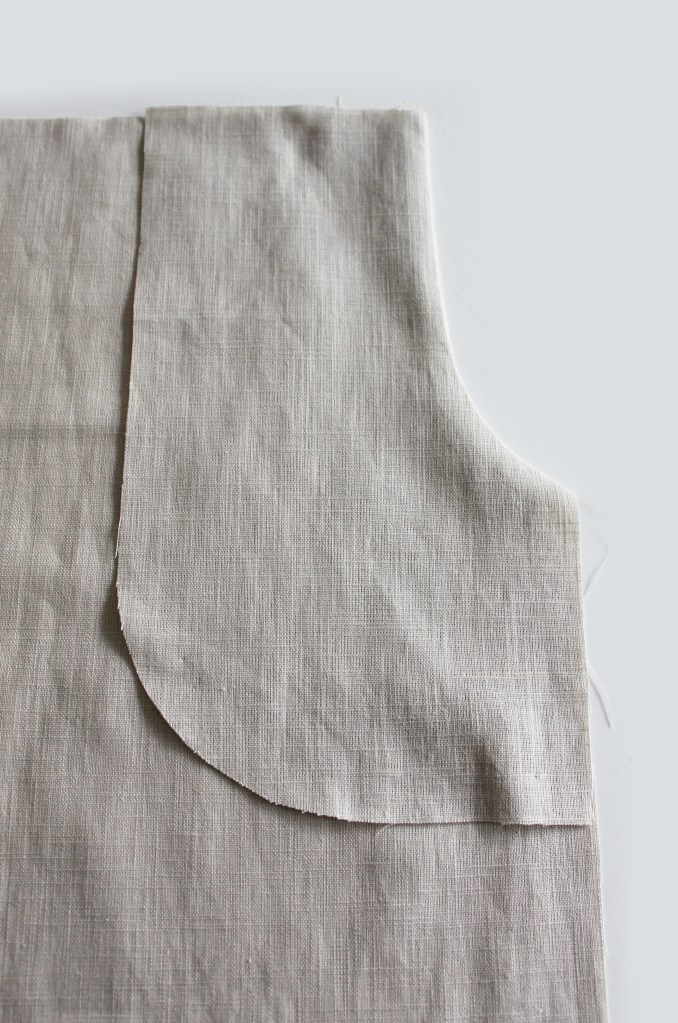
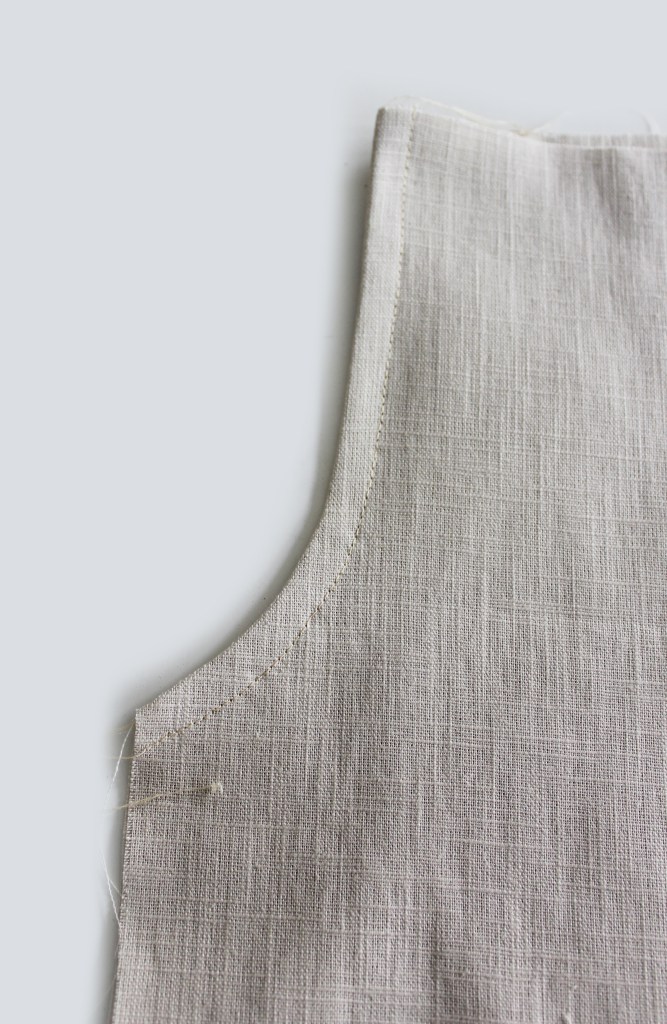
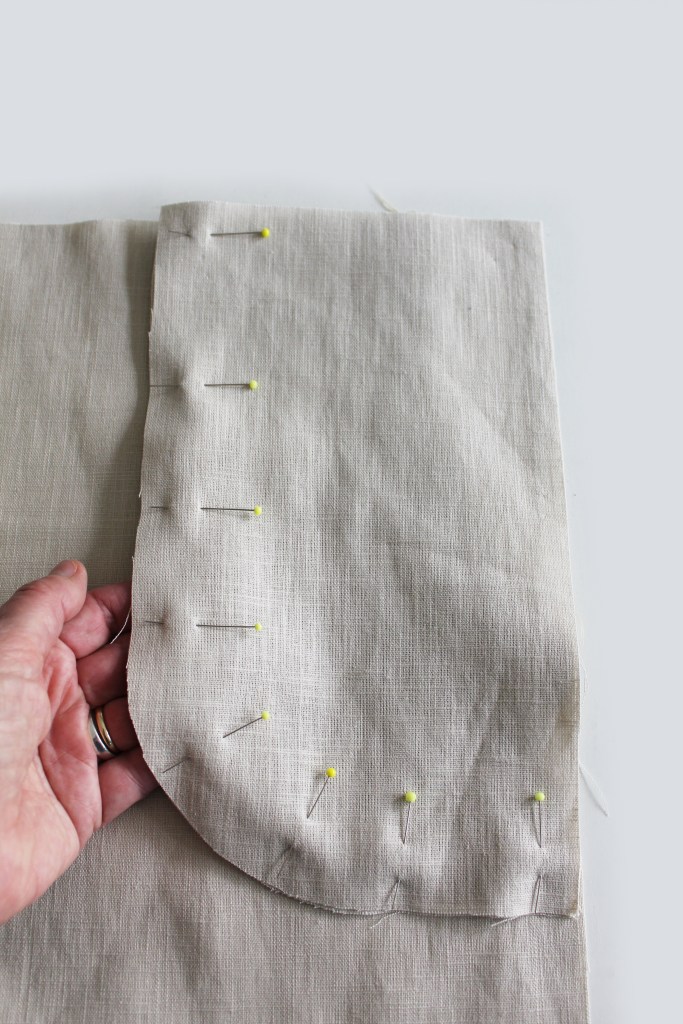
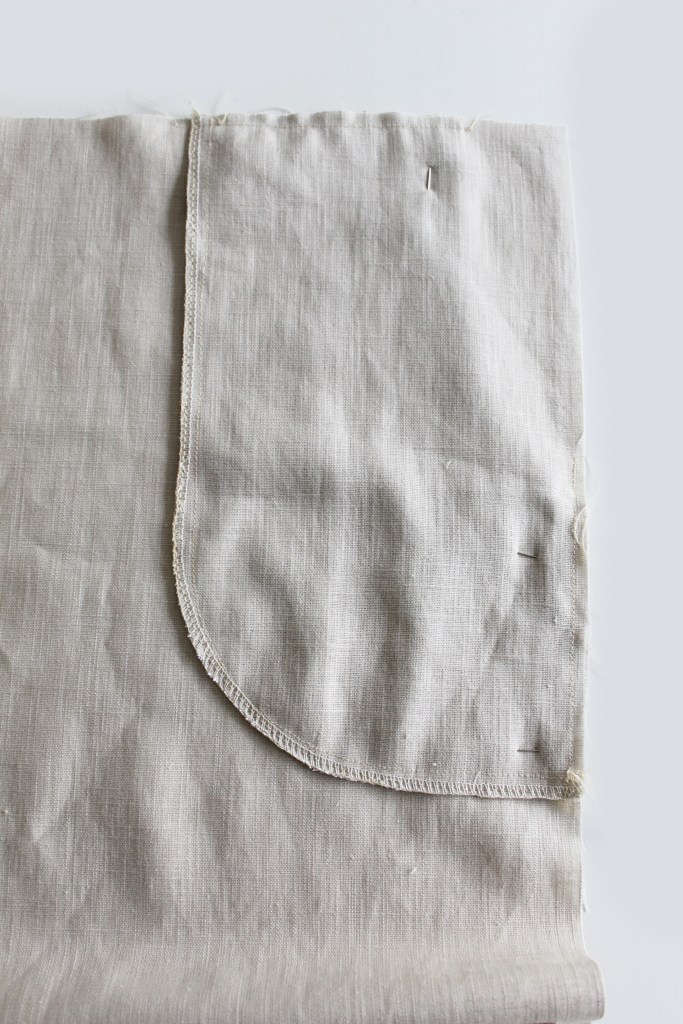
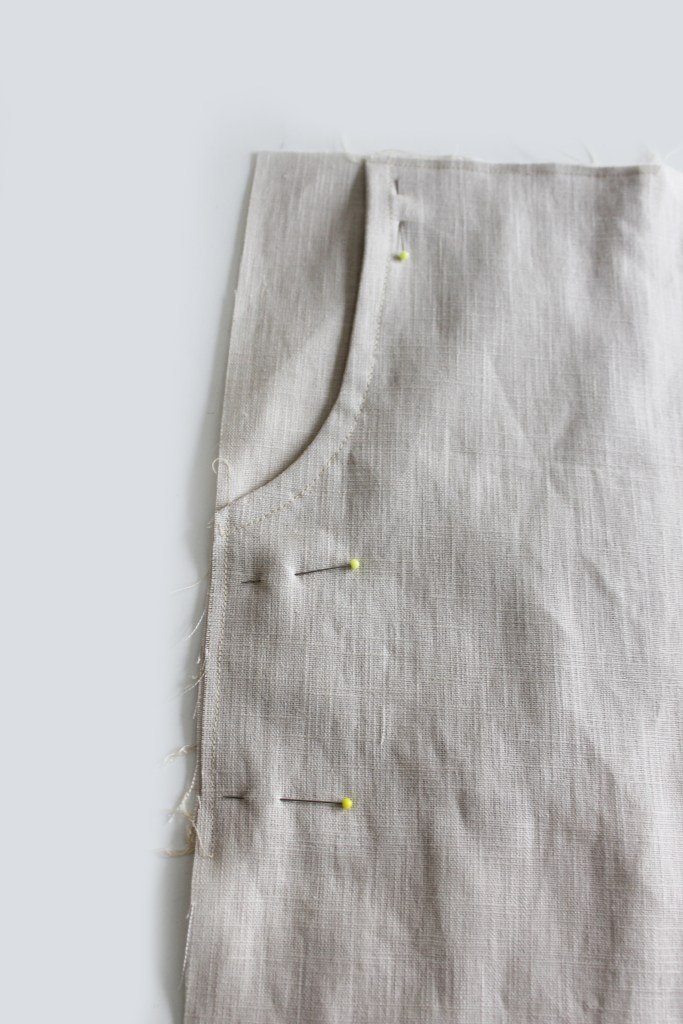
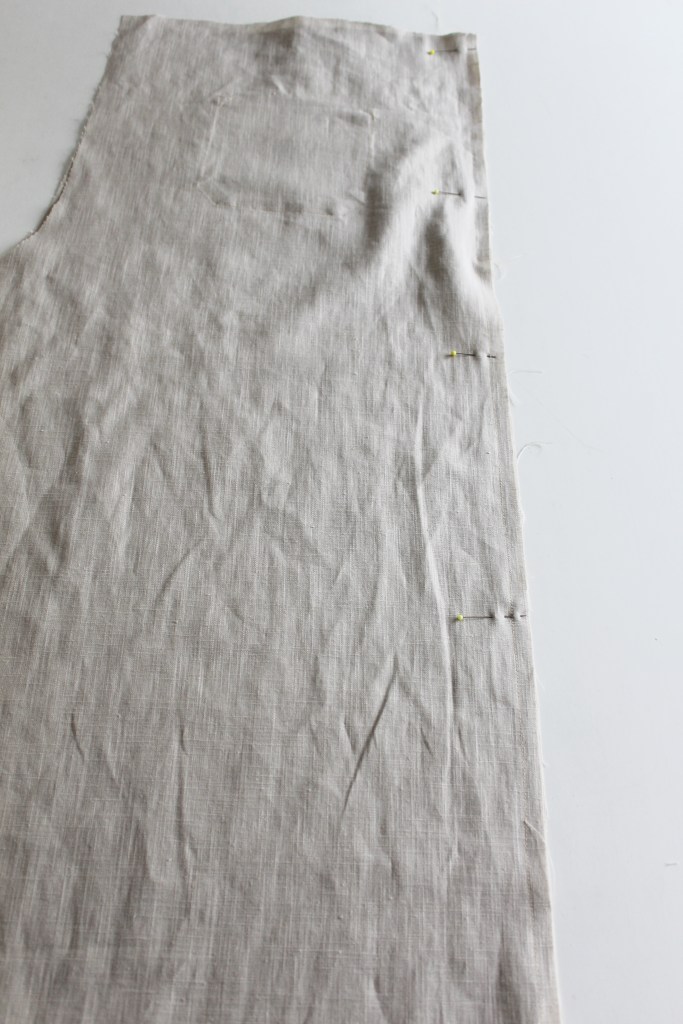
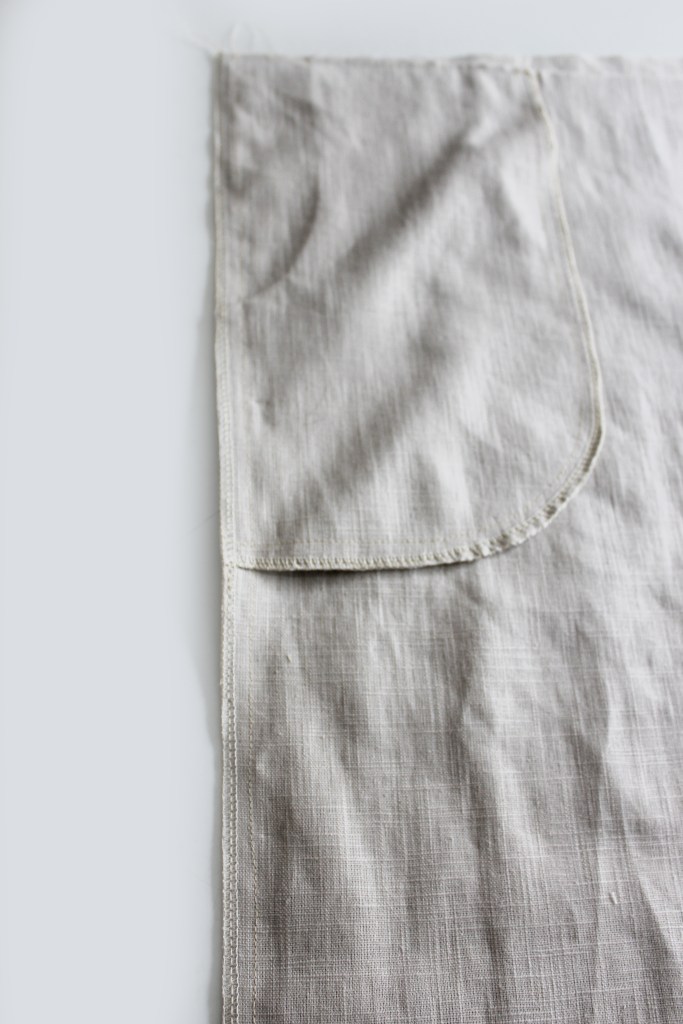
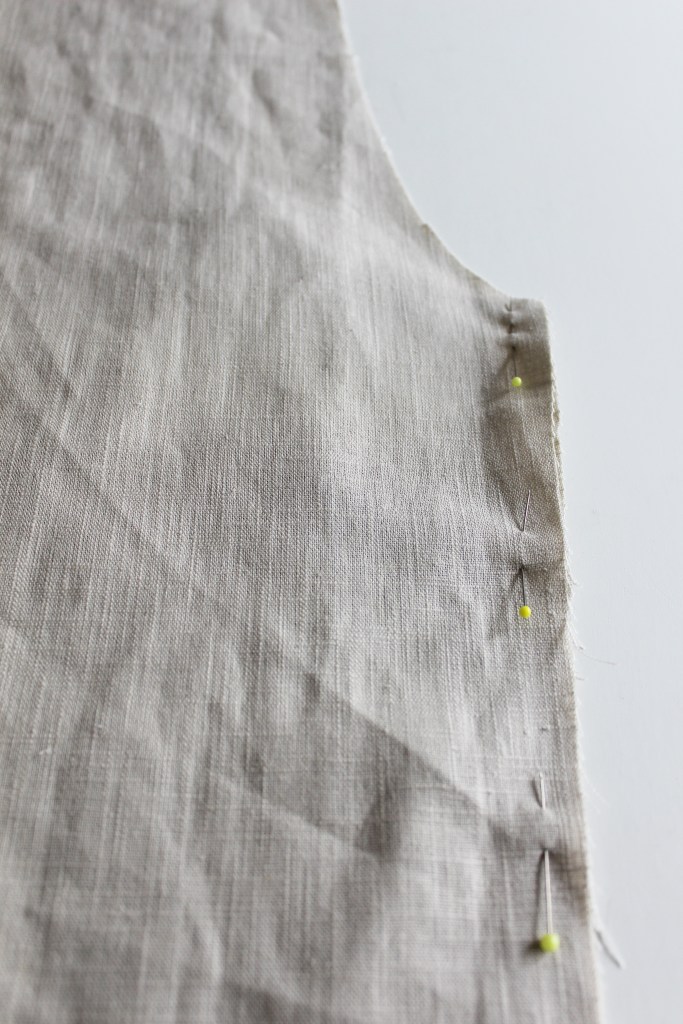
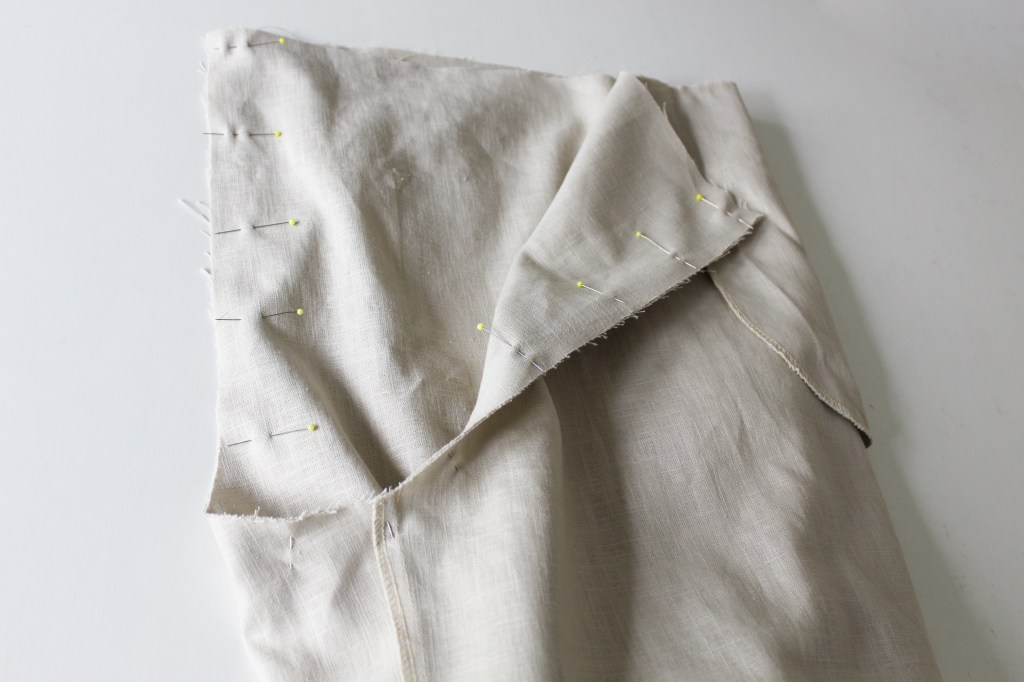
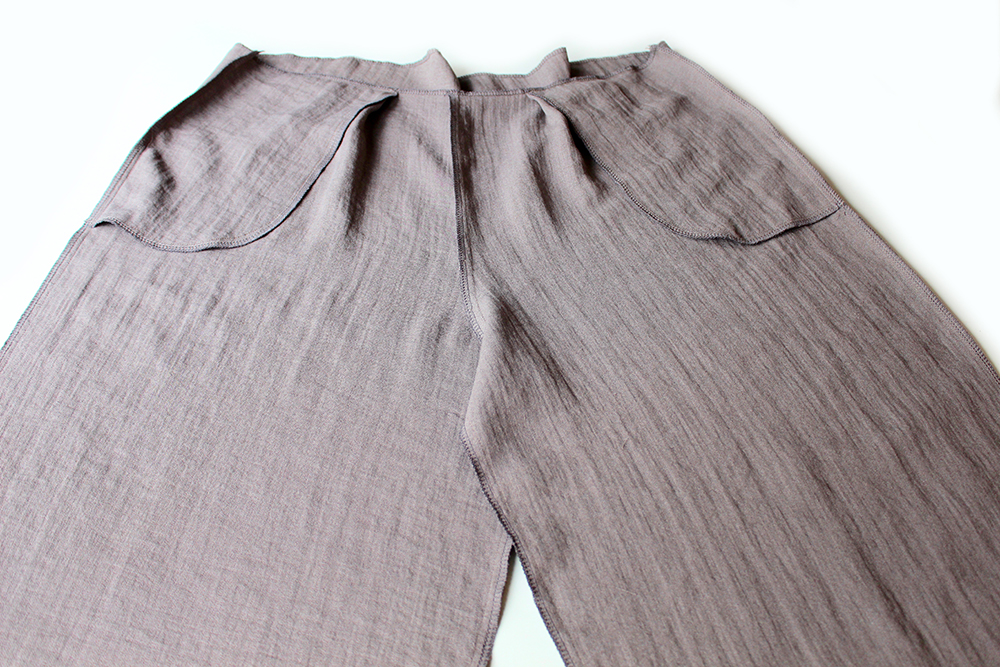
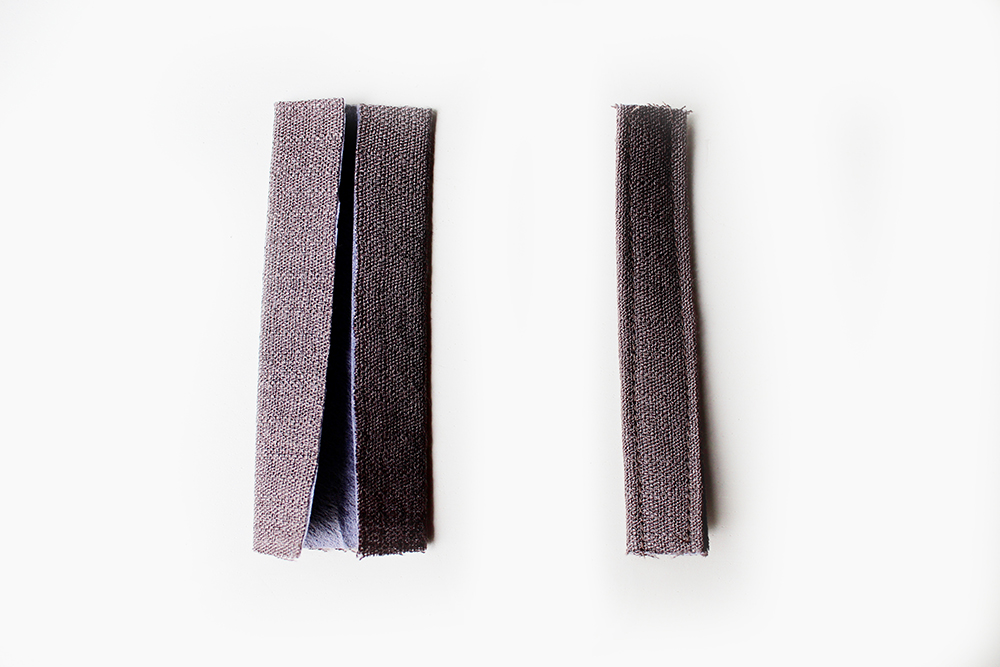
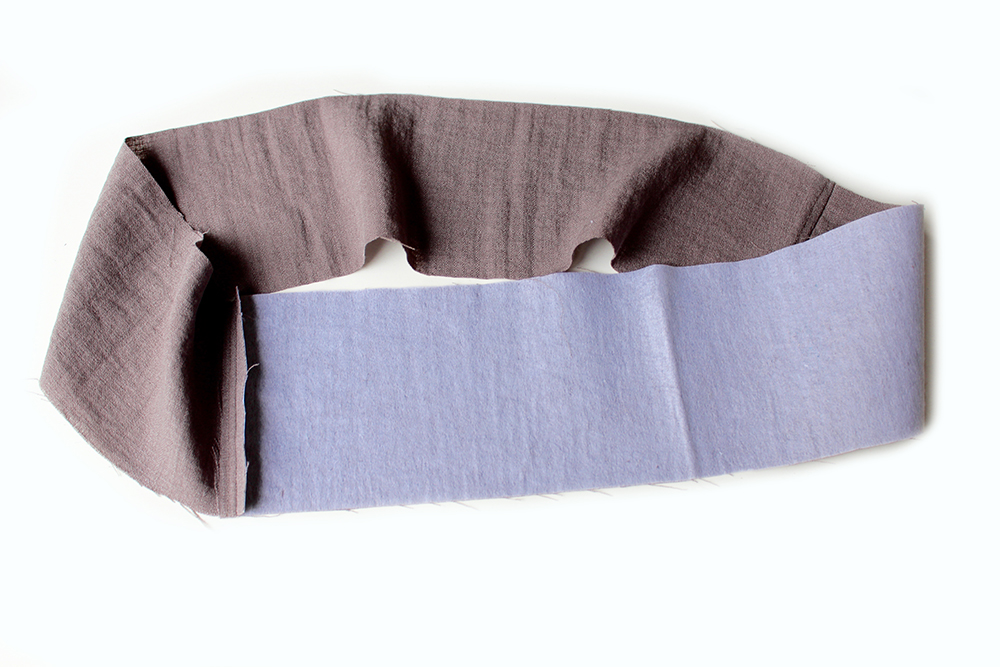 Interface the front waistband only. Pin and sew RST at the short sides. Press the seam allowances open.
 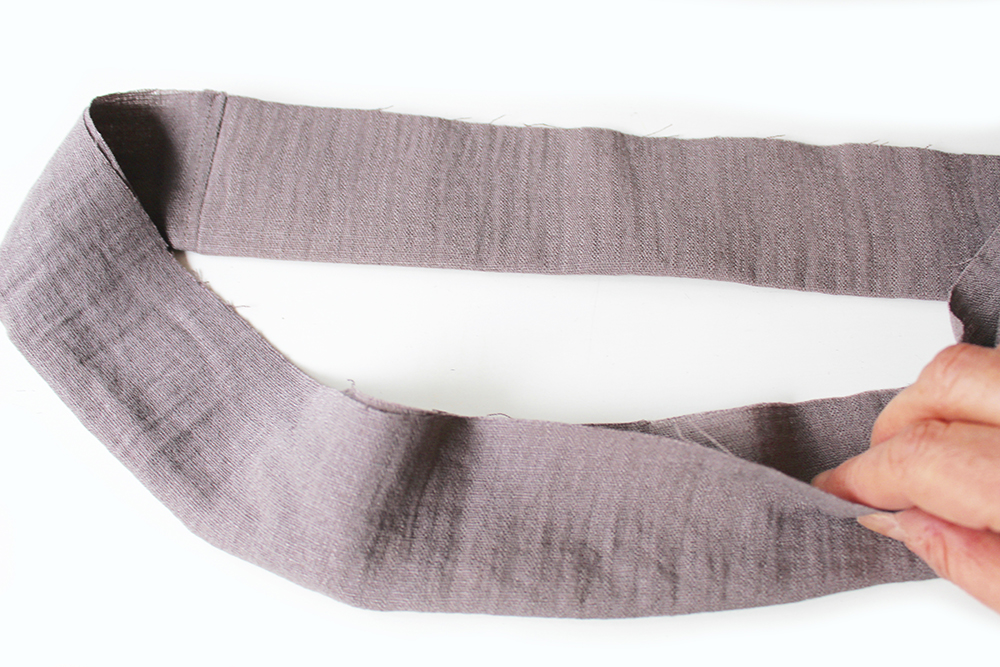 Fold in half so the WST (wrong sides are together), match the raw edges.
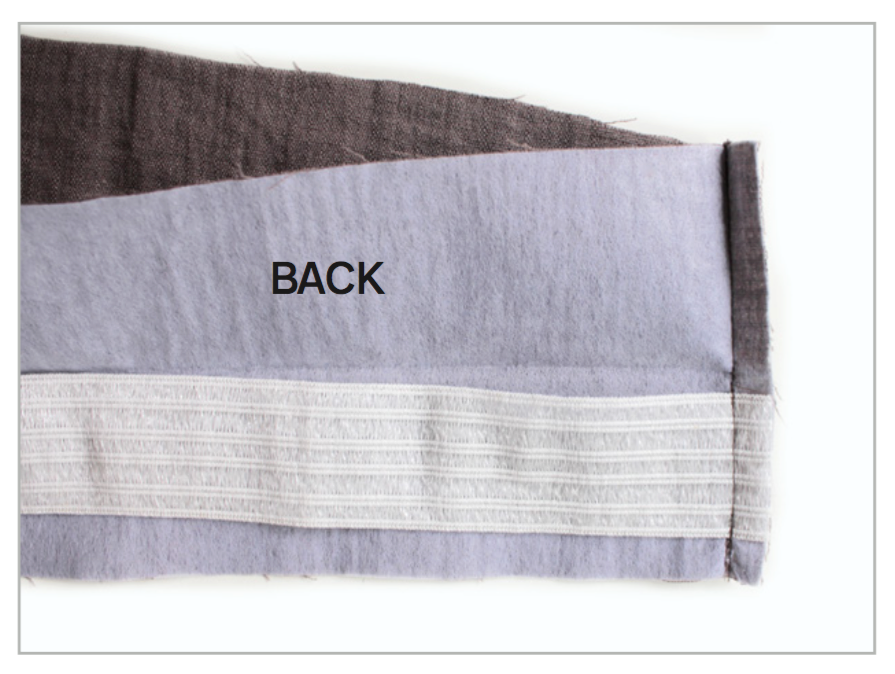 Pin the elastic at the side seams and extend across at the Back section.
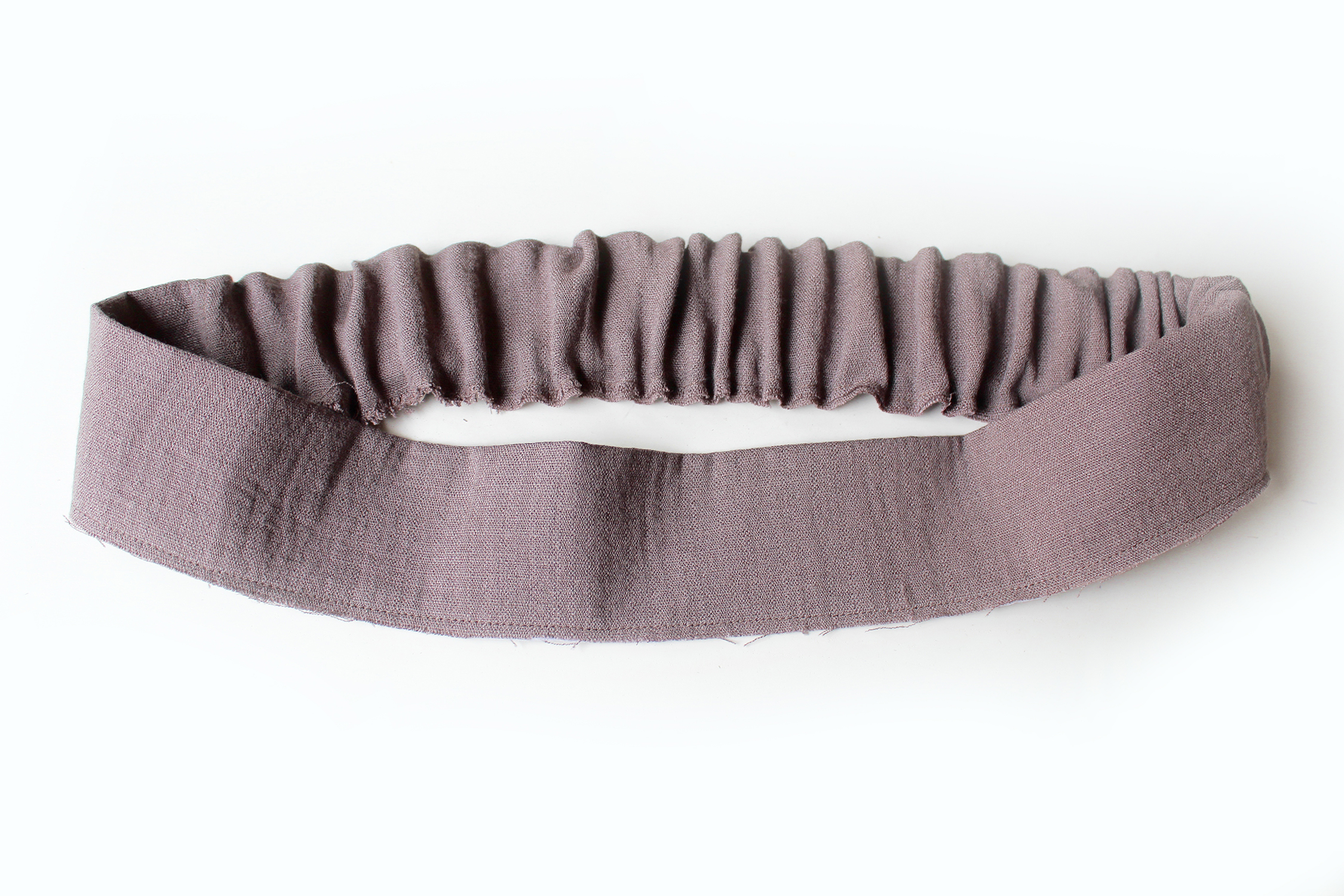 Machine tack close to the raw edges, making sure you don’t sew in any elastic. Finish the raw edge, also on the trousers front and back top edge.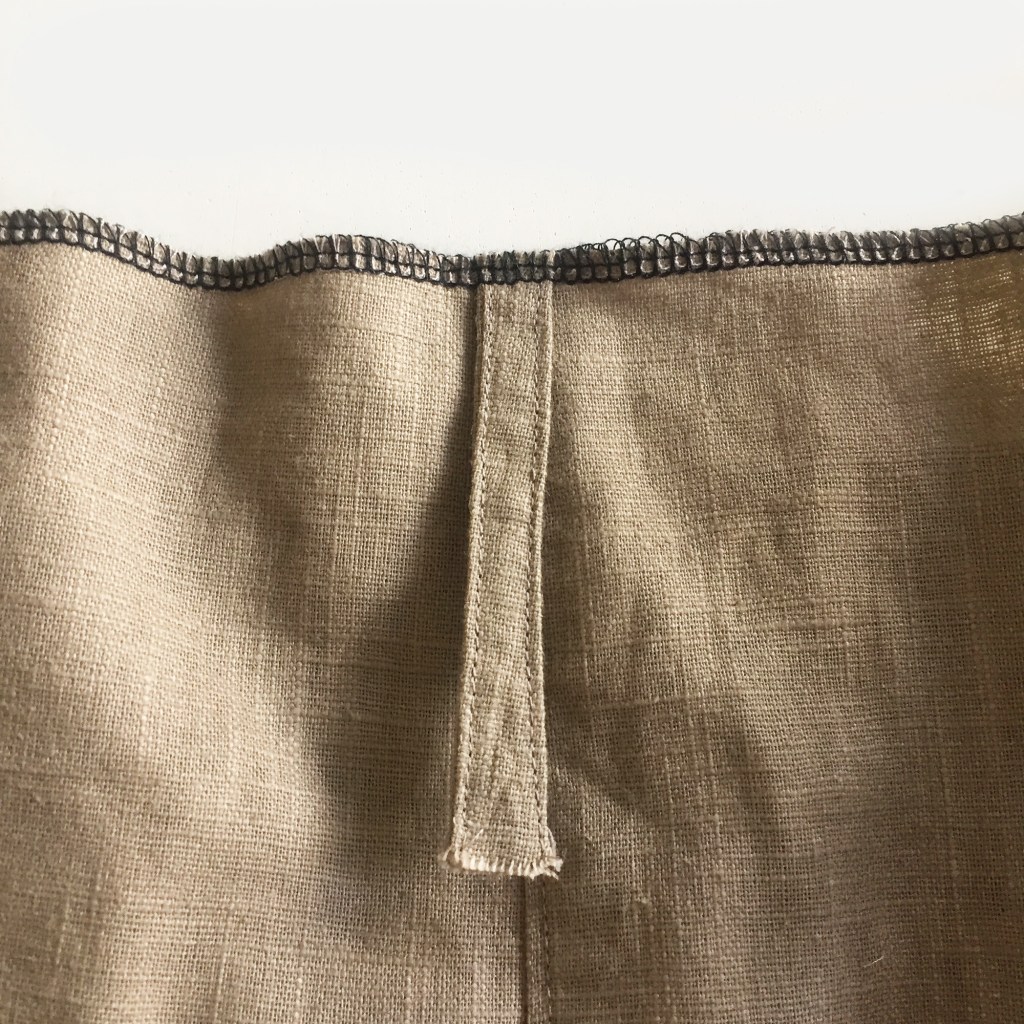
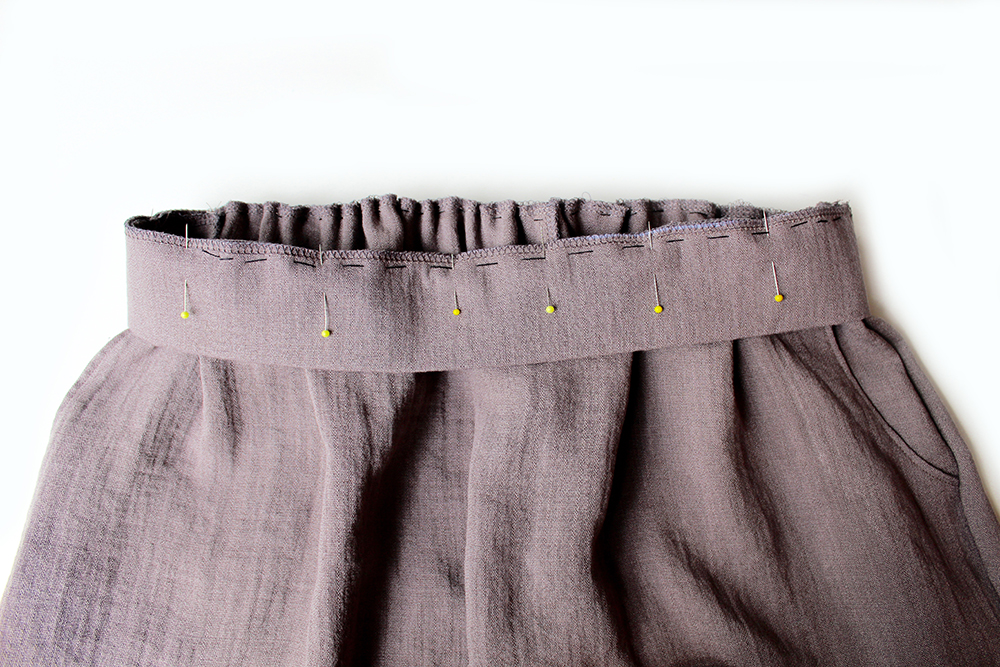
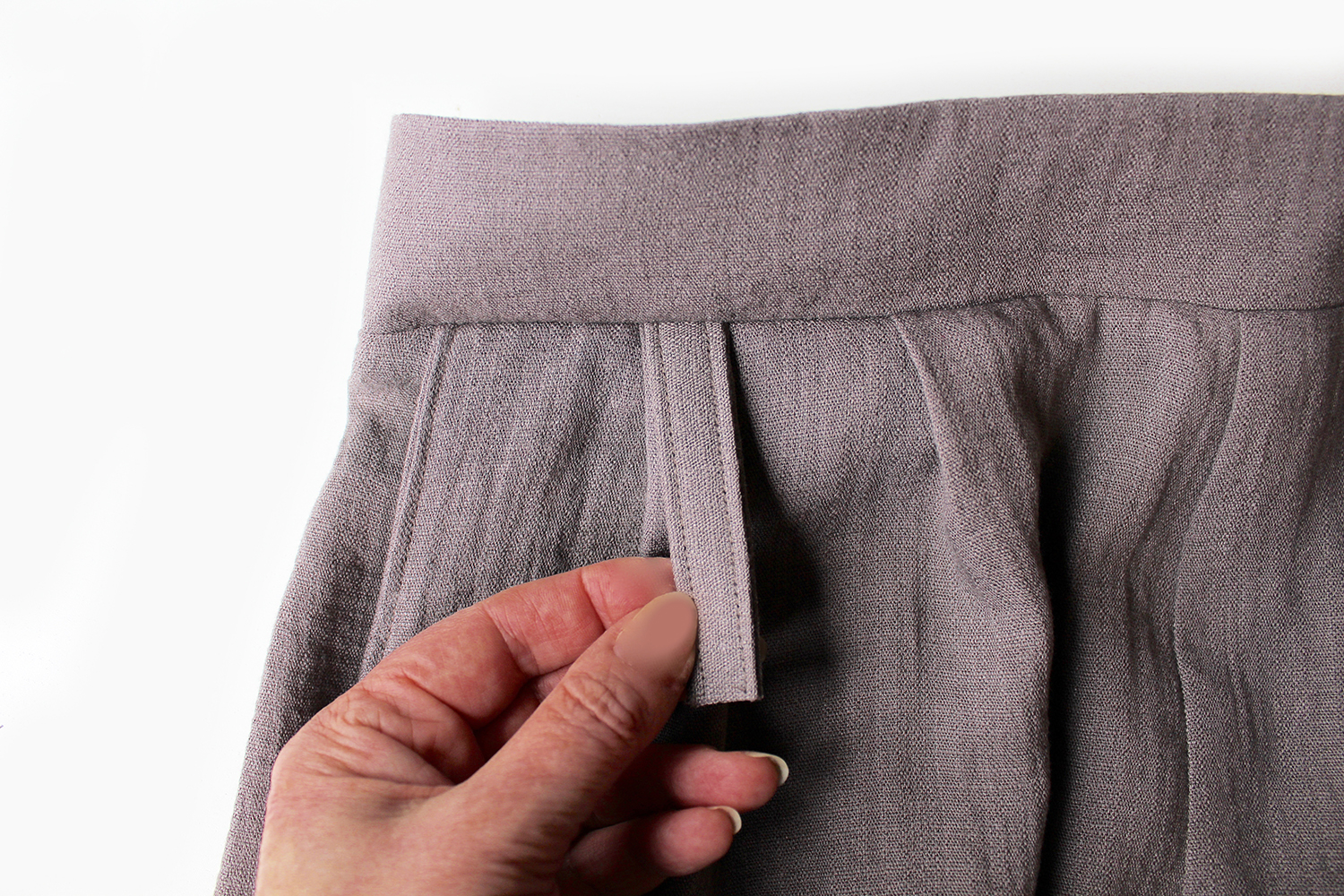
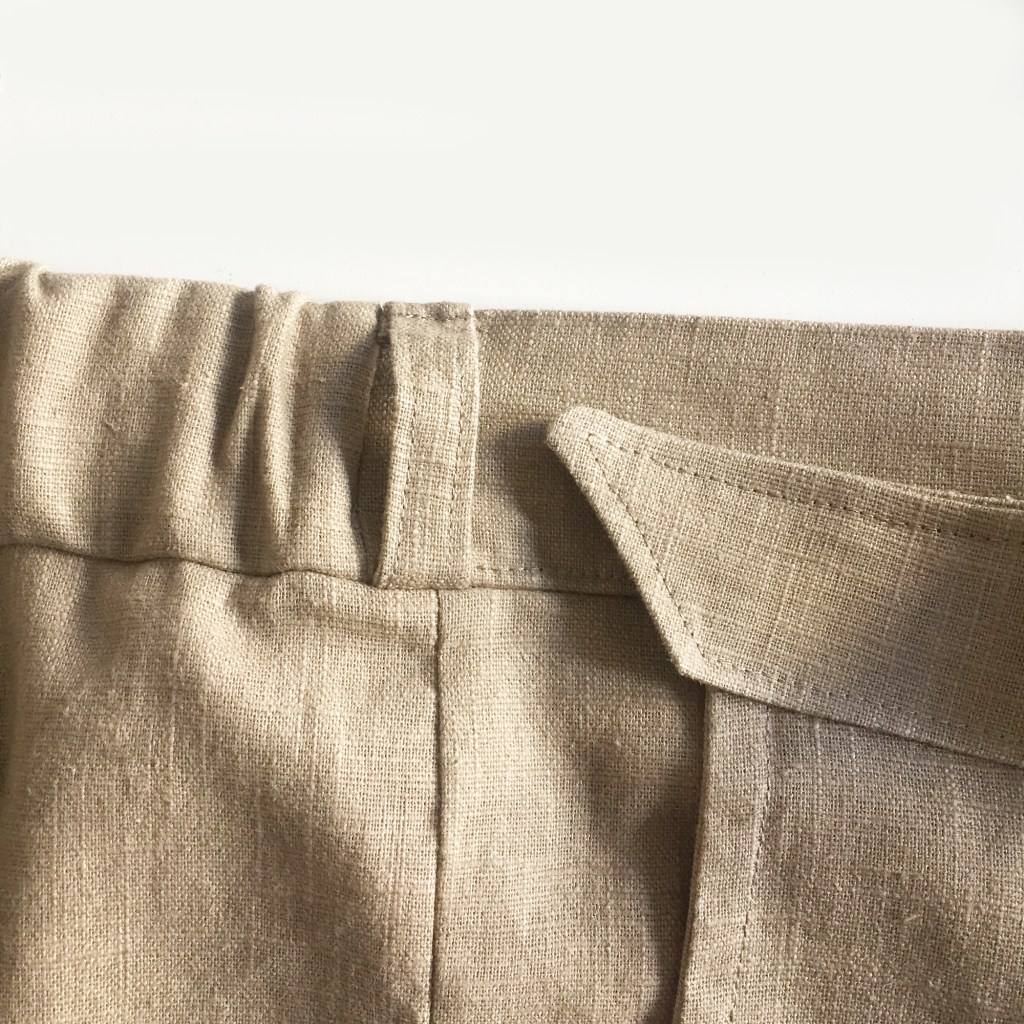
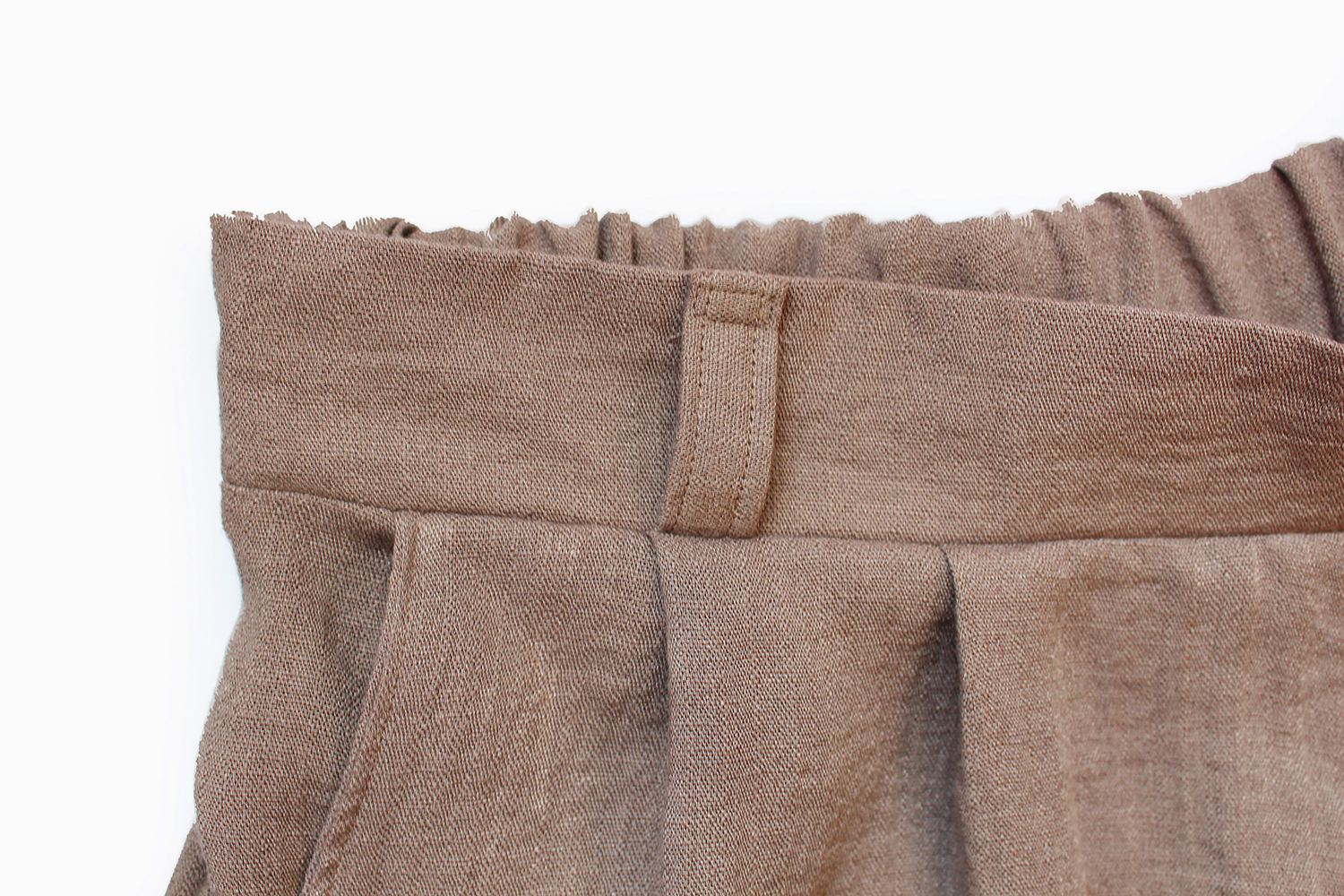
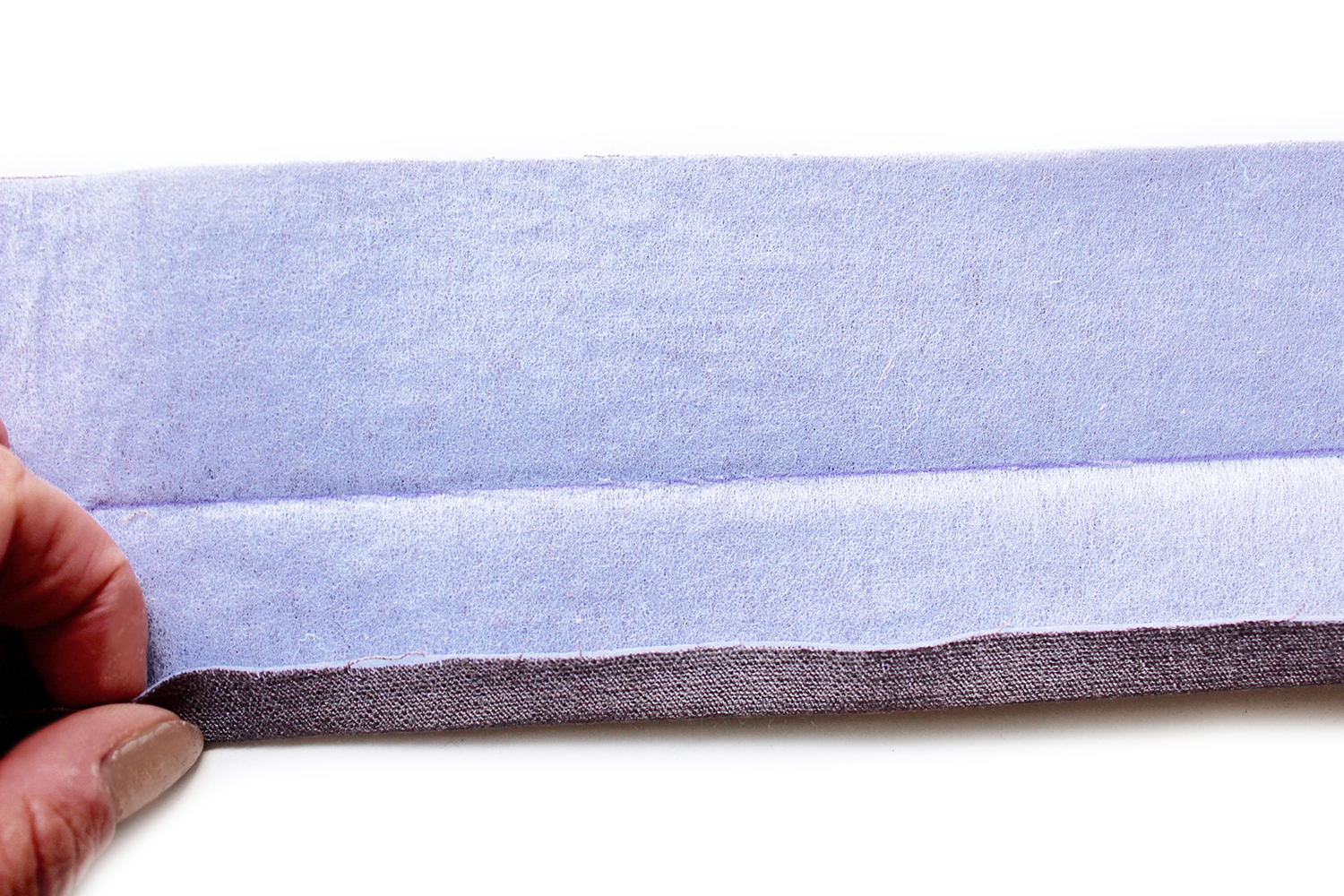 Fold over and press 1cm to the wrong side all around one long raw edge of the waistband.
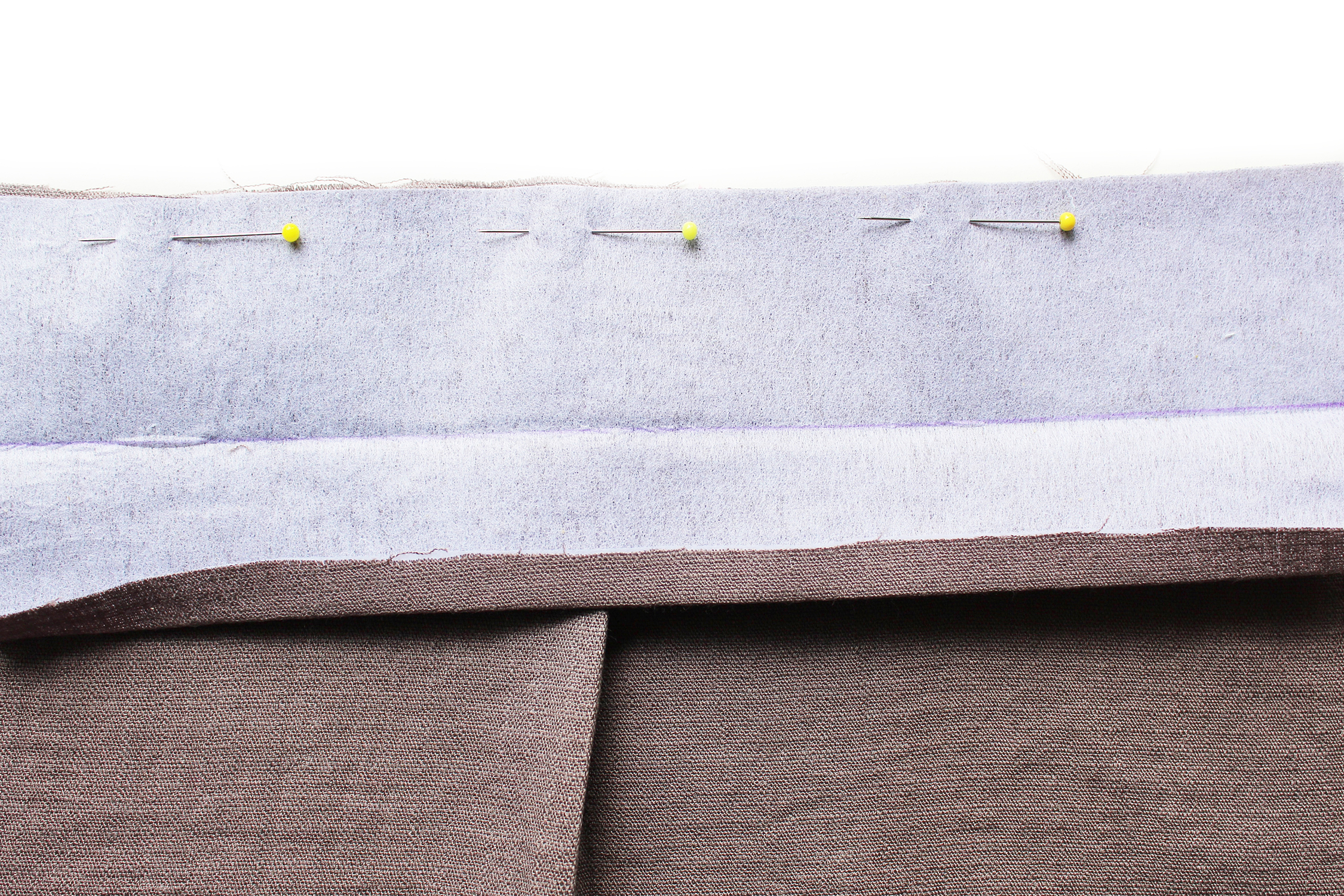 Pin the waistband unfolded edge to the trousers top edge., match up the side seams and align the back and front. Sew all around.
 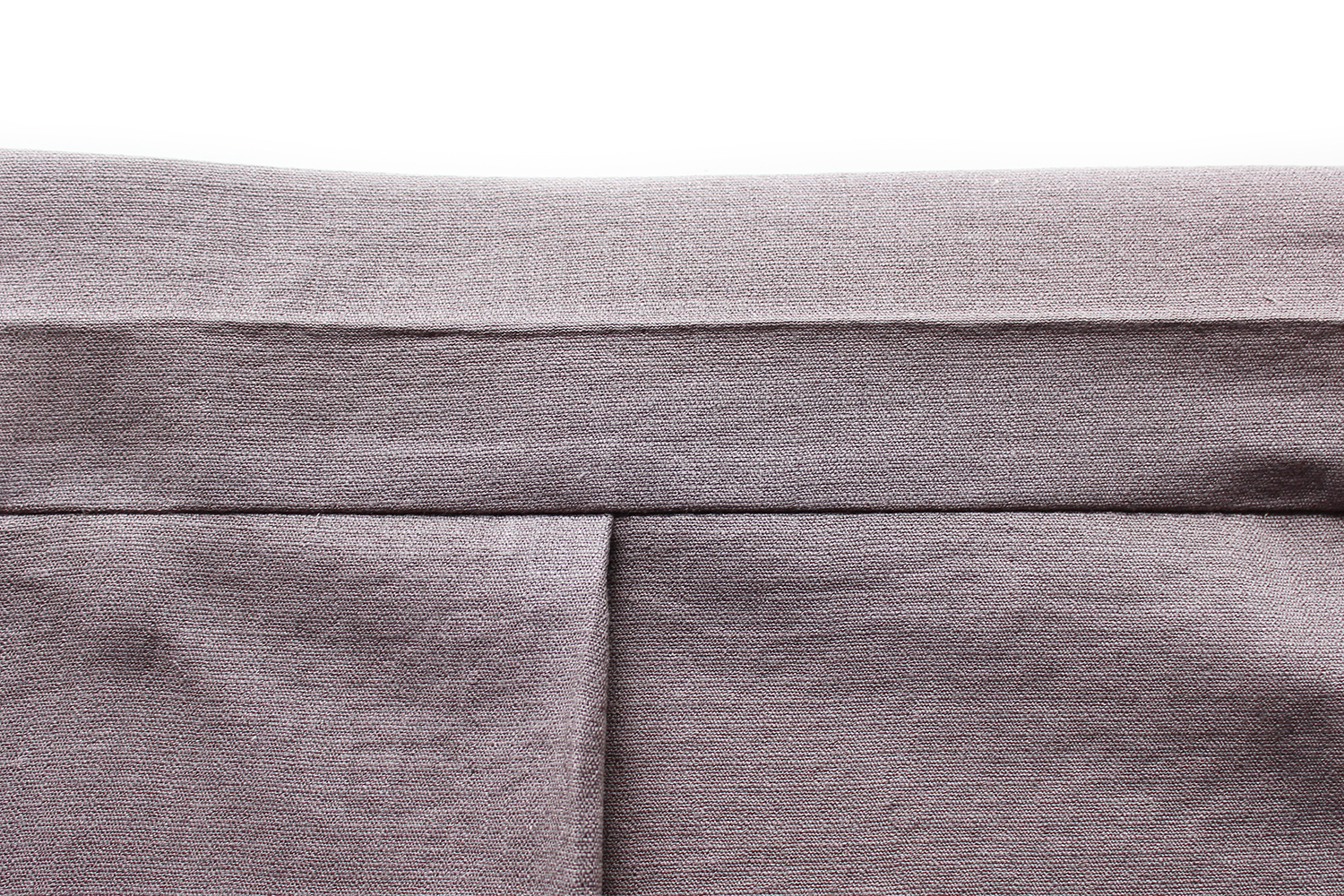 Fold the waistband up. Press at the seamline.
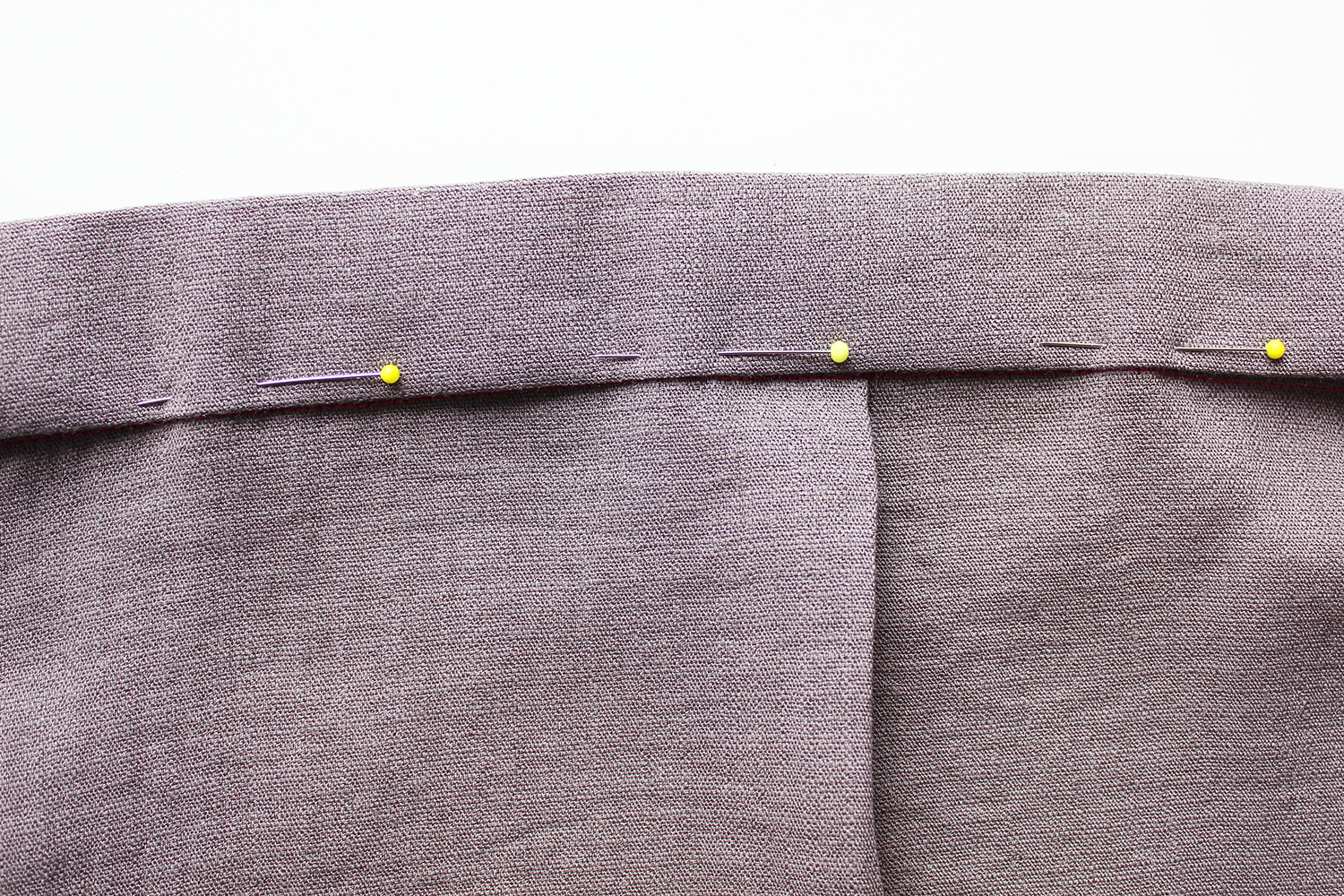 Fold over to the reverse side of the waistband encasing all the raw edges, keep passing the fabric along the elastic so you are always working with a flat piece of waistband.
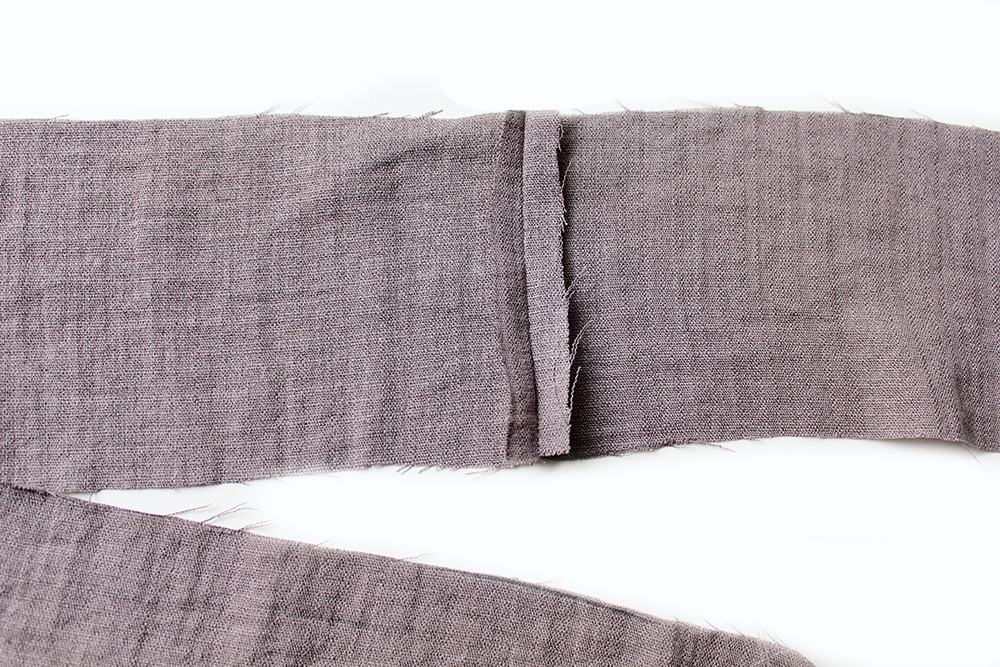 Join the tie pieces with the RST. Press the seam allowances open.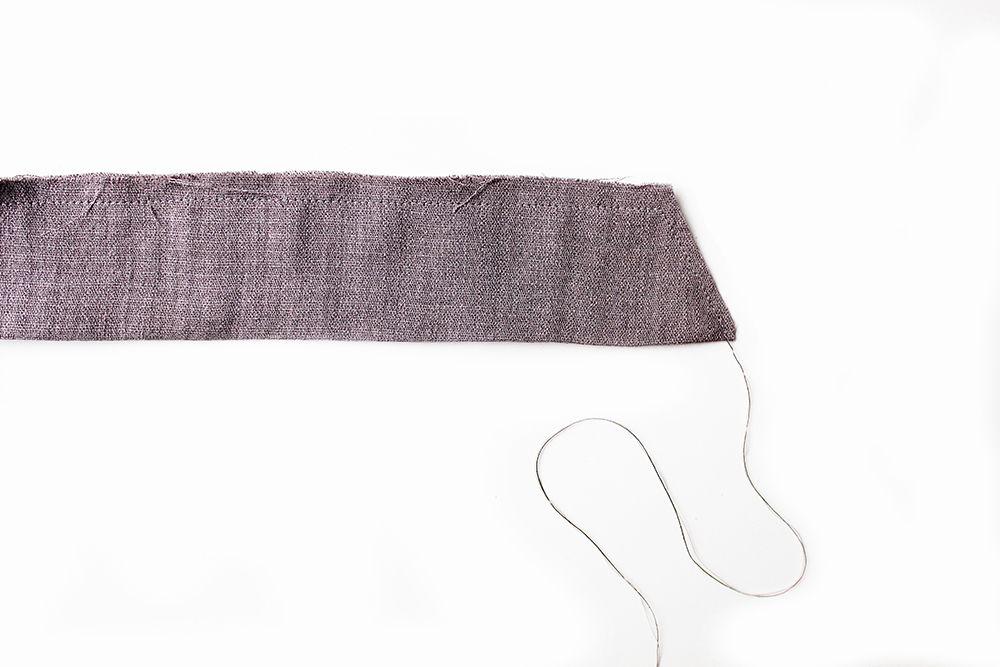
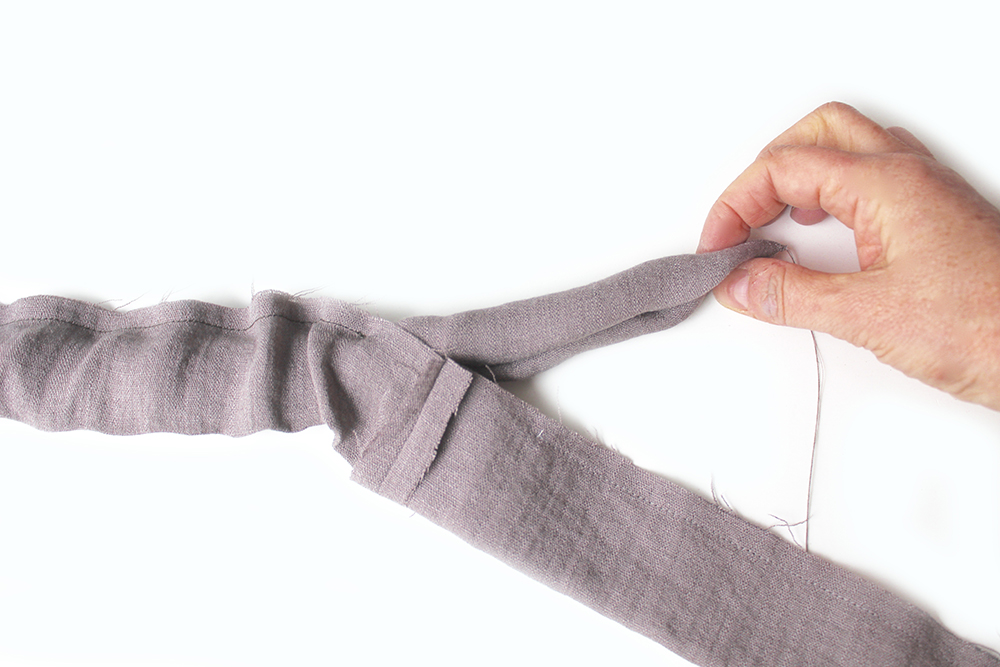
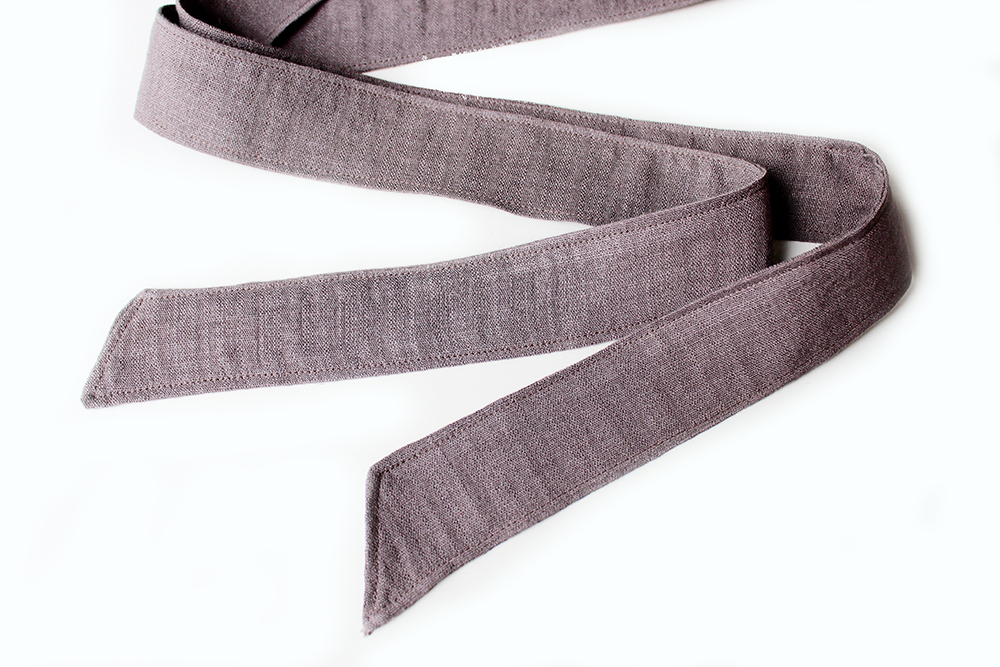
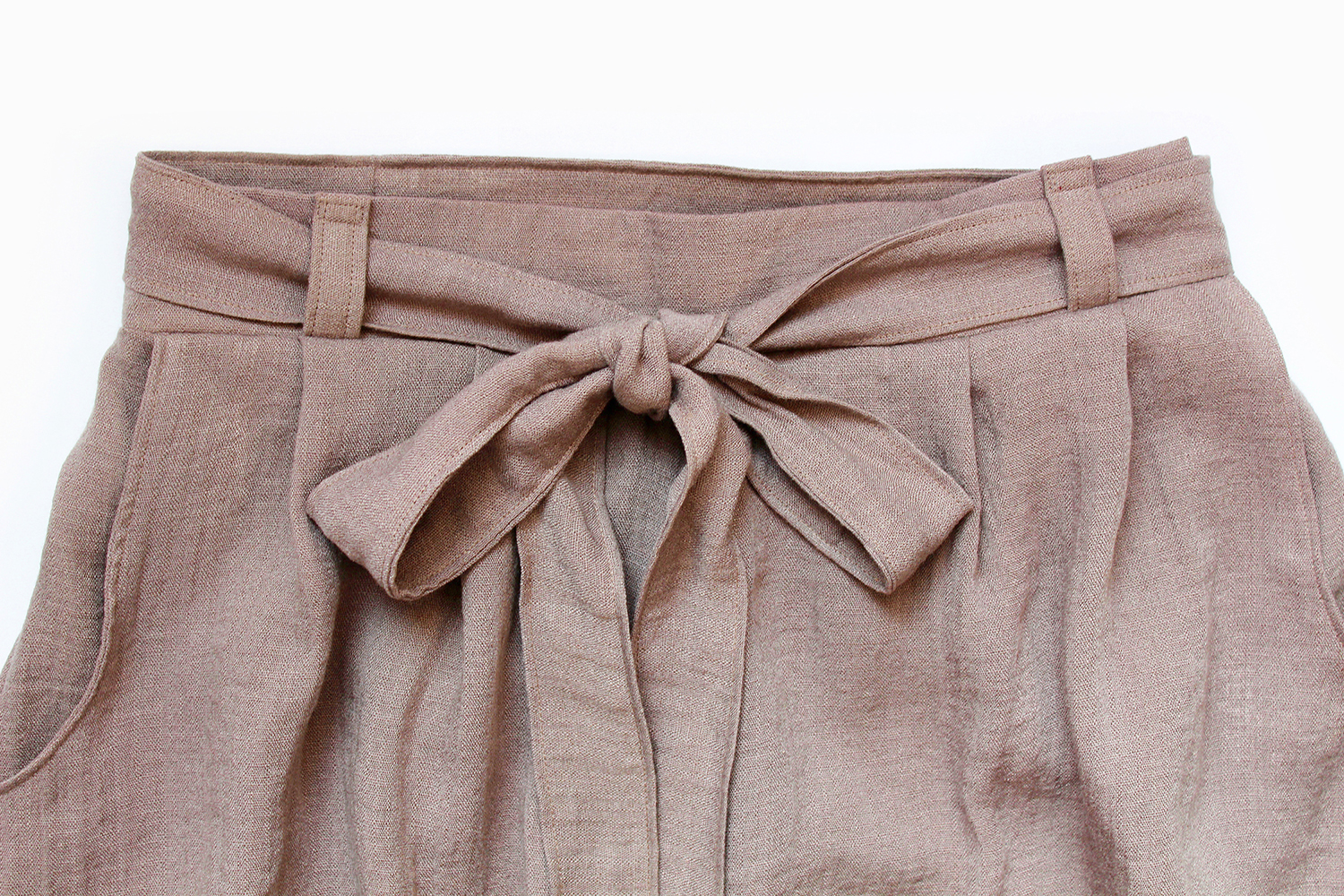
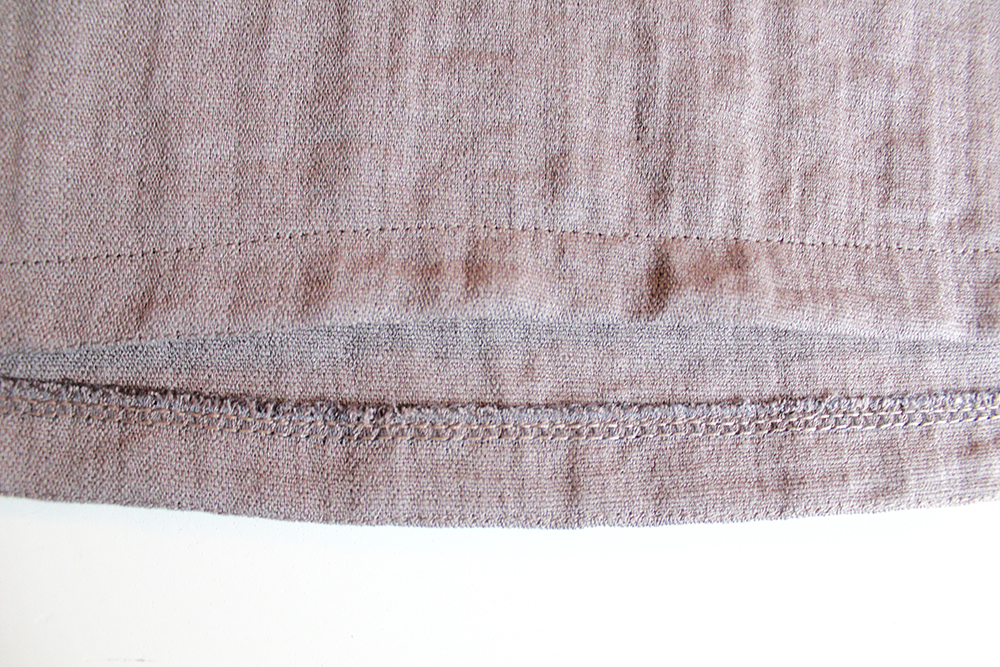
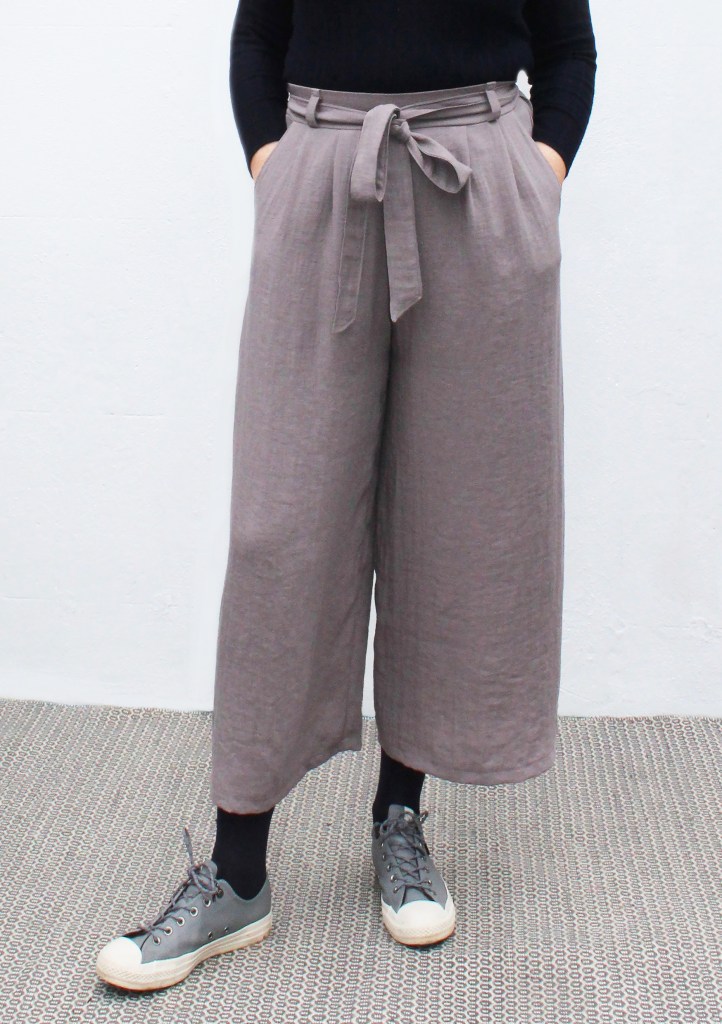
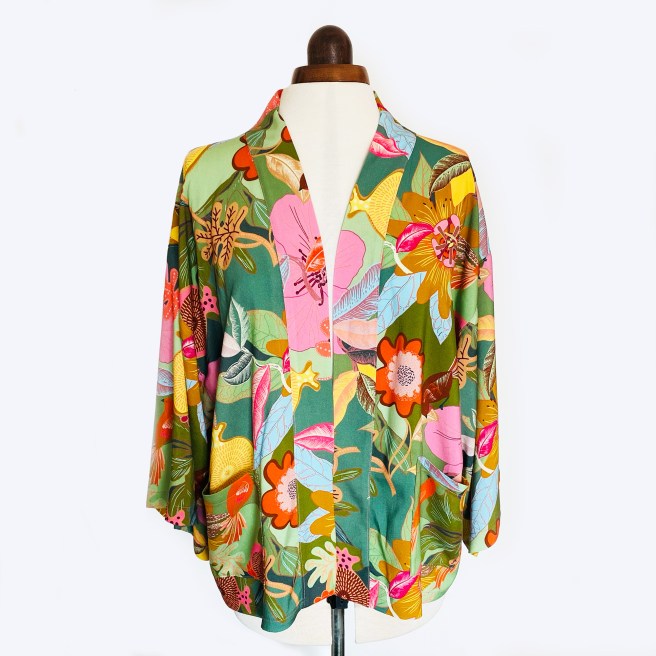
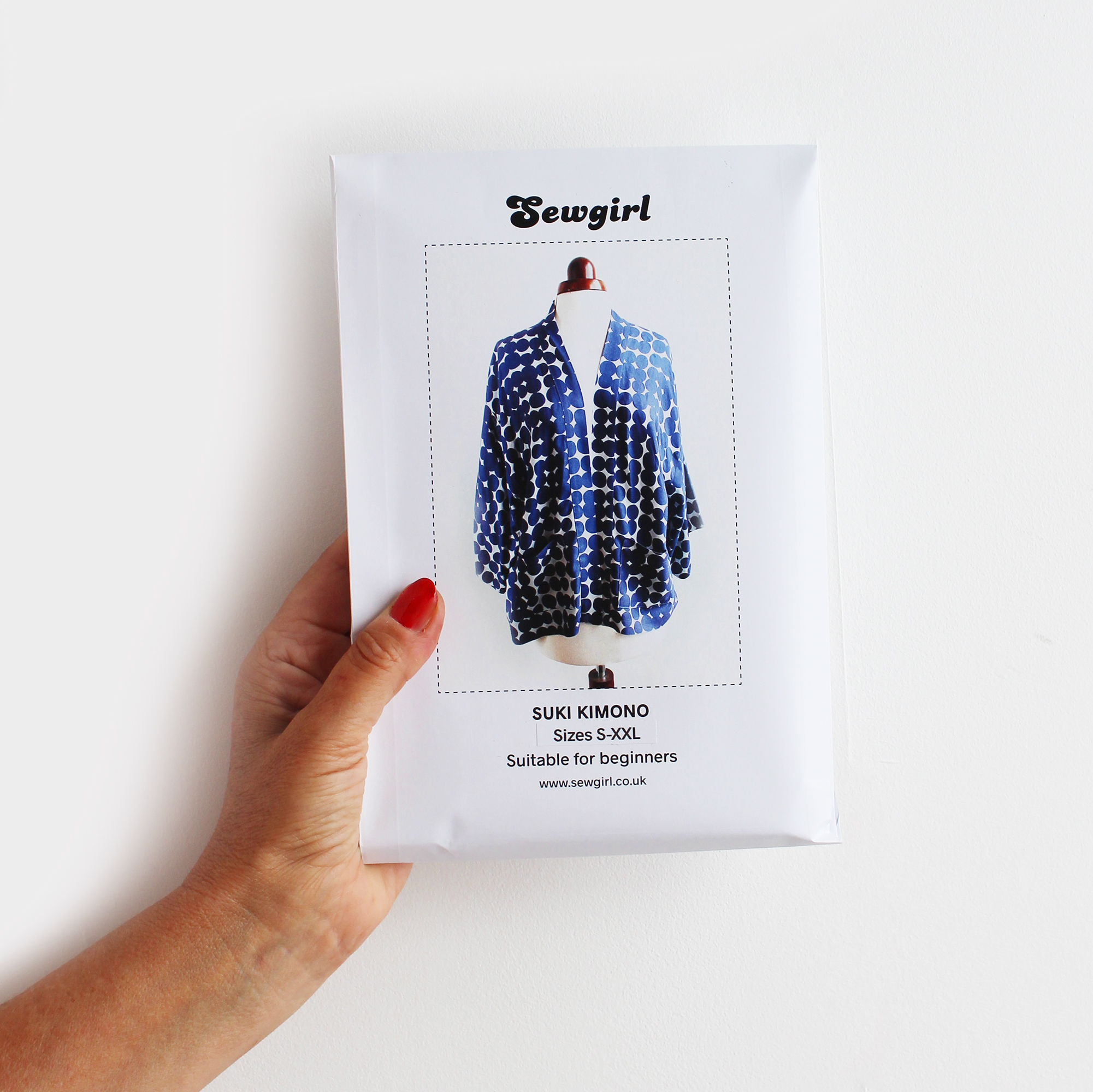
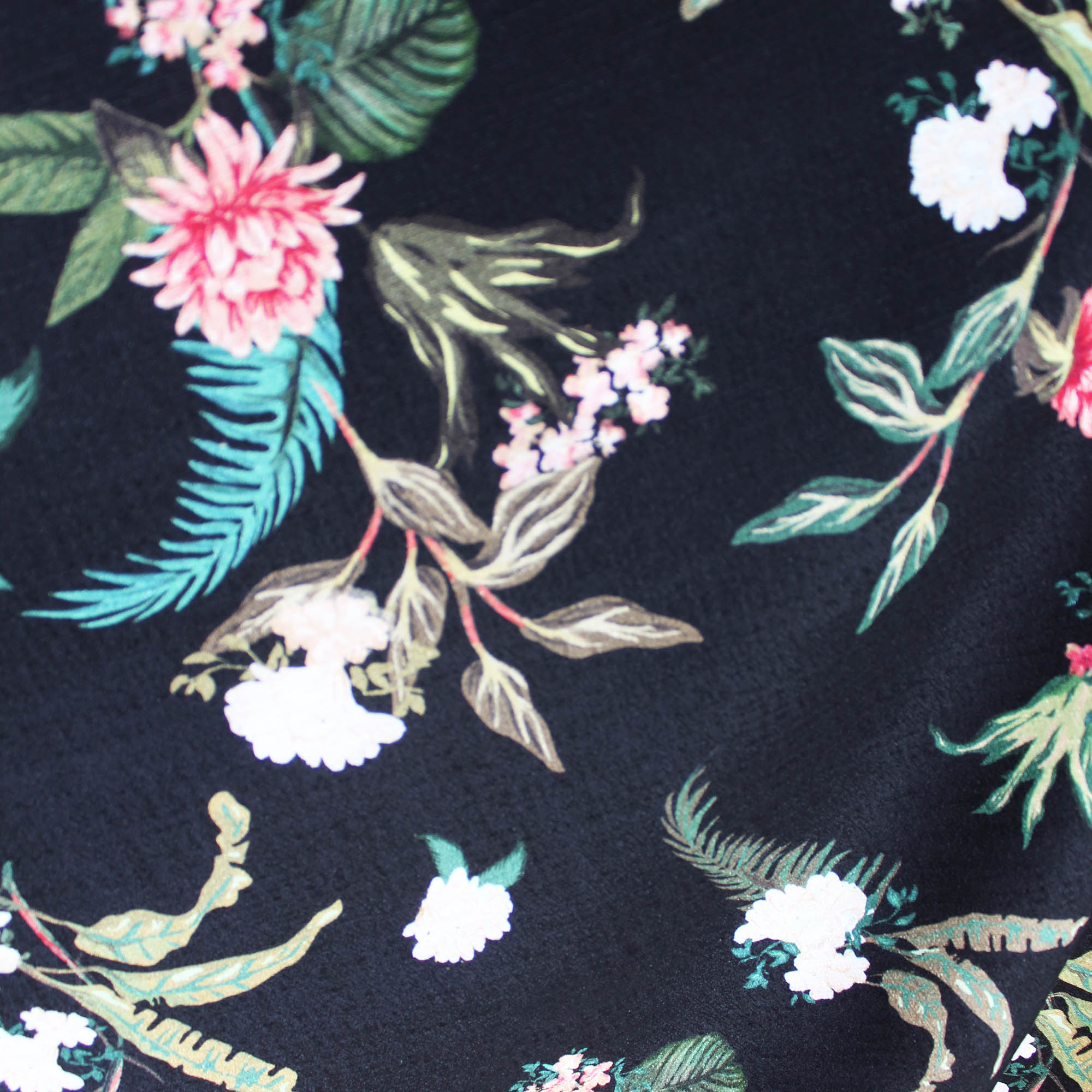
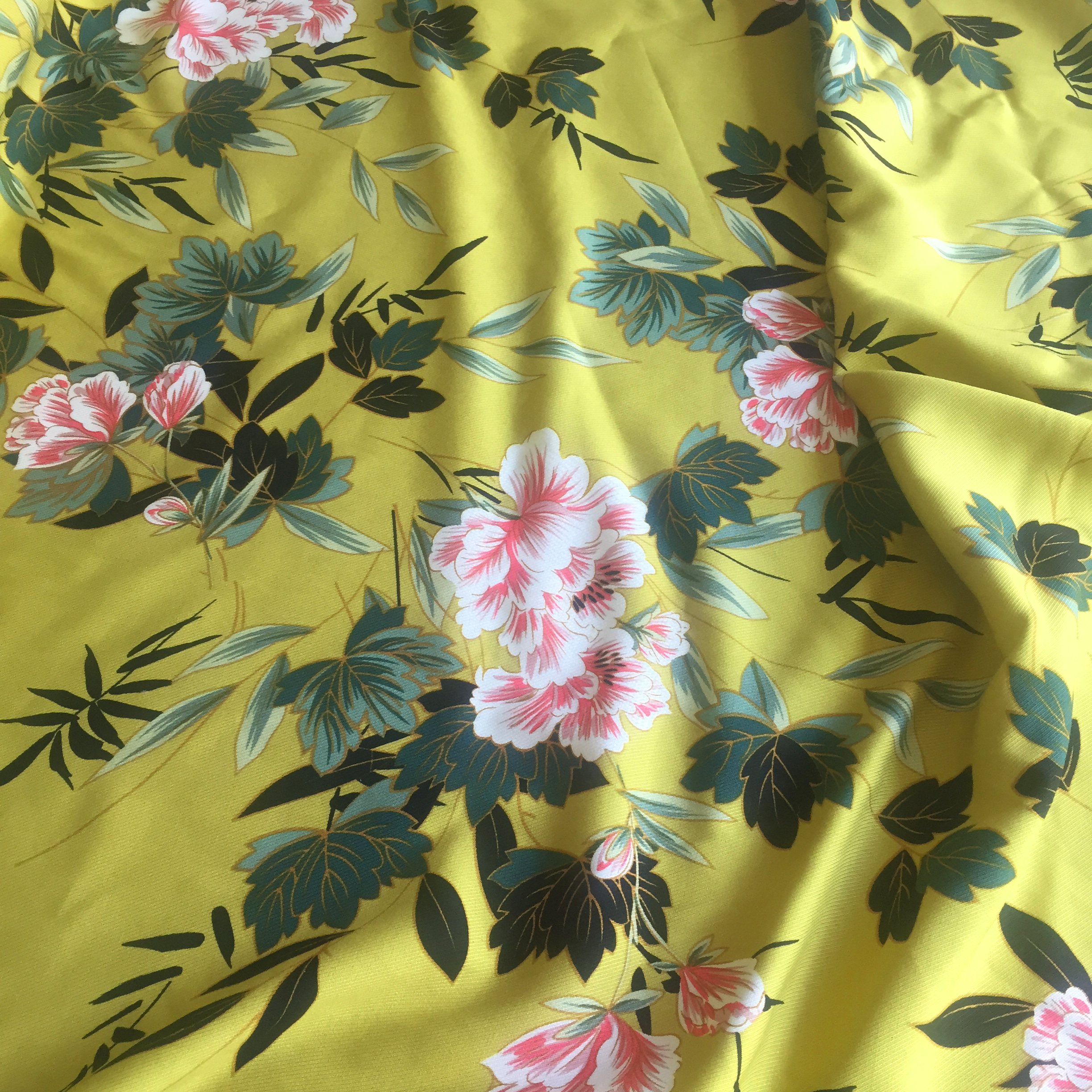
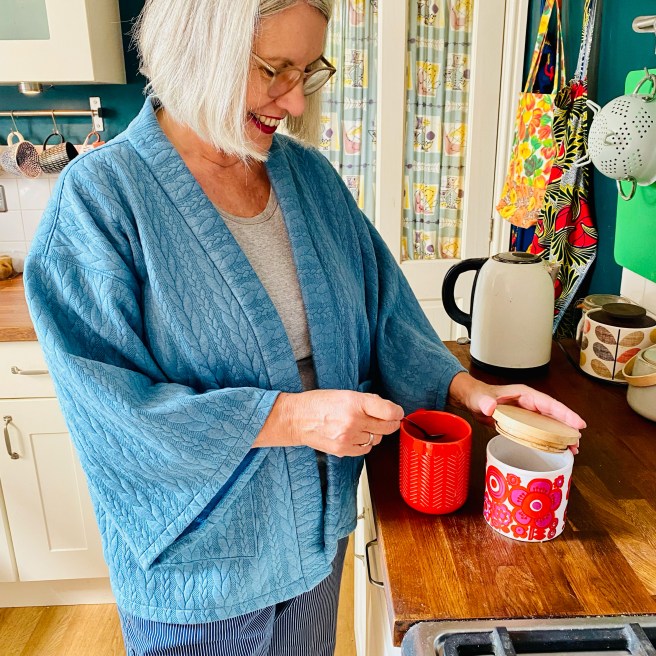
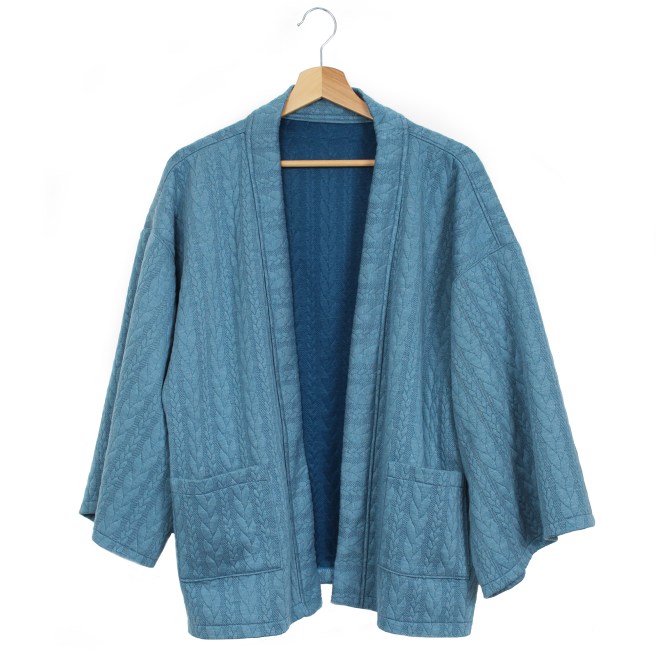
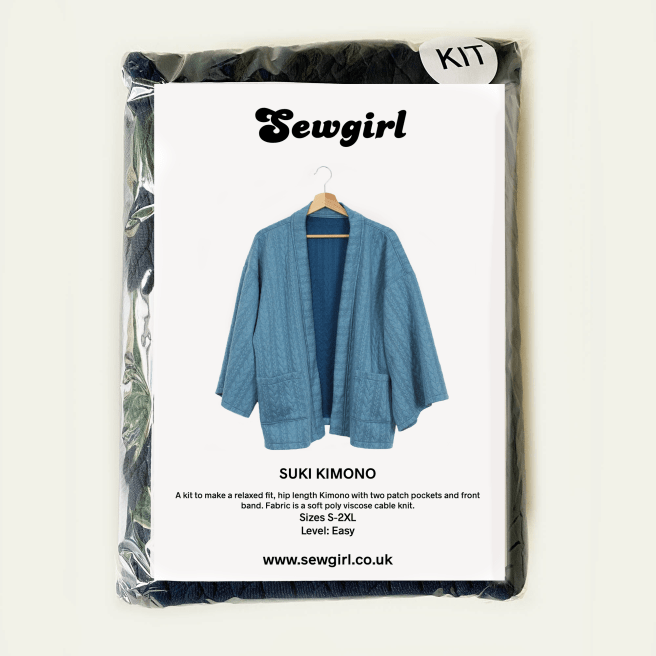


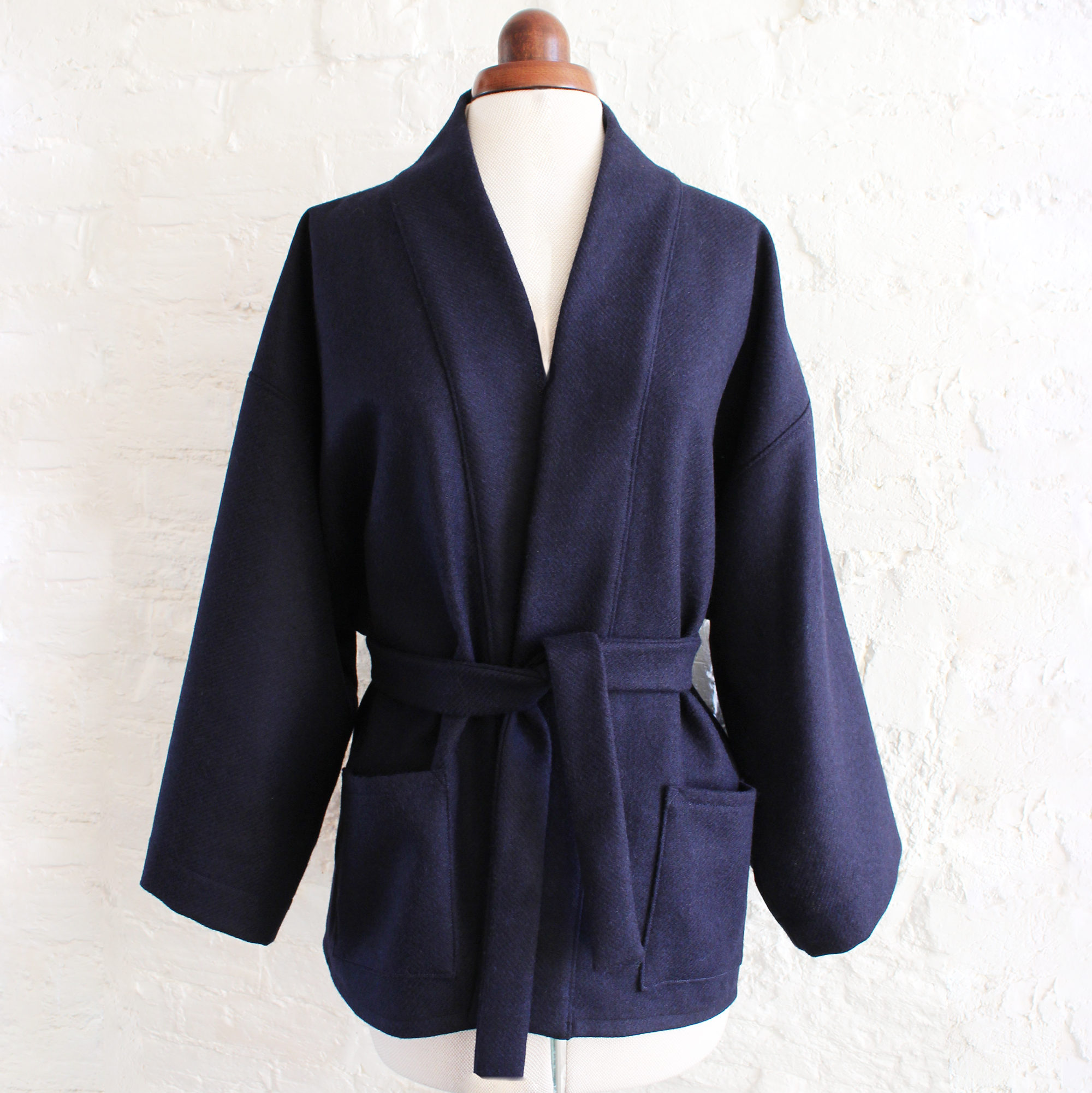
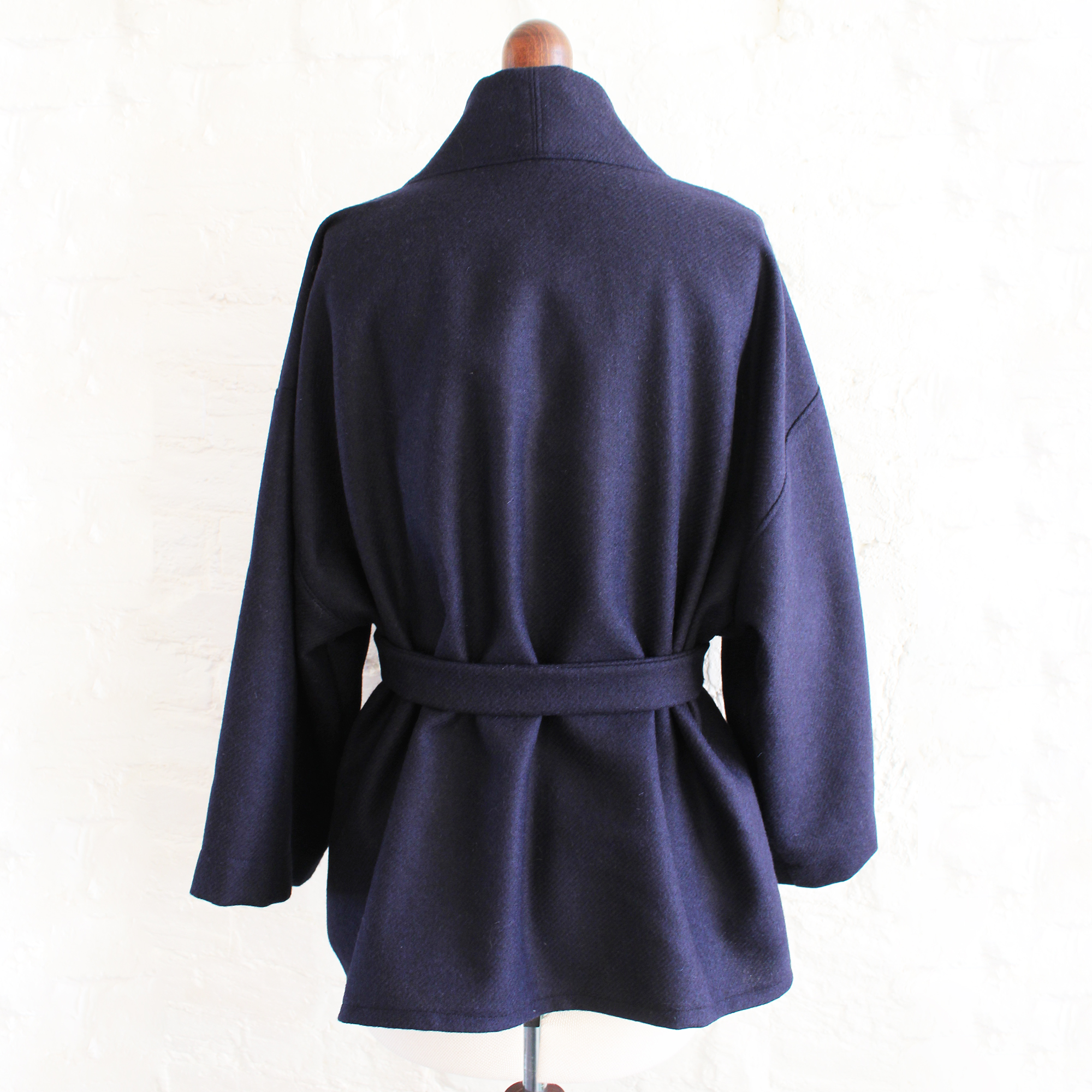
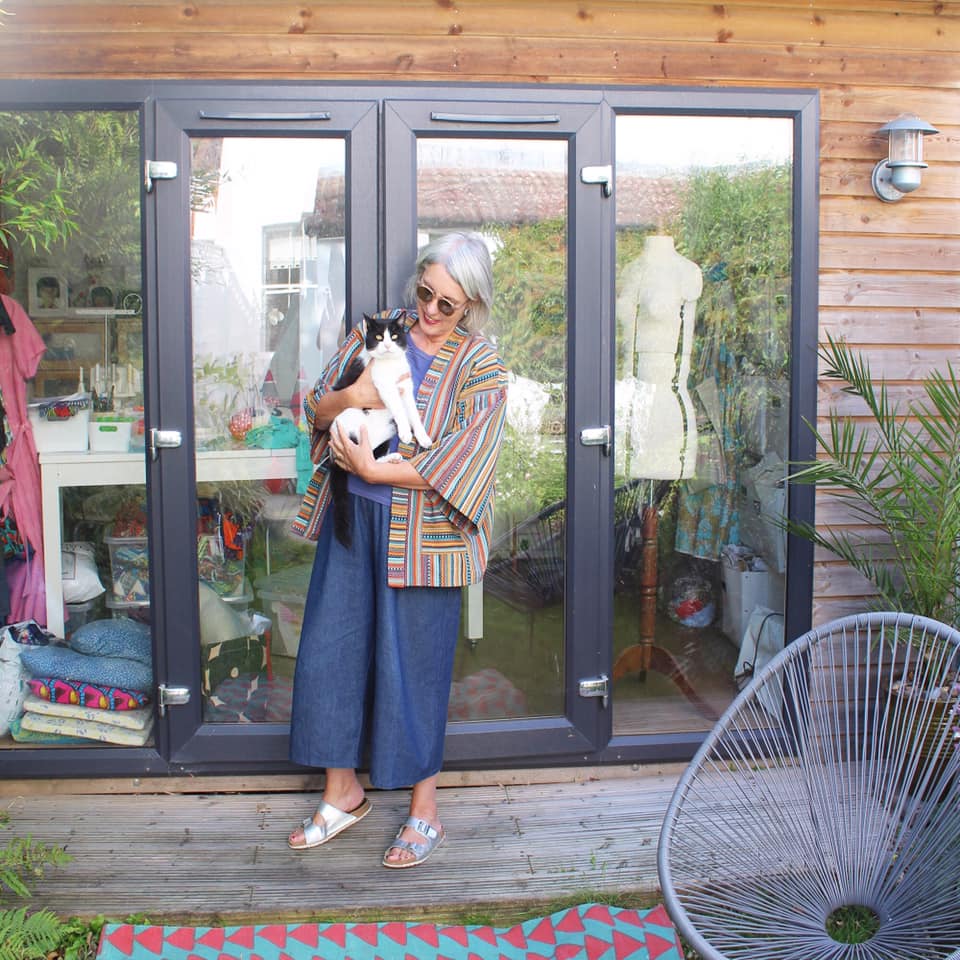

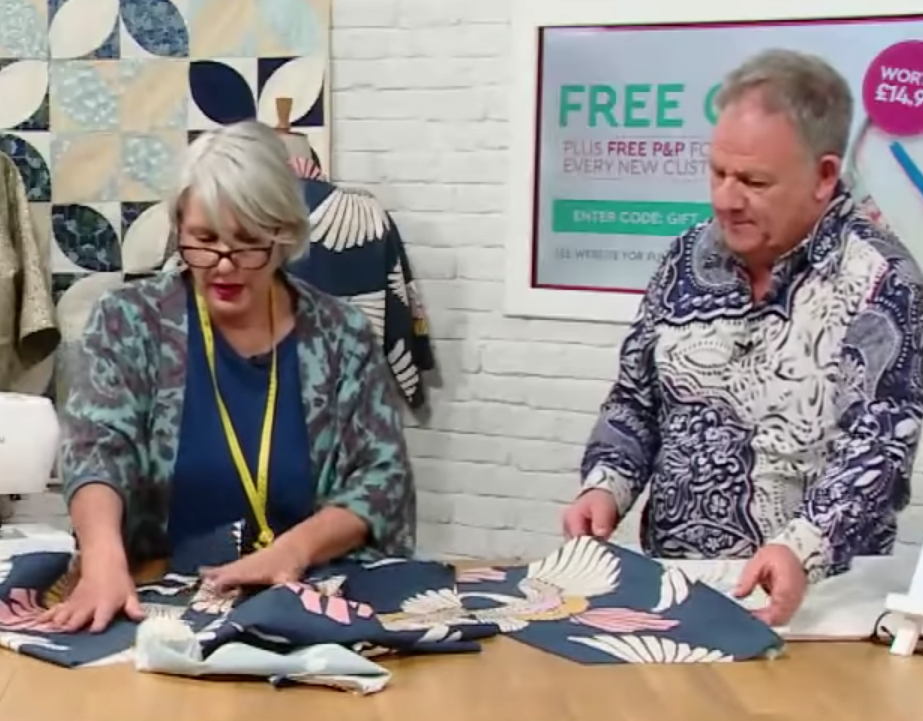

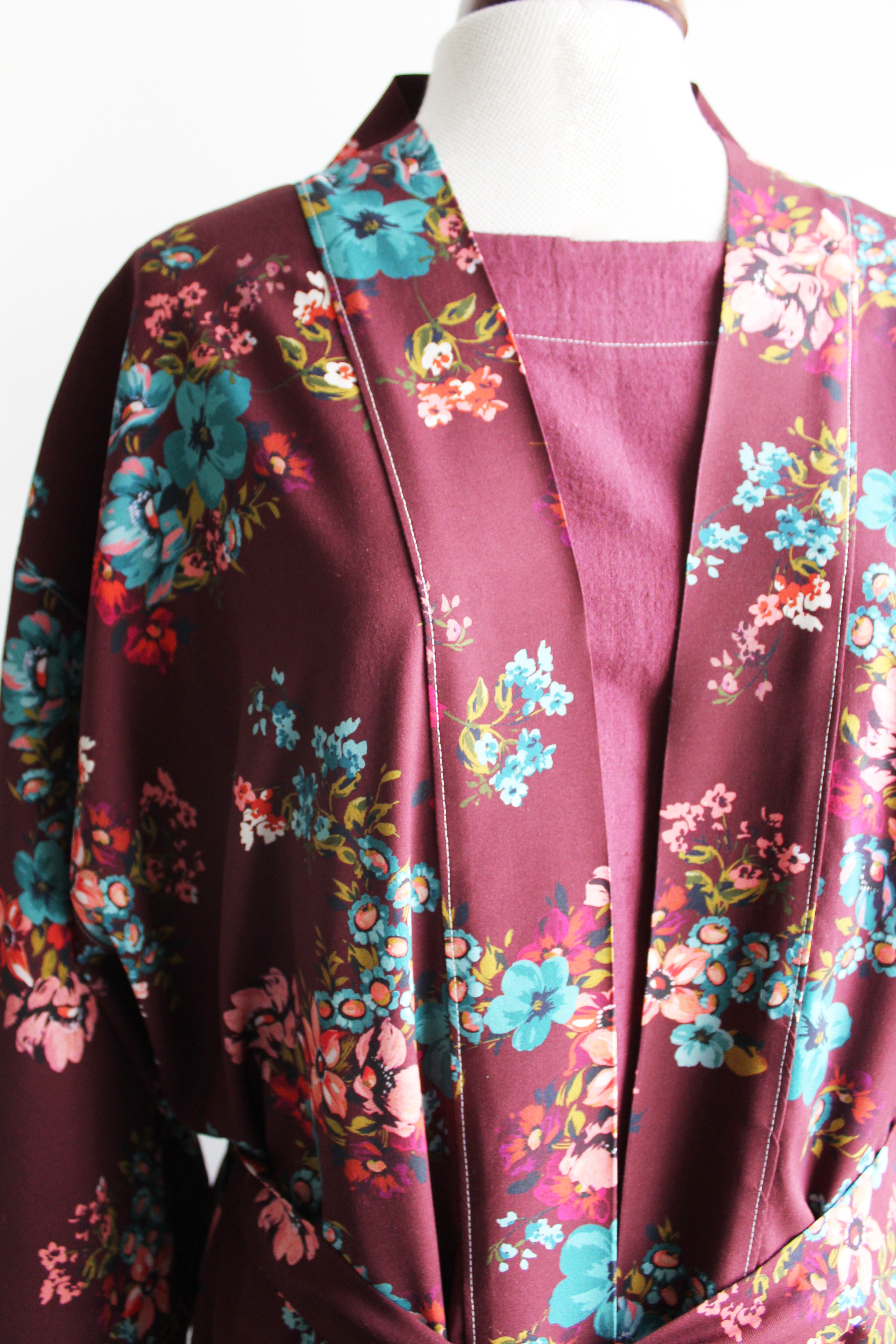 EXTENDING THE OVERALL LENGTH: You can make the kimono longer by using the larger sizes length lines or by extending the length of your pattern. You will need extra fabric if you make your kimono longer, so another half metre should be fine or +80cm, if you want to add length to your sleeves.
 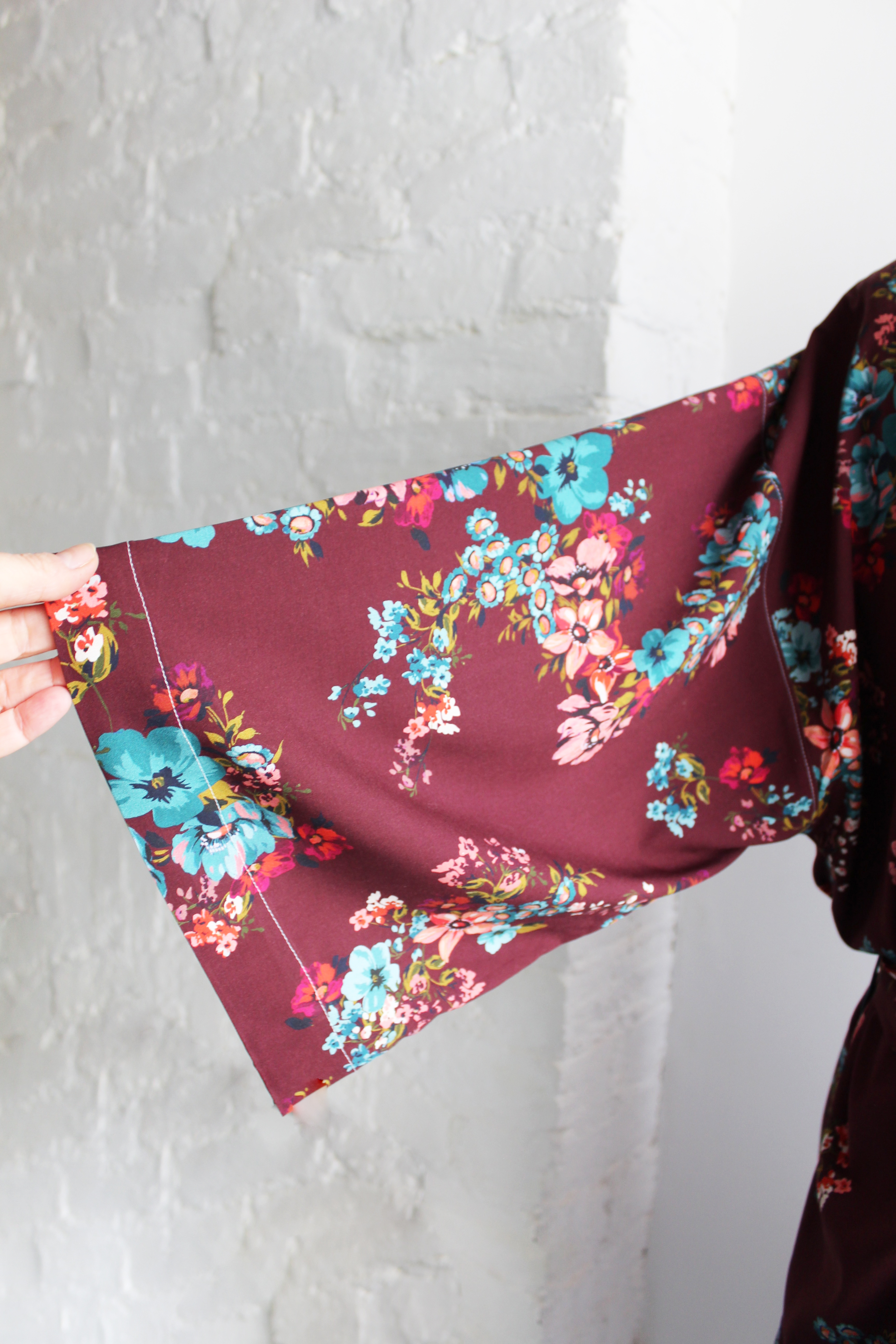 LONGER SLEEVE: You can also extend the length of the sleeve by adding on as much as you like, but remember you will need some more fabric. You will need an extra 10cm approx for 140cm wide fabric and 20cm for the 112cm wide fabric if you are extending the sleeve another 10cm.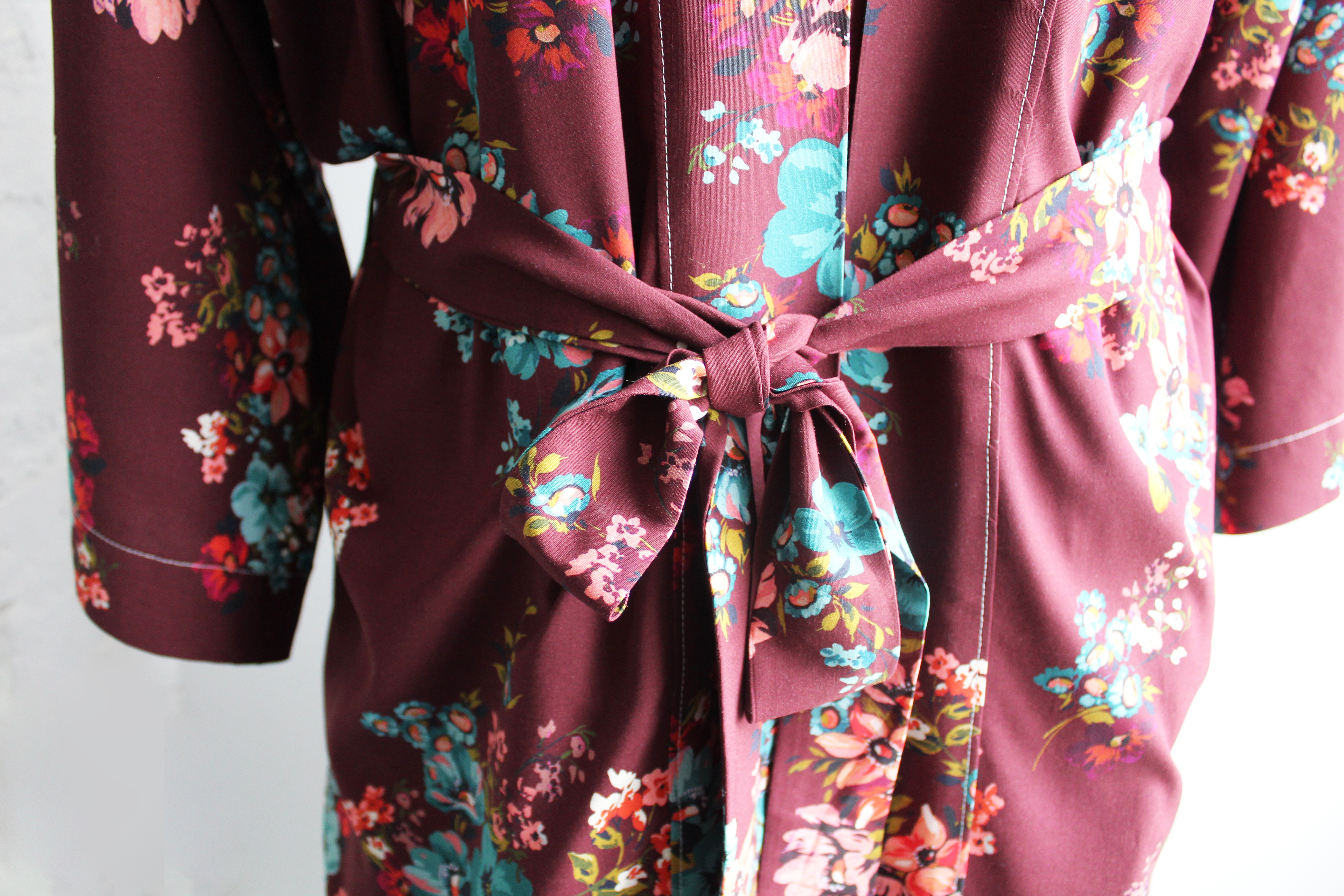
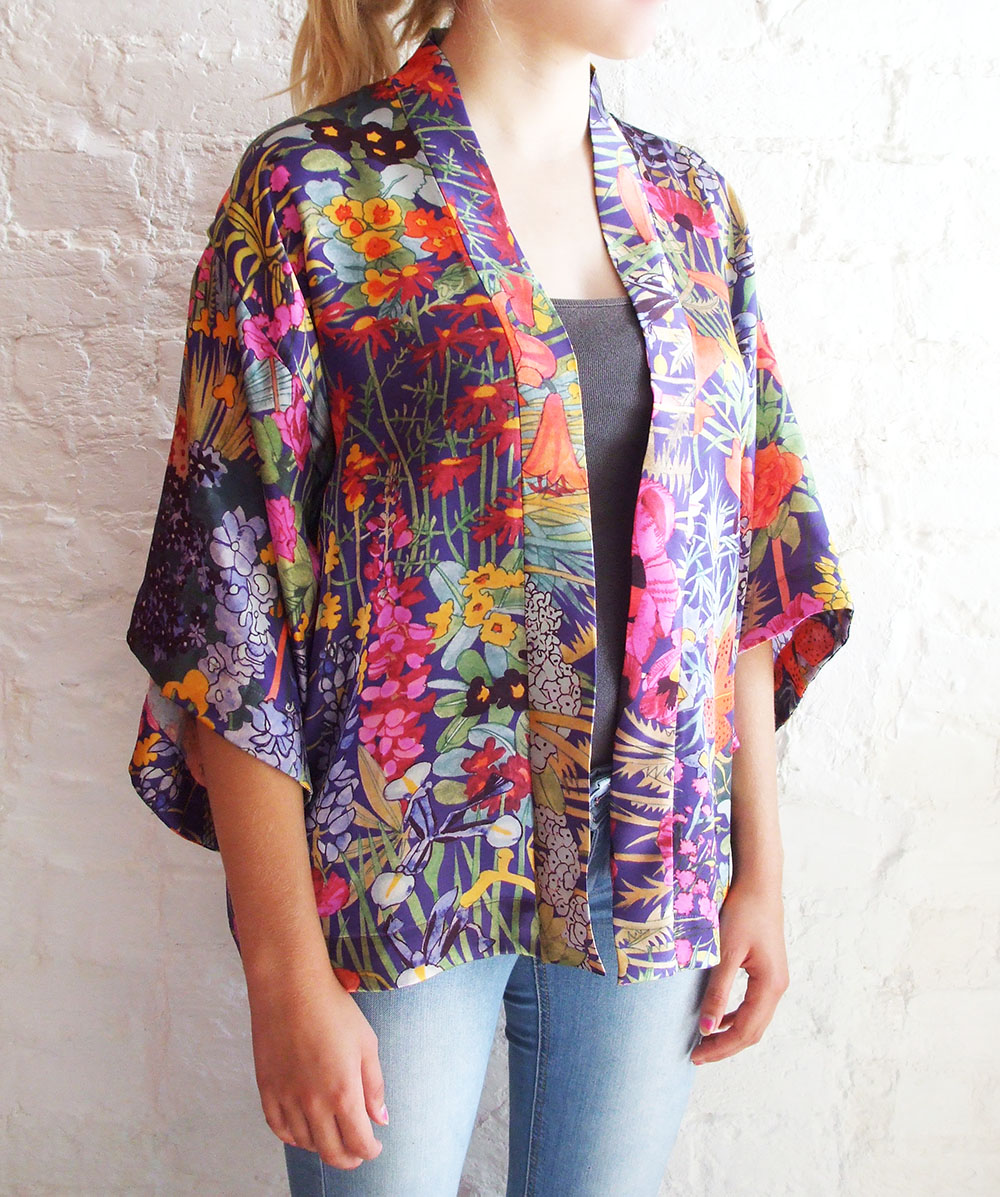
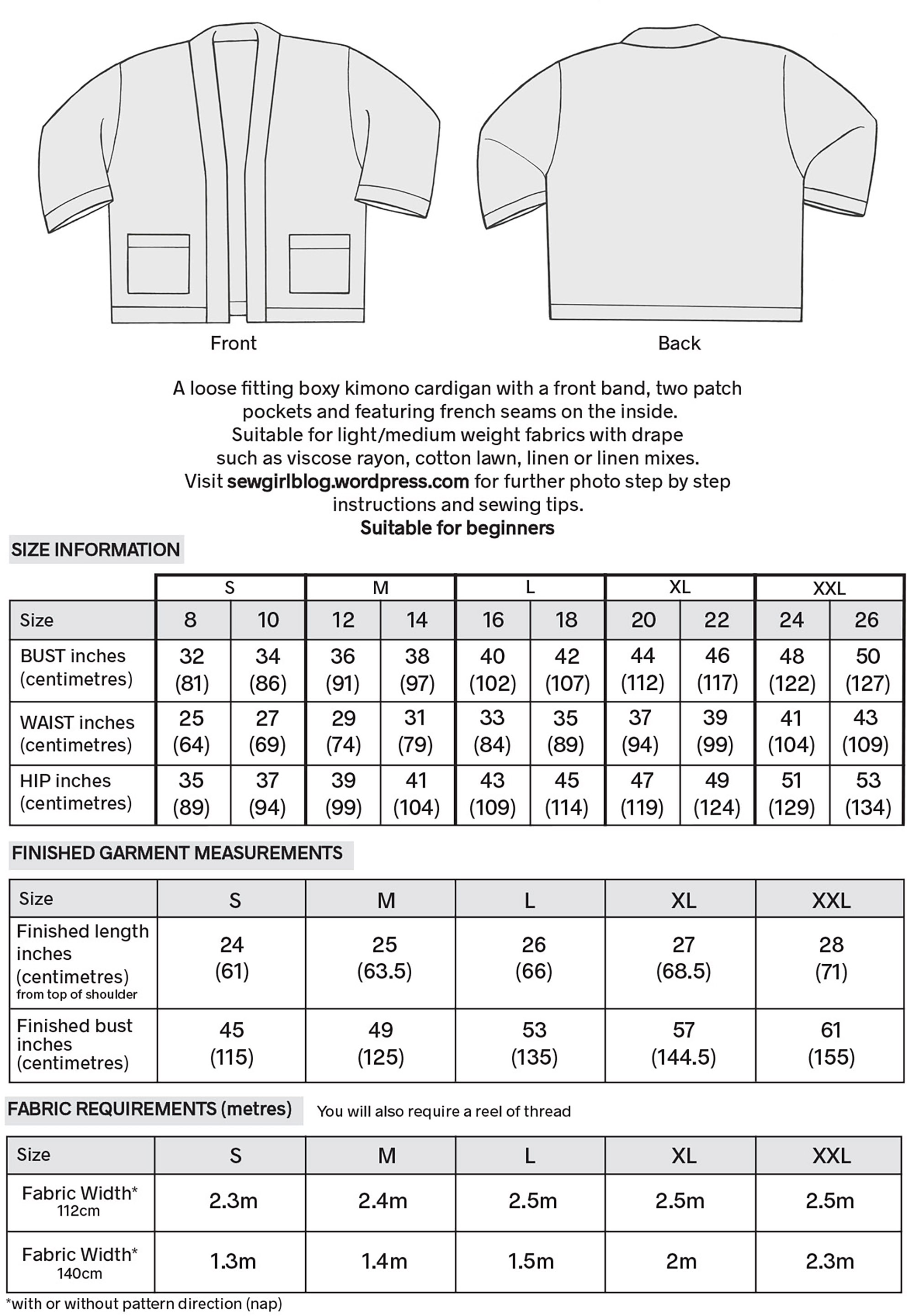
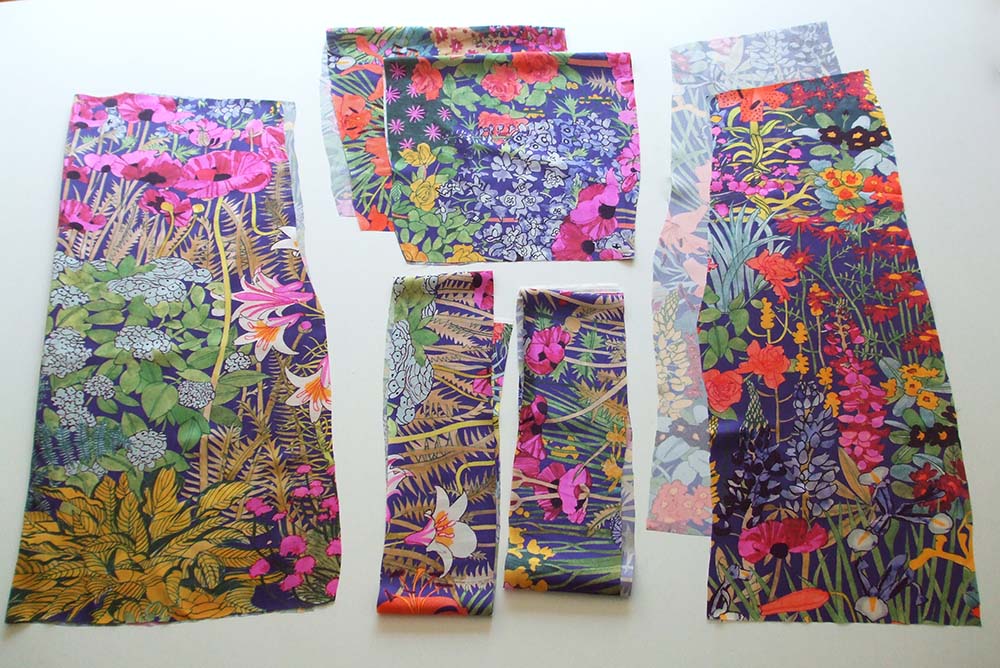
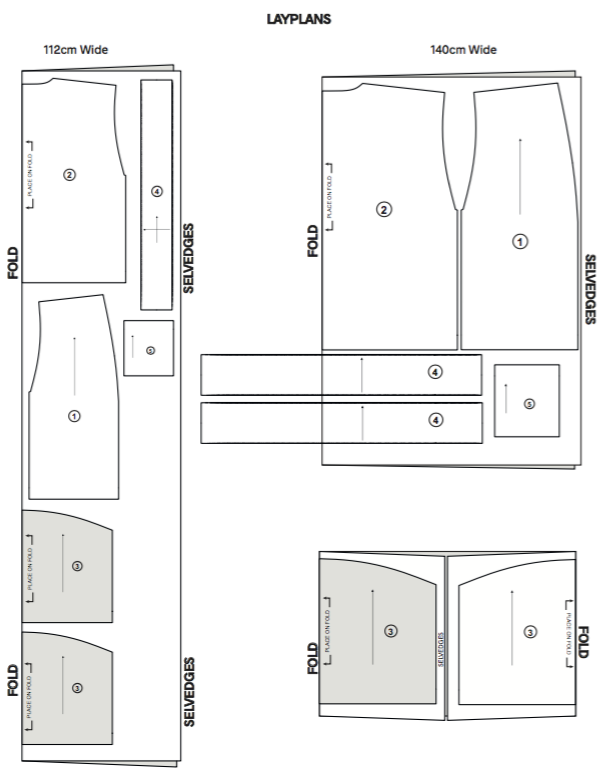
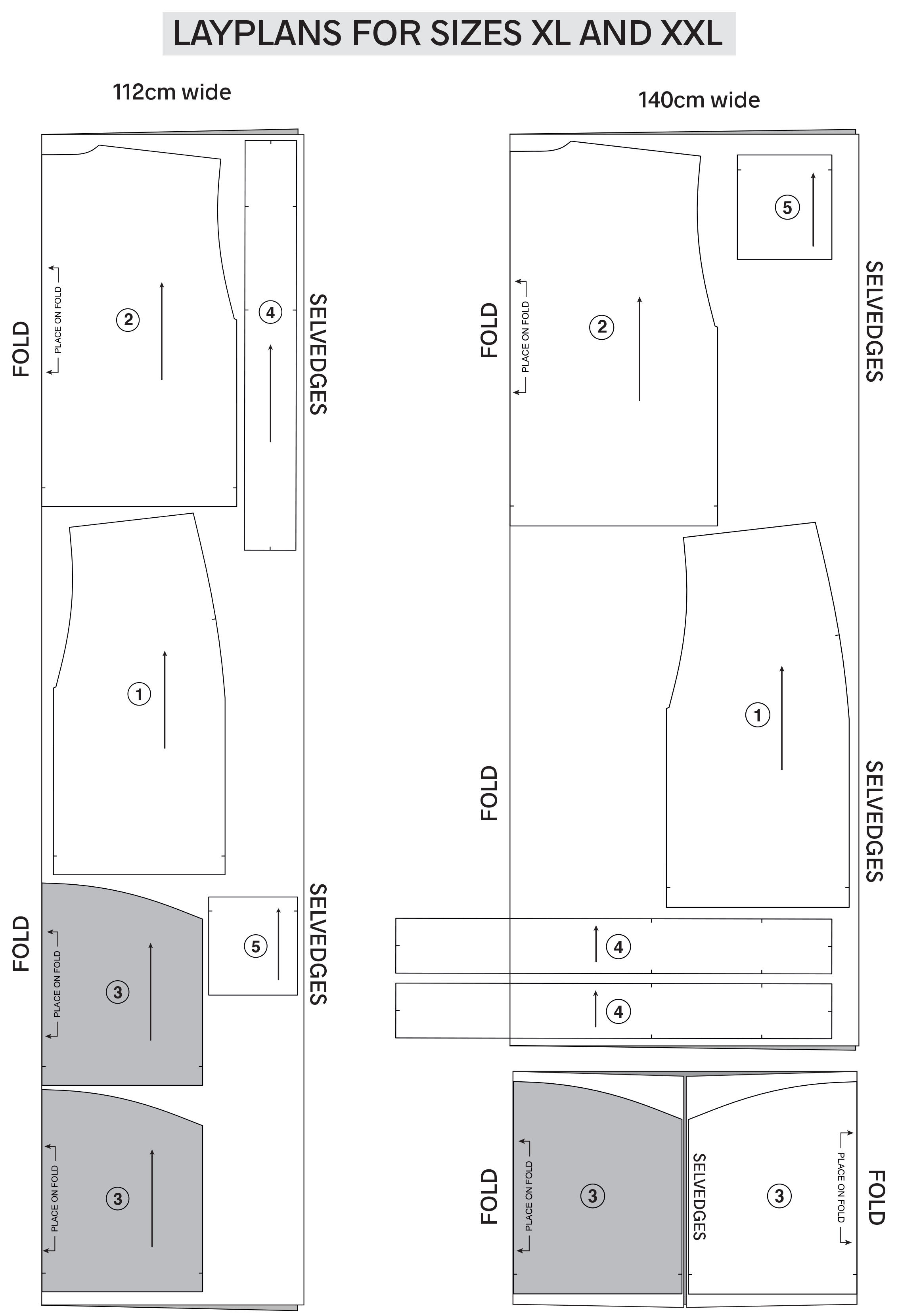
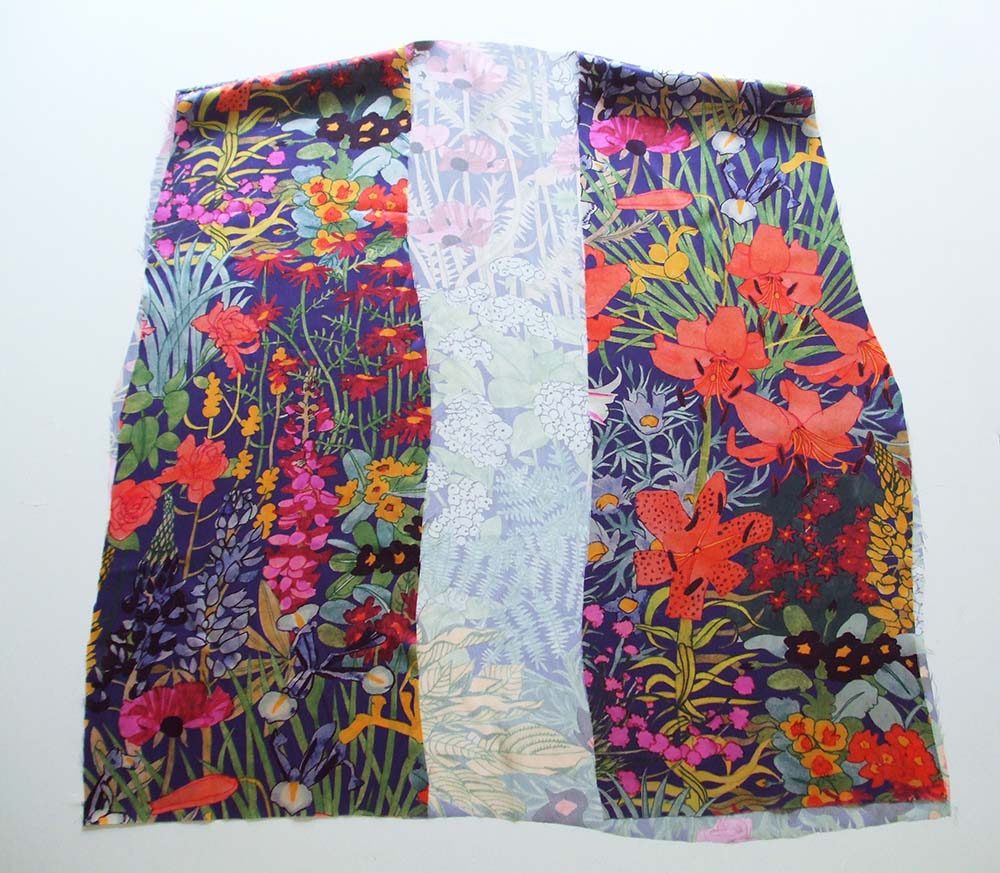
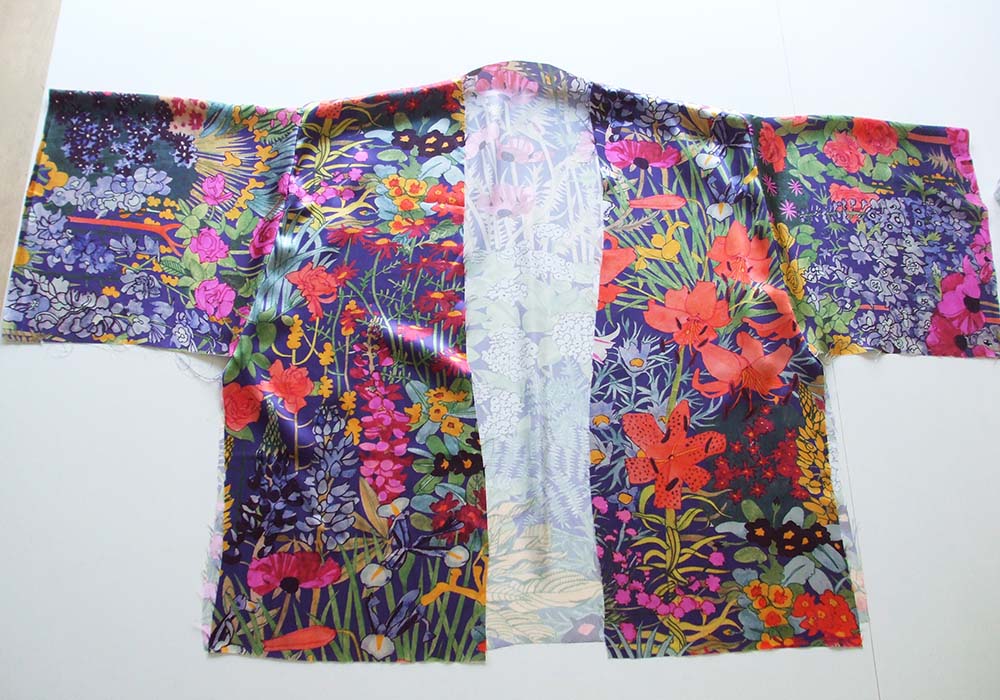 Now pin your sleeve piece to the body at the armhole edge, sew.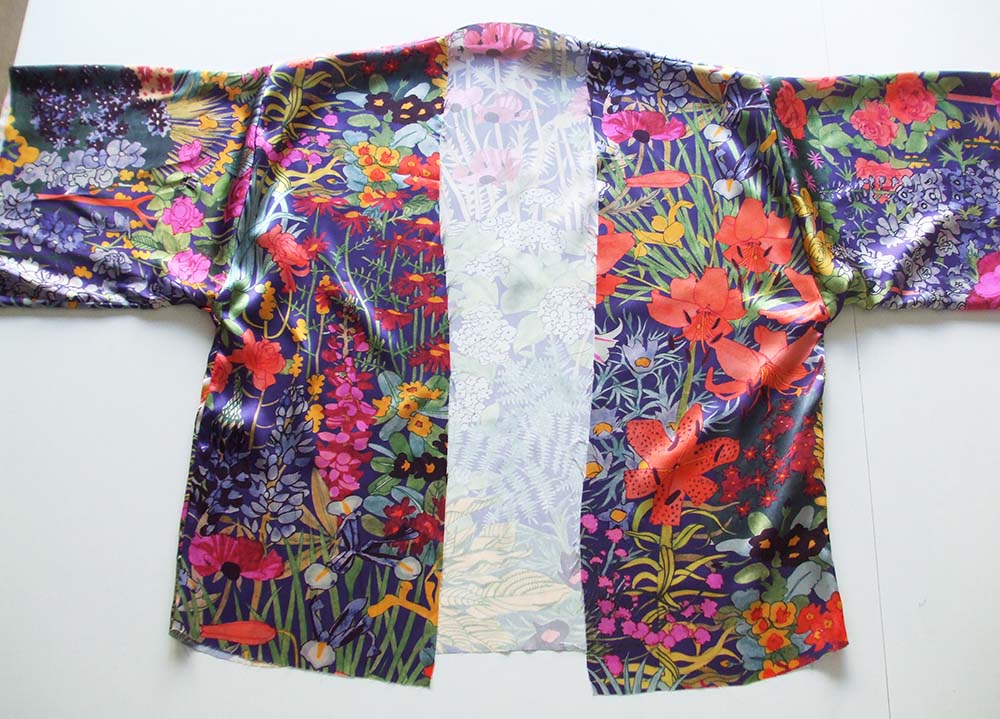

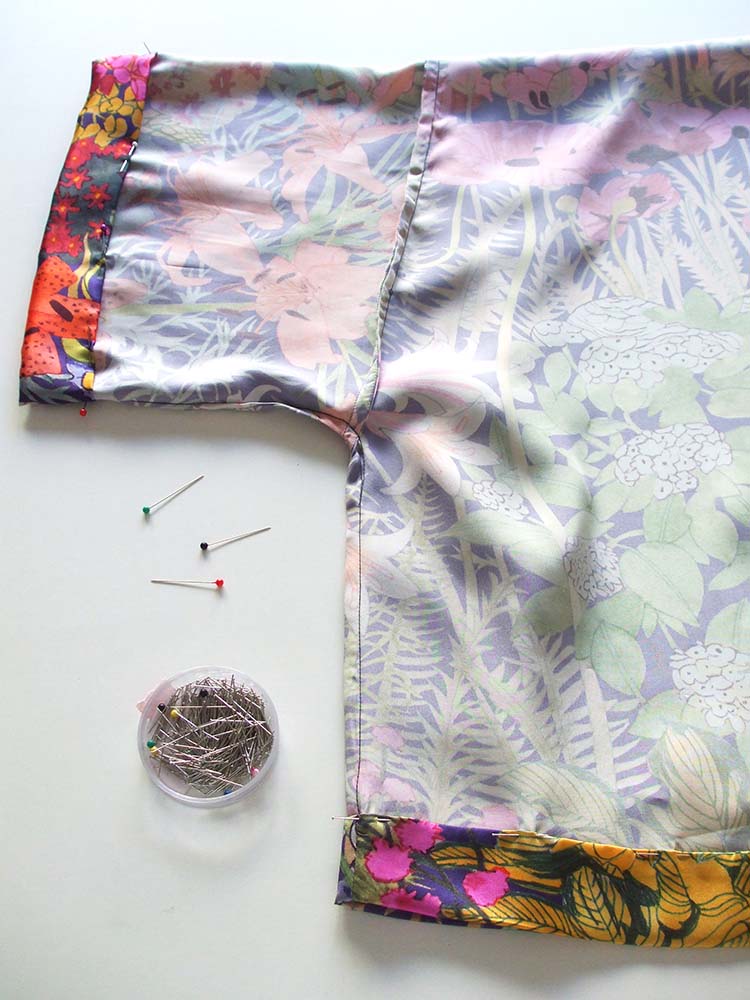
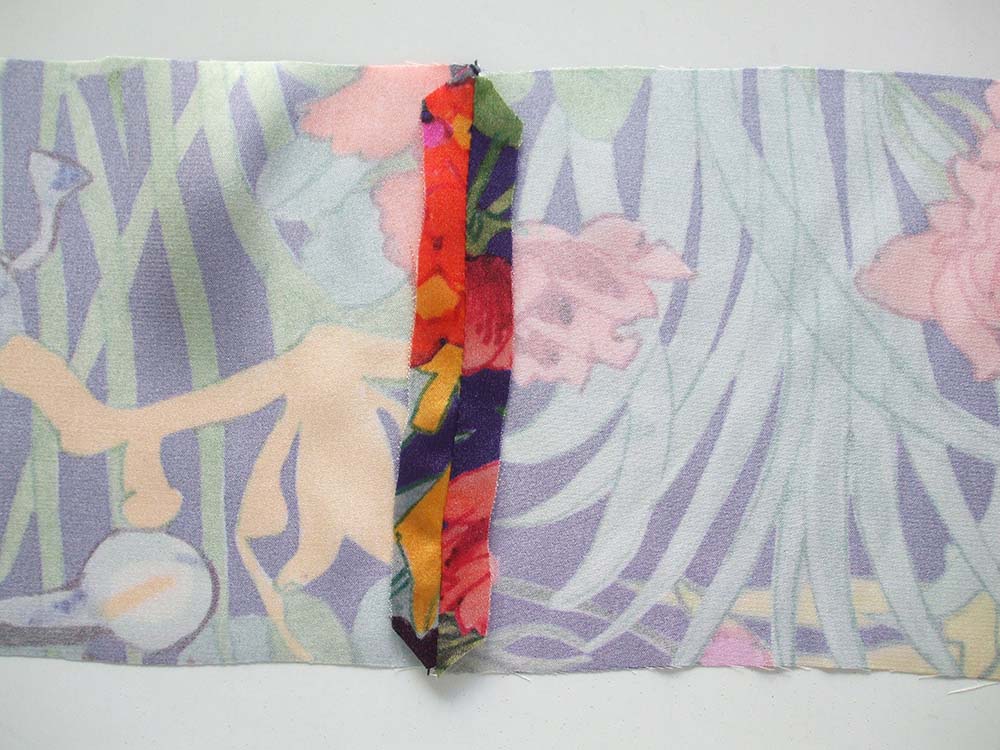
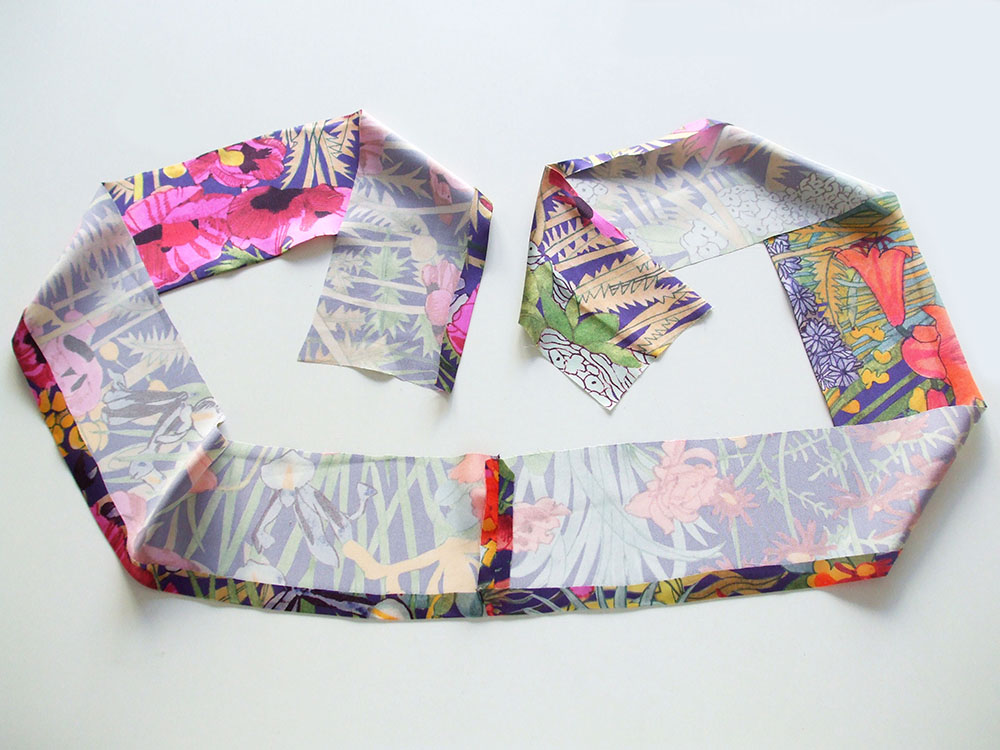
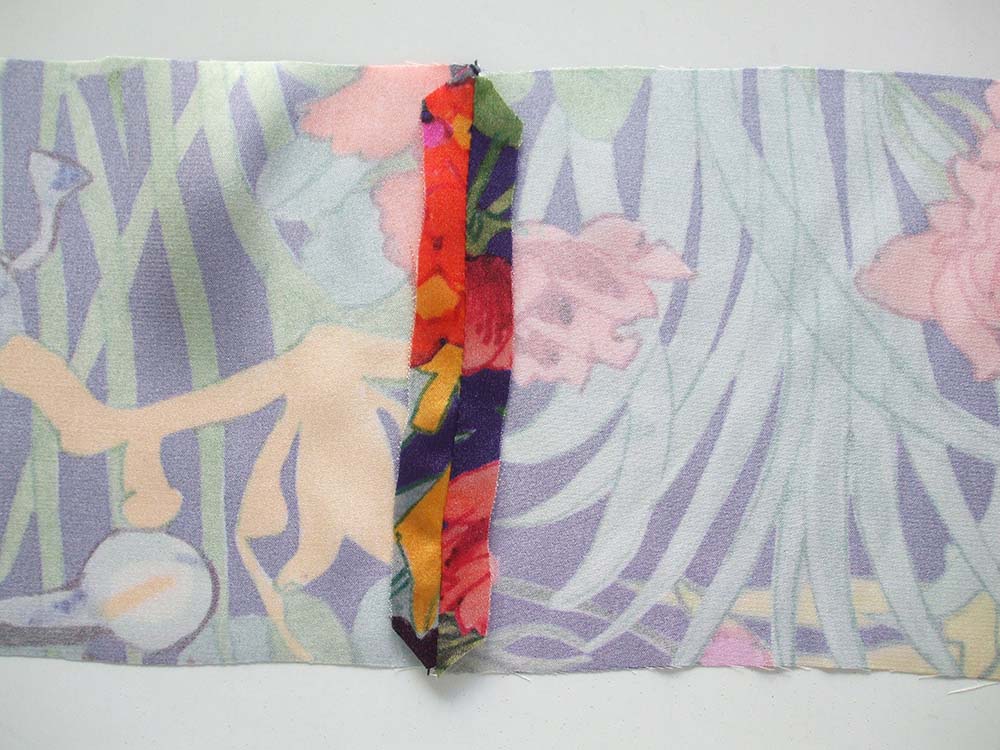
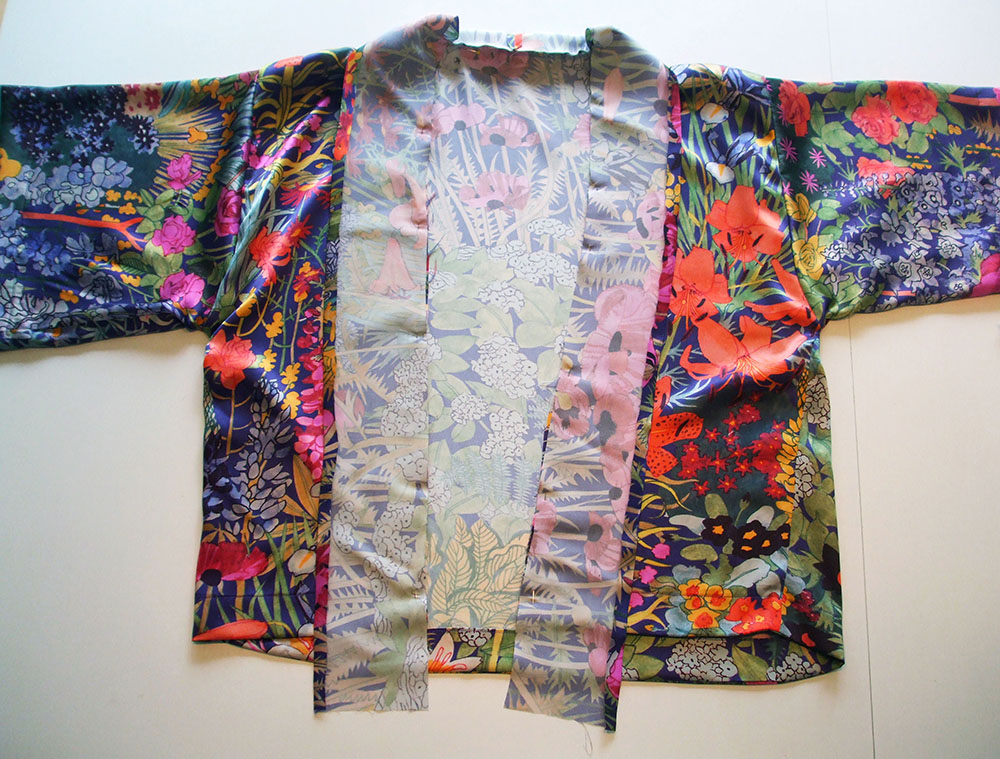
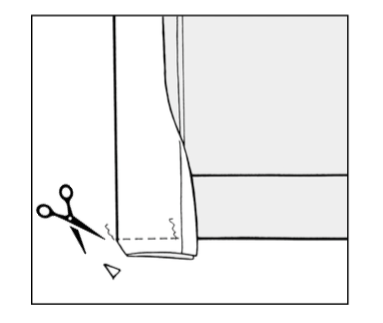
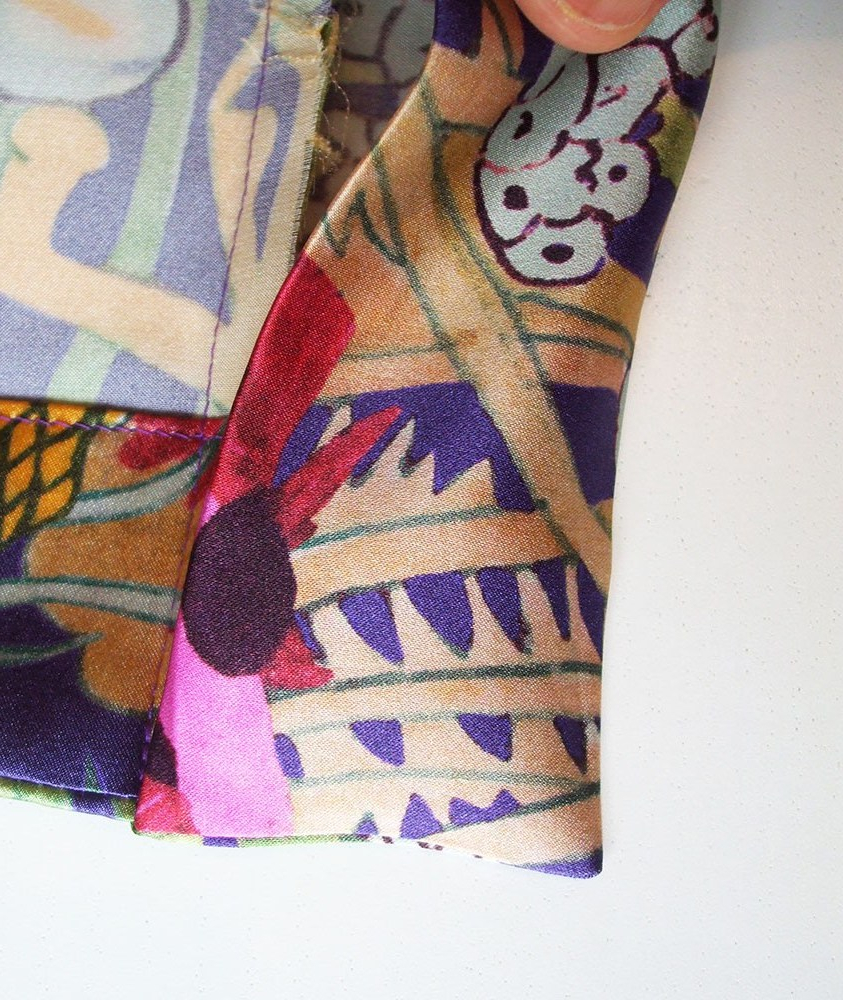
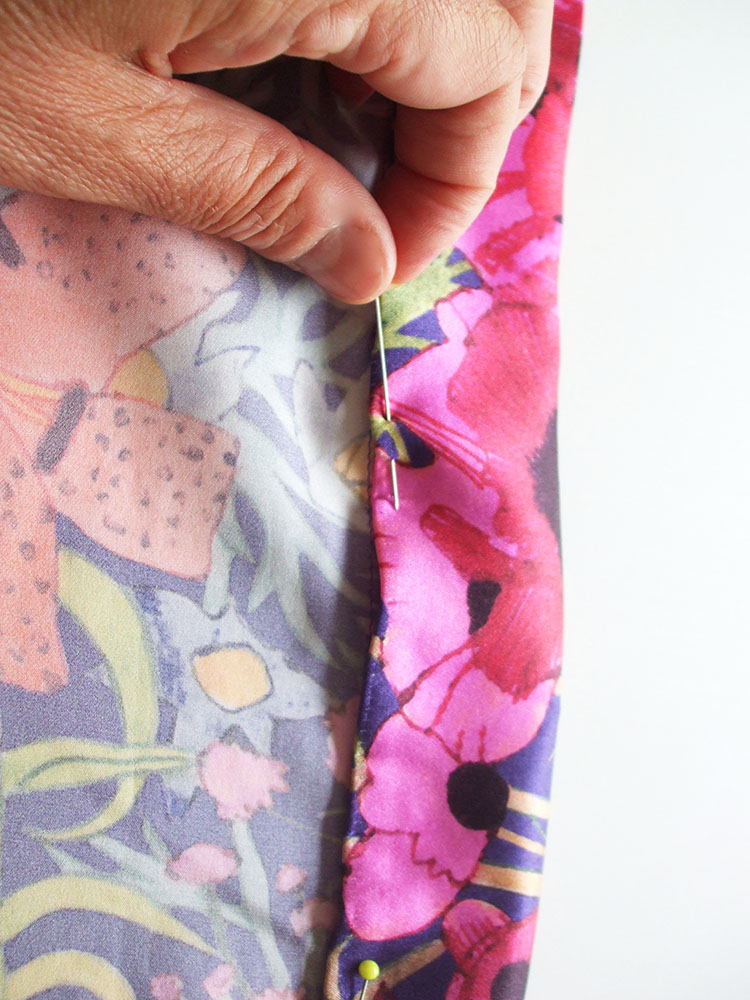
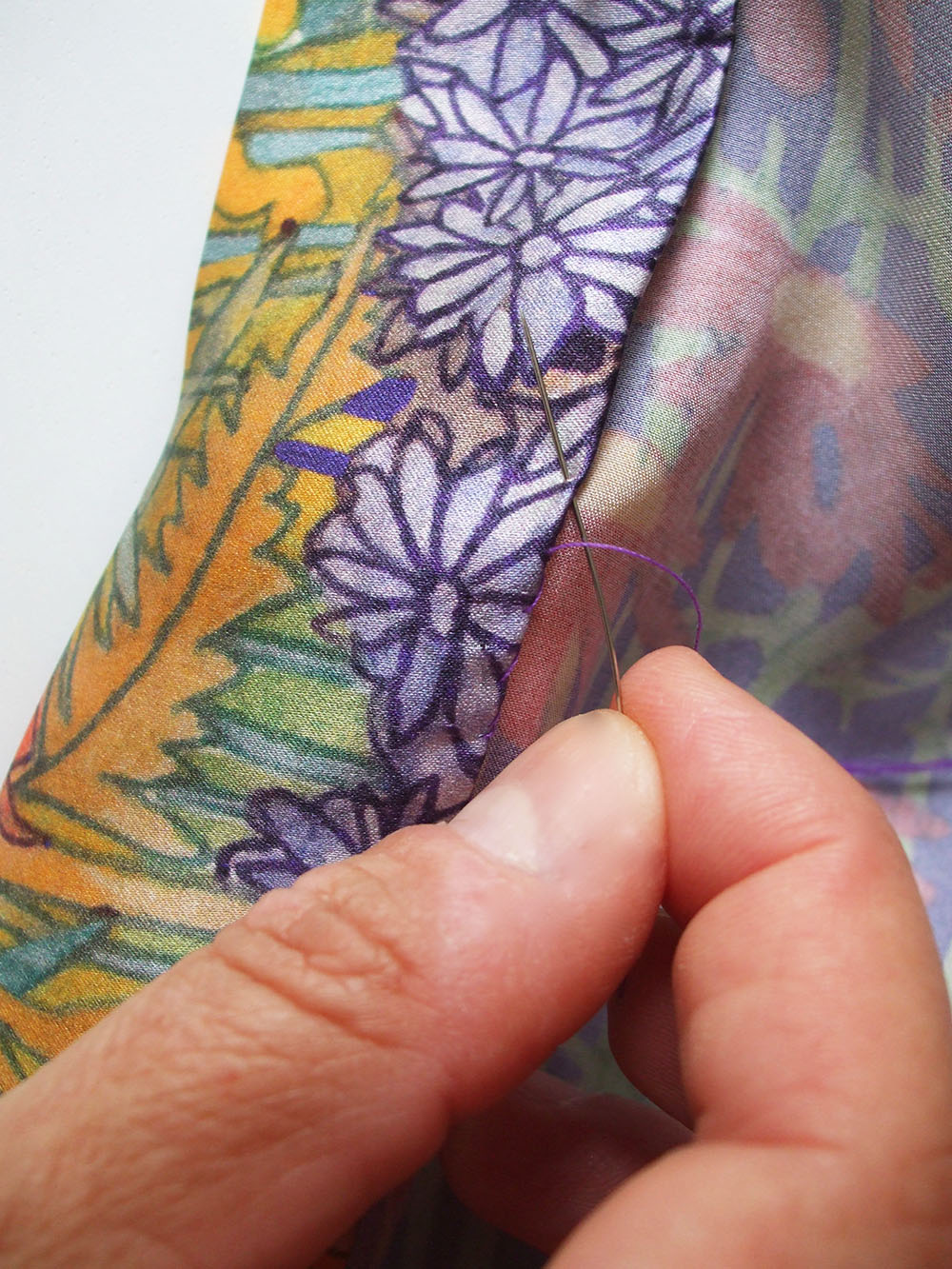
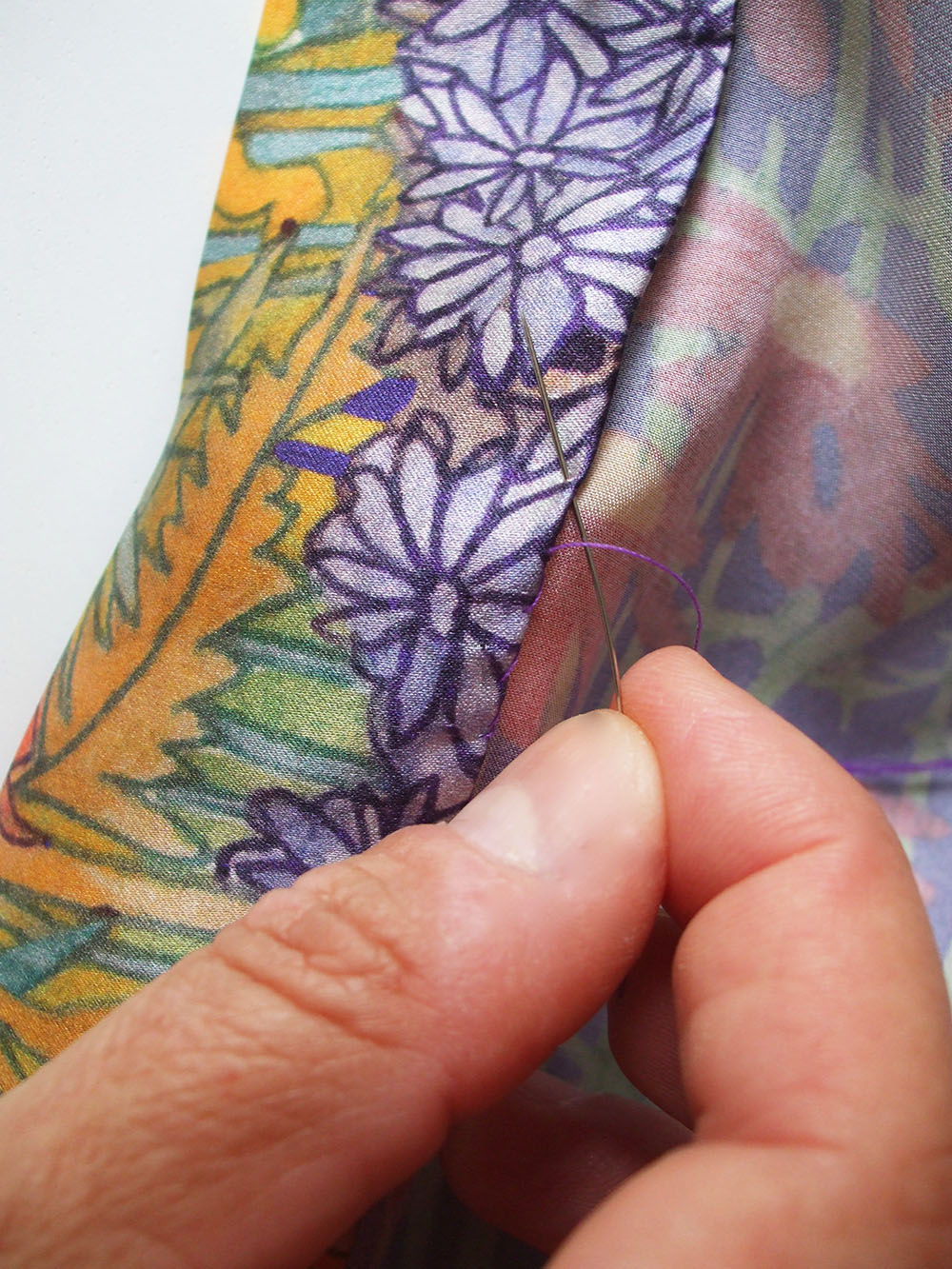
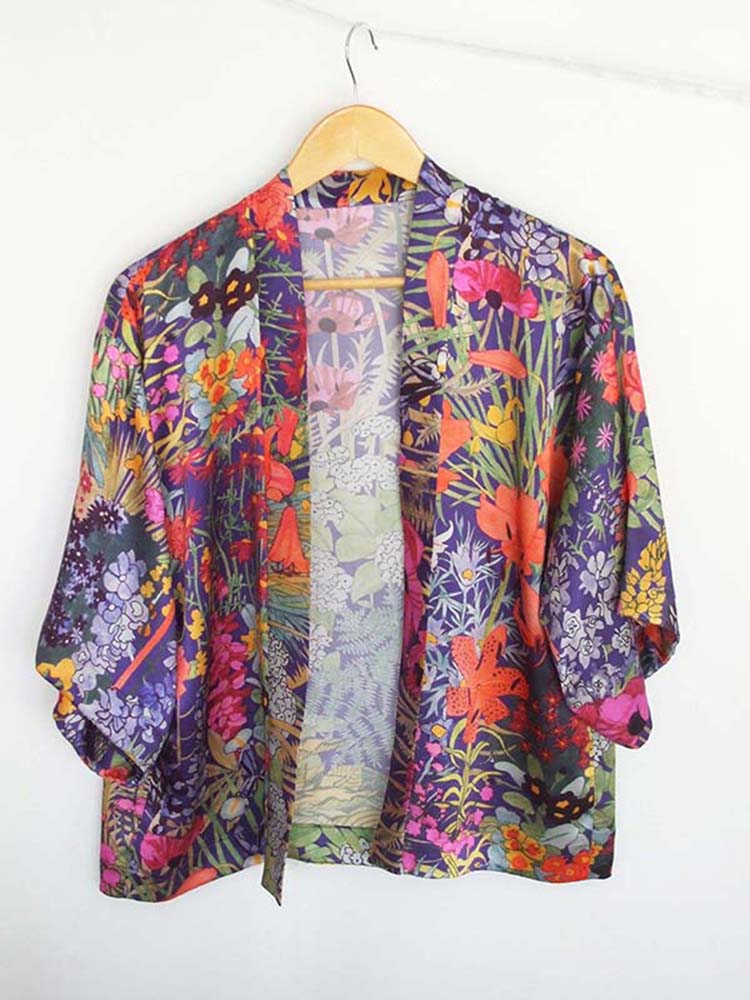
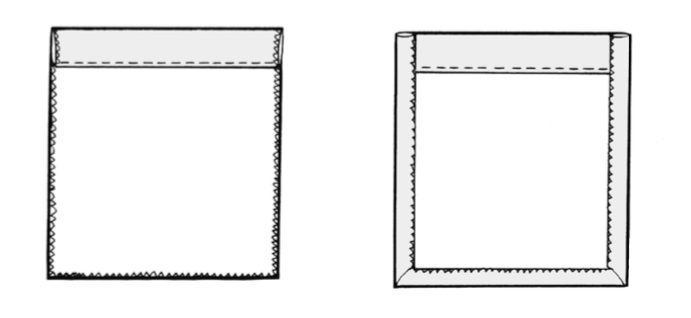
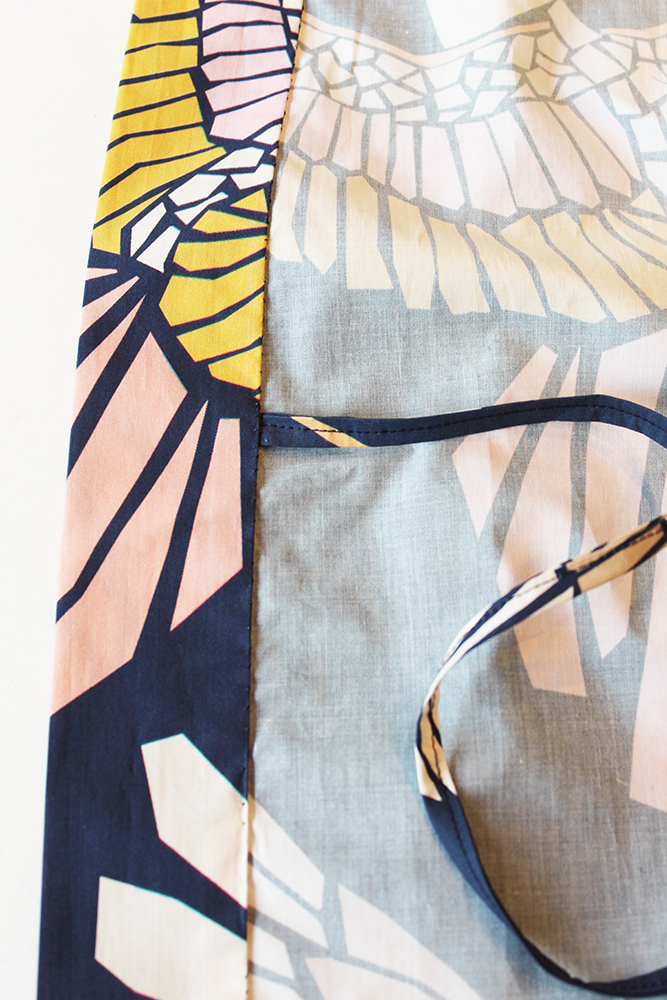

 This easy to make quilted clutch purse makes a lovely addition to any outfit for a special event. With its optional loop handle, useful for carrying lipstick, powder compact, money and keys.
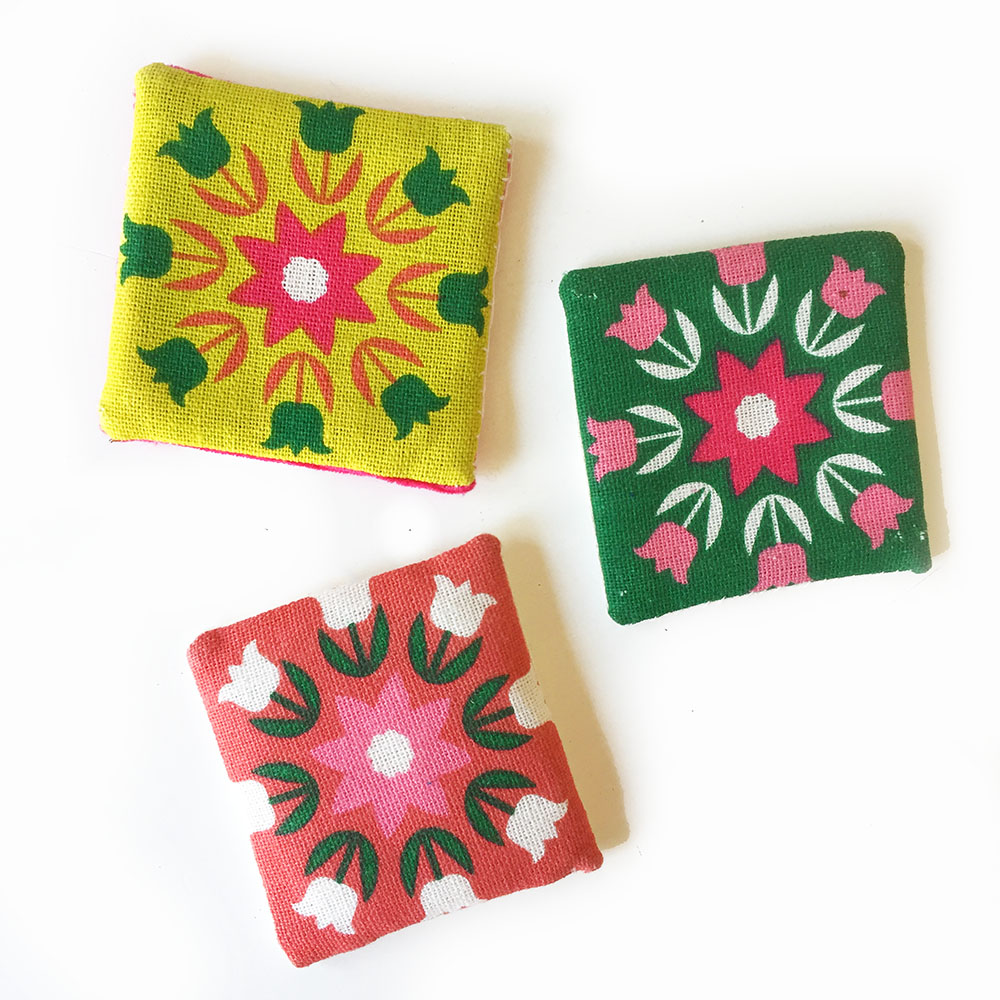
 I make them out of scraps of fabric but actually this fabric was printed with squares in exactly the right size, but you could use any fabric you like. Its fun to use all one type of fabric, like Liberty fabric if you are a fan or just mix up your favourites from your stash.
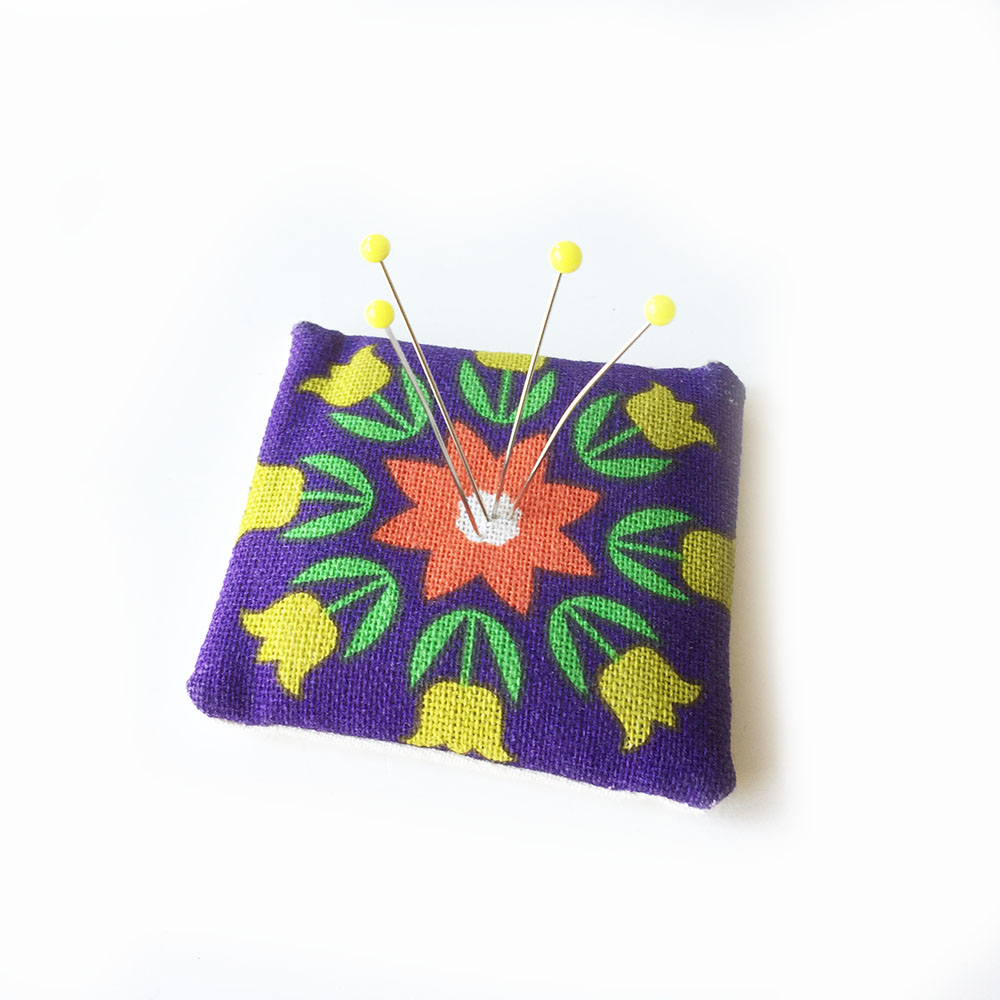 What you need:
 This is what the metal washers look like.
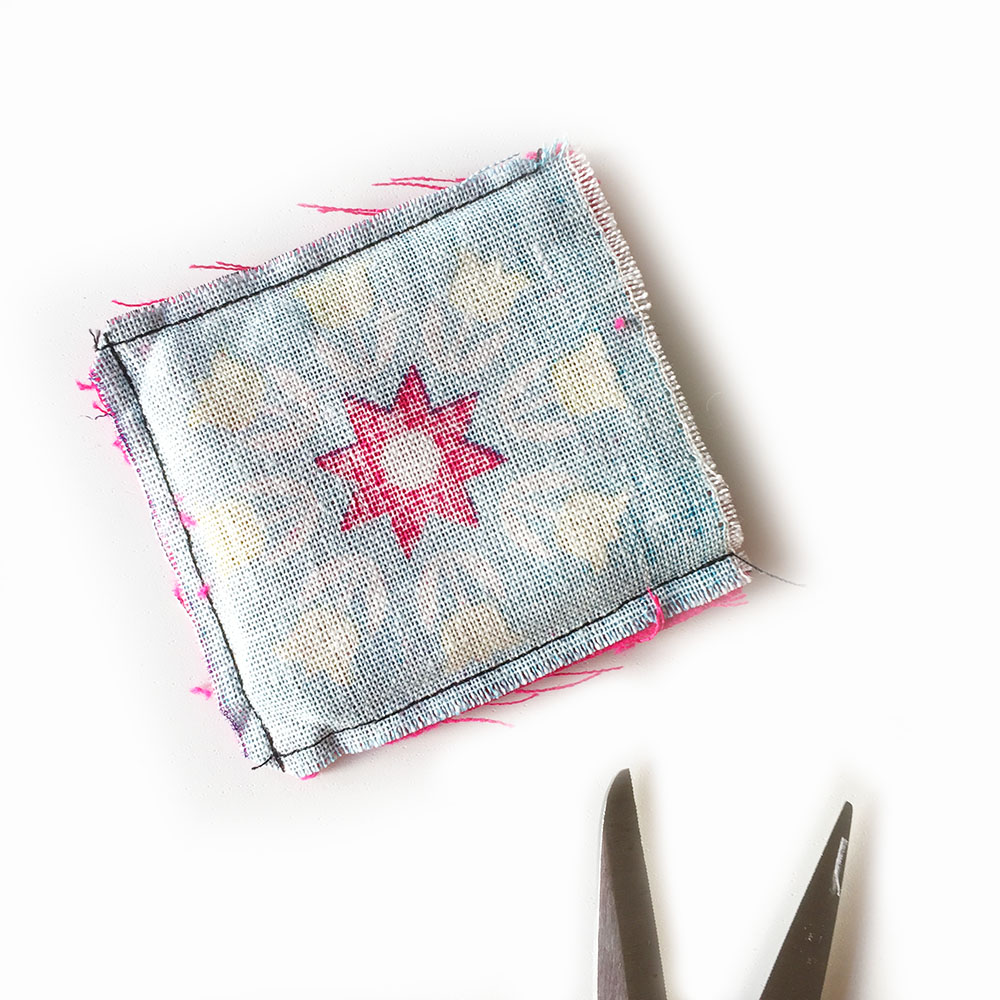 Sew your pieces with the right sides together with a 5mm seam allowance. Clip the corners and turn inside out. Poke the corners out or tease out with a needle.
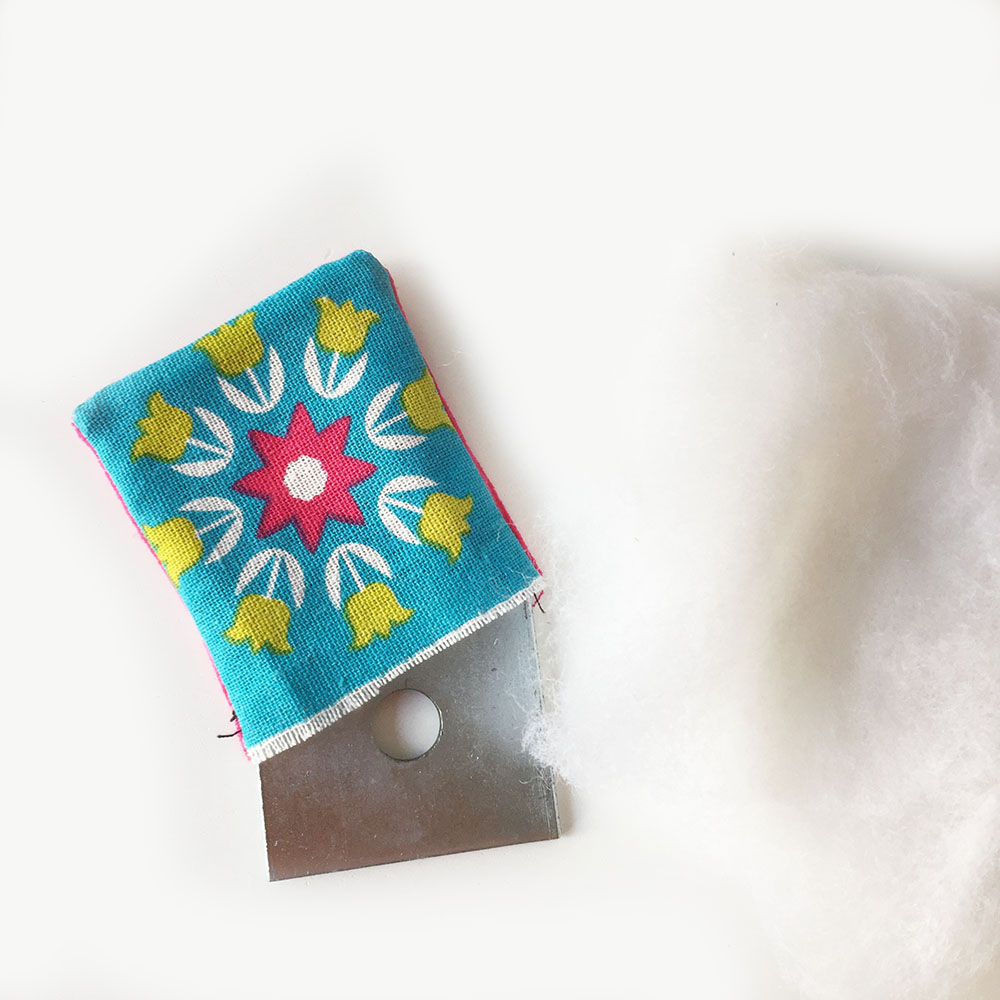 Insert your metal washer. Add some wadding under the top section only.
 Turn under the raw edges of the opening and hand stitch. i sometimes do a fancy bit of blanket stitch here with some embroidery thread to make a feature of it.
 There you have it. Also good for needles, don’t want them to feel left out!
 This is one of my favourite

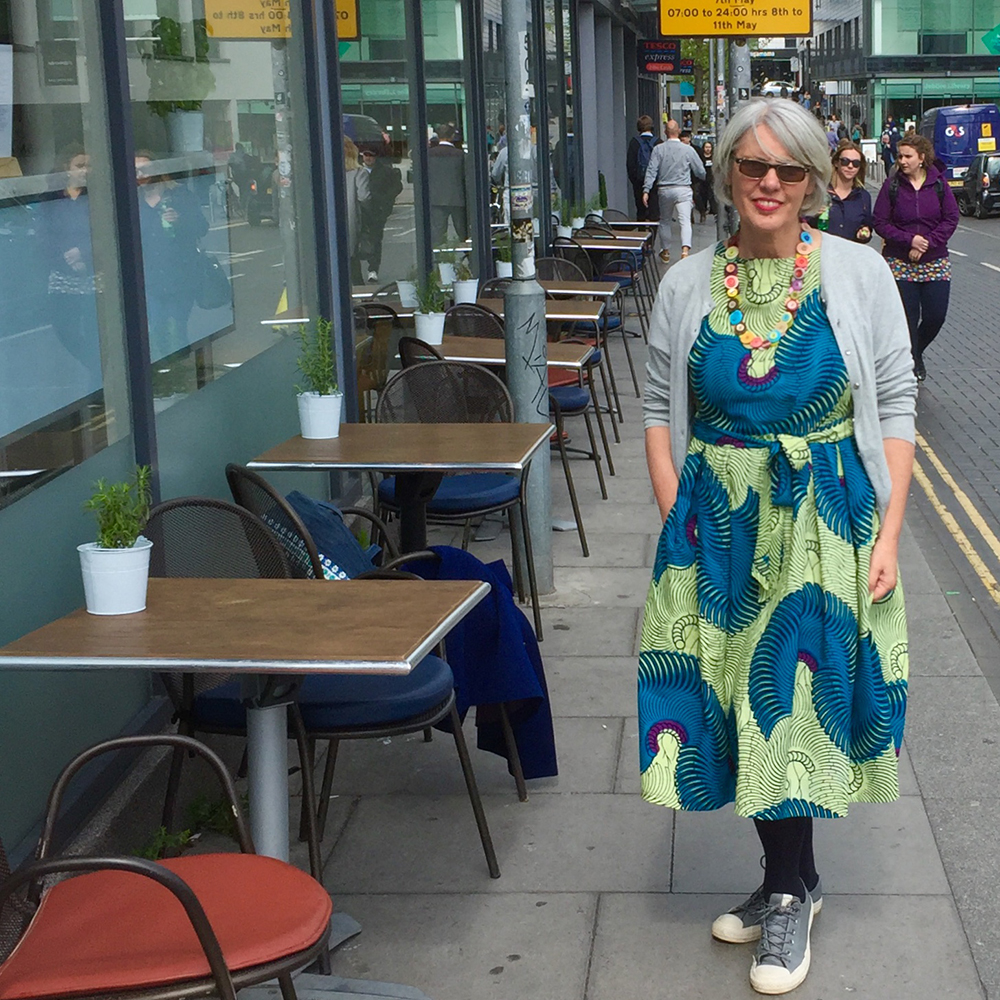
 This Cecily dress is made in fabulous Italian 100% fine linen pinstripe fabric (bundles available on my
 You will also need a 30cm concealed zip and 20cm of lightweight fusible interfacing
 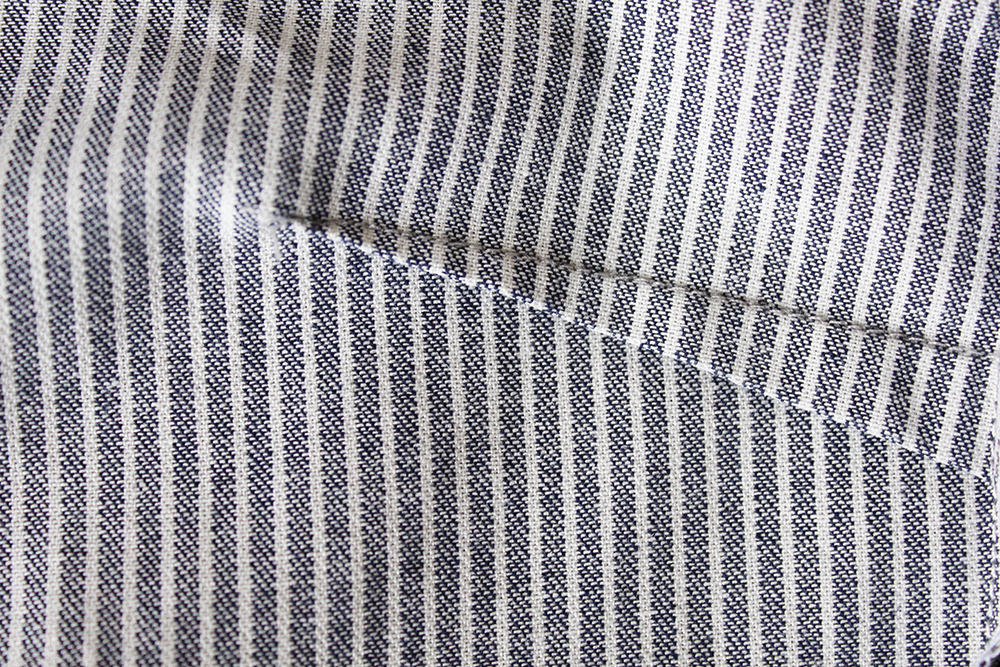 On the pattern you can see lots of lines for each Dart size. Each size has two lines: one (outer line) is the ‘cutting’ line and one (inner line) which is the ‘stitch’ line. See the diagram below, Ive marked size 8 Dart lines in yellow (cutting line) and pink (stitch line), to show you more clearly. Its a good idea to mark the required two lines as I have done on your pattern to make them easier to see.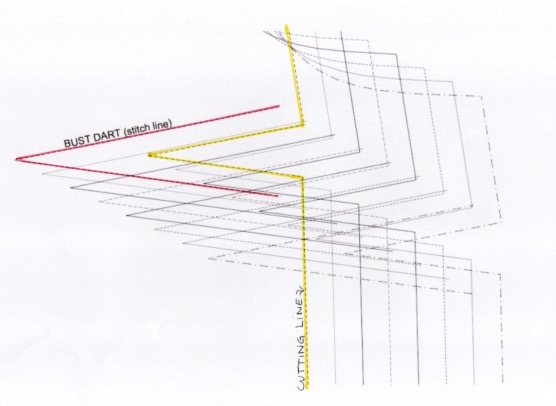
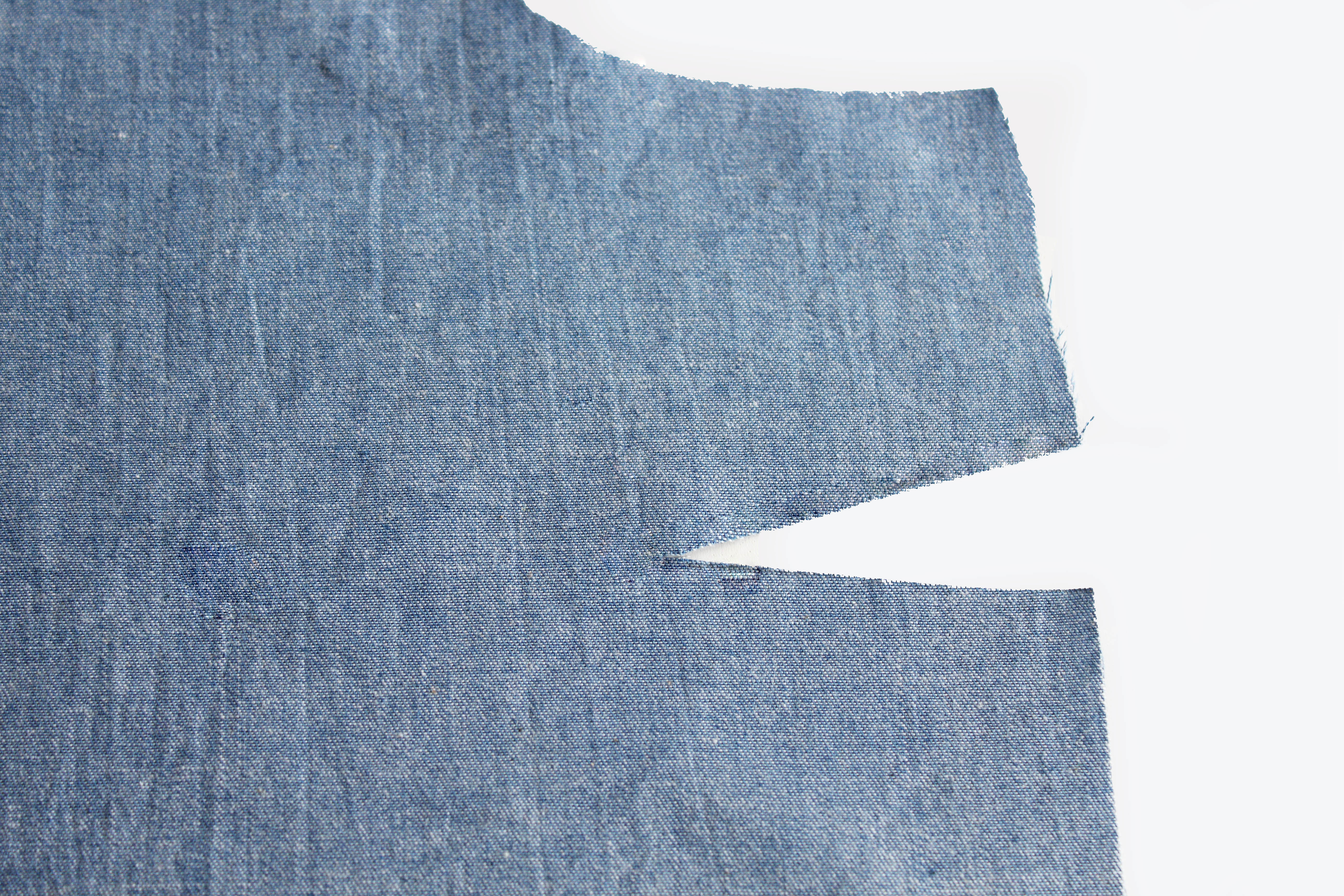 Fold the dart so that the RST(right sides together) and the dart raw edges are aligned. Mark your stitch line using a ruler and pencil which runs 1cm parallel to the cutting line.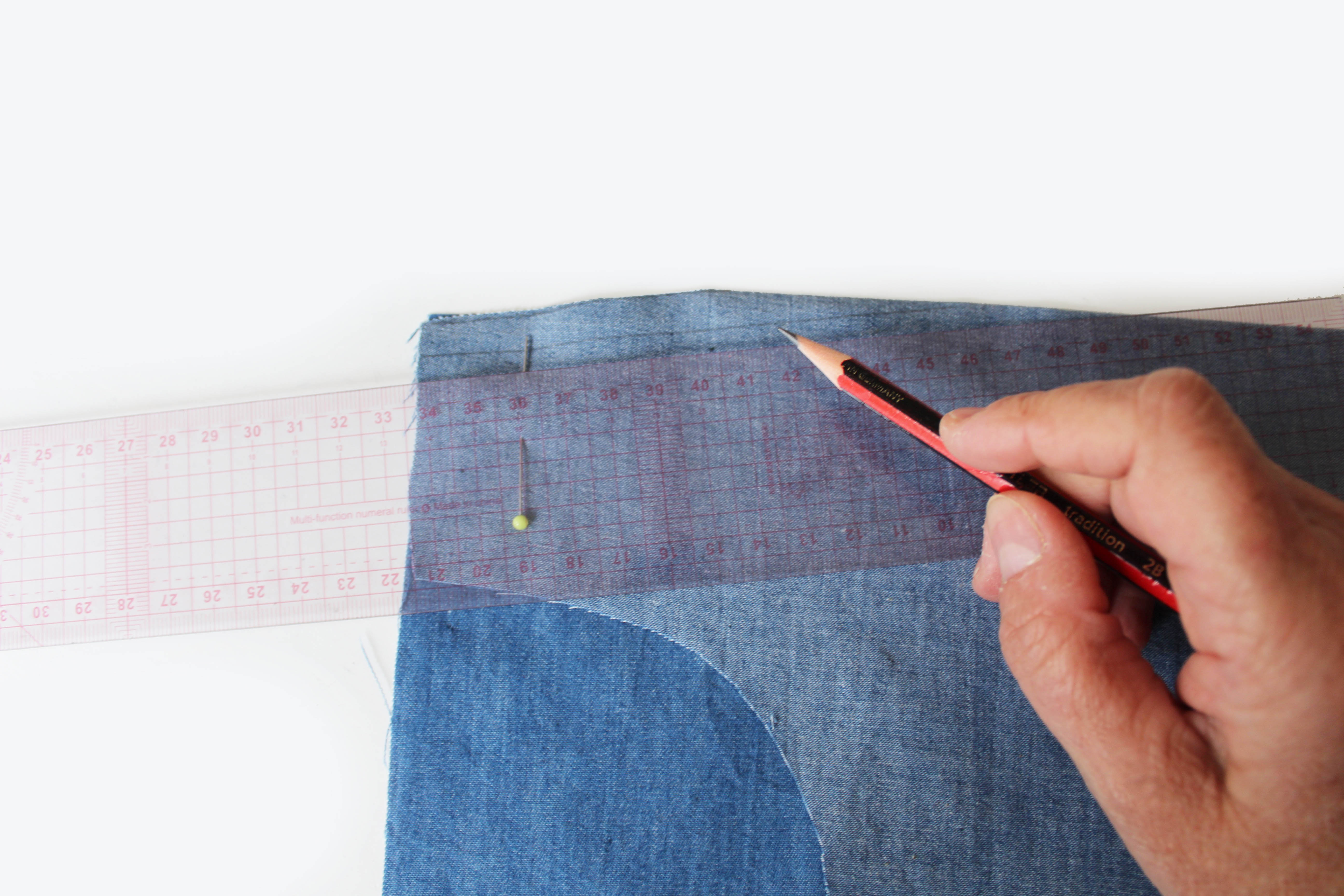
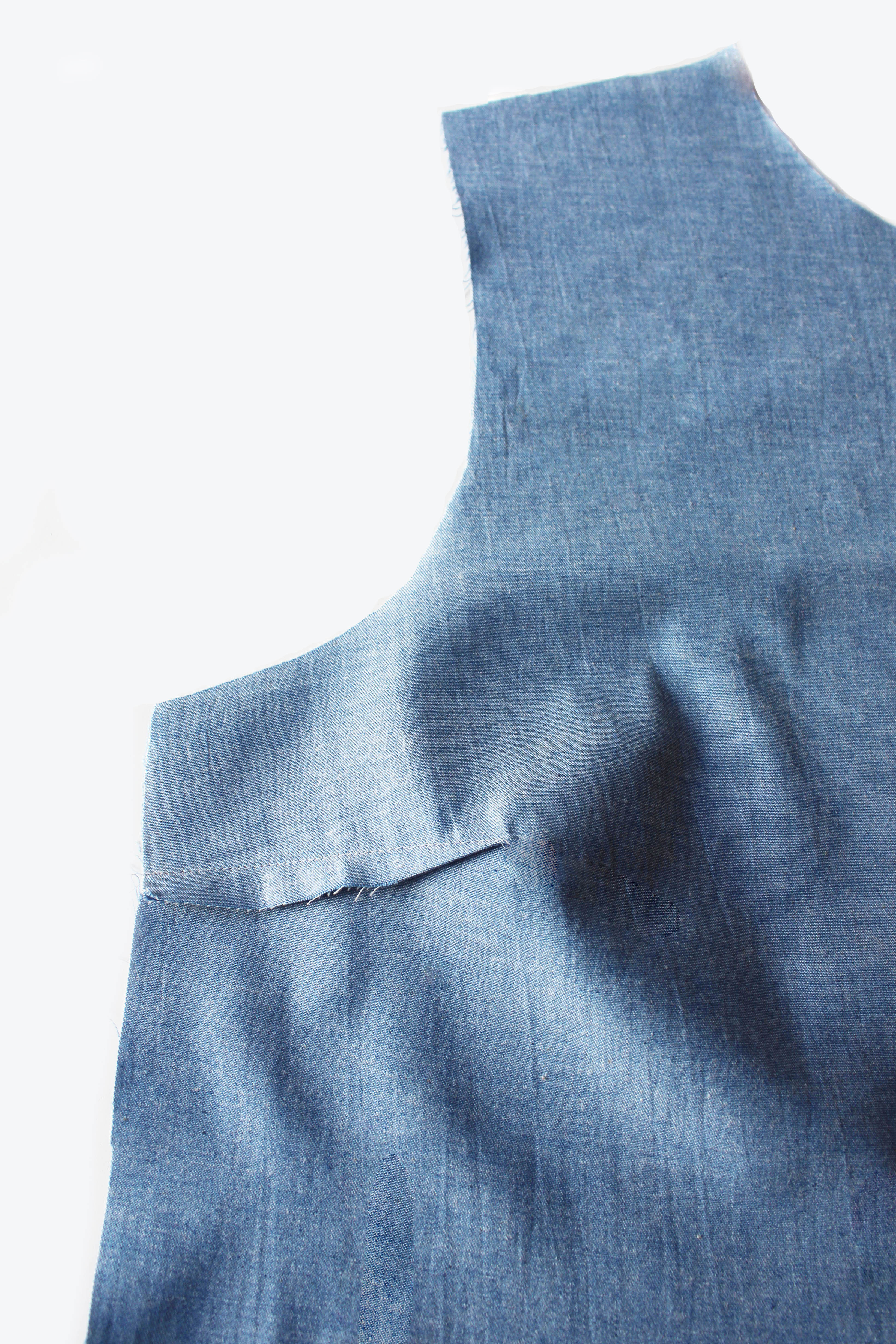
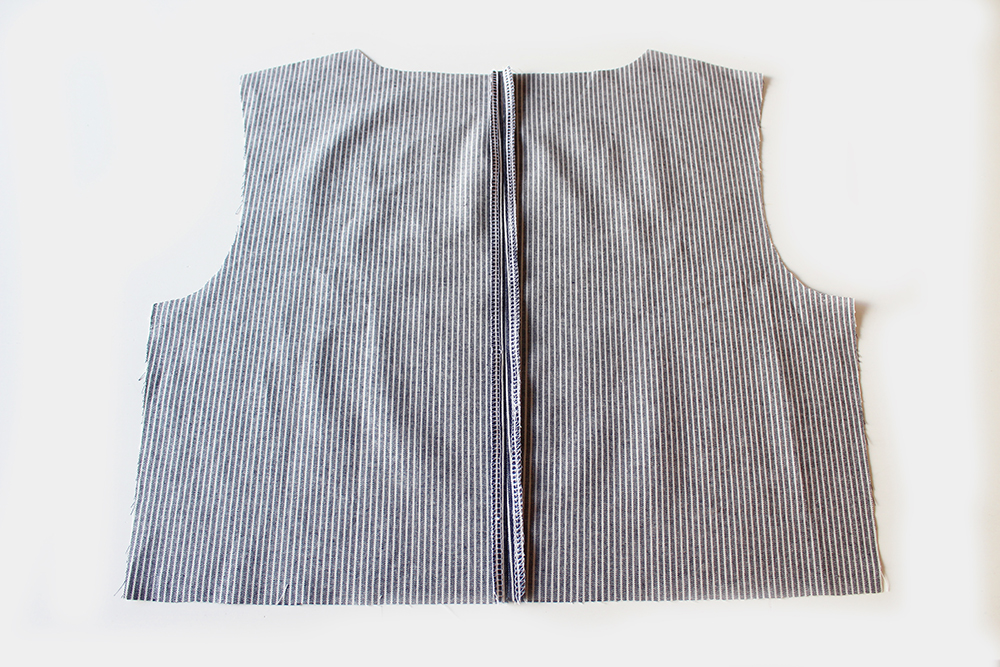
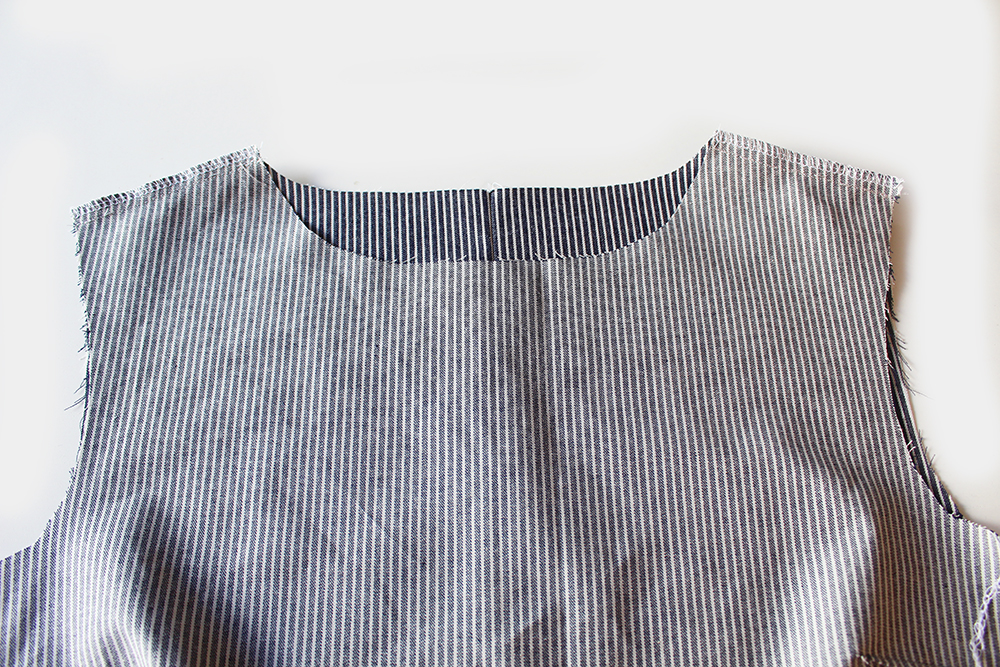
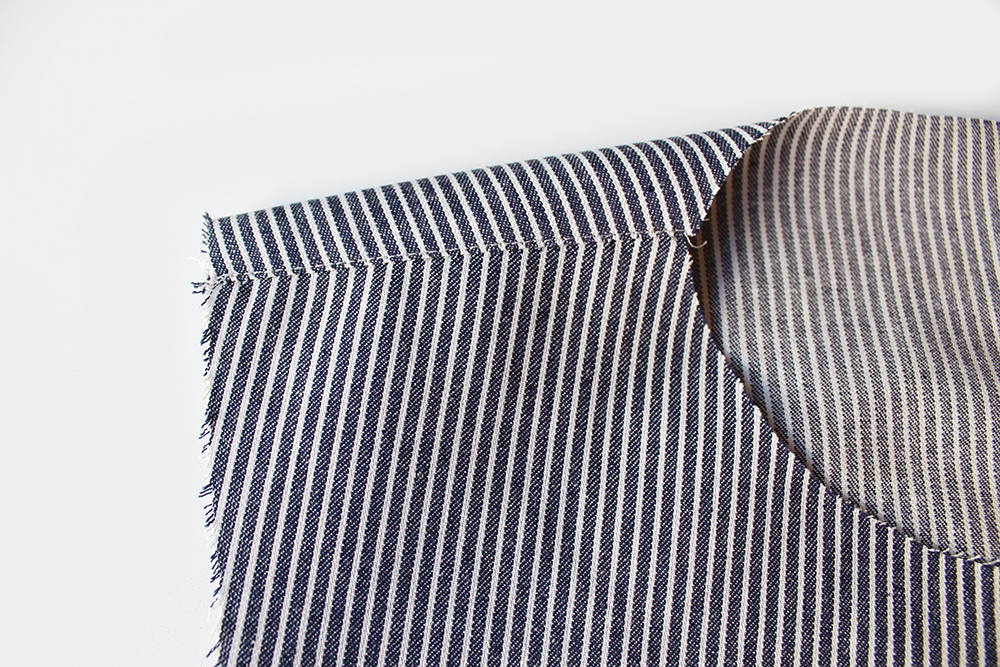
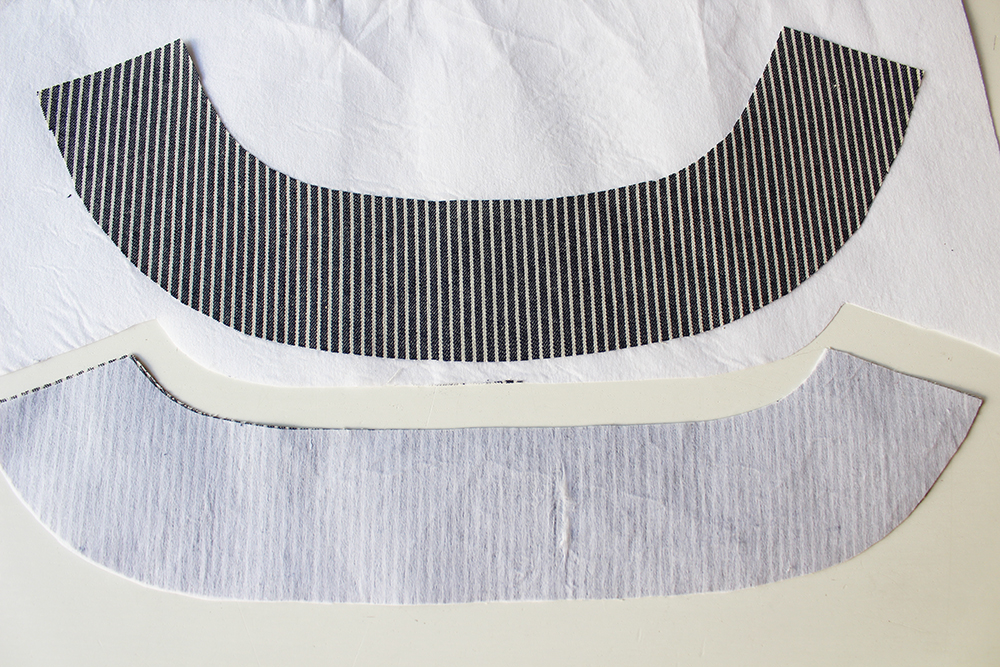
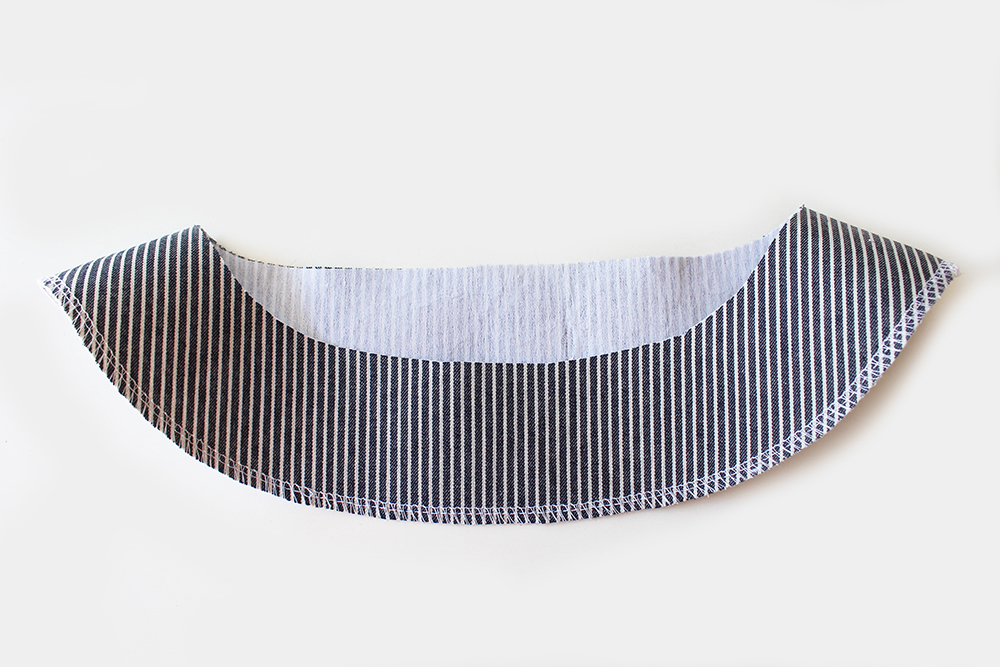
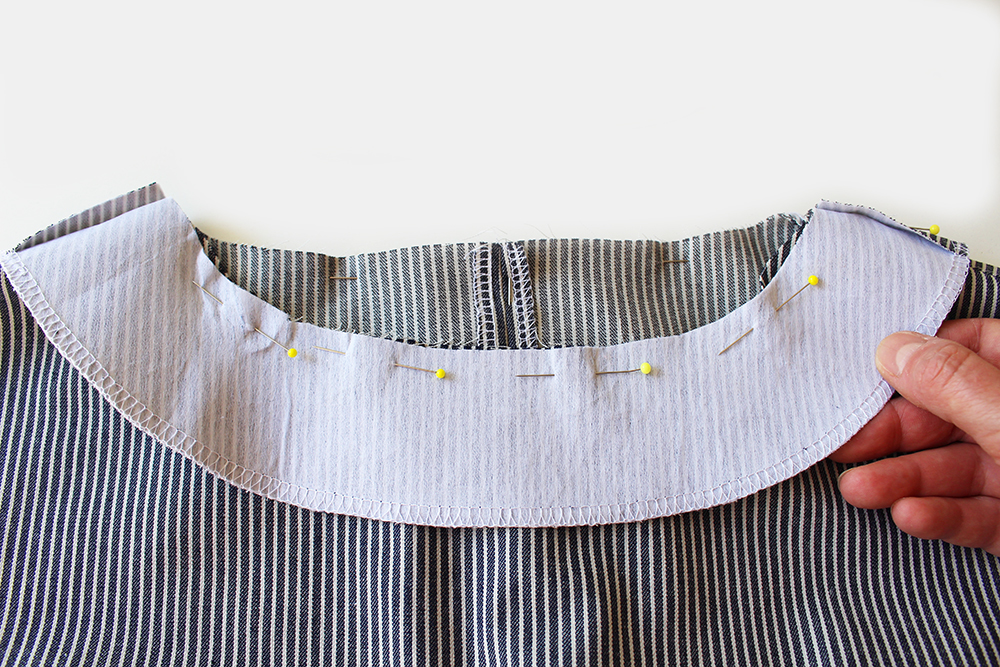
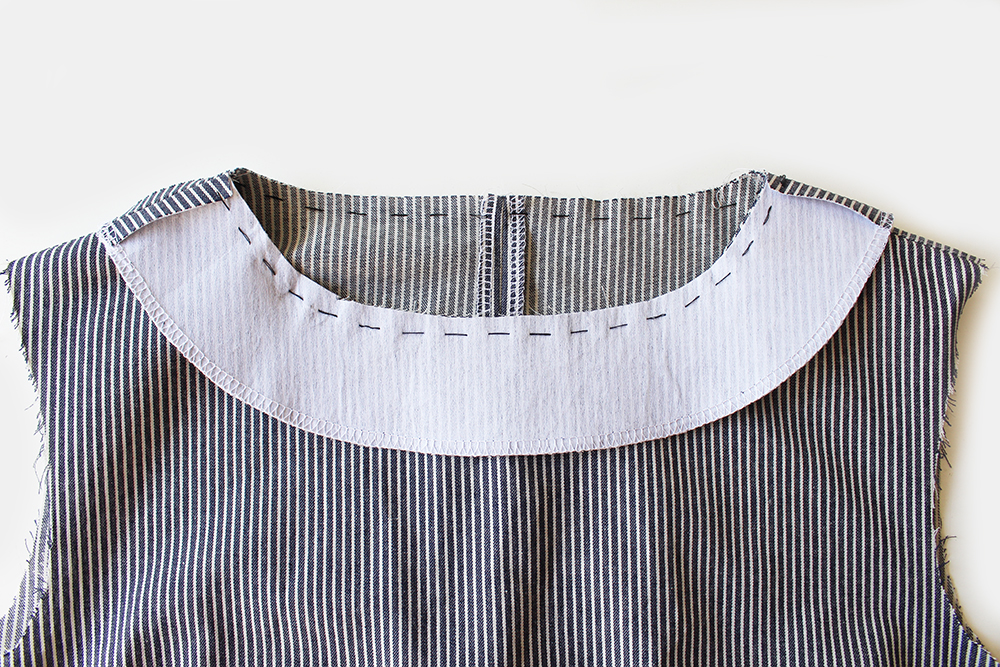
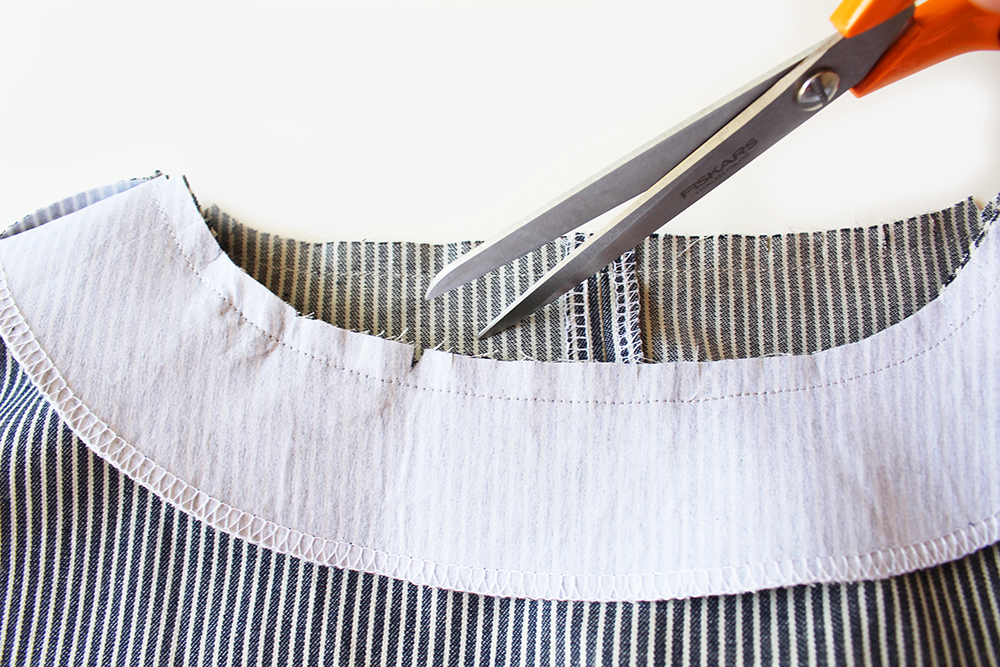
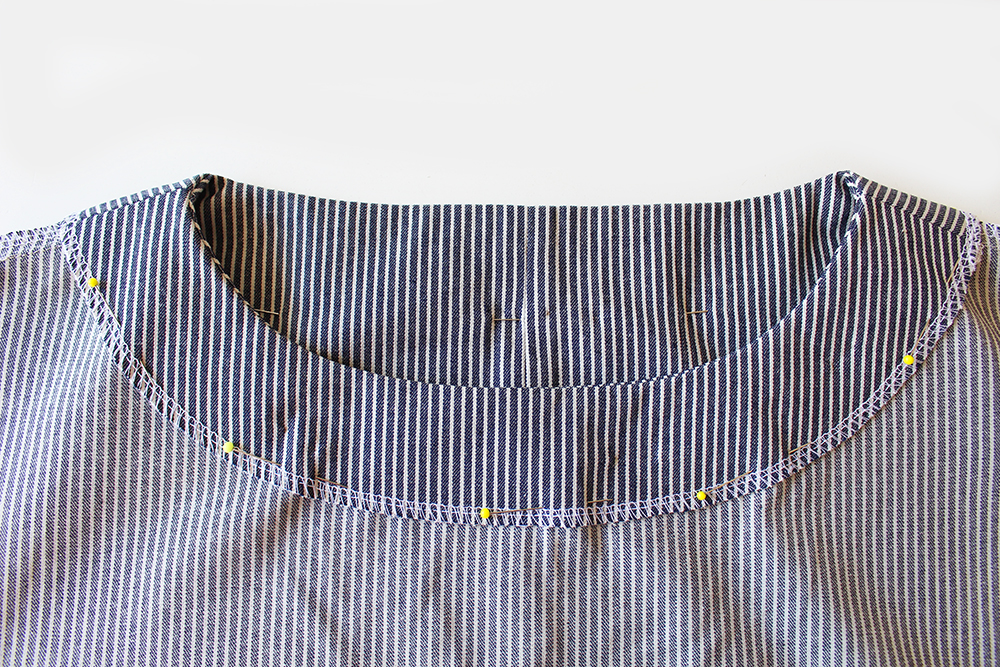
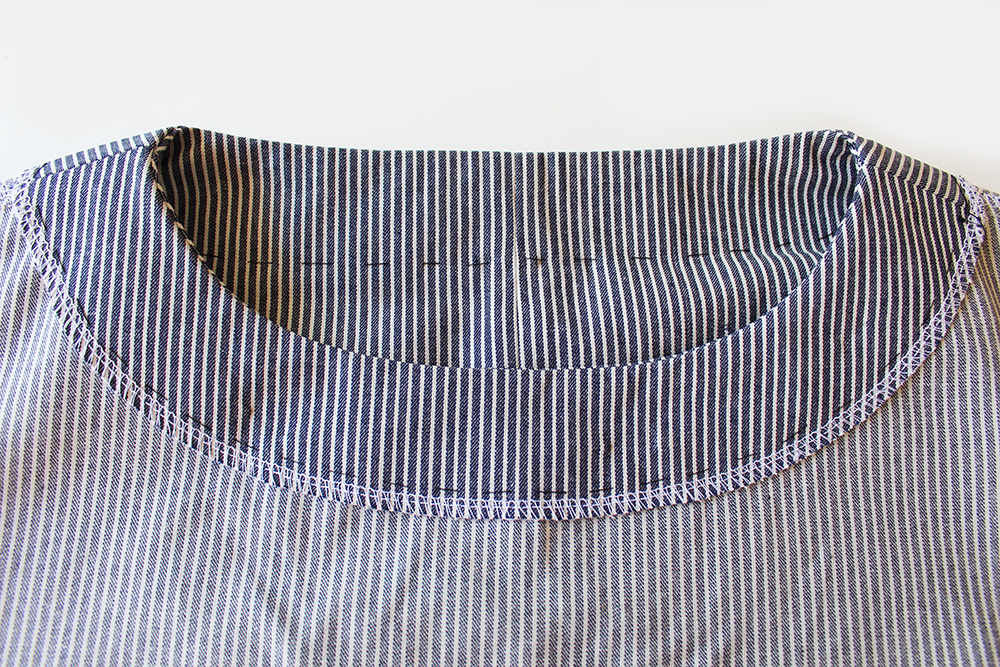
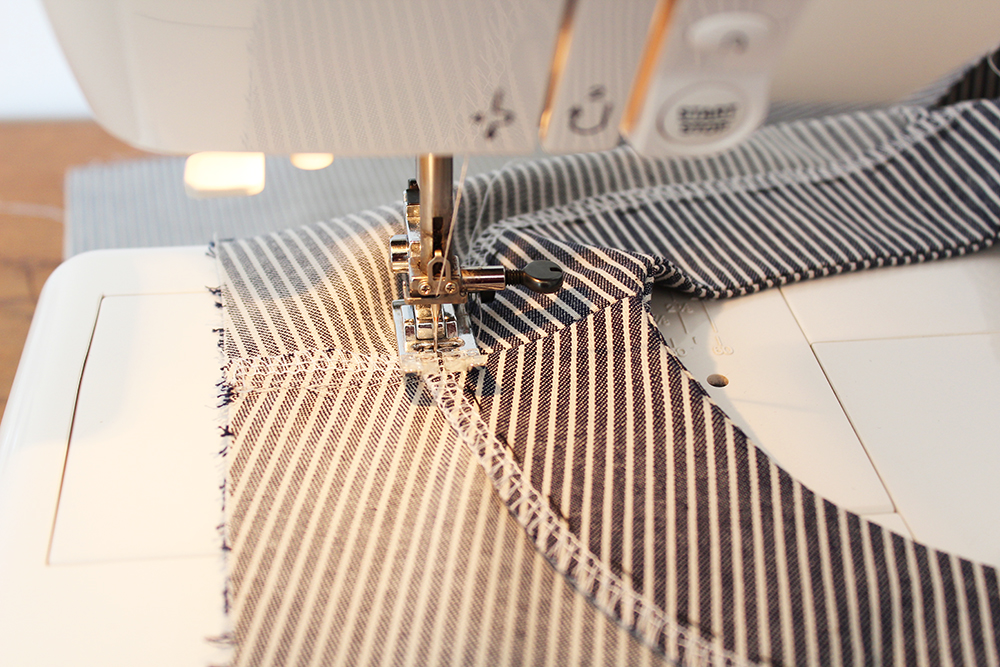
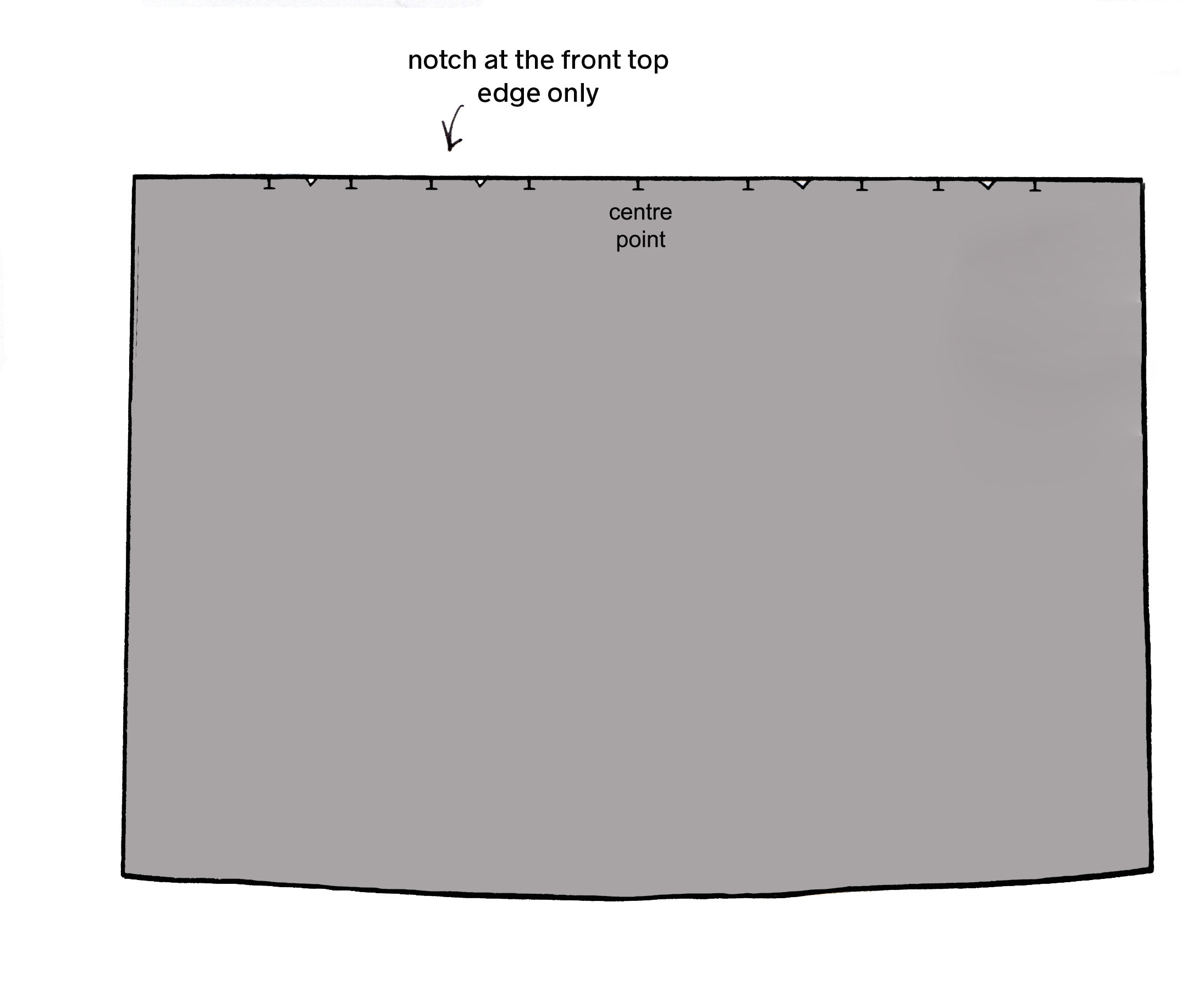
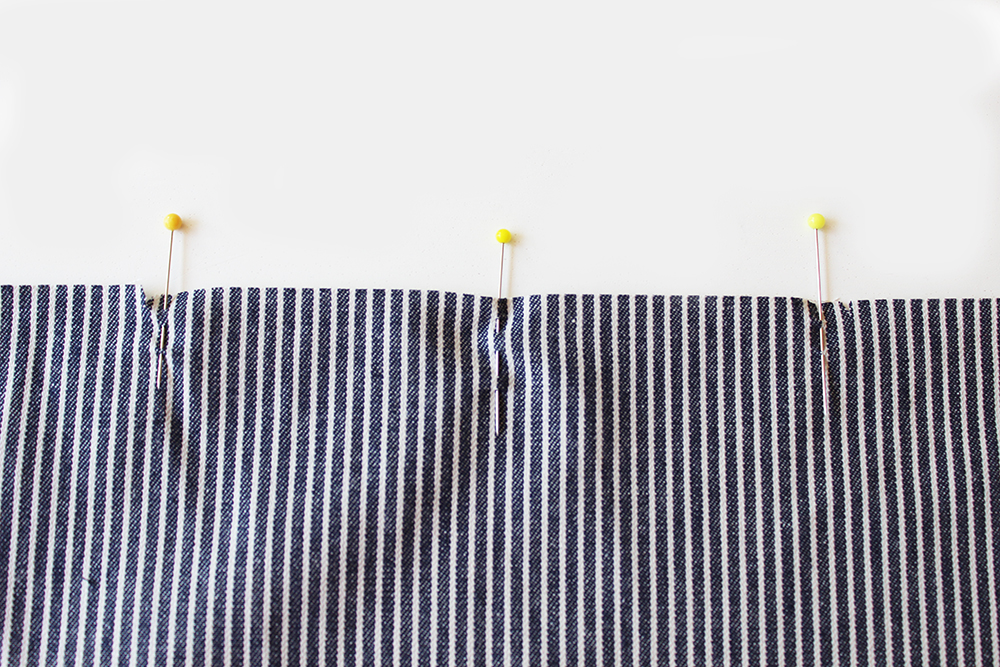
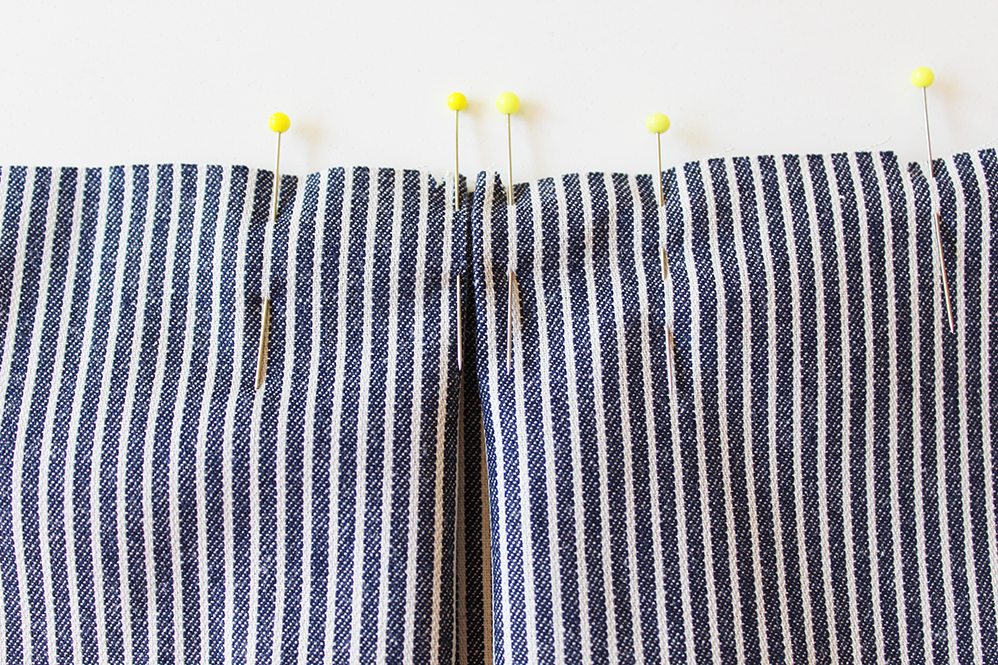
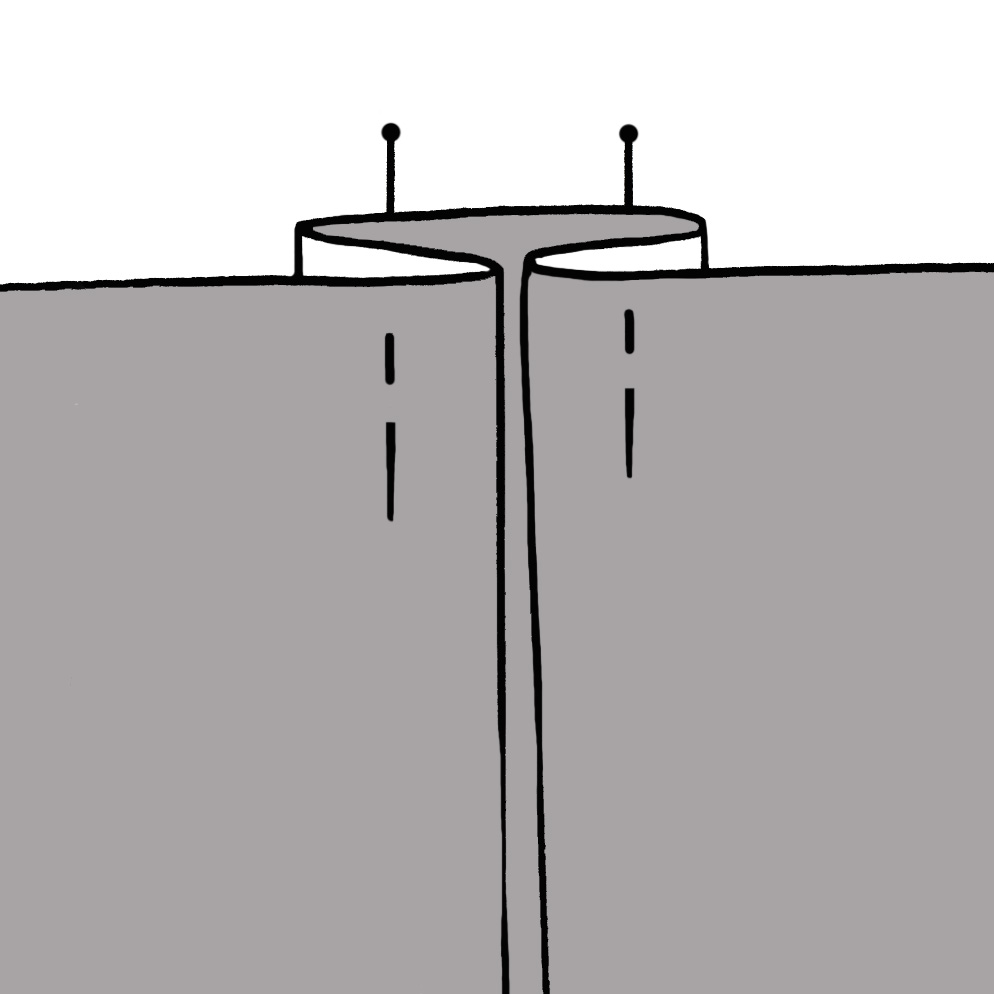
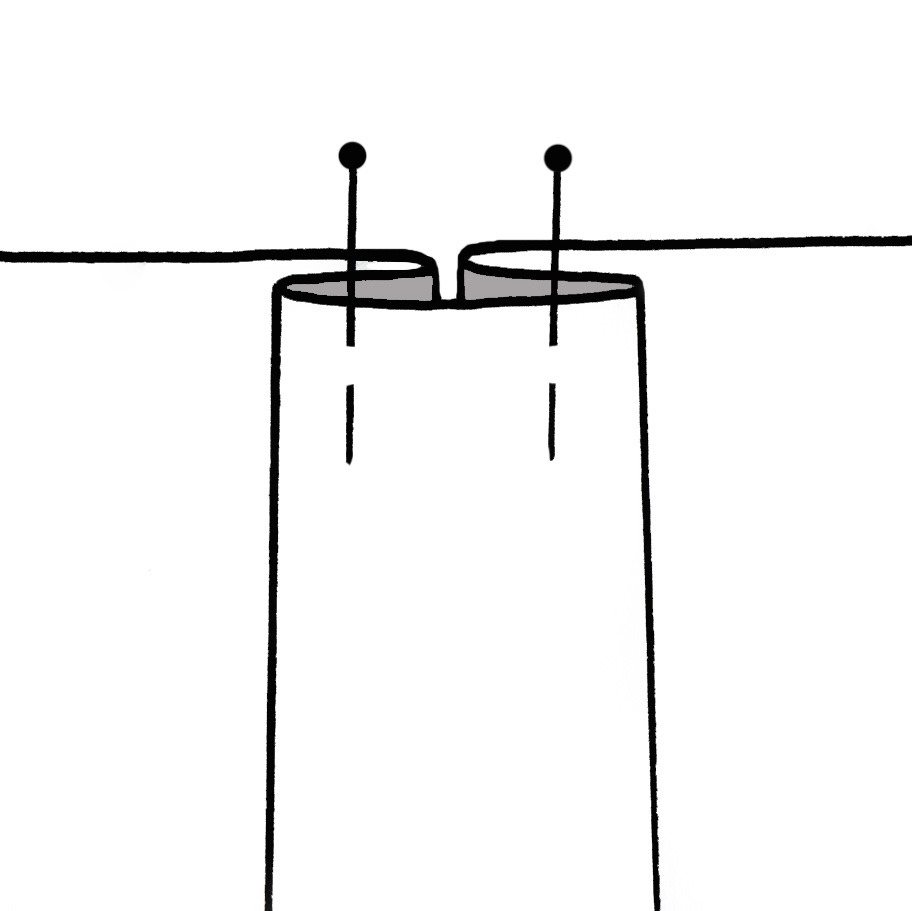
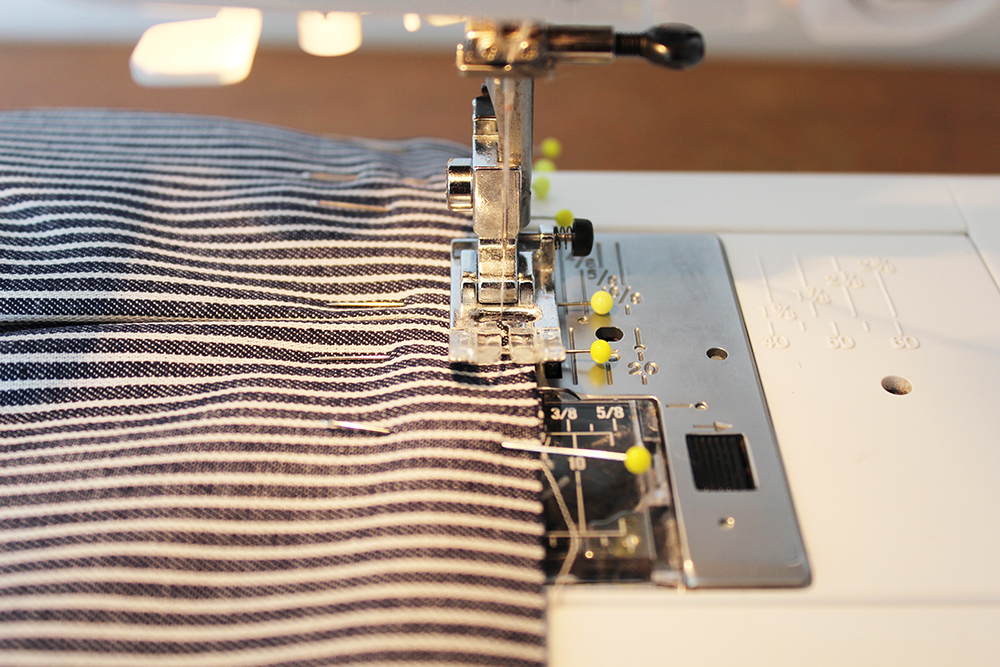
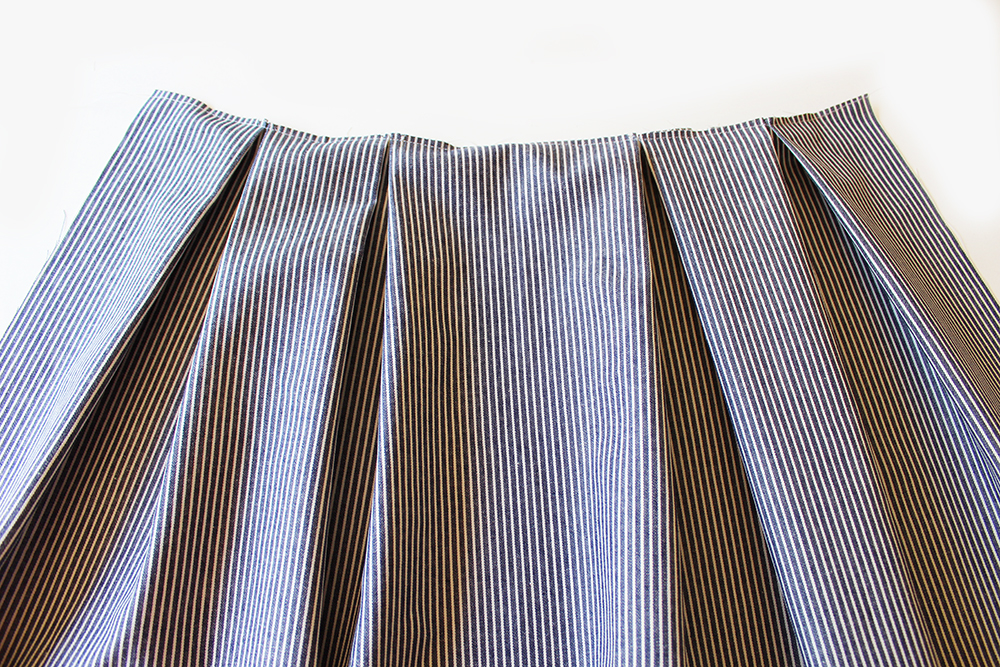
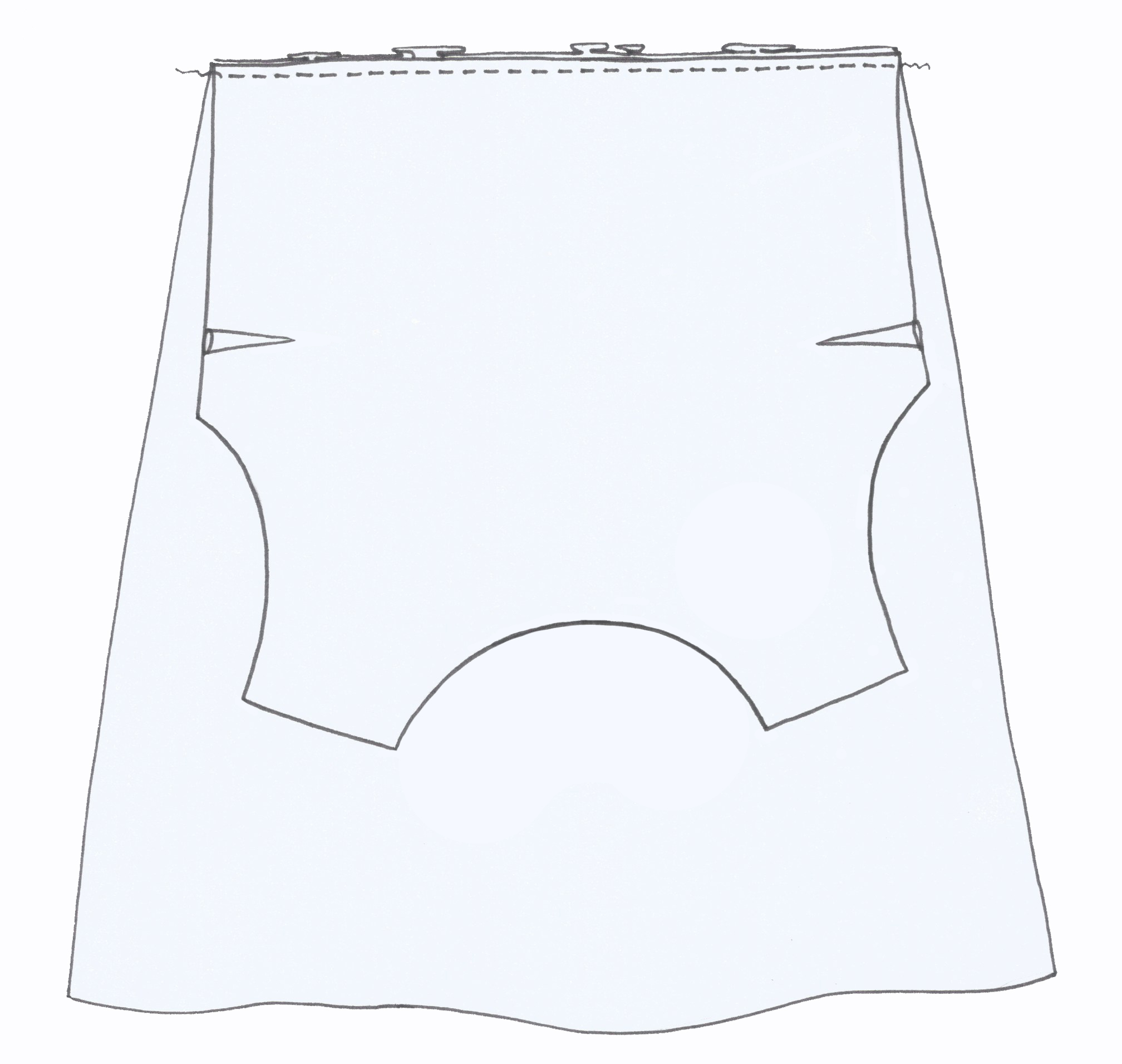
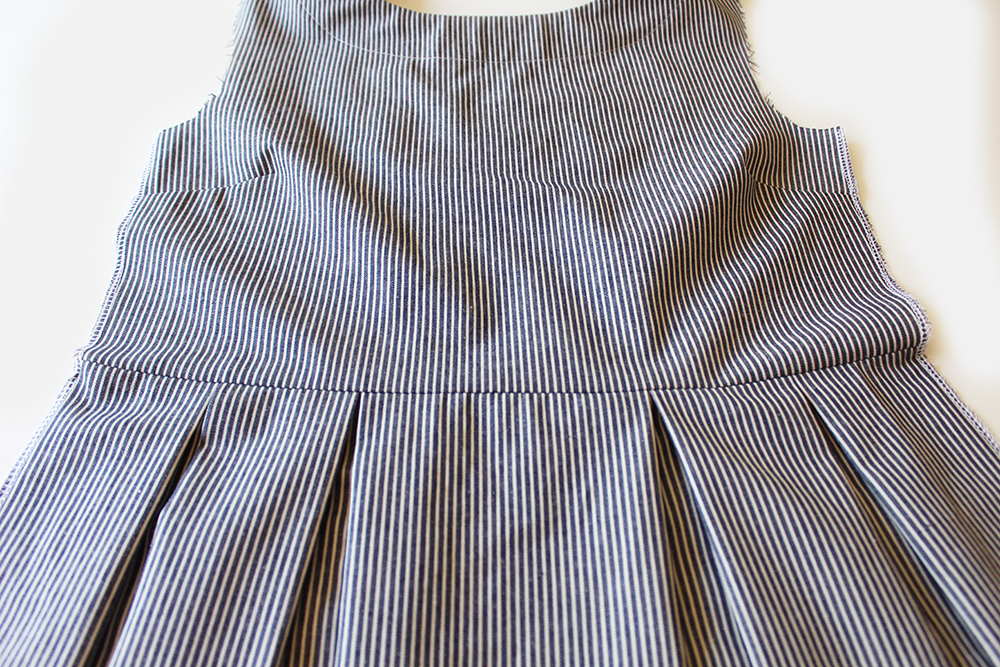
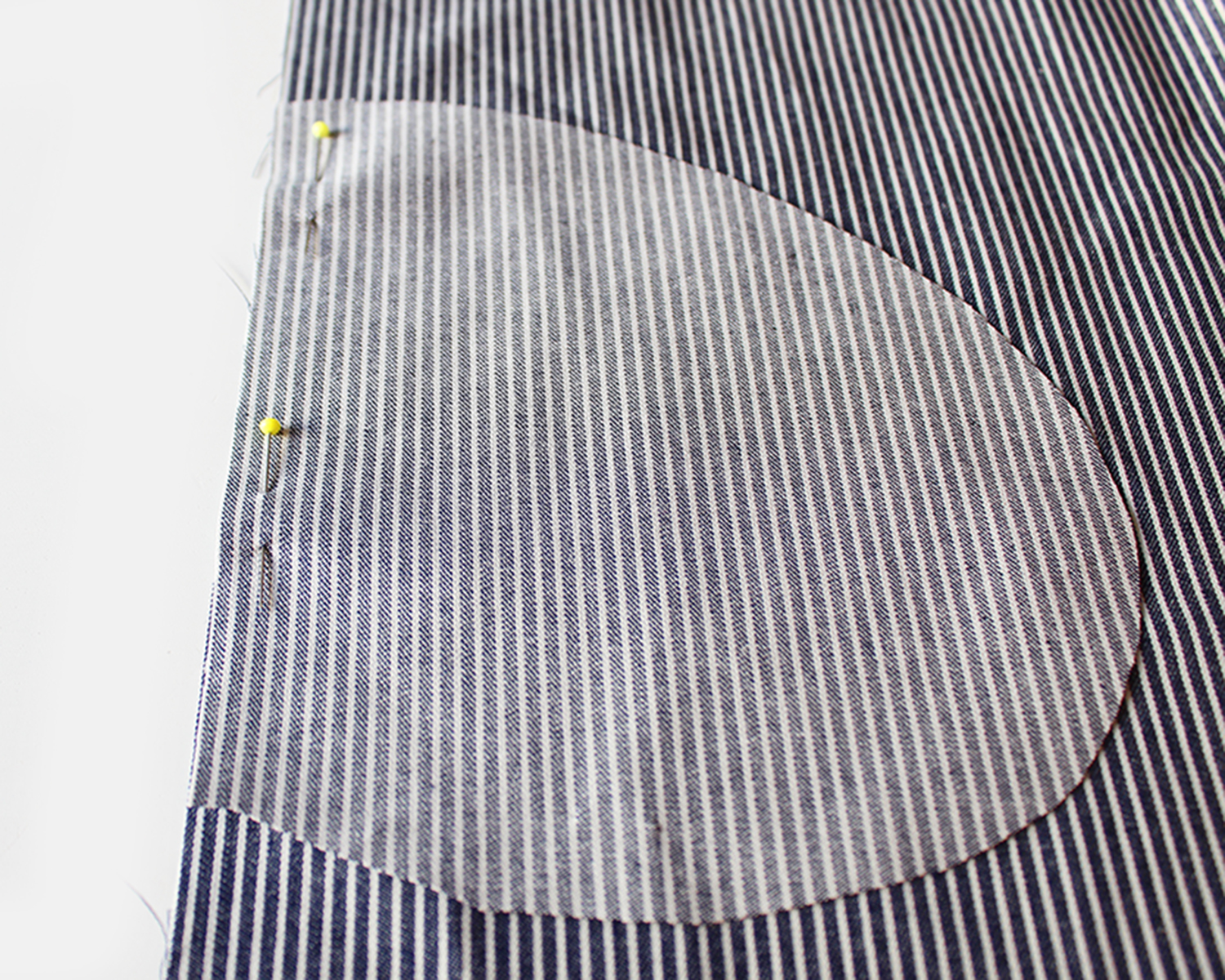
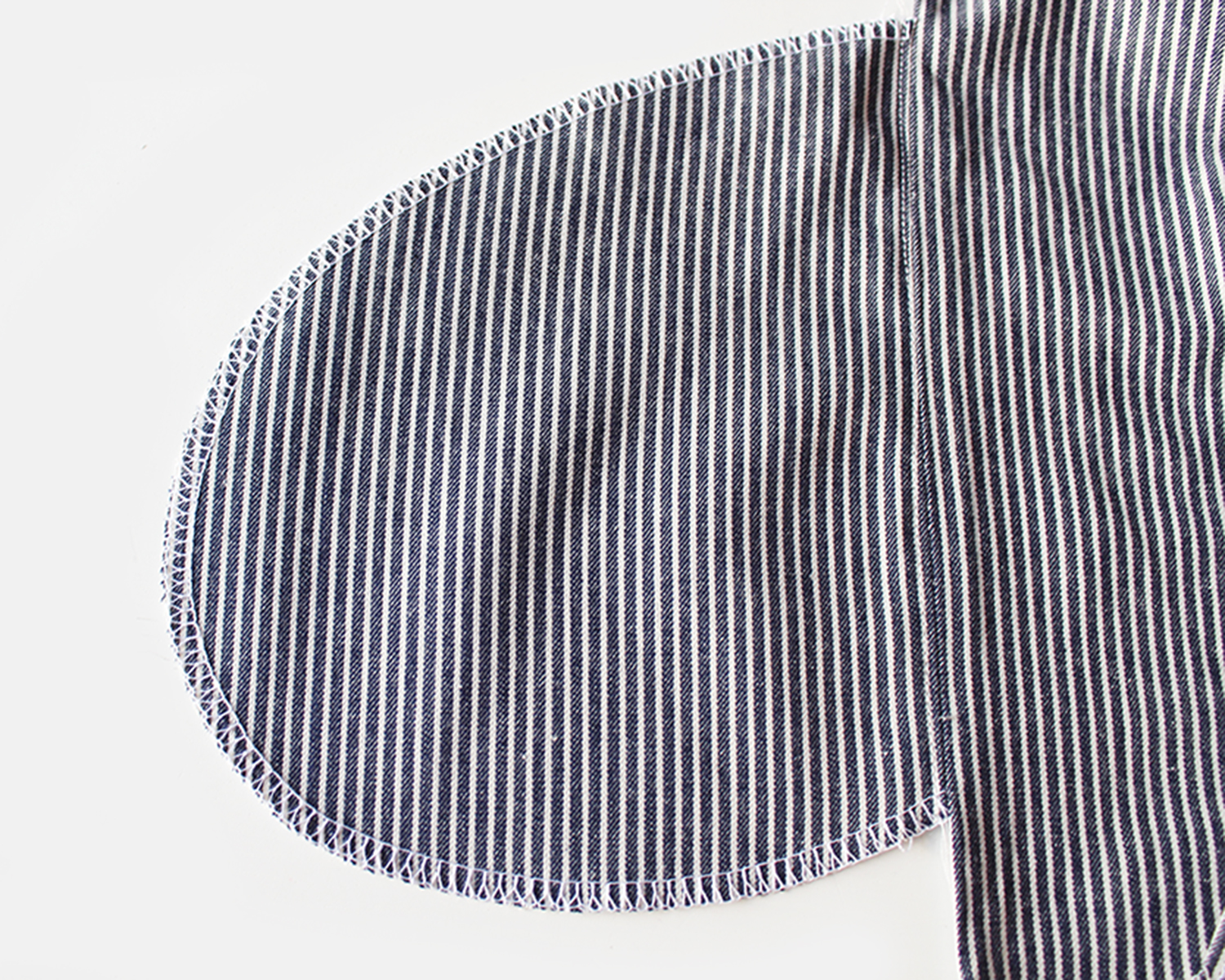
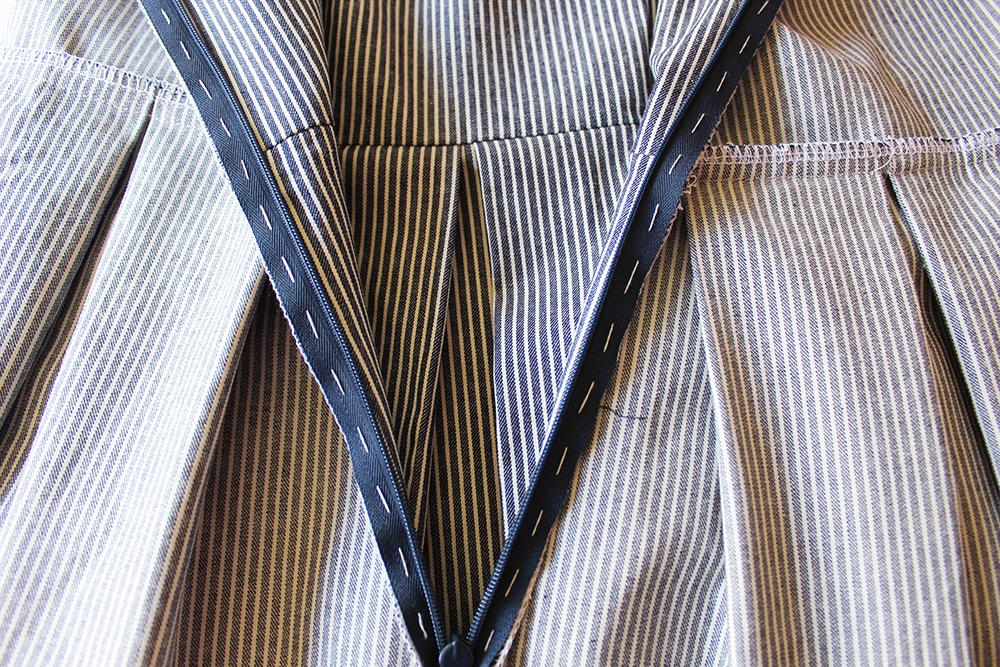
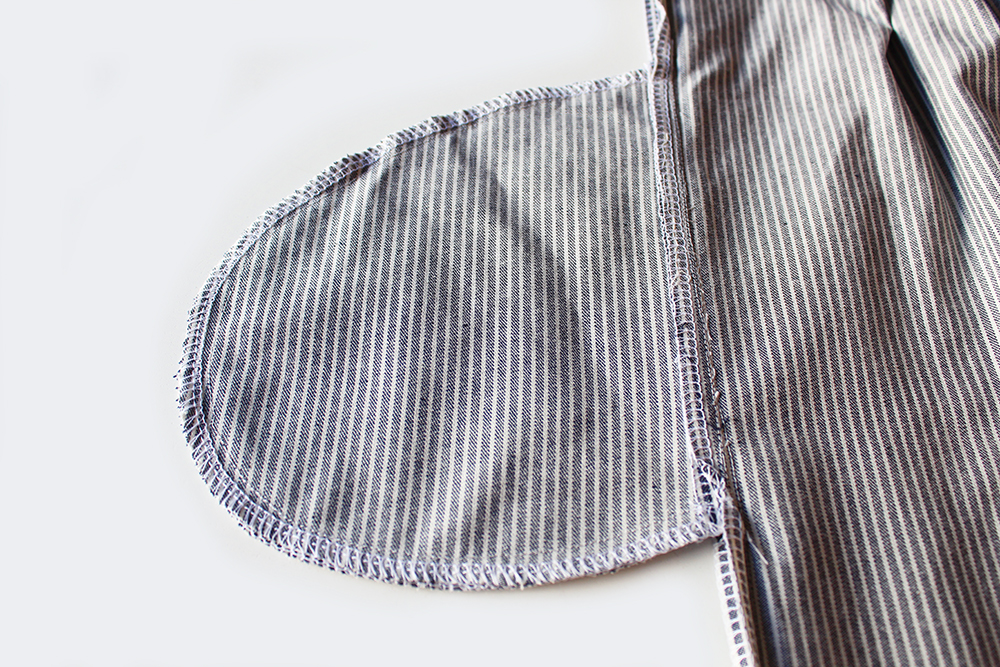
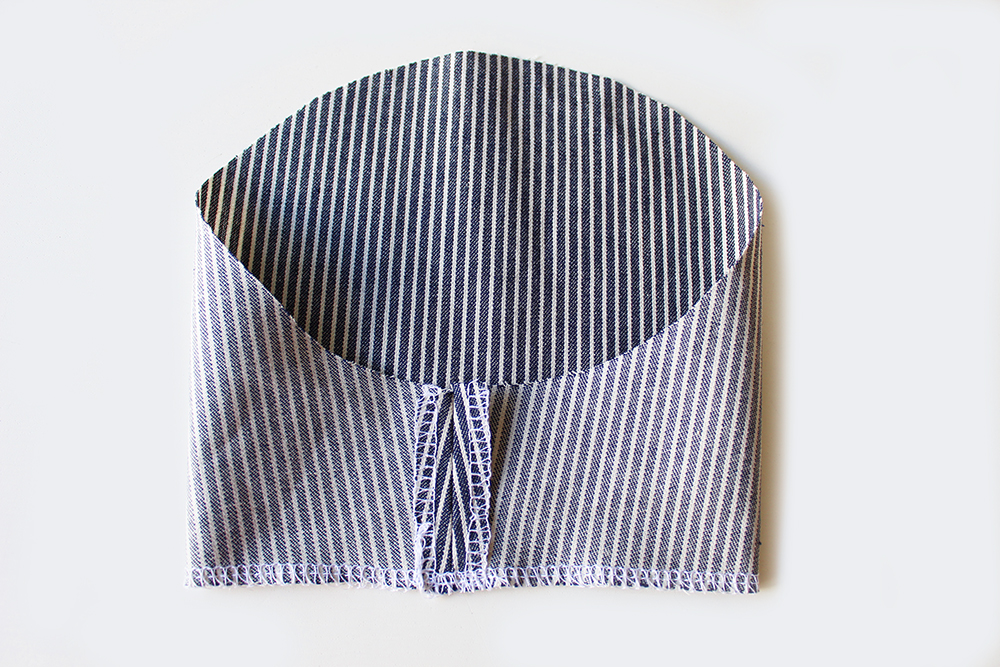
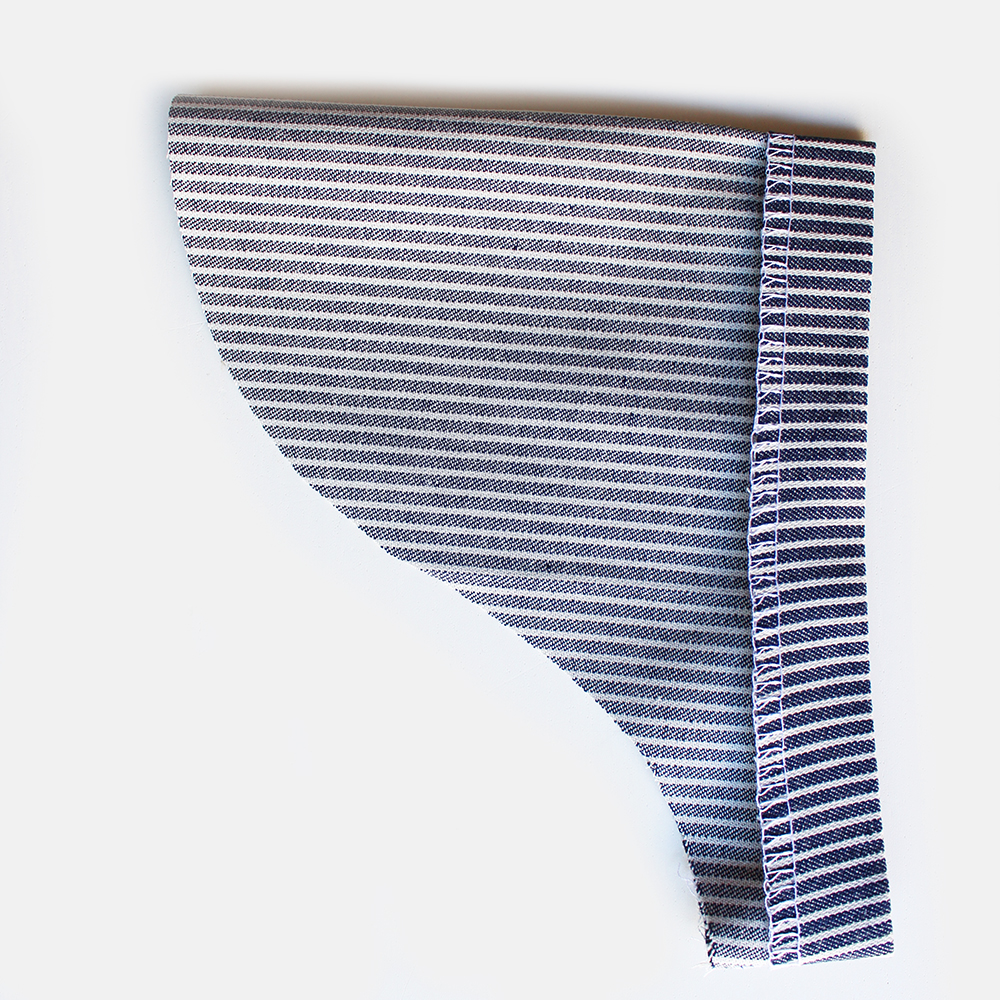
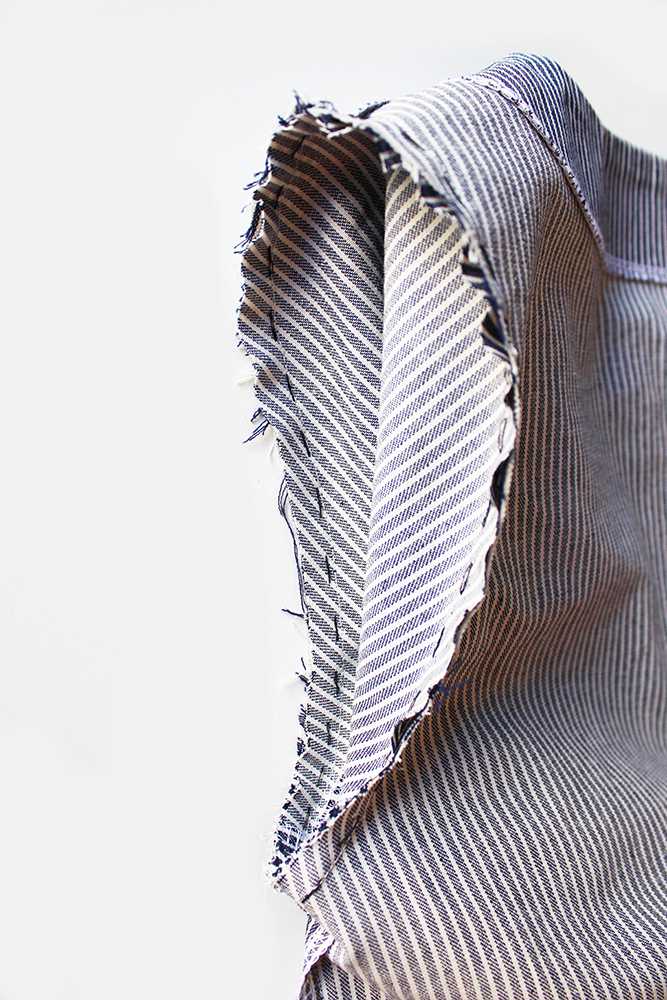
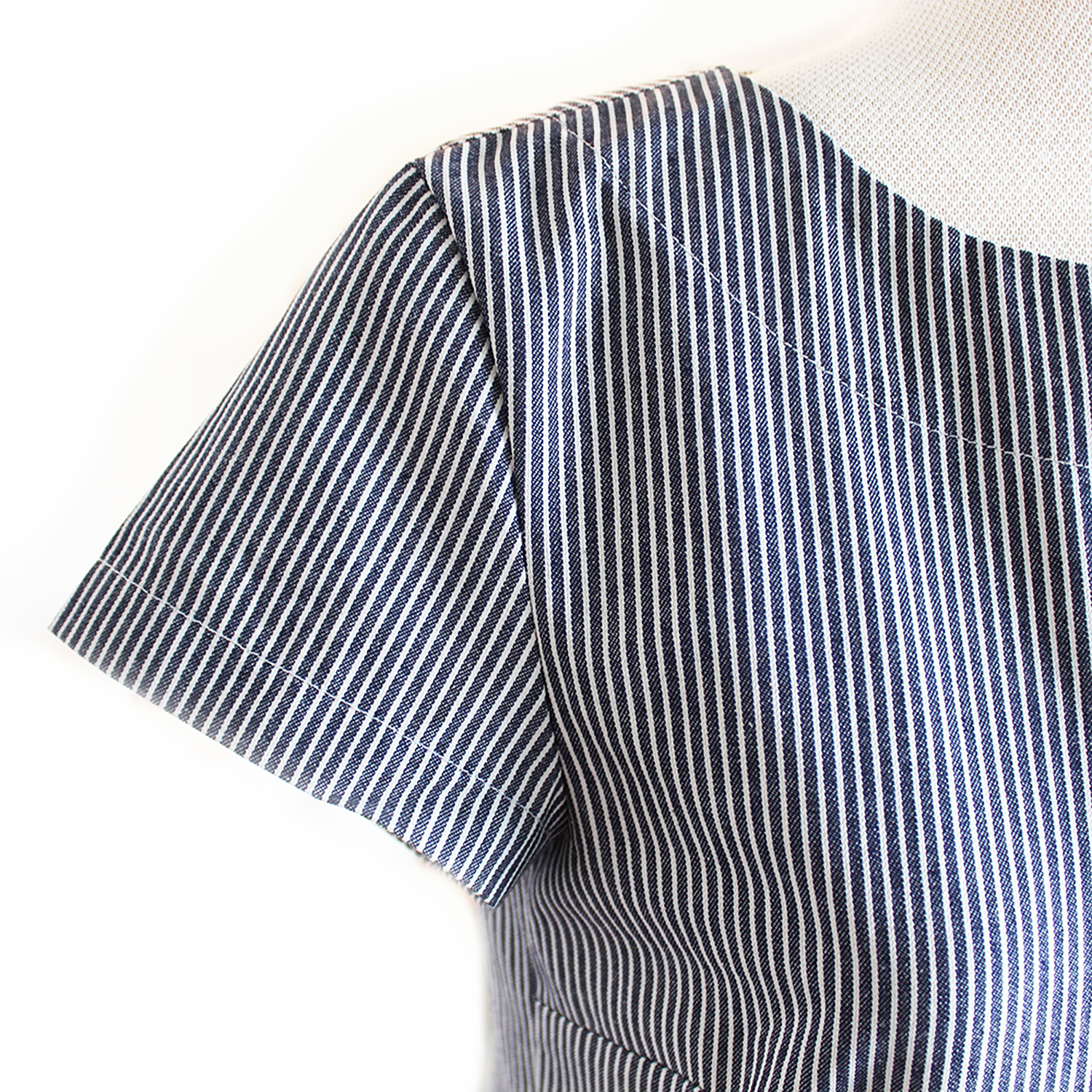
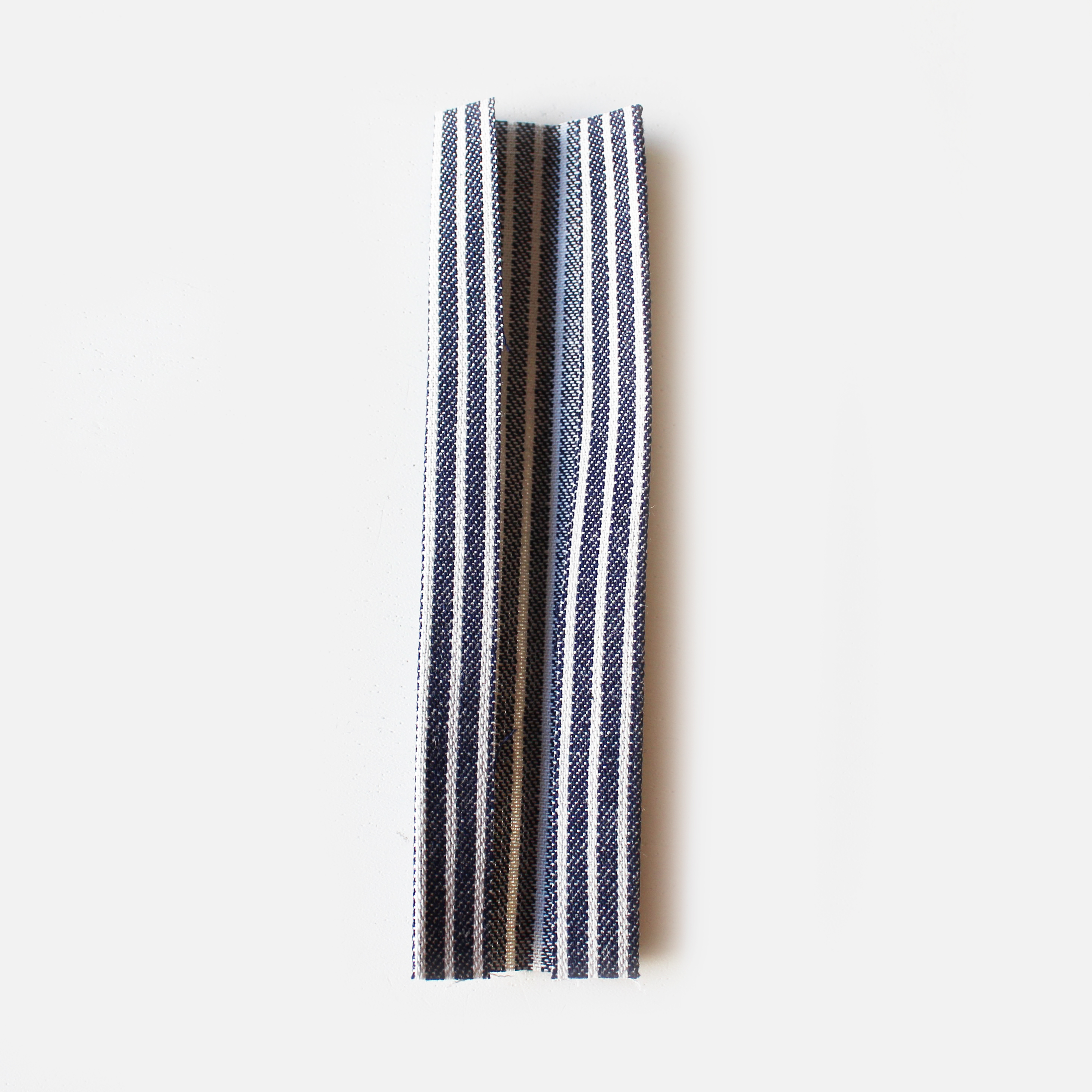
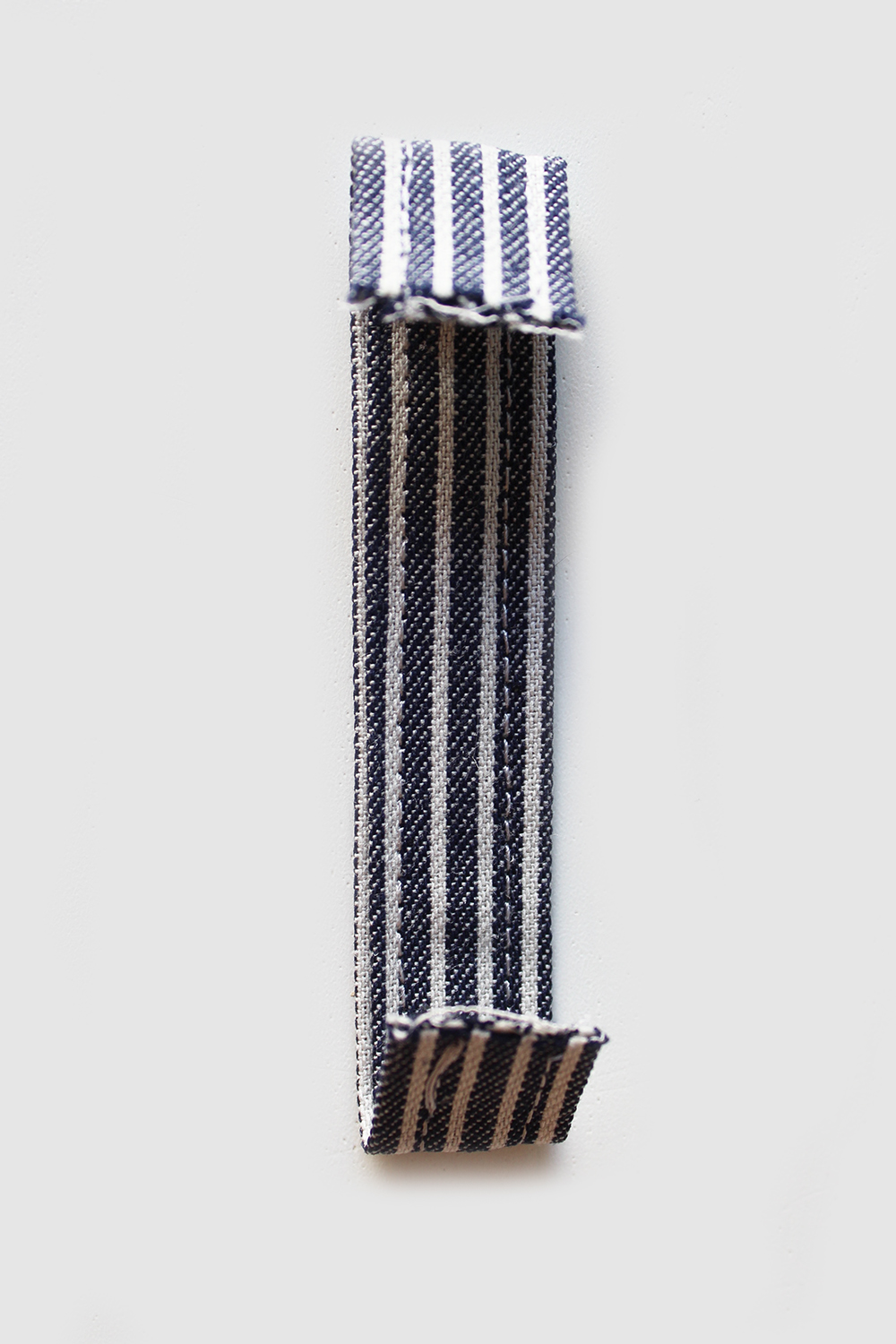
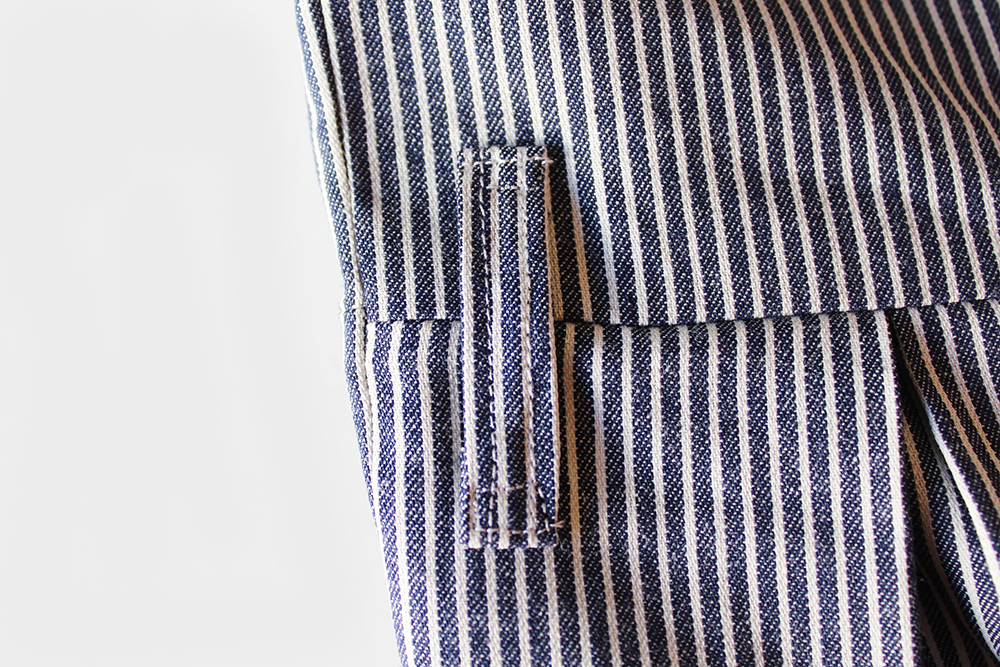
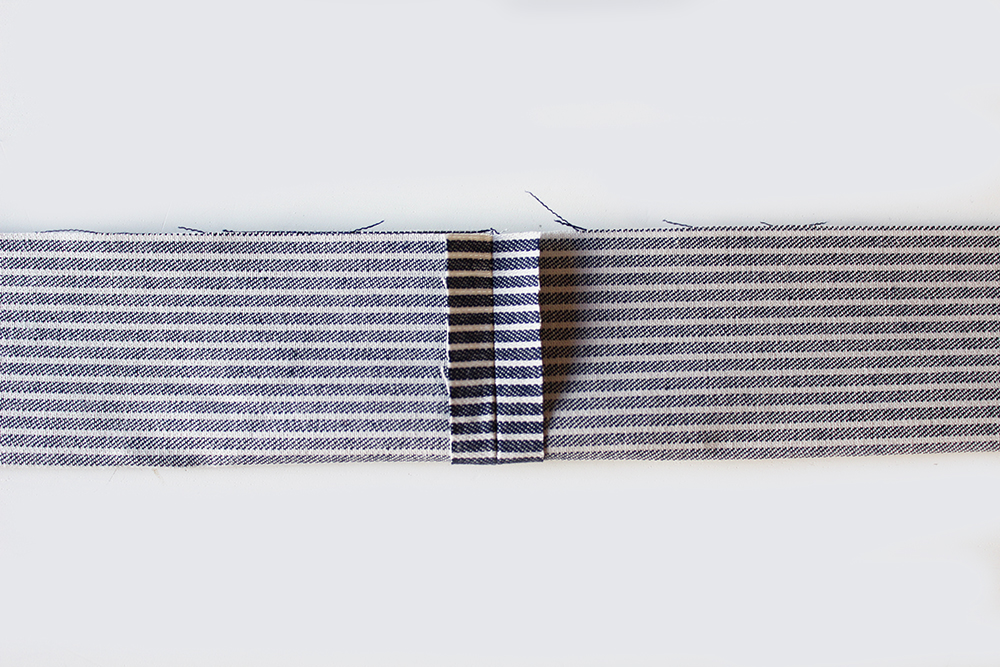
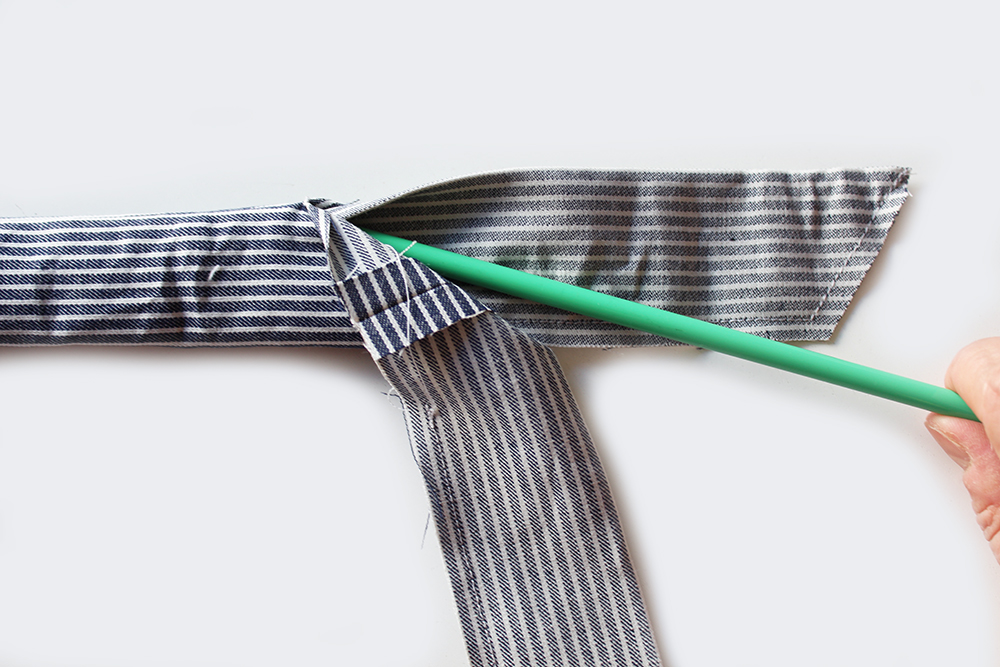
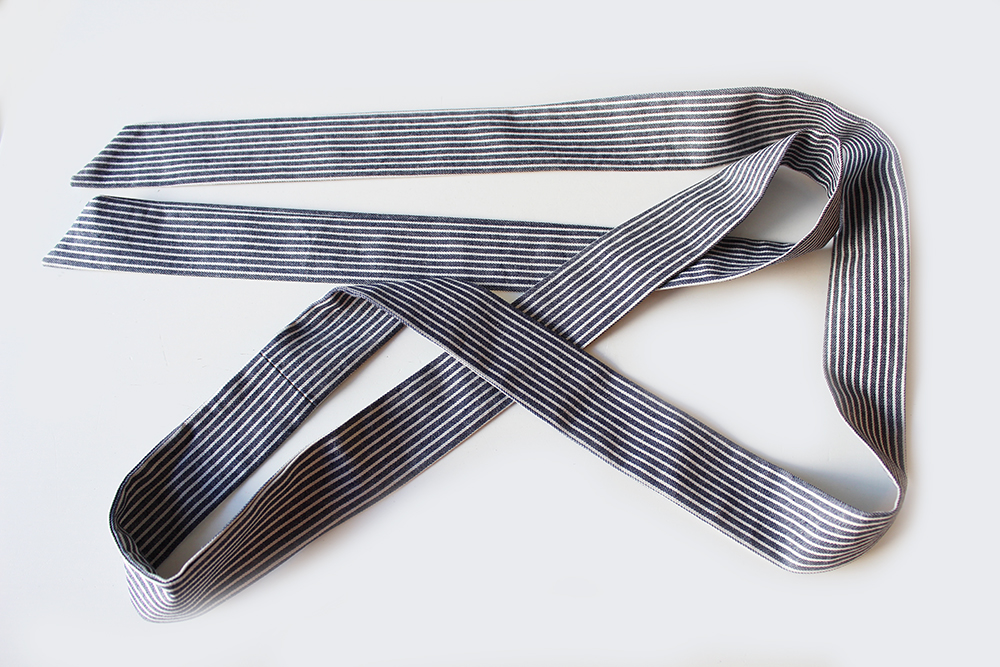
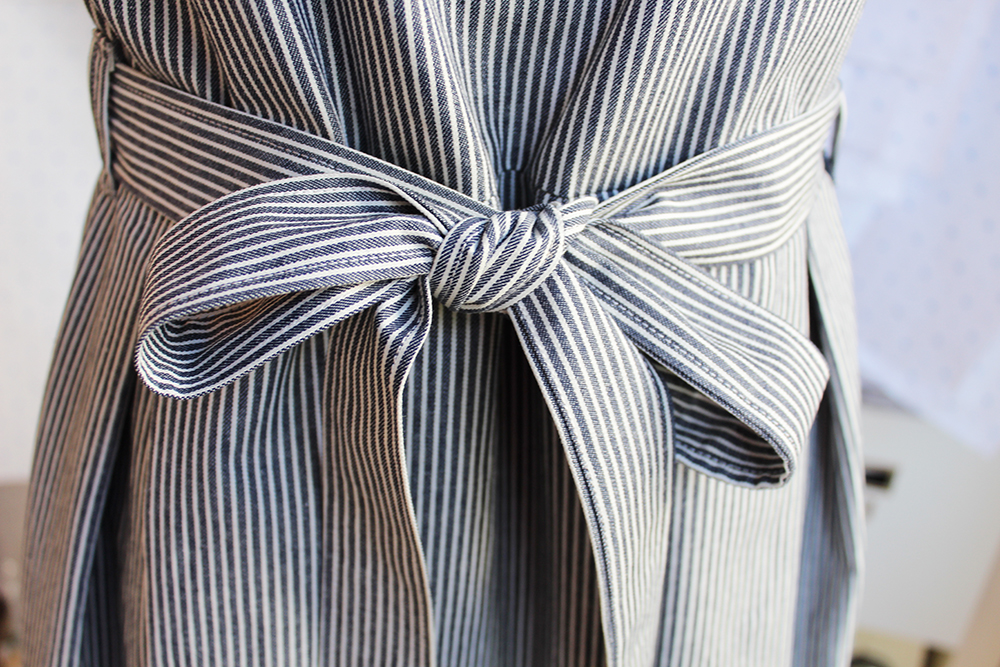
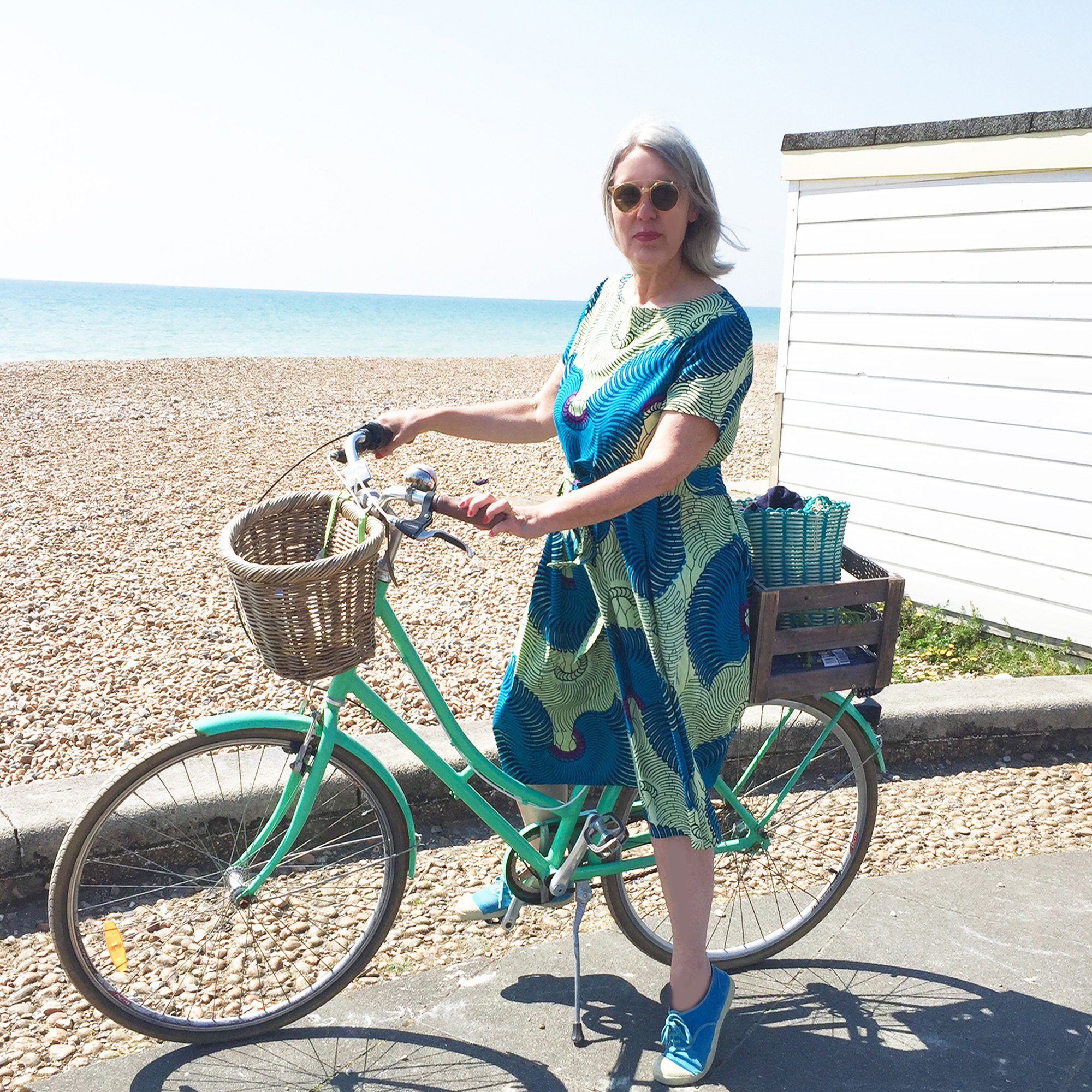
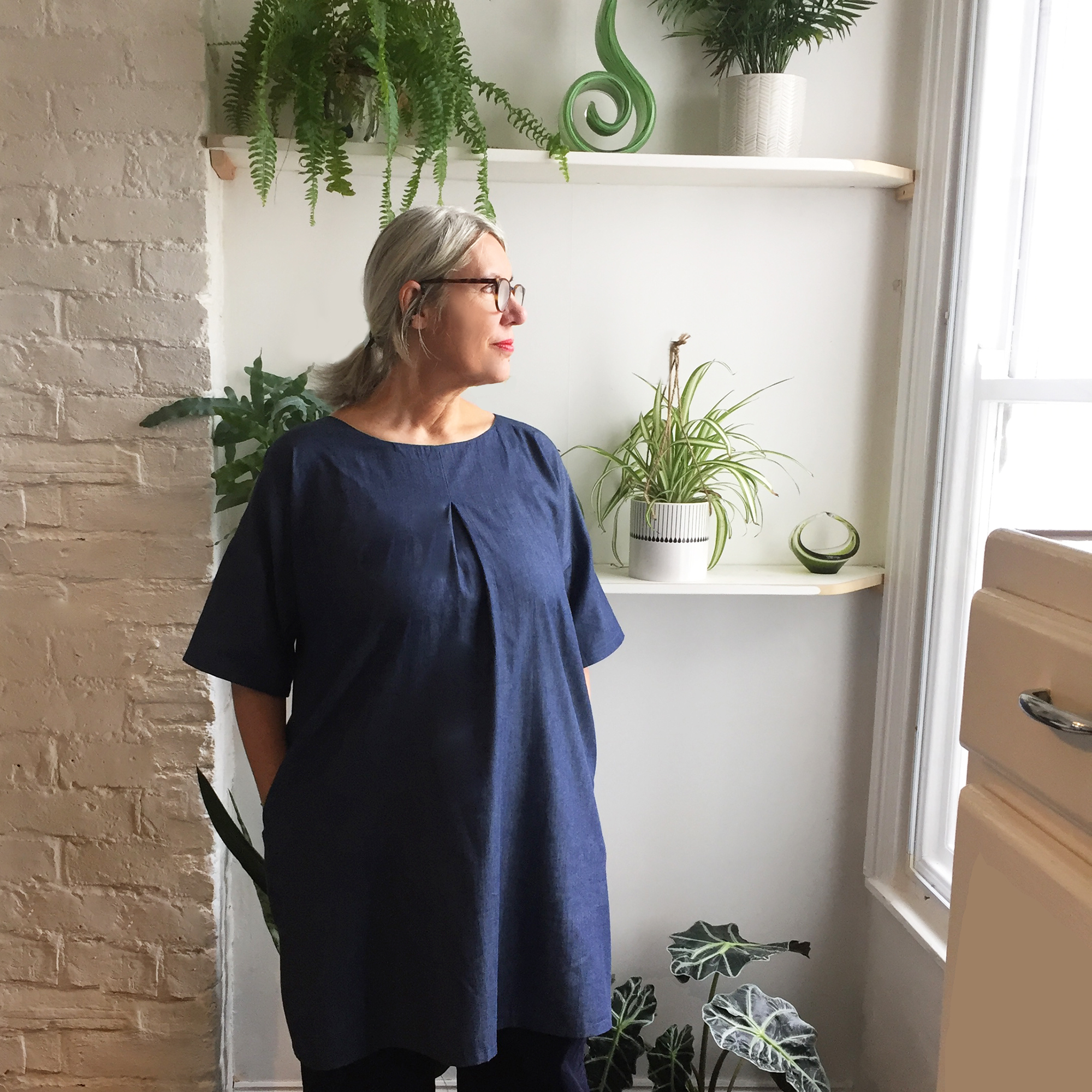

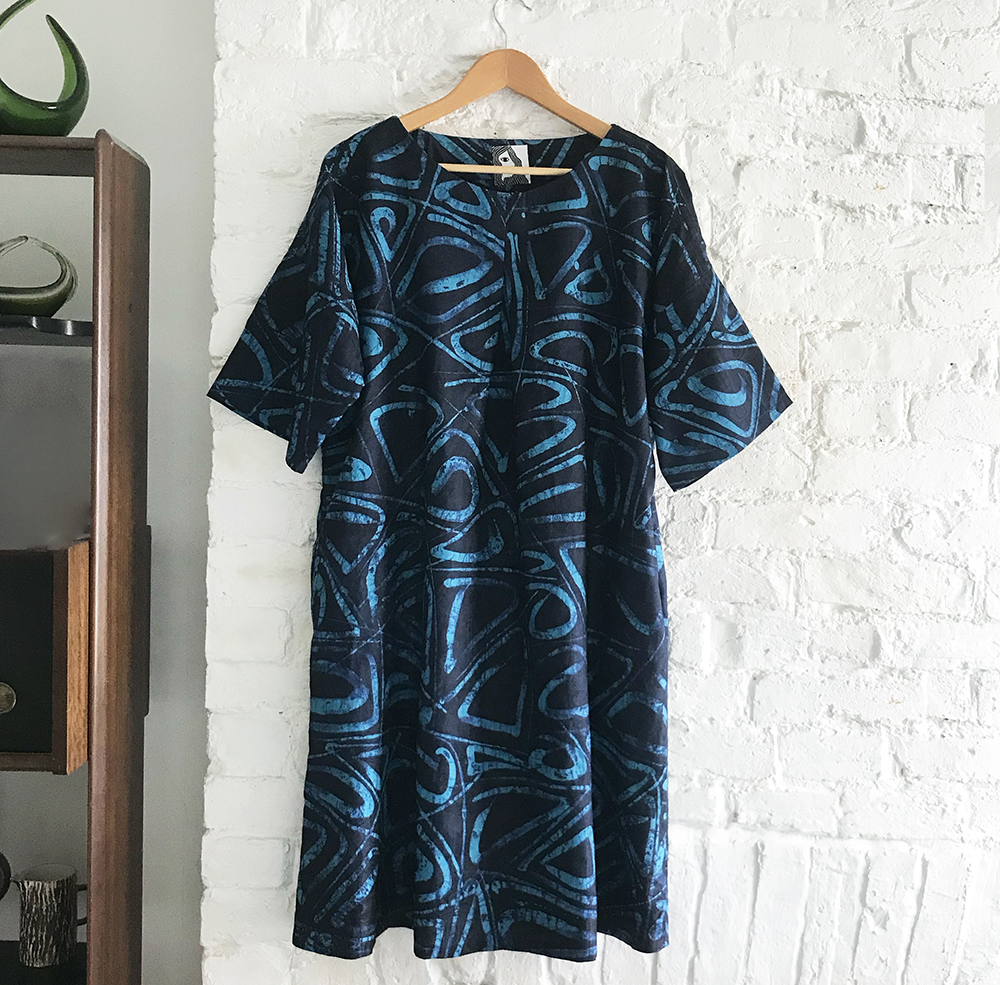
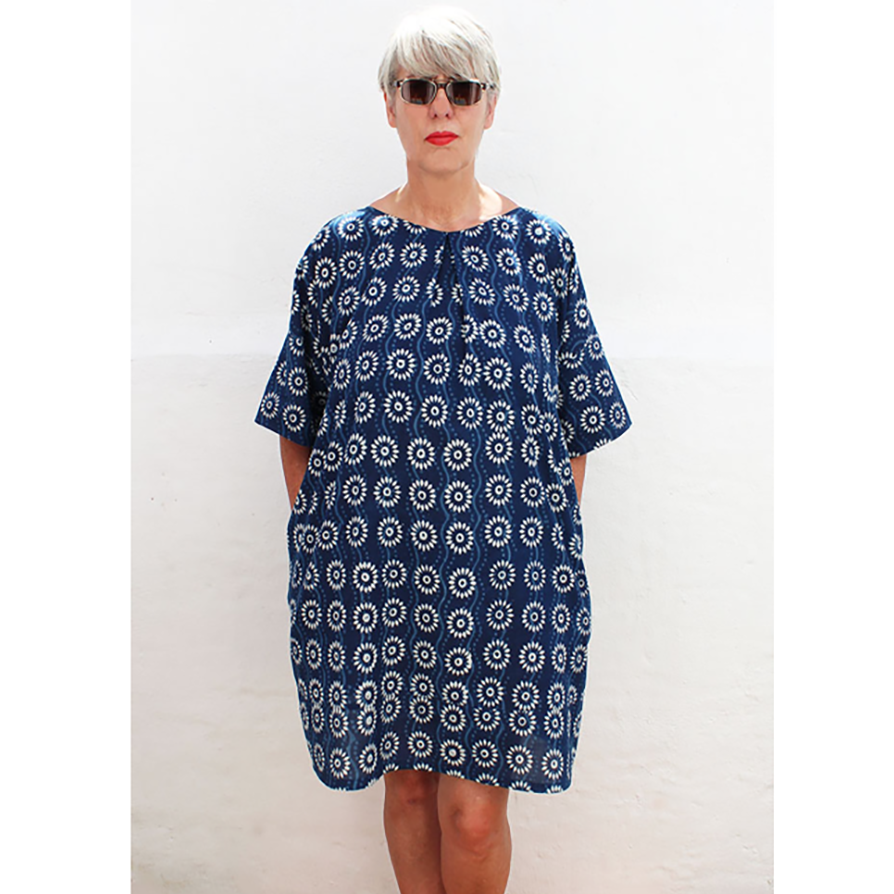
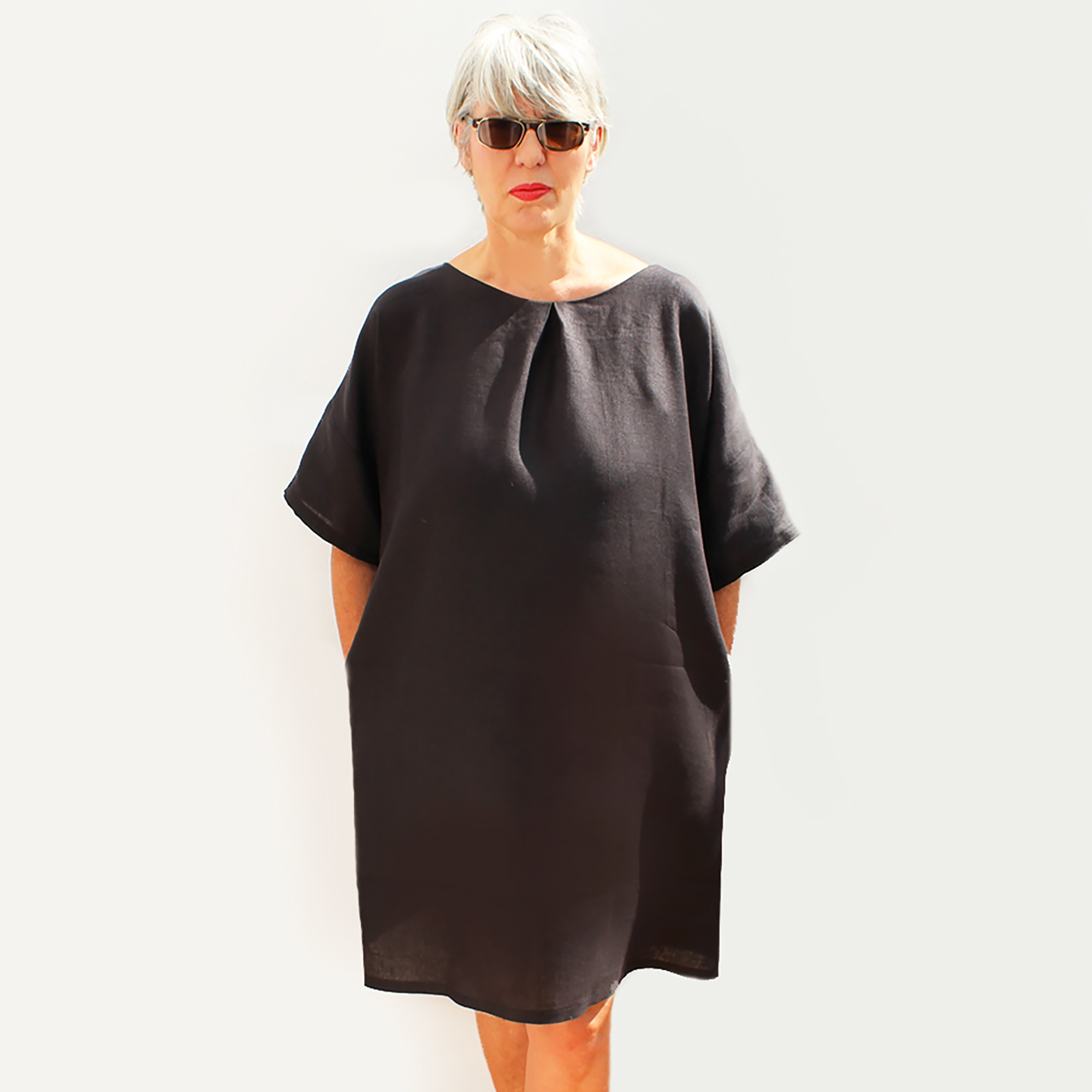
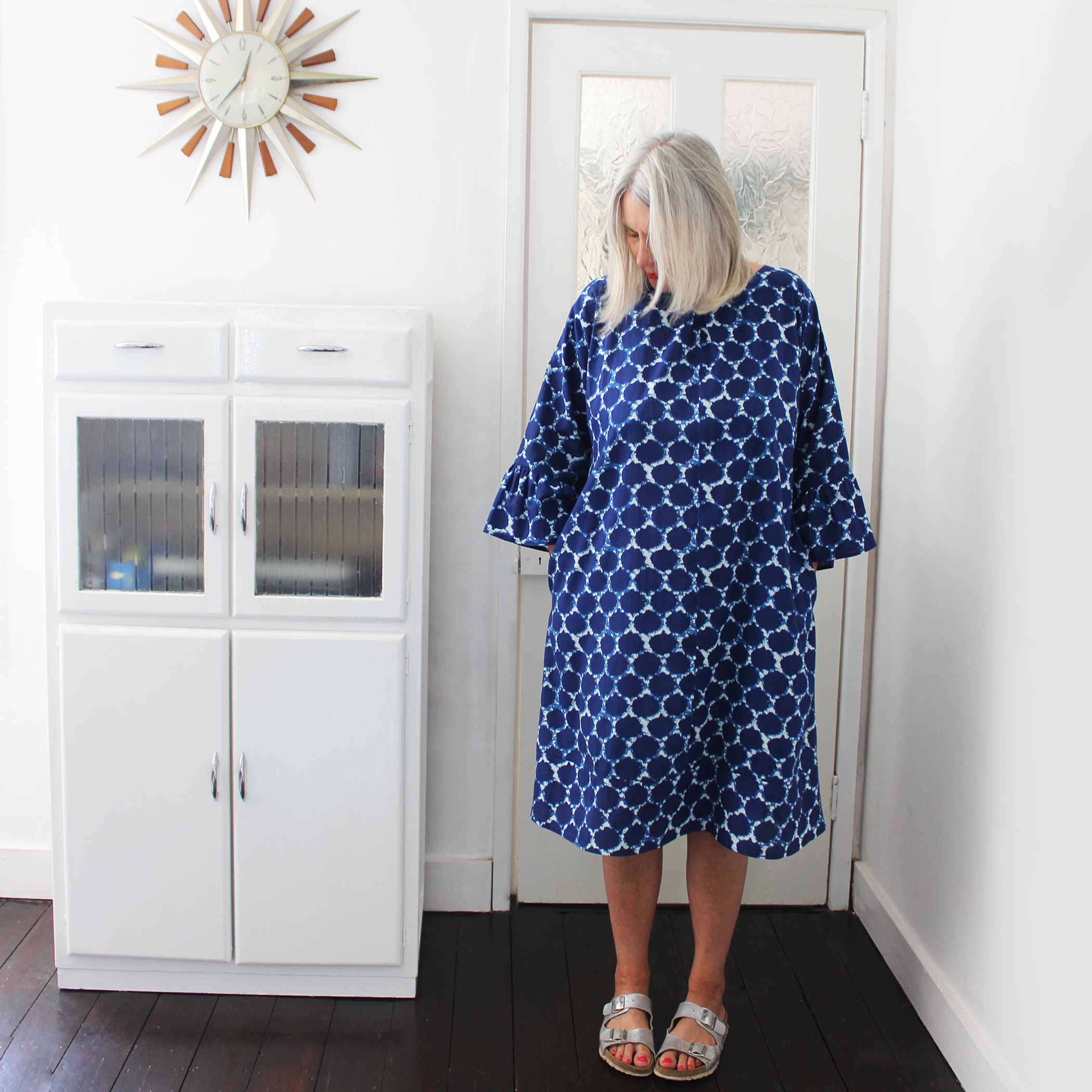
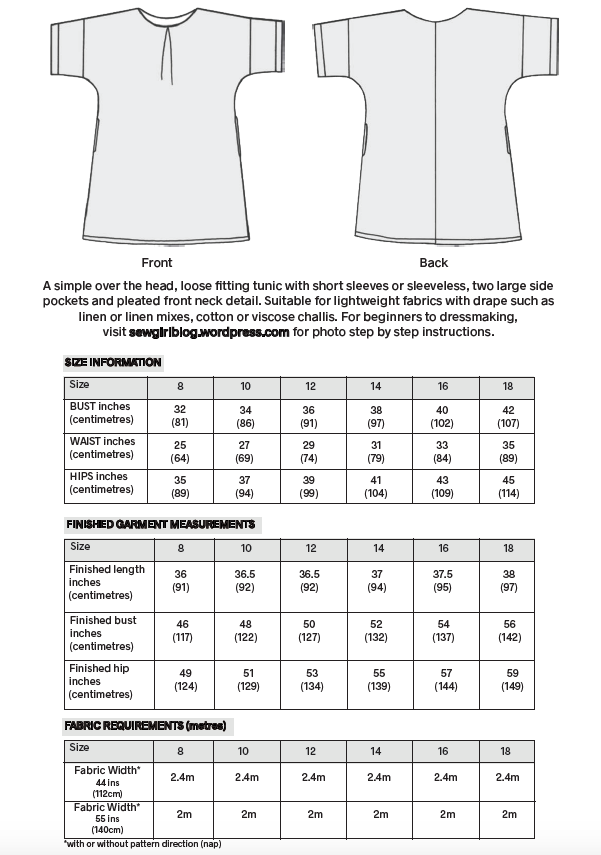
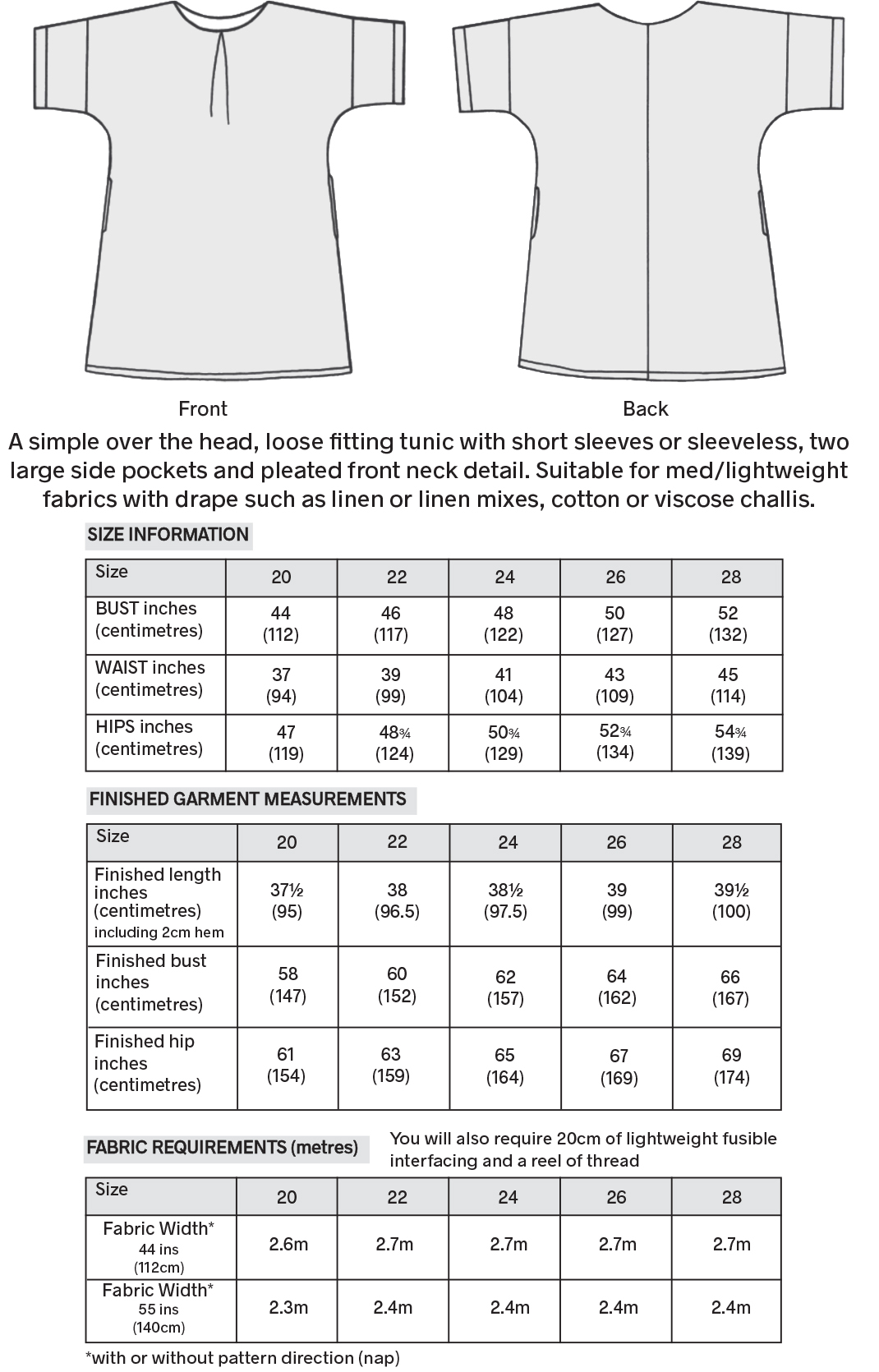
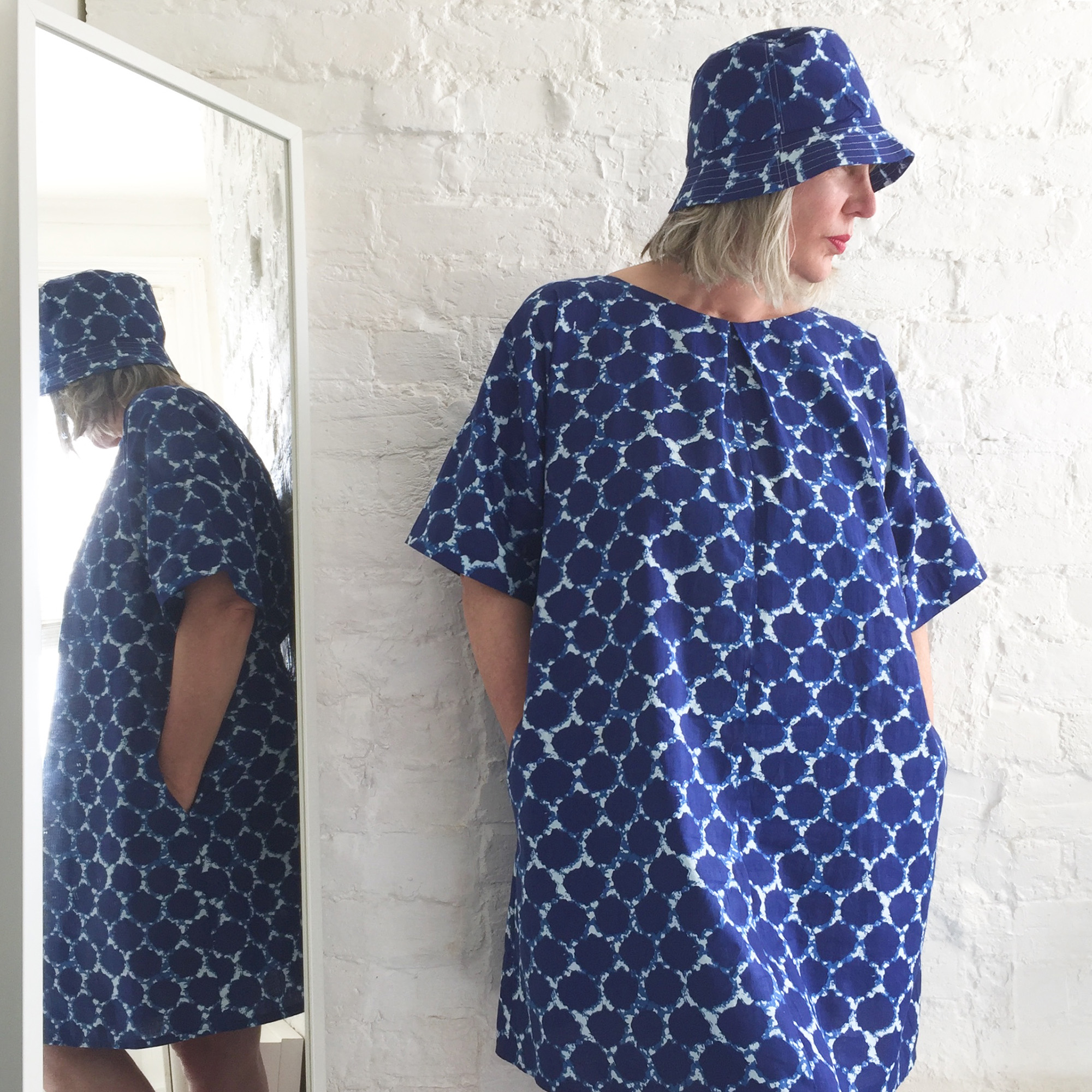

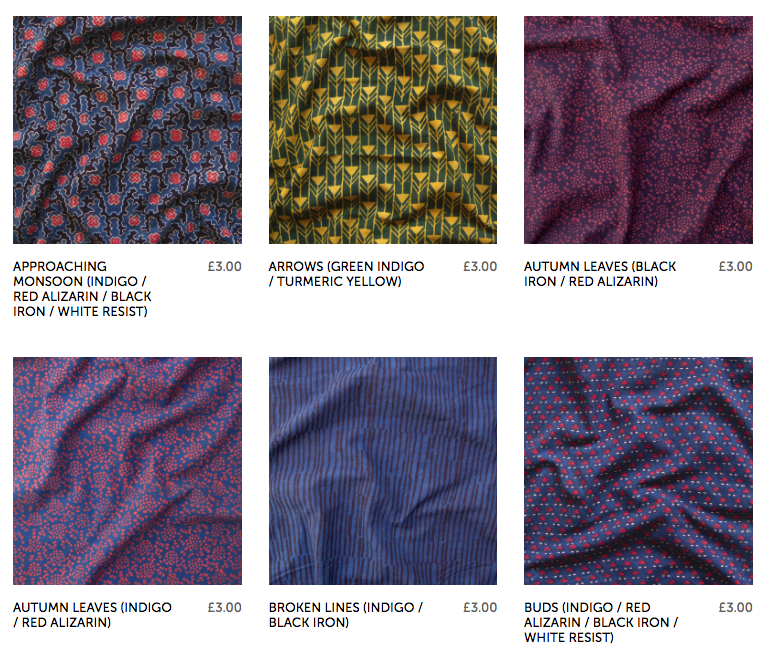
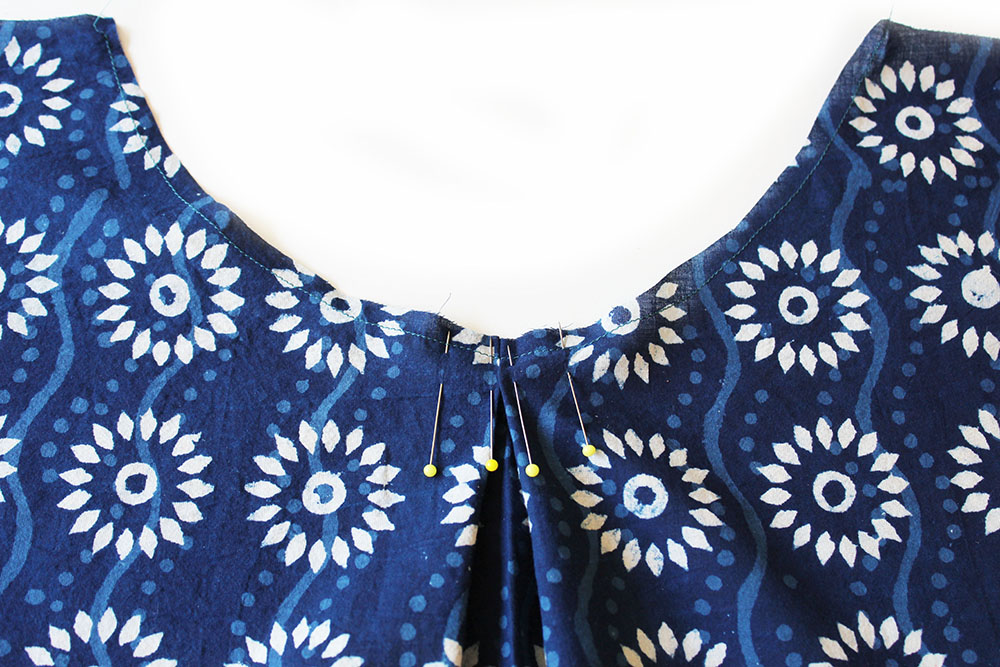 Make an inverted box pleat at the centre front neckline as shown on the template. Stay stitch all around 5mm from the raw edge to secure the pleats. Here is a diagram to help you….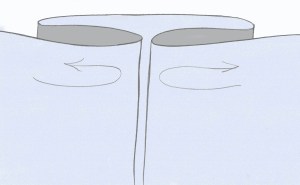
 Next pin your pockets at each side of front and back with the RST in position as shown on the template.
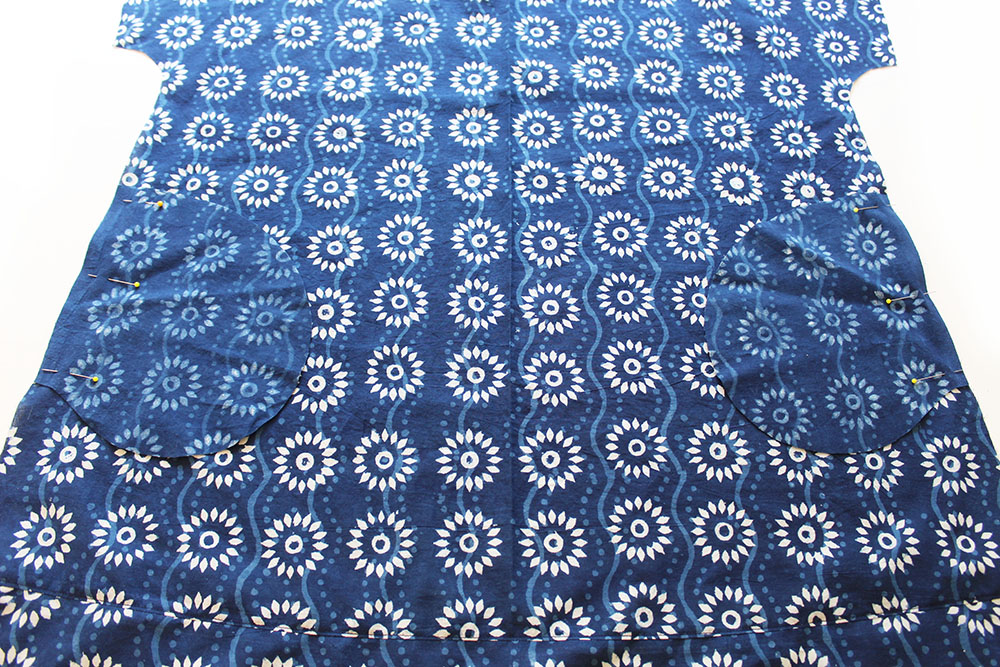 Sew down each straight side of the pockets (NB seam allowance is 1cm).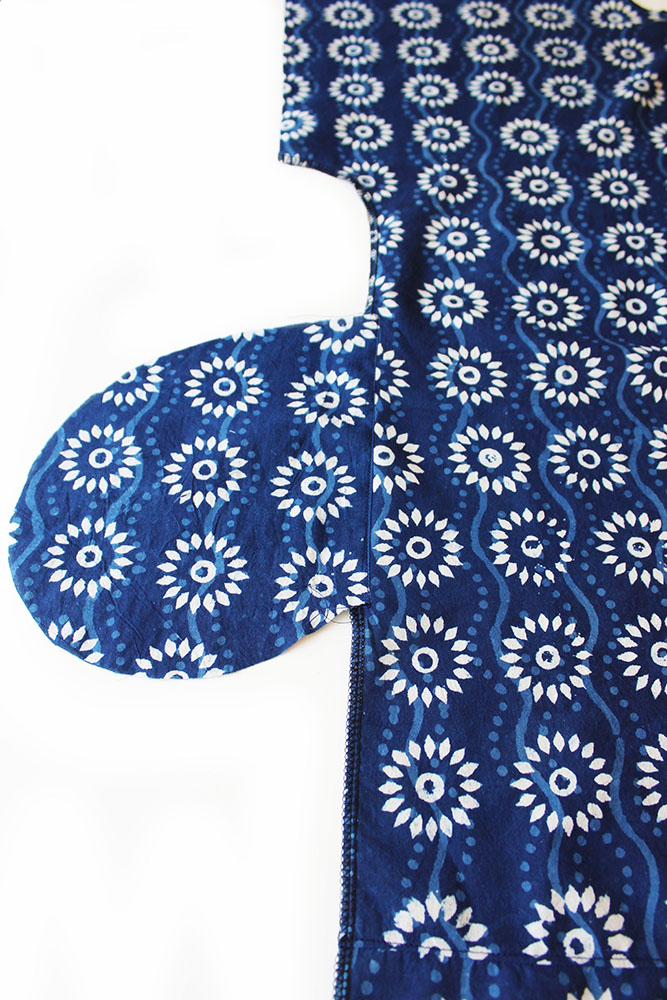
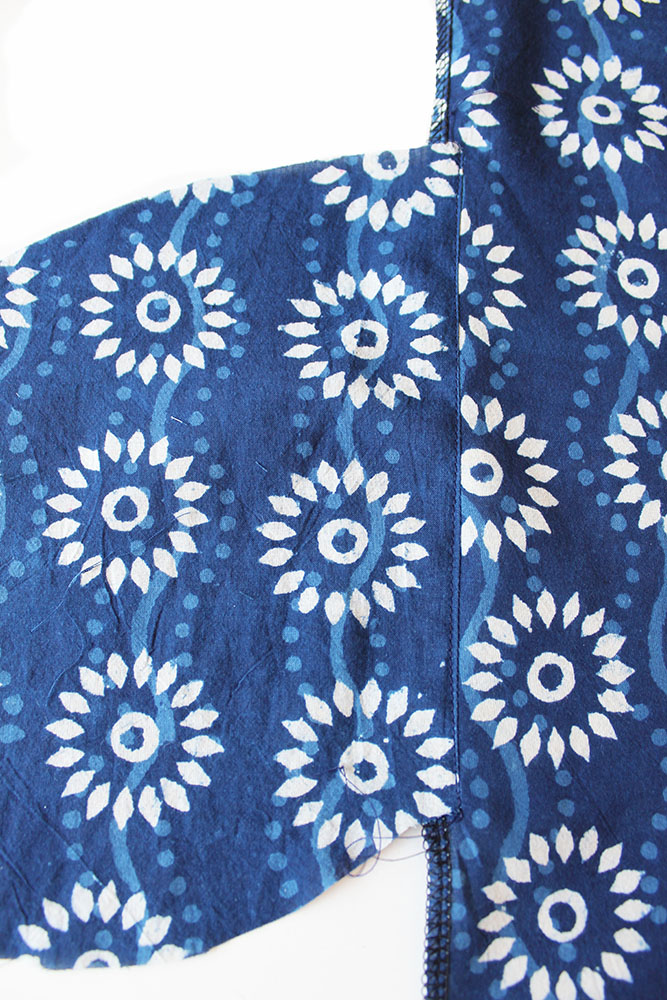
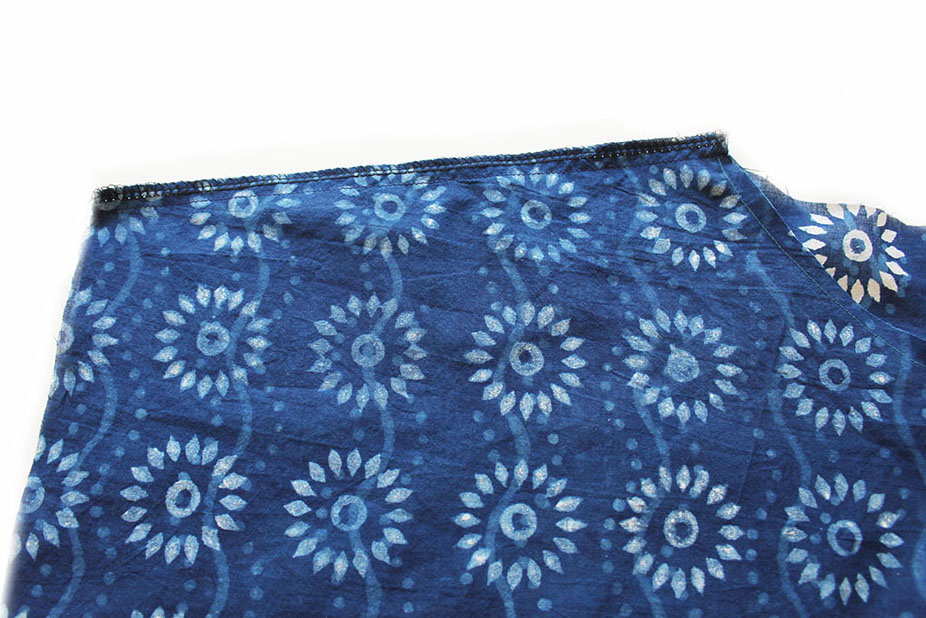
 below shows the reverse side view …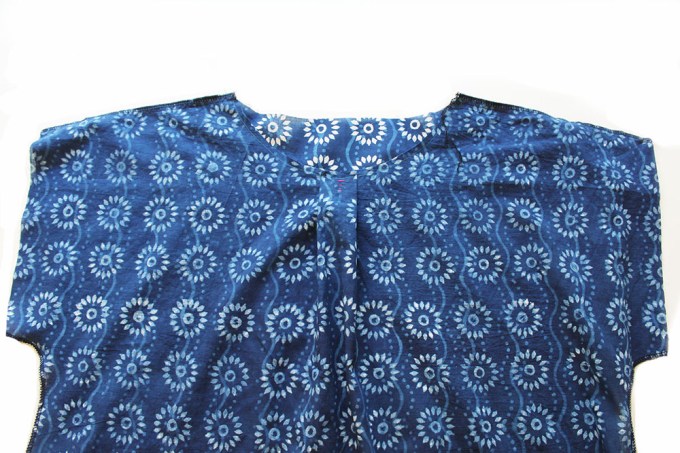
 With both facing pieces interfaced on the reverse side, pin then sew them together at the short sides with the RST. Press the seam allowances open.
 Finish the raw outer edge only all around. If you don’t have an overlocker you could fold under and press the outer edge 5mm approx and sew all around, it makes it look much neater. Or for a quicker job just overlock it.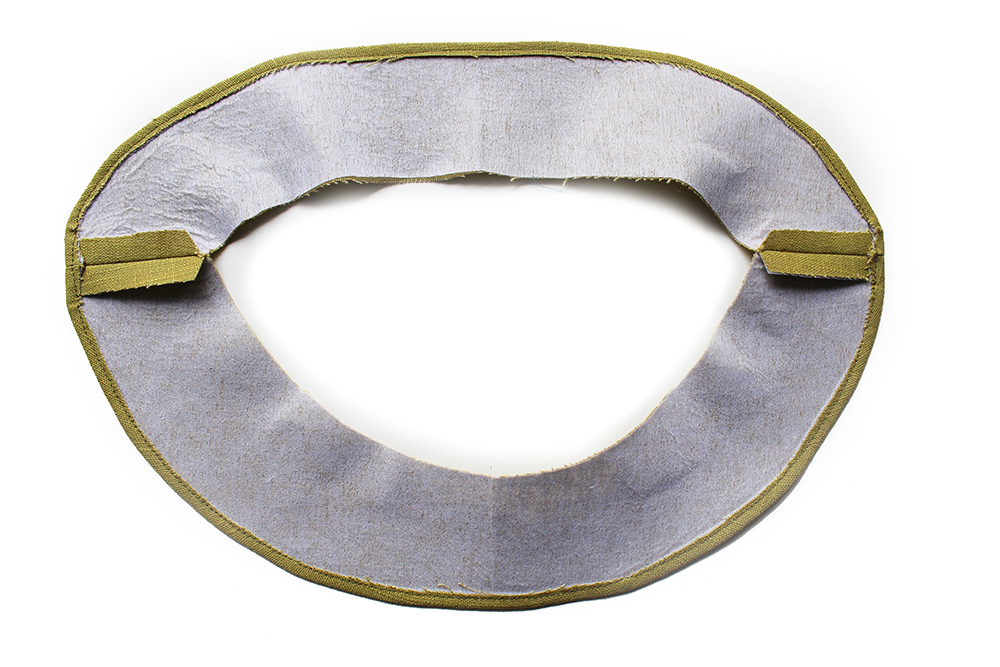
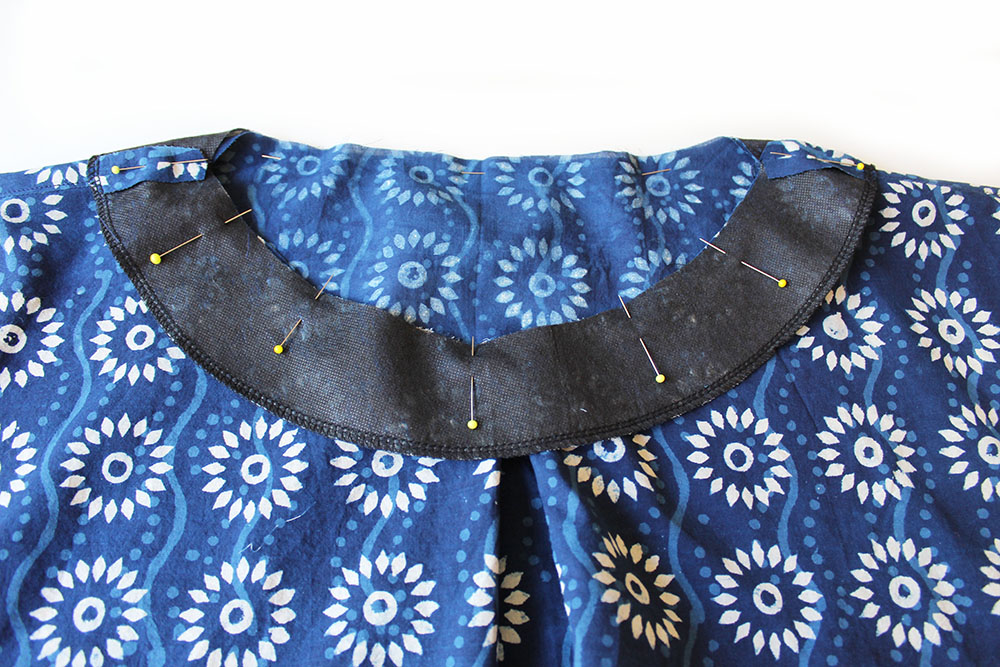 Pin the neck facing to the neck raw edge with the RST, aligning the cross seams at each shoulder. Sew all around.
  Nick the seam allowance at the curved edges with small V’s and reduce the bulky side seam allowances to 5mm. I also trim the cross seam allowances at the side seams to 5mm to make it less lumpy.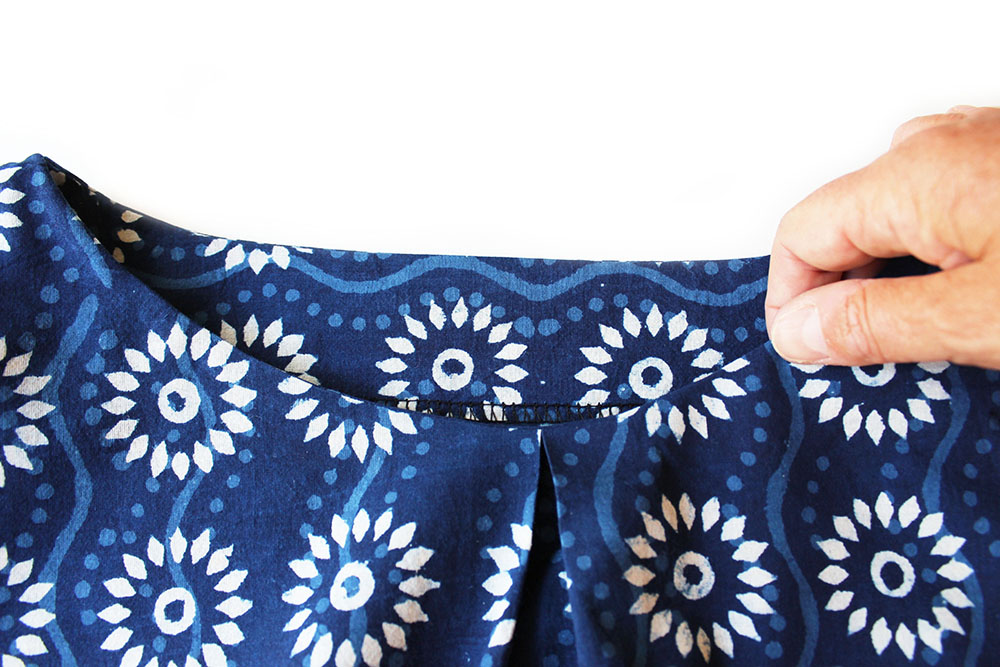
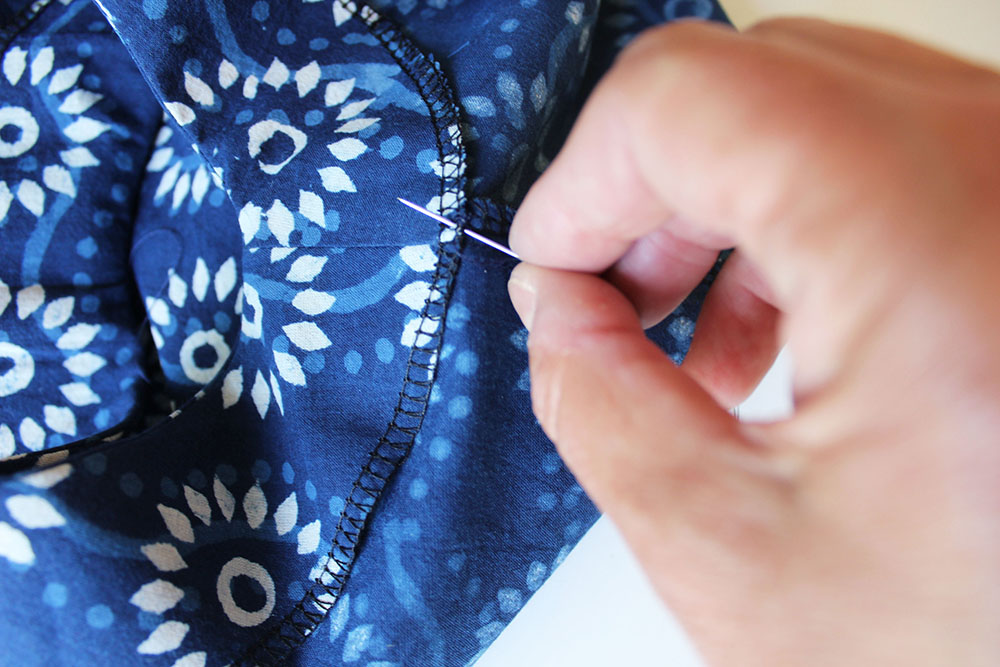 Secure each side of the neck facing at the shoulder seam allowance with a few hand stitches to secure in position. Now heres a tip: if you have some wondaweb why not sandwich a few pieces here and there underneath all around and press to secure the facing a little more in position, especially at the centre front and back.
 Pin the sleeve curved edge to the body at sleeve edge with the RST aligning the centre point to the shoulder seam. Sew. Finish the raw edge. Repeat for the other sleeve.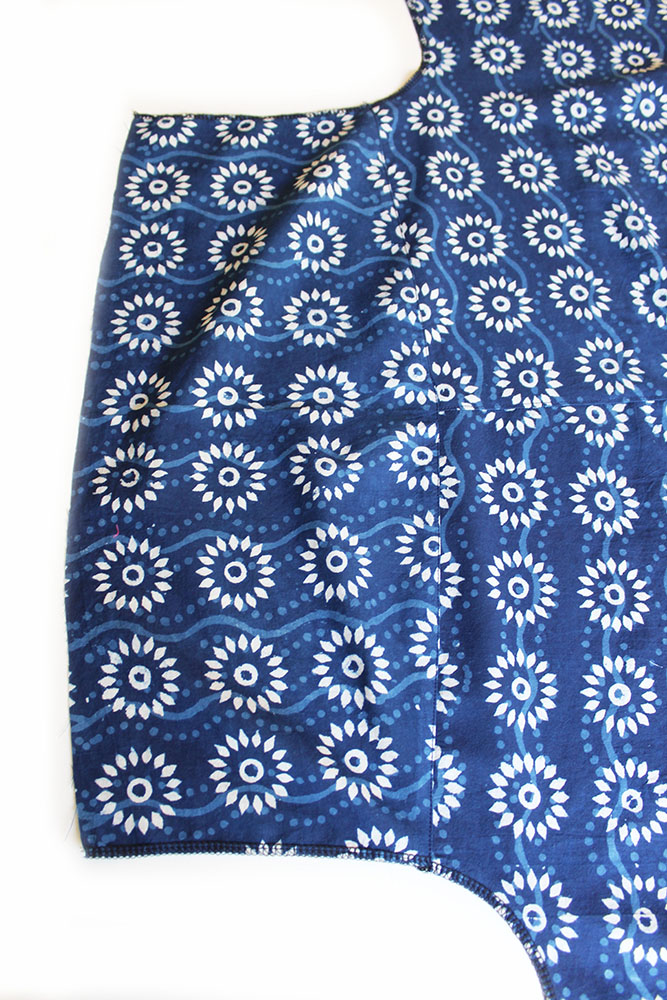
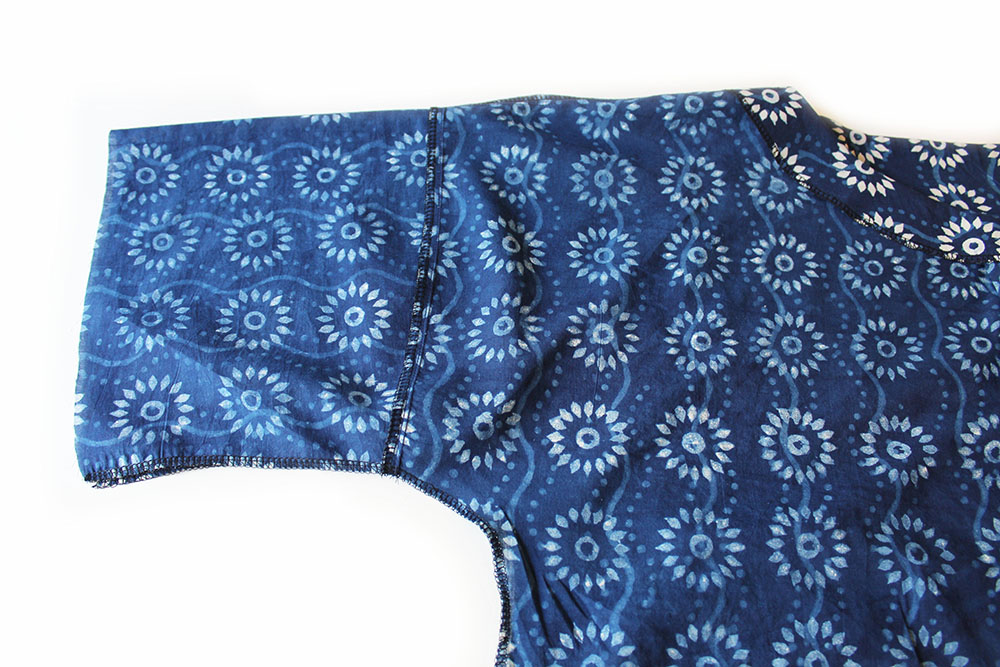
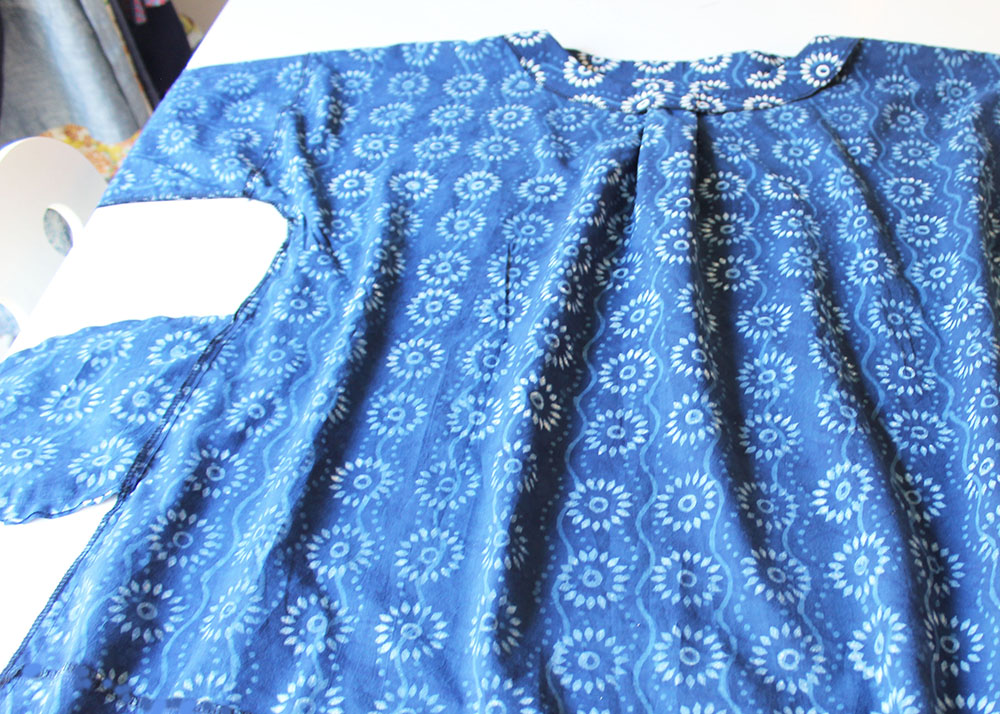 With RST, pin the front to back at the sides, under arms and all around pockets. Sew. Finish the raw edges. Press.
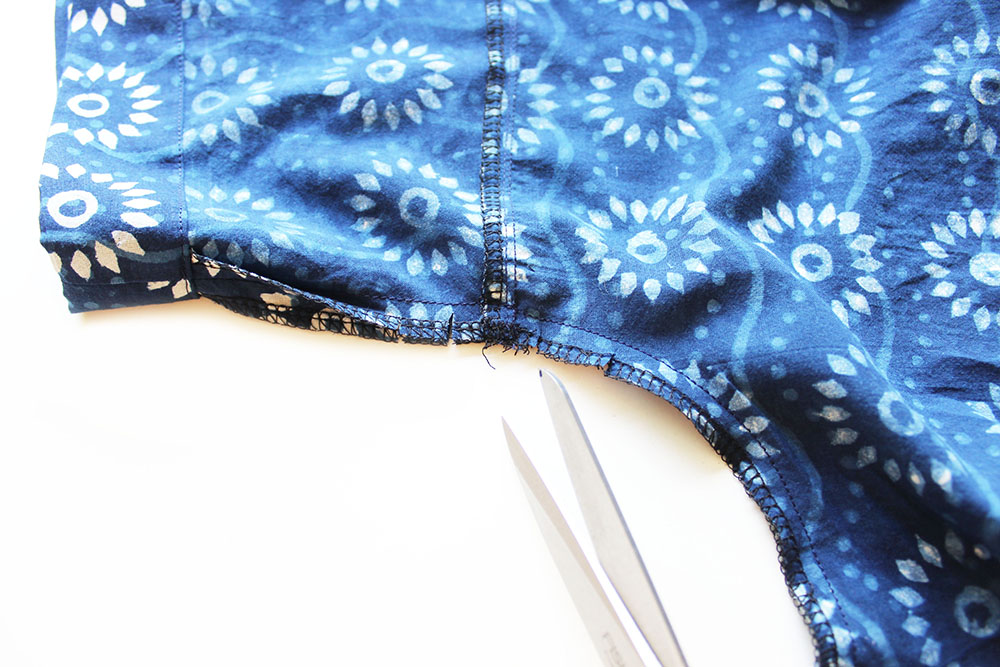 Just a couple of snips under the arm at the seam allowance will prevent it bunching up.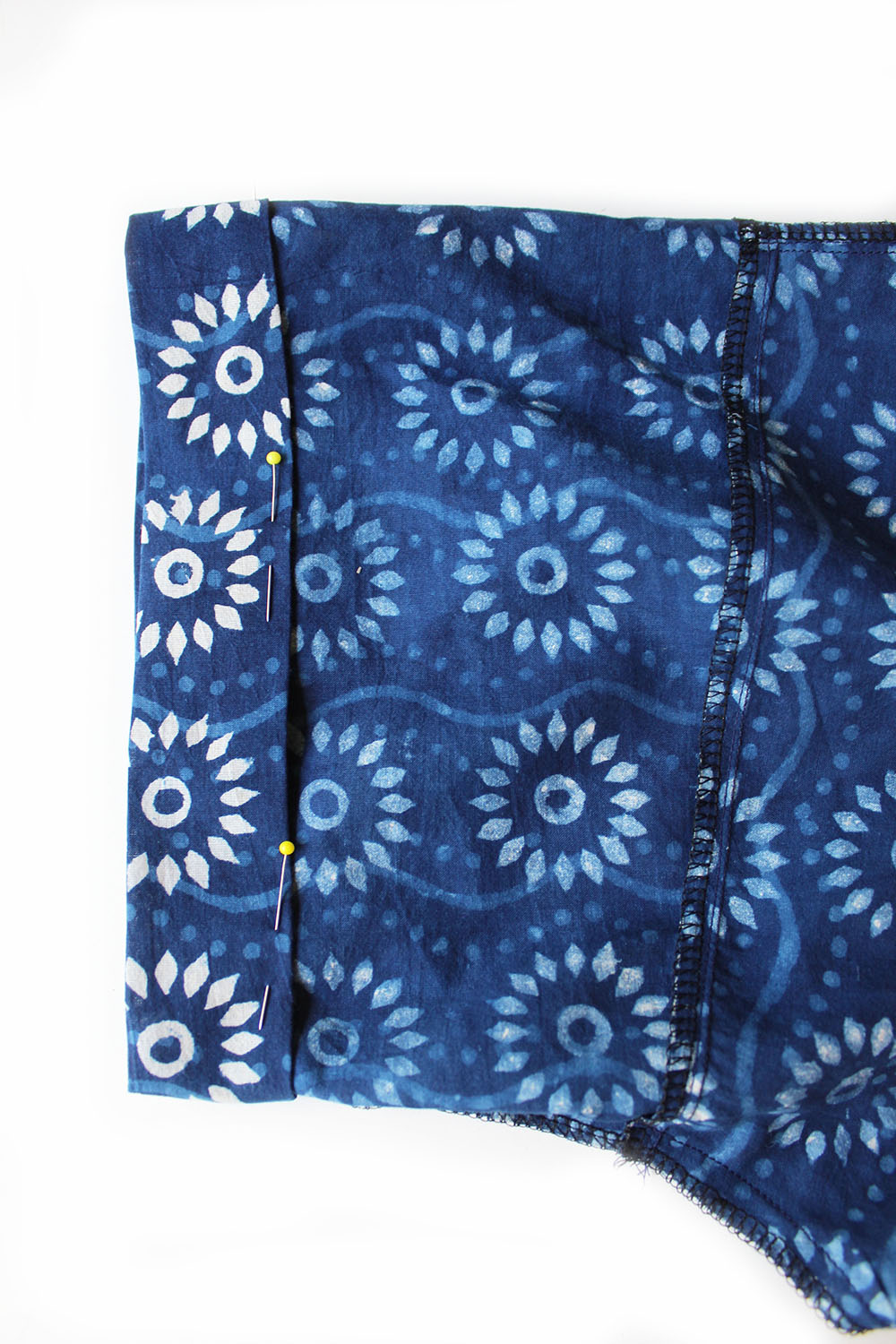
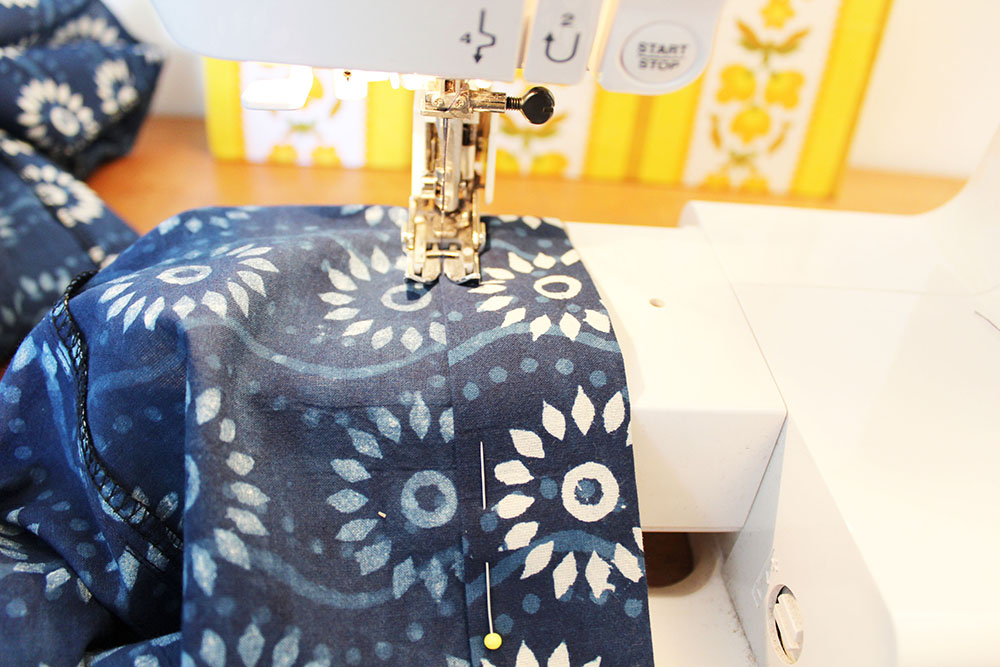
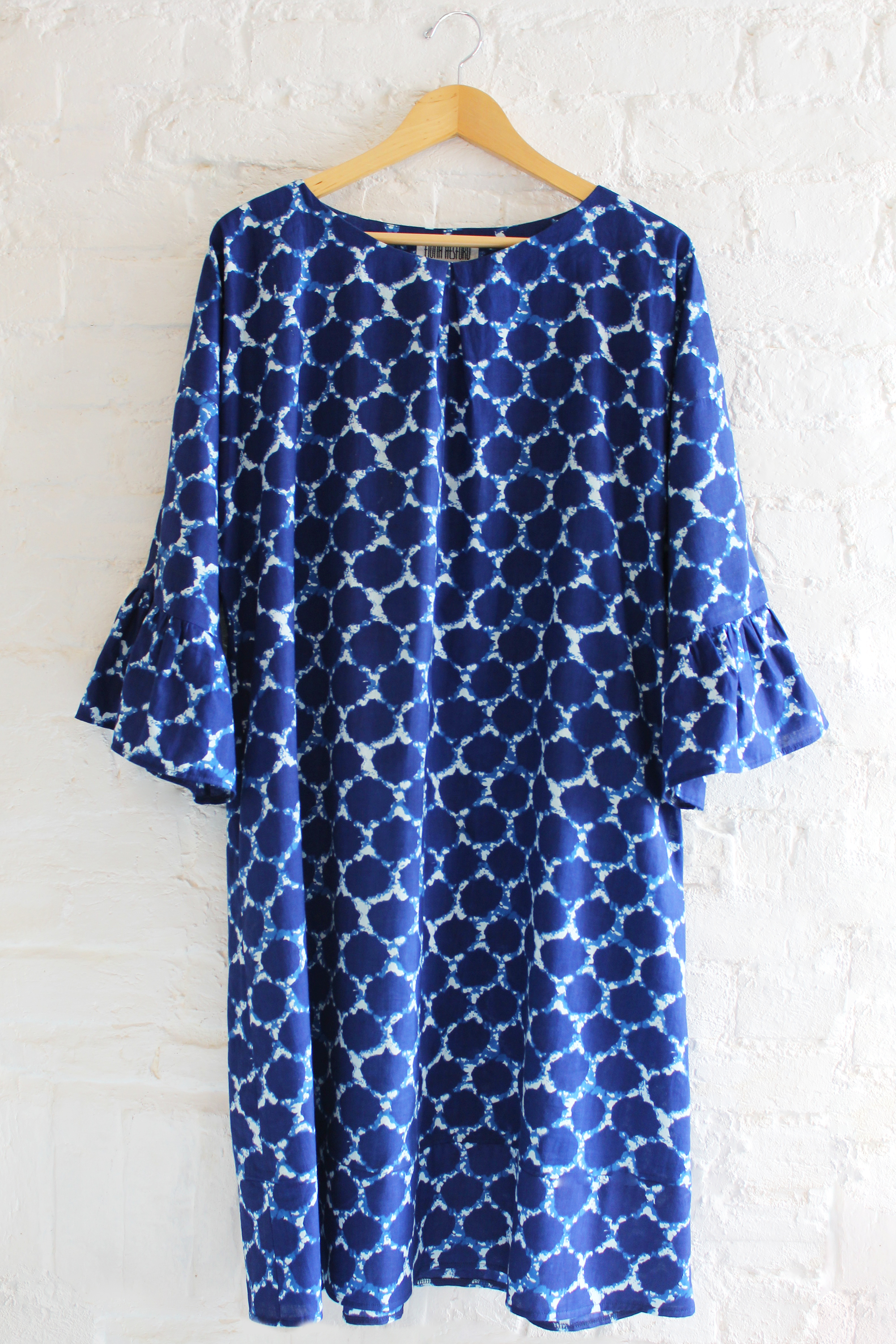
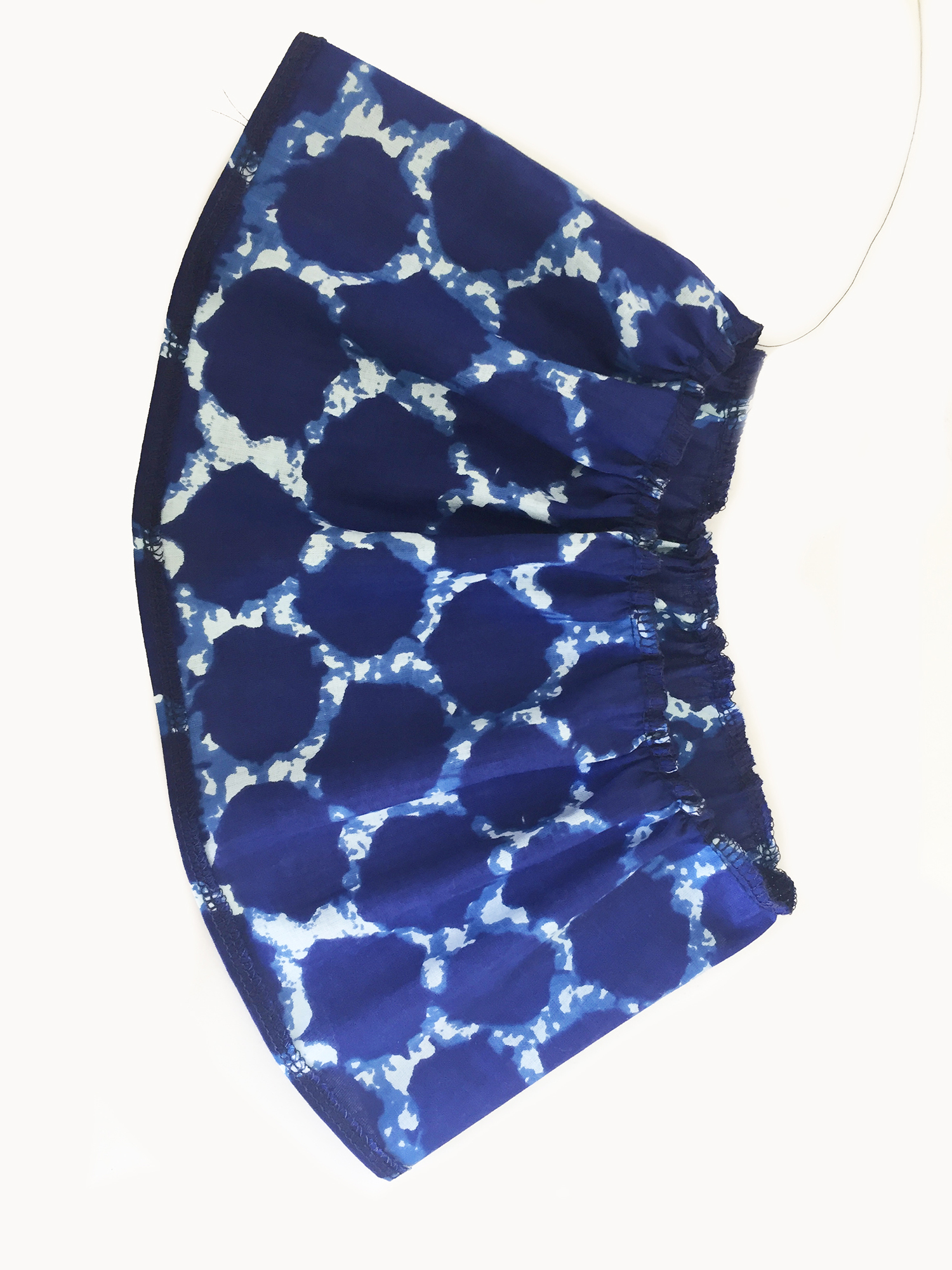
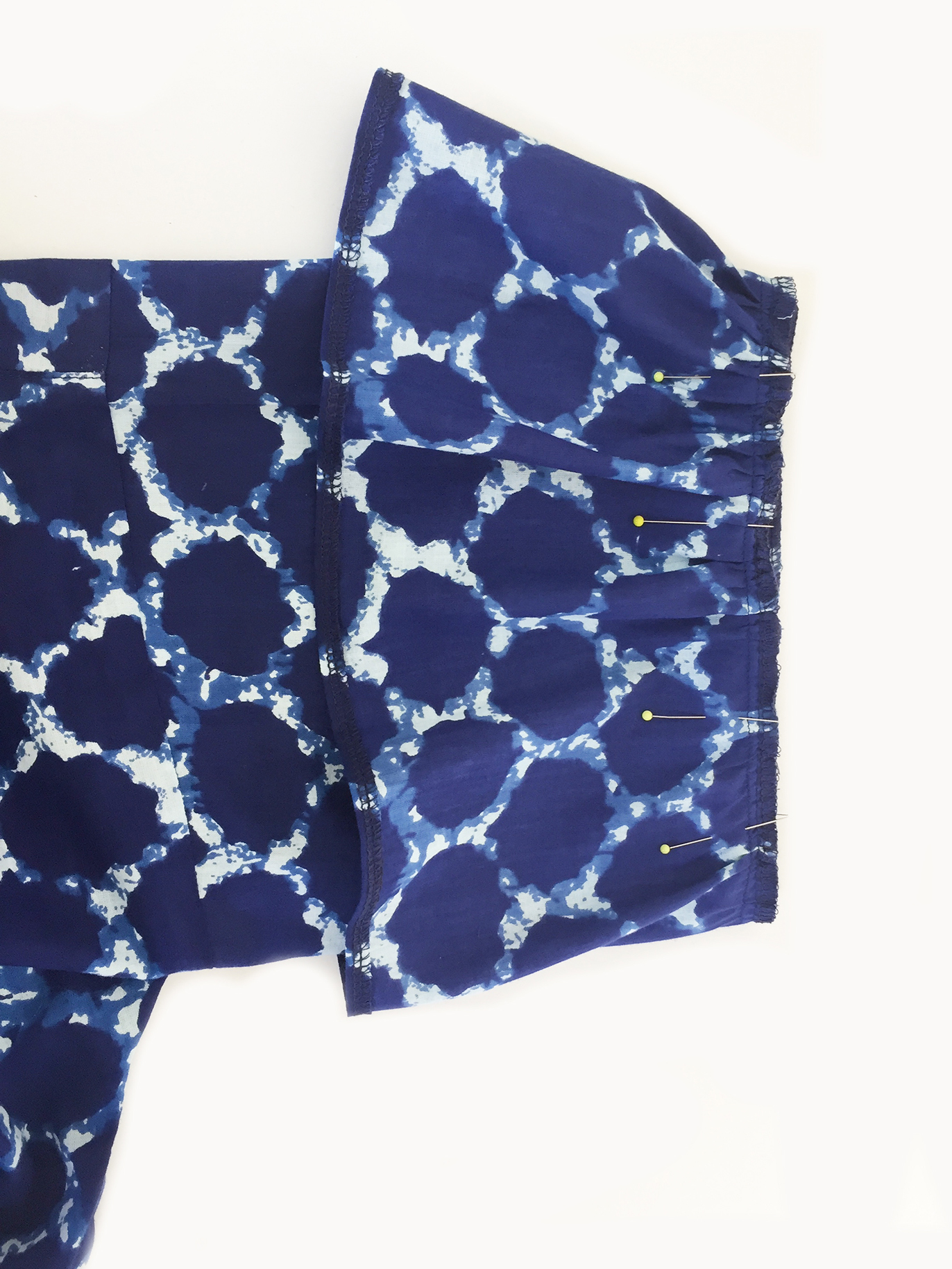
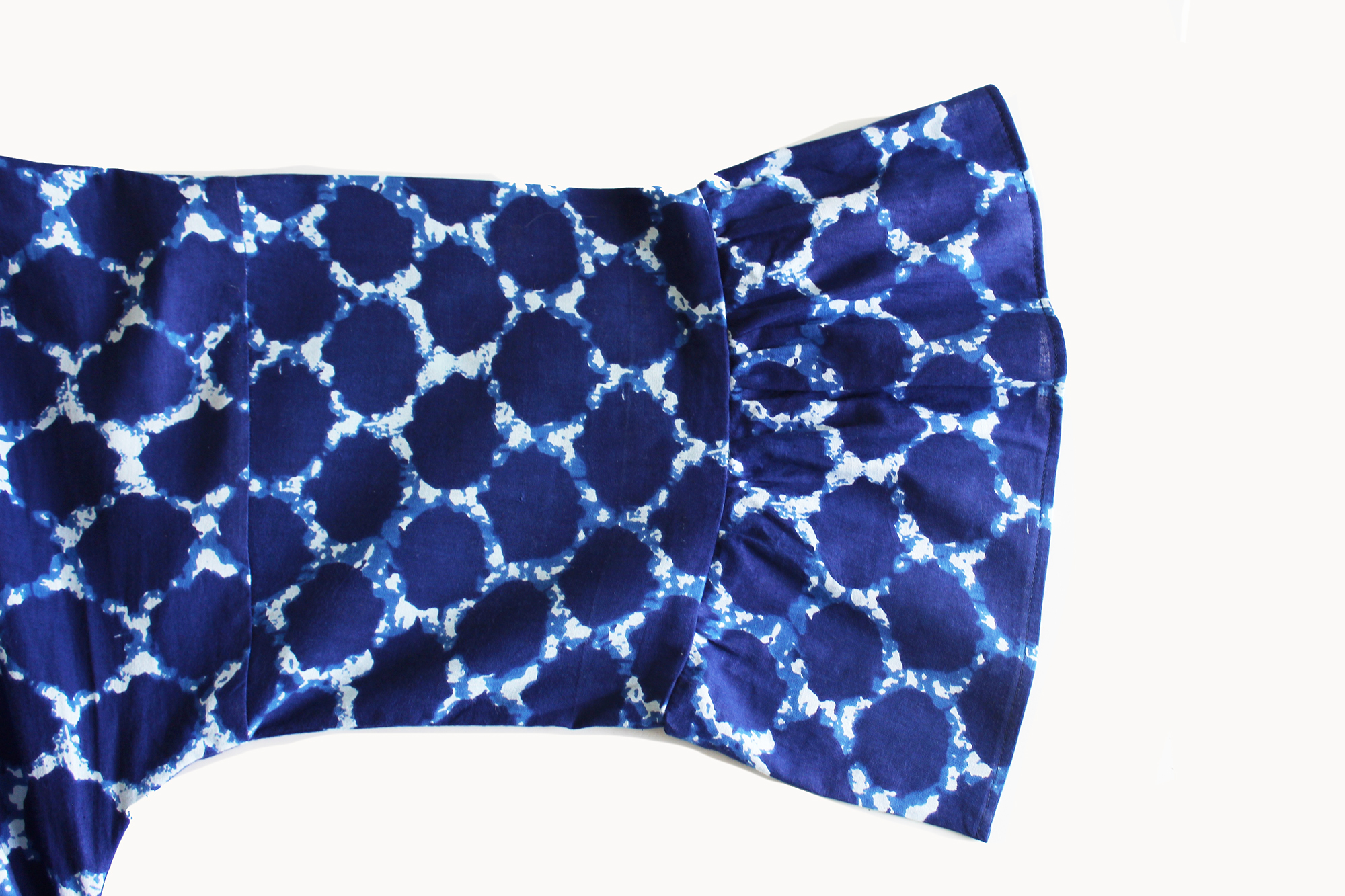
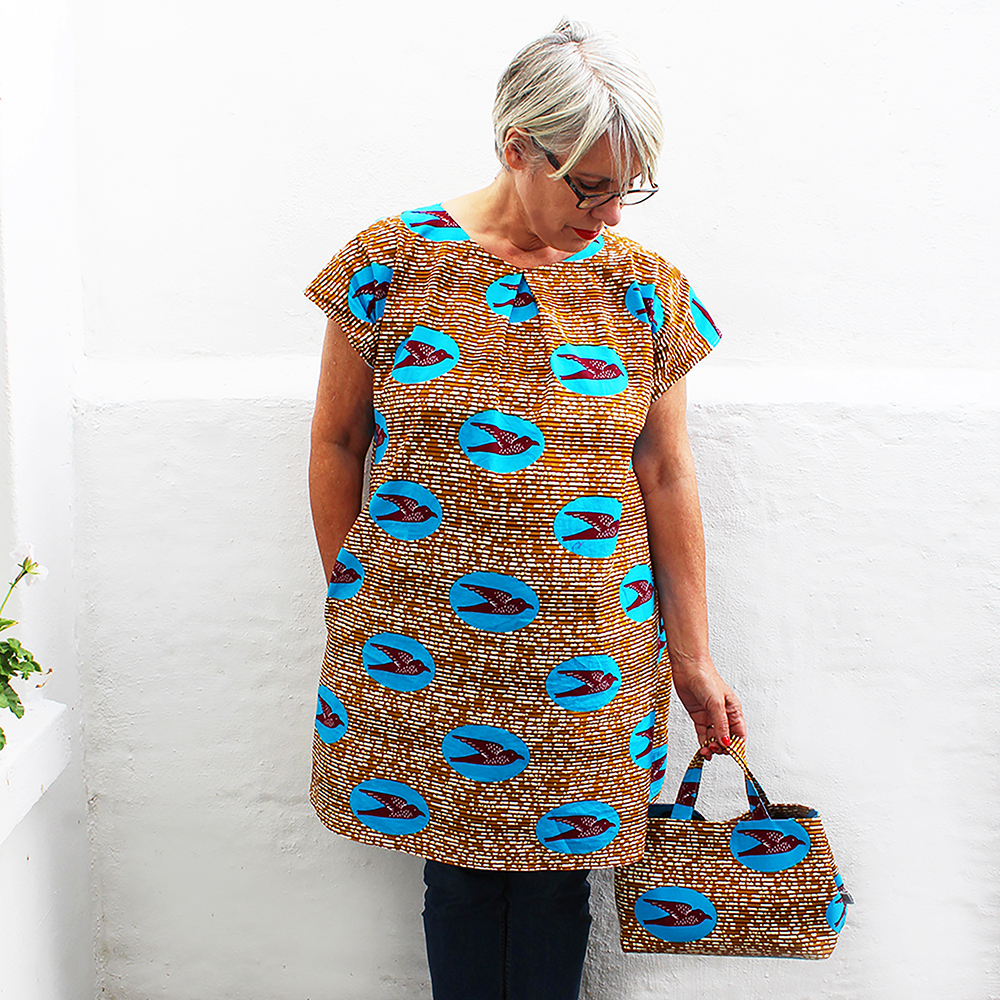

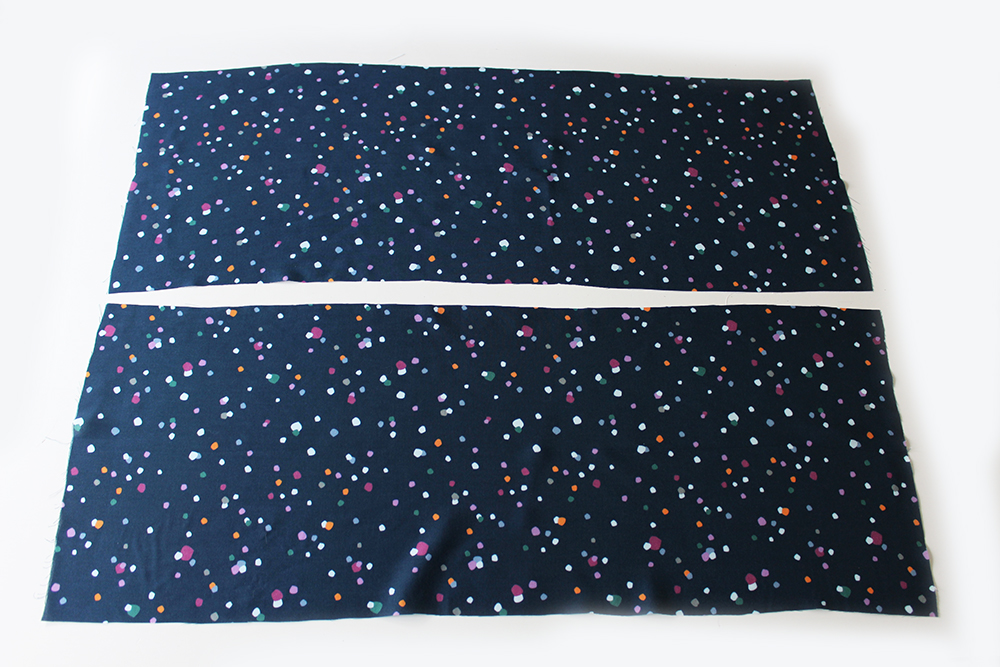
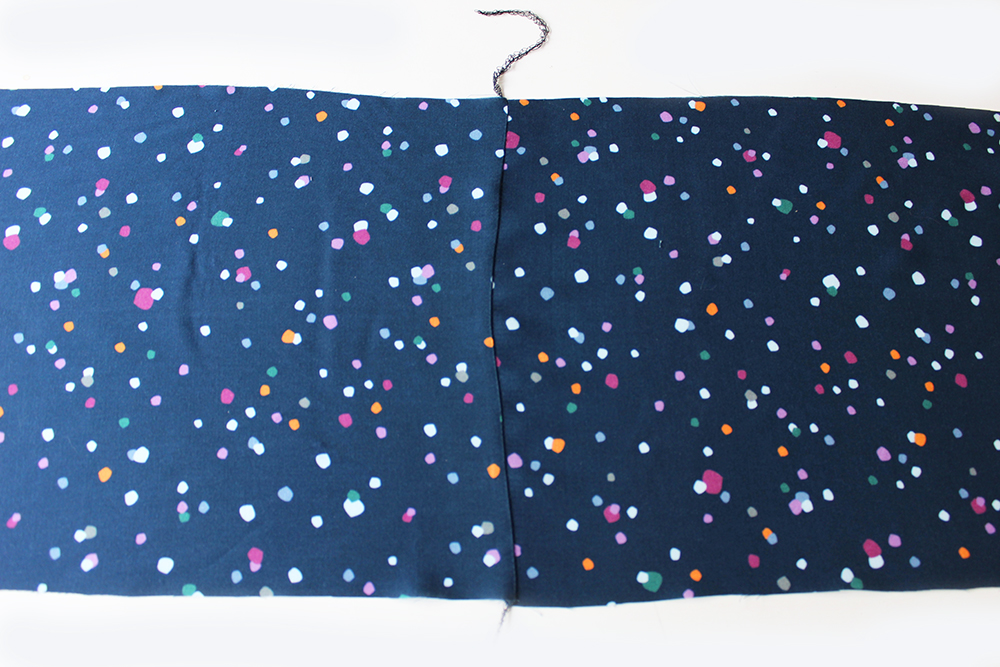
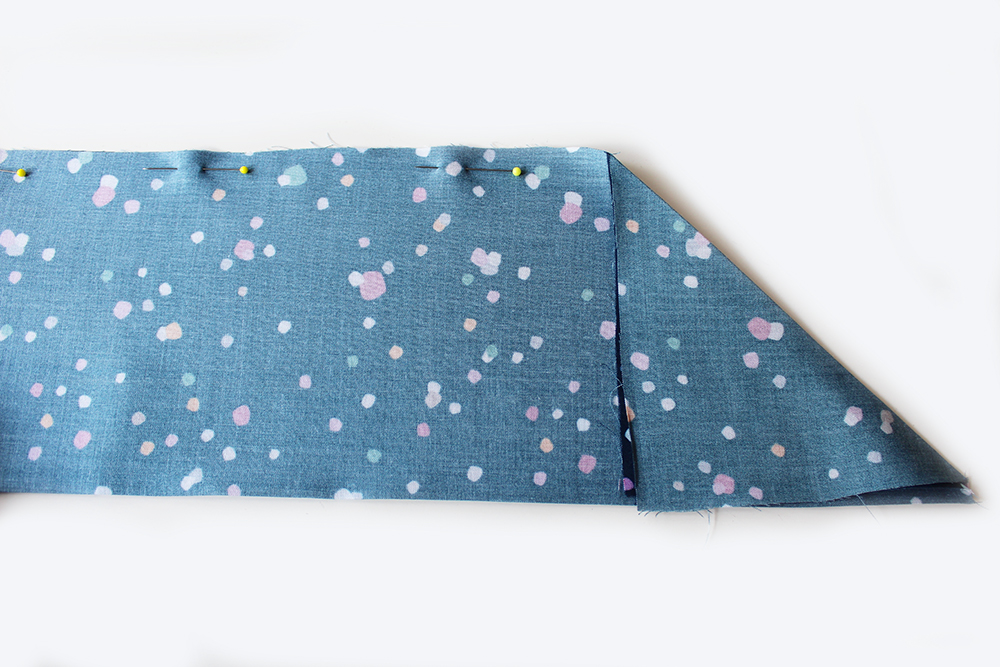
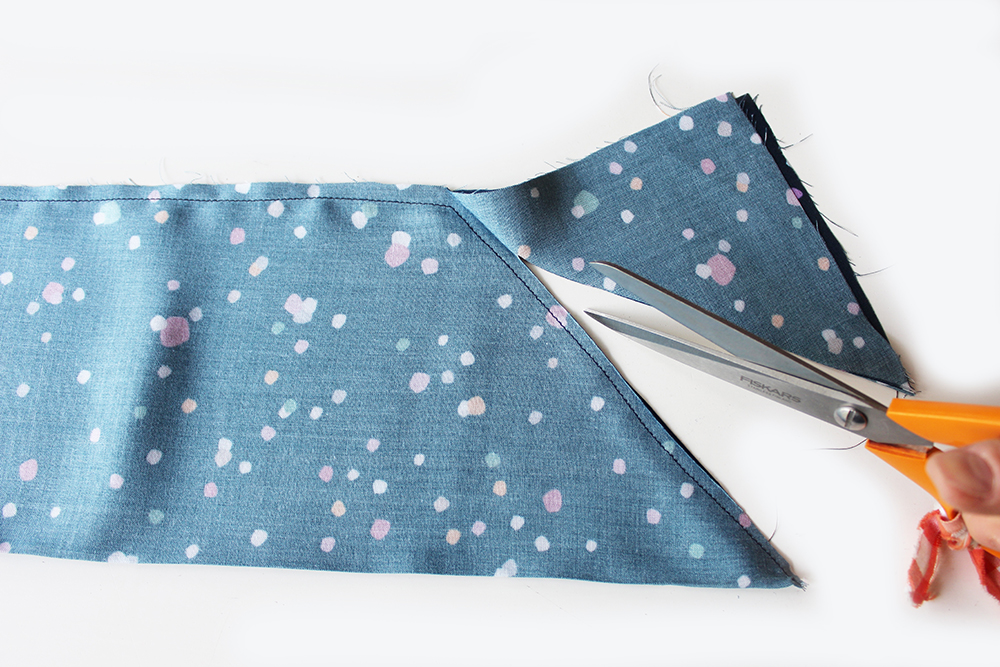
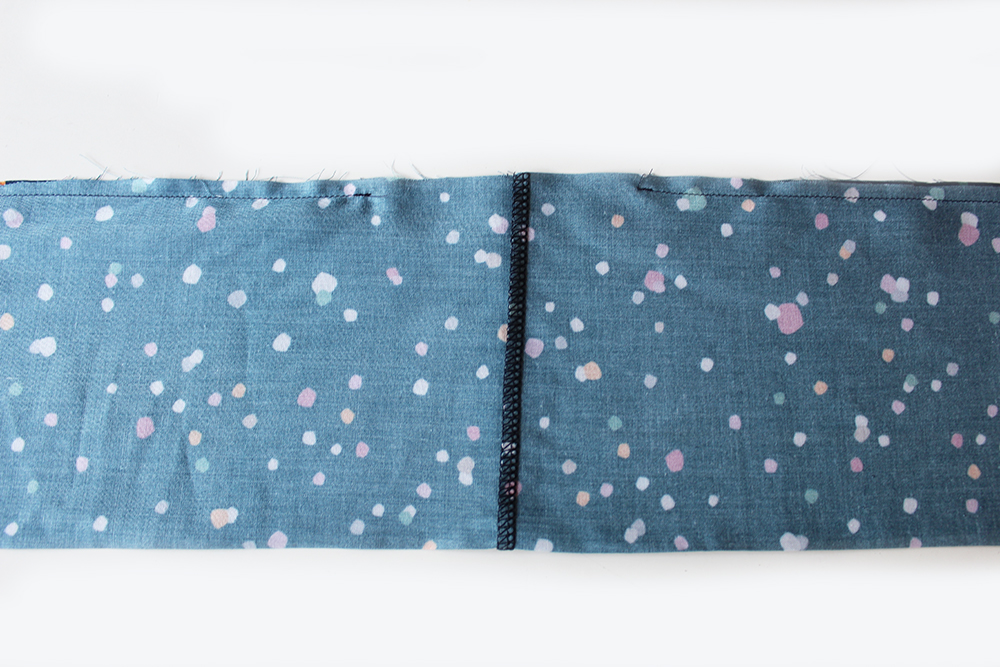
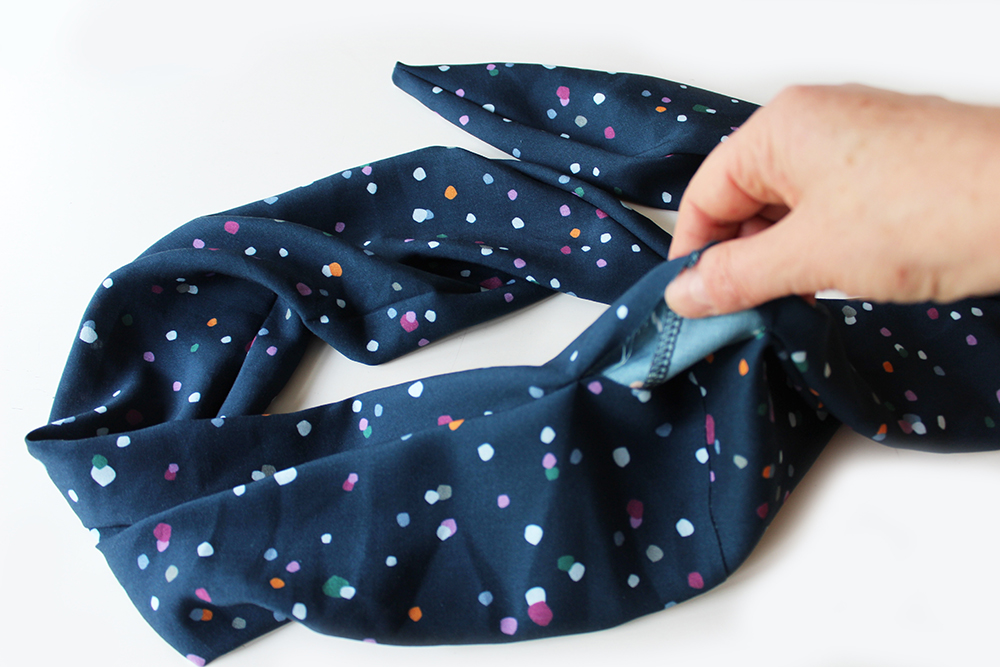
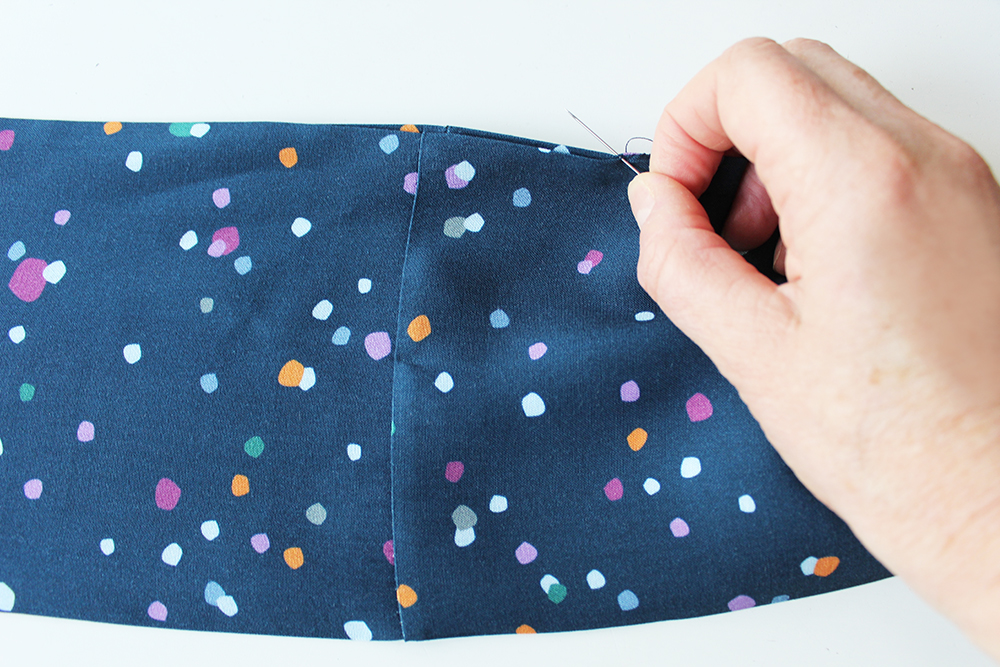
 sewgirlblog.com